- 234 -
KISEP Original Articles 생생 물물물물 정신의 학생생 정신의 학정신의 학정신의 학 Vol. 4, No. 2, December 1997
Failure to Support Associations of Neurotrophin-3((((NT-3)))) Gene Polymorphism in Korean Schizophrenic Patients*
Yu-Sang Lee, M.D.,1)†††† Jin-Hee Han, M.D.,2) Eun-Kee Chung, M.D.,3) Byung-Hwan Yang, M.D.,4) Hyeong-Seob Kim, M.D.,1) Jung-Sik Lee, M.D.,1) Yeon-Ho Joo, M.D.,1) Young-Gyu Chai, Ph.D.5)
hough initial report from Japan showed positive association of schizophrenia with dinucleotide repeat polymorphism in the NT-3 gene, subsequent studies showed mixed results. Therefore we conducted a replication study with Korean schizophrenics and matched controls who share similar ethnic background with Japanese population. The frequency of allele of dinucleotide repeat at 147 base pairs in the NT-3 gene was slightly incre- ased, however, failed to reach statistical significance(χ2=1.884, df=1, p<0.170) between the two groups. These findings do not support an association of NT-3 gene polymorphism with schizophrenia in Korean sample.
KEY WORDS:Neurotrophin-3(NT-3)・Dinucleotide repeat polymorphism・Association study・Schizophrenia.
Introduction
A contemporary view on schizophrenia indicated it may be a biological disorder of genetic origin as well as central nervous system dysfunction(Michael 1996). Moreover, recent findings from neuropathological studies of schizophrenia are more con- sistent with neurodevelopmental disorder rather than neurode- generative one(Weinberger 1995). Lack of gliosis(Benes et al.
1986), a failure of second trimester neuronal migration(Jacob
& Beckmann 1986), and anatomical asymmetry of brain(Crow 1990) are the relevant findings which support the neurodevel- opmental insult in the etiology of schizophrenia.
Neurotrophines are a family of extracellular ligands that affect
the differentiation, survival by inhibition of apoptosis, and ma- intenance of function of neuronal cells in vertebrates(Gotz &
Schartl 1994). Neurotrophin-3(NT-3) is by far most highly ex- pressed in immature regions of central nervous system in which proliferation, migration, and differentiation of neuronal precu- rsors is ongoing. NT-3 expression dramatically decreases with maturation of these regions(Maisonpierre et al. 1990). Thus, NT-3 is thought to be essential to the brain ontogenesis, e.g.
the pathogenesis of schizophrenia, and it could be an interesting candidate gene for schizophrenia.
Recently, Nanko et al.(1994) reported an association of sch- izophrenia with a polymorphic marker of NT-3 gene’s promoter.
Some replication studies from America, England, and Japan have shown inconsistent findings(Dawson et al. 1995;Nimgaonkar
TTTT
ABSTRACT
*Presented at the 150th Annual Meeting of the American Psychiatric Association, 1997
*This work was supported by a grant from Yong-In Psychiatric Research Institute
1)Yong-In Psychiatric Research Institute, Yong-In Mental Hospital, Yongin, Korea
2)Department of Psychiatry, Catholic University of Korea and St. Vincent Hospital, Suwon, Korea
3)Seoul National Mental Hospital, Seoul, Korea
4)Department of Psychiatry, College of Medicine and Mental Health Research Institute, Hanyang University, Seoul, Korea
5)Department of Biochemistry and Molecular Biology, Hanyang University, Ansan, Korea
†Corresponding author
Yu-Sang Lee, M.D. Yong-In Psychiatric Research Institute, Yong-In Mental Hospital, #4 Sangha-ri, Gusung-myun, Yongin-si, Kyunggi-do, Korea 449-910
Tel:0331-2880-212, Fax:0331-2880-184 Internet ID:[email protected]
- 235 - et al. 1995;Arinami et al. 1996). Considering the similar gen- etic background shared with Japanese, we performed an assoc- iation study of NT-3 gene’s polymorphism with Korean samples.
Material and Methods
Eighty eight Korean patients(mean age 30.9±6.8, range 20- 45, years) who met the DSM-IV(American Psychiatric Asso- ciation 1994) criteria for schizophrenia and 83 normal Korean controls(mean age 27.1±4.9, range 20-45 years) participated in this study. All subjects were given informed consent. Only unrelated male subjects were included in this study. Healthy control subjects were selected and matched by age and sex to the patients’ group.
Genomic DNA was extracted from peripheral blood accor- ding to the phosphate buffered saline standard method. Polym- orphic markers in the promoter region of NT-3 gene was am- plified by a polymerase chain reaction(PCR)(Hattori, et al.
1993). The primer sequences were 5’-GGCTTGTGTCTTCC- CCAAAGTT(CA strand) and 5’-AGGGGAGGAGGTGGA- GAA. Amplification was performed with an initial denaturing of 95℃ for 5 minutes(min) and followed by 33 cycles for 1 min at 94℃, for 1 min at 65℃, for 2 min at 72℃ and final el- ongation step for 5 min at 72℃. Analysis of PCR product were accomplished by electrophoresis using 10% polyacrylamide, 0.25% agarose composition gel and the bands were detected by silver staining. To confirm the size of PCR product, sequen- cing was performed and M13 was used as the standard DNA.
Chi-square test was used to compare the NT-3 genes allelic distribution between the patient and the control groups.
Result
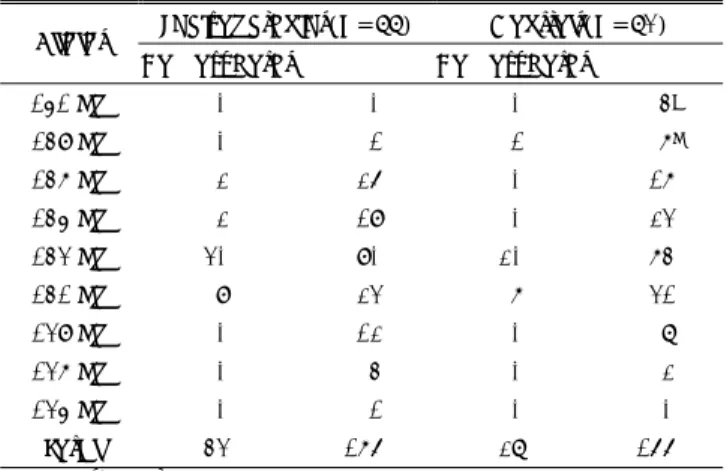
Table 1. shows the allelic distribution of dinucleotide repeat polymorphism at the NT-3 gene’s promoter in the patient and the control groups. We found 9 alleles at the NT-3 gene’s locus.
The 143 base pair(bp) allele was most frequent in both groups.
Although 151 bp allele and 149 bp allele were more frequent in the control group than in the patient group, they failed to reach statistical significance when Bonferroni correction was applied. Comparison of allelic distribution between the patients with younger age of onset(under 20 years) and the controls also resulted in no significant association. In addition, subgrouping the patient group either by age of onset(20 years) or by homo- zygous genotype again failed to get any significant associations in the allelic distribution between the two schizophrenic sub-
groups.
Discussion
Recently Dawson et al.(1995) reported association of an al- lele of the NT-3 gene with Caucasian male schizophrenics in England whereas Nimgaonkar et al.(1995) reported no such association with Caucasian or African-American ethnicity in the United States. Since Korean and Japanese share similar et- hnic background, it would be expected in this study to support original findings from Japan reported by Nanko et al.(1994).
Furthermore, we selected only male subjects to increase the ho- mogeneity of the study population. However, Korean sample re- vealed no positive association of schizophrenia not only with 147 bp allele(χ2=1.221, d.f.=1, p<.269) which is identical with A3 allele named by Nanko et al.(1994) but also with any other alleles.
Since the life time morbid risk for schizophrenia is known to be 1%(Gottesman 1991), it could be reasonable to assume that the controls are at the risk of schizophrenia because they were too young to be free from falling ill. Therefore, further compa- rison of the allelic distribution between the schizophrenic pati- ents and the controls was made on the assumption that one of the control subjects became ill and that he was homozygous for 147 bp allele. However, the results were similar to the uncorr- ected one.
Early onset male schizophrenics were thought to be more neurodevelopmentally abnormal than female or late onset schi- zophrenia(Castle & Murray 1991;Pilowsky et al. 1993). Th- erefore it could be relevant to examine the presence of linkage
Table 1. Distribution of polymorphism at the NT-3 genes’ promoter in schizophrenic patient and control group
Schizophrenics(N=88) Controls(N=83) Alleles
Homozygotes Homozygotes
151 bp# 0 0 0 4a
149 bp 0 1 1 7b
147 bp 2 26 0 17
145 bp 2 19 0 23
143 bp 30 90 20 74
141 bp 9 23 7 31
139 bp 0 12 0 8
137 bp 0 4 0 2
135 bp 0 1 0 0
Total 43 176 28 166
#=base pair
a 2=4.00, df=1, p<.041 bχ2=4.50, df=1, p<.029
Following Bonferoni correction, these two(a, b) values are not si- gnificant
- 236 - disequilibrium of the polymorphic markers at the NT-3 gene’s promoter site in the male schizophrenic population. In this reg- ard, we could not confirm positive association with male schi- zophrenics in Korean sample as reported by Dawson et al.
(1995) with Caucasian male schizophrenics. Failure to find an association of the marker locus in the neurodevelopmentally high risk group could provide more powerful basis to determine genetic implication. Findings above, taken together, suggests that linkage disequilibrium is not present at the NT-3 genes promoter site in schizophrenia.
Schizophrenia is known to be heterogeneous in etiology. Se- lection bias of the samples, in which phenotypes not associated with neurodevelopmental derangement was included, should be taken into account. This may, in part, explain the difference of results among studies of the NT-3 gene’s association with schi- zophrenia. In addition, phenocopy might act as another source of error in interpreting the results of genetic study of schizop- hrenia(Tsuang 1994). To overcome the problems arising from genetic heterogeneity in the schizophrenic disorders, use of st- ructured interviews and development of more rigorous research diagnostic criteria for genetic study should be considered. Case ascertainment by means of such methods could promote the validity of research in psychiatric genetics in the future.
References
American Psychiatric Association((((1994)))):::Diagnostic and statistical : manual of mental disorders. 4th ed, Washington DC, American Ps- ychiatric Press, pp268-287
Arinami T, Takekoshi K, Itokawa M, Hamaguchi H, Toru M (((
(1996)))):::Failure to find associations of CA repeat polymorphism : in the first intron and the Gly -63/Glu -63 polymorphism of the ne- urotrophin-3 gene with schizophrenia. Psychiatr Genet 6:13-15 Benes FM, Davidson B, Bird ED((((1986))))::::Quantitative cytoarchite-
ctural studies of the cerebral cortex of schizophrenics. Arch Gen Psychiatry 43:31-35
Castle DJ, Murray RM((((1991))))::::The neurodevelopmental basis of sex
differences in schizophrenia. Psychol Med 21:565-575
Crow TJ((((1990)))):::Temporal lobe asymmetries as the key to the etiology : of schizophrenia. Schizophr Bull 16:434-443
Dawson E, Powell JF, Sham PC, Nothen M, Crocq MA, Propping P, Korner J, Rietschel M, Van OS J, Wright P, Murray RM, Gill M((((1995)))):::An association study of neurotrophin-3: (NT-3) ge- ne polymorphism with schizophrenia. Acta Psychiatr Scand 92: 425-428
Gottesman I((((1991)))):::Schizophrenia genesis: :the origins of madness.
New York, W.H. Freeman
Gotz R. Schartl M((((1994))))::::The conservation of neurotrophic factors during vertebrate evolution. Comp Biochem Physiol Pharmacol To- xicol Endocrinol 108:1-10
Hattori M, Kuwata S, Fukuda R, Sasaki T, Shibata Y, Kazamatsuri H, Nanko S((((1993))))::::Dinucleotide repeat polymorphism in the pr- omoter region of neurotrophin-3 gene. Hum Molec Genet 2:1511 Jakob H, Beckmann H((((1986))))::::Prenatal developmental disturbances
in the limbic allocortex in schizophrenics. J Neural Transm 65: 303-326
Maisonpierre PC, Belluscio L, Friedman B, Alderson RF, Wiegand SJ, Furth ME, Lindsay RM, Yancopoulos GD((((1990)))):::NT-3, : BDNF and NGF in the developing rat nervous system:Parallel as well as reciprocal patterns of expression. Neuron 5:501-509 Michael RT((((1996))))::::Biological psychiatry, revised 2nd ed. Chichester,
John Wiley & Sons, pp183-225
Nanko S, Hattori M, Kuwata S, Sasaki T, Fukuda R, Dai XY, Ya- maguchi K, Shibata Y, Kazamatsuri H((((1994)))):::Neurotro-phin-: 3 gene polymorphism associated with schizophrenia. Acta Psychiatr Scand 89:390-392
Nimgaonkar VL, Zhang XR, Brar JS, DeLeo M, Ganguli R((((1995)))):::: Lack of association of schizophrenia with the neurotrophin-3 gene locus. Acta Psychiatr Scand 92:464-466
Pilowsky LS, Kerwin RW, Murray RM((((1993))))::::Schizophrenia:a neurodevelopmental perspective. Neuropsychopharmacology 9: 83-91
Tsuang MT((((1994))))::::Discussion:Identification of clinical phenotypes for genetic research on mental disorders. In:Genetic approaches to mental disorder. Ed by Gershon ES, Cloninger CR, Washington DC, American Psychiatric Press, pp123-139
Weinberger DR((((1995))))::::Schizophrenia as a neurodevelopmental dis- order. In:Schizophrenia. Ed by Hirsch SR, Weinberger DR, Oxford, Blackwell Science, pp293-323