Ⅰ. Introduction
Power saving is very important in the situation that thousands of ‘things’ are connected to the Internet. This is the same not only for sensors that operate on their own power or battery power, but also for devices such as gateways that are typically powered by AC wires. These devices offer great benefits in operation with minimal environmental impact in terms of their own energy demand. [1]
Power saving is a critical issue for devices operating in IoT environments. IoT devices have a precondition that needs to have very low power consumption because they are often
powered by an ordinary battery or energy harvesting rather than using a stable power supply using an electric plug.
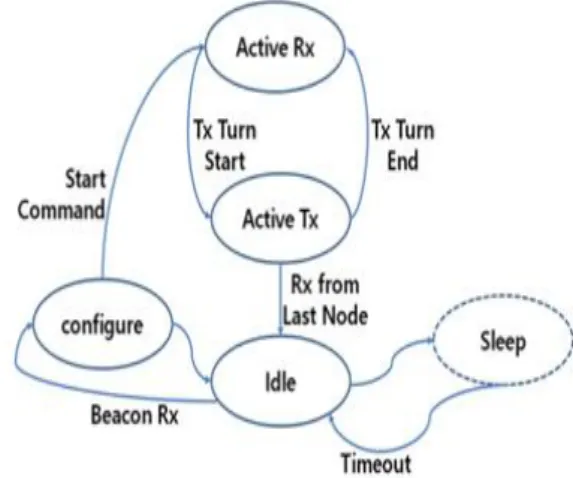
Fig. 1. Software architecture for experiments.
Suggestion to Improve Power Efficiency by Changing Sleep-Wakeup Period in Wireless Network
Environment for Internet of things
Eun-Ju Woo*, Yu-Sung Moon*, Jae-Hyun Choi**, Jae-Hoon Kim**, Jung-Won Kim*★
Abstract
The proposed scheme minimizes the Idle time under the residual energy of the sensor node to adjust the Sleep-Wakeup period and minimize unnecessary energy consumption. It is an important process to control the Application Packet Framework including the PHY and the MAC layer at each node’s Idle time with the Idle time mechanism state before the proposed function is executed. The Current Control Level of the Report Attribute is fixed at one sending / receiving node where power consumption can occur, by changing Sleep-Wakeup time, the low power consumption efficiency was improved while satisfying the transmission requirement of the given delay time constraint.
Key words: Sleep-Wakeup, Idle time, Duty Cycle, IoT, Current Consumption
* JIANGXI HOLITECH KOREA BRANCH
** UNITEL ELECTRONICS Co., Ltd.
★ Corresponding author
E-mail:[email protected], Tel:+82-2-783-8322
Manuscript received Sep. 10, 2018; revised Sep. 19, 2018; accepted Sep. 20, 2018
This is an Open-Access article distributed under the terms of the Creative Commons Attribution Non-Commercial License (http://creativecommons.org/licenses/by-nc/3.0) which permits unrestricted non-commercial use, distribution, and reproduction in any medium, provided the original work is properly cited.
ISSN:1226-7244 (Print)
ISSN:2288-243X (Online) j.inst.Korean.electr.electron.eng.Vol.22,No.3,862∼865,September 2018
논문번호 18-03-54 http://dx.doi.org/10.7471/ikeee.2018.22.3.862
341
(862)
342 j.inst.Korean.electr.electron.eng.Vol.22,No.3,862∼865,September 2018
Fig. 1 shows the software architecture for optimizing the required Report Attribute Current Level. [2]
If the method of supplying power only to the time when the actual sensor needs to be operated to be close to real time and turning off the power for the remaining time, the power actually consumed decreases. Idle mode and Sleep mode are used when power is not needed to implement this operation method, and Idle mode and Wakeup mode are used during use.
Ⅱ. Experiments
1. Transmission scenario of network device The standard scenario recognizes all data frames, but if the first attempt fails, IEEE 802.15.4 does not retransmit even if it retries.
The current consumption of the device over time is shown in Fig. 2. [3]
When the initialization is complete, the transceiver starts from sleep mode and from Idle mode on the switch. When an acknowledg- ment frame is received, the microcontroller switches into sleep mode as soon as possible.
Fig. 2. Standard transmission scenario for MAC.
When switched to sleep mode, the microprocessor continues Sleep function unless it starts a new transmission.
The MAC transmission method is the next step in the PHY procedure, but the IEEE 802.15.4 standard has the same rules as in Fig. 2. [4] The proposed scenario computes the energy for one of the device nodes in the network. When transmitting sensor data to the router or coordinator at this time, it is assumed that the
device has only one important task. This device transmits the given data for a given time.
2. Transmission / reception Node time control design Assume a send / receive connection with one Node. Here, the PHY / MAC layer serves as a transmission request in the more upper layer and a reception of data via wireless.
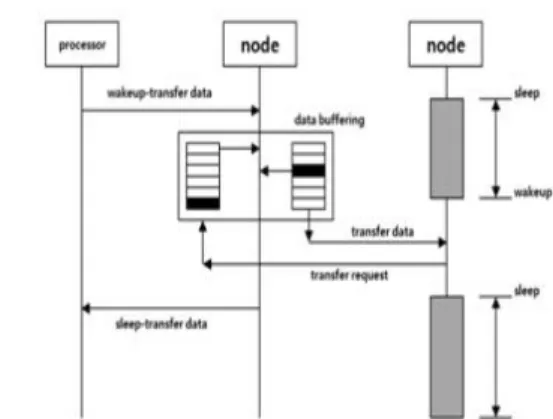
Fig. 3 shows a ‘Data Timing Buffer’ designed for experiment to prevent communication deadlocks with the processor. The Application Framework processes messages for PHY and MAC layer control, and supplies the energy only for the time it actually needs to operate. The ‘Post Processor’
of each node can take into account the computation time, processing, and boot up time. [5]
Fig. 3. Software design to prevent node deadlock.
3. Idle mode time control
The transmission and reception dynamic currents for the consumed current logic of the wireless sensor are limited.
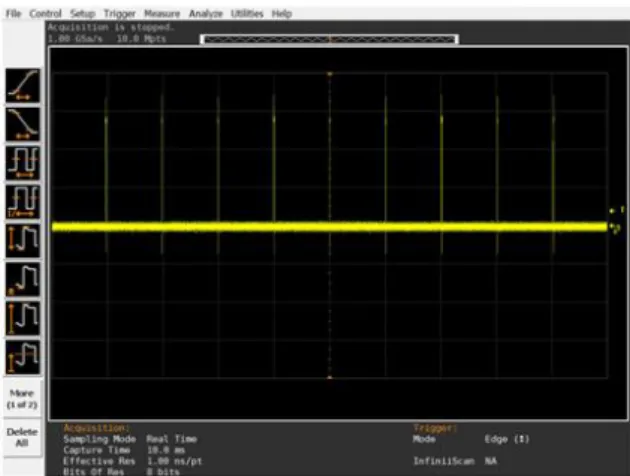
Fig. 4. Sample 1’s 4ms timing in Idle mode.
(863)
Suggestion to Improve Power Efficiency by Changing Sleep-Wakeup Period in Wireless Network Environment for Internet of things
343
Fig. 5. Sample 2’s 1ms timing in Idle mode.
Fig. 4 and Fig. 5 show the difference between Sample 1 and Sample 2, respectively. Sample 1 shows 4msec and Sample 2 shows 1msec. In Sleep mode, it does not perform any operation, so fast clock is not required.
However, when demanding a high-speed clock with ready status for the next task, it is more effective in energy efficiency characteristics.
Application Framework operation has a short entry cycle time and is designed considering the pre-entry phase of Wakeup mode for optimization in the worst case interval. [6]
4. Current consumption measurement
In Fig. 6, if Sample 1’s Wakeup time is 4msec, then RX_ON MODE is 21.6mV. If we change the Sample 2’s Wakeup time to 1msec in the same procedure, RX_ON MODE becomes 18.4mV as shown in Fig. 7.
Fig. 6. Current consumption when supplying power to Sample 1.
Fig. 7. Current consumption when supplying power to Sample 2.
5. Results
In Sample 1 and Sample 2 of Table 1, the Current Control Level was fixed at 40 to check the Sleep-Wakeup mode current consumption efficiency of the transceiver over time. [7]
Therefore, it can be seen that the consumed current can be changed by the mere condition for Sleep-Wake up time of the measured processor.
Table 1. Sample voltage measurement comparison.
Explanation of operation mode Sample 1 Sample 2
Current Control Level 40 40
Sleep-Wakeup time(ms) 4 1
RX_ON Volt Value(mV) 21.6 18.4
As can be seen from the comparison of the numerical values of Sample 1 and Sample 2, if the Sleep-Wakeup time is shortened, the efficiency of the Current Control Level is increased.
Ⅲ. Conclusion
In this paper, we show the effectiveness of the correlation between time and current consumption in the IoT wireless internet environment through the Idle time control which is the medium for Sleep-Wakeup of the proposed processor. If Sleep-Wakeup is processed several times over a long period of time, the task occupancy time between processors as well as the battery due to
(864)
344 j.inst.Korean.electr.electron.eng.Vol.22,No.3,862∼865,September 2018
current consumption is optimized and managed.
That is, it is possible to operate a stable system with energy efficiency of minimum 15% at the time of management of each transmitting / receiving node of WPAN. In particular, since smart wireless sensors are used in low-power emergency applications, current consumption time management is an essential use condition for power saving.
References
[1] “Korea Internet of Things Association,”
http://www.kiot.or.kr/ (URL)
[2] Jean J. Labrosse, Embedded Systems Building Blocks, Second Edition: Complete and Ready-to-use Modules in C, R&D Books, 2000.
[3] Wireless Medium Access Control (MAC) and Physical Layer (PHY) Specifications for Low-Rate Wireless Personal Area Networks (WPANs), IEEE Standard 802.15.4TM, 2006.
[4] Part 15.4: Wireless Medium Access Control (MAC) and Physical Layer (PHY) Specifications for Low Rate Wireless Personal Area Networks (WPANs), IEEE Standard for Information technology
― Telecommunications and information exchange between systems ― Local and metropolitan area networks ― Specific requirements, 2006.
[5] IEEE Standard for Local and metropolitan area networks ― Part 15.4: Low-Rate Wireless Personal Area Networks (LR-WPANs), IEEE Computer Society, 2011.
[6] A. Dementyev, S. Hodges, S. Taylor and J.
Smith, “Power consumption analysis of Bluetooth Low Energy, ZigBee and ANT sensor nodes in a cyclic sleep scenario,” 2013 IEEE International Wireless Symposium (IWS), Beijing, pp.1-4, 2013. DOI:10.1109/IEE E-IWS.2013.6616827 [7] Eun-Ju Woo, Yu-Sung Moon, Jung-Won Kim, “IEEE 802.15.4 power efficiency analysis using high-speed Wireless Personal Area Network transceiver in the environment for Internet of Things,” 2013 IKEEE Summer Conference Seoul, 2018, pp.15-18.
(865)