Effects of Simulation on Nursing Students’ Knowledge, Clinical Reasoning, and Self-confidence: A Quasi-experimental Study
Kim, Ji Young1 · Kim, Eun Jung2
1College of Nursing, Research Institute of Nursing Science, Chonbuk National University, Jeonju
2Division of Nursing, Research Institute of Nursing Science, Hallym University, Chuncheon, Korea
Purpose: Knowledge, clinical reasoning, and self-confidence are the basis for undergraduate education, and de- termine students’ level of competence. The purpose of this study was to assess the effects of the addition of a one-time simulation experience to the didactic curriculum on nursing students’ knowledge acquisition, clinical reasoning skill, and self-confidence. Methods: Using a quasi-experimental crossover design consisted of inter- vention and wait-list control groups. Participants were non-randomly assigned to the first intervention group (Group A, n=48) or the wait-list control group (Group B, n=46). Knowledge level was assessed through a multiple choice written test, and clinical reasoning skill was measured using a nursing process model-based rubric.
Self-confidence was measured using a self-reported questionnaire. Results: Results indicated that students in the simulation group scored significantly higher on clinical reasoning skill and related knowledge than those in the didactic lecture group; no difference was found for self-confidence. Conclusion: Findings suggest that under- graduate nursing education requires a simulation-based curriculum for clinical reasoning development and knowl- edge acquisition.
Key Words: Decision making, Knowledge, Undergraduate education, Patient simulation
Corresponding author: Kim, Eun Jung
Division of Nursing, Research Institute of Nursing Science, Hallym University, 1 Hallymdaehak-gil, Chuncheon 200-702, Korea.
Tel: +82-33-248-2725, Fax: +82-33-248-2734, E-mail: [email protected] Received: Jul 16, 2015 / Revised: Oct 1, 2015 / Accepted: Oct 2, 2015
This is an open access article distributed under the terms of the Creative Commons Attribution Non-Commercial License (http://creativecommons.org/licenses/
by-nc/3.0), which permits unrestricted non-commercial use, distribution, and reproduction in any medium, provided the original work is properly cited.
INTRODUCTION
Nursing knowledge, clinical reasoning, and self-con- fidence are the basis for undergraduate education and determine the level of competence with which the new graduate enters the workforce. However, it is reported that students lack the basic competence required for graduation. This is thought to originate from the type of educational methods used in nursing. In most nursing colleges in Korea, the theoretical courses are separated from clinical practice and usually exclude education about applying theoretical learning to clinical situations.
Most classes focus on merely obtaining nursing knowl- edge and on memorization. Traditional lecturing classes ruling out the differences in situational cases cannot en- hance students’ clinical reasoning and self-confidence.
Nursing educators are therefore faced with the task of
teaching students critical thinking skills that improve their clinical reasoning and self-confidence. Most learn- ing is naturally accomplished through actions, situations, and cultural contexts [1]. High-fidelity simulation (HFS) allows for the development of students’ cognitive, affec- tive, and psychomotor skills in a realistic replication of a health care setting [2]. With the rapid increase of simu- lation education, there has been a vast increase in the at- tention paid to its effective use. In other words, the way it is integrated into the nursing curriculum is important.
To be effective, HFS must be incorporated into the cur- riculum and not be seen as a stand-alone educational tool [2]. Until now, the effect has been verified by in- corporating the simulation as a part of, or in addition to, clinical practice. Few studies have confirmed how add- ing simulation to a theoretical class might affect theoreti- cal knowledge, critical thinking, or self-confidence. This
study aimed to examine the effects of the addition of a one-time simulation experience to the didactic curricu- lum on nursing students’ related knowledge acquisition, clinical reasoning skill, and self-confidence, compared to the traditional curriculum, in which theory learning and field training classes are separated.
1. Effects of Simulation in Undergraduate Nursing The result of simulation education in nursing students can be analyzed through self-confidence, knowledge gain, learner satisfaction, skill acquisition, and critical thinking [3]. Although HFS is becoming more common, outcomes research on its use and effectiveness is incon- sistent. In a review article on nursing, the use of HFS was found to increase students’ knowledge; however, findings related to confidence building or clinical rea- soning are mixed [4].
Through simulation experiences, students are pro- vided with a hands-on opportunity in a safe environ- ment where they can care for patients and make clinical decisions. The acquisition of nursing knowledge about specific disease processes is an important basis for un- dergraduate education [5]. However, although there have been many studies on the effects of simulation, evalua- tion of its effect on knowledge acquisition in students is rare [6]. Furthermore, as the measurement of the effect is based on students’ self-reporting, rather than direct mea- surement of knowledge acquisition, a more objective and reasonable measurement is required.
Clinical reasoning is the ability to assess patient prob- lems or needs and to analyze data accurately in the con- text of a patient’s situation [7]. Clinical reasoning in nurs- ing is viewed as a problem-solving activity, beginning with the assessment and nursing diagnosis, proceeding with planning and implementing nursing interventions directed toward the resolution of the diagnosed prob- lems, and culminating in the evaluation of the effective- ness of the interventions [8]. These skills are taught through the application of the nursing process model, which is the scientific basis for nursing [9]-thus, clinical reasoning skills necessary for practice may be better ac- quired through experience [10]. However, there is a lack of unequivocal evidence on the effectiveness of HFS use in the teaching of clinical reasoning skills to under- graduate nursing students [11].
Self-confidence has been shown to be an important variable for undergraduate students. Students who show high self-confidence are more likely to succeed in clin- ical practice, show better results in exams, and use clin-
ical skills more effectively [12,13]. As competency is very much related to self-confidence, a participant’s self-re- ported confidence is often assumed to represent their competency [14]. Experiences of different scenarios can build up competence and self-confidence in students through acknowledgment of clinically meaningful pat- terns and predictable outcomes [15]. However, the ef- fect of HFS experience on self-confidence is not consis- tent. A number of findings appear to show that HFS im- proves nursing students’ confidence [16,17], but the re- sults from other experimental studies show no statisti- cally significant differences in mean scores of self-con- fidence. Alinier et al., [18] found that intermediate-fidel- ity simulation is a useful training technique, but that stu- dents’perception of confidence was very similar bet- ween simulation and control groups. Brown and Chroni- ster [15] found that self-confidence measures showed no significant differences between a treatment group that engaged in weekly HFS and a control group that recei- ved only didactic instruction on electrocardiograms. The randomized controlled trial of Chang et al., [19] showed that simulation education of new nurses in the intensive care unit was effective in improving their emergency per- formances, but not in increasing their self-confidence. In a review study by Yuan et al., [20] students demonstrated increased confidence when delivering patient care after practicing with an HFS in qualitative or descriptive stud- ies, but significant results were not observed in similar experimental studies.
2. The Research Questions
The research questions for this study are as follows:
Research question 1: Does the one-time simulation experience to the didactic curriculum result in im- proved nursing students’ related knowledge acquisi- tion?
Research question 2: Does the one-time simulation experience to the didactic curriculum result in im- proved nursing students’ clinical reasoning skill?
Research question 3: Does the one-time simulation experience to the didactic curriculum result in im- proved nursing students’self-confidence?
METHODS
1. Study Design
A quasi-experimental design with a control group was used to test the effects of the simulation exercise, in
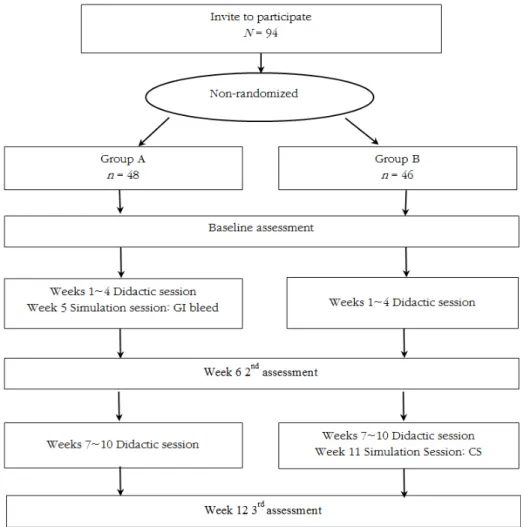
GI bleed=gastrointestinal bleed; CS=compartment syndrome.
Figure 1. Flowchart of the study.
conjunction with a traditional didactic lecture course, on students’ knowledge, clinical reasoning skill, and self- confidence with a specific patient. The study featured a wait-list control group with crossover (Figure 1).
2. Setting and Participants
The study was conducted at a university in South Korea. Data were collected from March to May 2012.
Junior nursing students enrolled in the medical surgical nursing course were eligible for inclusion, and all agreed to participate (N=94). In the curriculum for junior stu- dents, the didactic and clinical course was separated the first 12 weeks made up a didactic course, and the fol- lowing 6 weeks a clinical course. A simulation session was added to the didactic classes only for participants in the simulation group. None of the students had previous experience with simulation.
3. Ethical Consideration
This study was approved by the university institu- tional review boards (EU-12-02). The purpose and pro- cedures were explained to the students, and all of them gave informed consent prior to baseline assessment.
4. Measures
Three important variables were selected as the focus of this study: knowledge, clinical reasoning skills, and self-confidence. Self-confidence was measured before the didactic course and after the simulation session, while knowledge level and clinical reasoning skill were assessed after the simulation session.
Knowledge score was measured a week after the sim- ulation sessions, using a 10-item multiple-choice written
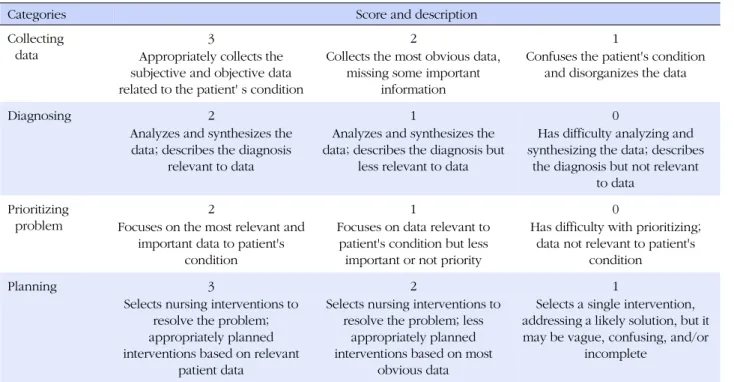
Table 1. Rubric for Evaluating the Clinical Reasoning Skill
Categories Score and description
Collecting data
3 2 1
Appropriately collects the subjective and objective data related to the patient' s condition
Collects the most obvious data, missing some important
information
Confuses the patient's condition and disorganizes the data
Diagnosing 2 1 0
Analyzes and synthesizes the data; describes the diagnosis
relevant to data
Analyzes and synthesizes the data; describes the diagnosis but
less relevant to data
Has difficulty analyzing and synthesizing the data; describes
the diagnosis but not relevant to data
Prioritizing problem
2 1 0
Focuses on the most relevant and important data to patient's
condition
Focuses on data relevant to patient's condition but less important or not priority
Has difficulty with prioritizing;
data not relevant to patient's condition
Planning 3 2 1
Selects nursing interventions to resolve the problem;
appropriately planned interventions based on relevant
patient data
Selects nursing interventions to resolve the problem; less
appropriately planned interventions based on most
obvious data
Selects a single intervention, addressing a likely solution, but it may be vague, confusing, and/or
incomplete exam which covered topics on gastrointestinal (GI) bleed
and compartment syndrome (CS). GI bleed and CS were taught during the didactic class, but the control group did not experience the simulation after these sessions.
The items measured content related to the students’ ap- plication of basic knowledge in a practice situation and their understanding of the specific patient’s state en- countered in the case scenarios that featured in the di- dactic and simulation scenarios (GI bleed or CS). The items were chosen from a test bank and modified by fac- ulty members. The knowledge score was determined by calculating the number of correct answers to these 10 items. Validity was established by 2 faculty experts. As a measure of reliability, the Kuder-Richardson formula 20 was calculated. The reliability was .74 and .71 for GI bleed and CS, respectively.
Clinical reasoning skill was measured using a rubric developed through literature review and faculty consen- sus. The rubric addressed 4 phases: collecting data, diag- nosing, prioritizing the problem, and planning. These phases directly relatedto the phases of the nursing pro- cess. The rubric described 3 levels of development for each phase the possible scoring ranged from 2 to 10 (Table 1). Rubric validity was determined through a re- view by 3 nursing faculty. One week after the simulation experience provided for the simulation group only, both the intervention and control groups were given a case similar to the scenario. Participants had to use this case to
collect data, make a nursing diagnosis, prioritize the pro- blem, and establish a care plan. A faculty member, who did not know which group each student had been as- signed to assessed the clinical reasoning skill using the rubric. Cronbach’s coefficient ⍺ was used as the meas- ure of internal consistency reliability. The reliability of clinical reasoning for GI bleed and CS was .72 and .70, respectively.
Self-confidence was measured with a modified ver- sion of the scale originally developed by Hicks et al., [5]
The questionnaire comprised 11 items with a 5-point Likert scale (1=strongly disagree, 5=strongly agree) and assessed confidence on 8 domains as follows: (1) recog- nizing a problem or change in patient conditions, (2) performing assessments of patient conditions, (3) inter- preting the data, (4) identifying the intervention for pa- tient conditions, (5) evaluating the effectiveness for pa- tient conditions, (6) communication, (7) patient safety, and (8) role of team members. The Cronbach’s ⍺s of the scale were .85 for pretest and .92 for posttest in the GI bleed scenario, and .70 for pretest and .86 for postt- est in the CS scenario.
5. Procedures
As shown in Figure 1, students were non-randomly as- signed to the first intervention (Group A, n=48) or wait- list control group (Group B, n=46). The participants
were recruited from two classes that had same curricu- lum at one university. To avoid cross-contamination of information between groups, A and B group students were recruited from different classes. Students in the first intervention group were the control group in the second intervention phase the inverse rule was applied for stu- dents in the first control group.
We measured participant’s demographic data, grade point average (GPA) and baseline self-confidence in tak- ing care of GI bleed patient for both groups. Both groups received didactic lectures on hepatobiliary disorders for 4 weeks (8 hours in total). Students in the first inter- vention group (Group A) then received 2 hours of simu- lation of a GI bleed due to esophageal varices rupture, while the wait-list control group (Group B) received no intervention. A second assessment of both groups was conducted one week later. Post-intervention knowl- edge, clinical reasoning, and self-confidence in taking care of GI bleed patient, and pre-intervention self-con- fidence in taking care of CS patient were measured.
After this second round of assessment, both group- sreceived didactic lectures on musculoskeletal disorders for 4 weeks (8 hours in total). The control group (Group B) then crossed over and received 2 hours of simulation of CS due to tibia-fibular fracture while the first inter- vention group (Group A) received no intervention. A third assessment of both groups was conducted one week later. Post-intervention knowledge, clinical reason- ing, and self-confidence in taking care of CS patient were measured. Both groups were oriented for manikin use and given the opportunity to assess the simulator for 40 minutes before intervention.
6. The Simulation Intervention
The intervention was designed to help students ac- quire the knowledge and delineate clinical reasoning skills needed to respond to scenarios. Two scenarios were chosen from the medical surgical nursing course topics: GI bleed due to esophageal varices rupture and compartment syndrome (CS) due to tibia-fibular fracture.
The GI bleed scenario included nursing care of a pa- tient with liver cirrhosis who had started to vomit blood (hematemesis), and the CS scenario included nursing care of a patient with a tibia-fibular fracture with a cast who had started to complain of extreme leg pain. The students were asked to recognize the situation, assess the patient, and begin to provide primary intervention in each of these scenarios. Validation of the GI bleed sce- nario was determined by a review of 3 expert nurses in
the medical unit, and 4 expert nurses in the orthopedic unit validated the CS scenario. The intervention group attended a 2-hour simulation session with a high-fidelity SimMan®. Each team consisted of 3~4 students partici- pating in the scenario, and the running time was around 15 minutes. At the end of the scenario session, a faculty member conducted a debriefing. In the debriefing ses- sion, the faculty member guided the students to reflect on their experience in terms of what they had done well in, what they had not done well in, and what they had learned from the experience.
7. Data Analysis
x2 test and independent samples t-tests were used to compare demographic characteristics of the experimental and control groups, and their pretest baseline measure- ments onself-confidence for the GI bleed and CS pa- tient care. The effects of the intervention were tested with independent samples t-tests. Data were analyzed using SPSS/WIN 18.0 (SPSS, Inc., Chicago, IL), and the level of significance was set at .05 (all comparisons were two-tailed).
RESULTS
1. Demographic Characteristics and Homogeneity Test
Table 2 presents the participants’ demographic char- acteristics. There were no significant differences found in gender, age, grade point average, or major satisfac- tion between the 2 groups. Regarding the baseline mea- sures, there were no significant differences between the 2 groups in self-confidence for GI bleed or CS patient care.
2. Knowledge Acquisition, Clinical Reasoning, and Self-confidence
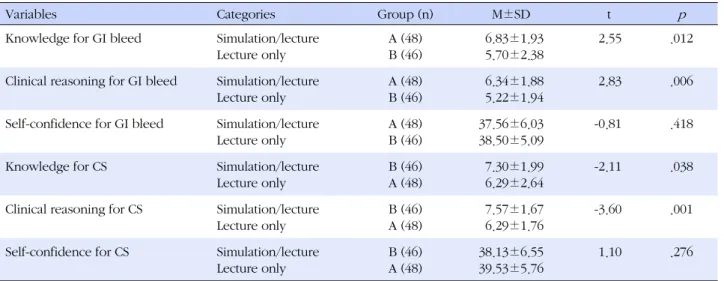
Table 3 provides the research outcomes. Following the GI bleed simulation intervention, the difference in GI bleed knowledge scores for the intervention group A (M=6.84, SD=1.93) and control group A (M=5.70, SD=
2.38) was statistically significant (t=2.55, p =.012). Simi- larly, the clinical reasoning scores for intervention group A (M=6.34, SD=1.88) and control group B (M=5.22, SD=
1.94) were significantly different (t=2.83, p=.006). There was no significant difference between groups for self- confidence (t=-0.81, p =.418).
Table 2. Homogeneity of the Participants' Characteristics between the Groups (N=94)
Characteristics Categories Group A (n=48) Group B (n=46)
x2 or t p
n (%) or M±SD n (%) or M±SD
Gender Male
Female
6 (12.5) 42 (87.5)
5 (10.9) 41 (89.1)
0.06 .806
Age (year) 21.06±1.80 20.98±1.35 0.26 .799
Satisfaction for nursing major 3.60±0.71 3.50±0.86 0.64 .523
Grade point average (GPA) 3.59±0.46 3.53±0.43 0.64 .523
Self-confidence for GI bleed 33.09±5.44 32.60±5.75 0.46 .679
Self-confidence for CS 33.90±5.60 33.33±7.54 0.41 .682
GI bleed=gastrointestinal bleed; CS=compartment syndrome.
Table 3. Comparison of Knowledge, Clinical Reasoning, and Self-confidence between the Groups (N=94)
Variables Categories Group (n) M±SD t p
Knowledge for GI bleed Simulation/lecture Lecture only
A (48) B (46)
6.83±1.93 5.70±2.38
2.55 .012
Clinical reasoning for GI bleed Simulation/lecture Lecture only
A (48) B (46)
6.34±1.88 5.22±1.94
2.83 .006
Self-confidence for GI bleed Simulation/lecture Lecture only
A (48) B (46)
37.56±6.03 38.50±5.09
-0.81 .418
Knowledge for CS Simulation/lecture
Lecture only
B (46) A (48)
7.30±1.99 6.29±2.64
-2.11 .038
Clinical reasoning for CS Simulation/lecture Lecture only
B (46) A (48)
7.57±1.67 6.29±1.76
-3.60 .001
Self-confidence for CS Simulation/lecture Lecture only
B (46) A (48)
38.13±6.55 39.53±5.76
1.10 .276
GI bleed=gastrointestinal bleed; CS=compartment syndrome.
Following crossover and the second simulation inter- vention, the difference in CS knowledge scores for the intervention group B (M=7.30, SD=1.99) and control group A (M=6.29, SD=2.64) was statistically significant (t=-2.11, p=.038). Similarly, the clinical reasoning scores for intervention group B (M=7.57, SD=1.67) and control group A (M=6.29, SD=1.76) were significantly different (t=-3.60, p =.001). There was no significant difference in self-confidence between groups (t=1.10, p =.276).
DISCUSSION
This study was conducted to examine whetherone si- mulation experience in conjunction with the traditional lecture class could affect the acquisition of related know- ledge, clinical reasoning,and self-confidence in nursing students with no clinical experience.
Our findings demonstrated that knowledge and clin-
ical reasoning with regard to a specific patient case was significantly higher in students who participated in a simulation of this case scenario than in those who did not. In our study, the experience of one-time simulation along with the lecture class had an effect on students’
cognitive ability, which comprises knowledge acquis- ition and clinical reasoning. Rather than assuming this effect was a simple result of additional simulation partic- ipation, this finding could be interpreted instead as a more effective way to increase students’ cognitive abil- ity through simulation experiences, compared to a one- way theoretical lecture. The effect of simulation on know- ledge revealed in this study matches the findings of pre- vious research. In the study of Gates et al., [6] the con- tent-specific examination scores in the simulation inter- vention group were significantly higher than in the con- trol group. In their study, second semester nursing stu- dents were required to participate in 15 hours of high fi-
delity simulated learning and were tested for their re- lated knowledge with 10 questions. Clinical reasoning was measured through the nursing process model-based rubric evaluating the students’reasoning ability for the given cases; the scores for clinical reasoning were sig- nificantly higher in the intervention group than in the control group.
Several studies have shown that simulation improves critical thinking [3]. In the present study, the faculty mem- ber facilitated the students to connect theoretical knowl- edge and problem solving in debriefing session. This may have helped third-year students with no clinical ex- perience to strengthen their reasoning skills, encourag- ing them to analyze and synthesize theoretical knowl- edge by providing them with the opportunity of con- textually bound clinical judgment through simulation experiences [8]. Furthermore, the rubric we designed is considered to help evaluate more sensitive changes in clinical reasoning skills. In a study by Meyer et al., [21]
clinical judgment scores of students who attended simu- lation over two weeks were not statistically improved as a result of simulation. They suggested that gains in clini- cal judgment could have been evaluated with a more sensitive measurement tool.
Our study demonstrates that integrating a one-time simulation into the didactic curriculum has significant effects on knowledge and clinical reasoning scores. While there is still a lack of evidence for how much HFS is needed in the nursing curriculum for greatest effective- ness, our findings suggest that participation has a pos- itive effect on students’ cognitive ability.
There were no significant differences in self-confi- dence between experimental and control groups after the GI bleed and CS simulations. In fact, self-confidence levels were higher in the control group who had re- ceived only the didactic sessions. First time simulation experience in students with no prior clinical practice may cause performance anxiety, resulting in poor confi- dence. We suggest that students in the simulation group found it difficult to make decisions in scenario situa- tions, which may have influenced their confidence in their ability to take care of the patients. In our additional analysis, most of the students who participated in the simulation perceived that they had not performed suc- cessfully and described their dissatisfaction with their performance. There is, however, evidence for a relation- ship between confidence level and the ability to under- take complex skills [22].
In a study by Baillie and Curzio [23], students’ confi- dence levels were enhanced because of their ability to
repeat skills during simulation. Thus, of the variables that can affect students’ self-confidence, repetitive practice is considered an important factor in improving both self- confidence and clinical performance. Bandura’s em- phasis that one’s mastery experiences are the most influ- ential source of self-efficacy or confidence information [24] has important implications for the mastery learning model of academic achievement.
Limitations
This study has several limitations that need to be con- sidered when interpreting the results. First, the results cannot be generalized because this study was conduc- ted within one medical-surgical nursing course at a sin- gle school, and a convenience sample was used. Second, although we developed a scoring rubric in order to min- imize inconsistent scoring, the fact that only one faculty member assessed the clinical reasoning scores may have resulted in a lack of reliability for this measure. The fac- ulty evaluator did not participate in the simulation ses- sion and scored using a blinded method. Third, the na- ture of the regular curriculum meant that we could not examine whether the groups were homogenous for baseline scores of knowledge and clinical reasoning; in- stead, we compared the grade point average of both groups for homogeneity. Future research would ideally measure and compare pre and posttest performance on these measures. Fourth, we crossed over the control group to the second experimental treatment immedi- ately after the intervention group completed the ex- periment because we had to follow a scheduled curric- ulum and concerned about dropouts of participants.
Future studies should wait to cross- over the control group until the first experiment does not affect the sec- ond experiment.
CONCLUSION
This study shows that adding simulation sessions to traditional lecture classes is an effective instructional pedagogy to increase nursing students’ cognitive ability.
Scores for related knowledge and clinical reasoning us- ing a nursing process model-based rubric were signifi- cantly higher in the group that experienced a simula- tion along with the theoretical course prior to clinical practice than in the group that participated only in the theoretical lecture. However, there was no significant dif- ference in self-confidence scores. Since self-confidence is an important variable in simulation education, more
work is needed to identify predictors of self-confidence, and to find strategies that can elevate students’ self-con- fidence.
REFERENCES
1. Brown JS, Collins A, Duguid S. Situated cognition and the cul- ture of learning. Educational Researcher. 1989;18(1):32-42.
http://dx.doi.org/10.3102/0013189X018001032
2. Wotton K, Davis J, Button D, Kelton M. Third-year undergra- duate nursing student’s perceptions of high-fidelity simulation.
Journal of Nursing Education. 2010;49(11):632-9.
http://dx.doi.org/10.3928/01484834-20100831-01
3. Jeffries PR. A framework for designing, implementing, and evaluating simulations used as teaching strategies in nursing.
Nursing Education Perspectives. 2005;26(2):96-103.
4. Weaver A. High-fidelity patient simulation in nursing educa- tion: an integrative review. Nursing Education Perspectives.
2011;32(1):37-40.
http://dx.doi.org/10.5480/1536-5026-32.1.37
5. Hicks F, Coke L, Li S. The effect of high-fidelity simulation on nursing students’ knowledge and performance: a pilot study 2009 [cited 2014 April 7]. Available from:
https://www.ncsbn.org/09_SimulationStudy_Vol40_web_wi th_cover.pdf
6. Gates MG, Parr MB, Hughen JE. Enhancing nursing know- ledge using high-fidelity simulation. Journal of Nursing Edu- cation. 2012;51(1):9-15.
http://dx.doi.org/10.3928/01484834-20111116-01
7. Murphy JI. Using focused reflection and articulation to pro- mote clinical reasoning: an evidence-based teaching strategy.
Nursing Education Perspectives. 2004;25(5):226-31.
8. Tanner CA. Thinking like a nurse: a research-based model of clinical judgment in nursing. Journal of Nursing Education.
2006;45(6):204-11.
9. Burns HK, O'Donnell J, Artman J. High-fidelity simulation in teaching problem solving to 1st-year nursing students: a no- vel use of the nursing process. Clinical Simulation in Nursing.
2010;6(3):e87-e95.
http://dx.doi.org/10.1016/j.ecns.2009.07.005
10. Lisko S, O'Dell V. Integration of theory and practice: experi- ential learning theory and nursing education. Nursing Educa- tion Perspectives. 2010;31(2):106-8.
11. Lapkin S, Levett-Jones T, BellchambersH, Fernandez R. Effec- tiveness of patient simulation manikins in teaching clinical reasoning skills to undergraduate nursing students: a syste- matic review. Clinical Simulation in Nursing. 2010;6(6):e207- 22. http://dx.doi.org/10.1016/j.ecns.2010.05.005
12. Lundberg KM. Promoting self-confidence in clinical nursing students. Nurse Educator. 2008;33(2):86-9.
http://dx.doi.org/10.1097/01.NNE.0000299512.78270.d0 13. Clark MC, Owen SV, Tholcken MA. Measuring student per-
ceptions of clinical competence. Journal of Nursing Educa- tion. 2004;43(12):548-54.
14. Cant RP, Cooper SJ. Simulation-based learning in nurse edu- cation: systematic review. Journal of Advanced Nursing. 2010;
66(1):3-15.
http://dx.doi.org/10.1111/j.1365-2648.2009.05240.x.
15. Brown D, Chronister C. The effect of simulation learning on critical thinking and self-confidence when incorporated into an electrocardiogram nursing course. Clinical Simulation in Nursing. 2009;5(1):e45-52.
http://dx.doi.org/10.1016/j.ecns.2008.11.001
16. Bambini D, Washburn J, Perkins R. Outcomes of clinical simulation for novice nursing students: communication, con- fidence, clinical judgment. Nursing Education Perspectives.
2009;30(2):79-82.
17. Smith S, Roehrs C. High fidelity simulation: factors correlated with nursing student satisfaction and self-confidence. Nursing Education Perspectives. 2009;30(2):74-8.
18. Alinier G, Hunt B, Gordon R, Harwood C. Effectiveness of intermediate-fidelity simulation training technology in under- graduate nursing education. Journal of Advanced Nursing.
2006;54(3):359-69.
http://dx.doi.org/10.1111/j.1365-2648.2006.03810.x 19. Chang S, Kwon E, Kwon YO, Kwon HK. The effects of simul-
ation training for new graduate critical care nurses on know- ledge, self-efficacy, and performance ability of emergency si- tuations at intensive care unit. Journal of Korean Academic Adult Nursing. 2010;22(4):375-83.
20. Yuan HB, Williams BA, Fang JB. The contribution of high- fidelity simulation to nursing students' confidence and com- petence: a systematic review. International Nursing Review.
2012;59(1):26-33.
http://dx.doi.org/10.1111/j.1466-7657.2011.00964.x
21. Meyer MN, Connors H, Hou O, Gajewski B. The effect of simulation on clinical performance: a junior nursing student clinical comparison study. Simulation in Healthcare. 2011;6 (5):269-77. http://dx.doi.org/10.1097/SIH.0b013e318223a048.
22. Rhodes ML, Curran C. Use of the human patient simulator to teach clinical judgment skills in a baccalaureate nursing pro- gram. CIN: Computers, Informatics, Nursing. 2005;23(5):256- 62.
23. Baillie L, Curzio J. Students’ and facilitators’ perceptions of simulation in practice learning. Nurse Education in Practice.
2009;9(5):297-306.
http://dx.doi.org/10.1016/j.nepr.2008.08.007
24. Bandura A.Social foundations of thought and action: asocial cognitive theory. Englewood Cliffs, NJ: Prentice Hall; 1986.