100 http://www.ecevr.org/
CLINICAL
EXPERIMENTAL VACCINE
RESEARCH
Introduction
Foot-and-mouth disease virus (FMDV) is an important animal pathogen that infects cloven-hoofed animals, and economically devastating disease of livestock worldwide [1]. The virus causes fever, lameness blisters on the feet and mouth, and the appear- ance of vesicular lesions in the mouth, tongue, nose, feet and teats [2]. FMDV rapidly replicates in the pharynx of hosts, invades the blood stream within 48 hours, thereafter lesions appear in the mouth and feet and spreads via aerosol, either by direct contact, or by contaminated animal products [3,4]. However, a recent report suggests that pigs are the significant factor in the spread of the disease since a single pig releases as much aerosol virus as 3,000 cattle in a short period of time [5].
FMDV is a non-enveloped virus with an icosahedral capsid belonging to the Aph- thovirus genus of the Picornaviridae family. The genome is a compact positive-strand RNA about 8,300 nucleotides long with a single open reading frame (ORF) [6]. The ge-
© Korean Vaccine Society.
This is an Open Access article distributed under the terms of the Creative Commons Attribution Non-Com- mercial License (http://creativecommons.org/licenses/
by-nc/3.0) which permits unrestricted non-commercial use, distribution, and reproduction in any medium, pro- vided the original work is properly cited.
K O R E A N V A C C I N E S O C I E T Y
K O R E A N K O R E A N A C C I N E O C I E T Y V
S
Clin Exp Vaccine Res 2014;3:100-109 http://dx.doi.org/10.7774/cevr.2014.3.1.100 pISSN 2287-3651 • eISSN 2287-366X
Subbiah Jeeva, Jung-Ah Lee, Seung-Yong Park, Chang-Seon Song, In-Soo Choi, Joong-Bok Lee
College of Veterinary Medicine and Veterinary Science Research institute, Konkuk University, Seoul, Korea
Received: October 20, 2013 Revised: November 10, 2013 Accepted: November 14, 2013
Corresponding author: Joong-Bok Lee, PhD College of Veterinary Medicine and Veterinary Science Research Institute, Konkuk University, 120 Neungdong-ro, Gwangjin-gu, Seoul 143-729, Korea
Tel: +82-2-450-3714, Fax: +82-2-3437-1960.
E-mail: [email protected]
No potential conflict of interest relevant to this article was reported.
This research was supported by veterinary science research institute, Konkuk University.
Purpose: Foot-and-mouth disease (FMD) is an economically important global animal disease.
To control FMD virus (FMDV) outbreaks, a lot of different novel approaches have been attemp- ted. In this study, we proposed a novel porcine reproductive and respiratory syndrome virus (PRRSV) as a replicon vector to express FMDV structural protein.
Materials and Methods: PRRSV infectious clone (PRRSVK418DM) was used to develop an expression vector through the reverse genetic manipulation of PRRSV; FMDVP12A3C gene of serotype O was synthesized and used for an antigen. MARC-145 cells (African green monkey kidney epithelial cell line) were used for electroporation mediated transfection. The transfec- tion or the expression of P12A3C and N protein of PRRSV was analyzed by either replicon con- taining PRRSV alone or by co-infection of helper PRRSV.
Results: We constructed PRRSVK418DM replicon vector containing FMDVP12A3C, and ge- nome sequences were confirmed by subsequent sequence analysis. In vitro expression of P12A3C and PRRSV N protein was confirmed by immunofluorescence antibody assay using antibodies specific for PRRSV N protein (anti-PRRSV N MAb), FMDV-VP1 (anti-VP1 MAb).
Conclusion: The results indicate that PRRSV replicon vector can be a promising novel vector system to control FMDV and useful for vaccine development in the future.
Keywords: Replicon, FMDV, PRRSV, Genetic vectors
Development of porcine
respiratory and reproductive syndrome virus replicon vector for foot-and-mouth disease
vaccine
nome is translated as a single ORF into a precursor polyprot- ein and the precursor protein is cleaved by viral coded prote- ases into both the intermediate and mature structural and nonstructural (NS) viral proteins. Based on the initial cleav- age products, the genome ORF is divided into four regions including the L, P1, P2, and P3 region, respectively [7]. The P1 region of the genome is encoding four viral structural pro- teins (VP4, VP2, VP3, and VP1). Following the P1 region is the P2, encodes three viral NS proteins (2A, 2B, and 2C), and the P3 region, encodes NS proteins 3A, three copies of VPg (3B1, 3B2, and 3B3), 3C protease (3Cpro), and 3D polymerase (3Dpol). The protease 3C plays crucial role in the cleavage of viral structural proteins and enables the proper folding and assembly of the FMDV capsid in the infected cells [7-9].
FMDV is one of the highly antigenic variable viruses, as a result of error-prone replication, and the lack of 3Dpol gene proofreading and postreplicative repair activities. Therefore, the FMDV consists of the seven serotypes including type O, A, C, SAT-1, SAT-2, SAT-3, and Asia-1; 64 subtypes. Among the seven serotypes of FMDV, the serotype “O” is the most com- mon and it is prevalent in China and its surrounding coun- tries. Furthermore, serotype O has been detected in South Korea, during the massive outbreaks of foot-and-mouth dis- ease (FMD) in 2011 [10].
The development of FMDV vaccine is important to control the FMD outbreaks in many countries. Thus, a lot of different approaches have been attempted. At the beginning, the killed or inactivated vaccines have been practiced. However, FMDV vaccines like other killed antigens do not induce broadly re- active long-term protection; require multiple vaccinations to
maintain good levels of herd immunity. Despite, convention- al binary ethyleneimine inactivated vaccines emulsified with adjuvant have been widely used in Asia, Africa, and South America for effective control and eradication programs. Sev- eral novel approaches have been applied to develop alterna- tive FMD vaccines, including construction of modified live- virus [11,12], biosynthetic proteins [13,14], synthetic peptides [15,16], naked DNA vectors [17,18], oral vaccine produced from transgenic plants [19,20] and recombinant viruses. Re- combinant adenovirus [21-23], recombinant vaccinia virus [24], pseudorabies or fowlpox-vectored vaccine [25,26] and recombinant baculoviruses have been developed to express virus like particles (VLP) [27,28].
In the present study, we attempted to develop a novel strat- egy for FMDV vaccine using porcine reproductive and respi- ratory syndrome virus (PRRSV) replicon as a vector. Our re- sults indicate that a PRRSV replicon vector expresses FMDV structural protein as well as N protein of PRRSV in vitro. The novel strategy will be useful to enhance the efficacy of FMDV vaccines in the future.
Materials and Methods
PRRSV vector construction
PRRSV infectious clone (PRRSVK418DM) was used for the genetic manipulation of PRRSV in this study. At the begin- ning, PRRSVK418DM was constructed as an expression vec- tor, since then further modifications were carried out in the infectious clone. To introduce enzyme sites (AscI and FseI) and artificial transcriptional initiation sequences (TRS), the
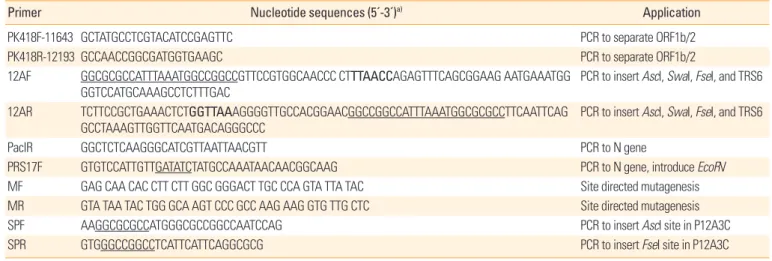
Table 1. Primer nucleotide sequences and applications
Primer Nucleotide sequences (5´-3´)a) Application
PK418F-11643 GCTATGCCTCGTACATCCGAGTTC PCR to separate ORF1b/2
PK418R-12193 GCCAACCGGCGATGGTGAAGC PCR to separate ORF1b/2
12AF GGCGCGCCATTTAAATGGCCGGCCGTTCCGTGGCAACCC CTTTAACCAGAGTTTCAGCGGAAG AATGAAATGG
GGTCCATGCAAAGCCTCTTTGAC PCR to insert AscI, SwaI, FseI, and TRS6
12AR TCTTCCGCTGAAACTCTGGTTAAAGGGGTTGCCACGGAACGGCCGGCCATTTAAATGGCGCGCCTTCAATTCAG
GCCTAAAGTTGGTTCAATGACAGGGCCC PCR to insert AscI, SwaI, FseI, and TRS6
PacIR GGCTCTCAAGGGCATCGTTAATTAACGTT PCR to N gene
PRS17F GTGTCCATTGTTGATATCTATGCCAAATAACAACGGCAAG PCR to N gene, introduce EcoRV
MF GAG CAA CAC CTT CTT GGC GGGACT TGC CCA GTA TTA TAC Site directed mutagenesis MR GTA TAA TAC TGG GCA AGT CCC GCC AAG AAG GTG TTG CTC Site directed mutagenesis
SPF AAGGCGCGCCATGGGCGCCGGCCAATCCAG PCR to insert AscI site in P12A3C
SPR GTGGGCCGGCCTCATTCATTCAGGCGCG PCR to insert FseI site in P12A3C
PCR, polymerase chain reaction.
a)Restriction sites are underlined. TRS6 is mentioned in bold letters.
primers 12AF and 12AR (Table 1) were synthesized by Mac- rogen (Seoul, Korea). For construction of the PRRSV expres- sion vector, the regions flanking the ORF1b/ORF2a junction were amplified as two fragments by polymerase chain reac- tion (PCR) using the primers PK418-11643F and 12AR, and 12AF and PK418-12193R, respectively. An overlap PCR was performed by primer set Pk418-11643F and Pk418-12193R using the mixture of purified two amplified fragments as a template, to get one completely modified fragment, which was ligated in pCR8/GW/TOPO using the TA cloning kit (In- vitrogen, Carlsbad, CA, USA) and transformed into DH5α cells. The recombinant clones were analyzed by recombinant plasmid isolation, restriction enzyme digestion and sequenc- ing. The sequence confirmed recombinant plasmid was fur- ther allowed to prepare inserts to replace the modified junc- tion fragment into PRRSVK418. The PRRSVK418DM and in- sert containing recombinant plasmid were digested by HpaI and EcoRV restriction enzyme. The restriction enzyme di- gested PRRSVK418DM and modified inserts were purified using a Dokdo-Prep Gel Extraction Kit (ELPIS BIOTECH, Dae- jeon, Korea). The purified insert and linearized PRRSVK418- DM were ligated and transformed in to DH5α competent cells.
The PRRSV vector positive clone was analyzed by recombi- nant plasmid isolation, restriction enzyme digestion analysis and sequencing.
FMDVP12A3C gene construction
The P12A3C gene of FMDV type “O” was codon optimized to express in eukaryotic cells and synthesized by Bioneer Corp.
(Daejeon, Korea). FMDV-type “O” isolate, Genbank acces- sion no. HM229661 was used as a reference to design P12A3C gene. The synthesized gene was amplified by PCR using prim- ers (SPF and SPR) to introduce two enzyme sites AscI and FseI on 5’ and 3’ region, respectively. In addition, site directed mutagenesis was carried out to modify internal FseI site using the oligonucleotide primers without changing codon using primers MF and MR and site-directed mutagenesis kit (Qia- gen, Valencia, CA, USA). The amplified full length P12A3C gene was cloned intopCR8/GW/TOPO TA cloning vector and the sequence was analyzed at Macrogen.
Construction of PRRSV replicon with FMDV
The P12A3C containing plasmid was digested using AscI, FseI, and XhoI restriction enzymes. PRRSV expression vector was digested by AscI and FseI; The prepared vector and inserts were ligated and transformed into DH5α cells. The inserted
fragment was analyzed by gene sequencing. The P12A3C containing full length PRRSV was further allowed to modify as a replicon. To construct replicon along with P12A3C, The N gene was amplified using primers PRS17F and PacI R. The amplified PCR product was ligated into a cloning vector pCR8/
GW/TOPO using the TA cloning kit (Invitrogen); transformed into Escherichia coli DH5α cells, and the sequences were ana- lyzed using gene sequencing. FMDV gene containing PRRS- VK418DM and the N gene containing plasmids were digested with EcoRV and PacI enzymes, and allowed for ligation. The ligated fragments were transformed into DH5α cells, followed by plasmids were isolated and sequenced.
In-vitro transcription
Replicon plasmids were isolated using a QIAfilter Plasmid Maxi Kit (Qiagen, Hilden, Germany) followed by identifica- tion by electrophoresis, restriction enzyme map identifica- tion. Ten micrograms of replicon plasmid was linearized by cleavage with the restriction enzyme either AcII or PacI, and the linear DNA was further treated with mungbean nuclease followed by recovering DNA using phenol : chloroform extrac- tion and purification. RNA was synthesized by using mMES- SAGEmMACHINE Kit (Ambion, Austin, TX, USA) and puri- fied linearized-plasmid as template, according to the manu- facturer’s protocol, and including treatment of the RNA with DNase to remove input plasmid. The RNA was dissolved in nuclease-free water.
Cells and replicon transfection
MARC-145 cells (African green monkey kidney epithelial cell line) were used for electroporation mediated transfection.
MARC-145 cells were grown and maintained in Dulbecco’s modified Eagle’s low glucose medium (DMEM) supplement- ed with 10% fetal bovine serum (FBS) at 37°C in 5% CO2. Cells were transfected with replicon transcribed RNA by electro- poration. MARC-145 cells were seeded into a 6-well plate and grown for 2 days, to reach the log phase before transfection.
The cells were washed once with DMEM with 5% FBS, and twice with DMEM containing 1.25% dimethyl sulfoxide (DM- SO) without FBS. An approximately, 2×10⁶ cells in 400 μL of phosphate bufferd saline (PBS) were electroporated with ap- proximately 10 μg of in vitro transcripts along with 10 μg of total RNA isolated from MARC-145 cells by pulsing once us- ing Bio-Rad Gene PulserXcell (Bio-Rad, Hercules, CA, USA) at 250 V, 950 μF in a 4.0 mm cuvette. The electroporated cells were transferred into a DMEM containing 10% FBS and 1.25%
DMSO in a 60 mm cell culture plate for virus recovery and in a separate plate for immunofluorescence staining; incubated at 37°C under 5% CO2. The 16 hour postelectroporated cells were washed and the medium was replaced with DMEM containing 5% FBS. The supernatant from the 96 hour post- electroporated cells in 60 mm plate was collected, clarified, and used for further studies.
Immunofluorescence antibody assay
MARC-145 cells were grown overnight to 70% confluence on 48 well plates. Cells were infected with 100 µL of replicon alone or co-infected with PRRSV at a multiplicity of infection of 0.1 for 48 hours at 37°C. In addition, a separate well containing 96 hour post-transfected cells were infected with the same concentration of PRRSV. At 48 hour postinfection, cells were washed once with PBS and fixed with cold methanol : acetone (1:1) for 10 minutes at room temperature, followed by the cells
air dried for 5 minutes and washed once with PBS. Cells were incubated with PRRSV specific MAb SDOW-17 and FMDV type “O” VP1 MAb in PBS for 1 hour at 37°C. After washing 3 times in PBS, cells were incubated for 30 minutes with fluo- rescein isothiocyanate-conjugated goat anti-mouse IgG (H+L) secondary antibody. The cells were washed 3 times in PBS and fluorescence was observed under the fluorescent micro- scope.
Results
Construction of PRRSV replicon with FMDV
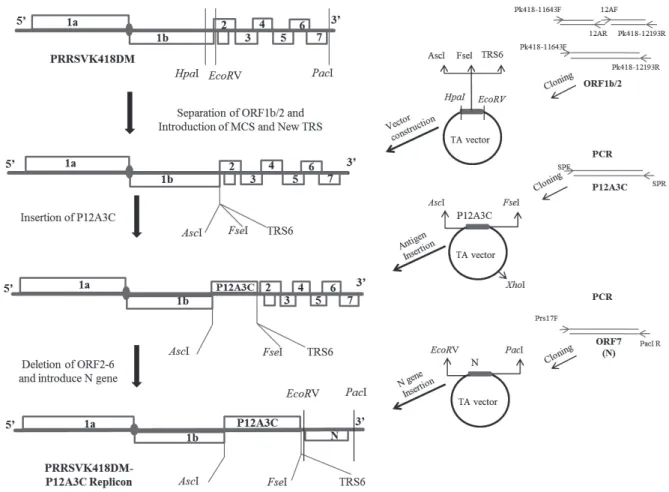
The construct of PRRSV replicon containing FMDVP12A3C was successfully achieved by following three strategies: Con- struction of PRRSVK418DM vector, Insertion of P12A3C be- tween ORF1b/2 of PRRSVK418DM, and the deletion of ORF’s 2 to 6 of PRRSVK418DM. The PRRSVK18DM infectious clone
Fig. 1. Schematic representation of the PRRSVK418DM-P12A3C replicon construction strategy. Porcine reproductive and respiratory syndrome virus (PRRSV) replicon containing FMDVP12A3C was constructed by three strategies: PRRSVK418DM vector construction, P12A3C insertion between ORF1b/2 of PRRSVK418DM, and the deletion of ORFs 2 to 6 of PRRSVK418DM. All the modification was performed by overlap poly- merase chain reaction and direct cloning procedure. The used overlapping primers and flanking primers are mentioned. The italic letters repre- sent the restriction enzymes used for reverse genetic manipulation. PCR, polymerase chain reaction; TRS, transcriptional initiation sequences.
was used for this complete study, and the schematic repre- sentation of the PRRSV replicon containing P12A3C con- struction was mentioned in Fig. 1. PRRSVK418DM is about 19 kbp in size and the complete sequences and restriction enzyme map was obtained. Based on the restriction enzyme sites, we chose enzyme sites HpaI and EcoRV, located at nu- cleotide position 11671 and 12163, respectively. The region between these sites was about 490 bp, and we designed primer set to flank about 570 bp from ORFs 1b and 2. The ORF’s 1b and 2 are non-overlapping and only one nucleotide persists between ORF1 and 2. Moreover, the TRS2 is located on ORF1b and positioned 26 nucleotides upstream from the start of ORF2. The ORF1b/2 junction was modified by intro- ducing multiple cloning sites (AscI-SwaI-FseI), followed by additional TRS6, which is located from 17 nucleotides down- stream of FseI site. The modified junction was ligated back to PRRSVK18DM to enable complete expression vector. Thus, any foreign gene can be inserted using enzymes AscI and FseI.
The gene coding P12A3C was inserted between ORF1b and 2. Thus, TRS2 drive the transcription of P12A3C and the downstream of inserting genes TRS6 will drive the transcrip- tion of ORF2 without any interruption. To construct a repli- con, the clone was further allowed to remove ORF’s 2 to 6 of PRRSVK418. To remove ORFs 2 to 6, the enzyme EcoRV and PacI, located downstream of 3’ UTR region, was chosen. The size between ORFs 2 and 6 was about 2.8 kbp. Therefore, we
have carefully designed a primer containing EcoRV site and primers (PRS17F) flanking PacI regions (PacIR). Eventually, the PRRSV N gene was cut with restriction enzymes (EcoRV and PacI) and replaced into the backbone of PRRSVK418DM.
The restriction enzyme digestion and sequence analysis re- sults was confirmed the manipulation of replicon vector sys- tems. The enzyme EcoRV was located an approximately 90 nucleotides downstream from the starting point of ORF2. Thus, the N gene is added 90 bp an extra from the upstream of the N gene start point. However, the sequence results revealed that it does not affect the expression of N gene. In addition, the orientation of the gene was analyzed by ORF findings, which proved that the sequences were manipulated without changing the amino acids and orientation of ORFs. The ma- nipulated PRRSVK418DM containing P12A3C of FMDV is mentioned as PRRSVK418DM-P12A3C replicon. In the case of replicon, TRS6, which is located at 22 nucleotides down- stream of the P12A3C, will drive the transcription of ORF7 or N gene. The PRRSVK418DM-P12A3C replicon was thought to be the only gene replicative due to the lack of PRRSV struc- tural genes and not possible to form a complete PRRS virus particle.
Expression of FMDV along with PRRSV N protein
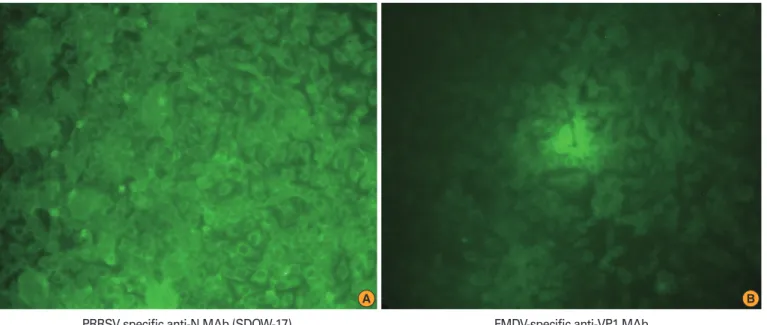
The expression of P12A3C and N gene of PRRSV was con- firmed by immunofluorescence antibody assay (Fig. 2). The Fig. 2. Analysis of foot-and-mouth disease virus (FMDV) and porcine reproductive and respiratory syndrome virus (PRRSV) gene expression without helper virus by immunofluorescence antibody assay. MARC-145 cells were infected with the supernatant from the replicon. At 48 hour postinfection, the cells were processed for indirect immunofluorescence detection using antibodies specific for PRRSV N protein (anti-PRRSV N Ab) (A), FMDV-VP1 (anti-VP1MAb) (B).
PRRSV specific anti-N MAb (SDOW-17) FMDV-specific anti-VP1 MAb
A B
Fig. 3. Identification of the P12A3C expression with helper virus by immunofluorescence antibody assay. MARC-145 cells were co-infected with the supernatant from the replicon and PRRSVK418DM. At 48 hour postinfection, the cells were processed for indirect immunofluorescence de tection using antibodies specific for porcine reproductive and respiratory syndrome virus (PRRSV) N protein (anti-PRRSV N Ab) (A), foot-and- mouth disease virus (FMDV)-VP1 (anti-VP1 (MAb) (B).
PRRSV specific anti-N MAb (SDOW-17) FMDV-specific anti-VP1 MAb
A B
Fig. 4. An alternative analysis of the P12A3C expression with helper virus by immunofluorescence antibody assay. The replicon transfected MARC- 145 cells were directly infected by PRRSVK418DM at 96 hour post-transfection. At 48 hour postinfection, the cells were processed for indirect immunofluorescence detection using antibodies specific for porcine reproductive and respiratory syndrome virus (PRRSV) N protein (anti-PRRSV N Ab), foot-and-mouth disease virus (FMDV)-VP1 (anti-VP1 MAb).
PRRSV specific anti-N MAb (SDOW-17) FMDV-specific anti-VP1 MAb
A B
supernatant from the 96 hour post-transfected cells were col- lected and infected with fresh MARC-145 cells. The cells were indirect-immunostained with a monoclonal antibody against the N protein of PRRSV (SDOW17) and against VP1 protein of FMDV (anti-VP1 MAb) at 48 hour postinfection. The result
shows fluorescence on both VP1 and N proteins and it is con- firmed the expression of both P12A3C protein and N genes.
However, the expression was unclear, because of the replicon particle (RP) does not spread effectively other cells. To con- firm the expression of N gene and P12A3C, We did one step
reverse transcription polymerase chain reaction using specif- ic primers for N gene and VP1 gene (data not shown). Fur- thermore, the cytopathic effect (CPE) was not observed. The immunofluorescence antibody assay (IFA) and CPE observa- tion results revealed that the FMDV structural gene continu- ously expressing in PRRSV replicon but not produce infec- tious particles. On the other hand, the inability of spreading RP or infection of the replicon alone was not able to effective- ly infect neighboring cells, without PRRSV structural protein.
Therefore, the PRRSVK418DM virus was used either to co-in- fected with replicon particles or the transfected cells were in- fected with PRRSVK418DM, which may help to spread into neighbor cells, thus allow the clear picture of P12A3C expres- sion. The co-infected cells were analyzed after 48 hour infec- tion by IFA using anti-N protein and anti VP1 MAb. The IFA results indicate that the inserted P12 A3C express well and spread to other cells with the help of helper virus (Figs. 3, 4).
Thus, the IFA pictures confirmed that the replicon is continu- ally expressing P12A3C as well as N protein of PRRSV in in vi- tro, and possible to spread the cells with the help of the help- er PRRSV.
Discussion
FMD, as a global animal disease, affects millions of animals worldwide. In South Korea, about 3,700 farms had been seri- ously affected due to the serotype O, during November 2010 to April 2011; it was controlled by implementing the emer- gency vaccination program through the supplement of O1 Manisa vaccines [10,29]. However, still unresolved problems remain to develop effective alternative vaccines. Despite, in- activated vaccines have been widely used to control FMD;
there are some drawbacks in inducing long term protection and safety in production. Therefore, the development of new alternative vaccine is essential for an effective control of FMD [1]. To overcome the limitation of inactivated vaccines, a num- ber of novel vaccine strategies have been applied. On the oth- er hand, the concern about escaping viruses from the pro- duction plant and the reversion of inactivated virus are forced to develop novel vaccines with safety.
To concern about the safety, it was thought that the sub- unit vaccines or synthetic peptides might be an alternative for vaccine development. The studies have been reported that the VP1 gene was responsible for the induction of pro- tective neutralizing antibodies [1,30]. Nevertheless, the later studies have proved that the VP1 could show only the partial
protection. Thus, structural characterization has been played important role for the development of complete protection and few studies have been carried out the effect of protection using the complete P1 polyprotein [30,31]. Eventually, the later studies reported that the NS protein 3C plays crucial role in P1 processing and assembly. Subsequent studies, suggest that 3C proteinase (3Cpro) is essential for the processing of capsid precursor, which facilitates to induce neutralizing an- tibodies and a protective immune response. The FMDVP1 along with 3Cpro could induce both humeral and cell mediat- ed immunity [23,32]. Furthermore, the P1 region along with 2A and 3C have also been shown strong protection [21]. There- fore, to concern about the importance of 3Cpro and 2A pep- tide, we designed an antigen P12A3C from serotype O. The P12A3C antigen expression was confirmed by our previous studies (unpublished data). The complete P12A3C is about 3.4 kbp and this poly protein could be expressed as a single protein and the 3Cpro has the ability to auto processing of P1, as a result it can produce complete VLP. However, the large size of P12A3C was not able to accept by all the vector sys- tems. We have tried with our previous studies that the devel- opment PRRSV vector (unpublished data), which could ex- press FMDV antigen, but it was unstable to maintain their large size genome inserts, when allowed for multiple passag- es. However, the large genome size vectors such as adenovi- rus vector or baculovirus vector systems could be possible for express large genome size antigen and could produce VLPs [5,33]). We developed a strategy to express P12A3C in PRRSV vector, which has the limited host specificity and advantages to deliver vaccines for swine. The replicon vector can contin- uously replicate in the transfected cells in the presence of es- sential region comprising in the ORF7 of PRRSV, and the lack of major structural protein of PRRSV. Moreover, the replicon vector system will be more promising with the safety rather than the commercial inactivated vaccines. Furthermore, the replicon virus could be impossible to revert as an emerging complete virus without complete structural protein. There- fore, the replicon vector system will be one of the safest and alternatives for commercial vaccine development in the fu- ture. However, further detailed studies are still required to develop as a complete vaccine and to improve the efficacy of vaccines.
Replication defective, recombinant vector vaccines are one of the key interests in the alternative vaccine development.
For instance, Adenovirus and pox virus have been widely used for the efficient expression of heterologous genes. Adenovirus
5 has the ability to carry about 5-8 kb of foreign genes, which facilitate the production of complete FMDV structural pro- teins [34]. Apart from the adenovirus vector systems, other vector systems have also been developed such as recombi- nant vaccinia virus, fowlpox virus and pseudorabies virus [34]. To control swine viruses, researchers have been attempt- ed PRRSV as recombinant vector vaccines. PRRSV is an en- veloped, single-stranded positive-sense RNA virus, a mem- ber of the order Nidovirales, family Arteriviridae. Moreover, PRRSV is about 15 kb size of RNA virus, thus allows the easier handling and manipulation of their genomes. The natural genetic mutation or deletion of NS protein region 2 (NS2) has been found in the field strain of PRRSV [35]. The natural dele- tions enabled the possibility of insertion of foreign genes or marker genes in the nonessential region of PRRSV NS2. In or- der to develop replication competitive PRRSV recombinant vectors, marker genes such as green fluorescent protein (GFP), enhanced GFP (EGFP) and luciferase have been successfully inserted to the nonessential region of PRRSV NS2. In recent, NP gene fragment of Newcastle disease virus has been insert- ed successfully into the deletion site by reverse genetic ma- nipulation, and found stable expression [36]. Nevertheless, some of the results indicate that the manipulated viruses in NS2 region don’t depict the consistency of foreign gene ex- pression after several passages.
The separation of PRRSV overlapping ORFs has not been interrupted the sub genomic RNA synthesis and the virus replication [37]. The direct insertion of PCV2 genes in the re- gion between ORF1b and 2 failed to express the inserted gene due to the lack of TRS and interruption on subgenomic RNA synthesis. Subsequently, a novel approach attempted by Pei et al. [38], by introducing artificial TRS6, downstream of in- serting foreign genes, enable the stability of inserting genes more than 30 passages, proved the immune response for both PRRSV and inserted foreign gene. Therefore, we chose PRRSV as a vector to insert P12A3C gene between ORF1b and ORF2 and an addition of artificial TRS6, introduced downstream of P12A3C. Before, developing PRRSV replicon vector, we con- firmed our vector system the expression of EGFP, P12A3C and other foreign gene expression from our previous study (unpublished data). The large size of P12A3C genome accom- modation in PRRSV, and the advantages of replicon vector, we tried PRRSV replicon vector to express P12A3C.
Many replicon based vaccines have been under the devel- opment for protecting many diseases including medicine and veterinary medicine. Replicon vectors are derived from either
positive- or negative-strand RNA viruses, and applied to vac- cines and gene therapy. The replicon vector system has a lot of advantages such as safety, high level expression of he tero- logous genes, only cytosolic expression of recombinant pro- teins, unable to spread neighbor cells due to the lack of struc- tural proteins, easy manipulation by reverse genetic systems, multivalent vaccine development and unable to revert to vir- ulence. Furthermore, replicon based vector vaccines possibly can stimulate both the humoral and the cellular mediated immune system [39]. Therefore, we chose the replicon based PRRSV vector system to express FMDVP12A3C protein. In our PRRSV replicon system, we have constructed without PRRSV ORFs 2, 3, 4, 5, and 6, and replaced FMDVP12A3C, which is more or less equal to the size of PRRSV structural protein. Thus, PRRSV replicon can access a large genome size of antigen without any trouble. Our replicon vector is similar like the previous report without ORFs 2 to 6, and the previous reports analyzed heterologous gene expression in both in vitro and in vivo using GFP marker genes [40]. Our results revealed that replicon vector systems confirmed ex- pression of P12A3C in vitro, and we will carry out in vivo stu- dies in future. We believe that the in vivo studies will also pro- duce similar result like previous replicon vector systems [40].
Moreover, the obtained results revealed that the constructed PRRSV replicon express the FMDV antigen in in vitro and the replicon vector strategies are promising for an effective devel- opment of novel vaccines.
References
1. Rodriguez LL, Grubman MJ. Foot and mouth disease vi- rus vaccines. Vaccine 2009;27 Suppl 4:D90-4.
2. Grubman MJ, Baxt B. Foot-and-mouth disease. Clin Mi- crobiol Rev 2004;17:465-93.
3. Pacheco JM, Arzt J, Rodriguez LL. Early events in the patho- genesis of foot-and-mouth disease in cattle after controlled aerosol exposure. Vet J 2010;183:46-53.
4. Sutmoller P, Barteling SS, Olascoaga RC, Sumption KJ. Con- trol and eradication of foot-and-mouth disease. Virus Res 2003;91:101-44.
5. Moraes MP, Mayr GA, Mason PW, Grubman MJ. Early protection against homologous challenge after a single dose of replication-defective human adenovirus type 5 expressing capsid proteins of foot-and-mouth disease vi- rus (FMDV) strain A24. Vaccine 2002;20:1631-9.
6. Bachrach HL. Foot-and-mouth disease. Annu Rev Micro-
biol 1968;22:201-44.
7. Pariente N, Sierra S, Airaksinen A. Action of mutagenic agents and antiviral inhibitors on foot-and-mouth disease virus. Virus Res 2005;107:183-93.
8. Belsham GJ. Distinctive features of foot-and-mouth dis- ease virus, a member of the picornavirus family; aspects of virus protein synthesis, protein processing and struc- ture. Prog Biophys Mol Biol 1993;60:241-60.
9. Grubman MJ, Zellner M, Bablanian G, Mason PW, Picco- ne ME. Identification of the active-site residues of the 3C proteinase of foot-and-mouth disease virus. Virology 1995;
213:581-9.
10. Park JH. Requirements for improved vaccines against foot- and-mouth disease epidemics. Clin Exp Vaccine Res 2013;
2:8-18.
11. Mason PW, Piccone ME, McKenna TS, Chinsangaram J, Grubman MJ. Evaluation of a live-attenuated foot-and- mouth disease virus as a vaccine candidate. Virology 1997;
227:96-102.
12. Almeida MR, Rieder E, Chinsangaram J, et al. Construc- tion and evaluation of an attenuated vaccine for foot-and- mouth disease: difficulty adapting the leader proteinase- deleted strategy to the serotype O1 virus. Virus Res 1998;
55:49-60.
13. Kleid DG, Yansura D, Small B, et al. Cloned viral protein vaccine for foot-and-mouth disease: responses in cattle and swine. Science 1981;214:1125-9.
14. Kleid DG. Using genetically engineered bacteria for vac- cine production. Ann N Y Acad Sci 1983;413:23-30.
15. Bittle JL, Houghten RA, Alexander H, et al. Protection agai- nst foot-and-mouth disease by immunization with a che- mically synthesized peptide predicted from the viral nu- cleotide sequence. Nature 1982;298:30-3.
16. DiMarchi R, Brooke G, Gale C, Cracknell V, Doel T, Mowat N. Protection of cattle against foot-and-mouth disease by a synthetic peptide. Science 1986;232:639-41.
17. Ward G, Rieder E, Mason PW. Plasmid DNA encoding re- plicating foot-and-mouth disease virus genomes induces antiviral immune responses in swine. J Virol 1997;71:7442-7.
18. Wong HT, Cheng SC, Chan EW, et al. Plasmids encoding foot-and-mouth disease virus VP1 epitopes elicited im- mune responses in mice and swine and protected swine against viral infection. Virology 2000;278:27-35.
19. Dus Santos MJ, Wigdorovitz A, Trono K, et al. A novel me- thodology to develop a foot and mouth disease virus (FM- DV) peptide-based vaccine in transgenic plants. Vaccine
2002;20:1141-7.
20. Carrillo C, Wigdorovitz A, Oliveros JC, et al. Protective im- mune response to foot-and-mouth disease virus with VP1 expressed in transgenic plants. J Virol 1998;72:1688-90.
21. Guo C, Zhang C, Zheng H, Huang Y. Recombinant adeno- virus expression of FMDV P1-2A and 3C protein and its immune response in mice. Res Vet Sci 2013;95:736-41.
22. Mayr GA, O’Donnell V, Chinsangaram J, Mason PW, Grub- man MJ. Immune responses and protection against foot- and-mouth disease virus (FMDV) challenge in swine vac- cinated with adenovirus-FMDV constructs. Vaccine 2001;
19:2152-62.
23. Mayr GA, Chinsangaram J, Grubman MJ. Development of replication-defective adenovirus serotype 5 containing the capsid and 3C protease coding regions of foot-and-mouth disease virus as a vaccine candidate. Virology 1999;263:
496-506.
24. Berinstein A, Tami C, Taboga O, Smitsaart E, Carrillo E.
Protective immunity against foot-and-mouth disease vi- rus induced by a recombinant vaccinia virus. Vaccine 2000;
18:2231-8.
25. Zheng M, Jin N, Zhang H, et al. Construction and immu- nogenicity of a recombinant fowlpox virus containing the capsid and 3C protease coding regions of foot-and-mouth disease virus. J Virol Methods 2006;136:230-7.
26. Zhang K, Huang J, Wang Q, et al. Recombinant pseudora- bies virus expressing P12A and 3C of FMDV can partially protect piglets against FMDV challenge. Res Vet Sci 2011;
91:90-4.
27. Li Z, Yi Y, Yin X, Zhang Z, Liu J. Expression of foot-and- mouth disease virus capsid proteins in silkworm-baculo- virus expression system and its utilization as a subunit vaccine. PLoS One 2008;3:e2273.
28. Mohana Subramanian B, Madhanmohan M, Sriraman R, et al. Development of foot-and-mouth disease virus (FM- DV) serotype O virus-like-particles (VLPs) vaccine and evaluation of its potency. Antiviral Res 2012;96:288-95.
29. Park JH, Lee KN, Ko YJ, et al. Control of foot-and-mouth disease during 2010-2011 epidemic, South Korea. Emerg Infect Dis 2013;19:655-9.
30. Sanz-Parra A, Jimenez-Clavero MA, Garcia-Briones MM, Blanco E, Sobrino F, Ley V. Recombinant viruses express- ing the foot-and-mouth disease virus capsid precursor polypeptide (P1) induce cellular but not humoral antiviral immunity and partial protection in pigs. Virology 1999;
259:129-34.
31. Saiz M, Nunez JI, Jimenez-Clavero MA, Baranowski E, So- brino F. Foot-and-mouth disease virus: biology and pros- pects for disease control. Microbes Infect 2002;4:1183-92.
32. Lu Z, Bao H, Cao Y, et al. Protection of guinea pigs and swine by a recombinant adenovirus expressing O sero- type of foot-and-mouth disease virus whole capsid and 3C protease. Vaccine 2008;26 Suppl 6:G48-53.
33. Bhat SA, Saravanan P, Hosamani M, et al. Novel immuno- genic baculovirus expressed virus-like particles of foot-and- mouth disease (FMD) virus protect guinea pigs against challenge. Res Vet Sci 2013;95:1217-23.
34. Zhang L, Zhang J, Chen HT, et al. Research in advance for FMD novel vaccines. Virol J 2011;8:268.
35. Wang FX, Song N, Chen LZ, Cheng SP, Wu H, Wen YJ. Non- structural protein 2 of the porcine reproductive and respi- ratory syndrome (PRRS) virus: a crucial protein in viral pathogenesis, immunity and diagnosis. Res Vet Sci 2013;
95:1-7.
36. Xu YZ, Zhou YJ, Zhang SR, et al. Stable expression of for-
eign gene in nonessential region of nonstructural protein 2 (nsp2) of porcine reproductive and respiratory syndrome virus: applications for marker vaccine design. Vet Micro- biol 2012;159:1-10.
37. Yu D, Lv J, Sun Z, Zheng H, Lu J, Yuan S. Reverse genetic manipulation of the overlapping coding regions for struc- tural proteins of the type II porcine reproductive and re- spiratory syndrome virus. Virology 2009;383:22-31.
38. Pei Y, Hodgins DC, Wu J, et al. Porcine reproductive and respiratory syndrome virus as a vector: immunogenicity of green fluorescent protein and porcine circovirus type 2 capsid expressed from dedicated subgenomic RNAs. Vi- rology 2009;389:91-9.
39. Zimmer G. RNA replicons: a new approach for influenza virus immunoprophylaxis. Viruses 2010;2:413-34.
40. Huang Q, Yao Q, Fan H, Xiao S, Si Y, Chen H. Development of a vaccine vector based on a subgenomic replicon of porcine reproductive and respiratory syndrome virus. J Virol Methods 2009;160:22-8.