Hepatocellular Carcinoma in the Elderly: Clinical Characteristics, Treatment, Survival Analysis in Korean Patients Older than
70 Years
The prevalence of hepatocellular carcinoma (HCC) has increased in recent years. However, HCC remains poorly characterized in elderly patients, and comprehensive data are limited.
This study aimed to investigate the clinical characteristics, prognostic features and survival outcome of elderly HCC patients. We retrospectively analyzed 992 HCC patients treated at Dongsan Hospital from January 2003 to December 2007. The patients were divided into two age groups: < 70 yr (n = 813) and ≥ 70 yr (n = 179). Elderly HCC patients, compared to younger patients, had significantly higher incidence of females (31.3% vs 18.9%, P = 0.001), hepatitis C-related disease (HCV antibody positivity 26.3% vs 9.2%, P = 0.001) and comorbid condition (53.6% vs 32.1%), but lower rates of hepatitis B-related disease (HBs antigen positivity 31.3% vs 69.4%, P = 0.001). There were no significant differences in underlying liver function, stage and survival outcomes. Factors significantly influencing the prognosis of HCC were Child-Pugh grade, number of HCC, level of alpha-fetoprotein, presence of metastasis. The survival outcome of older patients with HCC was not different from that of younger patients. There were no differences between groups in independent factors influencing the prognosis of HCC. Therefore, determining the optimal management strategy for elderly HCC patients is important to improve survival and long-term outcomes.
Key Words: Hepatocellular Carcinoma; Elderly; Survival; Prognosis Yun Jung Kim, Byoung Kuk Jang,
Eun Soo Kim, Woo Jin Chung, Kyung Sik Park, Kwang Bum Cho, and Jae Seok Hwang
Department of Internal Medicine, Keimyung University School of Medicine, Daegu, Korea Received: 10 February 2012
Accepted: 23 July 2012 Address for Correspondence:
Byoung Kuk Jang, MD
Department of Internal Medicine and Institute of Gastroenterology and Hepatology, Keimyung University School of Medicine, 56 Dalseong-ro, Jung-gu, Daegu 700-712, Korea Tel: +82.53-250-7088, Fax: +82.53-250-7088
E-mail: [email protected]
http://dx.doi.org/10.3346/jkms.2012.27.10.1147 • J Korean Med Sci 2012; 27: 1147-1154
INTRODUCTION
Hepatocellular carcinoma (HCC) is an important cause of can- cer-related morbidity and mortality in endemic area of hepati- tis B virus (HBV) infection including Korea. The prevalence of HCC in Korea has increased in recent years, with an increase in the mean age of patients. The high prevalence of HCC and pro- longed life expectancy in the population has led to reconsidera- tion of the treatment strategy in elderly patients, and it is expect- ed that the frequency of treating elderly HCC patients will fur- ther increase in the future. However, HCC remains poorly char- acterized in elderly patients and comprehensive data regarding elderly patients with HCC are limited, even though abundant evidence exists on the significant variance in the prognosis of non-elderly patients with HCC (1). In addition, elderly HCC pa- tients have not been included in many clinical trials to develop standard treatments and there have been only few studies in- vestigating the benefits and risks of treating them (2, 3).
In the present study, we analyzed the clinical characteristics of HCC in elderly patients and compared the prognostic fea- tures and survival outcomes between older and younger HCC
patients.
MATERIALS AND METHODS Patients and study design
We retrospectively analyzed 1,016 patients who were treated of HCC at Keimyung University Dongsan Hospital in Daegu, Korea, from January 2003 to December 2007. Patients who were diag- nosed and treated at other institutions before referral to our cen- ter were excluded. The diagnosis of HCC was made based on the guidelines proposed by the Korea Liver Cancer Study Group (4). Using these criteria, a patient is diagnosed as HCC if who has one or more risk factors (hepatitis B or C virus infection, and/or cirrhosis) and one of the following: a serum alpha-fetoprotein (AFP) level of > 200 ng/mL and a positive result with at least one of the three typical imaging techniques (triple phase computer- ized tomography [CT], contrast enhanced dynamic magnetic resonance imaging [MRI] or hepatic angiography); or a serum AFP level of < 200 ng/mL and positive findings for typical HCC with dynamic CT or MRI is indicative of arterial enhancement followed by venous washout in the delayed portal/venous phase.
The patients were divided into two groups according to their age at the time of HCC diagnosis: the younger group (< 70 yr;
n = 813) and the older group (≥ 70 yr; n = 179). We compared the clinical characteristics, prognostic features and survival out- comes between the two groups.
Methods
Data were collected to evaluate the clinical characteristics of the patients. Data recorded for each patient included sex, age, viral hepatitis B surface antigen (HBs Ag), viral hepatitis C antibody (HCV Ab), AFP values, size and number of tumors, Child-Pugh (C-P) grade, presence or absence of portal vein tumor throm- bosis (PVTT), comorbid condition, performance status by East- ern Cooperative Oncology Group (ECOG) (5), initial therapy and survival. Level of AFP was measured at the time of the ini- tial diagnosis of HCC. The AFP level was divided into two cate- gories: < 400 ng/mL and > 400 ng/mL. The C-P scoring system (6) was used for evaluation of the functional status of the liver.
Medical imaging was based on dynamic contrast CT. According to the maximal tumor diameter, HCCs were classified as tumor diameter < 3 cm or > 3 cm. HCCs were also divided into soli- tary and multiple tumors. The extent of HCC was assessed us- ing the Tumor-Node-Metastasis (TNM) staging system (7) and the Barcelona Clinic Liver Cancer (BCLC) staging system (8).
To evaluate the types of initial treatment, treatment modality was subdivided into six types: 1) transarterial chemoemboliza- tion (TACE); 2) local ablation therapy such as percutaneous eth- anol injection (PEI) and radiofrequency ablation (RFA); 3) local chemotherapy, such as hepatic arterial infusion therapy (HAIT) and concurrent chemoradiotherapy (CCRT); 4) surgical resec- tion; 5) systemic chemotherapy and 6) palliative treatment. If the patient was untreated, the initial treatment modality was regarded as palliative therapy. Treatment related morbidity was defined as any complication within 30 days of treatment and treatment related mortality was defined as death from a com- plication within 30 days of treatment in this present study. Sur- vival and mortality, including cause of death, were investigated by examination of the final medical record. A survival census was performed on 31 July 2011. Survival was defined as the in- terval between the date of HCC diagnosis and either the date of liver-related death or the last follow-up to July 31, 2011. We in- vestigated the cause of death in both groups and separated pa- tients with extrahepatic disease (cardiopulmonary diseases, malignancies in other organ, etc.) from patients with diseases related to the liver (cancer progression, hepatic failure, compli- cation of liver cirrhosis like variceal bleeding and hepatorenal syndrome, etc.).
Statistical analyses
Data management and statistical analyses were performed with SPSS software version 18.0 (SPSS, Chicago, IL, USA). Means and
proportions were calculated for categorical variables. Categori- cal variables were compared between the two groups using the chi-square test. The Student’s t-test was used for comparison of continuous variables, as appropriate. Prognostic indicators of survival were defined by uni- and multivariate analyses. Univar- iate analysis was performed to identify parameters predicting survival by computing the survival curves, according to the Ka- plan-Meier method, and then comparing them using the log- rank test. Multivariate analysis was performed using the Cox proportional hazard regression model, to evaluate the indepen- dent factors predictive of patients’ survival. A P value < 0.05 was considered as statistically significant.
Ethics statement
This study protocol was approved by the institutional review board of Keimyung University Dongsan Hospital (IRB No.11- 180). Informed consent was waived by the board.
RESULTS
Clinical characteristics of patients
Of the 1,016 patients reviewed, 24 patients who were firstly di- agnosed and treated at other institutions were excluded. Of the 992 patients enrolled, 179 (18.0%) patients were aged 70 yr or older. The median age in this older group was 74.0 yr (range 70-91 yr) (Table 1), compared to 57.0 yr (range 30-69 yr) in the younger group. The percentage of female patients was higher in the older group than that in the younger group (31.3% vs 18.9%, P = 0.001). The percentage of patients with HCV infection, as determined by HCV Ab positivity, was also higher in the older group than that in the younger group (26.3% vs 9.2%, respec- tively; P = 0.001). The percentages of comorbid conditions were higher in the older group than those in the younger group (53.6%
vs 32.1%, P = 0.001). In contrast, the percentage of patients with HBV infection, as evident by HBs Ag positivity, was lower in the older group than that in the younger group (31.3% vs 69.4%, P = 0.001). There were no significant differences between the two groups with regard to liver cirrhosis, C-P grade, serum AFP values, TNM stage, BCLC stage, size and number of tumors and presence of PVTT or metastasis, performance status.
Comparison of treatment modalities
Overall, approximately 83.7% of our investigated patients un- derwent not palliative treatment, regardless of age. There were significantly lower rates of treatment in the older group, com- pared to the younger group (73.7% vs 86%, P = 0.001). TACE ac- counted for the majority of treatments and were similarly per- formed in both groups (48.0% vs 53.8%, P = 0.193). The older group received exclusively palliative treatment in 26.3% of the cases, compared to only 14.0% in the younger group (P = 0.001).
Only eight (4.5%) older patients underwent surgical resection,
compared to 12.5% in the younger group (P = 0.001). Local che- motherapy tended to be less performed in older group (2.8% vs 7.1%, P = 0.020) and local ablative therapy tended to be more performed in older group (17.3% vs 11.1%, P = 0.024).
Comparison of treatment-related mortality and complication between the two groups
There was no significant difference in the treatment mortality rates between older group (2.8%) and younger group (1.6%).
There was also no significant difference in the treatment-relat- ed complications between the two groups. The most common complication in both groups was hepatic failure (2.6% for older group vs 2.8% for younger group). In the same respective order with respect to subject group, other treatment-related compli- cations included gastrointestinal bleeding (1.1% vs 1.1%), liver abscess (1.7% vs 1.1%), rupture of HCC (1.1% vs 0.9%) and acute pancreatitis (0% vs 0.4%).
Table 1. Characteristics of old and young HCC patients
Variables Old
(age ≥ 70 yr) (n = 179)
Young (age < 70 yr)
(n = 813)
P value
Median age (yr, range) 74.0 (70-91) 57.0 (30-69) < 0.001
Male/Female, No (%) 123/56
(68.7/31.3) 659/154
(81.1/18.9) < 0.001 HCC cause, No (%)
HBV HCV Alcohol Unknown HBV/HCV
56 (31.3) 47 (26.3) 29 (16.2) 47 (26.3)
0 (0)
564 (69.4) 75 (9.2) 103 (12.7)
66 (8.1) 5 (0.6)
< 0.001
Virus marker HBsAg(+)/HBsAg(-) HBeAg(+)/HBeAg(-) HCVAb(+)/HCVAb(-)
58/118
15/69 49/110
587/204 173/329 77/557
< 0.001 0.004
< 0.001 Liver cirrhosis, No (%)
Positive
Negative 132 (73.7)
47 (26.3) 637 (78.4) 176 (21.6)
0.198
C-P grade, No (%) A
B, C 101 (56.4)
78 (43.6) 435 (53.5) 378 (46.5)
0.508
AFP, No (%) < 400 ng/dL
≥ 400 ng/dL 125 (75.8)
40 (24.2) 519 (69.9) 224 (30.1)
0.155
Diameter of HCC, No (%) ≤ 3 cm
> 3 cm 70 (39.1)
109 (60.9) 349 (42.9) 464 (57.1)
0.359
Number of HCC, No (%) Solitary
Non-solitary 87 (48.6)
92 (51.4) 461 (56.7) 352 (43.3)
0.056
TNM stage I II III IVA IVB
20 (11.2) 61 (34.1) 60 (33.5) 31 (17.3) 7 (3.9)
93 (11.4) 323 (39.7) 239 (29.4) 131 (16.1) 27 (3.3)
0.646
HCC, hepatocellular carcinoma; HBsAg, hepatitis B surface antigen; HBeAg, hepatitis B e antigen; HCV Ab, hepatitis C antibody; HBV, hepatitis B virus; HCV, hepatitis C virus;
C-P grade, Child-Pugh grade; AFP, alpha-fetoprotein; TNM, Tumor-Node-Metastasis; BCLC, Barcelona Clinic Liver Cancer; PVTT, portal vein tumor thrombosis.
Variables Old
(age ≥ 70 yr) (n = 179)
Young (age < 70 yr)
(n = 813)
P value BCLC stage
Very early stage Early stage Intermediate stage Advanced stage End stage
6 (3.4) 27 (15.1)
13 (7.3) 119 (66.5)
14 (7.8)
60 (7.4) 101 (12.4)
44 (5.4) 518 (63.7) 90 (11.1)
0.126
PVTT, No (%) Positive
Negative 43 (24.0)
136 (76.0) 248 (30.5) 565 (69.5)
0.086
Metastasis Positive
Negative 24 (13.4)
155 (86.6) 120 (14.8) 69.3 (85.2)
0.73
Comorbid condition, No (%) Hypertension
Cardiovascular disease Respiratory disease Diabetes mellitus Cerebrovascular disease Chronic renal failure Other malignancy
50 (27.9) 17 (9.5) 16 (8.9) 43 (24.0)
10 (5.6) 3 (1.7) 10 (5.6)
124 (15.3) 16 (2.0) 39 (4.8) 128 (15.7)
16 (2.0) 12 (1.5) 21 (2.6)
< 0.001
< 0.001 0.045 0.012 0.016 0.742 0.054 Performance status, No (%)
0 1 2 3 4
49 (27.4) 60 (33.5) 43 (24.0) 21 (11.7) 6 (3.4)
249 (30.6) 314 (38.6) 165 (20.3) 71 (8.7) 14 (1.7)
0.192
Survival 1-yr 3-yr 5-yr
44.7 27.9 8.9
51.8 26.0 10.8
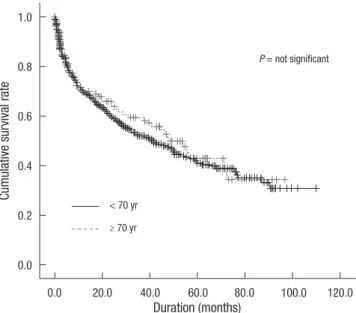
0.469 Fig. 1. Accumulated survival between old (≥70 yr) and young (<70 yr) HCC patients.
HCC, hepatocellular carcinoma.
Cumulative survival rate
Duration (months)
< 70 yr
P = not significant
≥ 70 yr
0.0 20.0 40.0 60.0 80.0 100.0 120.0
1.0
0.8
0.6
0.4
0.2
0.0
Comparison of survival rates between the two groups During the mean follow-up period of 21.6 ± 1.8 months (range, 0.3-96.8 months) in the older group and 23.2 ± 0.9 months (range, 0.3-109.8 months) in the younger group, a total of 138 (13.9%) patients were still alive on 30 June 2011.
No statistically significant difference was found in the sur- vival outcomes between the two groups. The mean survival was 51.3 months (95% CI, 43.5-59.0) in the older group, compared with 52.8 months (95% CI, 48.7-56.8) in the younger group (P = 0.469) (Fig. 1). The overall survival rate at 1-, 3- and 5-yr, in the older and younger groups was 44.7%, 27.9%, and 8.9% vs 51.8%,
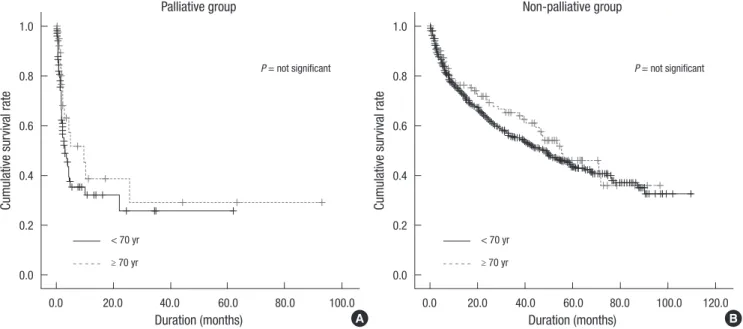
26.0%, and 10.8%, respectively. There was no significant differ- ence in survival outcome between the two groups, when ad- justed for stage of disease (Table 2). There was no significant difference in survival outcome according to age in terms of treat- ment (Fig. 2) and types of treatment (Table 3). However, there was a significant difference in survival outcome depending on treatment between the older and younger groups (Fig. 3).
Factors related to survival
Both univariate and multivariate analyses were employed to identify factors closely related to survival in the older group. In
Fig. 2. Comparison of overall survival between old (≥ 70 yr) and young (< 70 yr) HCC patients according to age in terms of treatment (A) Palliative group. (B) Non-palliative group). HCC, hepatocellular carcinoma.
Cumulative survival rate Cumulative survival rate
Duration (months) Palliative group
Duration (months) Non-palliative group
P = not significant P = not significant
0.0 20.0 40.0 60.0 80.0 100.0 0.0 20.0 40.0 60.0 80.0 100.0 120.0
1.0
0.8
0.6
0.4
0.2
0.0
1.0
0.8
0.6
0.4
0.2
0.0
< 70 yr < 70 yr
≥ 70 yr ≥ 70 yr
A B
Fig. 3. Comparison of overall survival between old (≥ 70 yr) and young (< 70 yr) HCC patients depending on whether treatment (A, old [≥ 70 yr] group; B, young [<70 yr] group).
HCC, hepatocellular carcinoma.
Cumulative survival rate Cumulative survival rate
Duration (months) Duration (months)
P = 0.001
≥ 70 yr < 70 yr
P = 0.001
0.0 20.0 40.0 60.0 80.0 100.0 0.0 20.0 40.0 60.0 80.0 100.0 120.0
1.0
0.8
0.6
0.4
0.2
0.0
1.0
0.8
0.6
0.4
0.2
0.0
Palliative group Palliative group
Non-palliative group Non-palliative group
A B
the univariate Cox regression analysis, the variables associated with survival in the older group included C-P class, TNM stage, BCLC stage, level of AFP, diameter and number of tumors, pres- ence of metastasis and performance of status (Table 4). In the multivariate analysis, C-P class, number of tumors, level of AFP
and presence of metastasis were independent factors associated with survival in older group (Table 5). In the multivariate analysis in younger group, C-P class (P = 0.001), BCLC stage (P = 0.002), level of AFP (P < 0.001), diameter and number of tumors (P = Table 4. Univariate Cox regression analysis of variables associated with survival in old HCC patients
Variables No. of
patients
Survival months, mean
1-/3-/5-yr
survival, % P value Overall 179 51.3 (43.5-59.0) 44.7/27.9/8.9
Sex Male Female
123 56
49.7 (40.9-58.4) 53.0 (39.4-66.6)
44.7/26.8/9.7 44.6/30.4/7.1
0.969
Etiology HBV HCV Alcohol Unknown
56 47 29 47
59.5 (46.1-72.9) 49.4 (35.2-63.6) 46.4 (31.6-61.1) 45.0 (32.2-57.8)
48.2/23.2/7.1 40.4/31.9/10.6
44.8/20.7/6.9 44.7/34.0/10.6
0.489
Liver cirrhosis Positive
Negative 132
47 50.3 (40.6-59.9)
53.7 (41.3-66.0) 40.9/22.0/8.3 55.3/44.7/10.6
0.602
C-P grade A B C
101 64 14
52.7 (43.6-61.9) 52.4 (38.9-65.9) 21.2 (6.5-35.9)
51.5/30.7/10.9 42.2/28.1/7.8
0
< 0.001
AFP < 400 ng/dL
≥ 400 ng/dL 125
40 56.1 (47.5-64.8)
27.4 (14.4-40.4) 55.2/34.4/10.4 17.5/12.5/7.5
< 0.001
Diameter of HCC ≤ 3 cm
> 3 cm 70
109 60.1 (49.3-71.0)
43.6 (33.5-53.7) 65.7/41.4/12.9 31.2/19.3/6.4
0.010
Number of HCC Solitary
Non-solitary 87
92 62.4 (51.9-72.9)
39.3 (29.3-49.4) 49.4/34.5/13.8 40.2/21.7/4.3
0.002
TNM stage I II III IVA IVB
20 61 60 31 7
70.9 (53.1-88.6) 55.7 (44.3-67.2) 44.4 (32.6-56.1) 13.5 (3.3-23.8)
35.7 (20.5-50.9)
80/55/15 54.1/34.4/16.4
48.3/26.7/5 3.2/0/0 14.3/0/0
< 0.001
BCLC stage Very early stage Early stage Intermediate stage Advanced stage End stage
6 27 13 119 14
63.0 (45.8-80.3) 72.5 (56.6-88.4) 34.3 (22.7-45.9) 46.8 (37.5-56.2) 23.3 (7.6-39.1)
66.7/66.7/50 66.7/48.1/14.8
61.5/46.2/0 39.5/23.5/7.6
0
< 0.001
PVTT Positive Negative
43 136
31.3 (18.5-44.1) 53.4 (45.1-61.7)
13.9/9.3/4.7 54.4/33.8/10.3
0.071
Metastasis Positive Negative
24 155
17.1 (5.6-28.7) 53.4 (45.5-61.4)
33.3/0/0 50.9/31.6/10.3
0.002
Performance status 0
1 2 3 4
49 60 43 21 6
68.2 (55.8-80.5) 46.8 (36.3-57.3) 31.7 (20.2-43.3) 32.6 (12.1-53.0) 22.2 (0-45.8)
67.3/44.9/14.3 56.7/38.3/10 20.9/6.9/2.3 9.5/4.8/4.8 33.3/33.3/16.7
0.002
Comorbidity Positive
Negative 96
83 55.8 (45.6-66.0)
44.5 (33.3-55.7) 51.0/35.4/8.3 37.3/19.3/9.6
0.141
HCC, hepatocellular carcinoma; CI, confidence interval; HBV, hepatitis B virus; HCV, hepatitis C virus; C-P grade, Child-Pugh grade; AFP, alpha-fetoprotein; PVTT, portal vein tumor thrombosis.
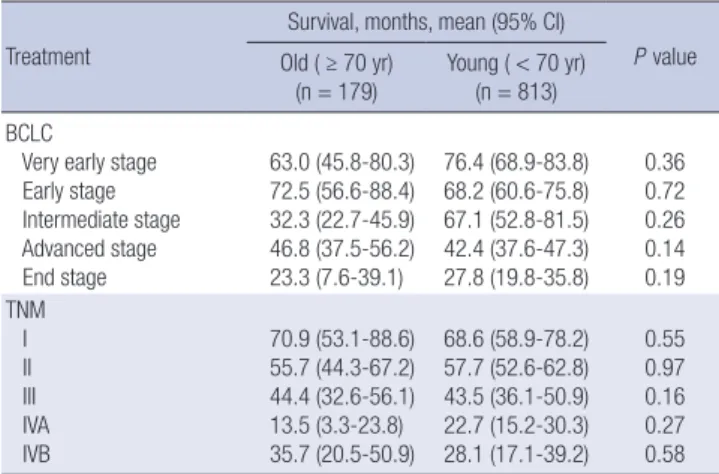
Table 2. Comparison of overall survival in old and young HCC patients according to stage Treatment
Survival, months, mean (95% CI)
P value Old ( ≥ 70 yr)
(n = 179)
Young ( < 70 yr) (n = 813) BCLC
Very early stage Early stage Intermediate stage Advanced stage End stage
63.0 (45.8-80.3) 72.5 (56.6-88.4) 32.3 (22.7-45.9) 46.8 (37.5-56.2) 23.3 (7.6-39.1)
76.4 (68.9-83.8) 68.2 (60.6-75.8) 67.1 (52.8-81.5) 42.4 (37.6-47.3) 27.8 (19.8-35.8)
0.36 0.72 0.26 0.14 0.19 TNM
I II III IVA IVB
70.9 (53.1-88.6) 55.7 (44.3-67.2) 44.4 (32.6-56.1) 13.5 (3.3-23.8) 35.7 (20.5-50.9)
68.6 (58.9-78.2) 57.7 (52.6-62.8) 43.5 (36.1-50.9) 22.7 (15.2-30.3) 28.1 (17.1-39.2)
0.55 0.97 0.16 0.27 0.58 HCC, hepatocellular carcinoma; CI, confidence interval; BCLC, Barcelona Clinic Liver Cancer; TNM, Tumor-Node-Metastasis.
Table 3. Comparison of overall survival in old and young HCC patients according to types of treatment
Treatment
Survival, months, mean (95% CI)
P value Old ( ≥ 70 yr)
(n = 179)
Young ( < 70 yr) (n = 813)
TACE 55.4 (44.0-66.8) 52.4 (46.9-57.8) 0.22
Local ablative therapy PEIT/RFA 53.2 (42.5-63.9) 66.0 (56.1-76.0) 0.50 Local chemotherapy HAIC/CCRT 47.9 (22.2-73.7) 13.2 (8.0-18.4) 0.079 Operation 42.5 (13.2-71.8) 68.4 (60.6-76.3) 0.139 Systemic chemotherapy 6.2 (5.3-7.2) 14.3 (5.6-23.0) 0.954 Palliative therapy 32.0 (12.8-51.2) 18.9 (11.2-26.6) 0.130 HCC, hepatocellular carcinoma; CI, confidence interval; TACE, transarterial chemo- embolization; PEIT, percutaneous ethanol injection treatment; RFA, radiofrequency ablation; HAIC, hepatic arterial infusion chemotherapy; CCRT, concurrent chemora- diotherapy.
Table 5. Prognostic significance of their survival in patients with HCC according to multivariate analysis using Cox proportional hazards regression with older HCC pa- tients
Variables Death, hazard ratio (95% CI) P value
C-P grade*
B vs A C vs A
0.89 (0.49-1.61) 3.72 (1.55-8.91)
0.71 0.003 Diameter of HCC
> 3 cm vs ≤ 3 cm 1.61 (0.93-2.81) 0.09
Number of HCC*
Non-solitary vs solitary 1.77 (1.02-3.07) 0.04 AFP*
≥ 400 vs < 400
2.28 (1.26-4.10) 0.006
Metastasis*
Positive vs negative 0.42 (0.17-0.99) 0.047
*Significant variables in multivariate analysis. HCC, hepatocellular carcinoma; CI, con- fidence interval; C-P grade, Child-Pugh grade; AFP, alpha-fetoprotein.
0.013), presence of metastasis (P = 0.004) and PVTT (P < 0.001) were significantly associated with survival.
Causes of death between the two groups
We investigated the cause of death in both groups and separat- ed patients with not liver related mortality (cardiopulmonary diseases, malignancies in other organs, etc.) from patients with liver related mortality (cancer progression, hepatic failure, com- plication of liver cirrhosis like variceal bleeding and hepatore- nal syndrome, etc.). Non-liver related mortality was higher in elderly patients than that in the younger patients (20.3% vs 9.6%, P = 0.018).
DISCUSSION
There is a worldwide trend toward increased age in patients di- agnosed with HCC (9, 10). The concept of “elderly” has become more difficult to define. The World Health Organization has not determined a standard age for the definition of an elderly pop- ulation, and has recently stated that persons aged over 60 yr could be considered as an aged population (11). However, this criterion cannot be applied to all societies. Aging of the popula- tion has progressed more rapidly in South Korea than in any other country. According to a report of Statistics Korea in 2010, the country has already become an aging society as the rate of population aged over 70 yr was 8.2% and the average life expec- tancy has reached about 80.55 yr. Therefore, we used the cut-off value of 70 yr to divide the patients into the older and younger groups to clarify the characteristics of HCC in older patients. We believe that this allows for more reasonable and meaningful comparison with other previous studies (12-14).
The present study has clarified the clinical features of older HCC patients compared with younger HCC patients. Older pa- tients showed lower rates of HBV-related disease and higher in- cidence of HCV-related disease and female gender, compared to those of younger patients. The incidence of hepatitis-associ- ated etiology and the peak age at disease onset vary according to geographic barriers (15). In the present study, we found age- related difference in the HBs Ag carrier rate, with significant lower incidence in the elderly group. This finding is compatible with results from several previous studies (12, 16). In East Asia, including Korea, patients with HBV-related HCC, predominant- ly transmitted via perinatal infection, are diagnosed at a young- er age than Western patients with HCV-related HCC (17). This could suggest that the mechanisms for carcinogenesis might be different, depending on the etiology and age distribution at HCC diagnosis (15). HBV-related HCC is more aggressive than HCV- related HCC (18), whereas HCV-related HCC may cause gradu- al progression from cirrhosis over the course of two to three de- cades (19). Thus, HCV-related HCC and HBV-related HCC dif- fer not only in origin, but also in the clinical course of disease
progression (20). Establishing a specific strategy for the treat- ment of elderly patients with HCC is more useful than the strat- egy usually followed in younger patients.
The present study found no significant difference in the over- all survival between older and younger HCC patients. In addi- tion, there was no significant difference in the survival outcome according to age in terms of treatment, only a significant differ- ence of survival outcome depending on whether treatment both two groups. Several previous reports support our results. One study (1) investigated the optimal treatment in elderly patients with HCC and reported that advanced stage of HCC, but not advanced age, influenced the survival rate in elderly patients. A Spanish study (21) reported that advanced age seemed to be a prognostic factor of poor survival of HCC, but was not signifi- cant when analyzed by treatment subgroups (P = 0.344). In other words, patient age was not an independent factor related to survival. Our data echo this view. Furthermore, patients of the same age can show individual differences reflecting the de- gree of physical aging. Therefore, elderly HCC patients should be classified into patients fitting the standard treatment (i.e., those who can benefit from treatment) and frail patients fitting the modified treatment (i.e., those who are expected to suffer from either severe complications or side effects following the standard treatments), after assessing their functional age through comprehensive geriatric assessment (CGA). CGA has been wide- ly used to evaluate the actual functional age of elderly patients.
CGA assesses a subject’s condition with various items, includ- ing functional status, comorbid medical condition, cognition, psychological state and nutritional status. In studies using CGA, the survival rate of elderly cancer patients with functional im- pairment was lower, and those with associated disease record- ed increased mortality rates (22-24). However, in the present study, we did not collect sufficient data required to evaluate CGA. Further studies are needed to compare the clinical out- come for management of HCC according to functional age eval- uated by CGA.
Regarding the initial treatment, the older group received ex- clusively palliative treatment in 26.3% of the cases, compared to only 14.0% in the younger group (P = 0.001). In addition, only eight (4.5%) elderly patients underwent surgical resection, com- pared to 12.5% in the younger group (P = 0.001). This suggests that the older group received less intensive/invasive types of treatment although there were no differences between groups in independent factors influencing the prognosis of HCC. It could be interpreted that many elderly patients did not meet the cri- teria for invasive treatment due to other associated conditions and/or they might be given up active treatment due to social convention or cultural background specific for advanced age (1, 13). Presently, however, elderly patients did not show different survival rates compared to the younger patients. In multivariate analysis, C-P class, number of HCC, and presence of metastasis
are significant prognostic factor like those of younger patients.
These results mean that even though elderly patients have more comorbid condition than younger patients, prognosis is only depend on baseline liver function, tumor factor, and whether treatment or not. Another study (25) also reported that elderly patients undergoing treatment did not show different survival rate compared to younger patients, and survival rate depended solely on whether treatment was initiated.
This present study included a relatively large number of HCC patients and a long follow-up period. However, there were also some limitations. First, a selection bias might be present because data was collected from a single center. Second, we used a ret- rospective design. Therefore, many patients were lost follow up and we could not collect enough data to evaluate exact function- al age of elderly patients. Also we could not determine whether comorbid conditions of elderly patients had influence on their treatment decision or not. Third, we analyzed the treatment re- sults based on initial treatment because most patients with HCC were treated various treatment modalities.
In conclusion, the survival outcome of elderly patients with HCC is not different from that of younger patients. In addition, there are not differences between the two groups in indepen- dent factors influencing the prognosis of HCC, such as underly- ing liver function and tumor stage. Advanced age by itself does not have an adverse effect on survival. Therefore, evaluation of basal liver function and HCC itself as well as general status eval- uation for older patients by CGA is necessary to determine the optimal management strategy for elderly HCC patients to im- prove survival and long-term outcomes.
REFERENCES
1. Dohmen K, Shirahama M, Shigematsu H, Irie K, Ishibashi H. Optimal treatment strategy for elderly patients with hepatocellular carcinoma. J Gastroenterol Hepatol 2004; 19: 859-65.
2. Hutchins LF, Unger JM, Crowley JJ, Coltman CA Jr, Albain KS. Under- representation of patients 65 years of age or older in cancer-treatment trials. N Engl J Med 1999; 341: 2061-7.
3. Lewis JH, Kilgore ML, Goldman DP, Trimble EL, Kaplan R, Montello MJ, Housman MG, Escarce JJ. Participation of patients 65 years of age or older in cancer clinical trials. J Clin Oncol 2003; 21: 1383-9.
4. Park JW, Korean Liver Cancer Study Group, National Cancer Center.
Practice guideline for diagnosis and treatment of hepatocellular carci- noma. Korean J Hepatol 2004; 10: 88-98.
5. Oken MM, Creech RH, Tormey DC, Horton J, Davis TE, McFadden ET, Carbone PP. Toxicity and response criteria of the Eastern Cooperative Oncology Group. Am J Clin Oncol 1982; 5: 649-55.
6. Pugh RN, Murray-Lyon IM, Dawson JL, Pietroni MC, Williams R. Tran- section of the oesophagus for bleeding oesophageal varices. Br J Surg 1973; 60: 646-9.
7. Ueno S, Tanabe G, Nuruki K, Hamanoue M, Komorizono Y, Oketani M, Hokotate H, Inoue H, Baba Y, Imamura Y, et al. Prognostic performance
of the new classification of primary liver cancer of Japan (4th edition) for patients with hepatocellular carcinoma: a validation analysis. Hepa- tol Res 2002; 24: 395-403.
8. Llovet JM, Bru C, Bruix J. Prognosis of hepatocellular carcinoma: the BCLC staging classification. Semin Liver Dis 1999; 19: 329-38.
9. Deuffic S, Poynard T, Buffat L, Valleron AJ. Trends in primary liver can- cer. Lancet 1998; 351: 214-5.
10. El-Serag HB, Mason AC. Rising incidence of hepatocellular carcinoma in the United States. N Engl J Med 1999; 340: 745-50.
11. Brubaker TH, Powers EA. The stereotype of “old.” A review and alterna- tive approach. J Gerontol 1976; 31: 441-7.
12. Lee SH, Choi HC, Jeong SH, Lee KH, Chung JI, Park YS, Hwang JH, Kim JW, Kim N, Lee DH, et al. Hepatocellular carcinoma in older adults:
clinical features, treatments, and survival. J Am Geriatr Soc 2011; 59:
241-50.
13. Nomura F, Ohnishi K, Honda M, Satomura Y, Nakai T, Okuda K. Clini- cal features of hepatocellular carcinoma in the elderly: a study of 91 pa- tients older than 70 years. Br J Cancer 1994; 70: 690-3.
14. Poon RT, Fan ST, Lo CM, Liu CL, Ngan H, Ng IO, Wong J. Hepatocellular carcinoma in the elderly: results of surgical and nonsurgical manage- ment. Am J Gastroenterol 1999; 94: 2460-6.
15. Namieno T, Kawata A, Sato N, Kondo Y, Uchino J. Age-related, different clinicopathologic features of hepatocellular carcinoma patients. Ann Surg 1995; 221: 308-14.
16. Dohmen K, Shigematsu H, Irie K, Ishibashi H. Comparison of the clini- cal characteristics among hepatocellular carcinoma of hepatitis B, hepa- titis C and non-B non-C patients. Hepatogastroenterology 2003; 50:
2022-7.
17. Chang PE, Ong WC, Lui HF, Tan CK. Is the prognosis of young patients with hepatocellular carcinoma poorer than the prognosis of older pa- tients? A comparative analysis of clinical characteristics, prognostic fea- tures, and survival outcome. J Gastroenterol 2008; 43: 881-8.
18. Cantarini MC, Trevisani F, Morselli-Labate AM, Rapaccini G, Farinati F, Del Poggio P, Di Nolfo MA, Benvegnu L, Zoli M, Borzio F, et al. Effect of the etiology of viral cirrhosis on the survival of patients with hepatocel- lular carcinoma. Am J Gastroenterol 2006; 101: 91-8.
19. Kiyosawa K, Sodeyama T, Tanaka E, Gibo Y, Yoshizawa K, Nakano Y, Furuta S, Akahane Y, Nishioka K, Purcell RH, et al. Interrelationship of blood transfusion, non-A, non-B hepatitis and hepatocellular carcino- ma: analysis by detection of antibody to hepatitis C virus. Hepatology 1990; 12: 671-5.
20. Teratani T, Ishikawa T, Shiratori Y, Shiina S, Yoshida H, Imamura M, Obi S, Sato S, Hamamura K, Omata M. Hepatocellular carcinoma in elderly patients: beneficial therapeutic efficacy using percutaneous etha- nol injection therapy. Cancer 2002; 95: 816-23.
21. Fernandez-Ruiz M, Guerra-Vales JM, Llenas-Garcia J, Colina-Ruizdel- gado F. Hepatocellular carcinoma in the elderly: clinical characteristics, survival analysis, and prognostic indicators in a cohort of Spanish pa- tients older than 75 years. Rev Esp Enferm Dig 2008; 100: 625-31.
22. Rodin MB, Mohile SG. A practical approach to geriatric assessment in oncology. J Clin Oncol 2007; 25: 1936-44.
23. Extermann M, Overcash J, Lyman GH, Parr J, Balducci L. Comorbidity and functional status are independent in older cancer patients. J Clin Oncol 1998; 16: 1582-7.
24. Audisio RA, Ramesh H, Longo WE, Zbar AP, Pope D. Preoperative as-
sessment of surgical risk in oncogeriatric patients. Oncologist 2005; 10:
262-8.
25. Pignata S, Gallo C, Daniele B, Elba S, Giorgio A, Capuano G, Adinolfi LE, De Sio I, Izzo F, Farinati F, et al. Characteristics at presentation and
outcome of hepatocellular carcinoma (HCC) in the elderly. A study of the Cancer of the Liver Italian Program (CLIP). Crit Rev Oncol Hematol 2006; 59: 243-9.