© 2011 The Korean Academy of Medical Sciences.
This is an Open Access article distributed under the terms of the Creative Commons Attribution Non-Commercial License (http://creativecommons.org/licenses/by-nc/3.0) which permits unrestricted non-commercial use, distribution, and reproduction in any medium, provided the original work is properly cited.
pISSN 1011-8934 eISSN 1598-6357
Fatal Rhabdomyolysis in a Patient with Liver Cirrhosis after Switching from Simvastatin to Fluvastatin
HMG-CoA reductase inhibitors (statins) are widely used to treat hypercholesterolemia.
Among the adverse effects associated with these drugs are statin-associated myopathies, ranging from asymptomatic elevation of serum creatine kinase to fatal rhabdomyolysis.
Fluvastatin-induced fatal rhabdomyolysis has not been previously reported. We describe here a patient with liver cirrhosis who experienced fluvastatin-induced fatal
rhabdomyolysis. This patient had been treated with simvastatin (20 mg/day) for coronary artery disease and was switched to fluvastatin (20 mg/day) 10 days before admission. He was also taking aspirin, betaxolol, candesartan, lactulose, and entecavir. Rhabdomyolysis was complicated and continued to progress. He was treated with massive hydration, urine alkalization, intravenous furosemide, and continuous renal replacement therapy for acute renal failure, but eventually died due to rhabdomyolysis complicated by hepatic failure. In conclusion, fluvastatin should be used with caution in patients with liver cirrhosis, especially with other medications metabolized with CYP2C9.
Key Words: Rhabdomyolysis; Liver Cirrhosis; Simvastatin; Fluvastatin Seung Don Baek1, Sun-Joo Jang1,
So-Eun Park1, Tae Jin Ok1, Jaechan Leem1, Ho-Su Lee1, So Jung Park1 and Tae Hee Kim2
1Department of Internal Medicine, Asan Medical Center, University of Ulsan College of Medicine, Seoul; 2Department of Internal Medicine, Inje University College of Medicine, Busan, Korea Received: 11 July 2011
Accepted: 25 September 2011 Address for Correspondence:
Tae Hee Kim, MD
Department of Internal Medicine, Inje University College of Medicine, 75 Bokji-ro, Busanjin-gu, Busan 614-735, Korea Tel: +82.51-890-6073, Fax: +82.51-892-0273 E-mail: [email protected]
The results presented in this paper have not been published previously in whole or part, except in abstract form. As a conflict of interest, all authors declare that they have no relevant financial interests.
http://dx.doi.org/10.3346/jkms.2011.26.12.1634 • J Korean Med Sci 2011; 26: 1634-1637
CASE REPORT
Nephrology
INTRODUCTION
Statins are used to lower serum cholesterol concentrations in the primary and secondary prevention of cardiovascular disease (1). In randomized trials, the use of statins has demonstrated 30% reductions in atherosclerotic end points without serious morbidity. The pleiotropic effects of statins, indirectly related to cholesterol-lowering activities (2), have also been assessed, mak- ing these drugs more widely accepted in various clinical settings.
Fluvastatin, available as both fluvastatin sodium and fluvas- tatin extended-release, is the first synthetic 3-hydroxy-3-meth- ylglutaryl coenzyme A reductase inhibitor. Because fluvastatin is well tolerated and lacks clinically significant drug-drug inter- actions, it is regarded as one of the safest statins, especially in patients receiving multiple medications (3). Even patients with renal disease, renal transplantation recipients and patients who have undergone PCI can be safely treated with fluvastatin (4).
The most significant adverse effect associated with statins is muscle toxicity. This includes a broad clinical spectrum of dis- orders, from mild and non-specific muscle aches or weakness, through asymptomatic and symptomatic elevation of serum creatine kinase levels, to life-threatening rhabdomyolysis. To
date, few cases of fatal rhabdomyolysis associated with the use of statins have been reported; these include 19 patients taking lovastatin, 3 taking pravastatin, 14 taking simvastatin, 6 taking atorvastatin, and 31 taking cerivastatin, the latter which was with- drawn worldwide (5). There have been no reports to date of fatal rhabdomyolysis associated with the use of fluvastatin. We re- port a case of fluvastatin-induced fatal rhabdomyolysis in a pa- tient with liver cirrhosis; this patient had been switched from simvastatin to fluvastatin 10 days earlier and died due to severe rhabdomyolysis complicated by hepatic failure.
CASE DESCRIPTION
A 56-yr-old man with liver cirrhosis caused by the hepatitis B virus visited our hospital on December 30, 2008 for evaluation of weakness in his lower legs of 1-week duration. He first expe- rienced discomfort and myalgia in his lower legs, which wors- ened over time and made him unable to walk. He had under- gone a percutaneous coronary intervention 10 yr previously at the local hospital and had taken simvastatin (20 mg/day) regu- larly since then. He was diagnosed with Child-Pugh C cirrhosis due to hepatitis B virus a year ago and followed-up at the same
Baek SD, et al. • Fluvastatin-associated Rhabdomyolysis with Liver Cirrhosis
http://jkms.org 1635
http://dx.doi.org/10.3346/jkms.2011.26.12.1634
hospital with stable liver function in a compensated state. Ten days before visiting our hospital, he was switched from simvas- tatin to fluvastatin (20 mg/day) by his doctor, as the patient was concerned about his liver disease. In addition to fluvastatin (20 mg/day), his medications included aspirin (100 mg/day), be- taxolol (10 mg/day), candesartan (16 mg/day), lactulose (30 mL/day), and entecavir (0.5 mg/day) without diuretics or fi- brates. His medical history was significant for no alcohol use and 10 pack-years of smoking, but he had quit smoking 10 yr previously.
The patient’s blood pressure was 122/76 mmHg, his temper- ature was 36.8°C, his pulse was 63 beats/min, weight was 98 kg, and his body mass index was 29.8 kg/m2. He had mild tender- ness of the lower extremities but all other assessments were un- remarkable. Laboratory findings included sodium 125 mM/L, potassium 5.1 mM/L, chloride 97 mM/L, phosphorus 3.1 mg/
dL, CO2 24.4 mM/L, serum creatinine 1.0 mg/dL, blood urea
nitrogen 21 mg/dL, glucose 176 mg/dL, calcium 8.3 mg/dL, phosphorus 3.1 mg/dL, aspartate transaminase 1,303 IU/L (nor- mal < 40), alanine transaminase 354 IU/L (normal < 40), alka- line phosphatase 145 IU/L (normal 40 to 120), total bilirubin 4.6 mg/dL, direct bilirubin 1.4 mg/dL, protein 8.0 g/dL, albumin 2.7 g/dL, and uric acid 3.5 mg/dL. His hematocrit was 38.5%, plate- let count was 80,000/µL, and white blood cell count was 11,100/
µL, with 18.5% lymphocytes, 69.7% polymorphonuclear leuko- cytes, 10.2% monocytes, 1.4% eosinophils, and 0.2% basophils.
His prothrombin time (PT) was 1.78 INR (40.7%) and activated partial thromboplastin time (aPTT) was 36.5 seconds. His total serum creatine kinase (CK) was 36,804 IU/L (normal 50 to 250 IU/L) and his CK-MB was 157.0 ng/mL (normal < 5 ng/mL). Thy- roid function test was within normal limits. Urinalysis revealed no red or white blood cells, positive dipsticks for protein, occult blood, bilirubin and urobilinogen, but negative for glucose. A
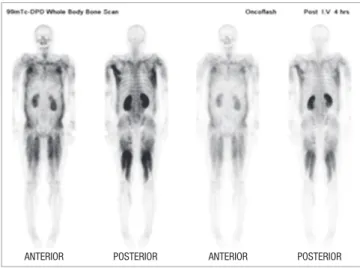
99mTc-diphosphonate scintigram bone scan showed increased uptake over all extremities and muscles of the thorax and abdo- men (Fig. 1).
The patient was diagnosed with fluvastatin-induced rhabdo- myolysis. Treatment with fluvastatin, betaxolol and candesartan was discontinued, and he received massive hydration and urine alkalization. He was treated with intravenous sodium bicarbon- ate (100 mEq in 1,000 mL of half-normal saline at a rate of up to 500 mL/h or 50 mEq/h) titrated to a urine pH > 6.5. He was ad- ministered a 20-80 mg dose of intravenous furosemide to main- tain diuresis. The extent of rhabdomyolysis progressed despite supportive treatment. His CK concentration was increased to 166,160 IU/L, and renal failure occurred. He underwent contin- uous renal replacement therapy on day 7, but his renal function did not recover and hepatic function worsened, with PT pro- longed to 3.8 INR (18%) and total bilirubin increased to 24.5 mg/
dL (Fig. 2). He died due to rhabdomyolysis complicated by he- patic failure on day 15.
Fig. 1. A 99mTc-diphosphonate scintigram bone scan showed increased uptake over all extremities and muscles of the thorax and abdomen.
ANTERIOR POSTERIOR ANTERIOR POSTERIOR
Admission days CRRT
Expired Fresh frozen plasma
transfusion
0 1 2 3 4 5 6 7 8 9 10 11 12 13 14 15
180,000 160,000 140,000 120,000 100,000 80,000 60,000 40,000 20,000 0
4 3.5 3 2.5 2 1.5 1 0.5 0
CK (IU/L) PT (INR)
CK (IU/L) PT (INR)
Fig. 2. Changes in serum CK and PT concentrations during admis- sion. CRRT, continous renal re- placement therapy.
Baek SD, et al. • Fluvastatin-associated Rhabdomyolysis with Liver Cirrhosis
1636 http://jkms.org http://dx.doi.org/10.3346/jkms.2011.26.12.1634
DISCUSSION
Fluvastatin is one of the statins shown to reduce the incidence of vascular events and slow the angiographically demonstrated progression of atherosclerotic disease (4). Since its approval in 1993, fluvastatin has been administered for more than 21 mil- lion patient-years worldwide. Among the statins, fluvastatin has been associated with the fewest cases of rhabdomyolysis. Al- though there was a report of fatal rhabdomyolysis induced by fluvastatin-gemfibrozil combination therapy (6), to our knowl- edge, fluvastatin alone has not been reported to induce fatal rhabdomyolysis.
Our patient had both chronic liver disease and established coronary artery disease, making it difficult to choose the most appropriate type and dose of statin, or even whether to treat with statin. The benefits of statins in lowering cholesterol and prevent- ing heart disease outweigh the potential risks of hepatotoxicity, even in patients with chronic liver disease (7). The National Lipid Association (NLA) expert liver panel has stated that patients with chronic liver disease, nonalcoholic fatty liver disease and non- alcoholic steatohepatitis may safely receive statin therapy, sup- porting no scientific evidence to contraindicate statin use in pa- tients with compensated cirrhosis (8). Literature has also indi- cated that use of statins in patients with hepatitis C infection and primary biliary cirrhosis is safe. Statins have not been shown to worsen the outcome in persons with chronically increased trans- aminase levels due to hepatitis B or C viruses (9). However, the incidence of discontinuations from statins due to hepatotoxici- ty was significantly higher in HBsAg-positive than in HBsAb- negative patients with coronary heart disease (10). Statins are contraindicated in patients with active liver disease or unex- plained, persistent increases in liver function tests.
Except for cerivastatin, all statins have a very low systemic bioavailability owing to their extensive first-pass extraction by the liver. All statins, except for pravastatin, undergo microsomal metabolism by the cytochrome P450 (CYP) isoenzyme systems.
Inhibition of CYP450 isoenzymes by concomitantly interacting drugs can lead to increased plasma concentrations of statins, resulting in myositis and rhabdomyolysis. Fibrates, warfarin, di- goxin and mibefradil have been reported in patients with statin- associated rhabdomyolysis (11). Advanced age, diabetes, chron- ic renal insufficiency, and multiple medications are also associ- ated with increased risks of statin-associated myopathy (9). Our patient, however, was not taking any drugs that interact with statins, nor was he ingesting alcohol. He did not have any other factors including hypokalemia, hypophosphatemia, hypo- or hyperthyroidism, and diuretics that could predispose him to the development of myopathy. No clinically important interac- tions have been observed between statins and other drugs used in cardiovascular diseases, such as propranolol, angiotensin-con- verting enzyme inhibitors, and thiazide diuretics (12).
About half of all statins currently available in clinical practice are biotransformed in the liver, primarily by the CYP450 3A4 sys- tem. Fluvastatin, unlike other statins, is metabolized primarily by the CYP2C9 enzyme in the liver, with CYP3A4 and CYP2C8 contributing to a lesser extent, and is therefore less subject to in- teractions than other statins (13). Thus, fluvastatin has a favor- able adverse effect profile among the statins. As fluvastatin has the shortest elimination half-life of inactive metabolites among the statins and higher liver extraction, however, it results in high liver and peripheral tissue concentration, minimizing the sys- temic burden, instead potentiating hepatocellular injury in se- rious liver disease (6). In a population based cohort study (14), the highest risk of serious liver dysfunction among statins was associated with fluvastatin (hazard ratio 2.53, 95% confidence interval 1.84-3.47), which was significantly higher than that with simvastatin (hazard ratio 1.52, 95% confidence interval 1.38 to 1.66). With regard to this, our patient with liver cirrhosis was sub- ject to serious adverse effects.
Among his medications, betaxolol is metabolized by CYP1A2 and CYP2D6 (15). Candesartan is primarily excreted as un- changed drug (75%) in the urine and feces with a smaller pro- portion (20%-25%) inactivated by CYP2C9. Entecavir and lactu- lose are not substrates for and do not inhibit or induce CYP iso- enzymes. However, the major enzymes involved in glucuroni- dation and hydroxylation of NSAIDs are CYP2C9 (16). There- fore, we could not exclude the possibility that CYP2C9 enzyme in our patient was partially saturated with candesartan and as- pirin or he had genetic variants in CYP2C9, which we could not identify unfortunately.
Statin-associated myopathies are dose-dependent and com- parable among the various statins. Simvastatin is more potent than fluvastatin in lowering cholesterol. At doses of 20 mg/d, simvastatin and fluvastatin can reduce low-density lipoprotein by 30%-40% and 10%-20%, respectively. Lipophilic statins, in- cluding lovastatin, simvastatin, and cerivastatin, also have a great- er potential for muscle toxicity than do hydrophilic statins in- cluding fluvastatin, atorvastatin, and pravastatin owing to their enhanced ability to penetrate myocytes. In our patient, rhabdo- myolysis occurred after switching from a high- to a low-potency statin. It could be preliminarily explained in addition from a re- port that hepatic reactions associated with fluvastatin might be more common and more serious than those caused by other statins (17), especially in patients with hepatic dysfunction. In one third of severe hepatotoxicity associated with fluvastatin, it occurred after < 1 month of therapy.
Fluvastatin is an established treatment for hypercholesterol- emia; its efficacy and safety have been documented in several clinical trials. Rhabdomyolysis associated with fluvastatin is very rare, with the adverse event reporting system of the U.S. Food and Drug Administration showing that only 1.7% of the incidents of statin-associated rhabdomyolysis were related to fluvastatin
Baek SD, et al. • Fluvastatin-associated Rhabdomyolysis with Liver Cirrhosis
http://jkms.org 1637
http://dx.doi.org/10.3346/jkms.2011.26.12.1634
administration. However, our findings indicate that fluvastatin should be used with caution in patients with liver cirrhosis, es- pecially with other medications metabolized with CYP2C9.
REFERENCES
1. Expert Panel on Detection, Evaluation, and Treatment of High Blood Cholesterol in Adults. Executive summary of the third report of the Na- tional Cholesterol Education Program (NCEP) Expert Panel on Detec- tion, Evaluation, And Treatment of High Blood Cholesterol In Adults (Adult Treatment Panel III). JAMA 2001; 285: 2486-97.
2. Suh JW, Choi DJ, Chang HJ, Cho YS, Youn TJ, Chae IH, Kim KI, Kim CH, Kim HS, Oh BH, Park YB. HMG-CoA reductase inhibitor improves endo- thelial dysfunction in spontaneous hypertensive rats via down-regula- tion of caveolin-1 and activation of endothelial nitric oxide synthase. J Korean Med Sci 2010; 25: 16-23.
3. Corsini A, Jacobson TA, Ballantyne CM. Fluvastatin: clinical and safety profile. Drugs 2004; 64: 1305-23.
4. Liberopoulos EN, Daskalopoulou SS, Mikhailidis DP, Wierzbicki AS, Elisaf MS. A review of the lipid-related effects of fluvastatin. Curr Med Res Opin 2005; 21: 231-44.
5. Staffa JA, Chang J, Green L. Cerivastatin and reports of fatal rhabdomy- olysis. N Engl J Med 2002; 346: 539-40.
6. Akoglu H, Yilmaz R, Kirkpantur A, Arici M, Altun B, Turgan C. Combined organ failure with combination antihyperlipidemic treatment: a case of hepatic injury and acute renal failure. Ann Pharmacother 2007; 41: 143-7.
7. Russo MW, Jacobson IM. How to use statins in patients with chronic liv- er disease. Cleve Clin J Med 2004; 71: 58-62.
8. Cohen DE, Anania FA, Chalasani N; National Lipid Association Statin Safety Task Force Liver Expert Panel. An assessment of statin safety by hepatologists. Am J Cardiol 2006; 97: 77C-81C.
9. Pasternak RC, Smith SC Jr, Bairey-Merz CN, Grundy SM, Cleeman JI, Lenfant C; American College of Medicine, Ameican Heart Association, National Heart Lung and Blood Institute. ACC/AHA/NHLBI clinical ad- visory on the use and safety of statins. J Am Coll Cardiol 2002; 40: 567-72.
10. Zhang Q, Yang Z. Can statins be used safely in coronary heart disease patients of hepatitis B virus carriers? Int J Cardiol 2011; 146: 291.
11. Omar MA, Wilson JP. FDA adverse event reports on statin-associated rhabdomyolysis. Ann Pharmacother 2002; 36: 288-95.
12. Bellosta S, Paoletti R, Corsini A. Safety of statins: focus on clinical phar- macokinetics and drug interactions. Circulation 2004; 109: III50-7.
13. Corsini A, Bellosta S, Baetta R, Fumagalli R, Paoletti R, Bernini F. New insights into the pharmacodynamic and pharmacokinetic properties of statins. Pharmacol Ther 1999; 84: 413-28.
14. Hippisley-Cox J, Coupland C. Unintended effects of statins in men and women in England and Wales: population based cohort study using the QResearch database. BMJ 2010; 340: c2197.
15. Zateyshchikov DA, Minushkina LO, Brovkin AN, Savel’eva EG, Zateysh- chikova AA, Manchaeva BB, Nikitin AG, Sidorenko BA, Nosikov VV. As- sociation of CYP2D6 and ADRB1 genes with hypotensive and antichro- notropic action of betaxolol in patients with arterial hypertension. Fun- dam Clin Pharmacol 2007; 21: 437-43.
16. Miners JO, Birkett DJ. Cytochrome P4502C9: an enzyme of major impor- tance in human drug metabolism. Br J Clin Pharmacol 1998; 45: 525-38.
17. Conforti A, Magro L, Moretti U, Scotto S, Motola D, Salvo F, Ros B, Leone R. Fluvastatin and hepatic reactions: a signal from spontaneous report- ing in Italy. Drug Saf 2006; 29: 1163-72.