I. Introduction
Increased longevity with better health and wellbeing is a 21st-century phenomenon to be celebrated. But statisticians and demographers find it difficult to model the needs of an ageing population and its impact on workplace demography and diversity. Aging research is focusing increasingly on the concept of healthy aging and active aging.
Well-being and healthy aging has often been defines as physical and mental health that continues into old age, as well as continued social involvement and meaningful activities (Row and Kahn, 1997). Yanni Hao(2008) reveal that concurrent participation in paid work and volunteering has protective effects against mental health decline for old adults.
Therefore, active aging allows people to realize their potential for physical, social and mental well-being and to participate in society according to their needs, desires, and abilities. Social activity participation and social engagement can maintain social network of old people in their life.[1] This social interaction can result in improving human capital and making social capital. It is need to explore effects on healthy aging in social activity participation for the elderly. The purpose of this research is to test factor relationships among health status, self-esteem, mental health, and healthy aging in the social activity participated elderly and the non-participatd elderly.
The Empirical Study for Well-Being and Healthy Living of the Korean Elderly
1)Kyung-Woo Kim*
Abstract
The old people's feelings, emotions, and self-evaluative judgements fluctuate overtime. The purpose of this paper is to proof relations among well-being factors in social activity. Major results of this paper was as follows. First, the social activity participated elderly had higher health status, self-esteem, mental-health, and successful aging than the non-participated elderly. Second, self-esteem and mental health were exposed as important variable for all of the two groups to improve the successful aging. Thus, self-esteem and mental health can become significant indicator of self-empowering and psychological resilience. Third, the strongest total causal effect of successful aging was health status in social activity participated elderly, while self-esteem was the greatest total causal effect of it in the non-participated elderly. Health status had higher indirect effect of successful aging than direct effect of it in both of them.
▸Keyword :Elderly Well-Being, Healthy Living, Mental Health, Self-Esteem
∙First Author: Kyung-Woo Kim
*Kyung-Woo Kim([email protected]), Dept. of Addiction Rehabilitation Social Welfare, Eulji University
∙Received: 2015. 06. 15, Revised: 2015. 06. 19, Accepted: 2015. 07. 01.
II. Theory & Related Works
Healthy ageing is about optimising opportunities for good health, so that older people can take an active part in society and enjoy an independent and high quality of life. Ageing is not necessarily a burden, and it does not necessarily decrease a person's ability to contribute to society.[3] older people can make valuable and important contributions to society, and enjoy a high quality of life.
By showing practical proofs of healthy aging in Korea, and making available useful information about healthy ageing, we hope that healthy ageing. builds awareness of the steps required to make healthy ageing a reality. With regard to combing volunteering with other social roles, some researchers have called 'complimentary effect of volunteering(Oman, Thoresen, and McMahon, 2000). Li and Ferraro(2006) found that volunteers tend to be healthier and more socially integrated individuals. The altruistic nature of volunteering offers a way of gaining social approval in addition to improving self-esteem(Siegrist, Knesebeck, and Dollack, 2004). [2]
Social activity and engagement can positively. Social activity and engagement can positively effect on psychological well-being stemming from a sense of satisfaction with one's life is not enough to define healthy aging. Identities as situated self-meanings are responsive to variations in individual behaviors, as well as the actual and perceived responsive of others, whereas self-esteem tends to be more stable and resilience to change(Donald and Elizabeth, 2006). Cast and Burke(2002) suggested that self-esteem is animportant outcome of the active process by which individuals strive to validate and enhance positive identities. Through reflected appraisals and social comparison processes, individuals seek to confirm their identitieswith a positive sense of self-esteem. Li and Ferraro(2005) found that depression may promote voluntary participation in later life overcoming negative effects. [3]
Ⅲ. Methods
1.Data collection and sample descriptive
Question from investigation were used to collect data
with respect to health status, self-esteem, mental health, and healthy aging for the elderly. A structured questionnaire was used to interview a sample 360 elderly over 65years old, who live in capital area, South Korea.
This investigation was conducted to March 31 from Jan.
10, 2015. Sixty percents of the respondents were elderly women, while elderly men were forty percents. The mean of old people was 74 years old (SD:5.90, Range: 65~82) 58 percents of respondents were social activity participated elderly, while non-participated elderly were 42 percents.
2. Measures
1) Dependent variable: Successful Aging
This scale is derived from Kim, M.H. & Shin, K.L.
2005's Korean successful aging scale.[2] This compute scale consisted of ‘Life that feel self-efficacy'(13 item), 'Life that is company self-satisfaction betweencouple'(3 item), and 'Life that do will self-control'(6 item). This scale is measured on a 5-point likert scale from 1 'absolutely disagree' to 5 'absolutely agree'. The higher the score, the greater successful aging level. The internal consistency for this scale, as measured by Cronbach's alpha was .88.
2) Independent variable (1) Health Statis
Heal status is measured perception of the overall health status. 'Do you feel that how you are healthy?' This scale was measured on a 5-point likert scale from 1 'terrible' to 5'best'. The higher the score, the greater perception og the overall health status level.
(2) Self-esyeem
This scale is derived from Rosenberg(1976)'s self esteem scale, which has proven to be a desirable measure of a person's assesment of self.[4] This composite scale was consisted of 10items of self-esteem measured on a 5-point Likert scale from 1 ' strongly disagree' to 5 'strongly agree', Negative 5 items of this scale were recoded adversely. The higher the score, the greater self-esteem level. [5] The internal consistency for this scale, as measured by Cronbach's alpha was .91.
(3) Mental Health
This scale is derived from Shin, S.I(2003)'s
Variable participated non-participated
χ2
M(SD) M(SD)
Health Status 3.03(.71) 2.55(.95) 4.23***
Self-esteem 34.225(6.32) 32.138(6.26) 2.65**
Mental Health 12.34(4.52) 10.78(4.87) 2.73**
Well-being
Aging 19.50(5.86) 17.58(6.16) 2.72**
Variable Correlation
Coefficient Variable Correlation Coefficient
HS-SE .43(.43) SE-MH .54(.47)
HS-MH .66(.37) SE-WA .59(.52)
HS-WA .57(.33) MH-WA .55(.53)
KGHQ-20(Korean General Health Questionnaire-20). This composite scale consisted of 'anxiety'(5items), ''depression' (5items),'social maladaptation' (9items), and 'frequency of going out'(1item). This scale as comoosed of 20 items measured on a 2-point likert scale(1='absolutely disagree' or 'disagree', 2='absolutely agree' or 'agree'). The higher the score, the greater general mental health level. The internal consistency for this scale, as measured by Cronbsch's alpha, was .83.
3. Research Model
This paper was conceptualized the framework of health status, and well-being aging. The following hypotheses are tested in this research.
H1: Self-esteen would be positively influenced by health status.
H2: Mental health would be positively influenced by health status and self-esteem.
H3: Well-being aging would be positively influenced by health status, self-esteem, and mental health.
H4: Data analysis of direct and indirect effects will show that health status, self-esteem, mental health are significant variable intervening between cause and effect in a model.
Statistics analyses for this study included t-test.
Pearson's product moment correlation, Hierarchical regression, and path analysis.[5] Path analysis was used in order to examine the casual relationships among health ststus, self-esteem, mental health, and well-being aging.
SPSS for the WIN 17.0 program was used for these analyses.
Ⅳ. Results and Discussion
1. The Characteristics of Variables
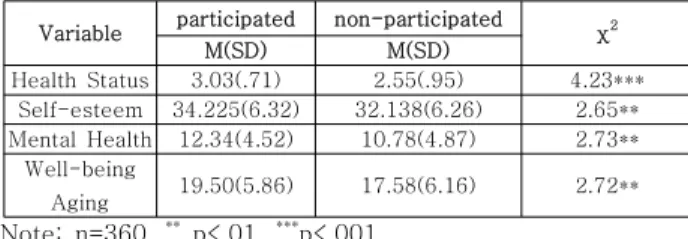
Table 1. presents the characteristics of variables.
For the social activity participated elderly had higher health status, self-esteem, mental health, and well-being aging than the non-participated elderly. [6]
Table 1. presents the characteristics of variables
Note: n=360, ** p<.01, ***p<.001
2. Correlations among Variables
Table 2 presents correlation matrix among selected variables. Health status, self-esteem, mental health were significantly and positively related to well-being aging in both the social activity participated elderly and the non-participated elderly. Self-esteem was highest correlation with well-being aging in the social activity participated elderly. Otherwise, for the non-participated elderly, the greatest correlation with well-being aging was mental health.
Table 2. Pearson's Correlation of Variables
Note: n=360, ***p<.001, ( ); non-participated
HS: Health Status, SE: Self-esteem, MH: Mental Health WA: Well-being Aging
3. The Hierarchical Regression Results
Table 3 and Table 4 present the results of hierarchical regression analyses. In order to evaluate the unique of health status, self-esteem and mental health individually, the hierarchical regression model, was used in this study.
In the first regression equation of the path model, health status was entered. Both the social activity participated elderly and the non-participated elderly, health status(β
=.42;β=.44)had significant and positive effects on the self-esteem. The respondents who perceived that they had higher health status had greater self-esteem in two groups. The result supports that hypothesized relationships among health status and self-esteem(H1) in two groups. Self-esteem was entered in the second regression analysis. Health status (β=.44;β=.43)had significant and positive effects on the mental health in both the social activity participated elderly and the non-participated elderly. The respondents who perceived that they had higher health status and greater
Variable Model 1 Model 2 Model 3
B β VIF B β VIF B β VIF
Health status 3.64 .44*** 1.00 2.97 .48*** 1.21 1.86 .25** 1.64
Self-esteem .22 .30*** 1.21 .38 .44*** 1.39
Mental Health .26 .22* 1.84
R2(Adjusted) .16 .47 .48
F-value 28.24*** 57.31*** 44.15***
D-W 1.65 1.97 1.85
Con 24.22 -4.32 -2.55
Variable Model 1 Model 2 Model 3
B β VIF B β VIF B β VIF
Health status 3.14 .43*** 1.00 1.03 .17* 1.24 .37 .05 1.89
Self-esteem .31 .42*** 1.24 .32 .34*** 1.38
Mental Health .44 .37*** 1.43
R2(Adjusted) .17 .28 .36
F-value 43.20*** 30.65*** 32.66***
D-W 2.13 1.65 2.06
Con 24.36 -2.23 1.37
self-esteem had higher mental health. The R-square for this equation was .16 and .17 individually the social activity participated elderly and the non participated elderly. This result supports that hypothesized relationships among health status and self-esteem(H1) in two groups. Self-esteem was entered in the second regression analysis. Health ststus(β=.42;β=.17) and self-esteem(β=.30;β=.42)had significant and positive effects on the mental health in both the social activity participated elderly and the non-participated elderly. The respondents who perceived that they had higher health ststus and greater self-esteem had higher mental health.
The R-square for this equation was .47 and .28 individually the social activity participated elderly and the non-participated elderly. This result supports that hypothesized relationships among health status, self-esteem, and mental health(H2) in two groups.
Influences of variables appeared as two groups differ. In case of the social activity participated elderly, influence of health status was more than influence of it in the non-participated elderly. Otherwise, for the non-participated elderly, influence of self-esteem was higher than influence of it in the social activity participated elderly. This result showed that health status and self-esteem are important predicator for improving mental health in social activity elderly and non-participated elderly respectively. Mental health was entered in the third regression analysis. For the social activity participated elderly, health status(β=.25), self-esteem(β=.44), and mental health(β=.22) were significant and positive effects on the successful aging.
The respondents who perceived that they had higher health status, greater self-esteem, and higher mental health had higher successful aging. The R-square for this equation was .48. This result supports that hypothesized relationships among health status, self-esteem, mental health and successful aging(H3). Self-esteem (β=.34) and mental health (β=.37) were significant and positive effects on the successful aging, but health status was not significant effect on the successful aging in the non-participated elderly. The respondents who perceived that they had higher self-esteem greater mental health had higher successful aging. This result showed that there is different predictor to enhance of successful aging.
Table3. The Hierarchical Regression for Casual model(participated)
Note: n=360, *p<.05,*p<.01;*p<.001
Table 4. The Hierarchical Regression for Casual model(non-participated)
Note: n=360, *p<.05,***p<.001
4. The Direct and Indirect Effect of Successful Aging
Table4 presents the direct and indirect effect of successful aging. Three regression equations were used to determine the indirect effects among the variables. The decomposition of total effects into direct and indirect effect was presented in Table 4. Health status had higher indirect effect than direct of successful aging in both the social activity participated elderly and the non-participated elderly. This result showed that health status appeared to be important intervening variable in the elderly. Thus, hypothesis 4 was supported. The strongest total causal effect of successful aging was health status in the social activity elderly, while the greatest total causal effect of the non-participated elderly was self-esteem. Both the social activity participated elderly and the non-participated elderly, mental health was the strongest effect of successful aging. The greatest total effect of successful aging was self-esteem in social activity elderly, while mental health was the strongest total effect in case of the non-participated elderly. [7]
Ⅴ. Conclusion
The purpose of this paper is to test healthy livingl model for successful aging in social activity participated elderly and the non-participated elderly. Major results of this study was as follow: First, the social activity participated elderly had higher health status, self-esteem, mental-health, and successful aging than the non-participated elderly. Thus, to enhance successful aging of the social activity participated elderly, it is need to keep social activity participation and discovers own value and potential. Also, for the non-participated elderly, first of all, we need to investigate reasons (spontaneous and non-spontaneous) which they don't social activities.
Second, self-esteem and mental health were exposed as important variable for all of the two groups to improve the successful aging. Thus, self-esteem and mental health can become significant indicator of self-empowering and psychological resilience. Therefore, alternatives that can improve self-esteem and mental health should be sought for two groups. But the strongest predictor of the successful aging appeared as two groups differ.[7]
Self-esteem was the strongest predictor of the successful aging for the social activity participated elderly.
Otherwise, mental health was the strongest predictor of the successful aging for the non-participated elderly. [8]
Third, the strongest total causal effect of successful aging was health status in social activity participated elderly, while self-esteem was the greatest total causal effect of it in the non-participated elderly. Health status had higher indirect effect of successful aging than direct effect of it in both of them. This result support this hypothesized model in the social activity participated elderly and the non-participated elderly. But future research needs to test a casual model for successful aging in other countries. [9] First, successful aging is human rights. It is need to promote self-health care and health services, activity and social interaction, and mental health, regardless of physical and cognitive function.
Therefore, we need to improve various social activities and engagement on the basis of positive image of aging and get rid of aging myths because successful aging is a talk of all generations. [10]
Second, successful aging is cooperative efforts. This is required joint efforts of old people, family, community, and nation. Family cohesion and adaptation ability are required too important for old people who social
interaction is less. Community should offer informations and opportunities to old people who want social activity on the basis of the aging friendly community. Third, successful aging is human capital. In order to enhance of successful aging, it is need to keep social activity interactions and discovers own potential and improves mental health along with this. These efforts will produce various social capital in community. The findings of this study will provide useful information for social workers who develop programs to help the old people increase successful aging through perception of health status, positive assessment of self, improvement of mental health.
REFERENCES
[1] Ko, C. F., Who takes care of the elderly?
Companion of supporting attitude in European Union Countries, Journal of population Studies, 24, 1-32, 2011.
[2] Wang, Y. T. Factors Associated with Health-related quality of Life Indications among Community dwelling Frail Elders, New York: Columbia University, Ph.D. Dissertation, 2011.
[3] Herr, S. S., & Weber, G., Aging, rights, and quality of life, Paul H. Brookes Publishing Co., Inc. 2012.
[4] Yang, C. L., Living arrangement of the elderly:
number of children and factors associated with tendency of living together, Journal of Population Studies, 20, 161-181, 2010.
[5] Chiu, I. W., Where to go for long term care for the elderly in family change, Community Development Journal , 106, 168-182, 2012.
[6] Fisher, B. J., Successful aging, life satisfaction, and generatively in later life, International Journal of Aging and Human Development, 41, 243-256, 2009.
[7] Gerfein, A. J., & Herzog, W. R., Robust aging among the young-old, old-old and oldest old, Journal of Gerontology, 52B, S77-S86, 2012.
[8] Hardy, S. E., Concaco, J., &Gill, T.M,, Resilience of community dwelling older persons, Journal of the American Gerianrics Society, 52, 265-272, 2013.
[9] Humpreys, J., Research in sheltered battered women, Issues in Mental Health Nursing, 24, 163-174, 2013.
[10] Owens, T. J., Self and identity, Handbook of social psychology, 215-231, New York, NY: Kluwer Academic/ Plemum Publishers, 2012.
Authors
Kyung-Woo Kim received the B.S., M.S.
and Ph.D. degrees in Management Information System(PA) from Kook Min University, Korea, in 1985, 1988 and 1991, respectively
Dr. Kim joined the faculty of the Department of Office Automation (MIS) at Eulji University, Seoul, Korea, in 1992. He is currently a Professor in the Department of Addiction Rehabilitation Social Welfare, Eulji University. He is interested in business information system, internet and mobile welfare information system, addiction and big data computing.