Effect of conjugated linoleic acid in diacylglycerol-rich oil on the lipid metabolism of C57BL/6J mice fed a high-fat high-cholesterol diet
Jeung Hee Lee1, Kyung-Hyun Cho2, Ki-Teak Lee3*
1Department of Food and Nutrition, Daegu University, Gyeongsan 712-714, Korea
2School of Biotechnology, Yeungnam University, Gyeongsan 712-749, Korea
3Department of Food Science and Technology, Chungnam National University, Daejeon 305-764, Korea
Received on 7 February 2014, revised on 19 March 2014, accepted on 21 March 2014
Abstract : The effect of conjugated linoleic acid (CLA) isomers esterified in diacylglycerol (DAG)-rich oil on lipid metabolism was investigated. Since dietary DAG has been known to induce the regression of atherosclerosis, CLA-DAG and olive-DAG oils containing similar levels of DAG (51.4~54.2%) were synthesized from olive oil. Hyperlipidemic C57BL/6J mice were then fed high-fat high-cholesterol diets supplemented with these oils (5% each) for 7 wk. The CLA-DAG diet containing 2.1% CLA isomers (0.78% c9,t11-CLA; 1.18% t10,c12-CLA) remarkably increased the levels of total plasma cholesterol and glutamic oxaloacetic transaminase (GOT) along with hepatic cholesterol and triacylglycerol (TAG) contents. Furthermore, the CLA-DAG diet inhibited fat uptake into adipose tissue whereas fat deposition (especially in the liver) was increased, resulting in the development of fatty livers. Hepatic fatty acid composition in the CLA-DAG mice was different from that of the olive-DAG mice, showing higher ratios of C16:1/C16:0 and C18:1/C18:0 in the liver.
The activity of hepatic acyl-CoA:cholesterol acyltransferase (ACAT) was higher in CLA-DAG mice while plasma lecithin:cholesterol acyltransferase (LCAT) activity and the ferric reducing ability of plasma (FRAP) were lower in CLA-DAG mice compared to the olive-DAG animals. Results of the present study suggest that CLA incorporation into DAG oil could induce atherosclerosis in mice.
Key words : Cholesterol acyltransferase, Conjugated linoleic acid, Diacylglycerol-rich oil, Olive oil
*Corresponding author: Tel: +82-42-821-6729 E-mail address: [email protected]
I. Introduction
Conjugated linoleic acid (CLA), found predominantly in meat and dairy products, is a mixture of positional and geometric isomers of linoleic acid (C18:2) that contain conjugated double bonds with cis and trans combinations. Beneficial effects of CLA that provide protection against atherosclerotic disease have been reported in animal models. Diets containing <1% CLA improve serum lipid profiles with reduced levels of total cholesterol and triacylglycerol (TAG), and decrease aortic fatty streak formation in mice, hamsters, and rabbits (Munday et al., 1999; Gavino et al., 2000; Wilson
et al., 2000; Kritchevsky et al., 2002). However, some deleterious effects that lead to the development of fatty liver and hyperinsulemia have also been observed.
Studies demonstrated that feeding CLA to mice for prolonged periods or at high concentrations induces the accumulation of TAG in the liver by increasing the synthesis of hepatic fatty acids (Javadi et al., 2004), thereby resulting in a fatty liver (Nakanishi et al., 2004). Among the CLA isomers, diets rich in t10,c12-CLA have pro-atherogenic effects on mice (Arbones-Mainar et al., 2006) whereas c9,t11-CLA inhibits the ath- erogenic process in hyperlipidemic hamsters (Valeille et al., 2005). A meta-analysis of 18 eligible human- based studies showed that 3.2 g CLA/d leads to a modest reduction in human body fat (Whigham et al., 2007).
Diacylglycerol (DAG) is an intermediate product of TAG digestion and absorption, and is found as a natural component of plant-derived edible fats and oils. DAG metabolic characteristics are distinct from those of TAG. Diets containing DAG prevent the accumulation of body fat in animals and humans because DAG tends to be oxidized for energy rather than stored as a fat. DAG also affects lipid metab- olism by lowering postprandial plasma TAG levels that promote atherogenesis (Tada et al., 2003). Ota et al. (2007) showed that dietary DAG induces the regression of atherosclerosis because total levels of cholesterol and low density lipoprotein (LDL) along with the development of aortic atherogenic lesions were significantly reduced in DAG-fed rabbits compared to TAG-fed animals.
Dietary oils containing high levels of DAG (mostly sn-1,3) are produced by lipase-catalyzed glycerolysis of edible oils and glycerol from which sn-2 monoa- cylglycerol (MAG) is an expected by-product (Lee et al., 2007). MAG has been found to inhibit fatty acid uptake into rat and human intestinal cells (Murota et al., 2001). However, the underlying mechanism is not fully understood. According to a previous study in mice, DAG-rich oil (40% DAG) synthesized from corn oil has in vivo anti-atherosclerotic effects against acylCoA:cholesterol acyltransferase (ACAT), an atherogenic factor (Cho et al., 2006).
The effects of CLA incorporated into DAG-rich oils on animals have not been extensively explored. Therefore, in the present study CLA-DAG oil and olive-DAG oil were synthesized by an enzyme-catalyzed two-step reaction from olive oil with or without CLA isomers, and then with glycerol. Hyperlipidemic C57BL/6J mice were then fed a high-fat high-cholesterol diet (15%
fat/1.2% cholesterol) supplemented with 5% olive-DAG oil, CLA-DAG oil, or olive oil (olive-TAG) for 7 weeks.
Effects of the CLA isomers on lipid profiles, antioxidant activity, and in vivo enzyme activities in the plasma and livers of the mice were then evaluated.
II. Materials and methods
1. Materials
CLA fatty acid mixture comprising 94% of total CLA isomers produced from safflower oil was a gift from Livemax Co. (Sungnam, Korea). The main isomers were cis-9,trans-11 CLA (36.5%) and trans-10,cis-12 CLA (54.5%); 3.3% were other CLA isomers. Olive oil was provided by C.J. Co. (Seoul, Korea) and immobilized enzyme from Rhizomucor miehei (Lipozyme RM IM) was purchased from Novozymes Inc. (Copenhagen, Denmark).
2. Synthesis of DAG-rich oils
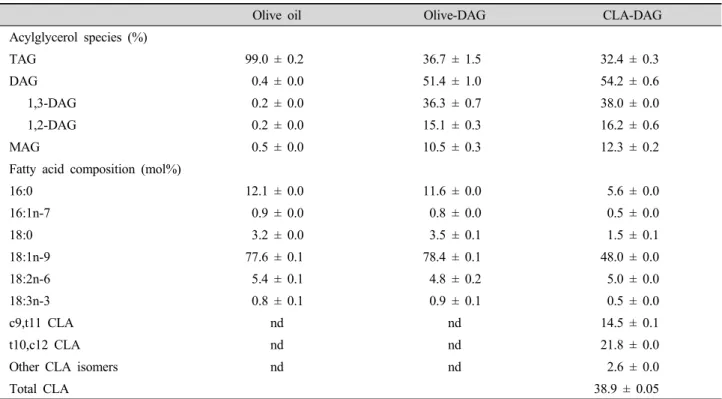
TAG containing CLA (CLA-olive oil) was prepared by a Lipozyme RM IM-catalyzed reaction of olive oil and a mixture of CLA isomers. To synthesize DAG-rich oils (olive-DAG and CLA-DAG oils), olive oil or CLA-olive oil (each 250 g) and glycerol (13 g) were blended in a 2:1 molar ratio, and interesterified by Lipozyme RM IM (5% of the total substrate weight) in a 1-L stirred-tank batch-type reactor at 300 rpm for 48 h at 60℃. After the reaction was complete, the reactant was filtered under vacuum to remove the enzymes. Hexane was added and the reactant was centrifuged at 3400 rpm for 15 min to remove the unreacted glycerol. The upper hexane phase was passed through an anhydrous sodium sulfate column, and the excessive hexane was evaporated in a rotary evaporator and dried with nitrogen gas. Composition of the fatty acids and acylglycerols in the oils was determined as previously described (Cho et al., 2006) and is presented in Table 1.
3. Animals and diets
Male C57BL/6J mice (5 wk old) were obtained from the animal facility of the Korea Research Institute of
Table 1. Acylglycerol and fatty acid composition of the experimental oils.
Olive oil Olive-DAG CLA-DAG
Acylglycerol species (%)
TAG 99.0 ± 0.2 36.7 ± 1.5 32.4 ± 0.3
DAG 0.4 ± 0.0 51.4 ± 1.0 54.2 ± 0.6
1,3-DAG 0.2 ± 0.0 36.3 ± 0.7 38.0 ± 0.0
1,2-DAG 0.2 ± 0.0 15.1 ± 0.3 16.2 ± 0.6
MAG 0.5 ± 0.0 10.5 ± 0.3 12.3 ± 0.2
Fatty acid composition (mol%)
16:0 12.1 ± 0.0 11.6 ± 0.0 5.6 ± 0.0
16:1n-7 0.9 ± 0.0 0.8 ± 0.0 0.5 ± 0.0
18:0 3.2 ± 0.0 3.5 ± 0.1 1.5 ± 0.1
18:1n-9 77.6 ± 0.1 78.4 ± 0.1 48.0 ± 0.0
18:2n-6 5.4 ± 0.1 4.8 ± 0.2 5.0 ± 0.0
18:3n-3 0.8 ± 0.1 0.9 ± 0.1 0.5 ± 0.0
c9,t11 CLA nd nd 14.5 ± 0.1
t10,c12 CLA nd nd 21.8 ± 0.0
Other CLA isomers nd nd 2.6 ± 0.0
Total CLA 38.9 ± 0.05
Data are expressed as the mean ± SD (n = 3). TAG, triacylglycerol; DAG, diacylglycerol; MAG, monoacylglycerol; nd, not detected.
Table 2. Composition of the experimental diets.
Diet Control
(g /100g)
High-fat high-cholesterol diet (g/100 g)a
Olive-TAG Olive-DAG CLA-DAG
CRF-1b 100 80 80 80
Cholesterol 1.2 1.2 1.2
Sodium cholate 0.5 0.5 0.5
Cacao butter 7.5 7.5 7.5
Lard 7.5 7.5 7.5
Olive oil 5
Olive-DAG/MAG oil 5
CLA-DAG/MAG oil 5
aThe high-fat high-cholesterol diet was supplemented with 1.25% cholesterol, 15% fat (7.5% cacao butter and 7.5% lard), 0.5% sodium cholate, and 5% of experimental oil (EVOO, olive-DAG oil, or CLA-DAG oil) based on the CRF-1 diet. bCRF-1 (Tokyo, Japan) consisted of 22.6 g protein, 5.6 g fat, 53.8 g carbohydrates, 3.3 g fiber, 6.6 g ash, 8.1 g water, 3783 IU vitamin A, 503 IU vitamin D3, 21.2 mg vitamin E, 0.16 mg vitamin K3, 4.44 mg vitamin B1, 3.06 mg vitamin B2, 14 mg vitamin C, 1.26 mg vitamin B6, 12.2 μg vitamin B12, 431 mg inositol, 27.8 μg biotin, 7.07 mg pantothenic acid, 14.6 mg niacin, 0.31 g choline, and 0.25 mg/100 g folic acid.
Bioscience and Biotechnology (Daejeon, Korea), and maintained with 12-h light-dark cycle in a temperature- (22℃) and humidity-controlled (55%) room. The mice were fed a normal powder diet for 1 wk during acclimation and randomly divided into four groups (n
= 10 per group). The control group was fed plain
CRF-1 normal chow (Oriental Yeast Co., Tokyo, Japan) while the olive TAG, olive-DAG, and CLA-DAG groups were fed a high-fat high-cholesterol diet (HFHC, 15%
fat/1.2% cholesterol/0.5% sodium cholate based on the CRF-1 diet) supplemented with 5% (wt/wt) olive oil, olive-DAG oil, or CLA-DAG oil, respectively (Table 2).
The mice had access to water and their assigned diets ad libitum. Each mouse received 5 g diet/d and their body weights were measured weekly throughout the 7-wk period of the study. Feed efficiency was calculated with the following formula: increased body weight per cage (g)/kcal of food consumed per cage per d. This study was performed in accordance with the guidelines for animal experiments by the committee of Yeungnam University (Gyeongsan, Korea).
4. Blood analysis
At the end of experimental period, blood samples were collected from the retro-orbital sinus using heparinized microhematocrit capillary tubes (02-668-66, Sigma-Aldrich Chemical Corp., St. Louis, MO, USA) after 12 h of food deprivation. Plasma total cholesterol and TAG levels were measured using commercially available kits (cholesterol, T-CHO, triglyceride, and Cleantech TS-S; Wako Pure Chemical, Osaka, Japan).
Other plasma parameters such as glucose and glutamic oxaloacetic transaminase (GOT) concentrations were determined using an automatic blood analyzer (Fuji DRI-CHEM, FDC-3000, Tokyo, Japan). Protein con- centrations were measured with a Lowry protein assay as modified by Markwell et al. (1978) using Bradford reagent (Bio-Rad, Seoul, Korea) with bovine serum albumin as a standard.
5. Measurement of enzyme activities in the liver and plasma
A lecithin:cholesterol acyltransferase (LCAT) assay was conducted with mouse plasma (30 μL as an enzyme source) as previously described in detail (Cho et al., 2006; Han et al., 2006). WT-rHDL containing radiolabeled cholesterol (1 μCi of [14C]-4-cholesterol/69 μg of cholesterol/1 mg of apoA-I) was used as a substrate. The reaction was initiated by adding the mouse plasma and the mixture was incubated for 1 h
at 37℃. The activity was expressed as the percent conversion rate of cholesteryl ester from free cholesterol.
Hepatic acyl-CoA:cholesterol acyltransferase (ACAT) activity was measured as previously described by Cho et al. (2006). Liver microsomal fractions of the mice were prepared by homogenization and ultracentrifugation using a Himac CP-90α (Hitachi, Japan). The hepatic microsomes were mixed with potassium phosphate buffer, bovine serum albumin, cholesterol, and distilled water, and then pre-incubated at 37℃ for 15 min.
Next, a [1-14C]oleoyl-CoA solution (0.05 μCi; 10 µM final concentration) was added and the reaction pro- ceeded for another 15 min. Radioactivity of the supernatant was measured with a liquid scintillation counter (1450 Microbeta Trilux, Wallac Oy, Turku, Filand). Hepatic ACAT activity was expressed as the amount of synthesized cholesteryl oleate.
6. Total plasma antioxidant activity
The ferric reducing ability of plasma (FRAP) was evaluated to measure plasma antioxidant activity as described by Benzie et al. (1996). The FRAP reagents were prepared by mixing 0.2 M acetate buffer (pH 3.6, 25 mL), 10 mM 2,4,6, tripyridyl-s-triazine (TPTZ, 2.5 mL; Fluka Chemicals), and 20 mM FeCl3・6H2O (2.5 mL). The freshly prepared FRAP reagent (300 μL) was mixed with 10 μL plasma and 30 μL water, and absorbance was read at 593 nm after 4 min.
7. Determination of liver and adipose tissue fatty acid composition
Lipids were extracted from liver and adipose tissue (500 mg each) as described by Ametaj et al. (2003) with some modification. The extracted lipids were methylated with 3 mL of 6% H2SO4 in methanol at 70℃
in an oven for 1 h. After the solution was cooled to room temperature, hexane (2 mL) was added and vortexed for 1 min. The upper hexane layer was collected, passed
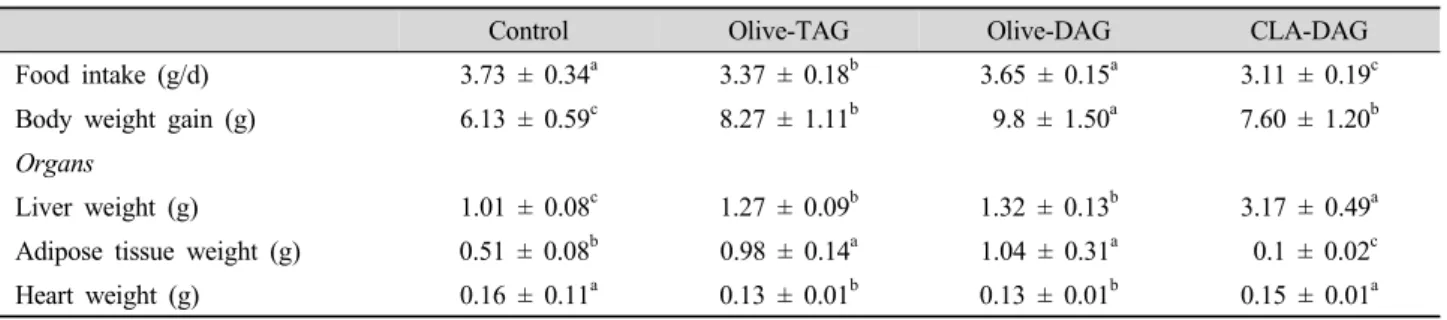
Table 3. Effects of the diets on total body and tissue weight of the mice after 7 wk of feeding.
Control Olive-TAG Olive-DAG CLA-DAG
Food intake (g/d) 3.73 ± 0.34a 3.37 ± 0.18b 3.65 ± 0.15a 3.11 ± 0.19c
Body weight gain (g) 6.13 ± 0.59c 8.27 ± 1.11b 9.8 ± 1.50a 7.60 ± 1.20b
Organs
Liver weight (g) 1.01 ± 0.08c 1.27 ± 0.09b 1.32 ± 0.13b 3.17 ± 0.49a
Adipose tissue weight (g) 0.51 ± 0.08b 0.98 ± 0.14a 1.04 ± 0.31a 0.1 ± 0.02c
Heart weight (g) 0.16 ± 0.11a 0.13 ± 0.01b 0.13 ± 0.01b 0.15 ± 0.01a
Data are expressed as the mean ± SD (n = 10). Values with different letters in the same row are significantly different (P<0.05).
Olive-TAG, olive-DAG, and CLA-DAG groups were fed high-fat high-cholesterol (15% fat/1.2% cholesterol) diets supplemented with olive oil, olive-DAG oil, or CLA-DAG oil, respectively, at a final 5% concentration (wt/wt).
through an anhydrous sodium sulfate column, and concentrated under nitrogen gas. Fatty acids of the liver and adipose tissue were analyzed with a fused- silica capillary column (SP-Wax, 60 m x 0.25 mm i.d.;
Supelco, Bellefonte, PA, USA) using a Hewlett-Packard 6890 gas chromatography with an auto injector and flame-ionization detector (Agilent Technologies, Little Falls, DE, USA). The column temperature was held at 100°C for 1 min, increased to 220°C at a rate of 10°C/min, and then held for 65 min. Nitrogen was used as the carrier gas with a total gas flow rate of 1 mL/min (constant flow mode) and 50:1 split mode.
Temperatures of the injector and detector were 250 and 260°C, respectively. Heptadecanoic acid (C17:0) was used as an internal standard and triplicate analyses were performed. The stearyol-CoA desaturase activity index (SCD index) was calculated based on the ratios of palmitoleic acid to palmitic acid (C16:1/C16:0) and oleic acid to stearic acid (C18:1/C18:0) in the liver and adipose tissue.
8. Statistical analysis
Data are expressed as the mean ± standard deviation. Analysis of variance with Duncan’s multiple range test was performed to evaluate difference between the groups using the Statistical Analysis System version 6.0 (2000). P-values<0.05 were considered statistically significant.
III. Results and discussion
1. Effect on food intake, body weight gain, and organ weight
The HFHC diets significantly increased body weight gain in the olive-TAG, olive-DAG, and CLA-DAG groups compared to the control group (p<0.05, Table 3). Among the HFHC groups, the CLA-DAG diet significantly reduced body weight gain (p<0.05);
however, this resulted in the greatest liver and smallest adipose tissue masses (p<0.05). Our observations confirmed results of a previous study showing that CLA decreases body fat accumulation in an animal model (Takahashi et al., 2003). Olive oil is a form of TAG. Olive-DAG and CLA-DAG oils are mixtures of with a similar acylglycerol composition of TAG/
DAG/MAG. In the present study, these DAG-rich oils (olive-DAG and CLA-DAG oils) had different physio- logical effects on the plasma and liver of C57BL/6J mice compared to olive oil. CLA incorporation into DAG oil induced the development of fatty liver as well as remarkably high cholesterol and TAG concentrations in mouse plasma and liver.
Olive-DAG oil has a fatty acid composition similar to that of olive oil, but has distinct metabolic char- acteristics associated with improvement of plasma and hepatic lipids in the mice. Unlike conventional edible oils composed mainly of TAG, DAG oil contains
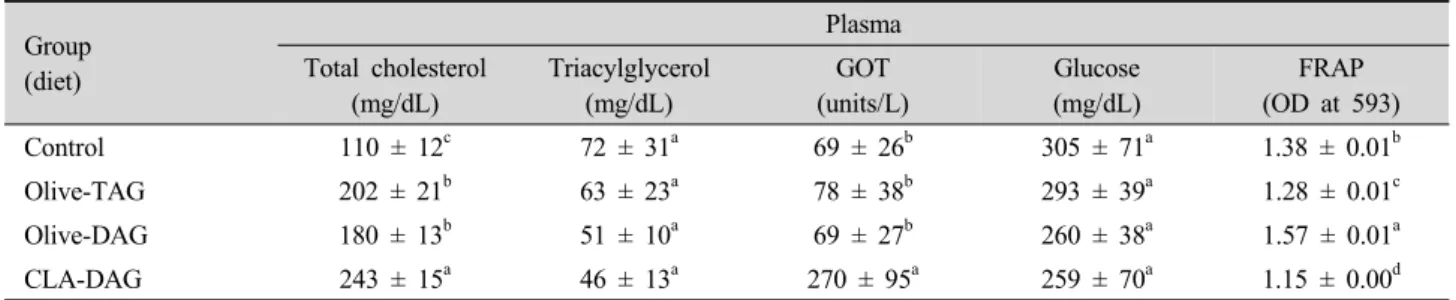
Table 4. Effects of the diets on lipid profiles and antioxidant power of mouse plasma after 7 wk of feeding.
Group (diet)
Plasma Total cholesterol
(mg/dL)
Triacylglycerol (mg/dL)
GOT (units/L)
Glucose (mg/dL)
FRAP (OD at 593)
Control 110 ± 12c 72 ± 31a 69 ± 26b 305 ± 71a 1.38 ± 0.01b
Olive-TAG 202 ± 21b 63 ± 23a 78 ± 38b 293 ± 39a 1.28 ± 0.01c
Olive-DAG 180 ± 13b 51 ± 10a 69 ± 27b 260 ± 38a 1.57 ± 0.01a
CLA-DAG 243 ± 15a 46 ± 13a 270 ± 95a 259 ± 70a 1.15 ± 0.00d
Data are expressed as the mean ± SD (n = 10).
Values with different letters in the same column are significantly different (P<0.05).
GOT: glutamic oxaloacetic transaminase.
Antioxidant power of the mouse plasma was determined as ferric-reducing ability of plasma (FRAP) measured at 593 nm at 4 min.
The olive-TAG, olive-DAG, and CLA-DAG groups were fed high-fat high-cholesterol (15% fat/1.2% cholesterol) diets supplemented with olive oil, olive-DAG oil, and CLA-DAG oil, respectively, at a final concentration of 5% (wt/wt).
a high proportion of DAG that has nutritional behaviors different from TAG due to the presence of 1,3-DAG (Table 1). In the small intestine, TAG molecules are hydrolyzed into 2-MAG and free fatty acids by sn-1,3 pancreatic lipase. The metabolites are absorbed into epithelial cells and initially reassembled into 1(3), 2-DAG via two major pathways [the glycerol-3-phospate (G3P, 20%) and 2-MAG pathways (80%) catalyzed by acyl-CoA:MAG acyltransferase (MGAT)], then finally converted into TAG by acyl-CoA:DAG acyltransferase (DGAT)(Bierbachm, 1983). The TAGs are packaged into a chylomicron and secreted into lymph that carries them into the blood circulation throughout body. The body takes up fatty acids hydrolyzed by lipoprotein lipase before they reach the liver.
For DAGs, 1(3),2-DAG is believed to be hydrolyzed into fatty acids and 2-MAG, and reassembled to TAG in the same matter as dietary TAG during digestion, while 1,3-DAG is hydrolyzed into fatty acids and 1(or 3)-MAG, and further into glycerol. The free glycerol is readily absorbed and transported into the blood circulation. Since 1- and 3-MAG have a lower affinity for MGAT than 2-MAG, the digestive products of 1,3-DAG are used to re-synthesize TAG by G3P for utilization by the DGAT pathway. In contrast to TAG formed through the 2-MAG pathway, TAG formed through the G3P pathway is mainly stored in the cytoplasm of intestinal mucosal cells rather than
being used for chylomicron assembly (Meng et al., 2004). Therefore, dietary DAG contributes to decreased TAG concentrations in plasma chylomicrons, dem- onstrating the different metabolic fates of TAG.
2. Effect on lipid profiles, hepatic lipid, protein levels, and plasma antioxidant power
Plasma lipid profiles and liver functions of the mice are presented in Table 4. Animals fed the HFHC diet had higher concentrations of total plasma cholesterol than mice fed the control diet. Total cholesterol concentrations were the highest in the CLA-DAG group (p<0.05) whereas plasma TAG and glucose levels were not significantly altered among the groups (p > 0.05). Plasma GOT levels were highest in the CLA- DAG group (270 units l-1, p<0.05), and were 3.5- or 3.9-fold higher than the levels observed in the olive-TAG and olive-DAG groups, respectively. However, GOT levels were not significantly different between the other groups (p>0.05, Table 4). FRAP absorbance was the highest in plasma from the olive-DAG group and the lowest for the CLA-DAG group. These findings suggested that CLA-DAG diet resulted in the lowest plasma antioxidant power in the mice. Consumption of the HFHC diet induced higher hepatic cholesterol concentrations except for in the olive-DAG group
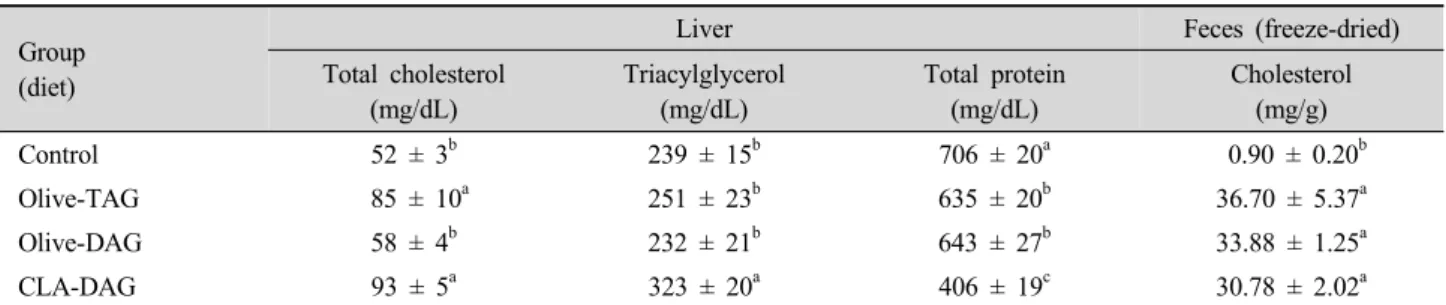
Table 5. Effects of the diets on hepatic lipid and protein, and fecal cholesterol concentrations of mice after 7 wk of feeding.
Group (diet)
Liver Feces (freeze-dried)
Total cholesterol (mg/dL)
Triacylglycerol (mg/dL)
Total protein (mg/dL)
Cholesterol (mg/g)
Control 52 ± 3b 239 ± 15b 706 ± 20a 0.90 ± 0.20b
Olive-TAG 85 ± 10a 251 ± 23b 635 ± 20b 36.70 ± 5.37a
Olive-DAG 58 ± 4b 232 ± 21b 643 ± 27b 33.88 ± 1.25a
CLA-DAG 93 ± 5a 323 ± 20a 406 ± 19c 30.78 ± 2.02a
Data are expressed as the mean ± SD (n = 10). Values with different letters in the same column are significantly different (P<0.05).
The olive-TAG, olive-DAG, and CLA-DAG groups were fed high-fat high-cholesterol (15% fat/1.2% cholesterol) diets supplemented with olive oil, olive-DAG oil, or CLA-DAG oil, respectively, at a final concentration of 5% (wt/wt).
which showed a cholesterol concentration similar to that of the control group (p>0.05, Table 5). When comparing the olive-DAG and CLA-DAG groups, the levels of hepatic cholesterol and TAG were lower in the olive-DAG group (p<0.05). The lowest hepatic protein concentrations were observed in the CLA-DAG group while the highest protein contents were found in the control group (p<0.05). Such results confirmed ones from previous studies demonstrating that a CLA diet induces fatty liver development in animal models (Javadi et al., 2004; Nakanishi et al., 2004). More cholesterol was secreted in the feces of the mice fed an HFHC diet compared to the control group. However, the levels of fecal cholesterol secretion were not significantly different between the CLA-DAG and olive-DAG groups (p>0.05).
Rats fed DAG oil show increased hepatic enzyme activities related to fatty acid oxidation and decreased activities associated with fatty acid synthesis. These effects are accompanied by lowered levels of hepatic TAG and plasma cholesterol (Mutata et al., 1977;
Flickinger and Matuso, 2003). Furthermore, consumption of DAG oil has been reported to stimulate β-oxidation in the small intestine of mice compared to TAG oil (Murase et al., 2002). Results from these previous studies could help explain the changes in plasma and hepatic TAG concentrations we observed, and the significantly reduced hepatic cholesterol levels (p
<0.05) in the olive-DAG mice compared to olive-TAG animals.
In the present investigation, CLA isomers were esterified only in CLA-DAG oil (50.7% in the sn-1,3 position and 15.4% in the sn-2 position). Additionally, the CLA-DAG diet exerted different physiological effects on the plasma and liver of the C57BL/6J mice, resulting in greater atherosclerotic progression than the olive-DAG diet. The ability of CLA to reduce body fat in animal studies has attracted much attention, and such effects are associated with t10, c12-CLA.
However, studies have demonstrated that CLA isomers may lead to lipid accumulation in the liver. In the form of TAGs, a 0.2% CLA mixture was found to suppress hepatic lipid accumulation in rats (Noto et al., 2006). In contrast, diets containing 0.5% CLA (a 1:1 mixture of t10, c12 and c9, t11 CLA) or 0.3%
t10,c12-CLA enhance lipid deposition in murine liver and decrease fat accumulation in adipose tissue (Javadi et al., 2004; Viswanadha et al., 2006). Oral administration of CLA mixtures at a dose of 300 μL/d for 4 wk results in fatty liver in mice (Nakanishi et al., 2004). In the present study, the CLA-DAG diet containing 2.1% CLA isomers (0.78% c9,t11-CLA and 1.18% t10,c12-CLA) significantly promoted fat accu- mulation in the liver. Cholesterol and TAG contents were also significantly increased compared to the olive-DAG diet which did not contain CLA isomers.
To understand the effect of CLA administered as DAG-rich oil on lipid metabolism, the level and fatty acid composition of hepatic lipid were evaluated because liver is the major site for fatty acid synthesis.
Fig. 1. Hepatic acyl-CoA:cholesterol acyltransferase (ACAT) and plasma lecithin:cholesterol acyltransferase (LCAT) activities in C57BL/6J mice fed the experimental diets. Data are expressed as the mean ± SD (n=10). Values with different letters are significantly different (p<0.05).
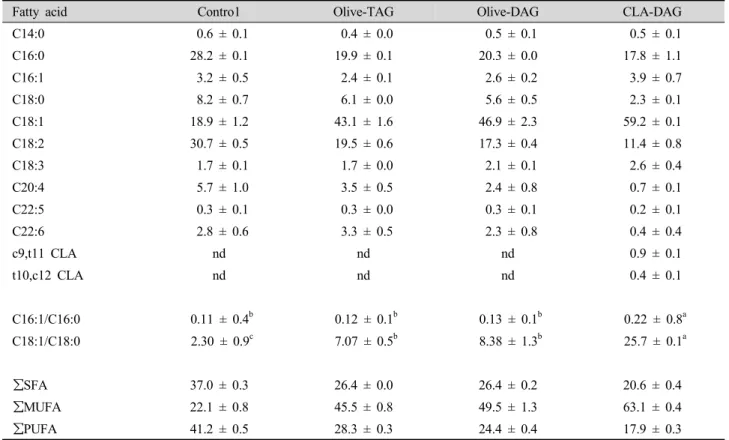
Consumption of the CLA-DAG diet was associated with significantly increased C16:1/C16:0 and C18:1/C18:0 ratios (SCD index), possibly due to increased activity of stearoyl-CoA desaturase that catalyzes the bio- synthesis of oleic acid (C18:1) and palmitoleic acid (C16:1). Stearoyl-CoA desaturase has been recognized as the critical point for regulating hepatic lipid homeostasis and body weight (Kelly et al., 2004;
Dobrzynm and Ntambi, 2005). High activity of this enzyme has been implicated in various diseases including atherosclerosis, obesity, and cancer. Kelly et al. (2004) reported that a 0.5% CLA diet (88.1%
t10,c12-CLA; 6.6% c9,t11-CLA; and 3.6% other isomers) increases the weight of hepatic lipid in C57BL/6N mice over an 8-wk period and stimulates stearoyl-CoA desaturase activity in the liver.
3. Effect on ACAT and LCAT activities
Liver ACAT activities of the groups fed a HFHC diet were considerably elevated up to 2.2-fold - 3.8-fold compared to the control group (Fig. 1). Among the HFHC groups (p<0.05), the activity was the highest in the CLA-DAG group (598 pmol/min/mg) and the lowest in the olive-DAG group (345 pmol/min/mg).
Plasma LCAT activity was the lowest in the CLA-DAG group (3.8%, p<0.05), and differences in the activity between the olive-DAG and CLA-DAG groups were not significantly different (p>0.05, Fig. 1). Hepatic ACAT activity was significantly higher in mice fed the HFHC diet compared to the control diet. The CLA- DAG diet containing 2.1% CLA isomers increased ACAT activity more than the olive-DAG diet that did not contain CLA isomers. Conversely, diets containing 1% t10,c12-CLA and 0.6% CLA isomers reduce hepatic ACAT activity in hamsters and C57BL/6J mice fed atherogenic diets, respectively (Lee et al., 2005;
Navarro et al., 2007). These contrasting results might be related to the type of animals being assessed and/or the types of CLA (free or esterified form, and
amount of t10,c12-CLA) added to the diet. In liver, ACAT promotes the production and secretion of VLDL via the formation of cholesteryl esters (Chang et al., 1997). Due to its role in regulating cellular cholesterol homeostasis, ACAT has been proven to play a critical role in the early development of atherosclerosis through the transformation of macrophages and/or smooth muscle into foam cells due to cholesteryl ester accumulation (Sakashita et al., 2000).
LCAT, a plasma enzyme essential for cholesterol metabolism, transfers cholesterol synthesized or deposited in peripheral tissues to the liver in a process referred as reverse cholesterol transport (Stein and Stein, 1999). LCAT has been known to play a role in the prevention of atherosclerotic vascular disease.
Hoeg et al. (1996) investigated the ability of LCAT to
Table 6. Hepatic fatty acid composition (mol%) of the mice after 7 wk of feeding.
Fatty acid Contro1 Olive-TAG Olive-DAG CLA-DAG
C14:0 0.6 ± 0.1 0.4 ± 0.0 0.5 ± 0.1 0.5 ± 0.1
C16:0 28.2 ± 0.1 19.9 ± 0.1 20.3 ± 0.0 17.8 ± 1.1
C16:1 3.2 ± 0.5 2.4 ± 0.1 2.6 ± 0.2 3.9 ± 0.7
C18:0 8.2 ± 0.7 6.1 ± 0.0 5.6 ± 0.5 2.3 ± 0.1
C18:1 18.9 ± 1.2 43.1 ± 1.6 46.9 ± 2.3 59.2 ± 0.1
C18:2 30.7 ± 0.5 19.5 ± 0.6 17.3 ± 0.4 11.4 ± 0.8
C18:3 1.7 ± 0.1 1.7 ± 0.0 2.1 ± 0.1 2.6 ± 0.4
C20:4 5.7 ± 1.0 3.5 ± 0.5 2.4 ± 0.8 0.7 ± 0.1
C22:5 0.3 ± 0.1 0.3 ± 0.0 0.3 ± 0.1 0.2 ± 0.1
C22:6 2.8 ± 0.6 3.3 ± 0.5 2.3 ± 0.8 0.4 ± 0.4
c9,t11 CLA nd nd nd 0.9 ± 0.1
t10,c12 CLA nd nd nd 0.4 ± 0.1
C16:1/C16:0 0.11 ± 0.4b 0.12 ± 0.1b 0.13 ± 0.1b 0.22 ± 0.8a
C18:1/C18:0 2.30 ± 0.9c 7.07 ± 0.5b 8.38 ± 1.3b 25.7 ± 0.1a
∑SFA 37.0 ± 0.3 26.4 ± 0.0 26.4 ± 0.2 20.6 ± 0.4
∑MUFA 22.1 ± 0.8 45.5 ± 0.8 49.5 ± 1.3 63.1 ± 0.4
∑PUFA 41.2 ± 0.5 28.3 ± 0.3 24.4 ± 0.4 17.9 ± 0.3
Data are expressed as the mean ± SD (n = 10). Values with different letters in the same row are significantly different (P<0.05).
The olive-TAG, olive-DAG, and CLA-DAG groups were fed high-fat high-cholesterol (15% fat/1.2% cholesterol) diets supplemented with olive oil, olive-DAG, or CLA-DAG oil, respectively, at a final 5% (wt/wt) concentration.
help modulate plasma lipoprotein levels and athero- sclerosis development by overexpressing human LCAT in rabbits. The LCAT transgenic rabbits fed a 0.3%
cholesterol diet were protected from diet-induced atherosclerosis by developing an anti-atherogenic lipoprotein profile. Lipid accumulation and cellular proliferation in the aortic intima were also significantly reduced. LCAT can also act as a potent enzymatic antioxidant and prevent the accumulation of oxidized lipid in plasma lipoproteins (Vohl et al., 1999). In the present study, plasma LCAT activity was lower in CLA-DAG mice compared to olive-DAG animals, and it appeared that lower LCAT activity was associated with higher levels of total plasma cholesterol in the CLA-DAG mice. Moreover, lower LCAT activity was observed with reduced plasma antioxidant power (lower FRAP values) in the CLA-DAG group compared to the olive-DAG group. These finding suggested that
DAG-rich oil containing CLA could decrease antioxidant power and LCAT activity in the plasma of C57BL/6J mice compared to DAG-rich oil that lacked CLA.
4. Effect on fatty acid composition of liver and adipose tissue
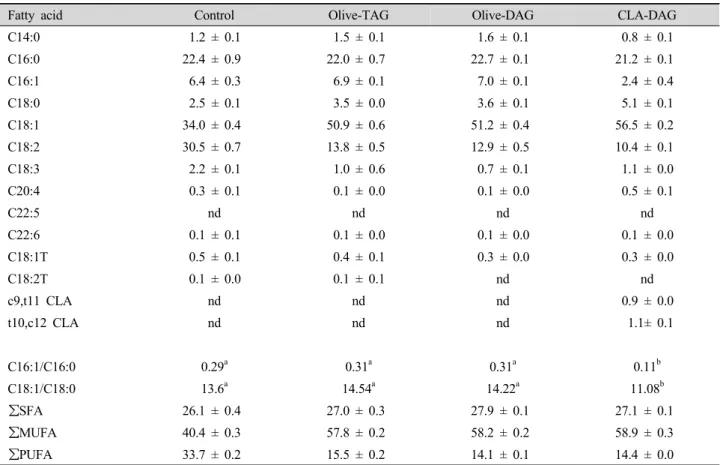
Table 6 and 7 show the remarkable differences in fatty acid compositions of the liver and adipose tissue between the control and HFHC groups. CLA isomers (c9,t11 CLA and t10,c12 CLA) were found only in the CLA-DAG group, and more CLA was found in adipose tissue (2.0 mol%) than in the liver (1.3 mol%). Livers of mice fed the HFHC diet contained higher levels of monounsaturated fatty acids (MUFAs; mainly in the form of oleic acid, C18:1) and lower concentrations of saturated (SFAs; mainly palmitic acid, C16:0) and polyunsaturated fatty acids (PUFAs; primarily linoleic
Table 7. Fatty acid composition (mol%) of the mouse adipose tissue after 7 wk of feeding.
Fatty acid Control Olive-TAG Olive-DAG CLA-DAG
C14:0 1.2 ± 0.1 1.5 ± 0.1 1.6 ± 0.1 0.8 ± 0.1
C16:0 22.4 ± 0.9 22.0 ± 0.7 22.7 ± 0.1 21.2 ± 0.1
C16:1 6.4 ± 0.3 6.9 ± 0.1 7.0 ± 0.1 2.4 ± 0.4
C18:0 2.5 ± 0.1 3.5 ± 0.0 3.6 ± 0.1 5.1 ± 0.1
C18:1 34.0 ± 0.4 50.9 ± 0.6 51.2 ± 0.4 56.5 ± 0.2
C18:2 30.5 ± 0.7 13.8 ± 0.5 12.9 ± 0.5 10.4 ± 0.1
C18:3 2.2 ± 0.1 1.0 ± 0.6 0.7 ± 0.1 1.1 ± 0.0
C20:4 0.3 ± 0.1 0.1 ± 0.0 0.1 ± 0.0 0.5 ± 0.1
C22:5 nd nd nd nd
C22:6 0.1 ± 0.1 0.1 ± 0.0 0.1 ± 0.0 0.1 ± 0.0
C18:1T 0.5 ± 0.1 0.4 ± 0.1 0.3 ± 0.0 0.3 ± 0.0
C18:2T 0.1 ± 0.0 0.1 ± 0.1 nd nd
c9,t11 CLA nd nd nd 0.9 ± 0.0
t10,c12 CLA nd nd nd 1.1± 0.1
C16:1/C16:0 0.29a 0.31a 0.31a 0.11b
C18:1/C18:0 13.6a 14.54a 14.22a 11.08b
∑SFA 26.1 ± 0.4 27.0 ± 0.3 27.9 ± 0.1 27.1 ± 0.1
∑MUFA 40.4 ± 0.3 57.8 ± 0.2 58.2 ± 0.2 58.9 ± 0.3
∑PUFA 33.7 ± 0.2 15.5 ± 0.2 14.1 ± 0.1 14.4 ± 0.0
Data are expressed as the mean ± SD (n = 10). Values with different letters in the same row are significantly different (P<0.05).
Olive-TAG, olive-DAG, and CLA-DAG groups were fed high-fat high-cholesterol (15% fat/1.2% cholesterol) diets supplemented with olive oil, olive-DAG, or CLA-DAG oil, respectively, at a final 5% (wt/wt) concentration.
acid, C18:2). Livers of the olive-TAG and olive-DAG groups showed a similar fatty acid composition, but ones from the CLA-DAG group exhibited higher concentrations of oleic acid and lower levels of stearic (C18:0), linoleic, and arachidonic acid (C20:4) compared to the olive-DAG group. In adipose tissue, higher concentrations of MUFAs and lower concentrations of PUFAs were found in mice fed the HFHC diet relative to the control group. SCD index of the CLA-DAG mice was the highest (C16:1/C16:0 and C18:1/C18:0) for the liver and the lowest for the adipose tissue (p<0.05).
Reductions of linoleic and arachidonic acid contents in the liver were found in the CLA-DAG group. Some studies have shown that such altered fatty acids composition in the liver is positively related to levels of t10,c12-CLA but not c9,t11-CLA (Kelly et al., 2004;
Viswanadha et al., 2006). These results concurred with
our finding in liver from mice fed the CLA-DAG diet in which t10,c12-CLA concentrations (1.18% of diet) were 1.5-fold greater than c9,t11-CLA (0.78%). Contrary to the excessive hepatic lipid deposition observed in the C57BL/6J mice, a CLA-DAG diet significantly reduced the weight (p<0.05) and SCD index (p<0.05) of adipose tissue compared to the olive-TAG and olive-DAG diets. Such reductions might be caused by CLA isomers, especially t10,c12-CLA (Viswanadha et al., 2006).
IV. Conclusions
In the present study, we investigated the effect of CLA isomers in an esterified form administered with DAG-rich oil to hyperlipidemic C57BL/6J mice. Even though olive-DAG and CLA-DAG oils contained similar
levels of TAG/DAG/MAG, CLA-DAG oil exerted dif- ferent physiological effects on the mice. The CLA-DAG diet containing 2.1% CLA isomers (0.78% c9,t11-CLA and 1.18% t10,c12-CLA) inhibited the uptake of fat into adipose tissue. In contrast, fat deposition increased in the liver, resulting in fatty liver and increased GOT levels. Total plasma cholesterol levels, modified hepatic fatty acid composition, increased hepatic ACAT activity, reduced plasma LCAT activity, and decreased FRAP ability were observed in mice fed the CLA-DAG diet.
Taken together, results of the present study suggested that CLA-DAG oil promotes atherogenic progression in mice.
References
Ametaj BN, Bobe G, Lu Y, Young JW, Beitz DC. 2003. Effect of sample preparation, length of time, and sample size on quantification of total lipids from bovine liver. Journal of Agricultural and Food Chemistry 51:2105-2110.
Arbonés-Mainar JM, Navarro MA, Acín S, Guzmán MA, Arnal C, Surra JC. Carnicer R, Roche HM, Osada J. 2006.
Trans-10, cis-12- and cis-9, trans-11-conjugated linoleic acid isomers selectively modify HDL-apolipoprotein composition in apolipoprotein E knockout mice. Journal of Nutrition 136:353-359.
Benzie IF, Strain JJ. 1996. The ferric reducing ability of plasma (FRAP) as a measure of antioxidant power: the FRAP assay.
Analytical Biochemistry 239:70-76.
Bierbachm H. 1983. Triacylglycerol biosynthesis in human small intestinal mucosa Acyl-CoA: monoglyceride acyltransferase.
Digestion 28:138-147.
Chang TY, Chang CCY, Cheng D. 1997. Acyl-coenzyme A:
cholesterol acyltransferase. Annual Review of Biochemistry 66:613-618.
Cho KH, Han JM, Jeong TS, Kim HY, Lee JH, Lee KT. 2006.
Anti-atherosclerotic effects of a new synthetic functional oil containing mono- and diacylglycerol from corn oil. Annals of Nutrition and Metabololism 50:467-475.
Dobrzynm A, Ntambi JM. 2005. Stearoyl-CoA desaturase as a new drug target for obesity treatment. Obesity Reviews 6:169-174.
Flickinger BD, Matuso N. 2003. Nutritional characteristics of DAG oil. Lipids 38:129-132.
Gavino VC, Gavino G, Leblanc MJ, Tuchweber B. 2000. An isomeric mixture of conjugated linoleic acids but not pure cis-9,trans-11-octadecadienoic acid affects body weight gain and plasma lipids in hamsters. Journal of Nutrition 130:
27-29.
Han JM, Jeong TS, Lee WS, Choi I, Cho KH. 2006. Structural and functional properties of V156K and A158E mutants of apolipoprotein A-I in the lipid-free and lipid-bound states.
Journal of Lipid Research 46:589-596.
Hoeg JM, Santamarina-Fojo S, Bérard AM. 1996. Over expression of lecithin:cholesterol acyltransferase in transgenic rabbits prevents diet-induced atherosclerosis. Proceedings of the National Academy of Sciences of USA 93:11448-11453.
Javadi M, Beynen AC, Hovenier R, Lankhorst E, Lemmens AG, Terpstra AHM, Geelen MJH. 2004. Prolonged feeding of mice with conjugated linoleic acid increases hepatic fatty acid synthesis relative to oxidation. Journal of Nutritional Biochemistry15:680-687.
Kelly DS, Bartolini GL, Warren JM, Simon VA, Mackey BE, Erikson KL. 2004. Contrasting effects of t10,c12- and c9,t11-conjugated linoleic acid isomers on the fatty acid profiles of mouse liver lipids. Lipids 39:135-141.
Kritchevsky D, Tepper SA, Wright S, Czarnecki SK. 2002.
Influence of graded levels of conjugated linoleic acid (CLA) on experimental atherosclerosis in rabbits. Nutrition Research 22:1275-1279.
Lee JH, Cho KH, Lee KT, Kim MR. 2005. Antiaterogenic effects of structured lipid containing conjugated linoleic acid in C57BL/6J mice. Journal of Agricultural and Food Chemistry 53:7295-7301.
Lee JH, Yu F, Vu PL, Choi MS, Akoh CC, Lee KT. 2007.
Compositional study on rice bran oil after lipase-catalyzed glycerolysis and solvent fractionations. Journal Food Science 72:C163-167.
Meng A, Zou D, Shi Z, Duan AZ. 2004. Dietary diacylglycerol prevents high-fat diet-induced lipid accumulation in rat liver and abdominal adipose tissue. Lipids 39:37-41.
Munday JS, Thompson KG, James KAC. 1999. Dietary conjugated linoleic acids promote fatty acid streak formation in the C57BL/6 mouse atherosclerosis model. British Journal of Nutrition 81:251-255.
Murase T, Aoki M, Wakisaka T, Hase T, Tokimitsu I. 2002.
Anti-obesity effect of dietary diacylglycerol in C57BL/6J mice: dietary diacylglycerol stimulates intestinal lipid me- tabolism. Journal of Lipid Research 43:1312-1319.
Murota K, Matusi N, Kawada T, Takahashi N, Fushuki T. 2001.
Inhibitory effect of monoacylglycerol in fatty acid uptake into rat intestinal epithelial cells. Bioscience, Biotechnology, and Biochemistry 65:1441-1443.
Mutata M, Ide T, Hara K. 1977. Reciprocal responses to dietary diacylglycerol of hepatic enzymes of fatty acid synthesis and oxidation in the rat. British Journal of Nutrition 77:
107-201.
Nakanishi T, Oikawa D, Koutoku T, Hirakawa H, Kido Y, Tachibana T, Furuse M. 2004. γ-Linoleic acid prevents conjugated linoleic acid-induced fatty liver in mice. Nutrition 20:390-393.
Navarro V, Macarulla MT, Fernández-Quintela A, Rodríguez VM, Simón E, Portillo MP. 2007. Effects of trans-10,cis-12
conjugated linoleic acid on cholesterol metabolism in hyper- cholesterolaemic hamsters. European Journal of Nutrition 46:213-219.
Noto A, Zahradka P, Yurkova N, Xie X, Nitschmann E, Ogborn M, Taylor CG. 2006. Conjugated linoleic acid reduces hepatic steatosis, improves liver function, and favorably modifies lipid metabolism in obese insulin-resistant rats. Lipids 41:179-188.
Ota N, Soga S, Hase T, Tokimitsu I, Nurase T. 2007. Dietary diacylglycerol induces the regression of atherosclerosis in rabbits. Journal of Nutrition 137:1194-1197.
Sakashita N, Miyazaki A, Takeya M, Horiuchi S, Chang CCY, Chang TY, Takahashi K. 2000. Acyl coenzyme A:cholesterol acyltransferase (ACAT) in macrophase-derived foam cells and its distribution in human organs. Acta Histochemica et Cytochemica 33:189-194.
SAS Institute. 2000. SAS Statistics Software; release 8.2. Cary, N.C.
Stein O, Stein Y. 1999. Atheroprotective mechanisms of HDL.
Atherosclerosis 144:285-300.
Tada N, Yoshida H. 2003. Diacylglycerol on lipid metabolism.
Current Opinion in Lipidology 14:29-33.
Takahashi Y, Kushiro M, Shinohara K, Ide T. 2003. Activity and mRNA levels of enzymes involved in hepatic fatty acid
synthesis and oxidation in mice fed conjugated linoleic acid.
Biochimica et Biophysica Acta 1631:265-273.
Valeille K, Férézou J, Amsler G, Quignard-Boulange A, Parquet M, Gripois D, Dorovska-Taran V, Martin JC. 2005. A cis-9,trans-11-conjugated linoleic acid-rich oil reduces the outcome of atherogenic process in hyperlipidemic hamster.
American Journal of Physiology: Heart and Circulatory Physiology; 289:H652-659.
Viswanadha S, McGilliard ML, Herbein JH. 2006. Desaturation indices in liver, muscle, and bone of growing male and female mice fed trans-10, cis-12 conjugated linoleic acid.
Lipids 41:763-770.
Vohl MC, Neville TAM, Kumarathasan R, Brashci S, Sparks DL. 1999. A novel lecithin-cholesterol acyltransferase anti- oxidant activity prevents the formation of oxidized lipids during lipoprotein oxidation. Biochemistry 38:5976-5981.
Whigham LD, Watras AC, Schoeller, DA. 2007. Efficacy of conjugated linoleic acid for reducing fat mass: a meta-analysis in humans. American Journal of Clinical Nutrition 85:1203- 1211.
Wilson TA, Nicolosi RJ, Chrysam M, Kritchevsky D. 2000.
Conjugated linoleic acid reduces early aortic atherosclerosis greater than linoleic acid in hypercholesterolemic hamsters.
Nutrition Research 20:1795-1805.