Study on Fuel Specificity and Harmful Air Pollutants Factor of Agglomerated Wood Charcoal 1KORAPP
Taek Yong JEOUNG
2⋅Seung Min YANG
2⋅Seog Goo KANG
2,†ABSTRACT
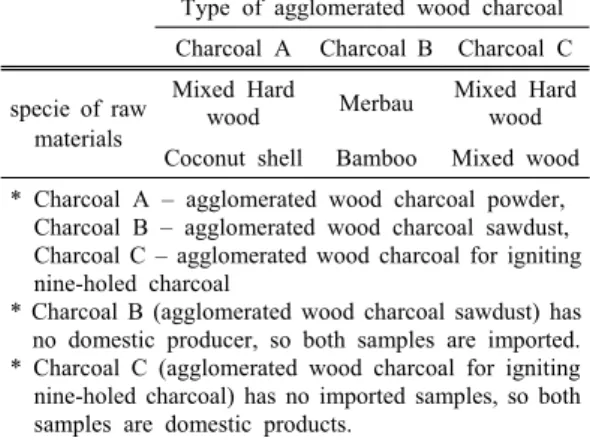
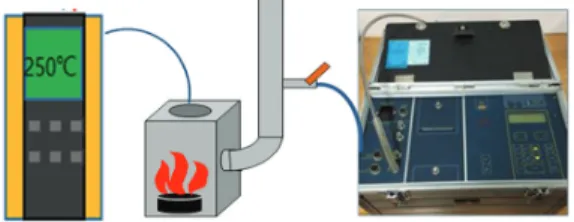
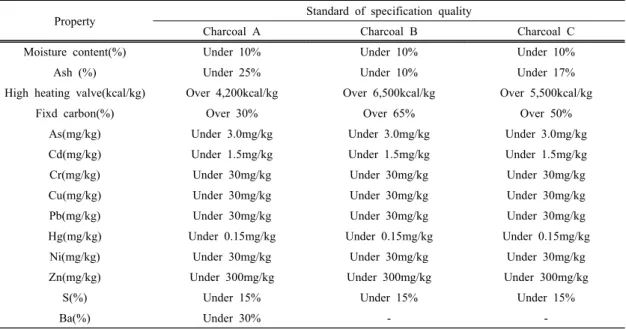
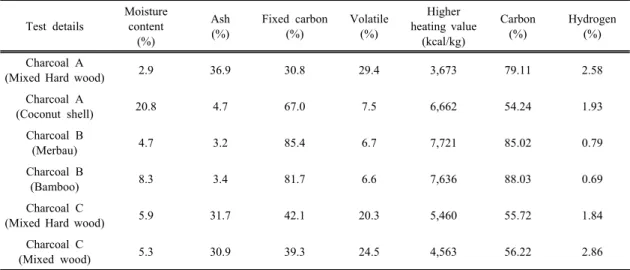
1)This study selected three types of agglomerated wood charcoal (Agglomerated wood charcoal with charcoal powder, Carbonized wood briquette, Ignition-type of perforated charcoal) that are in circulation in Korea among fuel-type wood products and analyzed the fuel characteristics, harmful substance content, and emissions of air pollutants generated by combustion. The first results showed that charcoal-grilled carbon, which is the raw material of charcoal, produced higher CO than saw-billed carbon. The second result is that the emission standards of air pollutants generated by the combustion of molded wood coal are not up to the emission standards of nitrogen oxides and sulfur oxides in the entire product, compared with the emission criteria of the atmospheric environment preservation method (based on 2019, carbon monoxide: 200 ppm, nitrogen oxides, 150 ppm sulfur oxides: 100 ppm), but the carbon dioxide moulding and carbon dioxide levels were not up. Based on the analysis of combustion gas generated during combustion derived from this study, future research is needed for comparing with the emission standards of pellets, which are wood products for fuel, among the existing biomass burning standards and for reducing carbon monoxide generated during incomplete combustion of agglomerated wood charcoal.
Keywords: renewable energy, air pollutants (CO, CO
2, NO
x, SO
x), agglomerated wood charcoal
1. INTRODUCTION
Recently, there has been increasing public interest in fine dust and pollutants entering in the atmosphere of Korea (Jo et al., 2019). The Ministry of Environment amended and promulgated the Enforcement Regulations of the Clean Air Conservation Act in May 2019, and planned to implement it in January 2020. According to the amended enforcement regulations, substances such as ethylbenzene, styrene, and carbon tetrachloride have been newly established as specific air pollutants, and the regulations on existing specific air pollutants
(13 types including chromium, arsenic, mercury, etc.) have been strengthened by approximately 33%. For 11 types of general air pollutants (dust, carbon monoxide, nitrogen oxides, sulfur oxides, etc.), the standards on allowable emission have been reduced by an average of 30% (Magnone et al., 2019).
As the standards on allowable emission of pollutants have been strengthened, companies have established air pollutant emission reduction devices, and coal power plants came up with alternatives such as an indoor coal yard (an indoor coal yard project to reduce scatter dust from outdoor coal yards) and the use of renewable
1
Date Received September 17, 2019, Date Accepted March 9, 2020
2
Deparment of Biobased Materials, College of Agriculture and Life Science, Chungnam National University, Deajeon 34134, Republic of Korea
†