혐기성공정을 이용한 축산폐수의 메탄생성 및 질소제거
(Methane Production and Nitrogen Removal from Piggery
Wastewater Using Anaerobic Process)
Noh-Back Park
Department of Climate Change and AgroEcology, NAAS, RDA, Suwon 441-707, Korea
Introduction
Biological nitrogen removal requires the combination of the physically separated aerobic and anoxic phases, thus many treatment systems have been developed to optimize the performance of reactions at each phase. Since the 1990s, simultaneous denitrification/methanogenesis in a single reactor was studied for the purpose of the integrated removal of COD and nitrogen (Akunna et al., 1994; Lin and Chen, 1995). However, it has been known that methanogenic activity was inhibited by nitrate and its intermediates generated during the growth of denitrifiers (Akunna et al., 1992; Hendriksen and Ahring, 1996; Clarens et al., 1998). Afterward, plenty of research on simultaneous removal of both nitrogen and carbon had been studied in anaerobic systems in spite of the inhibitory effects. In a single anaerobic reactor such as up-flow anaerobic sludge blanket (UASB) reactor or up-flow sludge bed-filter (USBF), the integrated removal of nitrogen and carbon was successfully performed by several researchers (Hendriksen and Ahring, 1996; Mosquera-Corral et al., 2001). Furthermore, the combination of aerobic processes with various anaerobic reactors has shown the potential treatment of both nitrogen and organic matter from wastewater (Barber and Stuckey, 2000; Bernet et al.,2000; Del Pozo and Diez, 2003, 2005). These works focused on the possibility of the integrated removal of nitrogen and carbon, which mainly tended to remove nitrogen with carbon as an electron donor for denitrification rather than methane production in anaerobic process.
Anaerobic reactors tended to be used as substitutes for anoxic reactors in denitrification process and to play a little role in methane production due to the reduced COD. Among the parameters affecting denitrification, influent COD/N ratio was the common interest in the previous studies (Hendriksen and Ahring, 1996; Mosquera-Corral et al., 2001; DelPozo and Diez, 2003), while the strategy for maximization of methane production seemed to not be well discussed. On the other hand, various microbial groups are responsible for biogas production through complex biochemical reactions such as hydrolysis, acidification, and methanogenesis in anaerobic digestion processes. Two-phase anaerobic digestion (TPAD) has been widely applied for biogas recovery from strong wastewater, using UASB (Shin et al., 2001, 2005, Han et al., 2005) and up-flow anaerobic filter (UFAF; Ince, 1998; Christof et al., 2002) next to a completely stirred tank reactor (CSTR) for hydrolysis/acidification. TPAD
technology separated the different microbial groups successfully with favorite environments for each microorganism, by controlling HRT, pH, and temperature.
In this study, nitrogen removal and methane production from strong animal wastewater were observed in TPAD process combined with biologic nitrogen removal (BNR) process. Effects of denitrification on both acidogenic and/or methanogenic activities were also investigated in both batch and continuous experiments. Autotrophic nitrogen removal from the organic-exhausted effluent of TPAD was expected in BNR process next to TPAD. That could offer the best way to enhance biogas production in TPAD without the competition for influent organic matter with conventional denitrifiers.
Material and Methods
Animal wastewater
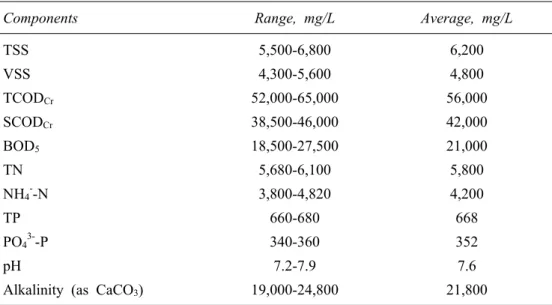
The raw wastewater was sampled from the primary sedimentation tank at a local piggery wastewater treatment plant. The wastewater was screened through 150 μm diameter sieve to remove grit and coarse solids. Table 1 shows the characteristics of the screened raw wastewater. The average total COD (TCOD) and soluble COD (SCOD) were 56,000 and 42,000 mg/L, respectively. BOD5 and total
nitrogen (TN) were approximately 21,000 mg/L and 5,800 mgN/L, where BOD5/TN ratio was as low
as 3.6. Ammonia nitrogen fluctuated between 3,800 and 4,800 mgN/L. The raw wastewater was diluted with tap water to adjust the influent loading rate. TCOD and ammonium concentrations at the start-up of continuous experiment were in the range of 3,500-4,200 mg/L and 220-260 mg․N/L, respectively, Diluted wastewater was stored at 5°C to prevent decomposition of wastewater before using.
Table 1. Characteristics of raw wastewater
Components Range, mg/L Average, mg/L
TSS VSS TCODCr SCODCr BOD5 TN NH4--N TP PO43--P pH
Alkalinity (as CaCO3)
5,500-6,800 4,300-5,600 52,000-65,000 38,500-46,000 18,500-27,500 5,680-6,100 3,800-4,820 660-680 340-360 7.2-7.9 19,000-24,800 6,200 4,800 56,000 42,000 21,000 5,800 4,200 668 352 7.6 21,800
Experimental apparatus and operational modes
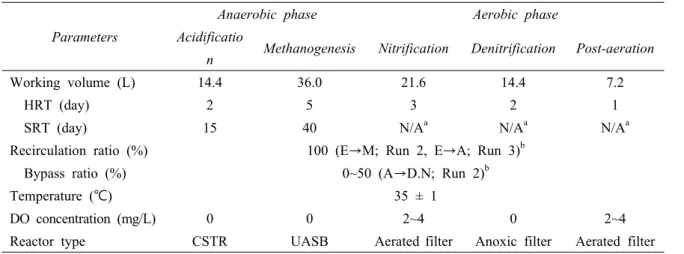
A laboratory-scale experimental apparatus, composed of TPAD and BNR processes, was installed and operated to investigate methane production and nitrogen removal (Fig. 1). The TPAD process, consisted of CSTR followed by methanogenic UASB, was applied for high-rate digestion.
Their HRTs (hydraulic retention time) were 2 and 5 days and SRTs (sludge retention time) were controlled to 15 and 40 days, respectively (Table 2). The feeding rate was maintained to 7.2 L/d and organic loading rate (OLR) of UASB reactor was adjusted to the range of 0.7-4.2 gTCOD/Lday by dilution of the raw wastewater. CSTR was fed upward with the diluted wastewater and gently agitated. Liquefied solution from CSTR was separated from the acidogenic sludge in a subsequent clarifier. Settled biomass was returned to CSTR, while the supernatant was fed to UASB using peristaltic pump. Gas samples for components analysis were collected from the top of UASB reactor and volume of the gas generated was measured by calibrated water displacement vessels. TPAD was followed by aerobic-anoxic-aerobic filters, which introduced nitrification, denitrification, and post-aerated stripper in series without final clarifier. Their HRT were 3, 2, and 1 days, respectively. Each reactor was fully packed with 0.5-inch ring-type plastic media. Dissolved oxygen in nitrification and post-aerated filter was maintained at 2-4 mg O2/L. Conversion of organic matter into methane gas in UASB would
promote the growth of nitrifiers in the subsequent aerobic filter without competition for DO with heterotrophs due to low C/N ratio. Removal of both ammonium and nitrite, autotrophically, was expected in anoxic filter coupled with a partial nitrification in the previous aerobic filter. Besides gas stripping, additional oxidation of residual pollutants occurred in the post-aerated filter. At Run-1, both methane production and autotrophic nitrogen removal were tested in the TPAD-BNR system without recirculation.
To determine the optimum removal of nitrogen, three operating modes were applied. The nitrified effluent of the TPAD-BNR system was recirculated to methanogenic UASB (Run-2) or acidogenic CSTR (Run-3), with the same rate as influent feeding rate. At Run-2, denitrification in UASB was tested and overall TN removal was evaluated by recirculating the nitrified effluent from the post-sripper to UASB.
Concurrently, fermented product from CSTR was directly pumped to the denitrification filter to introduce heterotrophic denitrification (Run-2). At Run-3, denitrification in acidogenic CSTR was also investigated with recirculation of the nitrified effluent to the CSTR. Table 2 shows the characteristics and operational parameters of the integrated TPAD-BNR system. The experimental set was operated at 35°C ± 1. Granular sludge sampled from a brewery wastewater treatment plant was seeded to TPAD process. BNR process was seeded with activated sludge in a local domestic wastewater treatment plant.
Table 2. Characteristics and operation parameters of experimental apparatus
Parameters
Anaerobic phase Aerobic phase
Acidificatio
n Methanogenesis Nitrification Denitrification Post-aeration
Working volume (L) 14.4 36.0 21.6 14.4 7.2
HRT (day) 2 5 3 2 1
SRT (day) 15 40 N/Aa N/Aa N/Aa
Recirculation ratio (%) 100 (E→M; Run 2, E→A; Run 3)b
Bypass ratio (%) 0~50 (A→D.N; Run 2)b
Temperature (℃) 35 ± 1
DO concentration (mg/L) 0 0 2~4 0 2~4
Reactor type CSTR UASB Aerated filter Anoxic filter Aerated filter
aN/A ; Not Applicable.
bE, Effluent; M, Methanogenic Reactor; A, Acidogenic Fermenter; D.N, Denitrification (Fig. 1).
Serum bottle test
Denitrification by acidogenic and methanogenic sludges was investigated in 300-mL serum bottles. Obligate anaerobic sludge was sampled from CSTR and UASB reactors at steady state. The sludges were seeded into 300-mL serum bottles and sealed with rubber stopper. The medium containing nitrate (KNO3) and elementary trace minerals were added to the bottles. The C/N ratio was adjusted to 10 and
20 gCOD/gNO3-N by spiking glucose stock solution. Purging with helium gas was carried out to
remove air both in mixed liquor and headspace. Denitrifying activity was investigated by measuring nitrate concentration and specific denitrification rate (SDNR). Total volatile acid (TVA) and methane were measured for checking methanogenic activities of the sludge. All the batch experiments were conducted at 35°C.
Fig. 1. Schematic diagram of experimental apparatus.
Analysis
Nitrogen, methane and carbon dioxide were measured by a gas chromatograph (GOW-MAC series 580, GOW-MAC Instruments, Bethlehem, PA) equipped with a thermal conductivity detector. A
Porapak Q stainless column (80/100 mesh, 6 ft × 2 mm) was used at the rate of 15 mL/min with helium as a carrier gas. Temperature of column, injector and detector were maintained at 50℃, 80℃, and 90℃, respectively. VFA was measured by a liquid chromatograph (HPLC 9600, Youngrin, Korea). Nitrate and nitrite were measured by an ion chromatograph (Metrohm modular, Herisau, Switzerland) using 1.7 mM NaHCO3 and 1.8 mM Na2CO3 as eluent solution. Ammonia nitrogen was measured by Nessler
method (NH4--N distillation method; HACH Co., Dusseldorf, Germany). COD was measured by the
closed reflux and colorimetric method and other analyses were carried out according to the standard methods (APHA, 1995).
Results and Discussion
COD removal and methane production
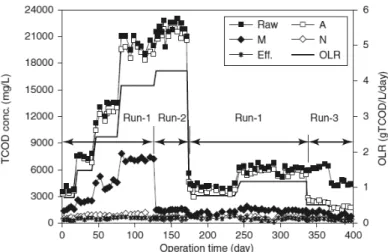
Figure 2 shows the TCOD removal in each reactor (Fig. 1) at different OLRs of UASB reactor throughout the experiment. OLR of UASB increased stepwise from 0.7 to 4.2 gTCOD/L per day by diluting influent. During the start-up period, removal efficiency of TCOD in TPAD was as low as 50%, however, it gradually increased to 70% at OLR of 4.2 gTCOD/L per day after 80 days operation at Run-1. Han et al. (2005) reported COD removal efficiency in UASB from food waste was over 96% at OLR of 12.9 gCOD/L per day. Im et al. (2001) showed COD removal efficiency was 80% from landfill leachate at OLR of 15.2 gCOD/L per day and Ince (1998) showed it was 90% from dairy wastewater at 5.0 gCOD/L per day. Sanchez et al. (2005) reported COD removal from piggery wastewater at HRT of 2 days suddenly decreased at OLR higher than 4.1 gCOD/L per day in upflow anaerobic sludge bed. TCOD removal in this study was slightly lower than the results in the previous other researches, which probably resulted from the low bioavailability of piggery wastewater (in which BOD5/TCOD ratio was 0.4). SCOD removal efficiency in TPAD was in the range
of 60-70%. TCOD from TPAD suddenly dropped at Run-2 and Run-3, due to dilution effect of influent by recirculating the final effluent. Residual TCOD in TPAD effluent was oxidized in the subsequent aerated filter. Overall TCOD removal efficiency throughout the TPAD-BNR system reached up to 98% and final effluent was in the range of 150-700 mg/L. Final effluent BOD5 was as low
as 10-20 mg/L, which showed nonbiodegradable organic matter (color) was mainly contained in effluent.
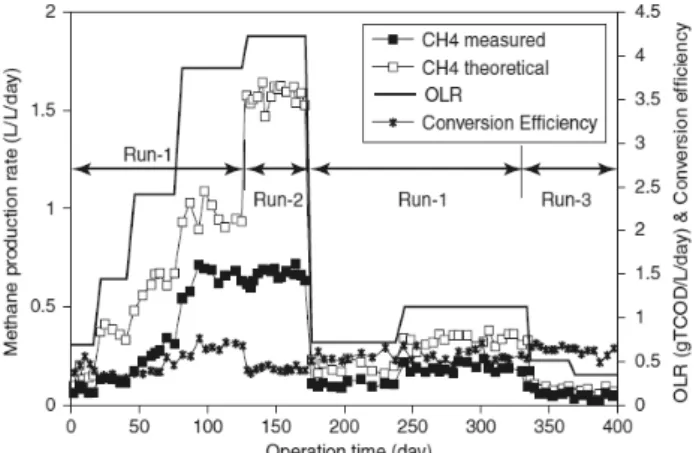
Figure 3 shows methane production rate per unit volume of UASB and conversion efficiency of the removed TCOD into methane in UASB. Methane production rate gradually increased up to 0.7 L/L per day at OLR of 3.9 gTCOD/L per day after 100 days of operation, which was comparable to the results using food waste in other researches (Shin et al., 2001; Parawira et al., 2006). The theoretical methane production at 35°C was stoichiometric calculation by regarding the actually removed TCOD in UASB as glucose. And methane conversion efficiency implied the ratio of observed methane production to the corresponding theoretical production. At Run-1, methane production gradually increased from 0.1 to 0.7 L/L per day, whereas their conversion efficiencies were correspondent to 0.42 and 0.72.
Fig. 2. Total COD (TCOD) removal in each reactor at different organic loading rate (OLRs). While the nitrified effluent was recirculated to UASB where methanogenesis might be repressed by denitrification, methane production was still maintained the level of 0.6-0.7 L/L per day at Run-2. It might be caused by high TCOD/NOx ratio in influent of UASB with OLR increase. Methane conversion efficiency decreased to 0.40-0.45 at Run-2, due to both dilution with the recirculation flow and consumption of TCOD by denitrification in UASB. Detection of nitrogen gas in UASB confirmed the denitrifying activity of methanogenic sludge. Methane conversion efficiency recovered to the range of 0.6-0.7 at the end of the second Run-1 (after 280-330 days). As the OLR decreased below 1.1 gTCOD/L per day methane production gradually decreased throughout second Run-1 and Run-3. Although methane production decreased with recirculation of the nitrified effluent to CSTR after 340 days operation (Run-3), methane conversion efficiency was not affected by the recirculation. Recirculation of the nitrified effluent did not directly affect TPAD performance rather improved TCOD removal efficiency. Alkalinity in piggery wastewater was so sufficient at high OLR that considerable effect on methanogenesis and nitrification was not observed. Specifically, the ratio of total volatile acids (TVA) to alkalinity was maintained below 0.4 in UASB. High ratio of TVA/alkalinity beyond 0.3-0.5 could deteriorate the performance of anaerobic digestion as shown in other studies (Sanchez et al., 2005; Mosquera-Corral et al., 2001). Alkalinity was removed mainly in aerated filter by nitrification but it was still remained in the final effluent in the range of 900-2,100 mgCaCO3/L.
Fig. 3. Methane production rate and total COD conversion efficiency at different operating schemes.
Denitrification activity of anaerobic sludge
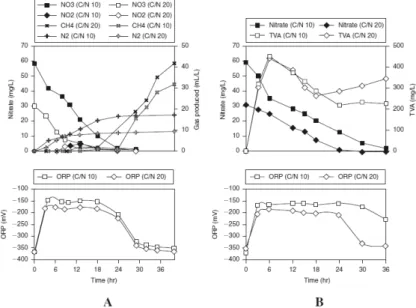
At steady state after 100-120 days operation, denitrification with acidogenic and methanogenic sludges was tested for both investigation of denitrifying activity and recirculating strategies of the nitrified effluent. Figure 4 shows the nitrate removal at different COD/N ratios with acidogenic and methanogenic sludges. Both sludges cultured without nitrate in long term showed the obvious denitrification activities without lag phase. In denitrification with methanogenic sludge, nitrate immediately started to disappear and the equivalent amount of nitrogen gas was produced, which confirmed denitrification was the main pathway to reduce nitrate as shown in other studies (Lin and Chen, 1995; Hendriksen and Ahring, 1996).
At COD/N ratios of 10 and 20, nitrate immediately started to convert to nitrogen gas via nitrite with methanogenic sludge as shown in Figure 4A. Methane started to generate after nitrate disappeared completely, however, nitrite was still remained in the serum bottle. After 18 h, methane started to produce and increase up to 42 mL/L at COD/N ratio of 20. A lower COD/N ratio of 10, a little longer reaction time was required for the complete removal of nitrate, and methane started to generate after 24 h. Methane production was about 32 mL/L at COD/N ratio of 10. Methane was not also detected in the presence of both nitrate and nitrite. Methanogenesis reaction could occur only when nitrite presented in serum bottles. Nitrite, however, was detected in low level in this study. Similarly, denitrifying activity of methanogenic sludge and its effects on methanogenesis were reported previously (Akunna et al., 1994; Lin and Chen, 1995; Hendriksen et al., 1996; Clarens et al., 1998; Roy and Conrad, 1999; Jun et al., 2005), however, its mechanism is not clear so far. Nevertheless, their application to the integrated removal of carbon and nitrogen in a single reactor was successful in many literatures (Tilche et al., 1994; Barber and Stuckey, 2000; Mosquera-Corral et al., 2001). On the other hand, acids formers were not affected by denitrification activity. Concentration of total volatile acids (TVA) sharply increased with stable removal of nitrate simultaneously as shown in Figure 4B. TVA reached at peak concentration around 450 mgCOD/L after 6 hours and then started to decrease as long as nitrate was reduced. Interestingly, TVA increased again after incomplete nitrate removal at higher COD/N ratio of
20 due to conversion of surplus glucose into TVA although redox potential was maintained relatively higher value around -200 mV. Denitrification with the both acidogenic and methanogenic sludges successfully performed, however, the calculated specific denitrification rates (SDNRs) were as low as 0.017 and 0.024 gNO3-N/gVSS per day, respectively. Their SDNRs were comparable to the
endogenous denitrification rate of the suspended growth denitrifiers (George et al., 2004), which might imply that the biocommunity responsible for denitrification was not fully acclimated for the new environment in the presence of nitrate and/or nitrite. Barber and Stuckey (2000) reported SDNR in ABR were in the range between 0.09 and 0.34 gNO3-N/gVSS per day. Quevedo et al. (1996) showed
SDNR was 0.58 with glucose and 1.56 gNO3-N/gVSS per day with acetic acid, respectively, which
were very high values compared other results in the literature.
Fig. 4. Nitrate removal by (A) methanogenic sludge and (b) acidogenic sludge.
Nitrogen removal
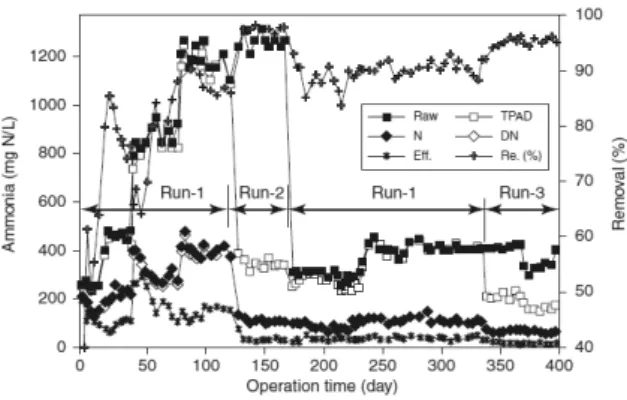
Figure 5 shows the behavior of ammonium nitrogen (NH4-N) and its removal efficiency at the same
operating mode as TCOD removal. The considerable increase in ammonium by ammonification in UASB was not observed throughout the experiments. Ammonium rather slightly decreased in UASB at Run-1 without recirculation of nitrified effluent probably due to both stripping of free ammonia at high temperature (35℃) and assimilatory synthesis of anaerobes. However, ammonia in effluent from TPAD dramatically decreased by the recirculated flow from final aerated stripper. Removal efficiency of ammonia in nitrification filter gradually increased to 60-70%, as its loading rate increased stepwise up to 0.4 gNH4-N/L per day, at first Run-1. Then, ammonia was additionally removed by 5-10% in the
next denitrification filter, which was correspondent to assimilatory removal based on stoichiometry. At Run-1, overall removal efficiency of ammonia, including additional oxidation in aerated stripper, was
in the range of 85-92%. At Run-2 and Run-3, recirculation of the nitrified effluent to TPAD improved overall removal efficiency of ammonia up to 95-97%. And its final concentration was below 20 mgN/L in the last operation mode (Run 3).
Figure 6 shows the removal of the nitrified nitrogen (NOx-N) throughout the experiment. As the nitrification efficiency increased, nitrate in aerated filter gradually increased up to 460 mgN/L after 90 days operation at Run-1. Meanwhile, 15-20% of nitrogen loss, compared to the removed ammonia, was observed in aerated filter from nitrogen balance.
This loss could be probably due to simultaneous denitrification with VFA contained in the effluent UASB and air stripping of free ammonia in the aerated filter. After 90 days of operation, nitrate suddenly decreased to 0, while nitrite accumulated over 450 mgN/L. Growth of nitrite oxidizers might be inhibited by both high temperature (35°C; Hunik, 1993) and ammonium loading rate (Anthonisen, 1976). Dissolved oxygen (DO) was maintained in the range of 2-4 mgO2/L in this study. Recently, Yun
and Kim (2003) suggested oxygen was not expected to be a limiting factor for
nitrification and nitrite accumulation. Furthermore, Taichi et al. (2006) also stated the former two factors were crucial for nitrite build-up. The ratio of nitrite to ammonia in effluent from nitrification filter was maintained around 1.1-1.4 between 115 days and 220 days operation, which was similar to SHARON process (Hellinga et al., 1998). In the next denitrification filter, slight removal of ammonia and nitrite was observed, possibly corresponding to assimilatory nitrogen synthesis and endogenous denitrification by heterotrophs. Typical autotrophic denitrification process, (anaerobic ammonium oxidation, Anammox; Mulder et al., 1995; Van de Graaf et al., 1995), was not observed in the denitrification filter. Anammox essentially prefer the autotrophic environment, such as low C/N ratio, and optimum pH of 8.0 and temperature of 37-40°C (Jetten et al., 1999; Schmidt et al., 2003). On the other hand, it has been known anammox is negatively affected by organic compound, DO (0.2 mg/L), phosphate (60 mg/L), sulfate and sulfide (Van de Graaf et al., 1995; Strous et al., 1999; Schmidt et al., 2003). And, high nitrite loading could also inhibit anammox reaction in the concentration range of 70-280 mg N/L (Strous et al., 1998; Jetten et al., 1999). Meanwhile, Ahn et al. (2004) suggested anammox reaction was less influenced by the degree of partial denitrification and anammox bacteria did not compete with denitrification bacteria. Although the present denitrification filter was well met with the stoichiometry proposed by Strous et al. (1998), anammox reaction did not occur in this study. Decrease in ammonia loading rate resulted in regrowth of nitrite oxidizers, so nitrate was observed after 210 days operation at second Run-1 (Fig. 6). Furthermore, additional nitrification in postaerated filter raised nitrate and nitrite in the final effluent, which deteriorated overall nitrogen removal efficiency at second Run-1. At Run-2 and Run-3, removal efficiency of nitrogen was improved by recirculation of the effluent to TPAD.
Fig. 5. Ammonia nitrogen in each reactor at different operating schemes.
Fig. 6. Nitrogen oxides in each reactor at different operating schemes.
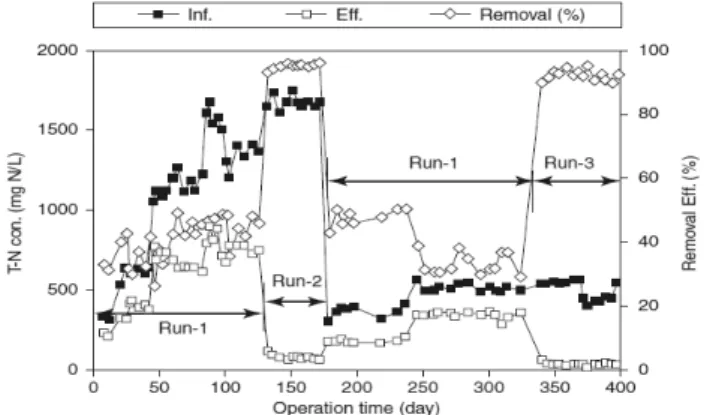
Figure 7 shows the removal of total nitrogen (TN) at different operating schemes. Removal efficiency of TN was as low as 30-50% at Run-1. With nitrogen balance mentioned above, simultaneous nitrification/denitrification (SND), stripping of free ammonia in aerated filter and cell synthesis and endogenously anoxic respiration might be the main pathway of TN removal at Run-1. For improvement of TN removal, final effluent containing nitrified nitrogen was recirculated to methanogenic UASB at Run-2 (Fig. 1). Nitrified nitrogen was completely denitrified in UASB without apparent decrease in methane production despite of nitrate inhibition of methanogenesis as shown in serum bottle tests. Nevertheless, an interesting observation reported by Barber and Stuckey (2000) was that denitrifying ABR promoted the methane production. It was based on the hypothesis, not proven, that dissimilatory nitrate reduction produced reduced nitrogen as a nutrient for methanogenic archaea and denitrification increased pH slightly, that could change the environmental condition for methanogenesis. For improvement of nitrogen removal in methanogenic reactor, Mosquera-Corral et al. (2001) added glucose to generate VFA, mainly acetic acid, as an external carbon source for denitrification. Elsewhere, alternatives with anaerobic reactor to produce VFA as an external and/or internal (in anaerobic-aerobic consist) carbon source for denitrification were attempted by using various wastes and wastewaters (Pavan et al., 1998; Rustrian et al., 1999; Elefsiniotis et al., 2004).
Therefore, some of the fermented products was directly pumped to denitrification filter to introduce heterotrophic denitrification, as an alternative to anammox, in this study (Run-2). In this case, nitrified nitrogen from aerated filter was also completely removed in the next denitrification filter. And, residual COD was additionally oxidized in next aerated stripper with no influence on effluent quality. With change in operational mode (Run-2), removal efficiency of TN was dramatically improved up to 96%. However, abrupt increase in biomass was observed in denitrification filter due to higher heterotrophic growth, which led to conduct backwashing. At Run-3, final effluent was recirculated to acidogenic CSTR to compare the performance of TN removal to those at Run-1 and Run-2. Recirculated nitrified nitrogen to the CSTR was also completely removed without inhibition or decrease in methane conversion efficiency to the next UASB. Removal efficiency of TN in overall system was also improved up to 94%, and the final effluent TN was below 50 mgN/L.
Fig. 7. Efficiency of total nitrogen removal.
Conclusions
In this study, TPAD combined with autotrophic BNR (anammox), was tested for nitrogen removal as well as methane production. Nitrogen removal by anammox could save organic matter and promote maximum methane yield in this system. Anammox system, however, was hardly developed
due to extremely lower growth rate of the microorganisms involved in the reaction. As an alternative for anammox, recirculation of the nitrified effluent to TPAD, and bypass of the VFA to anaerobic filter were applied for TN removal. Conclusively, denitrification in acidogenic CSTR occurred completely without any inhibition of both itself and subsequent methanogenesis. Nitrite denitrification, rather than nitrate, could decrease in consumption of VFA and generate alkalinity to moderate pH change. Moreover, methanogenic denitrification produced mixture gas of methane and nitrogen, while acidogenic denitrification produced valuable methane gas. For these possible reasons, optimum strategy could be suggested by recirculating the nitrified effluent to acidogenic CSTR, and the results are as follows.
1. The conversion efficiency of TCOD to methane from a strong animal wastewater was up to 72% and overall TCOD removal efficiency in TPAD-BNR system was as high as 97%. Methane production rate in methanogenic UASB was 0.7 L/L per day at OLR of 3.9 gTCOD/L per day. 2. In batch experiments, both acidogenic and methanogenic sludges showed denitrification
activities. Methanogenic activity was inhibited in the presence of both nitrate and nitrite, while acidogenic activity was not.
3. Partial nitrification was successfully performed in the nitrification filter, where the ratio of nitrite to ammonia was in the range between 1.1 and 1.4. However, autotrophic nitrogen removal was not observed in the denitrification filter.
4. Removal Efficiency of TN was as low as 30-50% in TPAD-BNR, without recirculation of the nitrified effluent at Run-1. However, it could be improved up to 94-96% by recirculating the nitrified effluent to methanogenic and/or acidogenic reactor. Denitrification in acidogenic reactor did not affect on methane conversion efficiency.
References
Akunna, J.C., Bizeau, C., and Moletta, R. (1992). Denitrification in anaerobic digester: Possibilities and influences of wastewater COD/N-NOX ratio. Environ. Technol. 13(9), 825.
Akunna, J.C., Bizeau, C., Moletta, R., Bernet, N., and Heduit, A. (1994). Combined organic carbon and complete nitrogen removal using anaerobic and aerobic upflow filters. Water Sci. Tech. 30(12), 297.
Ahn, Y.H., Hwang, I.S., and Min, K.S (2004). ANAMMOX and partial denitrification in anaerobic nitrogen removal from piggery waste. Water Sci. Tech. 49(5-6), 145.
Anthonisen, A.C. (1976). Inhibition of nitrification by ammonia and nitrous acid. J. Water Pollut.
Control Fed. 48, 835.
APHA-AWWA-WPCF. (1995). Standard Methods for the Examination of Water and Wastewater, 19th ed. Washington, DC.
Barber, W.P., and Stuckey, D.C. (2000). Nitrogen removal in a modified anaerobic baffled reactor (ABR): 1, Denitrification. Water Res. 34(9), 2413.
Bernet, N., Delgenes, N., Akunna, J. C., Delgenes, J.P, and Moletta, R. (2000). Combined anaerobic-aerobic SBR for the treatment of piggery wastewater. Water Res. 34(2), 611.
Christof, H., Martin, W., Karl-Heinz, R. and Georg, M.G. (2002). Two-phase anaerobic fermentation of organic waste in CSTR and UFAF-reactors. Bioresource Technol. 81, 19.
Clarens, M., Bernet, N., Delgenes, J.P., and Moletta, R. (1998). Effects of nitrogen oxides and denitrification by Pseudomonas stutzeri on acetotrophic methanogenesis by Methanosarcina mazei. FEMS Microbiol. Biotechnol. 25, 271.
Del Pozo, R., and Diez, V. (2003). Organic matter removal in combined anaerobic-aerobic fixed-film bioreactors. Water Res. 37, 3561.
Del Pozo, R., and Diez, V. (2005). Integrated anaerobic-aerobic fixed-film reactor for slaughterhouse wastewater treatment. Water Res. 39, 1114.
Elefsiniotis, P., Wareham, D.G., and Smith, M.O. (2004). Use of volatile fatty acids from an acid-phase digester for denitrification. J. Biotechnol. 114, 289.
George, T., Franklin, L.B., and David, H.S. (2004). Wastewater Engineering; Treatment and Reuse, Metcalf & Eddy, Inc., 4th ed. New York: McGraw Hill.
Han, S.K., Kim, S.H., and Shin, H.S. (2005). UASB treatment of wastewater with VFA and alcohol generated during hydrogen fermentation of food waste. Proc. Biochem. 40, 2897.
Hendriksen, H.V., and Ahring, B.K. (1996). Integrated removal of nitrate and carbon in an upflow anaerobic sludge blanket (UASB) reactor: Operating performance. Water Res. 30(6), 1451. Hunik, J.H. (1993). Engineering aspects of nitrification with immobilized cells. Ph. D. thesis,
Wageningen University, The Netherlands.
Hellinga, C., Schellen, A.A., Mulder, J.W., Van Loosdrecht, M.C.M., and Heijnen, J.J. (1998). The SHARON process: An innovate method for nitrogen removal from ammonium-rich wastewater.
Water Sci. Tech. 37, 135.
Im, J.H., Woo, H.J., Choi, M.W., Han, K.B., and Kim, C.W. (2001). Simultaneous of organic and nitrogen removal from munici-pal landfill leachate using an anaerobic-aerobic system. Water Res. 35(10), 2403.
Ince, O. (1998). Performance of a two-phase anaerobic digestion system when treating dairy wastewater. Water Res. 32(9), 2707.
Jetten, M.S.M., Strous, M., Van De Pas-Schoonen, K.T., Schalk, J., Van Dongen, U.G.J.M., Aan De Graaf, A.A., Logemann, S., Muyzer, G., Van Loosdrecht, M.C.M., and Kuenen, J.G. (1999). The anaerobic oxidation of ammonium. FEMS Microbiol. Rev. 22, 421.
Jun, H.B., Park, S.M., Park, N.B. and Kim, D.H. (2005). Denitrification ability of anaerobic mixed culture at different COD/NO3-N ratios. Proceedings of the 1st ASPIRE (Asia Pacific Regional Group Conference), Singapore.
Lin, Y.F., and Chen, K.C. (1995). Denitrification and methanogenesis in a co-immobilized mixed culture system. Water Res. 29(1), 35.
Mosquera-Corral, A., Sanchez, M., Campos, J.L., Mendez, R., and Lema, J.M. (2001). Simultaneous methanogenesis and denitrification of pretreated effluents from a fish canning industry. Water
Res. 35(2), 411.
Mulder, A., Van De Graaf, A.A., Robertson, L.A., and Kuenen, J.G. (1995). Anaerobic ammonium oxidation in a denitrifying fluidized bed reactor. FEMS Microbiol. Ecol. 16, 177.
Parawira, W., Murto, M., Zvauya, R., and Mattiasson, B. (2006). Comparative performance of a UASB reactor and an anaerobic packed-bed reactor when treating potato waste leachate. Renewable
Pavan, P., Battistoni, P., Traverso, P., Musacco, A., and Cecchi, F. (1998). Effect of addition of anaerobic fermented OFMSW (organic fraction of municipal solid waste) on biological nutrient removal (BNR) process: Preliminary results. Water Sci. Tech. 38(1), 327.
Quevedo, M., Guynot, E., and Muxi, L. (1996). Denitrifying potential of methanogenic sludge.
Biotechnol. Lett. 18(12), 1363.
Roy, R., and Conrad, R. (1999). Effect of methanogenic precursors (acetate, hydrogen, propionate) on the suppression of methane production by nitrate in anoxic rice field soil. FEMS Microbiol. 28, 301.
Rustrian, E., Delgenes, J.P., Bernet, N., and Moletta, R. (1999). Acidogenic activity: Process of carbon source generation for biological nutrient removal. Water Sci. Tech. 40(8), 25.
Sanchez, E., Borja, R., Traieso, L., Martin, A., and Colmenarejo, M.F. (2005). Effect of organic loading rate on the stability, operational parameters and performance of a secondary upflow anaerobic sludge bed reactor treating piggery waste. Bioresource Technol. 96, 335
Schmidt, I., Sliekers, O., Schmid, M. Bock, E., Fuerst, J., Kuenen, J. G., Jetten, M.S.M., and Strous, M. (2003). New concepts of microbial treatment processes for the nitrogen removal in wastewater.
FEMS Microbiol. Rev. 27, 481.
Shin, H.S., Han, S.K., Song, Y.C., and Lee, C.Y. (2001). Performance of UASB reactor treating leachate from acidogenic fermenter in the two-phase anaerobic digestion of food waste. Water
Res. 35(14), 3441.
Strous, M., Heijnen, J.J., Kuenen, J.G., and Jetten, M.S.M. (1998). The sequencing batch reactor as a powerful tool for the study of slowly growing anaerobic ammonium-oxidizing microorganisms.
Appl. Microbiol. Biotechnol. 50, 589.
Strous, M., Kuenen, J.G., and Jetten, M.S.M. (1999). Key physiology of anaerobic ammonium oxidation. Appl. Environ. Microbiol. 65, 3248.
Taichi, Y., Keita, T., Toichiro, K., and Kenji, F. (2006). Novel partial nitritation treatment for anaerobic digestion liquor of swine wastewater using swim-bed technology. J. Biosci. Bioeng. 102(6), 497. Tilche, A., Bortone, B., Forner, G., Indulti, M., Stante, L., and Tesini, O. (1994). Combination of
anaerobic digestion and denitrification in a hybrid upflow anaerobic filter integrated in a nutrient removal treatment plant. Water Sci. Tech. 30(12), 405.
Yun, H.J., and Kim D.J. (2003). Nitrite accumulation characteristics of high strength ammonia wastewater in an autotrophic nitrifying biofilm reactor. J. Chem. Technol. Biotechnol. 78, 377. Van De Graaf, A.A., Mulder, P., De Bruijn, P., Jetten, M.S.M., Robertson, L.A., and Kuenen, J.G.
(1995). Anaerobic oxidation of ammonium in a biologically mediated process. Appl. Environ.
Microbiol. 61, 1246.
Key words : Methane production, nitrogen removal, TPAD, autotrophic denitrification Corresponding author : E-mail. [email protected]; Tel. 82-31-290-0233