Caballeronia sordidicola strain PAMC 26510 was isolated from Psoroma sp., a lichen material, collected from Barton Peninsula of King George Island in Antarctica. The draft genome sequence of PAMC 26510 consisted of 224 contigs and they was 7,872,143 base pairs with 59.7% G+C content.
The genome included 7,580 protein coding sequences and 6 ribosomal RNA genes and 46 tRNA genes. The strain PAMC 26510 is also a metabolic generalist as we have observed in previous genomic studies in the arctic strain of Caballeronia sordidicola. The draft genomic sequences of PAMC 26510 had six CRISPR arrays on six contigs, and there were two clusters of CRISPR-associated genes that were linked with respective CRISPR arrays.
Keywords: Caballeronia sordidicola, Psoroma species, Antarctic, lichen
The strain PAMC 26510 was identified as Burkholderia sordidicola based on 16S rRNA sequence analysis and the strain was associated with a Psoroma species (Lee et al., 2012,
2014). The genus Burkholderia contains animal and plant pathogenic species, endophytes, and legume nodulators as well as environmental bacteria in soil and water (Angus et al., 2014). However the Burkholderia was proposed for animal and plant pathogens and a new generic name Paraburkholderia was coined to include so-called environmental isolates by the molecular typing and phylogenetic analysis (Sawana et al., 2014). The Caballeronia genus was proposed to include twelve Burkholderia and Paraburkholderia species with distinct phylogenetic lineage from the main phylogenetic lineages of Burkholderia and Paraburkholderia (Dobritsa and Samadpour, 2016). Members of the genus Caballeronia has been isolated from soil, wastewater-treatment system, fungus, or moss (Dobritsa and Samadpour, 2016). So the strain PAMC 26510 was assigned from Burkholderia sordidicola to Caballeronia sordidicola during the genome analysis.
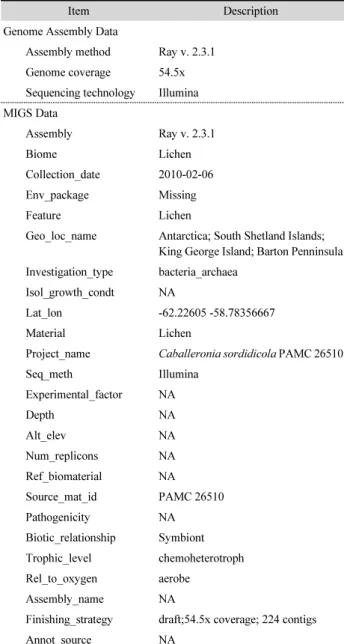
Here we report the draft genome sequence of the strain PAMC 26510 (Table 1). It was isolated from Psoroma sp., a lichen collected from Barton Peninsula of King George Island in the Antarctic (Lee et al., 2014). The draft genome sequence was determined using Illumina and was assembled with Ray
Korean Journal of Microbiology (2017) Vol. 53, No. 2, pp. 137-140 pISSN 0440-2413
DOI https://doi.org/10.7845/kjm.2017.7033 eISSN 2383-9902
Copyright ⓒ 2017, The Microbiological Society of Korea
Note (Genome Announcement)
Genome sequence of Caballeronia sordidicola strain PAMC 26510 isolated from Psoroma sp., an Antarctic lichen
Jhung Ahn Yang
1, Soon Gyu Hong
2, and Hyun-Myung Oh
1*
1
Department of Marine-Bio Convergence Science, Specialized Graduate School Science & Technology Convergence, Pukyong National University, Busan 48547, Republic of Korea
2
Division of Polar Life Sciences, Korea Polar Research Institute, Incheon 21990, Republic of Korea
남극 지의류에서 분리한 Caballeronia sordidicola 균주 PAMC 26510의 유전체 서열 분석
양정안
1・ 홍순규
2・ 오현명
1*
1
부경대학교 과학기술융합전문대학원,
2극지연구소
(Received June 1, 2017; Accepted June 8, 2017)
*For correspondence.
E-mail: [email protected];Tel.: +82-51-629-6869; Fax: +82-51-629-6865
138
∙ Yang et al.미생물학회지 제53권 제2호
software (v.2.3.1) (Boisvert et al., 2010). Assembly of genome analysis were carried out with 23-mer search option, which produced longest N50 (121,862 bp) and 225 contigs. Bedtools (bedtools genomecov; aka “genomeCoverageBed” v. 2.25.0) (Quinlan and Hall, 2010) was used to calculate genome coverage (Kim et al., 2017) and aligned Illumina reads corresponded to 54.5x coverage depth (Table 1). Finally 224 contigs were submitted to GenBank and the draft genome of PAMC 26510 was comprised of 7,872,143 base pairs with 59.7% GC content. One contig was filtered because it was
contaminant sequence with no hits to any known nucleotides in the GenBank database.
The genome included 7,580 protein coding sequences anno- tated by the methods described in the previous study (Kim et al., 2017). Annotation of some genes of interest was confirmed using BLAST search tool against National Center for Bio- technology Information (NCBI) database. The genome had 6 ribosomal RNA genes (four 5S rRNA genes) and 46 tRNA genes. Major genes covered varieties of enzymes involved in metabolism of carbohydrate, amino acid, nitrogen/sulfur, aro- matic compound, and vitamins. Glucose metabolism genes included Embden-Meyerhof-Parnas Pathway, Entner-Doudoroff Pathway, and Pentose phosphate pathway. Glycogen or starch metabolic genes and maltose phosphorylase and β-phosphoglucomutase were presented. Chitobiose could not be utilizable but N- acetylglucosamine could be processed by deacetylase and deaminases to glucose. PAMC 26510 had two kinds of lactate dehydrogenases that can form D-lactate and L-lactate from pyruvate from carbohydrate metabolisms. Acetyl-CoA fermen- tation to butyric acid is impaired because butanoyl-CoA dehydrogenase was missing for crotonyl-CoA that was converted from acetyl-CoA. Propanoate could be metabolized to succinate through propanoyl-CoA formation. Environmental response genes and regulators included stress response proteins, mem- brane transporters, antibiotic resistance genes, multidrug resistance efflux pumps, and heavy metal resistances. Twenty three phage-related genes were observed and there were three regions with transposable elements. Overall metabolic features were not different from PAMC26592 from the same species with poles apart location and different host lichen (Kim et al., 2017). By using the CRISPRDetect program for CRISPR array analysis (Biswas et al., 2016), there are several contigs that have clustered regularly interspaced short palindromic repeat (CRISPR) sequence on them, which is differentiating PAMC 26510 from previous arctic strain PAMC 26592 that had no CRISPR array (Kim et al., 2017). There are six CRISPR arrays by CRISPRDetect program and two contigs shared the same spacer sequences (GenBank Accessions: NBTY01000155.1 and NBTY01000222.1) (Table 2). CRISPR-related protein genes were adjacent to two contigs respectively (NBTY01000120.1 and NBTY01000155.1).
Table 1. Caballeronia sordidicola strain PAMC 26510 genome assembly and its general features
Item Description
Genome Assembly Data
Assembly method Ray v. 2.3.1 Genome coverage 54.5x Sequencing technology Illumina MIGS Data
Assembly Ray v. 2.3.1 Biome Lichen Collection_date 2010-02-06 Env_package Missing Feature Lichen
Geo_loc_name Antarctica; South Shetland Islands;
King George Island; Barton Penninsula Investigation_type bacteria_archaea
Isol_growth_condt NA
Lat_lon -62.22605 -58.78356667
Material Lichen
Project_name Caballeronia sordidicola PAMC 26510
Seq_meth Illumina
Experimental_factor NA Depth NA
Alt_elev NA
Num_replicons NA Ref_biomaterial NA
Source_mat_id PAMC 26510 Pathogenicity NA
Biotic_relationship Symbiont Trophic_level chemoheterotroph Rel_to_oxygen aerobe
Assembly_name NA
Finishing_strategy draft;54.5x coverage; 224 contigs Annot_source NA
Genome sequence of C. sordidicola PAMC 26510∙
139
Korean Journal of Microbiology, Vol. 53, No. 2
Table 2. CRISPR array list from draft genome of C. sordidicola strain PAMC 26510 in this study: (.) consensus sequences, (-) missing sequencesContig
(Accession) Position Repeat %identity Spacer Repeat sequence Spacer sequence Insertion/Deletion [position]
NBTY01000120.1 1 32 100 34 ... CATGCCACCGTACCCATGCCACCGTAATTTAGAT 67 32 100 34 ... GAGCGGGCAATCGACGAGGTTCGAAGACCGGGGA 133 32 100 35 ... TCAAACTGGACTTCGGACAAATCGATTTCGACGGT 200 32 100 35 ... GGTTGCTAGGGCGTGGGGCATACGCAAAACGCAAC 267 32 100 34 ... ACCTCGGCTTTAGAGGATGCAGCGAAAGCCGGAC 333 32 100 36 ... TATAGGTTCGACGCGCTACTCTGGGTCTACATATTC 401 32 100 35 ... AGAGCACGGCCAACTCGTCCGACTACGGTCGTAGC 468 32 100 34 ... CGCTGCCGACCGTATTGTCGATGAGGTGATCGAG 534 32 100 33 ... CAATCCGGCCAGTTTCTCGGCGCCATCGTGGTA 599 32 100 33 ... CGCGCATTTCACCGCCGATATCGTTGCCTATGA 664 32 100 35 ... GATGGTAGCCGTTGCCGTTGAATCAAACGAATGGT 731 32 100 0 ... |
12 32 100 35 GTTTCAACCCACGCGCCCGTGAAGAGCGCGAC
NBTY01000120.1 9725 31 100 35 ... GTCCAAGCGGTCGCCAGTCTTCAACGTGCCAAACG 9659 31 100 34 ... TTGCATCCAAAGCCCGTTGAGCCAATAAGCCGAC 9594 31 100 34 ... GCAAGAAACTCGCGCGGCTCCACCGGCGTGAGGT 9529 31 100 35 ... GACACAGTCAGCAAACTAGACGTCACGCGCCCGAG 9463 31 100 34 ... GCTTGATCTCACGGGCGCGCGCGTCGAACTGTGG 9398 31 100 36 ... GCCGCCCGCAAAAAACAAGCTGTTGATTGACTACGA 9331 31 100 35 ... CGACAATTCGTCGAGACGTGCGATACATCGGCTAA 9265 31 96.8 35 ...C... TGAATTGTTGCTGGCCTTGGCTATCGCCAAAGCGC 9199 31 100 36 ... ACCATCATGGCCGCGTGTGTGGACTCAGGCGGGCAC 9132 31 100 36 ... GCCACTGGCCGGGGCTGTAGCGAAGCCATTTACACC
9065 31 100 35 ... TATCGGGGCCTATGGGTGTATGGCAGCAAGCCGTT CGCGGGTG [9039]
8991 31 87.1 0 ...C...A...T...G | 12 31 98.7 35 GTCGCGTCCTCACGGGCGCGTGGGTTGAAAC
NBTY01000155.1 55095 28 100 32 ... AACCAGACACCACGCAGCGCAAAAAACATGGG 55155 28 100 32 ... TGACGATACACCAAGCGCGGATCTGTCAGCCC 55215 22 78.6 0 ...--- |
3 28 92.9 32 GTTTGCTGCCGCACAGGCAGCTCAGAAA
NBTY01000222.1 1 26 92.9 32 --... ATGAGGATCGTGGACGGCACGTCTACCAACTT 59 28 100 32 ... AGCGCGGCGTCATCGAAATGCAACTCGATGTA 119 28 100 32 ... GTCTTGCTCAACGACATAGCAGCGCCCGATCG 179 28 100 32 ... ACCCCGAAGGCATCGAAAAATTGAAGCCCATT 239 28 100 32 ... ACAAACATATCGACCGATCAGCGCGTGGCCGC 299 28 100 32 ... AGAAGCCGAGGAGAGCTTTGAGGTGGCCGCCA 359 28 100 32 ... TGCAGCAGCCCGACAGCTTTGTCGATGATGTC 419 28 89.3 0 ...C...G...C |
8 28 97.8 32 GTTTGCTGCCGCACAGGCAGCTCAGAAA NBTY01000194.1 56456 31 100 32 ... ATCATCTCGTCGAGCAGCGGCTCCGCATCGTC
56519 31 100 34 ... TTCATGTAAGCGGACCACTCATCGCCGCTCTTTT 56584 31 100 33 ... GATATTCGGTGCCGGCGTGGTTTCTGGGGACGG 56648 31 100 35 ... AGCTTGAGGCCCCTATCTATATGGGCGTTGAAACC 56714 31 100 36 ... AGCTTGCCTGATATGTGAGTATCCGCCGCCTCCGCC 56781 31 100 36 ... GATGACAGTGACCGGCGCGGGAGTGGCACCAGGCAC 56848 31 100 35 ... GTCGACGGCCGTAGCCGGGTTGATCTTGCCGCGCT 56914 31 100 35 ... GTCCAAGCGGTCGCCAGTCTTCAACGTGCCAAACG 56980 31 100 34 ... TTGCATCCAAAGCCCGTTGAGCCAATAAGCCGAC 57045 31 100 34 ... GCAAGAAACTCGCGCGGCTCCACCGGCGTGAGGT 57110 31 100 35 ... GACACAGTCAGCAAACTAGACGTCACGCGCCCGAG
57176 30 96.8 0 ...- - Deletion [57206]
57206 31 64.5 4 CG.TT.AT...C.C..C...CT GTGG Deletion [57241]
57241 31 100 36 ... GCCGCCCGCAAAAAACAAGCTGTTGATTGACTACGA 57308 31 100 0 ... |
15 31 97.4 30 GTCGCGTCCTCACGGGCGCGTGGGTTGAAAC
NBTY01000066.1 123058 32 100 36 ... TTCAATAGTTCAAGTTTCATTAACCTCCCAATAAGC 122990 32 100 36 ... CATGCGAGCCACCCGTAATCCGTCCCGCCGATACCG 122922 32 100 35 ... GAATCCAGCAATGCGCGTCATCAGTTCGGCGCGGC 122855 32 96.9 35 ...T... TGAAGCGCATCAACCTGACGCCGGTGACGGAGCAA 122788 32 100 35 ... TGCCAACGCTCGACAAGGCCGATGCGGTTATCACG 122721 32 100 34 ... GTGGGCAATATCTACGGTGTCATCGCGATCAAAG
122655 32 90.6 0 ...A..C.G... | C [122625]
7 32 98.2 35 GTCGCGCTCTTCACGGGCGCGTGGGTTGAAAC
140
∙ Yang et al.미생물학회지 제53권 제2호
Nucleotide sequence accession number(s)
This whole genome shotgun project has been deposited under the accession NBTY00000000 at GenBank. The version described in this paper is version NBTY 01000000 (NBTY 01000001-NBTY01000224). Small subunit rRNA sequence of Caballeronia sordidicola strain PAMC 26510 was deposited at GenBank under accession number KJ606826 according to previous study.
적 요
Caballeronia sordidicola 균주 PAMC 26510은 남극 킹조 지섬의 바톤반도에서 채집된 지의류인 Psoroma sp.에서 분리 되었다. 균주 PAMC 26510의 초안 유전체 서열은 224개의 콘 티그로 이루어졌으며, 총 7,872,143 염기쌍은 59.7% G+C 함 량을 나타냈다. 유전체는 7,580개의 단백질 유전자, 6개의 rRNA 유전자와 46개의 tRNA 유전자를 포함하였다. 균주 PAMC 26510는 이전에 연구한 Caballeronia sordidicola에 속 하는 북극 균주와 마찬가지로 대사능력에 있어서 광범위한 능 력을 가지고 있는 것으로 여겨진다. PAMC 26510의 초안 유전 체는 6개의 CRISPR arrays를 각각의 콘티그 상에 가지고 있으 며, 이중 두 개의 콘티그 상에 CRISPR-관련 유전자가 연결되 어 있었다.
Acknowledgements
This work was supported by the Korea Polar Research Institute (KOPRI, Grant PE17090) and was supported by a grant from the Collaborative Genome Program (20140428) funded by the Ministry of Oceans and Fisheries, Korea.
References
Angus, A.A., Agapakis, C.M., Fong, S., Yerrapragada, S., Estrada-de los Santos, P., Yang, P., Song, N., Kano, S., Caballero-Mellado, J., de Faria, S.M., et al. 2014. Plant-associated symbiotic Burkholderia species lack hallmark strategies required in mammalian pathogenesis. PLoS One 9, e83779.
Biswas, A., Staals, R.H.J., Morales, S.E., Fineran, P.C., and Brown, C.M. 2016. CRISPRDetect: A flexible algorithm to define CRISPR arrays. BMC Genomics 17, 356.
Boisvert, S., Laviolette, F., and Corbeil, J. 2010. Ray: simultaneous assembly of reads from a mix of high-throughput sequencing technologies. J. Comput. Biol. 17, 1519–1533.
Dobritsa, A.P. and Samadpour, M. 2016. Transfer of eleven species of the genus Burkholderia to the genus Paraburkholderia and proposal of Caballeronia gen. nov. to accommodate twelve species of the genera Burkholderia and Paraburkholderia. Int. J.
Syst. Evol. Microbiol. 66, 2836–2846.
Kim, J., Kwon, K.K., Kim, B.K., Hong, S.G., and Oh, H.M. 2017.
Genome sequence of Caballeronia sordidicola strain PAMC 26592 isolated from an arctic lichen species. Korean J. Microbiol.
53.
Lee, Y.M., Kim, G., Jung, Y.J., Choe, C.D., Yim, J.H., Lee, H.K., and Hong, S.G. 2012. Polar and Alpine Microbial Collection (PAMC): a culture collection dedicated to polar and alpine microorganisms. Polar Biol. 35, 1433–1438.
Lee, Y.M., Kim, E.H., Lee, H.K., and Hong, S.G. 2014. Biodiversity and physiological characteristics of Antarctic and Arctic lichens- associated bacteria. World J. Microbiol. Biotechnol. 30, 2711–
2721.
Quinlan, A.R. and Hall, I.M. 2010. BEDTools: a flexible suite of utilities for comparing genomic features. Bioinformatics 26, 841–
842.
Sawana, A., Adeolu, M., and Gupta, R.S. 2014. Molecular signatures and phylogenomic analysis of the genus Burkholderia: proposal for division of this genus into the emended genus Burkholderia containing pathogenic organisms and a new genus Paraburk- holderia gen. nov. harboring environmental species. Front Genet. 5, 429.