Chemotherapy
Infect Chemother 2014;46(1):1-12 pISSN 2093-2340 · eISSN 2092-6448
Received: February 7, 2014
Corresponding Author : Jung-Hyun Choi, MD, PhD
Division of Infectious Diseases, Department of Internal Medicine, Incheon St. Mary’s Hospital, 56 Dongsu-ro, Bupyeong-gu, Incheon 403-720, Korea
Tel: +82-32-280-5854, Fax: +82-32-280-5987 E-mail: [email protected]
This is an Open Access article distributed under the terms of the Creative Commons Attribution Non-Commercial License (http://creativecommons.org/licenses/by-nc/3.0) which permits unrestricted non-commercial use, distribution, and repro- duction in any medium, provided the original work is properly cited.
Copyrights © 2014 by The Korean Society of Infectious Diseases | Korean Society for Chemotherapy
www.icjournal.org
Biomarkers of Sepsis
Sung-Yeon Cho
1,2, and Jung-Hyun Choi
1,21Division of Infectious Diseases, Department of Internal Medicine, and 2Vaccine Bio Research Institute, The Catholic University of Korea College of Medicine, Seoul, Korea
Sepsis remains a leading cause of death in critically ill patients, despite efforts to improve patient outcome. Thus far, no magic drugs exist for severe sepsis and septic shock. Instead, early diagnosis and prompt initial management such as early goal-direct- ed therapy are key to improve sepsis outcome. For early detection of sepsis, biological markers (biomarkers) can help clinicians to distinguish infection from host response to inflammation. Ideally, biomarkers can be used for risk stratification, diagnosis, monitoring of treatment responses, and outcome prediction. More than 170 biomarkers have been identified as useful for evalu- ating sepsis, including C-reactive protein, procalcitonin, various cytokines, and cell surface markers. Recently, studies have re- ported on the usefulness of biomarker-guided antibiotic stewardships. However, the other side of these numerous biomarkers is that no novel single laboratory marker can diagnose, predict, and track the treatment of sepsis. The purpose of this review is to summarize several key biomarkers from recent sepsis studies.
Key Words: Biomarkers; Cytokines; Diagnosis; Outcome; Prognosis; Sepsis
Introduction
1. Sepsis: Where are we now?
Severe sepsis and septic shock are leading causes of death, representing 30–50% of hospital-reported mortality [1]. Sepsis treatment outcomes are disappointing, despite a long history of interventions, such as numerous antibiotics including peni- cillin, efforts to follow guidelines from the Surviving Sepsis Campaign (SSC), and development of supportive modalities for organ dysfunctions accompanying sepsis (e.g., dialysis, ventilators, extracorporeal membrane oxygenation). We have seen the rise and fall of recombinant human activated protein
C (drotrecogin alfa) for the treatment of severe sepsis, while the disappointing results might be explained by statistical in- significance stemming from the relatively lower mortality rate (25%) in the Protein C Worldwide Evaluation in Severe Sepsis (PROWESS) study [2, 3]. In addition to activated protein C, treatments with agents such as toll-like receptor (TLR) 4-blocker (eritoran) and human recombinant lactoferrin (ta- lactoferrin) are also viewed with skepticism [4-6]. Failure of these treatments in clinical trials might be predictable for sev- eral reasons. Sepsis is the result of a complex chain of events composed of innate and adaptive immune responses, includ- ing activation of the complement system, coagulation cas-
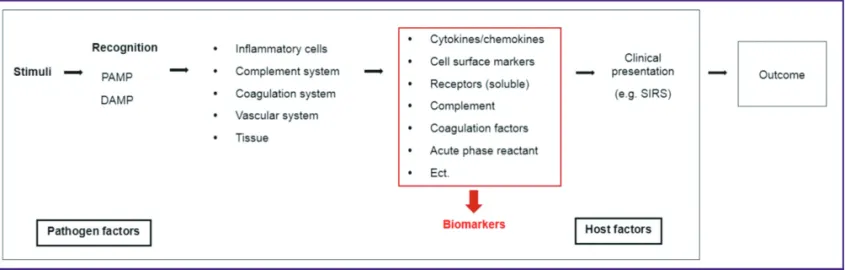
cades, and the vascular endothelial system (Fig. 1). Such com- plexity makes it difficult for new drugs targeting a single immunological event to improve sepsis outcome. In addition, immune responses are based on individual patient factors in- cluding age, underlying diseases, nutritional state, and even genetic variability. For this reason, treatments, especially im- munotherapy, have to be individualized. Furthermore, patho- gen factors also vary by patient. Given that adjunctive therapy for sepsis has shown disappointing results, conventional man- agement is of immediate importance in the real world. Practi- cally, “bundled care” for sepsis, with early administration of appropriate antibiotics and supportive care based on SSC guidelines, improves outcome [7, 8]. This emphasizes the ne- cessity for early and accurate detection of sepsis. However, a definite microbiological diagnosis cannot be made in approxi- mately one-third of patients with clinical manifestations of sepsis [9, 10]. For this reason, good biomarkers can guide the early diagnosis and management of sepsis. Here, we discuss sepsis biomarkers and directions for future research.
2. Pathophysiology of sepsis
Sepsis is the result of host response to infection by microbial pathogens, meaning that antimicrobial agents are insufficient for treatment of this infectious disease. In 1904, William Osler noted, “It appears that patients are dying not from their infec- tions but rather their reaction to them.” Sepsis has traditional- ly been considered as a result of uncontrolled inflammatory response, a “cytokine storm” that results in shock or organ dysfunction [11]. More than 30 clinical trials have focused on blocking these inflammatory cascades, such as steroids, tu- mor necrosis factor (TNF)-α antagonist, and anti-endotoxin.
However, the paradigm of sepsis understanding and treat-
ment has shifted toward its immunosuppressive effects [12].
For example, elderly patients with sepsis are lack of fever and other immune responses, that are associated with poor prog- nosis. Such immunosuppression is now considered a key pathogenesis associated with sepsis mortality. Immunosup- pressed conditions lead to secondary infections due to noso- comial pathogens such as Acinetobacter, Enterococcus, Steno- trophomonas, or Candida species, which could worsen outcome. In addition, several clinical trials have shown that immune-enhancing therapies such as recombinant human interleukin (IL)-7 and granulocyte-macrophage colony-stim- ulating factor may have beneficial effects [13, 14]. Immuno- suppression in sepsis has been also identified in post-mortem studies of patients who died of sepsis [11, 15]. There was a marked decrease in lipopolysaccharide (LPS)-stimulated cy- Figure 1. Systemic responses to sepsis and possible biomarkers. Systemic response to sepsis results from multiple changes to the inflammatory, coagulatory, and vascular systems. Candidate biomarkers include proteins such as cytokines, soluble receptors, and acute phase reactants.
DAMP, damage-associated molecular pattern; PAMP, pathogen-associated molecular pattern; SIRS, systemic inflammatory response syndrome.
Figure 2. Inflammatory response to sepsis. Immune response to sepsis is both proinflammatory and anti-inflammatory. An initial hyper-inflammatory phase is followed by a hypo-inflammatory (immunosuppressive) phase. Immunosuppres- sion in sepsis contributes to increased mortality in elderly patients. Ideally, good biomarkers can reflect the hyper- (A) or hypo-inflammatory (B) status and the direction of inflammatory response (A or C).
tokine secretion of mediators including TNF, interferon-γ, IL- 6, and IL-10 in splenocytes from patients diagnosed with sep- sis. In addition, immune effector cells, including clusters of differentiation (CD) 4, CD8 cells, and human leukocyte anti- gen-DR were significantly decreased in splenic tissue of pa- tients dying of sepsis compared to control patients [15]. Early hyper-inflammatory and late compensatory anti-inflammato- ry response syndromes are included in current immunologi- cal models of sepsis (Fig. 2). However, this is not a simple bi- phasic model in many cases. The degree and duration of immune response differs from patient to patient according to age, underlying physical state, comorbidities, pathogen viru- lence, pathogen burden, and genetic factors. These cycles may repeat, with waxing and waning of clinical symptoms. During the course of sepsis, the duration and degree of immunosup- pression could affect the outcome, which leads us to consider tailored immunomodulatory therapy.
Biomarkers of sepsis
An ideal biomarker can be objectively measured and reflects normal biological and pathogenic processes as well as re- sponses to therapeutic interventions [16]. Many trials have identified potential biomarkers. More than 170 biomarkers have been studied for use in evaluation of sepsis [17]. Devel- opment of sepsis changes the expression and activity of thou- sands of endogenous mediators of inflammation, coagulation, and intermediary metabolism [18, 19]. Even when biomarkers start at equal values, the effect of inflammatory responses can cause these values to change in opposite directions (Fig. 2).
While early diagnosis is helpful, biphasic or repeated biphasic models of sepsis make it difficult to predict mortality and prognosis based on initial biomarker levels. Nevertheless, the ideal biomarkers could play a role in sepsis screening, early diagnosis, risk stratification, critical assessment, and progno- sis prediction [19, 20], which can improve outcomes (Table 1).
This review will discuss the major measurable sepsis biomark- ers that have been proposed for clinical use.
1. Markers for early response to sepsis
The traditional sepsis model is the immune response acti- vated when TLR expressed on the macrophage recognizes LPS in cell walls of gram-negative bacteria. This is an example of pattern recognition receptors (PRR) and pathogen-associ- ated molecular patterns (PAMP). This recognition stimulates secretion of proinflammatory cytokines, such as TNF-α, IL-1β,
and IL-6. Various inflammatory cytokines and LPS have there- fore been studied as sepsis biomarkers.
1) Cytokines and chemokines
TNF-α, IL-1β, and IL-6 are cytokines responsible for media- tion of the initial innate immune system response to injury or infection. These proinflammatory cytokines contribute to fe- ver, activate endothelial cells, attract circulating polymorpho- nuclear cells (PMNs), and enter the circulatory system. Stud- ies have demonstrated increased blood cytokine levels in patients with sepsis. However, levels of these cytokines also increase after trauma, surgery, stroke, or with autoimmune diseases. Use of these inflammatory cytokines to diagnosis sepsis is difficult because they are nonspecific and unable to differentiate infection from inflammation. TNF-α and IL-6 lev- els have been reported to be related to organ damage and mortality, making them potentially useful prognosis predic- tors [21-23]. However, a clinical trial of pretreatment with polyclonal ovine anti-TNF fragment antigen binding frag- ments (CytoFab) showed no difference in 28-day mortality [24, 25]. The conflicting reports could be explained by the short half-life (the half-life of TNF, for example, is 17 minutes) and earlier peak concentration of proinflammatory cytokines than other biomarkers. IL-1β levels are not elevated to the same degree as TNF. Therefore, neither TNF nor IL-1β has proven to be useful as major biomarkers of sepsis. It is difficult to translate certain clinical condition into particular cytokine profile [26], which could be caused by and is the result of com- plex inflammatory responses. Recent studies have proposed that measurement of multiple cytokines correlates well with disease severity and prognosis [26-28]. Combined biomarkers will be addressed later.
Table 1. Characteristics of ideal sepsis biomarkers Role of biomarkers
Screening patients at risk of sepsis
Es tablish early diagnosis that helps the initial management of sepsis
Risk stratification to identify patients at risk of poor outcome Monitoring the response of intervention
Predict outcomes
Requisites for useful biomarkers Objectively measured Have reference standard Reproducibility of test Have well-known kinetics Cost-effectiveness
Re flect normal biologic process, pathologic process or pharmacologic response to therapy
2) Lipopolysaccharide-binding protein
LPS-binding protein (LBP), mainly synthesized in the liver, is a polypeptide that binds LPS. The LPS-LBP complex initi- ates signal transduction according to LBP level. This complex complex has a dual action, enhancing and inhibiting LPS sig- naling at low and higher levels, respectively [29]. Serum LBP level increases several-fold in sepsis, making it useful for diag- nosis [30, 31]. It may also be effective as a predictive marker for disease severity and outcome [32, 33]. However, LPS and LBP levels are affected by administration of antibiotics and generally do not correlate to the clinical course of sepsis [34].
Therefore, it is of limited use as a sepsis biomarker.
2. Markers for late response to sepsis
TNF-α and IL-1β are released within minutes of exposure to LPS. In the late 1990s, investigators found that LPS-treated mice died after serum TNF-α and IL-1β returned to basal lev- els, suggesting that mediators other than TNF-α might con- tribute to death. There are two well-known inflammatory me- diators, high-mobility group box 1 (HMGB1) protein and macrophage migration inhibitory factor (MIF), which are im- portant in late phase of severe infections.
1) High-mobility group box 1 protein
HMGB1 is a cytoplasmic and nuclear protein that is unde- tectable in healthy subjects. It is released by activated mono- cytes or necrotic tissues during infection or injury. This proin- flammatory cytokine reaches detectable levels after 8–12 hours and plateaus after 18–32 hours. Plasma HMGB1 con- centration has been shown to increase in patients with severe sepsis and septic shock and is correlated with the degree of organ failure [35, 36]. In a prospective study, HMGB1 mea- surements on day 3 discriminated survivors from non-survi- vors with a sensitivity and specificity of 66% and 67%, respec- tively. HMGB1 levels greater than 4 ng/mL on day 3 were associated with a 5.5-fold increased risk of death (95% confi- dence interval [CI]: 1.3–23.6) [37].
2) Macrophage migration inhibitory factor
The other “late” proinflammatory molecule, MIF normally circulates at low levels of 2–10 ng/mL [38]. Plasma MIF concen- tration increases during infection and very high levels have been found in cases with severe sepsis and septic shock [39]. A recent study concluded that high MIF levels serve as an early indicator of poor outcome in sepsis [40]. These results imply that late mediators such as HMGB1 and MIF could predict sepsis prognosis.
3. C-reactive protein
Tillet & Francis first discovered C-reactive protein (CRP) in a patient with lobar pneumonia in 1930. It was identified as a protein responsible for precipitating C polysaccharide during the acute phase of Streptococcus pneumonia infection [41].
CRP was also found in patients with endocarditis or rheumat- ic fever. Its response is stronger in acutely ill patients; levels decrease as patients recover. These characteristics make CRP a member of the class of acute-phase reactants. CRP is an old biomarker used most commonly in clinical settings. It is a nonspecific marker of inflammation that also increases after surgery, burns, myocardial infarctions, and rheumatic diseas- es [42]. The sensitivity and specificity of CRP as a marker for bacterial infections are 68–92% and 40–67%, respectively [43- 46]. Its low specificity and inability to differentiate bacterial infections from noninfectious causes of inflammation makes CRP of limited diagnostic value. However, CRP shows promise for evaluating sepsis severity and prognosis. CRP plasma lev- els have been shown to correlate with the severity of infection [47]. A rapid decrease in CRP levels has been reported to cor- relate with good response to initial antimicrobial therapy in septic patients [48]. CRP is a useful biomarker to monitor treatment response. However, hasty interpretation or antibiot- ic guidance within 1–2 days after starting empirical antibiotic treatment is problematic in many clinical situations. Clini- cians cannot interpret changes in CRP levels without consid- ering the kinetics of this marker.
4. Procalcitonin
Procalcitonin (PCT) is a precursor of calcitonin, a calcium regulatory hormone secreted from thyroid tissue in healthy individuals. In infectious conditions, PCT is released from nearly all tissues including lung, liver, kidney, pancreas, spleen, colon, and adipose tissues. In 1993, PCT was first de- scribed as a marker elevated in bacterial infections [49]. In 2008, PCT was proposed as an adjunctive diagnostic marker to differentiate acute bacterial infection from other inflamma- tory states by the American College of Critical Care Medicine and the Infectious Diseases Society of America [50]. In a sys- tematic review and meta-analysis, PCT was found to be more specific (specificity 81% [95% CI: 67–90%]) than CRP (67%
[95% CI: 56–77%]) for differentiating bacterial infection among hospitalized patients [46]. The cutoff median PCT value in this meta-analysis was 1.1 ng/mL (interquartile range: 0.5–2.0 ng/
mL). PCT cutoffs for diagnosis of sepsis or guidance of antibi- otic choice have not yet been fully determined; the sensitivity and specificity of this marker for diagnosis of sepsis are affect-
ed by different cutoff values. PCT values need to be further evaluated according to different sites of infection, hosts, and pathogens. Another recent meta-analysis showed that PCT is a useful marker for early diagnosis of sepsis in critically ill pa- tients, with sensitivity and specificity of 77% (95% CI: 72–81%) and 79% (95% CI: 74–84%), respectively [51]. PCT levels are also elevated after surgery, cardiogenic shock, heat shock, acute graft-versus-host disease, and immunotherapy such as granulocyte transfusion, which could limit its usefulness as a sepsis biomarker [52, 53]. PCT has also drawn attention be- cause it can be used for guidance of antibiotic stewardship to reduce inappropriate use of antibiotics [54]. However, many experts recommend that PCT-guided decision-making should be an adjunctive method based on consideration of the pa- tient’s clinical course.
5. Lactate
Serum lactate levels can reflect tissue hypoperfusion and anaerobic metabolism in severe sepsis and septic shock. At a cellular level, energy production depends on glucose and oxy- gen metabolism. Glycolysis converts glucose to pyruvate and yields 2 adenosine triphosphates (ATPs). Pyruvate then enters the Krebs cycle, which produces more ATPs. However, in hy- poxic circumstances, pyruvate is instead converted to lactate.
Elevated lactate levels and lactate-to-pyruvate ratios result mostly from increased glycolysis and lactate production as well as limited tissue oxygenation. Elevated levels are also re- lated to impaired hepatic lactate clearance and mitochondrial dysfunction [20]. Several studies have demonstrated that ele- vated lactate levels are related to mortality in patients with sepsis [55-58]. In a retrospective study of critically ill patients, serum lactate levels greater than 2 mmol/L on admission were associated with a 1.94–10.89-fold increased mortality com- pared to levels below 2 mmol/L [59]. In a large study of 1,278 patients with infections, those with lactate levels above 4 mmol/L had higher in-hospital mortality rates than patients with lactate levels less than 2.5 mmol/L (28.4% vs. 4.9%) [57].
Another study has reported that sustained hyperlactatemia is predictive of in-hospital mortality [60]. In contrast, however, early lactate clearance was associated with improved out- comes in patients with severe sepsis and septic shock [61]. A recent systematic review further confirmed the utility of moni- toring serial blood lactate and its value as a predictive marker of in-hospital mortality [58]. Recently, data from a retrospec- tive study by the Vasopressin Septic Shock Trial and a single- center septic shock cohort (St. Paul’s Hospital cohort) have suggested that even minimal increases in arterial lactate con-
centration within the reference range (1.4–2.3 mmol/L) may predict 28-day mortality (sensitivity and specificity of 86% and 27%, respectively). Furthermore, the data suggested that pa- tients with lactate levels below 1.4 mmol/L might benefit from vasopressin infusion [56]. Therefore, lactate screening and monitoring may be a valuable tool for risk stratification and to predict sepsis outcome.
6. Mid-regional proadrenomedullin
Like PCT, proadrenomedullin (proADM) is a kind of “hor- mokine” that encompasses the cytokine-like behavior of hor- mones during inflammation and infections. Adrenomedullin (ADM) is a 52-amino-acid peptide produced by the adrenal medulla. ADM is produced during physiological stress and has various functions including vasodilation and anti-inflam- matory and antimicrobial effects [62]. Plasma ADM concen- tration and ADM gene expression increases in patients with sepsis [63]. However, ADM is rapidly cleared from the circula- tion, making measurements unreliable. Therefore, instead of ADM, serum quantification of the mid-regional fragment of proADM has been studied. Recent clinical data have shown that circulating mid-regional proADM levels are significantly higher in patients with sepsis than in patients with systemic inflammatory response syndrome (SIRS) [64]. A recent study of febrile patients with hematologic malignancies reported that proADM could predict localized bacterial infections and differentiate sepsis from SIRS [65]. In addition, proADM is re- sponsible for hypotension associated with severe sepsis, which has been proposed as a good marker for risk assess- ment and predicting sepsis prognosis [64, 66]. If further data support these findings on the predictive value of proADM, it could be useful as both a prognostic marker and a diagnostic marker for early stages of localized infections.
7. Cell surface markers and soluble receptors
1) CD64
CD64 is a membrane glycoprotein with increased expres- sion in patients with bacterial infections. CD64 expression in- creases hours after activation of innate immunity; it is not ex- pressed by PMN in healthy individuals. Therefore, CD64 expression can reflect very early stages of infection and help to both make early diagnosis and predict prognosis. The CD64 index has been suggested to be predictive of positive bacterial cultures and a useful test for management of sepsis and other significant bacterial infections [67]. Another study demon- strated that the CD64 index is higher in febrile adult patients
with bacterial infections, with a sensitivity of 87% (95% CI: 79–
92%), and that high CD64 expression is related to survival [68].
In contrast, it has been reported that CD64 indices greater than 2.2 are specific (89% specificity [95% CI: 83–94%]) but less sensitive (63% sensitivity [95% CI: 55–71%]) to predict bacterial infections in critically ill patients [69]. A systematic review and meta-analysis concluded that CD64 could be a marker for bacterial infection with a pooled sensitivity and specificity of 79% (95% CI: 70–86%) and 91% (95% CI: 85–
95%), respectively. However, because published studies have low methodological quality, further studies are needed to ver- ify these findings [70].
2) Soluble triggering receptor expressed on myeloid cells 1
Soluble triggering receptor expressed on myeloid cell 1 (sTREM-1) is a soluble form of TREM-1, a glycopeptide recep- tor expressed on the surface of myeloid cells such as PMNs, mature monocytes, and macrophages. TREM-1 expression in- creases in bacterial or fungal infections [71-73]. A prospective study by Gibot et al. suggested that the sensitivity and speci- ficity of sTREM-1 for diagnosis of sepsis are comparable to that of CRP and PCT [74, 75]. A meta-analysis reported that the sensitivity and specificity of sTREM-1 to diagnose bacteri- al infections were 82% (95% CI: 68–90%) and 86% (95% CI:
77–91%), respectively [76]. Another recent meta-analysis showed that plasma sTREM-1 had only moderate diagnostic performance to differentiate sepsis from SIRS [77]. A prospec- tive study at a single center in Korea reported that sTREM-1 levels on admission were independently significant for surviv- al in patients with severe sepsis [78]. In addition, rapid de- crease of sTREM-1 is correlated with better outcome [72].
Therefore, sTREM-1 may be useful for sepsis diagnosis or pre- dicting sepsis prognosis. The usefulness of sTREM-1 as a bio- marker requires further evaluation in clinical settings either measured alone or combined with other biomarkers.
3) Soluble urokinase plasminogen activator receptor First described in 1990, urokinase plasminogen activator re- ceptor (uPAR) is a surface signaling receptor expressed on most leukocytes [79]. uPAR was originally thought to assist di- rectional invasion of migrating cells, but is now known to be involved in multiple immunological functions including cellu- lar adhesion, differentiation, proliferation and angiogenesis, as well as migration [80]. During inflammatory processes, uPAR is cleaved from the cell surface by proteases and re- leased as soluble uPAR (suPAR). It is measurable in blood and
body fluids including urine, cerebrospinal fluid, bronchial washing fluid, and saliva. suPAR plasma levels reflect immune activation in response to bacterial or viral infection, cancer, burns, and rheumatic diseases. suPAR levels are significantly higher in patients with sepsis than those without and also higher in critically ill patients than control patients [81]. How- ever, recent studies have demonstrated that suPAR has a lower diagnostic value for sepsis (areas under receiver operating characteristic curves [AUC-ROC] of 0.62) than CRP or PCT [82-84]. Several studies have suggested suPAR to be an infor- mative marker for severity of sepsis [81, 84-87]. In a prospec- tive study of 543 acutely-ill patients, baseline suPAR levels were significantly associated with 30 day- and 90 day-mortali- ty after adjusting for age, CRP, and Charlson’s comorbidity in- dex [86]. In a recent systematic review, suPAR was superior to other biomarkers, including CRP, PCT, and sTREM-1 for pre- dicting prognosis [84]. Overall, suPAR might have better prog- nostic value to predict mortality instead of diagnosing sepsis.
8. Angiopoietin
Angiopoietin (Ang)-1 and -2 are endothelial-derived vascu- lar growth factors that play opposing roles during sepsis. Ang- 1 stabilizes the endothelium, whereas Ang-2 facilitates loss of endothelial integrity and vascular leakage. Ang-1 or Ang-2 ac- tivates the transmembrane endothelial tyrosine kinase Tie2, which mediates the quiescent, healthy state of blood vessels [88].
Ang-2 plays a crucial role in induction of inflammation [88, 89].
Elevated levels of circulating Ang-2 are associated with sepsis with multi-organ dysfunction, which is indicative of impaired vascular endothelial integrity. A cohort study revealed that el- evated Ang-1 and lower Ang-2 levels were observed in sepsis survivors [90]. The endothelium and Ang-Tie2 receptor ligand system have been the recent focus of ongoing sepsis studies.
9. Combined biomarkers and sepsis scoring systems We have discussed several sepsis biomarkers. Numerous biomarkers have been evaluated for clinical use in sepsis, with moderate to good sensitivity and specificity for diagnosis and prognosis. However, the results of measuring a single bio- marker are inconclusive in clinical settings. Owing to this limi- tation, combination approaches measuring multiple biomark- ers have recently been introduced. “Scoring systems” have also been developed, which use both clinical and laboratory markers [28, 91, 92]. In 2003, the infection probability score (IPS) was introduced to assess the probability of infection in critically ill patients. The IPS ranges from 0 to 26 points, and includes patient body temperature (0–2 points), heart rate
(0–1 points), respiratory rate (0–1 points), white blood cell counts (0–3 points), CRP (0–6 points), and sepsis-related or- gan failure assessment score (0–2 points). The AUC-ROC of IPS was 0.82 for predicting the probability of infection. Pa- tients with <14 points have only a 10% risk of infection [93].
Several clinical examples of combinations of biomarkers and scoring for sepsis are shown in Table 2 [27, 31, 44, 82, 91, 92, 94, 95].
Combined biomarkers and inclusion of sepsis scoring sys- tems showed better AUC-ROC values than single biomarkers.
Theoretically, combining multiple markers can improve diag- nostic and prognostic values, because sepsis is composed of multiple immune responses with various changes in cyto- kines and biomarkers. However, which and how many combi- nations of biomarkers are most informative have not yet been investigated for use as a high-throughput technology. Cost-ef- fectiveness and comprehensive clinical interpretation must also be evaluated.
Conclusions
Biomarkers are useful for early diagnosis of sepsis, to predict outcome, and to guide choice of antibiotic therapy. In these modern times, clinicians encounter the laboratory results on a daily basis. Therefore, proper interpretation and wise use of biomarkers are necessary. Combination approaches of bio- markers with new techniques needs to be further evaluated.
References
1. Levy MM, Dellinger RP, Townsend SR, Linde-Zwirble WT, Marshall JC, Bion J, Schorr C, Artigas A, Ramsay G, Beale R, Parker MM, Gerlach H, Reinhart K, Silva E, Harvey M, Regan S, Angus DC. The Surviving Sepsis Campaign: re- sults of an international guideline-based performance im- provement program targeting severe sepsis. Intensive Care Med 2010;36:222-31.
2. Ranieri VM, Thompson BT, Barie PS, Dhainaut JF, Douglas IS, Finfer S, Gårdlund B, Marshall JC, Rhodes A, Artigas A, Payen D, Tenhunen J, Al-Khalidi HR, Thompson V, Janes J, Macias WL, Vangerow B, Williams MD; PROWESS- SHOCK Study Group. Drotrecogin alfa (activated) in adults with septic shock. N Engl J Med 2012;366:2055-64.
3. Vincent JL. The rise and fall of drotrecogin alfa (activated).
Lancet Infect Dis 2012;12:649-51.
4. Guntupalli K, Dean N, Morris PE, Bandi V, Margolis B, Riv- ers E, Levy M, Lodato RF, Ismail PM, Reese A, Schaumberg JP, Malik R, Dellinger RP; TLF LF-0801 Investigator Group.
A phase 2 randomized, double-blind, placebo-controlled study of the safety and efficacy of talactoferrin in patients with severe sepsis. Crit Care Med 2013;41:706-16.
5. McCulloh R, Opal SM. Human recombinant lactoferrin for sepsis: too good to be true? Crit Care Med 2013;41:908-9.
6. Opal SM, Laterre PF, Francois B, LaRosa SP, Angus DC, Mira JP, Wittebole X, Dugernier T, Perrotin D, Tidswell M, Jauregui L, Krell K, Pachl J, Takahashi T, Peckelsen C, Cor- dasco E, Chang CS, Oeyen S, Aikawa N, Maruyama T, Table 2. Several clinical examples of combined sepsis biomarkers
Authors [references] Markers Outcome Results
Bozza et al. [27] MCP-1, APACHE-II Predict 28-day mortality AUC-ROC of 0.89
Selberg et al. [44] PCT, C3a Differentiate sepsis from SIRS AUC-ROC of 0.93a
Kofoed et al. [82] su PAR, sTREM-1, MIF, CRP, PCT, WBC
D ifferentiate bacterial infection from SIRS
AUC-ROC of 0.88
Gibot et al. [91] sTREM, PCT, CD64 Diagnose sepsis AUC-ROC of 0.95b
Shapiro et al. [92] NGAL, protein C, IL-1ra P redict severe sepsis, septic shock, and death
AUC-ROC of 0.80, 0.77, and 0.79c
Kofoed et al. [94] suPAR, sTREM-1, MIF, age 30-day and 180-day mortality AUC-ROC of 0.93 and 0.87 Harbarth et al. [95] Temperature, HR, BP, WBC, PCT Differentiate sepsis from SIRS AUC-ROC of 0.94
ap (sepsis) = e(−28.6106 + 0.8912 × ln(PCT) + 4.3571 ×ln(C3a)/[1 + e(−28.6106 + 0.8912 × ln(PCT) + 4.3571 × ln(C3a)].
b“bioscore” was calculated by scoring as 0 or 1 values below or above each threshold value for sTREM, PCT, and CD64 index.
cSepsis Score = probability of severe sepsis = [e(raw score)/1 + e(raw score)] × 100; Raw Score = −8.7 + 0.63 (NGAL quartile) + 0.41 (IL-1ra quartile) + 0.50 (protein C quartile) APACHE-II, acute physiology and chronic health evaluation II; AUC-ROC, areas under receiver operating characteristic curves; BP, blood pressure; CD, cluster of differen- tiation; CRP, C-reactive protein; C3a, complement 3a; HR, heart rate; IL-1ra, interleukin-1 receptor antagonist; MCP, monocyte chemoattractant protein; MIF, macrophage migration inhibitory factor; NGAL, neutrophil gelatinase-associated lipocalin; PCT, procalcitonin; sTREM-1, soluble triggering receptor expressed on myeloid cell-1, suPAR;
soluble form of urokinase-type plasminogen activator receptor, WBC; white blood cell.
Schein R, Kalil AC, Van Nuffelen M, Lynn M, Rossignol DP, Gogate J, Roberts MB, Wheeler JL, Vincent JL; ACCESS Study Group. Effect of eritoran, an antagonist of MD2- TLR4, on mortality in patients with severe sepsis: the AC- CESS randomized trial. JAMA 2013;309:1154-62.
7. Dellinger RP, Levy MM, Rhodes A, Annane D, Gerlach H, Opal SM, Sevransky JE, Sprung CL, Douglas IS, Jaeschke R, Osborn TM, Nunnally ME, Townsend SR, Reinhart K, Kleinpell RM, Angus DC, Deutschman CS, Machado FR, Rubenfeld GD, Webb SA, Beale RJ, Vincent JL, Moreno R;
Surviving Sepsis Campaign Guidelines Committee includ- ing the Pediatric Subgroup. Surviving sepsis campaign: in- ternational guidelines for management of severe sepsis and septic shock: 2012. Crit Care Med 2013;41:580-637.
8. Choi JH. Recent evidences of sepsis treatment. Infect Che- mother 2008;40:67-75.
9. Sands KE, Bates DW, Lanken PN, Graman PS, Hibberd PL, Kahn KL, Parsonnet J, Panzer R, Orav EJ, Snydman DR, Black E, Schwartz JS, Moore R, Johnson BL Jr, Platt R; Aca- demic Medical Center Consortium Sepsis Project Work- ing Group. Epidemiology of sepsis syndrome in 8 aca- demic medical centers. JAMA 1997;278:234-40.
10. Vincent JL, Sakr Y, Sprung CL, Ranieri VM, Reinhart K, Gerlach H, Moreno R, Carlet J, Le Gall JR, Payen D; Sepsis Occurrence in Acutely Ill Patients Investigators. Sepsis in European intensive care units: results of the SOAP study.
Crit Care Med 2006;34:344-53.
11. Hotchkiss RS, Karl IE. The pathophysiology and treatment of sepsis. N Engl J Med 2003;348:138-50.
12. Hotchkiss RS, Monneret G, Payen D. Immunosuppression in sepsis: a novel understanding of the disorder and a new therapeutic approach. Lancet Infect Dis 2013;13:260-8.
13. Unsinger J, McGlynn M, Kasten KR, Hoekzema AS, Wata- nabe E, Muenzer JT, McDonough JS, Tschoep J, Ferguson TA, McDunn JE, Morre M, Hildeman DA, Caldwell CC, Hotchkiss RS. IL-7 promotes T cell viability, trafficking, and functionality and improves survival in sepsis. J Immu- nol 2010;184:3768-79.
14. Meisel C, Schefold JC, Pschowski R, Baumann T, Hetzger K, Gregor J, Weber-Carstens S, Hasper D, Keh D, Zucker- mann H, Reinke P, Volk HD. Granulocyte-macrophage colony-stimulating factor to reverse sepsis-associated im- munosuppression: a double-blind, randomized, placebo- controlled multicenter trial. Am J Respir Crit Care Med 2009;180:640-8.
15. Boomer JS, To K, Chang KC, Takasu O, Osborne DF, Wal- ton AH, Bricker TL, Jarman SD 2nd, Kreisel D, Krupnick
AS, Srivastava A, Swanson PE, Green JM, Hotchkiss RS.
Immunosuppression in patients who die of sepsis and multiple organ failure. JAMA 2011;306:2594-605.
16. Biomarkers Definitions Working Group. Biomarkers and surrogate endpoints: preferred definitions and conceptual framework. Clin Pharmacol Ther 2001;69:89-95.
17. Pierrakos C, Vincent JL. Sepsis biomarkers: a review. Crit Care 2010;14:R15.
18. Calvano SE, Xiao W, Richards DR, Felciano RM, Baker HV, Cho RJ, Chen RO, Brownstein BH, Cobb JP, Tschoeke SK, Miller-Graziano C, Moldawer LL, Mindrinos MN, Davis RW, Tompkins RG, Lowry SF; Inflamm and Host Response to Injury Large Scale Collab. Res. Program. A network- based analysis of systemic inflammation in humans. Na- ture 2005;437:1032-7.
19. Marshall JC, Reinhart K; International Sepsis Forum. Bio- markers of sepsis. Crit Care Med 2009;37:2290-8.
20. Samraj RS, Zingarelli B, Wong HR. Role of biomarkers in sepsis care. Shock 2013;40:358-65.
21. Pettilä V, Hynninen M, Takkunen O, Kuusela P, Valtonen M.
Predictive value of procalcitonin and interleukin 6 in criti- cally ill patients with suspected sepsis. Intensive Care Med 2002;28:1220-5.
22. Oberholzer A, Souza SM, Tschoeke SK, Oberholzer C, Abouhamze A, Pribble JP, Moldawer LL. Plasma cytokine measurements augment prognostic scores as indicators of outcome in patients with severe sepsis. Shock 2005;23:488- 93.
23. Pinsky MR, Vincent JL, Deviere J, Alegre M, Kahn RJ, Du- pont E. Serum cytokine levels in human septic shock. Re- lation to multiple-system organ failure and mortality.
Chest 1993;103:565-75.
24. Qiu P, Cui X, Barochia A, Li Y, Natanson C, Eichacker PQ.
The evolving experience with therapeutic TNF inhibition in sepsis: considering the potential influence of risk of death. Expert Opin Investig Drugs 2011;20:1555-64.
25. Rice TW, Wheeler AP, Morris PE, Paz HL, Russell JA, Edens TR, Bernard GR. Safety and efficacy of affinity-purified, an- ti-tumor necrosis factor-alpha, ovine fab for injection (Cy- toFab) in severe sepsis. Crit Care Med 2006;34:2271-81.
26. Lvovschi V, Arnaud L, Parizot C, Freund Y, Juillien G, Ghillani-Dalbin P, Bouberima M, Larsen M, Riou B, Goro- chov G, Hausfater P. Cytokine profiles in sepsis have limit- ed relevance for stratifying patients in the emergency de- partment: a prospective observational study. PLoS One 2011;6:e28870.
27. Bozza FA, Salluh JI, Japiassu AM, Soares M, Assis EF,
Gomes RN, Bozza MT, Castro-Faria-Neto HC, Bozza PT.
Cytokine profiles as markers of disease severity in sepsis:
a multiplex analysis. Crit Care 2007;11:R49.
28. Andaluz-Ojeda D1, Bobillo F, Iglesias V, Almansa R, Rico L, Gandía F, Resino S, Tamayo E, de Lejarazu RO, Bermejo- Martin JF. A combined score of pro- and anti-inflammato- ry interleukins improves mortality prediction in severe sepsis. Cytokine 2012;57:332-6.
29. Jerala R. Structural biology of the LPS recognition. Int J Med Microbiol 2007;297:353-63.
30. Zweigner J, Gramm HJ, Singer OC, Wegscheider K, Schumann RR. High concentrations of lipopolysaccha- ride-binding protein in serum of patients with severe sep- sis or septic shock inhibit the lipopolysaccharide response in human monocytes. Blood 2001;98:3800-8.
31. Gaïni S, Koldkjaer OG, Pedersen C, Pedersen SS. Procalci- tonin, lipopolysaccharide-binding protein, interleukin-6 and C-reactive protein in community-acquired infections and sepsis: a prospective study. Crit Care 2006;10:R53.
32. Opal SM, Scannon PJ, Vincent JL, White M, Carroll SF, Palardy JE, Parejo NA, Pribble JP, Lemke JH. Relationship between plasma levels of lipopolysaccharide (LPS) and LPS-binding protein in patients with severe sepsis and septic shock. J Infect Dis 1999;180:1584-9.
33. Sakr Y, Burgett U, Nacul FE, Reinhart K, Brunkhorst F. Li- popolysaccharide binding protein in a surgical intensive care unit: a marker of sepsis? Crit Care Med 2008;36:2014- 22.
34. Choi JH, Shin WS. Pathogenesis of sepsis and concepts of immunotherapy. Korean J Infect Dis 2000;32:148-57.
35. Sundén-Cullberg J, Norrby-Teglund A, Rouhiainen A, Rau- vala H, Herman G, Tracey KJ, Lee ML, Andersson J, Tokics L, Treutiger CJ. Persistent elevation of high mobility group box-1 protein (HMGB1) in patients with severe sepsis and septic shock. Crit Care Med 2005;33:564-73.
36. Hatada T, Wada H, Nobori T, Okabayashi K, Maruyama K, Abe Y, Uemoto S, Yamada S, Maruyama I. Plasma concen- trations and importance of High Mobility Group Box pro- tein in the prognosis of organ failure in patients with dis- seminated intravascular coagulation. Thromb Haemost 2005;94:975-9.
37. Gibot S, Massin F, Cravoisy A, Barraud D, Nace L, Levy B, Bollaert PE. High-mobility group box 1 protein plasma concentrations during septic shock. Intensive Care Med 2007;33:1347-53.
38. Petrovsky N, Socha L, Silva D, Grossman AB, Metz C, Bu- cala R. Macrophage migration inhibitory factor exhibits a
pronounced circadian rhythm relevant to its role as a glu- cocorticoid counter-regulator. Immunol Cell Biol 2003;81:137-43.
39. Calandra T, Echtenacher B, Roy DL, Pugin J, Metz CN, Hultner L, Heumann D, Männel D, Bucala R, Glauser MP.
Protection from septic shock by neutralization of macro- phage migration inhibitory factor. Nat Med 2000;6:164-70.
40. Bozza FA, Gomes RN, Japiassú AM, Soares M, Castro-Far- ia-Neto HC, Bozza PT, Bozza MT. Macrophage migration inhibitory factor levels correlate with fatal outcome in sepsis. Shock 2004;22:309-13.
41. Tillett WS, Francis T. Serological reactions in pneumonia with a non-protein somatic fraction of pneumococcus. J Exp Med 1930;52:561-71.
42. Vincent JL, Donadello K, Schmit X. Biomarkers in the criti- cally ill patient: C-reactive protein. Crit Care Clin 2011;
27:241-51.
43. Müller B, Becker KL, Schächinger H, Rickenbacher PR, Huber PR, Zimmerli W, Ritz R. Calcitonin precursors are reliable markers of sepsis in a medical intensive care unit.
Crit Care Med 2000;28:977-83.
44. Selberg O, Hecker H, Martin M, Klos A, Bautsch W, Köhl J.
Discrimination of sepsis and systemic inflammatory re- sponse syndrome by determination of circulating plasma concentrations of procalcitonin, protein complement 3a, and interleukin-6. Crit Care Med 2000;28:2793-8.
45. Suprin E, Camus C, Gacouin A, Le Tulzo Y, Lavoue S, Feuillu A, Thomas R. Procalcitonin: a valuable indicator of infection in a medical ICU? Intensive Care Med 2000;26:1232-8.
46. Simon L, Gauvin F, Amre DK, Saint-Louis P, Lacroix J. Se- rum procalcitonin and C-reactive protein levels as mark- ers of bacterial infection: a systematic review and meta- analysis. Clin Infect Dis 2004;39:206-17.
47. Póvoa P, Coelho L, Almeida E, Fernandes A, Mealha R, Moreira P, Sabino H. C-reactive protein as a marker of in- fection in critically ill patients. Clin Microbiol Infect 2005;11:101-8.
48. Schmit X, Vincent JL. The time course of blood C-reactive protein concentrations in relation to the response to initial antimicrobial therapy in patients with sepsis. Infection 2008;36:213-9.
49. Assicot M, Gendrel D, Carsin H, Raymond J, Guilbaud J, Bohuon C. High serum procalcitonin concentrations in patients with sepsis and infection. Lancet 1993;341:515-8.
50. O'Grady NP1, Barie PS, Bartlett JG, Bleck T, Carroll K, Kalil AC, Linden P, Maki DG, Nierman D, Pasculle W, Masur H;
American College of Critical Care Medicine; Infectious Diseases Society of America. Guidelines for evaluation of new fever in critically ill adult patients: 2008 update from the American College of Critical Care Medicine and the Infectious Diseases Society of America. Crit Care Med 2008;36:1330-49.
51. Wacker C, Prkno A, Brunkhorst FM, Schlattmann P. Pro- calcitonin as a diagnostic marker for sepsis: a systematic review and meta-analysis. Lancet Infect Dis 2013;13:426- 35.
52. Reinhart K, Meisner M. Biomarkers in the critically ill pa- tient: procalcitonin. Crit Care Clin 2011;27:253-63.
53. Schuetz P, Affolter B, Hunziker S, Winterhalder C, Fischer M, Balestra GM, Hunziker P, Marsch S. Serum procalcito- nin, C-reactive protein and white blood cell levels follow- ing hypothermia after cardiac arrest: a retrospective co- hort study. Eur J Clin Invest 2010;40:376-81.
54. Kopterides P, Siempos, II, Tsangaris I, Tsantes A, Arma- ganidis A. Procalcitonin-guided algorithms of antibiotic therapy in the intensive care unit: a systematic review and meta-analysis of randomized controlled trials. Crit Care Med 2010;38:2229-41.
55. Mikkelsen ME1, Miltiades AN, Gaieski DF, Goyal M, Fuchs BD, Shah CV, Bellamy SL, Christie JD. Serum lactate is as- sociated with mortality in severe sepsis independent of organ failure and shock. Crit Care Med 2009;37:1670-7.
56. Wacharasint P, Nakada TA, Boyd JH, Russell JA, Walley KR.
Normal-range blood lactate concentration in septic shock is prognostic and predictive. Shock 2012;38:4-10.
57. Shapiro NI, Howell MD, Talmor D, Nathanson LA, Lisbon A, Wolfe RE, Weiss JW. Serum lactate as a predictor of mortality in emergency department patients with infec- tion. Ann Emerg Med 2005;45:524-8.
58. Kruse O, Grunnet N, Barfod C. Blood lactate as a predictor for in-hospital mortality in patients admitted acutely to hospital: a systematic review. Scand J Trauma Resusc Emerg Med 2011;19:74.
59. Khosravani H1, Shahpori R, Stelfox HT, Kirkpatrick AW, Laupland KB. Occurrence and adverse effect on outcome of hyperlactatemia in the critically ill. Crit Care 2009;13:R90.
60. Claridge JA, Crabtree TD, Pelletier SJ, Butler K, Sawyer RG, Young JS. Persistent occult hypoperfusion is associated with a significant increase in infection rate and mortality in major trauma patients. J Trauma 2000;48:8-14; discus- sion 14-5.
61. Nguyen HB, Rivers EP, Knoblich BP, Jacobsen G, Muzzin A,
Ressler JA, Tomlanovich MC. Early lactate clearance is as- sociated with improved outcome in severe sepsis and sep- tic shock. Crit Care Med 2004;32:1637-42.
62. Linscheid P, Seboek D, Zulewski H, Keller U, Müller B. Au- tocrine/paracrine role of inflammation-mediated calcito- nin gene-related peptide and adrenomedullin expression in human adipose tissue. Endocrinology 2005;146:2699- 708.
63. Hinson JP, Kapas S, Smith DM. Adrenomedullin, a multi- functional regulatory peptide. Endocr Rev 2000;21:138-67.
64. Christ-Crain M, Morgenthaler NG, Struck J, Harbarth S, Bergmann A, Müller B. Mid-regional pro-adrenomedullin as a prognostic marker in sepsis: an observational study.
Crit Care 2005;9:R816-24.
65. Al Shuaibi M, Bahu RR, Chaftari AM, Al Wohoush I, Shomali W, Jiang Y, Debiane L, Raad S, Jabbour J, Al Akhrass F, Hachem RY, Raad I. Pro-adrenomedullin as a novel biomarker for predicting infections and response to antimicrobials in febrile patients with hematologic malig- nancies. Clin Infect Dis 2013;56:943-50.
66. Suberviola B, Castellanos-Ortega A, Ruiz Ruiz A, Lopez- Hoyos M, Santibañez M. Hospital mortality prognostica- tion in sepsis using the new biomarkers suPAR and pro- ADM in a single determination on ICU admission.
Intensive Care Med 2013;39:1945-52.
67. Icardi M, Erickson Y, Kilborn S, Stewart B, Grief B, Scharn- weber G. CD64 index provides simple and predictive test- ing for detection and monitoring of sepsis and bacterial in- fection in hospital patients. J Clin Microbiol 2009;47:3914-9.
68. Cid J, García-Pardo G, Aguinaco R, Sánchez R, Llorente A.
Neutrophil CD64: diagnostic accuracy and prognostic val- ue in patients presenting to the emergency department.
Eur J Clin Microbiol Infect Dis 2011;30:845-52.
69. Gros A, Roussel M, Sauvadet E, Gacouin A, Marqué S, Chi- mot L, Lavoué S, Camus C, Fest T, Le Tulzo Y. The sensitiv- ity of neutrophil CD64 expression as a biomarker of bacte- rial infection is low in critically ill patients. Intensive Care Med 2012;38:445-52.
70. Cid J, Aguinaco R, Sánchez R, García-Pardo G, Llorente A.
Neutrophil CD64 expression as marker of bacterial infec- tion: a systematic review and meta-analysis. J Infect 2010;60:313-9.
71. Bouchon A, Facchetti F, Weigand MA, Colonna M. TREM- 1 amplifies inflammation and is a crucial mediator of sep- tic shock. Nature 2001;410:1103-7.
72. Gibot S. Clinical review: role of triggering receptor ex- pressed on myeloid cells-1 during sepsis. Crit Care
2005;9:485-9.
73. Ford JW, McVicar DW. TREM and TREM-like receptors in inflammation and disease. Curr Opin Immunol 2009;21:38- 46.
74. Gibot S, Kolopp-Sarda MN, Béné MC, Cravoisy A, Levy B, Faure GC, Bollaert PE. Plasma level of a triggering recep- tor expressed on myeloid cells-1: its diagnostic accuracy in patients with suspected sepsis. Ann Intern Med 2004;141:9-15.
75. Zhang J, She D, Feng D, Jia Y, Xie L. Dynamic changes of serum soluble triggering receptor expressed on myeloid cells-1 (sTREM-1) reflect sepsis severity and can predict prognosis: a prospective study. BMC Infect Dis 2011;11:53.
76. Jiyong J, Tiancha H, Wei C, Huahao S. Diagnostic value of the soluble triggering receptor expressed on myeloid cells-1 in bacterial infection: a meta-analysis. Intensive Care Med 2009;35:587-95.
77. Wu Y, Wang F, Fan X, Bao R, Bo L, Li J, Deng X. Accuracy of plasma sTREM-1 for sepsis diagnosis in systemic inflam- matory patients: a systematic review and meta-analysis.
Crit Care 2012;16:R229.
78. Jeong SJ, Song YG, Kim CO, Kim HW, Ku NS, Han SH, Choi JY, Kim JM. Measurement of plasma sTREM-1 in patients with severe sepsis receiving early goal-directed therapy and evaluation of its usefulness. Shock 2012;37:574-8.
79. Ploug M, Rønne E, Behrendt N, Jensen AL, Blasi F, Danø K.
Cellular receptor for urokinase plasminogen activator. Car- boxyl-terminal processing and membrane anchoring by glycosyl-phosphatidylinositol. J Biol Chem 1991;266:1926- 33.
80. Blasi F, Carmeliet P. uPAR: a versatile signalling orchestra- tor. Nat Rev Mol Cell Biol 2002;3:932-43.
81. Koch A, Voigt S, Kruschinski C, Sanson E, Dückers H, Horn A, Yagmur E, Zimmermann H, Trautwein C, Tacke F.
Circulating soluble urokinase plasminogen activator re- ceptor is stably elevated during the first week of treatment in the intensive care unit and predicts mortality in critical- ly ill patients. Crit Care 2011;15:R63.
82. Kofoed K, Andersen O, Kronborg G, Tvede M, Petersen J, Eugen-Olsen J, Larsen K. Use of plasma C-reactive pro- tein, procalcitonin, neutrophils, macrophage migration inhibitory factor, soluble urokinase-type plasminogen ac- tivator receptor, and soluble triggering receptor expressed on myeloid cells-1 in combination to diagnose infections:
a prospective study. Crit Care 2007;11:R38.
83. Koch A, Tacke F. Why high suPAR is not super--diagnostic, prognostic and potential pathogenic properties of a novel
biomarker in the ICU. Crit Care 2011;15:1020.
84. Backes Y, van der Sluijs KF, Mackie DP, Tacke F, Koch A, Tenhunen JJ, Schultz MJ. Usefulness of suPAR as a biologi- cal marker in patients with systemic inflammation or infec- tion: a systematic review. Intensive Care Med 2012;38:1418- 28.
85. Donadello K, Scolletta S, Covajes C, Vincent JL. suPAR as a prognostic biomarker in sepsis. BMC Med 2012;10:2.
86. Haupt TH, Petersen J, Ellekilde G, Klausen HH, Thorball CW, Eugen-Olsen J, Andersen O. Plasma suPAR levels are associated with mortality, admission time, and Charlson Comorbidity Index in the acutely admitted medical patient:
a prospective observational study. Crit Care 2012;16:R130.
87. Uusitalo-Seppälä R, Huttunen R, Tarkka M, Aittoniemi J, Koskinen P, Leino A, Vahlberg T, Rintala EM. Soluble uro- kinase-type plasminogen activator receptor in patients with suspected infection in the emergency room: a pro- spective cohort study. J Intern Med 2012;272:247-56.
88. David S, Kümpers P, van Slyke P, Parikh SM. Mending leaky blood vessels: the angiopoietin-Tie2 pathway in sep- sis. J Pharmacol Exp Ther 2013;345:2-6.
89. Fiedler U, Reiss Y, Scharpfenecker M, Grunow V, Koidl S, Thurston G, Gale NW, Witzenrath M, Rosseau S, Suttorp N, Sobke A, Herrmann M, Preissner KT, Vajkoczy P, Augustin HG. Angiopoietin-2 sensitizes endothelial cells to TNF-al- pha and has a crucial role in the induction of inflamma- tion. Nat Med 2006;12:235-9.
90. Ricciuto DR, dos Santos CC, Hawkes M, Toltl LJ, Conroy AL, Rajwans N, Lafferty EI, Cook DJ, Fox-Robichaud A, Kahnamoui K, Kain KC, Liaw PC, Liles WC. Angiopoi- etin-1 and angiopoietin-2 as clinically informative prog- nostic biomarkers of morbidity and mortality in severe sepsis. Crit Care Med 2011;39:702-10.
91. Gibot S, Béné MC, Noel R, Massin F, Guy J, Cravoisy A, Barraud D, De Carvalho Bittencourt M, Quenot JP, Bollaert PE, Faure G, Charles PE. Combination biomarkers to diag- nose sepsis in the critically ill patient. Am J Respir Crit Care Med 2012;186:65-71.
92. Shapiro NI, Trzeciak S, Hollander JE, Birkhahn R, Otero R, Osborn TM, Moretti E, Nguyen HB, Gunnerson KJ, Milz- man D, Gaieski DF, Goyal M, Cairns CB, Ngo L, Rivers EP.
A prospective, multicenter derivation of a biomarker pan- el to assess risk of organ dysfunction, shock, and death in emergency department patients with suspected sepsis.
Crit Care Med 2009;37:96-104.
93. Peres Bota D, Mélot C, Lopes Ferreira F, Vincent JL. Infec- tion Probability Score (IPS): A method to help assess the
probability of infection in critically ill patients. Crit Care Med 2003;31:2579-84.
94. Kofoed K, Eugen-Olsen J, Petersen J, Larsen K, Andersen O.
Predicting mortality in patients with systemic inflamma- tory response syndrome: an evaluation of two prognostic models, two soluble receptors, and a macrophage migra- tion inhibitory factor. Eur J Clin Microbiol Infect Dis
2008;27:375-83.
95. Harbarth S, Holeckova K, Froidevaux C, Pittet D, Ricou B, Grau GE, Vadas L, Pugin J; Geneva Sepsis Network. Diag- nostic value of procalcitonin, interleukin-6, and interleu- kin-8 in critically ill patients admitted with suspected sep- sis. Am J Respir Crit Care Med 2001;164:396-402.