Introduction
Farmers’ work includes physically heavy labor and frequently a combination of excessive postural load, handling of manual materials, and the use of muscu- lar force (Nemeth et al, 1990; Nevala-Puranen et al, 1993). Therefore, work-related musculoskeletal dis- orders are common health problem among farmers (Phajan et al, 2014). Work-related musculoskeletal
disorders are described as pathological conditions of the musculoskeletal system which result from acute damage due to a one-time trauma or which are re- lated to cumulative traumas such as excessive force, repetitive motion, sustained or awkward postures, and sitting and standing for prolonged periods of time (Da Costa and Vieira, 2010). A systematic re- view exploring the reasons for work-related muscu- loskeletal disorders identified awkward static or dy-
Corresponding author: Hye-seon Jeon [email protected]
This work was supported by the National Research Foundation of Korea (NRF-2016S1A5B8925203).
Musculoskeletal Pain Status of Local Farmers in Tigray, Ethiopia:
A Cross-Sectional Survey
Min-jae Jeon1, MSc, PT, Hye-seon Jeon2, PhD, PT
1Dept. of Physical Therapy, The Graduate School, Yonsei University
2Dept. of Physical Therapy, College of Health Science, Yonsei University
Abstract
1)Background: Agricultural work is physically demanding and is associated with a high frequency of musculoskeletal disorders. It is challenging to comprehensively understand the present status of work-related diseases and injuries among farmers in underdeveloped countries.
Objects: This study aimed to elucidate the current status of work-related musculoskeletal disorders in local farmers in Tigray, Ethiopia, and identify the agricultural factors associated work-related musculoskeletal pain (AFWMP) and healthy living and healthy behavior factors associated work-related musculoskeletal pain (HFWMP).
Methods: The Institute for Poverty Alleviation and International Development at Yonsei University conducted a survey of 126 households in Tigray, Ethiopia in 2014. A total of 116 individuals (73 men, 43 women) representing each household answered the questionnaires.
Results: 1) Work-related musculoskeletal pain (WMSP) most commonly occurred when performing heavy lifting and most frequently occurred in the lower back. 2) Age, self-perceived labor intensity, and months of farming work were significantly higher in the pain group than those in the non-pain group. 3) Overall work-related musculoskeletal pain intensity (WPI) showed positive and negative correlations with years of farming experience and self-perceived health status, respectively. 4) In binary logistic regression, the occurrence of WMSP showed significant associations with self-perceived labor intensity. 5) On multiple linear regression analysis, age, months of farming work, and self-perceived health status had a significant impact on overall WPI.
Conclusion: The WMSP of farmers in Tigray, Ethiopia was related to the characteristics of farm working and health status. Furthermore, HFWMP and AFWMP were the chief factors affecting the occurrence of WMSP in farmers in Tigray. Therefore, both HFWMP and AFWMP should be considered for clinical health assessments of farmers with WMSP in underdeveloped African countries.
Key Words: Agricultural work; Ethiopia; Health; Work-related musculoskeletal pain.
namic working postures, heavy physical work, and lifting as the chief biomechanical risk factors for the progression of lower back pain (Da Costa and Vieira, 2010). The risk factors which provide evidence of the causal relationships for the development of work-re- lated musculoskeletal disorders include biomechanical factors (i.e., excessive repetition, awkward postures, and heavy lifting), high psychosocial work demands, high body mass index, the presence of co-morbid- ities, and smoking (Da Costa and Vieira, 2010).
In several population-based studies, musculoskeletal syndromes were more common among agricultural workers, with more substantial symptoms affecting the forearms and hands, hips, and lower back com- pared to those affecting the less physically demanding, non-agricultural occupations (Holmberg et al, 2002;
Kolstrup, 2012; Skovron et al, 1994). Throughout the work day, agricultural workers are exposed to various physical risks, such as working with the trunk in sustained flexion, lifting and carrying heavy loads, exposure to vibration from farm vehicles and power tools, unpredictable actions of livestock, and risks of trips and falls on slippery and uneven walkways (Walker-Bone and Palmer, 2002). The particular type of musculoskeletal symptoms and region of the body affected vary according to the type of farming task (Rosecrance et al, 2006). For example, farming tasks that involve reaching overhead are a risk factor for shoulder disorders, while the use of tractors resulting in whole-body vibrations has frequently been asso- ciated with the risk of lower back symptoms (Fulmer et al, 2002; Sorainen et al, 1998).
One of the poorest countries in the world by any standard, Ethiopia is a country in eastern Africa with a population of 80 million (Hurissa, 2011). According to the United Nations Development Programme (UNDP), Ethiopia has a low human development index score (UNDP, 2010). According to the Federal Democratic Republic Of Ethiopia Central Statistical Agency, farming is the core activity in this country, where approximately 84% of people engaged in several ag- ricultural activities work to sustain their livelihoods
(FESA, 2009). Maize, sorghum, teff, wheat, finger millet, barely, and common beans are the main crops in almost all regions of the country in spite of the variation in the volume of production across Ethiopia (Assefa et al, 2014; FESA, 2009). Subsistence farm- ers who work small, fragmented plots of land in Ethiopia produce approximately 96% of the farming output (FESA, 2007). Agriculture in Ethiopia has suffered due to the persistence of traditional farming implements and systems of subsistence farming as well as the inadequate use of contemporary agricul- tural advances, which has led to poor performance (FESA, 2011). The Tigray region is commonly re- garded as an environmentally degraded state located in the northern part of Ethiopia (Abay et al, 2009;
Aseyehegn et al, 2012). The highland region of northern Ethiopia and the Tigray region are partic- ularly prone to drought, where the risks to farming production are prevalent (Gebregziabher and Holden, 2011). The rainfall in this region is insufficient and erratic, and the soils are generally poorer than those of other regions (Abay et al, 2009). The environ- mental stresses faced by agricultural workers in the Tigray region have been particularly worsened by the limited infrastructure (Abay et al, 2009).
Although the observed relationship between gross domestic product and health expenditure is mislead- ing for health policy in some populations (Kanavos and Mossialos, 1999), the low level of awareness about healthy perceptions and behaviors combined with the prevalent preference for traditional treat- ment options might cause substantial challenges for the use of health services in farmers in under- developed countries such as Ethiopia (Abera et al, 2015). Furthermore, although there is a need for public health intervention programs targeting healthy living as well as the treatment and causes of mus- culoskeletal disorders in low-income settings, there has been limited information regarding the health-re- lated perception and behavior of farmers as well as their preferred options in Ethiopia. While work-re- lated musculoskeletal disorders in farmers cause sig-
nificant health complications and productivity loss, previous studies have focused only on the overall health factors in agricultural workers (Jo et al, 2016).
A previous study of farmers in of Tanzania, an underdeveloped country, reported that musculoskeletal pain was significantly correlated with agricultural work, as well as with health and socio-economic factors (Jeon et al, 2016). In Ethiopian farmers, better phys- ical conditions may result in better production or higher labor productivity, which may, in turn, increase economic growth and household income (Croppenstedt and Muller, 2000). Similarly, poor health may result in work loss or decreased worker capacity, which is likely to decrease output.
Data from the Large and Medium-Scale Commercial Farms Sample Survey of Central Statistical Agency of Ethiopia provide an indication of the extent and sta- tus of specific agricultural sectors in this country (FESA, 2011); However, the survey does not include questions regarding the musculoskeletal symptoms of the residents (FESA, 2011; Rosecrance et al, 2006).
Although numerous epidemiologic studies have re- ported on injuries in farm workers, there are limited data on the agriculture-associated injuries in Ethiopia, where the majority of farmers are engaged in sub- sistence farming; to our knowledge, no studies have assessed the nature and causes of these muscu- loskeletal disorders among agricultural workers in this country (Lewis et al, 1998; Lyman et al, 1999;
Rosecrance et al, 2006).
Because farming is a core industry in Tigray of Ethiopia, detailed prevalence information on work-re- lated musculoskeletal disorders is needed in order to understand the total burden and characteristics of musculoskeletal syndromes (Lee and Lim, 2008; Lee et al, 2014). Therefore, it is necessary to determine the prevalence rates in order to assess the degree of these problem and to identify risk factors, especially as some risk factors may be unique to Ethiopian farmers working within specific environmental contexts such as the Tigray region (Osborne et al, 2013).
These findings are clinically useful to understand the
many types of musculoskeletal symptoms among Ethiopian farmers (Lee et al, 2014). The Institute for Poverty Alleviation and International Development lo- cated in Yonsei University, South Korea, conducted a survey to investigate the status of work-related musculoskeletal pain (WMSP) among Tigray local farmers in Ethiopia, and identify the agricultural work factors of work-related musculoskeletal pain (AFWMP), and identify the healthy living and healthy behavior factors of work-related musculoskeletal pain (HFWMP) affecting local musculoskeletal pain in ag- ricultural workers.
Methods
Study Regions and Respondents
Tigray is divided into four sub-regions, Central, Eastern, Western, and Southern Tigray. It consists of 673 villages (tabias) and 47 districts (woredas).
According to the 2007 census, there are approx- imately 992,000 households and 4,317,000 people in Tigray. The famer’s work of this region is cultivat- ing predominantly the soybean and is characterized by subsistence farming producing mainly vegetable crops and cereal for sale and local consumption (Aseyehegn et al, 2012). Hawzen is a district in the sub-region of Eastern Tigray (Figure 1). According to the 2007 census, there are approximately 118,000 people and 25,000 households in Hawzen, which cor-
Figure 1. Location of Hawzen in Tigray province.
responds to an average household size of 4.71 in- dividuals (Abafita and Kim, 2015).
The villages of Selam and Simret in Hawzen con- tain approximately 2,400 households. Of the approx- imately 2400 households in these villages, 126 were selected by random cluster sampling. We interviewed 126 individuals (73 men, 43 women) from these villages.
However, ten respondents were excluded from the analysis due to incomplete information. Before partic- ipating in the study, all respondents agreed to provide their information.
The pain and non-pain groups were defined as fol- lows: In the last 12 months, agricultural worker who experienced or not experienced any pain in the bone, muscle, and joint in the body during or after the physical work in the field or farm.
Procedure
We amended the survey questionnaire to empha- size the interdisciplinary features and to measure the WMSP related to agricultural activity and the health status of the rural villages in Tigray. The survey was executed in three stages. In January 2012, a pilot study was conducted to evaluate the applic- ability of the research tool in the Hawzen village setting (Abafita and Kim, 2015). After examining the data and assessing which queries worked, we reor- ganized the survey questionnaire and redrafted the questions in order to better fit the native context. In February 2013, we interviewed the 126 randomly se- lected households, including 62 and 64 from Selam and Simret, respectively. The present investigation collected data on socio-demographic characteristics and farming activities at the household level. In April 2014, the survey was implemented to collect data on self-rated health status, nutritional status, disability, health-related behaviors, and musculoskeletal dis- orders among the villagers (Abafita and Kim, 2015).
In the rural region of Hawzen, there are no ad- dresses, and houses are dispersed far from one another. Given the restrictions in the financial plan and study period, the logistical difficulties allowed us
to complete interviews with only 126 households in Selam and Simret. Lecturers from Mekelle University and 15 graduate students were hired and educated as enumerators. All of them were fluent in English and Tigrinya. The enumerators visited the households nominated in the sampling and transcribed the inter- viewee responses according to the questions in the questionnaire. The head of the household generally re- plied to the questions. However, other members of the household such as the spouse also answered the questions (Approximately 17 households). The inter- view process lasted approximately 50 minutes per household. The agricultural department of the Hawzen local government in Eastern Tigray region authorized the performance of the survey in two villages (Abafita and Kim, 2015).
Survey
The investigation design was similar to that of the Ethiopian Rural Household Survey (Dercon and Hoddinott, 2004) in terms of the information collected. However, our investigation data were more detailed than that collected by nationwide large-scale investigations such as the Ethiopian Rural Household Survey, which offers additional comprehensive and profound understanding of the study area. As our investigation focused primarily on WMSP, our re- search sample included only the 116 respondents from the main sample of 126 surveyed households (Abafita and Kim, 2015).
The survey consisted of nine sections (Table 1).
Among these sections, we primarily focused on the fourth and fifth, which collected information about the characteristics of the agricultural work and health status related to the presence and intensity of WMSP. The years of agricultural experience was calculated by subtracting the age at which the par- ticipant began to engage in agricultural work from the current age.
Data Analysis
Descriptive statistics such as means and standard
Section number
Section name Sum of
questions Question related to WMSPa section (name of variable)
1 Household identification 12
2 Household composition 12
3 General disability 5
4
Agricultural work and WMSP 11
∘How many months did you work on the farm last year? (Months of farming work)
∘How many days a week did you work on the farm during the farming season last year? (Days of work per week)
∘At what age did you start farming? (Starting age for farming)
∘Thinking about both the good and bad aspects of your job, how would you rate the quality of your job as a whole? (Job satisfaction)
∘How would you rate the level of perceived physical load from your work?
(Self-perceived labor intensity)
∘During the past month, have you experienced any pain in the bones, muscles, or joints of your body during or after the physical work in the field or farm?
(Presence of WMSP)
∘During the farming season last year, how many days did you stay home and not work because you had pain in your muscles and/or joints? (Sick days in farming season)
∘While you are farming, if you feel pain while performing the following 11 tasks, please tell me which physical movements are painful and how severe the pain is.
(WPIb by physical movement)
∘While you are farming, if you feel pain in and of the following 10 body parts, please tell me which physical movements are painful and how severe the pain is. (WPI by body part)
5
Healthy living and healthy behavior 21
∘Were you happy last week? (Level of happiness)
∘How healthy do think you are? (Self-perceived health status)
∘How important is health to you? (Importance of health)
∘Have you suffered any chronic illnesses within the last six months? (Chronic diseases)
∘Do you currently smoke? (Smoking)
∘Do you drink? (Drinking)
∘Do you exercise regularly? (Regular exercising)
∘Do you wash your hands? (Hand washing)
∘When you last had a medical emergency in your family, how much did it cost for you to receive treatment? Expense for medical emergency)
6 Mortality 4
7 Household food 9
8 Individual dietary diversity 17
9 Drinking water 5
awork-related musculoskeletal pain, bwork-related musculoskeletal pain intensity.
Table 1. Survey question items according to sections
deviations were used to examine the health and workplace environmental characteristics of Tigray farmers and the prevalence of WMSP. One-sample Kolmogorov-Smirnov (KS) statistical tests were per- formed to determine the normal distributions of each variable.
Significant differences between the pain and non-pain groups were analyzed by independent t-tests. Chi-square tests were used to examine the associations in the proportion of subgroups of farm- ers with and without WMSP based on health and agricultural work status. Bivariate analysis using Spearman correlations was used to analyze the cor- relations between the WMSP and AFWMP, HFWMP.
Binary logistic regression analysis (BLR) (enter- method) was used to determine the odds ratio of the risk of WMSP and to determine the 95% confidence intervals according to the health and agricultural work variables. We estimated three types of BLR:
(1) Model 1 evaluated the effect of variables asso- ciated with AFW, including age. (2) Model 2 addition- ally adjusted for gender. (3) Model 3 included the variables from Model 2 and additionally adjusted for chronic disease. Multiple linear regression analysis (MLR) was used to analyze the factors that affected the overall WPI. In the MLR, overall work-related musculoskeletal pain intensity (overall WPI) was the dependent variable, while the age, months of farming work, self-perceived labor intensity, and self-per- ceived health status were the independent variables.
Statistical analysis was performed using International Business Machines Corporation SPSS Statistics ver.
21.0 (SPSS, Inc., Chicago, IL, USA) for Windows.
Results
Status of socio-demographic factors(SDF), AFWMP, and HFWMP in Tigray farmers
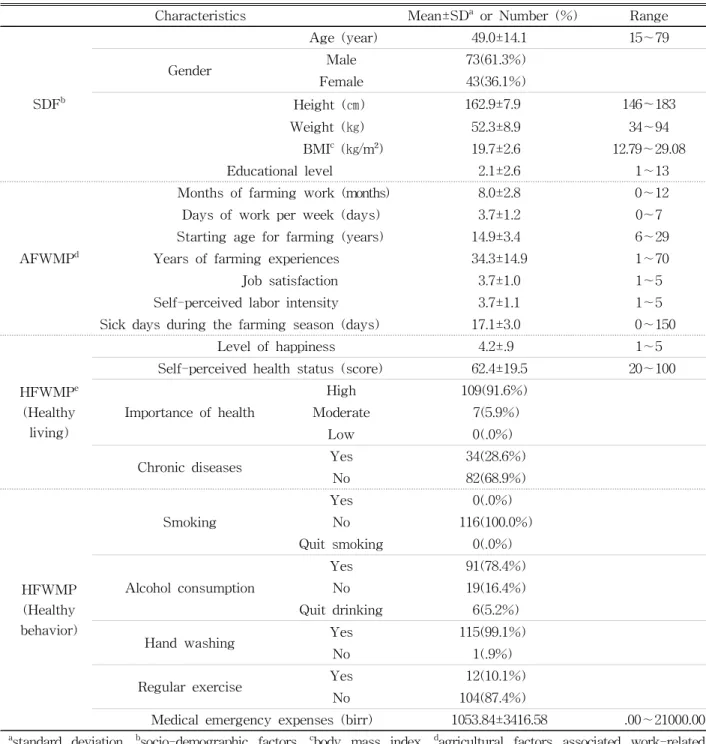
Table 2 presents the total study sample according to SDF, AFWMP, and HFWMP. Among the agricul- tural workers represented by the sample, 61.3% were
male and 36.1% were female. The mean age was 49.0 years and the mean height, weight, and body mass index (BMI) were 162.9 ㎝, 52.3 ㎏, and 19.7
㎏/㎡, respectively. The average months of farming work and das of work per week were 8.0 and 3.7, respectively. Chronic disease was reported by 28.6%
of the respondents; 100.0% were non-smokers, 78.4%
drank alcohol, and 10.1% exercised regularly. The mean self-perceived level of happiness was 4.2 and the mean self-perceived health status score was 62.4.
Finally, the for medical expense was 1053.84 birr in an emergency situation at once.
WMSP prevalence in the pain group The 88 participants with any WMSP were asked to respond to additional questions about the location of the WMSP and the pain-evoking physical movements (Table 3). The prevalence of WMSP was highest for lifting heavy objects (55, 62.5%), followed by kneel- ing or squatting for long periods of time (53, 60.2%), pulling and pushing heavy objects (48, 54.5%), reach- ing toward far objects (25, 28.4%), and bending and twisting of the back (21, 23.9%). The prevalence of WMSP in the pain group was highest for the lower back (46, 52.3%), followed by the shoulder (44, 50.0%), upper back (43, 48.9%), knee (40, 45.5%), and wrist/
hand (30, 34.1%).
Correlations between WPI and SDF, AFWMP, and HFWMP
The results of the Spearman correlation analyses between overall WPI and SDF, AFWMP, and HFWMP are shown in Table 4. Overall WPI had low to moderate correlations with SDF, AFWMP, and HFWMP (r=-.349∼.505). In the pain group, each of the WPIs according to physical movements were slightly correlated with SDF, AFWMP, and HFWMP (r=-.338∼.497). Each of the WPIs according to body part was slightly correlated with SDF, AFWMP, and HFWMP (r=-.306∼.332). However, sick days during the farming season was found moderately correlated with the WPI of the shoulder (r=.520, P<.01).
Factors affecting the overall WPI
The results of MLR analysis on the variables af- fecting overall WPI are presented in Table 5. In case four predicting variables (age, months of farming work, self-perceived labor intensity, self-perceived
health status) were applied simultaneously to the model, it was statistically significant (F=4.756, p=.002) and accounted for overall WPI approximately 18.6% (R2=.186, adjusted R2=.147). However, only three variables (age, months of farming work, self-
Characteristics Mean±SDa or Number (%) Range
SDFb
Age (year) 49.0±14.1 15∼79
Gender Male 73(61.3%)
Female 43(36.1%)
Height (㎝) 162.9±7.9 146~183
Weight (㎏) 52.3±8.9 34∼94
BMIc (㎏/m²) 19.7±2.6 12.79∼29.08
Educational level 2.1±2.6 1∼13
AFWMPd
Months of farming work (months) 8.0±2.8 0∼12
Days of work per week (days) 3.7±1.2 0∼7
Starting age for farming (years) 14.9±3.4 6∼29
Years of farming experiences 34.3±14.9 1∼70
Job satisfaction 3.7±1.0 1∼5
Self-perceived labor intensity 3.7±1.1 1∼5
Sick days during the farming season (days) 17.1±3.0 0∼150
HFWMPe (Healthy
living)
Level of happiness 4.2±.9 1∼5
Self-perceived health status (score) 62.4±19.5 20∼100
Importance of health
High 109(91.6%)
Moderate 7(5.9%)
Low 0(.0%)
Chronic diseases Yes 34(28.6%)
No 82(68.9%)
HFWMP (Healthy behavior)
Smoking
Yes 0(.0%)
No 116(100.0%)
Quit smoking 0(.0%)
Alcohol consumption
Yes 91(78.4%)
No 19(16.4%)
Quit drinking 6(5.2%)
Hand washing Yes 115(99.1%)
No 1(.9%)
Regular exercise Yes 12(10.1%)
No 104(87.4%)
Medical emergency expenses (birr) 1053.84±3416.58 .00∼21000.00
astandard deviation, bsocio-demographic factors, cbody mass index, dagricultural factors associated work-related musculoskeletal pain, ehealthy living and healthy behavior factors associated work-related musculoskeletal pain.
Table 2. Characteristics of SDF, AFWMP, and HFWMP in participants (N=116)
perceived health status) were showed statistically significant (P<.05). Self-perceived labor intensity was not a significant variable for the prediction of overall WPI (P>.05).
Comparisons of the pain and non-pain groups
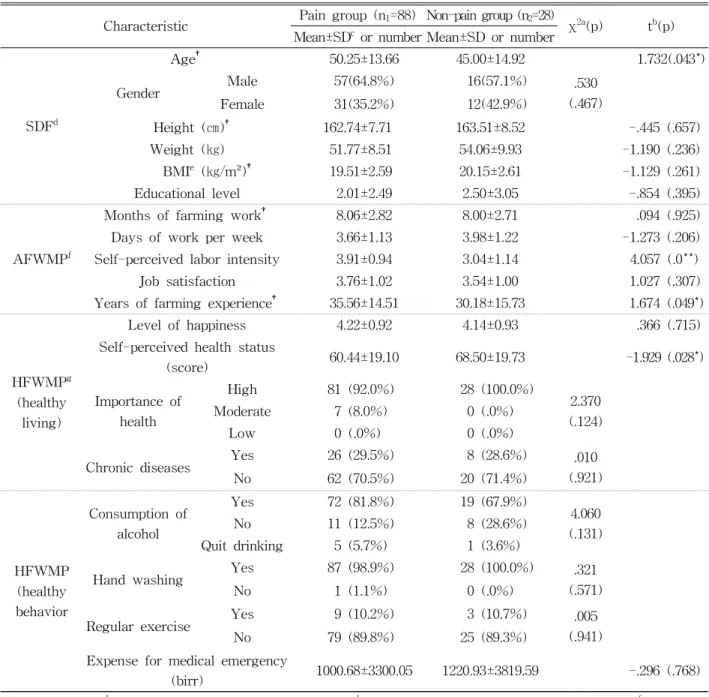
Comparative analysis of farmers with and without an WMSP revealed no significant differences in SDF (gender, height, weight, BMI, educational level), AFWMP (months of farming work, days of work per week, job satisfaction), or HFWMP (level of happi-
ness, importance of health, chronic diseases, drinking, hand washing, regular exercise, expense for medical emergencies) (P>.05). However, age, self-perceived labor intensity, and years of farming experiences were significantly higher in the pain group than in the non-pain group (P<.05), while the self-perceived health status score was significantly lower in the pain group than that in the non-pain group (P<.05) (Table 6).
Factors influencing the presence of WMSP BLR analysis (Table 7) showed that older farmers WPIa by physical movement Subject
(number)
Percentage
(%) WPI by body part Subject (number)
Percentage (%) Kneeling or squatting long
periods of time
No 35 39.8
Neck No 69 78.4
Yes 53 60.2 Yes 19 21.6
Bending and twisting of the back
No 67 76.1
Upper back No 45 51.1
Yes 43 48.9
Yes 21 23.9
Standing for long periods of time
No 68 77.3
Lower back No 42 47.7
Yes 46 52.3
Yes 20 22.7
Lifting heavy objects (crops, fertilizer, water, soil, etc.)
No 33 37.5
Shoulder No 44 50.0
Yes 55 62.5 Yes 44 50.0
Frequent lifting of the arms over the head
No 76 86.4
Elbow No 81 92.0
Yes 12 13.6 Yes 7 8.0
Neck bending (forward or backward) and rotation
No 72 81.8
Wrist or Hand No 58 65.9
Yes 16 18.2 Yes 30 34.1
Repetitive hand and wrist motions
No 80 90.9
Hip No 86 97.7
Yes 8 9.1 Yes 2 2.3
Reaching toward far objects
No 63 71.6
Knee No 48 54.5
Yes 25 28.4 Yes 40 45.5
Sitting for long periods of time
No 71 80.7
Ankle or Foot No 67 76.1
Yes 17 19.3 Yes 21 23.9
Pulling and pushing heavy objects
No 40 45.5
Other No 79 89.8
Yes 48 54.5 Yes 9 10.2
Using machines, tools, or instruments
No 71 80.7
Yes 17 19.3
awork-related musculoskeletal pain intensity.
Table 3. Occurrence of work-related musculoskeletal pain according to physical movements and body parts in
the pain group (N=88)
(odds ratios; OR: 1.040, 95% confidence interval; CI:
1.004-1.077), and those with higher self-perceived labor intensity (OR: 2.522, 95% CI: 1.533-4.150) had an increased likelihood of experiencing a WMSP in model 1. In model 2, older farmers (OR: 1.039, 95%
CI: 1.003-1.076), and those with higher self-perceived labor intensity (OR: 2.516, 95% CI: 1.526-4.147) also had an increased likelihood of experiencing a WMSP.
In model 3, older farmers (OR: 1.036, CI: 1.001-1.073),
those with a higher self-perceived labor intensity (OR: 2.661, CI: 1.586-4.465), and those who worked fewer days per week (OR:.628, CI:.397-.994) had an increased likelihood of experiencing a WMSP.
Discussion
The major objective of this research was to de- termine the status of work-related musculoskeletal disorders such as WMSP and WPI and to inves- tigate AFWMP and HFWMP of Tigray local farmers in Ethiopia. The main results of this study revealed that among the 116 respondents, 88 reported having WMSP. These WMSP were mostly noted when the farmers were kneeling or squatting or pulling, push- ing heavy, or lifting heavy objects. Among the 10 body parts, the WMSP were most prevalent in the lower back, upper back, and shoulder (Table 3).
Although the health service coverage is 86.7% in Ethiopia, free services for the poor are unevenly dis- tributed and utilization remains low (32%) (Federal democratic republic of ethiopia, 2007). In the study in the Amhara region of Ethiopia, 995 (5.6%) respondents were sick for over two weeks preceding the inves- tigation and only 38.7% of them had visited health facilities (Fantahun and Degu, 2003). Consequently, farmers in this region do not generally obtain re- medial interventions for WMSP. Given the regional differences in subjects participating the study, our results are in partially agreement with those of nu- merous other studies (Kolstrup, 2012; Lee et al, 2014;
Nonnenmann et al, 2008; Osborne et al, 2013; Xiao et
Characteristic Overall
WPIa
SDFb
Age .286**
BMIc (㎏/m²) -.133
Educational level -.349**
AFWMPd
Months of farming work -.247*
Days of work per week -.063 Years of farming experiences .279*
Job satisfaction .026 Self-perceived labor intensity .017 Sick days during the farming
season .505**
HFWMPe
Level of happiness -.218*
Self-perceived health status score -.344**
Importance of health -.012 Expense for medical emergency
(birr) .016
awork-related musculoskeletal pain intensity, bsocio- demographic factors, cbody mass index, dagricultural work fctors associated work-related musculoskeletal pain,
ehealthy living and healthy behavior factors associated work-related musculoskeletal pain, *p<.05, **p<.01.
Table 4. Correlations between WPI and factors accord- ing to sections in the pain group (N=88)
Dependent
variable Independent variables B β t p VIFa
Overall WPIb
(constant) 22.482
Age .204 .204 2.026 .046* 1.036
Months of farming work -1.169 -.241 -2.396 .019* 1.034 Self-perceived labor intensity 1.570 .108 1.060 .292 1.066 Self-perceived health status (score) -.206 -.288 -2.898 .005** 1.008
avariance inflation factor, bwork-related musculoskeletal pain intensity, *p<.05, **p<.01.
Table 5. Multiple linear regression model for the prediction of factors influencing overall WPI in the pain
group (N=88)
al, 2013). Research on Thailand farmers conducted by Phajan et al (2014) also reported the highest prevalence of work-related musculoskeletal disorders in the lower back and shoulder. However, the results of WPI according to physical movements in our study differ from those of Kolstrup (2012), who
studied work-related musculoskeletal disorders in 66 farmers and 37 employed farm workers according to ergonomic work factors and physical exertion. There are several explanations for these differences in findings. First, the farmers in this study were sub- sistence farmers who traditionally operate on frag- Characteristic Pain group (n1=88) Non-pain group (n2=28) χ2a(p) tb(p)
Mean±SDc or number Mean±SD or number
SDFd
Age† 50.25±13.66 45.00±14.92 1.732(.043*)
Gender Male 57(64.8%) 16(57.1%) .530
(.467)
Female 31(35.2%) 12(42.9%)
Height (㎝)† 162.74±7.71 163.51±8.52 -.445 (.657)
Weight (㎏) 51.77±8.51 54.06±9.93 -1.190 (.236)
BMIe (㎏/m²)† 19.51±2.59 20.15±2.61 -1.129 (.261)
Educational level 2.01±2.49 2.50±3.05 -.854 (.395)
AFWMPf
Months of farming work† 8.06±2.82 8.00±2.71 .094 (.925)
Days of work per week 3.66±1.13 3.98±1.22 -1.273 (.206)
Self-perceived labor intensity 3.91±0.94 3.04±1.14 4.057 (.0**)
Job satisfaction 3.76±1.02 3.54±1.00 1.027 (.307)
Years of farming experience† 35.56±14.51 30.18±15.73 1.674 (.049*)
HFWMPg (healthy
living)
Level of happiness 4.22±0.92 4.14±0.93 .366 (.715)
Self-perceived health status
(score) 60.44±19.10 68.50±19.73 -1.929 (.028*)
Importance of health
High 81 (92.0%) 28 (100.0%)
2.370 (.124)
Moderate 7 (8.0%) 0 (.0%)
Low 0 (.0%) 0 (.0%)
Chronic diseases Yes 26 (29.5%) 8 (28.6%) .010
(.921)
No 62 (70.5%) 20 (71.4%)
HFWMP (healthy behavior
Consumption of alcohol
Yes 72 (81.8%) 19 (67.9%)
4.060 (.131)
No 11 (12.5%) 8 (28.6%)
Quit drinking 5 (5.7%) 1 (3.6%)
Hand washing Yes 87 (98.9%) 28 (100.0%) .321
(.571)
No 1 (1.1%) 0 (.0%)
Regular exercise Yes 9 (10.2%) 3 (10.7%) .005
(.941)
No 79 (89.8%) 25 (89.3%)
Expense for medical emergency
(birr) 1000.68±3300.05 1220.93±3819.59 -.296 (.768)
achi-square test, bindependent T-test, cstandard deviation, dsocio-demographic factors, ebody mass index, fagricultural work factors associated work-related musculoskeletal pain, ghealthy living and healthy behavior factors associated work-related musculoskeletal pain, *p<.05, **p<.01.†normal distribution.
Table 6. Comparisons between pain and non-pain groups (N=116)
mented small plots of land and infrequently use ma- chines, tools, or instruments. Second, farming of the common bean (Phaseolus vulgaris L.), produced pri- marily in Tigray, requires squatting and bending postures (Assefa et al, 2014). Finally, the major cereal crops grown by farmers in this area, including teff, barley, and wheat, have relatively short heights (Deressa, 2013).
Lifting is the chiefly ascribed cause for lower back pain (Osborne et al, 2013). Lifting and pushing movements increases the risk for progressing work-related musculoskeletal disorders, as agricul- tural workers frequently push, pull, and lift bulky and heavy objects (Phajan et al, 2014). Relocation of those items exposes agricultural workers’ spines to excessive pressure forces. Long-term exposure to these conditions increases the risk of losing equili- brium, and therefore, the farmers were exposed to spinal discomfort, muscle stress, and muscle trauma (Phajan et al, 2014). This finding was in agreement with other studies on the association between dy- namic labor and work-related musculoskeletal dis- orders (Phajan et al, 2014).
The farming industry relies on physical labor and
is one of the riskiest industries (Lee et al, 2014). In the Tigray region, moisture stress such as recurrent droughts, and environmental degradation such as limited infrastructure, and wars including the most recent clash with Eritrea, all of these restrict the de- velopment of improved farming output, which sub- sequently increases the physical work demands and WPI in the agricultural industry (Aseyehegn et al, 2012; Gebregziabher and Holden, 2011). Detailed oc- currence statistics on these outcomes are essential to understanding the nationwide burden and distribution of musculoskeletal symptoms among agricultural workers in Ethiopia and the associated need for in- tervention and healthcare resources (Lee et al, 2014).
Therefore, more research is needed to identify the ergonomic risk factors affecting WMSP in Ethiopian agricultural workers living in specific conditions (Lee et al, 2014).
Agricultural work is vital, hazardous, and accom- plished predominantly by farm workers who are at risk for pain associated with musculoskeletal injuries, which are influenced by various factors including workplace hazards, limited access to medical care, cultural health beliefs, and demographics (Brock et
Independent variables Model 1a Model 2b Model 3c
Age
ORsd 1.040 1.039 1.036
95%CIe 1.004-1.077 1.003-1.076 1.001-1.073
p-value .027* .033* .046*
Self-perceived labor intensity
ORs 2.522 2.516 2.661
95%CI 1.533-4.150 1.526-4.147 1.586-4.465
p-value .001** .001** .001**
Job satisfaction
ORs 1.146 1.147 1.230
95%CI .666-1.972 .666-1.975 .709-2.134
p-value .622 .622 .462
Days of work per week
ORs .703 .683 .628
95%CI .461-1.073 .440-1.058 .397-.994
p-value .103 .088 .047*
(constant) ORs .044 .075 .232
p-value .053 .182 .495
aNagelkerke R2=26.7%, badjusted for gender; Nagelkerke R2=26.9%, cadjusted for gender and chronic disease;
Nagelkerke R2=14.8%, dodds ratios, econfidence interval, *p<.05, **p<.01.
Table 7. Binary logistic regression analysis of the variables that affected the occurrence of WMSP (N=116)
al, 2012). The results of our study revealed sig- nificant differences between the pain and non-pain groups in age, self-perceived labor intensity, years of farming experience, and self-perceived health status. In contrast, there were no significant differ- ences between two groups in the other factors as- sessed in this study (Table 6). As can be seen in results of the BLR (Table 7), older farmers and those with higher self-perceived labor intensity had increased likelihoods of experiencing WMSP in all three models.
The pain group was older and had a lower level of self-perception of health status compared to those in the non-pain group. The more overall WPI farm- ers have, the lower their perception of self-health. In agricultural work, overall WPI increases with in- creasing age and years of farming experience. The MLR revealed that age, months of farming work, and self-perceived health status were the major pre- dicting variables for overall WPI (Table 5). The re- sults of correlation analysis revealed that WPI ac- cording to physical movement including kneeling or squatting for extended periods and lifting heavy ob- jects were positively correlated with age. WPI ac- cording to physical movements including reaching toward far objects was negatively correlated with months of farming work, while WPI according to body parts including the upper back and shoulder were negatively correlated with months of farming work. Overall WPI was positively correlated with age and negatively correlated with months of farm- ing work and self-perceived health status. WPI ac- cording to physical movements including pulling and pushing heavy objects was negatively correlated with self-perceived health status, while WPI accord- ing to body parts including the upper and lower back were negatively correlated with self-perceived health status.
Unlike our expectation, the relationships between WPI (according to body parts and physical move- ments) and AFW showed that as the months of farming work increased, WPI of body parts such as
the upper back and shoulder and physical movements such as reaching toward far objects decreased. These results are the controversy somewhat with duration factor of overuse syndrome. WPI by body parts was not significantly correlated with variables such as days of work per week, age, and years of farming experience that reflect the general characteristics of the working duration. This did not support our ex- pectation that increased workload of labor will in- crease WMSP, which is supported by the findings of a study of Swangnetr and Kaber (2014), who re- ported that the age and experience of the farmer in- fluence the occurrence of musculoskeletal pain. This may be due to the fact that farmers who are perma- nently exposed and experience repeated impairment contribute significantly to the presence of WMSP compared to the effects of short-term exposure to agricultural work.
Musculoskeletal complaints and pain have a major impact on work in terms of presenteeism (reduced performance and productivity at work), long-term in- ability to work, and absence due to illness (Phillips et al, 2008). In our study, the reasons why overall WPI and the AFWMP variables showed only low correlation with WPI according to the body part and physical movements might be explained by other physical and psychological characteristics of muscu- loskeletal pain. Given the fact that each of the farm- ers in this study cultivated several types of crops with different growth characteristics depending on the season, the agricultural working environments in are very different. However, the WPI according to the body part and physical movements were as- sessed simultaneously. If the investigation had been performed immediately after similar farming work, the correlations and associations between WPI and AFWMP such as months of farming work may have shown a more significant relationship (Jeon et al, 2016).
Surprisingly, the correlation analysis of the varia- bles associated with WPI, pain intensity of neck part and pain intensity when bending and rotation the
neck showed negative correlations with BMI, where- as other variables of pain intensity such as WPI ac- cording to the body part and physical movements were not significantly correlated with. As BMI de- creased, the WPI of the neck and in neck bending and rotation increased. In the case of Ethiopian farmers who predominantly cultivate soybean, thin farmers may be more likely to develop WMSP of the neck.
This study has several limitations, which requires that our findings be interpreted with care. First, al- though this study used a nationally representative sample, the study sample might not be entirely rep- resentative of the agricultural worker population in all underdeveloped African nations. Second, this re- search relied largely on self-reported symptom data, which are subject to reporting bias. Third, we did not identify the distinct reasons for the significant correlations between musculoskeletal pain and healthy living variables. The other important limitation of this study was that it utilized a cross-sectional de- sign that does not permit causal inferences from the observed relationships.
In the additional studies of future should assess the effects of efforts to limit kneeling or squatting postures as well as the pushing, pulling, or lifting of heavy objects in order to avoid back and should- er injuries; similarly, efforts should be made to limit the disproportionate labor intensity and to limit the working periods (Phajan et al, 2014). These should be supplemented with targeted health promotion programs including therapeutic exercises and ergo- nomic education of the risk factors of WMSP, in addition to recommendations for tools and environ- mental revisions to reduce work-associated physical requirements. Moreover, future studies should em- phasize the development of practicable precautions for agricultural tasks related with vulnerability of musculoskeletal pain (Xiao et al, 2013). These inter- ventions should be aimed to specific postures of physical movements. There is also a need for more precise records on agricultural workers in under-
developed countries in order to support the managing of suitable public health (Xiao et al, 2013).
Conclusion
This study identified the actual status of work-re- lated musculoskeletal disorders such as WMSP and WPI and investigated AFWMP and HFWMP in local farmers of Tigray, Ethiopia. WMSP were mostly noted when the farmers were required to adopt kneeling or squatting postures, while pulling, pushing, and lifting heavy objects primarily resulted in back and shoulder injuries. There were significant differ- ences between the pain group and the non-pain group in age, self-perceived labor intensity, years of farming experience, and self-perceived health status.
Older farmers with higher self-perceived labor in- tensity had an increased likelihood of WMSP. Age, months of farming work, and self-perceived health status were the major predictive variables for overall WPI. Analysis of WPI by physical movement, and WPI by body parts, and overall WPI revealed low correlations with age, months of farming work, and self-perceived health status.
Therefore, the WMSP of Tigray local farmers in Ethiopia was associated with the characteristics of the farm work and health status. Furthermore, HFWMP and AFWMP were the chief features that could affect the occurrence of WMSP in this population. Both HFWMP and AFWMP should be considered in clinical health assessments of WMSP in farmers in underdeveloped countries. The findings of this study might be useful for regulating the pre- vention and management of WMSP in farmers in underdeveloped African countries.
References
Abafita J, Kim CS. Determinants of children’s schooling: The case of Tigray Region, Ethiopia.
Educ Res Rev. 2015;10(8):1130-1146.
Abay F, Bjørnstad A, Smale M. Measuring on Farm Diversity and Determinants of Barley Diversity in Tigray, Northern Ethiopia. MEJS. 2009;
1(2):44-66.
Abera M, Robbins JM, Tesfaye M. Parents’ percep- tion of child and adolescent mental health prob- lems and their choice of treatment option in southwest Ethiopia. Child Adolesc Psychiatry Ment Health. 2015;9:40. https://doi.org/10.1186/
s13034-015-0072-5
Aseyehegn K, Yirga C, Rajan S. Effect of small-scale irrigation on the income of rural farm households: The case of Laelay Maichew District, Central Tigray, Ethiopia. J Agric Sci.
2012;7(1):43-57.
Assefa T, Sperling L, Dagne B, et al. Participatory Plant Breeding with Traders and Farmers for White Pea Bean in Ethiopia; Journal of Agricultural Education and Extension. 2014;
20(5):497-512.
Birmeta K, Sim BR, Kim DH, et al. Analyzing Barriers to Accessing Health Care Services in Holeta Town, Ethiopia. Prim Health Care.
2015;5(2):1-7.
Brock M, Northcraft-Baxtera L, Escofferyb C, et al.
Musculoskeletal health in South Georgia farm- workers: A mixed methods study. Work.
2012;43(2):223-236.
Croppenstedt A, Muller C. The Impact of Farmers’
Health and Nutritional Status on Their Productivity and Efficiency: Evidence from Ethiopia. Econ Dev Cult Change. 2000;48(3):
475-502.
Da Costa BR, Vieira ER. Risk factors for work-re- lated musculoskeletal disorders: A systematic re- view of recent longitudinal studies. Am J Ind Med. 2010;53(3):285-323. https://doi.org/10.1002/
ajim.20750
Dercon S, Hoddinott J. The Ethiopian rural household surveys: Introduction. International Food Policy Research Institute, Washington, DC Photocopy.
2004.
Deressa A. Evaluation of Soil Acidity in Agricultural Soils of Smallholder Farmers in South Western Ethiopia. Sci Technol Arts Res J. 2013;2(2):1-6.
Federal democratic republic of ethiopia central stat- istical agency. Agricultural sample survey 2008/
2009. volume 1. Report on area and production of crops. 2009.
Federal democratic republic of ethiopia central stat- istical agency. Large and medium scale com- mercial farms sample survey 2010/2011. volume 8. Report on area and production of crops, and farm management practices. 2011.
Federal democratic republic of ethiopia, Ministry of Health. version 1. Health and Health Related Indicators. 2007.
Federal democratic republic of ethiopia central statistical agency. Rural investment climate sur- vey 2006/2007. volume 1. Report on rural non- farm enterprises, investment climate constraints, infrastructure accessibility, and households employment. 2007.
Fantahun M, Degu G. Health Service Utilization in Amhara Region of Ethiopia. Ethiop J Health Dev. 2003;17(2):140-147.
Fulmer S, Punnett L, Slingerland T, et al. Ergonomic exposures in apple harvesting: Preliminary observations. Am J Ind Med. 2002;(Suppl 2):3-9.
Gebregziabher G, Holden S. Does irrigation enhance and food deficits discourage fertilizer adoption in a risky environment? Evidence from Tigray, Ethiopia. J Dev Agric Econ. 2011:3(10):514-528.
Holmberg S, Stiernstrom EL, Thelin A, et al.
Musculoskeletal symptoms among farmers and non-farmers: A population-based study. Int J Occup Environ Health. 2002;8(4):339-345.
Hurissa B. Urban Poverty Alleviation in Ethiopia:
Reflections on Government Strategies. J Poverty Alleviation Int Dev. 2011;2(1):71-96.
Jeon MJ, Jeon HS, Lee TJ, et al. Musculoskeletal pain status of the Lyamungu local farmers in Tanzania: Relationship between musculoskeletal
pain and agricultural working environments, health factors, socio-economic factors. JRSD.
2016;25(s):149-183.
Jo H, Baek S, Park HW, et al. Farmers’ cohort for agricultural work-related musculoskeletal dis- orders (FARM) study: Study design, methods, and baseline characteristics of enrolled subjects.
J Epidemiol. 2016;26(1):50-56. https://doi.org/10.2188/
jea.JE20140271
Kanavos P, Mossialos E. International comparisons of health care expenditures: What we know and what we do not know. Journal of Health Service Research. 1999;4(2):122-126.
Kolstrup CL. Work-related musculoskeletal dis- comfort of dairy farmers and employed workers.
J Occup Med Toxicol. 2012;7(1):23. https://doi.org/
10.1186/1745-6673-7-23
Lee K, Lim HS. Work-related Injuries and Diseases of Farmers in Korea. Ind Health. 2008;46(5):
424-434.
Lee SJ, Tak S, Alterman T, et al. Prevalence of musculoskeletal symptoms among agricultural workers in the United States: An analysis of the National Health Interview Survey, 2004-2008.
J Agromedicine. 2014;19(3):268-280. https://doi.org/
10.1080/1059924X.2014.916642
Lewis MQ, Sprince NL, Burmeister LF, et al. Work- related injuries among Iowa farm operators: An analysis of the Iowa Farm Family Health and Hazard Surveillance Project. Am J Ind Med.
1998;33(5):510-517.
Lyman S, McGwin G Jr, Enochs R, et al. History of agricultural injury among farmers in Alabama and Mississippi: Prevalence, characteristics, and associated factors. Am J Ind Med. 1999;33(5):
499-510.
Németh G, Arborelius UP, Svensson OK, et al. The load on the low back and hips and muscular activity during machine milking. Int J Ind Ergon. 1990;5(2):115-123.
Nevala-Puranen N, Taattola K, Venalainen JM. Rail system decreases physical strain in milking. Int
J Ind Ergon. 1993;12(4):311-316.
Nonnenmann MW, Anton D, Gerr F, et al.
Musculoskeletal symptoms of the neck and up- per extremities among iowa dairy farmers. Am J Ind Med. 2008;51(6):443-451. https://doi.org/
10.1002/ajim.20582
Osborne A, Blake C, Meredith D, et al. Work-related musculoskeletal disorders among irish farm operators. Am J Ind Med. 2013;56(2):235-242.
https://doi.org10.1002/ajim.22092
Osborne A, Finnegan G, Blake C, et al. An evalua- tion of low back pain among farmers in Ireland.
Occup Med (Lond). 2013;63(1):53-59. https://doi.org/
10.1093/occmed/kqs173
Phajan T, Nilvarangkul K, Settheetham D, et al.
Work-related musculoskeletal disorders among sugarcane farmers in north-eastern Thailand.
Asia Pac J Public Health. 2014;26(3):320-327.
https://doi.org/10.1177/1010539514528026
Phillips C, Main C, Buck R, et al. Prioritising pain in policy making: The need for a whole systems perspective. Health Policy. 2008;88(2-3):166-175.
https://doi.org10.1016/j.healthpol.2008.03.008 Rosecrance J, Rodgers G, Merlino L. Low back pain
and musculoskeletal symptoms among Kansas farmers. Am J Ind Med. 2006;49(7):547-556.
Skovron ML, Szpalski M, Nordin M, et al.
Sociocultural factors and back pain. A pop- ulation-based study in Belgian adults. Spine (Phila Pa 1976). 1994;19(2):129-377.
Sorainen E, Penttinen J, Kallio M, et al. Whole-body vibration of tractor drivers during harrowing.
Am Ind Hyg Assoc J. 1998;59(9):642-644.
Swangnetr M, Kaber D. Analysis of novice and ex- perienced rice farmer grip force and arm muscle activity in a plowing task. Advances in Physical Ergonomics and Human Factors Part II.
2014;15(49).
UNDP. Human Development Report 2010. 20th ed.
2010.
Walker-Bone K, Palmer KT. Musculoskeletal dis- orders in farmers and farm workers. Occup Med
(Lond). 2002;52(8):441-450.
Xiao H, McCurdy SA, Stoecklin-Marois MT, et al.
Agricultural work and chronic musculoskeletal pain among latino farm workers: The MICASA study. Am J Ind Med. 2013;56(2):216-225.
https://doi.org/10.1002/ajim.22118
This article was received April 10, 2017, was re- viewed April 10, 2017, and was accepted May 15, 2017.