경락경혈학회지 Vol.29, No.1, pp.131 141, 2012∼ Korean Journal of Acupuncture
Wang-In Kim , Dae-Hwan Youn , Chan-Hun Choi , Chang-Su Na
Dept. of Meridian & Acupoint, Physiology, College of Oriental Medicine, Dongshin University
Abstract
Objectives : This study was performed to investigate the effect of invasive laser acupuncture treatment at Liver Brook (LR2) acupoint and Liver Sea (LR8) acupoint on liver damage induced by D-galactosamine (D-GalN) in rats
Methods : Liver damage was induced by D-GalN. The experimental rats were divided into two groups (control group, Low Level Laser Treatment (LLLT) group). Control groups were classified into small groups. Intact group had no liver damage and no treatment. D-GalN group was induced liver damage induced by D-GalN and not treated. LLLT group were induced liver damage induced by D-GalN and then treated at the LR2 or LR8 acupoint with 532, 658, 904 nm invasive laser acupuncture. The treatment was carried out three days at a time for 15days at both acupoints. To examine mechanism of the effect of invasive laser acupuncture, we measured the contents of ASP, ALT, ALP, TBIL in serum, CBC in blood and SOD in liver tissue.
Results : The change of body weight increased in all groups. That change was AST and ALP, the AST activity decreased significantly compared with the control groups and decreased by 532 nm and 904 nm both LLLT groups. But ALP increased at LR8 acupoint by 658 nm. TBIL level significantly decreased in all LLLT groups. The SOD of LLLT groups increased in the liver tissue of rats compared to the control groups. SOD activity indicated that LLLT can help cellular defense mechanism by preventing scavenging hydrogen peroxide. In the change of WBC, it was increased in D-GalN Control group compared to intact group and LLLT groups.
Conclusions : These results suggested that invasive laser acupuncture treatment at LR2 or LR8 acupoint reduced activation of hepatic enzyme and damage of liver tissue. Thus, the effect of invasive laser acupuncture was nearly identical to the way of the traditional acupuncture for the treatment of hepatocytotoxicity.
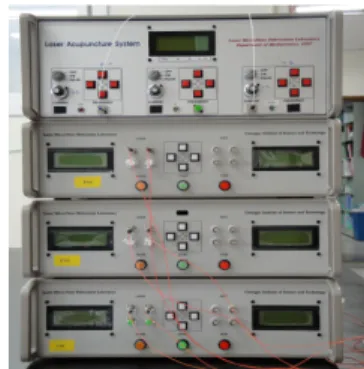
Fig. 1. The figure of low level laser acupuncture system.
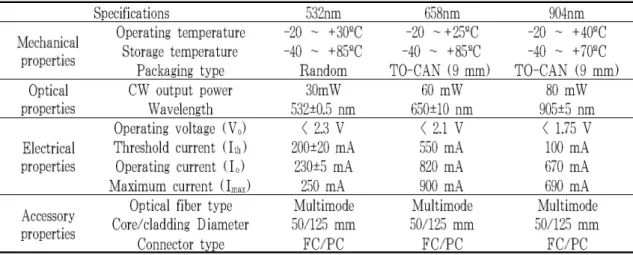
Table 1. The specifications of low level laser acupuncture system
μ
Table 2. Effect of LLLT treated at LR2 and LR8 on the change of body weight accroding to the number of treatment times with D-GalN rats (g)
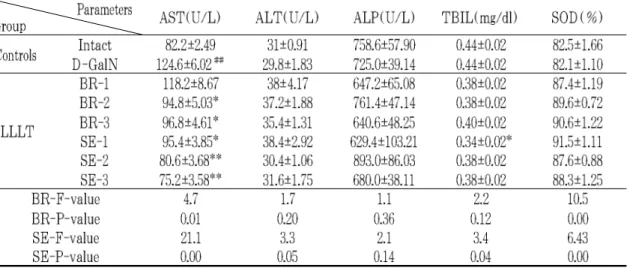
Table 3. Effect of LLLT with invasive laser acupuncture at LR2 and LR8 on AST, ALT, ALP, TBIL and SOD of D-GalN rats
μ μ μ μ μ Table 4. Effect of LLLT with invasive laser acupuncture at LR2 and LR8 on Leukocytes of D-GalN rats
μ μ Table 5. Effect of LLLT with invasive laser acupuncture at LR2 and LR8 on Erythrocytes and Thrombocyte of D-GalN rats