• 검색 결과가 없습니다.

Vascular Plant Diversity of Jeju Island, Korea

N/A
N/A
Protected

Academic year: 2021

Share "Vascular Plant Diversity of Jeju Island, Korea"

Copied!
13
0
0

로드 중.... (전체 텍스트 보기)

전체 글

(1)

Vascular Plant Diversity of Jeju Island, Korea

Kim Chan-Soo*

Warm-Temperate Forest Research Center, Korea Forest Research Institute, Seogwipo 697-050, Korea

Abstract - The vascular plants in Jeju composed of 21 families 62 genera, 190 species, 7 varieties with 197 taxa in Pteridophyta, 3 families 5 genera, 7 species, 3 forma with 10 taxa in gymnosperm (Coniferophyta) and 143 families 703 genera, 1,622 species, 114 varieties and 47 forma with 1,783 taxa in Endospermae. The total number of taxa was 1,990 consisting 167 families, 770 genera, 1,818 species, 121 varieties and 50 forma. Three families, 4 genera 4 species and 1 variety in Pteridophyta and 1 family, 1 genus I species, 1 forma of Coniferophyta were endemic to Jeju. Five families, 8 genera and 8 species in the Monocotyledonae of Endospermae and 23 families, 32 genera, 21 species, 16 varieties and 7 forma and 44 taxa in Cholipetalae, and 9 families, 24 genera, 12 species, 13 varieties and 7 forma, total 32 taxa in Sympetalae were endemic to Jeju. Total 90 taxa with 41 families, 69 genera, 46 species, 29 varieties and 15 forma were drawn up as endemic plants in Jeju. As the numbers show on, Jeju has more biodiversity especially plant diversity than any other places in Korea. It was an important region in regard to geographical position. The rarity on plants from Jeju has been assessed based on the IUCN red list categories and criteria at both regional and global levels. There was one species in each extinct (EX) and extinct in the Wild (EW). The EX and EW species were Rhododendron saisiuense Nakai (Ericaceae) and Asplenium antiquum Makino (Aspleniaceae), respectively. Three taxa, Rhododendron dauricum L. (Ericaceae), Lycopodium sieboldii Miq., and Lycopodiella cernua (L.) Serm (Lycopodiaceae) were species that is extinct in the region (RE).

Sixty-one taxa were critically endangered (CR), 13 were endangered (EN), and 83 were vulnerable (VU) at regional level.

The taxa listed on a Red List corresponds 26.9% of total taxa in Jeju. At global level, there were 19 taxa in CR, 4 in EN, and 1 in VU (Vulnerable) as the category of threat. The rest taxa (133 taxa) were classified as Least Concern (LC). According to the results of the assessment, conservation measures must be taken for total of 157 species that were categorized in threaten including one of EX, one of EW and three extinct in the region immediately. Of 157 species, 61 were CR, 13 are EN and 83 were VU.

Key words - vascular plants, Jeju, endemic plants, rare plants, IUCN, red list

*Corresponding author. E-mail : [email protected] Fig. 1. The location of Jeju Island.

Introduction

Jeju is a volcanic island that covers an area of 1,848 km

2

and lies in southwestern sea of Korean peninsula and the north of East China Sea (Fig. 1). Hallasan Mountain, 1,950 m high, dominated in center of the island. It has been a most interesting research site for plants because of its richness and unique biogeographic feature. The Island is classified as belonging to the East Asiatic floristic region of the Haloarctic floristic kingdom. Furthermore, given its unique geographical and geological location, it is also classified as the East Siberian floristic region, in addition to serving as a boundary that begins to exhibit features of the Indo-Malaysian sub- kingdom.

Consequently, the flora of Jeju was derived from greatly

divergent floristic kingdoms. Some traveled southward from

(2)

Table 1. Summarized table of Jeju flora

Family Genera Species Variety formas Total

Pteridophyta 21 62 190 7 - 197

Coniferophyta 3 5 7 - 3 10

Endospermae 143 703 1,622 114 47 1,783

Monocotyledoneae 25 197 455 24 13 492

Dicotyledoneae 118 506 1,167 90 34 1,291

Total 167 770 1,819 121 50 1,990

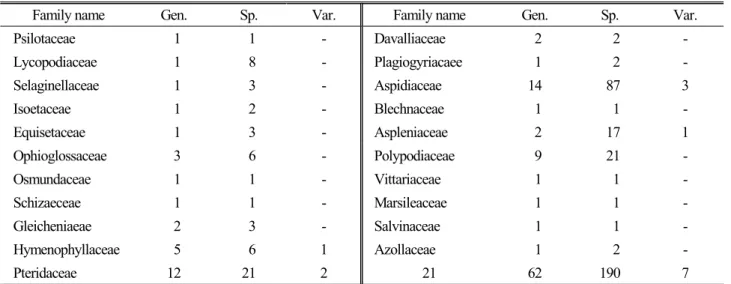
Table 2. Statistics of the Pteridophyta in Jeju Island

Family name Gen. Sp. Var. Family name Gen. Sp. Var.

Psilotaceae 1 1 - Davalliaceae 2 2 -

Lycopodiaceae 1 8 - Plagiogyriacaee 1 2 -

Selaginellaceae 1 3 - Aspidiaceae 14 87 3

Isoetaceae 1 2 - Blechnaceae 1 1 -

Equisetaceae 1 3 - Aspleniaceae 2 17 1

Ophioglossaceae 3 6 - Polypodiaceae 9 21 -

Osmundaceae 1 1 - Vittariaceae 1 1 -

Schizaeceae 1 1 - Marsileaceae 1 1 -

Gleicheniaeae 2 3 - Salvinaceae 1 1 -

Hymenophyllaceae 5 6 1 Azollaceae 1 2 -

Pteridaceae 12 21 2 21 62 190 7

the main continent; others survived on a long and narrow journey from China, Jeju and Japan; some were originated from tropical and subtropical zones; some were evolved from the flora of Jeju, Taiwan and Japan. As such, distributed on a relatively small area, the flora of Jeju exhibits astoundingly diverse traits and characteristics.

In this report, the status of vascular plants distributed in Jeju, Korea was summarized. To obtain the list, specimens, photos or descriptions were examined in 18 herbariums, Warm-Temperate Forest Research Center of Korea Forest Research Institute (WTFRC), Kangwon National Univ.

(KWNA), Kyeongbuk National Univ. (KBNA), Gyeongsang Natioanal Univ. (GSNA), Korea Univ. (KUSA), Korea National Arboretum (KNKA), Taejeon Univ. (TUT), Pusan National Univ. (PSNA), Seoul National Univ. For. Coll.

(SNFA), Seoul National Univ. (SNBA), Seonkkyungwan Univ. (SKKA), Sooncheon National Univ. (SCNA), Natural Museum of Ewha Univ. (ENHA), Ewha Univ. (EWUA),

Cheonbuk National Univ. (CBBA), Cheju National Univ.

(CJUA), Chungbuk Natioanl Univ. (CBUA), and Hongneung Arboretum (KNHA), and published literatures (Lee, 1996;

Koh, 1999; Kim, 2005, 2006a, 2006b, 2006c; Kim et al.

2006a, 2006b).

Flora of Jeju Island

The vascular plants in Jeju were found that 21 families 62

genera, 190 species, 7 varieties with 197 taxa in Pteridophyta,

3 families 5 genera, 7 species, 3 forma with 10 taxa in

gymnosperm (Coniferophyta) and 143 families 703 genera,

1,622 species, 114 varieties and 47 forma with 1,783 taxa in

Endospermae exist. The total number of taxa was 1,990

representing 167 families, 770 genera, 1,818 species, 121

varieties and 50 forma (Table 1). It included endemic plants

in Jeju, 22 families 69 genera, 87 species, 3 varieties and 3

cultivars with 197 taxa, and naturalized plants, 45 families

154 genera, 246 species, 5 varieties with 251 taxa (Park et al.,

(3)

Table 3. Statistics of the Coniferophyta in Jeju

Family name Genera Species formas

Taxaceae 2 2 -

Pinaceae 2 3 3

Cupressaceae 1 2 -

3 5 7 3

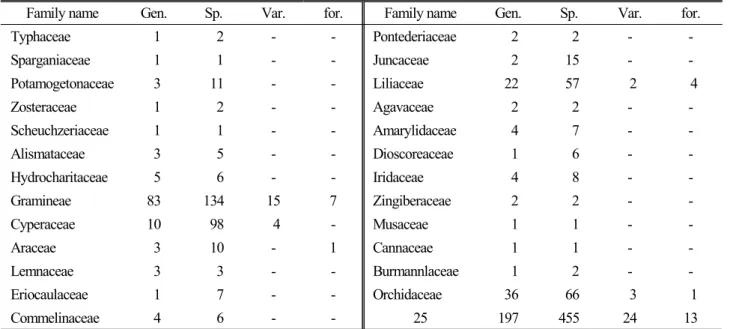
Table 4. Statistics of the Monocotyledonae in Jeju

Family name Gen. Sp. Var. for. Family name Gen. Sp. Var. for.

Typhaceae 1 2 - - Pontederiaceae 2 2 - -

Sparganiaceae 1 1 - - Juncaceae 2 15 - -

Potamogetonaceae 3 11 - - Liliaceae 22 57 2 4

Zosteraceae 1 2 - - Agavaceae 2 2 - -

Scheuchzeriaceae 1 1 - - Amarylidaceae 4 7 - -

Alismataceae 3 5 - - Dioscoreaceae 1 6 - -

Hydrocharitaceae 5 6 - - Iridaceae 4 8 - -

Gramineae 83 134 15 7 Zingiberaceae 2 2 - -

Cyperaceae 10 98 4 - Musaceae 1 1 - -

Araceae 3 10 - 1 Cannaceae 1 1 - -

Lemnaceae 3 3 - - Burmannlaceae 1 2 - -

Eriocaulaceae 1 7 - - Orchidaceae 36 66 3 1

Commelinaceae 4 6 - - 25 197 455 24 13

2002; Kim et al., 2007).

In Pteridophyta, 197 taxa with 21 families, 62 genera, 190 species and 7 varieties including Psilotaceae were distributed in Jeju (Table 2). The most dominant family was Aspidiaceae which consists of 14 genera, 87 species and 3 varieties with 90 taxa followed by Pteridaceae, 12 genera, 21 species 2 varieties of 23 taxa and Polypodiaceae, 9 genera 21 species, and Aspleniaceae, 2 genera 17 species 1 variety, and Lyco- podiaceae, 1 genus 8 species. There were seven families with 1 genus and 1 species. They were Psilotaceae, Osmundaceae, Schizaeceae, Blechnaceae, Vittariaceae, Marsileaceae, and Salvinaceae.

Three families, 5 genera, 7 species and 3 forma of gym- nosperm (Coniferophyta) were found in Jeju (Table 3). Taxus cuspidata in Taxaceae, 2 genera and 2 species of Torreya including Torreya nucifera, Pinus densiflora, Pinus thunbergii, and Abies koreana in Pinaceae, and 1 genus and 2 species in

Cupressaceae were major Coniferophyta in Hallasan. Coni- ferophyta in Jeju were Taxus cuspidata, Torreya nucifera, Pinus densiflora, Pinus thunbergii, Abies koreana, Juniperus chinensis. var. sargentii and Juniperus rigida, and 3 subspecies in Abies koreana.

Monocotyledonae, which belongs to Endospermae, contained 492 taxa with 25 families, 197 genera, 455 species, 24 varieties and 13 cultivars including Typhaceae (Table 4).

Gramineae was most dominant family that consists 83 genera, 134 species, 15 varieties and 7 as with 156 taxa, which followed by Cyperaceae, 10 genera, 98 species, 4 varieties with 102 taxa, Orchidacese, 36 genera, 66 species, 3 varieties and 1 forma with 70 taxa, Liliaceae, 22 genera, 57 species, 2 varieties and 4 forma with 63 taxa, Juncaceae, 2 genera and 15 species, Potamogetonaceae, 3 genera and 11 species, and Araceae, 3 genera, 10 species and 1 variety.

The families which consist of 1 family, 1 genus and 1 species were Typhaceae, Scheuchzeriaceae, Musaceae and Cannaceae. Just two families are native to Jeju because Cannaceae is a naturalized exotic family.

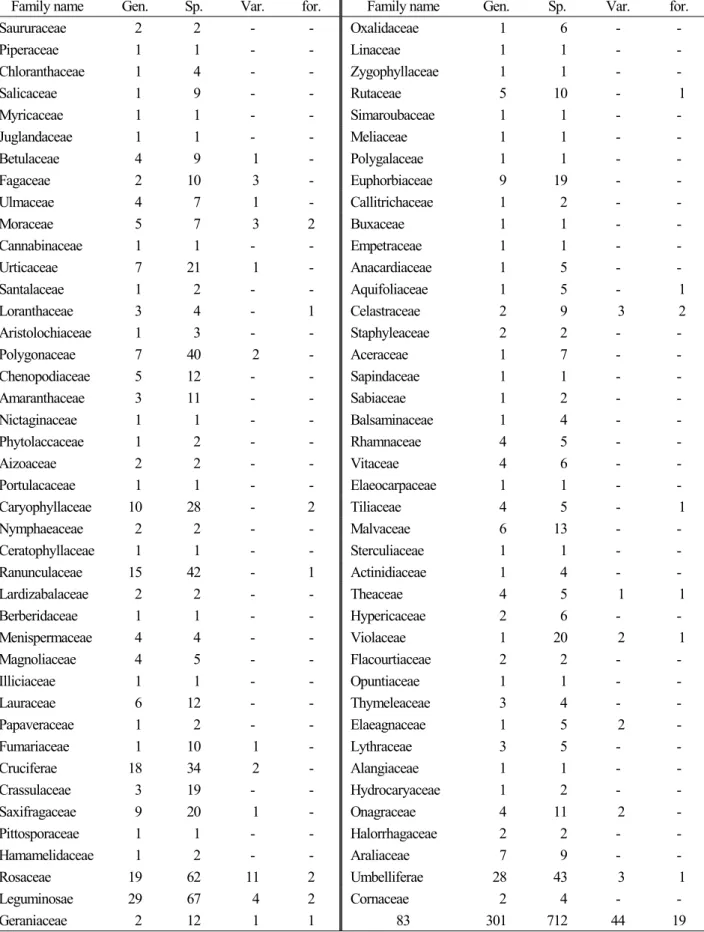
Dicotyledoeae was divided two groups, Cholipetalae and

Sympetalae because many taxa were included in this. Choli-

petalae contained 83 families, 301 genera, 712 species 44

varieties and 19 forma with 775 taxa representing Sauru-

raceae (Table 5).

(4)

Table 5. Statistics of the Cholipetalae subclass of the Dicotyledoeae in Jeju

Family name Gen. Sp. Var. for. Family name Gen. Sp. Var. for.

Saururaceae 2 2 - - Oxalidaceae 1 6 - -

Piperaceae 1 1 - - Linaceae 1 1 - -

Chloranthaceae 1 4 - - Zygophyllaceae 1 1 - -

Salicaceae 1 9 - - Rutaceae 5 10 - 1

Myricaceae 1 1 - - Simaroubaceae 1 1 - -

Juglandaceae 1 1 - - Meliaceae 1 1 - -

Betulaceae 4 9 1 - Polygalaceae 1 1 - -

Fagaceae 2 10 3 - Euphorbiaceae 9 19 - -

Ulmaceae 4 7 1 - Callitrichaceae 1 2 - -

Moraceae 5 7 3 2 Buxaceae 1 1 - -

Cannabinaceae 1 1 - - Empetraceae 1 1 - -

Urticaceae 7 21 1 - Anacardiaceae 1 5 - -

Santalaceae 1 2 - - Aquifoliaceae 1 5 - 1

Loranthaceae 3 4 - 1 Celastraceae 2 9 3 2

Aristolochiaceae 1 3 - - Staphyleaceae 2 2 - -

Polygonaceae 7 40 2 - Aceraceae 1 7 - -

Chenopodiaceae 5 12 - - Sapindaceae 1 1 - -

Amaranthaceae 3 11 - - Sabiaceae 1 2 - -

Nictaginaceae 1 1 - - Balsaminaceae 1 4 - -

Phytolaccaceae 1 2 - - Rhamnaceae 4 5 - -

Aizoaceae 2 2 - - Vitaceae 4 6 - -

Portulacaceae 1 1 - - Elaeocarpaceae 1 1 - -

Caryophyllaceae 10 28 - 2 Tiliaceae 4 5 - 1

Nymphaeaceae 2 2 - - Malvaceae 6 13 - -

Ceratophyllaceae 1 1 - - Sterculiaceae 1 1 - -

Ranunculaceae 15 42 - 1 Actinidiaceae 1 4 - -

Lardizabalaceae 2 2 - - Theaceae 4 5 1 1

Berberidaceae 1 1 - - Hypericaceae 2 6 - -

Menispermaceae 4 4 - - Violaceae 1 20 2 1

Magnoliaceae 4 5 - - Flacourtiaceae 2 2 - -

Illiciaceae 1 1 - - Opuntiaceae 1 1 - -

Lauraceae 6 12 - - Thymeleaceae 3 4 - -

Papaveraceae 1 2 - - Elaeagnaceae 1 5 2 -

Fumariaceae 1 10 1 - Lythraceae 3 5 - -

Cruciferae 18 34 2 - Alangiaceae 1 1 - -

Crassulaceae 3 19 - - Hydrocaryaceae 1 2 - -

Saxifragaceae 9 20 1 - Onagraceae 4 11 2 -

Pittosporaceae 1 1 - - Halorrhagaceae 2 2 - -

Hamamelidaceae 1 2 - - Araliaceae 7 9 - -

Rosaceae 19 62 11 2 Umbelliferae 28 43 3 1

Leguminosae 29 67 4 2 Cornaceae 2 4 - -

Geraniaceae 2 12 1 1 83 301 712 44 19

(5)

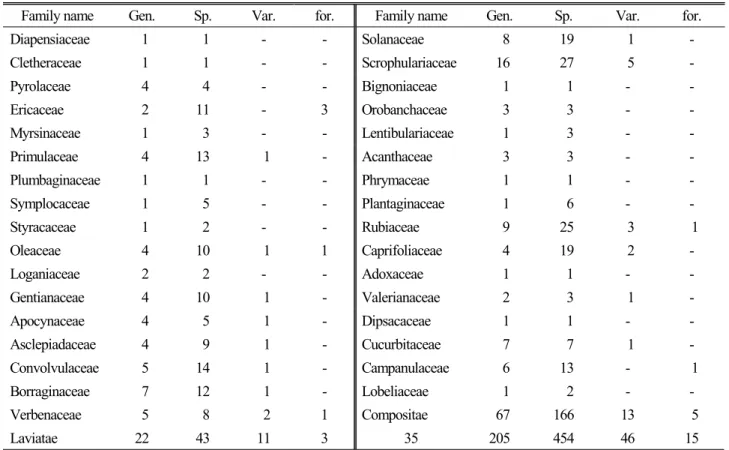
Table 6. Statistics of the Sympetalae subclass of the Dicotyledoeae in Jeju

Family name Gen. Sp. Var. for. Family name Gen. Sp. Var. for.

Diapensiaceae 1 1 - - Solanaceae 8 19 1 -

Cletheraceae 1 1 - - Scrophulariaceae 16 27 5 -

Pyrolaceae 4 4 - - Bignoniaceae 1 1 - -

Ericaceae 2 11 - 3 Orobanchaceae 3 3 - -

Myrsinaceae 1 3 - - Lentibulariaceae 1 3 - -

Primulaceae 4 13 1 - Acanthaceae 3 3 - -

Plumbaginaceae 1 1 - - Phrymaceae 1 1 - -

Symplocaceae 1 5 - - Plantaginaceae 1 6 - -

Styracaceae 1 2 - - Rubiaceae 9 25 3 1

Oleaceae 4 10 1 1 Caprifoliaceae 4 19 2 -

Loganiaceae 2 2 - - Adoxaceae 1 1 - -

Gentianaceae 4 10 1 - Valerianaceae 2 3 1 -

Apocynaceae 4 5 1 - Dipsacaceae 1 1 - -

Asclepiadaceae 4 9 1 - Cucurbitaceae 7 7 1 -

Convolvulaceae 5 14 1 - Campanulaceae 6 13 - 1

Borraginaceae 7 12 1 - Lobeliaceae 1 2 - -

Verbenaceae 5 8 2 1 Compositae 67 166 13 5

Laviatae 22 43 11 3 35 205 454 46 15

The most dominant family was Rosaceae which consists of 19 genera, 62 species, and 11 varieties with 75 taxa. The next was Leguminosae, 29genera, 67species, 4 varieties 2 forma with 73 taxa, followed by Umspeciesiferae, 28 genera 43 species 3varieties and 1 forma with 47 taxa, Ranunculaceae, 15 genera 42 species 1 forma with 43 taxa, Polygonaceae, 7 genera, 40 species and 2 varieties with 42 taxa, Cruciferae, 18 genera 34 species and 2 varieties with 36 taxa, Caryophyllaceae, 10 genera, 28 species and 2 varieties with 30 taxa, and Vio- laceae, 1 genera, 20 species, 2 varieties and 1 forma with 23 taxa.

Twenty two families, Piperaceae, Myricaceae, Juglandaceae, Cannabinaceae, Nictaginaceae, Portulacaceae, Ceratophyllaceae, Berberidaceae, Illiciaceae, Pittosporaceae, Linaceae, Zygo- phyllaceae, Simaroubaceae, Meliaceae, Polygalaceae, Buxaceae, Empetraceae, Sapindaceae, Elaeocarpaceae, Sterculiaceae, Opuntiaceae, Alangiaceae had only 1 genus and 1 species.

Among these, Nictaginaceae, Phytolaccaceae and Sterculiaceae are naturalized exotic species; therefore only 19 families were native to Jeju.

Sympetalae in Dicotyledoeae consists of 35 families, 205

genera, 454 species, 46 varieties and 15 forma with 515 taxa including Diapensiaceae (Table 6).

Compositae was most dominant family as of 184 taxa with 67 genera, 166 species, 13 varieties, 5 forma. Laviatae followed as consisting of 22 genera, 43 species, 11 varieties, 3 forma with total of 57 taxa. Scrophulariaceae, 16 genera, 27 species, 5 varieties with 32 taxa, Rubiaceae, 9 genera, 25 species, 3 varieties and 1 forma with 29 taxa, Solanaceae, 8 genera, 19 species and 1 variety with 20 taxa, Caprifoliaceae, 4 genera, 19 species and 2 varieties with 21 taxa, and Convolvulaceae, 5 genera, 14 species, 1 variety with 15 taxa. The families with 1 genus and 1 species were Diapensiaceae, Cletheraceae, Plumbaginaceae, Bignoniaceae, Phrymaceae, Adoxaceae, Dipsacaceae. Six of these families are native to Jeju and Bignoniaceae is a naturalized exotic family.

Endemic to Jeju Island

Three families, 4 genera 4 species and 1 variety in Pteri-

dophyta and 1 family, 1 genus I species, 1 forma of Coni-

ferophyta were endemic to Jeju. Five families, 8 genera and 8

(6)

Table 7. The list of 90 endemic vascular taxa of Jeju

No. Scientific name (Family name)

1 Lycopodium integrifolium Matsuda & Nakai (Lycopodiaceae)

2 Mankyua chejuense B.-Y. Sun, M. H. Kim & C. H. Kim. (Ophioglossaceae) 3 Polystichum cystolepidotum Franch. (Aspidiaceae)

4 Asplenium curtidens (Christ) Koidz. (Aspleniaceae)

5 Asplenium sarelii var. anogrammoides (H.Christ) Tagawa (Aspleniaceae) 6 Abies koreana for. rubrocarpa T. Lee (Pinaceae)

7 Agropyron ciliare for. pilosum T. Lee. (Gramineae) 8 Pseudosasa japonica var. purpurascens Nakai (Gramineae)

9 Eriocaulon glaberimum var. platypetalum (Satake) Satake (Eriocaulaceae) 10 Polygonatum odoratum var. quelpartense Hara (Liliaceae)

11 Lycoris chejuensis K.Tae & S.Ko (Amarylidaceae) 12 Calanthe coreana Nakai (Orchidaceae)

13 Diplolabellum coreanum (Finet) Maekawa (Orchidaceae) 14 Habenaria chejuensis Y. Lee & K. Lee (Orchidaceae) 15 Salix blinii Lev. (Salicaceae)

16 Colylus hallaisanensis Nakai (Betulaceae) 17 Quercus glauca var. nudata Blume (Fagaceae) 18 Celtis jessoensis var. angustifolia Nakai (Ulmaceae) 19 Boehmeria hirtella Satake (Urticaceae)

20 Boehmeria nakaiana Satake (Urticaceae) 21 Boehmeria taquetii Nakai (Urticaceae) 22 Silene fasciculata Nakai (Caryophyllaceae) 23 Aconitum quelpaertense Nakai (Ranunculaceae) 24 Ranunculus crucilobus Lev. (Ranunculaceae)

25 Berberis amurensis Rupr. var. quelpartensis Nakai (Berberidaceae) 26 Cinnamomum camphora var. cyclophyllum Nakai (Lauraceae) 27 Arabis serrata var. hallasanensis (Nakai) Ohwi (Cruciferae) 28 Cardamine impatiens var. fumariae Lev. (Cruciferae) 29 Sedum viridescens Nakai (Crassulaceae)

30 Astilbe taquetii (Lev.) Koidz. (Saxifragaceae) 31 Chrysosplenium hallaisanense Nakai (Saxifragaceae) 32 Distylium racemosum var. latifolia Nakai (Hamamelidaceae) 33 Aruncus dioicus var. aethussifolia (Lev.) Hara (Rosaceae) 34 Prunus hallasanensis C.Kim & M.Kim (Rosaceae)

35 Prunus jamasakura for. densifolia (Keohne) W. Lee (Rosaceae) 36 Prunus jamasakura var. quelpaertensis (Nakai) Uyeki (Rosaceae) 37 Prunus longistylus C.Kim & M.Kim (Rosaceae)

38 Prunus yedoensis Matsumura var. yedoensis (Rosaceae)

39 Prunus yedoensis var. angustipetala C.Kim & M.Kim (Rosaceae) 40 Rubus hirsutus for. argyi (Lev.) W.Lee (Rosaceae)

41 Rubus hongnoensis Nakai (Rosaceae) 42 Rubus schyzostylus Lev. (Rosaceae)

43 Rubus sumatranus var. myriadenus (Lev. &Vant.) W.Lee (Rosaceae) 44 Astragalus nkaianus Y. Lee (Leguminosae)

45 Trifolium lupinaster L. for. alpinus (Nakai) M.Park (Leguminosae)

(7)

Table 7. The list of 90 endemic vascular taxa of Jeju (Continued)

No. Scientific name (Family name)

46 Vicia unijuga for. minor Nakai (Leguminosae)

47 Geranium shikokianum var. quelpartensis Nakai (Geraniaceae) 48 Zanthoxylium piperitum for. pubescens (Nakai) W.Lee (Rutaceae) 49 Euphorbia octoradiata Lev. & Vaniot (Euphorbiaceae)

50 Euphorbia pekinensis var. fauriei (Lev. & Vaniot) Hurusawa (Euphorbiaceae) 51 Euonymus flavescens Nakai (Celastraceae)

52 Euonymus quelpartensis Nakai (Celastraceae) 53 Impatiens aphanantha Hook. fil. (Balsaminaceae) 54 Rhamnus taquetii Lev. (Rhamnaceae)

55 Grewia parviflora for. angusta (Nakai) W.Lee (Tiliaceae)

56 Angelica polymorpha var. fallax (Boissieu) Kitagawa (Umbelliferae) 57 Bupleurum longiradiatum for. leveillei (Boissieu) Kitagawa (Umbelliferae) 58 Pimpinella brachycarpa var. hallaisanensis W.Lee & G.Jang (Umbelliferae) 59 Rhododendron saisiuense Nakai (Ericaceae)

60 Chionanthus retusa var. coreana (Lev.) Nakai (Oleaceae ) 61 Callicarpa chejuensis Chung &Kim. (Verbenaceae)

62 Elsholtzia pseudo-cristata for. minima (Nakai) Kitagawa (Labiatae) 63 Elsholtzia hallasanensis Y. Lee (Labiatae)

64 Plectranthus inflexus var. canescens Nakai (Labiatae) 65 Scutellaria indica var. alba S.Kim & S.Lee (Labiatae) 66 Scutellaria indica var. coccinea S. Kim & S. Lee (Labiatae) 67 Euphrasia coreana W. Becker (Scrophulariaceae)

68 Melampyrum roseum var. ovalifolium for. albiflorum Nakai ex T. Lee (Scrophulariaceae) 69 Pedicularis hallasanensis Hurusawa (Scrophulariaceae)

70 Scrophularia buergeriana var. quelpartensis Yamazaki (Scrophulariaceae) 71 Scrophularia kakudensis var. microphylla Nakai (Scrophulariaceae) 72 Veronica linariaefolia var. villosula (Nakai) T.Lee (Scrophulariaceae) 73 Galium verum var. asiaticum for. pusillum Nakai (Rubiaceae) 74 Valeriana fauriei var. coreana (Briquet) Hara (Valerianaceae) 75 Adenophora palustris for. leucantha Nakai (Campanulaceae) 76 Codonopsis minima Nakai (Campanulaceae)

77 Artemisia japonica var. hallsanensis (Nakai) Kitamura (Compositae) 78 Aster chejuensis (Kitamura) Nakai (Compositae)

79 Aster hayatae Lev. & Vaniot (Compositae)

80 Aster magnus for. albiflorus Y.Lee & C.Kim (Compositae) 81 Aster magnus Y.Lee &C.Kim for. magnus (Compositae) 82 Aster scaber var. minor Yabe ex Nakai (Compositae) 83 Cirsium rhinoceros Nakai for. rhinoceros (Compositae) 84 Cirsium rhinoceros for. albiflorum Sakata &Nakai (Compositae) 85 Crepidiastrum hallasanense (H. Lev.) J.-H. Pak. (Compositae) 86 Kalimeris chejuensis Kim &Chung (Compositae)

87 Leontopodium hallasanense Hand.-Mazz. (Compositae)

88 Saussurea maximowizii var. triceps (Lev. & Vaniot) Kitamura (Compositae) 89 Serratula cornata L. var. alpina Nakai (Compositae)

90 Taraxacum hallasanensis Nakai (Compositae)

(8)

Table 8. Summary of number of species in each Red List category

Extinct (EX)

Extinct in the Wild

(EW)

Extinct in the Region

(RE)

Critically Endangered

(CR)

Endangered (EN)

Vulnerable (VU)

Near Threatened

(NT)

Least Concern

(LC)

Data Deficient

(DD)

1 1 3 61 13 83 374 907 526

species in the Monocotyledonae of Endospermae and 23 families, 32 genera, 21 species, 16 varieties and 7 forma, total 44 taxa in Cholipetalae, and 9 families, 24 genera, 12 species, 13 varieties and 7 forma, total 32 taxa in Sympetalae were endemic to Jeju. Total 90 taxa with 41 families, 69 genera, 46 species, 29 varieties and 15 forma were drawn up as endemic plants in Jeju (Table 7).

The families having large numbers of endemic plants were Compositae (14 taxa), Rosaceae (11 taxa), Scrophulariaceae (6 taxa), Laviatae (5 taxa.) and 3 species of Orchidaceae, Urticaceae, Leguminosae and Umbelliferae respectively. Sorting by genus, Prunus (6 taxa), Aster (6 taxa), Rubus (4 taxa) and Boehmeria (3 taxa) were in order. Endemic plants were diverse on the families and genera. Although the numbers or size of populations was small, only few of endemic plants were listed on Red Data Book (IUCN, 2006). In order to protect the endemic plant resources from the global warming and civilizations by humans, conservation efforts were required (Kim, 2002; Kong, 1998).

Rare plants

The rarity on plants from Jeju has been assessed based on the IUCN red list categories and criteria at both regional and global levels (IUCN, 2003, 2006; Kim et al., 2007). The objective data from the assessment will be useful for establi- shing policy on endangered flora and conducting environ- ment impact assessment.

As results, at regional level, there was one taxon in Extinct (EX), one in Extinct in the Wild (EW), 3 in Extinct in the Region (RE), 61 in Critically Endangered (CR), 13 in Endangered (EN), 83 in Vulnerable (VU), and 374 in Near Endangered (NE). The rest taxa fall in Least Concern (LC) and in Data Deficient (DD) (Table 8).

The taxa listed on a Red List corresponds 26.9% of total taxa (1,990) in Jeju. It was higher than that of Japan, which was 24%.

With the evaluations at the level of region, there were total of 536 taxa as the Red Lists that represent 1 of Extinct, 1 of Extinct in the Wild, 3 of Extinct in the Region, 61 of Critically Endangered, 13 of Endangered, 83 of Vulnerable, and 374 of Near Threatened. The taxa, which were required immediate conservation actions by the authorities in Jeju, were total of 157 that were classified as the categories of Critically Endangered (61), Endangered (13), and Vulnerable (83).

Followed species were classified as the category of Critically Endangered at global level; Isoetes sinensis Palmer, Mankyua chejuense B. Y. Sun, M. H. Kim & C. H. Kim, Silene fasciculata Nakai, Prunus hallasanensis Chan S. Kim & M.

Kim, Prunus longistylus Chan S. Kim & M. Kim, Prunus yedoensis Matsumura var. yedoensis, Prunus yedoensis var.

angustipetala Chan S. Kim & M. Kim, Orobanche filicicola Nakai, Leontopodium hallasanense Hand.-Mazz., Oreorchis coreana Finet. These ten species were also classified as the same category at global level. The endangered species was Eleutherococcus divaricatus var. chiisanensis (Nakai) C.H.

Kim & B.Y.Sun.

Eight species of ten in endangered at regional level were classified as critically endangered species at global level.

These were Salix blinii Lev., Arabis serrata var. hallasanensis (Nakai) Ohwi, Astragalus nakaianus Y.N.Lee, Rhamnus taquetii (Lev.) Lev., Pedicularis hallasanensis Hurusawa, Dendranthema coreanum (H. Lev. & Vaniot) Vorosch. and Lycoris chejuensis K.Tae & S.Ko. Two of them were also classified as endangered at global level. These were Asarum misandrum B.Oh & J.Kim and Megaleranthis saniculifolia Ohwi.

One species in category of Vulnerable at regional level, Euphrasia coreana W. Becker was critically endangered at global level and the other, Salix hallaisanensis Lev., was endangered species at global level.

When 157 taxa evaluated as Red Lists at regional level

(9)

Table 9. Number of species in each Red List Category using standard of IUCN

Critically Endangered Endangered Vulnerable Least Concern Total

19 4 1 133 157

Table 10. Red list by category using regional level standard of IUCN from Jeju Island

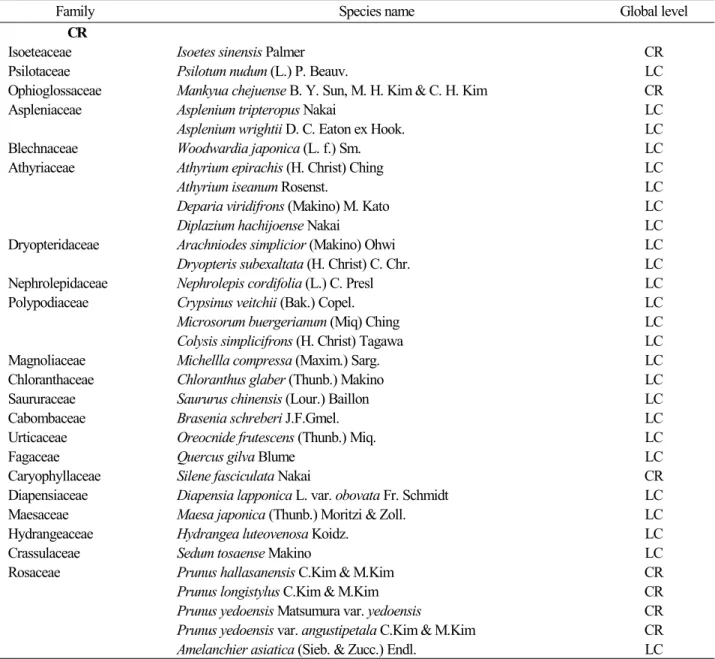
Family Species name Global level

CR

Isoeteaceae Isoetes sinensis Palmer CR

Psilotaceae Psilotum nudum (L.) P. Beauv. LC

Ophioglossaceae Mankyua chejuense B. Y. Sun, M. H. Kim & C. H. Kim CR

Aspleniaceae Asplenium tripteropus Nakai LC

Asplenium wrightii D. C. Eaton ex Hook. LC

Blechnaceae Woodwardia japonica (L. f.) Sm. LC

Athyriaceae Athyrium epirachis (H. Christ) Ching LC

Athyrium iseanum Rosenst. LC

Deparia viridifrons (Makino) M. Kato LC

Diplazium hachijoense Nakai LC

Dryopteridaceae Arachniodes simplicior (Makino) Ohwi LC

Dryopteris subexaltata (H. Christ) C. Chr. LC

Nephrolepidaceae Nephrolepis cordifolia (L.) C. Presl LC

Polypodiaceae Crypsinus veitchii (Bak.) Copel. LC

Microsorum buergerianum (Miq) Ching LC

Colysis simplicifrons (H. Christ) Tagawa LC

Magnoliaceae Michellla compressa (Maxim.) Sarg. LC

Chloranthaceae Chloranthus glaber (Thunb.) Makino LC

Saururaceae Saururus chinensis (Lour.) Baillon LC

Cabombaceae Brasenia schreberi J.F.Gmel. LC

Urticaceae Oreocnide frutescens (Thunb.) Miq. LC

Fagaceae Quercus gilva Blume LC

Caryophyllaceae Silene fasciculata Nakai CR

Diapensiaceae Diapensia lapponica L. var. obovata Fr. Schmidt LC

Maesaceae Maesa japonica (Thunb.) Moritzi & Zoll. LC

Hydrangeaceae Hydrangea luteovenosa Koidz. LC

Crassulaceae Sedum tosaense Makino LC

Rosaceae Prunus hallasanensis C.Kim & M.Kim CR

Prunus longistylus C.Kim & M.Kim CR

Prunus yedoensis Matsumura var. yedoensis CR

Prunus yedoensis var. angustipetala C.Kim & M.Kim CR

Amelanchier asiatica (Sieb. & Zucc.) Endl. LC

were classified again at global level, 19 were critically endangered, 4 were endangered, 1 was vulnerable, and the rest were least concern (Table 9).

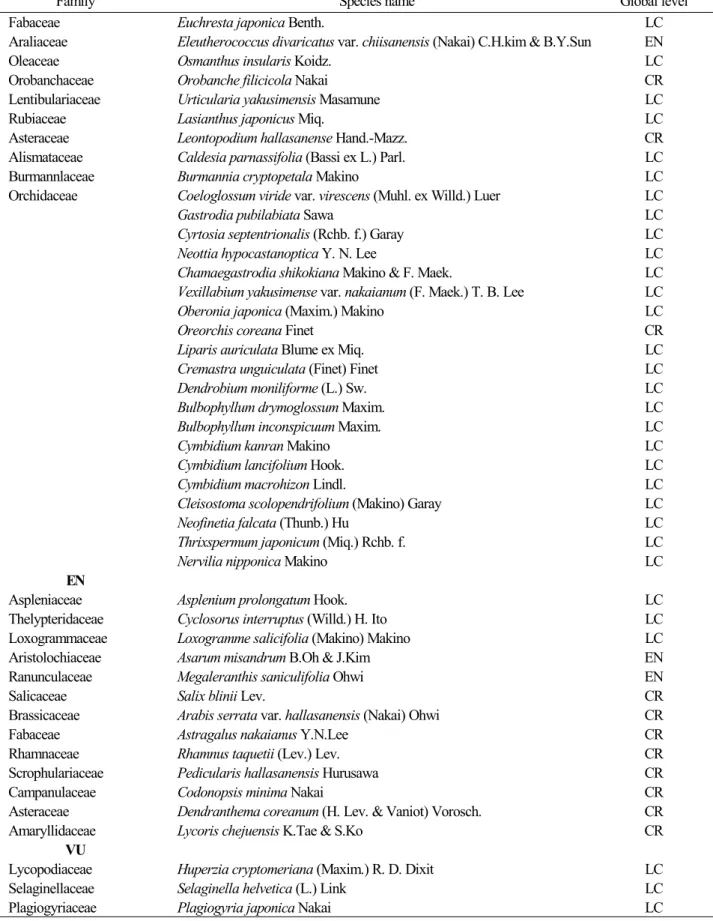
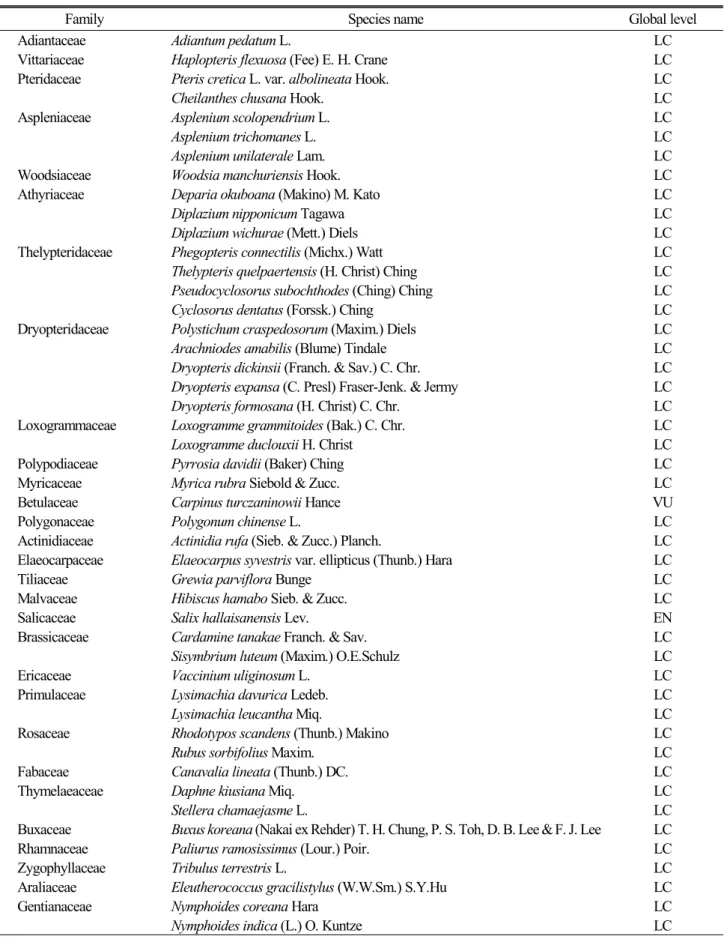
Conservation actions must be taken immediately for the species that were classified as critically endangered (61), endangered (13) and vulnerable (83) (Table 10).

Adopting the policy to protect wild fauna and flora will be

appropriate to protect the species in the Red List. For example,

the critically endangered and endangered species are regarded

as the first class of endangered species, and the vulnerable

species are regarded as the second class.

(10)

Table 10. Red list by category using regional level standard of IUCN from Jeju Island (Continued)

Family Species name Global level

Fabaceae Euchresta japonica Benth. LC

Araliaceae Eleutherococcus divaricatus var. chiisanensis (Nakai) C.H.kim & B.Y.Sun EN

Oleaceae Osmanthus insularis Koidz. LC

Orobanchaceae Orobanche filicicola Nakai CR

Lentibulariaceae Urticularia yakusimensis Masamune LC

Rubiaceae Lasianthus japonicus Miq. LC

Asteraceae Leontopodium hallasanense Hand.-Mazz. CR

Alismataceae Caldesia parnassifolia (Bassi ex L.) Parl. LC

Burmannlaceae Burmannia cryptopetala Makino LC

Orchidaceae Coeloglossum viride var. virescens (Muhl. ex Willd.) Luer LC

Gastrodia pubilabiata Sawa LC

Cyrtosia septentrionalis (Rchb. f.) Garay LC

Neottia hypocastanoptica Y. N. Lee LC

Chamaegastrodia shikokiana Makino & F. Maek. LC

Vexillabium yakusimense var. nakaianum (F. Maek.) T. B. Lee LC

Oberonia japonica (Maxim.) Makino LC

Oreorchis coreana Finet CR

Liparis auriculata Blume ex Miq. LC

Cremastra unguiculata (Finet) Finet LC

Dendrobium moniliforme (L.) Sw. LC

Bulbophyllum drymoglossum Maxim. LC

Bulbophyllum inconspicuum Maxim. LC

Cymbidium kanran Makino LC

Cymbidium lancifolium Hook. LC

Cymbidium macrohizon Lindl. LC

Cleisostoma scolopendrifolium (Makino) Garay LC

Neofinetia falcata (Thunb.) Hu LC

Thrixspermum japonicum (Miq.) Rchb. f. LC

Nervilia nipponica Makino LC

EN

Aspleniaceae Asplenium prolongatum Hook. LC

Thelypteridaceae Cyclosorus interruptus (Willd.) H. Ito LC

Loxogrammaceae Loxogramme salicifolia (Makino) Makino LC

Aristolochiaceae Asarum misandrum B.Oh & J.Kim EN

Ranunculaceae Megaleranthis saniculifolia Ohwi EN

Salicaceae Salix blinii Lev. CR

Brassicaceae Arabis serrata var. hallasanensis (Nakai) Ohwi CR

Fabaceae Astragalus nakaianus Y.N.Lee CR

Rhamnaceae Rhamnus taquetii (Lev.) Lev. CR

Scrophulariaceae Pedicularis hallasanensis Hurusawa CR

Campanulaceae Codonopsis minima Nakai CR

Asteraceae Dendranthema coreanum (H. Lev. & Vaniot) Vorosch. CR

Amaryllidaceae Lycoris chejuensis K.Tae & S.Ko CR

VU

Lycopodiaceae Huperzia cryptomeriana (Maxim.) R. D. Dixit LC

Selaginellaceae Selaginella helvetica (L.) Link LC

Plagiogyriaceae Plagiogyria japonica Nakai LC

(11)

Table 10. Red list by category using regional level standard of IUCN from Jeju Island (Continued)

Family Species name Global level

Adiantaceae Adiantum pedatum L. LC

Vittariaceae Haplopteris flexuosa (Fee) E. H. Crane LC

Pteridaceae Pteris cretica L. var. albolineata Hook. LC

Cheilanthes chusana Hook. LC

Aspleniaceae Asplenium scolopendrium L. LC

Asplenium trichomanes L. LC

Asplenium unilaterale Lam. LC

Woodsiaceae Woodsia manchuriensis Hook. LC

Athyriaceae Deparia okuboana (Makino) M. Kato LC

Diplazium nipponicum Tagawa LC

Diplazium wichurae (Mett.) Diels LC

Thelypteridaceae Phegopteris connectilis (Michx.) Watt LC

Thelypteris quelpaertensis (H. Christ) Ching LC

Pseudocyclosorus subochthodes (Ching) Ching LC

Cyclosorus dentatus (Forssk.) Ching LC

Dryopteridaceae Polystichum craspedosorum (Maxim.) Diels LC

Arachniodes amabilis (Blume) Tindale LC

Dryopteris dickinsii (Franch. & Sav.) C. Chr. LC

Dryopteris expansa (C. Presl) Fraser-Jenk. & Jermy LC

Dryopteris formosana (H. Christ) C. Chr. LC

Loxogrammaceae Loxogramme grammitoides (Bak.) C. Chr. LC

Loxogramme duclouxii H. Christ LC

Polypodiaceae Pyrrosia davidii (Baker) Ching LC

Myricaceae Myrica rubra Siebold & Zucc. LC

Betulaceae Carpinus turczaninowii Hance VU

Polygonaceae Polygonum chinense L. LC

Actinidiaceae Actinidia rufa (Sieb. & Zucc.) Planch. LC

Elaeocarpaceae Elaeocarpus syvestris var. ellipticus (Thunb.) Hara LC

Tiliaceae Grewia parviflora Bunge LC

Malvaceae Hibiscus hamabo Sieb. & Zucc. LC

Salicaceae Salix hallaisanensis Lev. EN

Brassicaceae Cardamine tanakae Franch. & Sav. LC

Sisymbrium luteum (Maxim.) O.E.Schulz LC

Ericaceae Vaccinium uliginosum L. LC

Primulaceae Lysimachia davurica Ledeb. LC

Lysimachia leucantha Miq. LC

Rosaceae Rhodotypos scandens (Thunb.) Makino LC

Rubus sorbifolius Maxim. LC

Fabaceae Canavalia lineata (Thunb.) DC. LC

Thymelaeaceae Daphne kiusiana Miq. LC

Stellera chamaejasme L. LC

Buxaceae Buxus koreana (Nakai ex Rehder) T. H. Chung, P. S. Toh, D. B. Lee & F. J. Lee LC

Rhamnaceae Paliurus ramosissimus (Lour.) Poir. LC

Zygophyllaceae Tribulus terrestris L. LC

Araliaceae Eleutherococcus gracilistylus (W.W.Sm.) S.Y.Hu LC

Gentianaceae Nymphoides coreana Hara LC

Nymphoides indica (L.) O. Kuntze LC

(12)

Table 10. Red list by category using regional level standard of IUCN from Jeju Island (Continued)

Family Species name Global level

Asclepiadaceae Marsdenia tomentosa Morr. & Decne. LC

Lamiaceae Dysophylla yatabeana Makino LC

Scrophulariaceae Euphrasia coreana W. Becker CR

Orobanchaceae Phacelamthus tubiflorus Sieb. & Zucc. LC

Caprifoliaceae Lonicera caerulea L. subsp. edulis (Turcz. ex Herder) Hulten LC

Asteraceae Tephroseris flammea (Turcz. ex DC.) Holub LC

Alismataceae Sagittaria aginashi (Makino) Makino LC

Sagittaria pygmaea Miq. LC

Hydrocharitaceae Ottelia alismoides Pers. LC

Blyxa aubertii Rich. LC

Juncaginaceae Triglochin maritimum L. LC

Araceae Pinellia tripartita (Blume) Schott LC

Arisaema hetrophyllum Blume LC

Poaceae Phacelurus latifolius (Steud.) Ohwi LC

Sparganiaceae Sparganium stoloniferum Ham. LC

Liliaceae Lilium concolor var. pulchellum (Fisch.) Regel LC

Lloydia serotinum (L.) Salisb. ex Rchb. LC

Liliaceae Tofieldia fauriei Lev. & Vaniot LC

Veratrum maackii var. japonicum T.Shimizu LC

Streptopus ovalis (Owhi) F. T. Wang & Y. C. Tang LC

Polygonatum involucratum (Franch. et Sav.) Maxim. LC

Clintonia udensis Trautv. & Mey. LC

Hypoxidaceae Hypoxis aurea Lour. LC

Iridaceae Iris minutoaurea Makino LC

Burmannlaceae Burmannia championii Thwaites LC

Orchidaceae Habenaria flagellifera (Maxim.) Makino LC

Amitostigma gracile (Blume) Schltr. LC

Platanthera mandarinorum subsp. maximowicziana (Schltr.) K. Inoue LC

Platanthera minor Reichb. fil. LC

Cephalanthera erecta var. subalphyla (Miyabe & Kudo) Ohwi LC

Pogonia japonica Reichb. fil. LC

Lecanorchis kiusiana Tuyama LC

Goodyera repens (L.) R Brown LC

Acknowledgment

This research was supported by a grant (no. 052-581-071) from the Core Environmental Technology Development Project for Next Generation funded by the Ministry of Environment of the Korean Government.

Literature Cited

IUCN. 2003. Guidelines for application of IUCN red list

criteria at regional levels: version 3.0. IUCN Species Survival Commission. IUCN, Gland, Switzerland.

IUCN. 2006. 2006 IUCN Red List of Threatened Species.

www.iucnredlist.org.

Kim, C. S. 2006a. Endemic and Rare Plants of Hallasan Natural Reserve. Report of survey and study of Hallasan Natural Reserve, Research Institute for Mt. Hallla, Jeju Special Self-Gorvening Province. Pp. 431-450. (in Korean)

Kim, C. S. 2006b. Flora of Hallasan Natural Reserve, Jeju

Island. Report of survey and study of Hallasan Natural

Reserve, Research Institute for Mt. Hallla, Jeju Special

(13)

Self-Gorvening Province. Pp. 365-396. (in Korean)

Kim, C. S. 2006c. Outline of Plants of Hallasan Natural Reserve. Report of survey and study of Hallasan Natural Reserve, Research Institute for Mt. Hallla, Jeju Special Self-Gorvening Province. Pp. 109-137. (in Korean)

Kim, C.S. 2002. Review on the factors causing changes in the subalpine vegetation of Mt. Halla and conservation measures.

The Proceedings on the Conservation and Management of Subalpine Zone in Mt. Halla. Pp. 26-55. Institute for Mt.

Halla. (in Korean)

Kim, C.S. 2005. The diversity of alpine plants in Mt. Halla. The Proceedings of the Symposium on Conservation and Sustainable Use of Bio-Diversity in Jeju Island, Pp. 31-48.

Korean Society of Native Species.

Kim, C.S., J.G. Koh, M.O. Moon, G.P. Song, S.Y. Kim, J. Kim, D.S. Kim, J.H. Toh and K.M. Song. 2008. Rare Plants of Jeju Island. Korea Forest Research Institute. 400pp. (in Korean) Kim, C.S., M.O. Moon, J.G. Koh and G.P. Song. 2007. Alien

Plants of Jeju island. Jeju Regional Environmental Tech-

nology Development Center. 426pp. (in Korean)

Kim, C.S., Y.J. Kang, M.O. Moon and G.P. Song. 2006a. The Plants of Mt. Halla. Jeju-Do Province & Hallasan Mountain Ecology and Culture Institute. 351pp. (in Korean)

Kim, C.S., Y.J. Kang, M.O. Moon, G.P. Song, S.H. Jung, J,G.

Oh and W.B. Kim. 2006b. The Lists of Animals and Plants of Mt. Halla. Jeju-Do Province & Hallasan Mountain Ecology and Culture Institute. 351pp. (in Korean)

Koh, J.G., M.O. Moon and S.C. Koh. 1999. The vegetation and plant resources of Paeknokdam, the crater of Mt. Halla.

Korean. J. Plant Res. 1(3): 221-233. (in Korean)

Kong, W.-S. 1998. The alpine and subalpine geoecology of the Korean Peninsula. Korean J. Ecol. 21(4): 383-387.

Lee, W.T. 1996. Lineamenta Florae Koreae. Academic Press, Seoul. (in Korean)

Park, S,H., J.H. Shin, Y.M. Lee, J.H. Lim and J.S. Moon. 2002.

Distribution of naturalized alien plants in Korea. Korea

Forest Research Institute. 216pp. (in Korean)

수치

Table 2. Statistics of the Pteridophyta in Jeju Island
Table 4. Statistics of the Monocotyledonae in Jeju
Table 5. Statistics of the Cholipetalae subclass of the Dicotyledoeae in Jeju
Table 6. Statistics of the Sympetalae subclass of the Dicotyledoeae in Jeju
+7

참조

관련 문서

The survey plants were also categorized based on endemic plants of the Korean Pen- insula (Chung et al., 2017), red list plants (National Insti- tute of Biological

The results showed that the vascular plants of the paddy fields in South Korea included 389 taxa, composed of 51 families, 219 genera, 350 species, four subspecies, 30

The list of vascular plants on Yugu stream (328 taxa: 88 families, 229 genera, 290 species, 3 subspecies, 30 varities, 5 forms) E; Endemic, R; Rare and Endanger, I, II, III,

As a result, the invasive alien plants in the Goyang Siksa district were 20 families 46 genera 57 taxa; according to the land-use type, the residential area(Wi City apart-

Rare and Endemic Plant Species of Korea Forest Service were 11 taxa such as Asarum maculatum, Aconitum japonicum subsp.. napiforme and

Among them, 28 taxa were Korean endemic plants and 8 taxa were rare plants designated by the Korea Forest Services, and 11 taxa were listed on the Red list of endangered plants and

18 taxa of Korean endemic species such as Asarum maculatum Nakai were found.. There were total 90 taxa of floristic regional indicator plants specially designated by the Ministry of

ABSTRACT: To identify the flora of the vascular plant on Chujado Island in Chuja-myeon, Jeju-si, Jeju Province, Korea, eleven field surveys were conducted between April to