• 검색 결과가 없습니다.

Host plants and Biological Characteristics of Illeis koebelei Timberlake (Coleoptera: Coccinellidae: Halyziini) in Gyeonggi-do

N/A
N/A
Protected

Academic year: 2021

Share "Host plants and Biological Characteristics of Illeis koebelei Timberlake (Coleoptera: Coccinellidae: Halyziini) in Gyeonggi-do"

Copied!
7
0
0

로드 중.... (전체 텍스트 보기)

전체 글

(1)

Original article KOREAN JOURNAL OF APPLIED ENTOMOLOGY

한국응용곤충학회지 ⓒ The Korean Society of Applied Entomology

Korean J. Appl. Entomol. 54(4): 295-301 (2015) pISSN 1225-0171, eISSN 2287-545X

DOI: http://dx.doi.org/10.5656/KSAE.2015.08.0.030

Host plants and Biological Characteristics of Illeis koebelei Timberlake (Coleoptera: Coccinellidae: Halyziini) in Gyeonggi-do

Young Su Lee*, Myoung Jun Jang 1 , Jin Gu Lee, Jun-Ran Kim 2 and Joon Ho Lee 3

Gyeonggi Agricultural Research and Extension Services, Hwaseong 18388, Republic of Korea

1

Kongju National University, Kongju 32439, Republic of Korea

2

National Academy of Agricultural Science, RDA, Wanju 55365, Republic of Korea

3

Department of Agricultural Biotechnology, Seoul National University, Seoul 08826, Republic of Korea

노랑무당벌레의 발생기주 및 생물학적 특성

이영수*ㆍ장명준 1 ㆍ이진구ㆍ김준란 2 ㆍ이준호 3

경기도농업기술원 1공주대학교, 2국립농업과학원, 3서울대학교

ABSTRACT: We investigated mycophagous ladybird, Illeis koebelei from 12 species of plants infected with powdery mildew in Gyeonggi-do, Korea. The pear tree, Pyrus ussuriensis var. macrostipes (Nakai), was most preferred by I. koebelei. This species was found from early July to early November in pear orchards. There was no entomophagous trace in the gut of I. koebelei without powdery mildew spores in a microscope. All stages except egg and pupa are obligate mycophagous, and the feeding potential is ranked as follows: fourth instar, adults, third instar, second instar, and first instar. Feeding amounts of each stage of I. koebelei were 45.6, 144.4, 372.2, 628.1, and 473.7 mm

2

of cucumber powdery mildew per day. Fourth instar larvae showed highest consumption of cucumber powdery mildew.

Developmental periods of four larval instars and adults feeding cucumber powdery mildew were 1.2, 2.3, 2.3, 4.6, and 37.7 days, respectively, at 25°C. In this study, we could not determine the feeding potential of I. koebelei against the cucumber powdery mildew;

therefore, and further studies are required to elucidate the potential of this species as a biological control agent, e.g., mass rearing, selection of low toxic chemical agents for Integrated Pest Management (IPM), and control techniques against powdery mildew in agro-ecosystems.

Key words: Illeis koebelei, Powdery mildew, Mycophagous, Biological control

초 록 : 경기도 8개 지역에서 2010년부터 2012년 동안 식균성인 노랑무당벌레의 발생기주를 조사한 결과, 흰가루병에 감염된 12종의 식물에서 관찰 이 되었다. 특히 가장 밀도가 높았던 배과원에서 노랑무당벌레는 7월 상순부터 11월 상순까지 발견되었다. 식균성인 노랑무당벌레의 장내에서는 흰가루병 균사나 포자 외에 다른 먹이의 흔적이 발견되지 않았고, 알과 번데기를 제외한 전 발육단계에서 균을 섭식하는 특성을 볼 때 절대적 식균성 곤충으로 생각된다. 25℃에서 오이 흰가루병균을 섭식한 노랑무당벌레의 발육기간은 알, 유충, 번데기, 성충이 각각 3.9, 10.4, 4.1, 37.7일 이었고, 발육단계별 오이 흰가루병 섭식량은 45.6, 144.4, 372.2, 628.1, 473.7 mm

2

로 4령, 성충, 3령, 2령, 1령 순으로 많았다. 본 연구를 통해 노랑무당벌 레의 오이 흰가루병에 대한 섭식능력을 바탕으로 향후 유용 토착천적으로써 대량사육기술, 저독성 약제 선발 등 작물 흰가루병 종합방제기술(IPM) 에 대한 연구가 필요하리라 사료된다.

검색어: 노랑무당벌레, 흰가루병, 식균성, 생물적 방제

*Corresponding author: [email protected] Received June 23 2015; Revised August 10 2015 Accepted August 31 2015

Powdery mildew is the most common, widespread, and very economically important disease in many agricultural crops

worldwide (Amano, 1986). They attack a wide range of plant

species and infect many different plant structures (Glawe, 2008)

in all kinds of temperate, arid, subarctic and tropical habitats

(Ale-Agha et al., 2008). Management of powdery mildew is

mainly relying on regular fungicide application, but this chemical

(2)

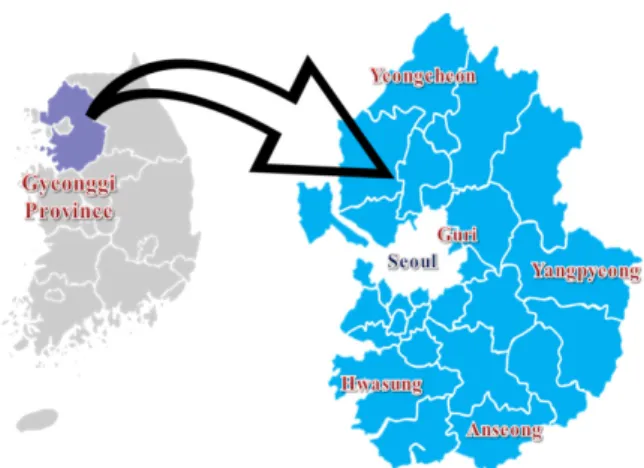
Fig. 1. Study area investigated for the natural occurrence of Illeis.

koebelei.

control have raised the high cost, causing fungicide resistance and residual effects on environment and human (Razdan and Sabitha, 2009). Therefore, as an alternative control method, biological control by arthropods or microbes has been considered;

mycolytic microorganisms (Kiss, 2003; Lee et al., 2007; Romero et al., 2007), mycophagous arthropods (Wu and Guo, 1987;

Bhattacharjee et al., 1994; English-Loeb et al., 2007) and other potential non-fungal biological control agents (Segarra, 2009;

Hegazi and El-Kot, 2010).

The family Coccinellidae is comprised of approximately 6,000 species worldwide (Hodek et al., 2012). Most Coccinellid species are commonly entomophagous, and the major prey is the Hemipteran insects, although their preference is different according to the food species (Omkar and Bind, 1996; Giorgi et al., 2009). Therefore, they have been well known as natural enemies. Apart from this entomophagous feeding habit, some species are mycophagous, and they belong to the tribe Halyziini and Tytthaspidini of Coccinellinae (Giorgi et al., 2009; Sutherland and Parrella, 2009).

Of them, mycophagous ladybeetles in the tribe Halyziini are potentially attractive agents for the biological control of powdery mildew, but trophic ecology of these beetles is poorly understood.

The major diet of these ladybeetles is powdery mildew, and their alternative foods were known for several species, for instance sooty mold or pollen (Sasaji, 1998; Giorgi et al., 2009).

Like the fungi that they feed on, the Halyziini exhibits a cosmopolitan distribution, and at least one species of mycophagous ladybird is present wherever powdery mildews commonly occur (Sutherland and Parrella, 2009).

Oriental genus Illeis belonging to Halyziini has attracted by many entomologists or biologists for its unique mycophagous habit (Men et al., 2002; Giorgi et al., 2009; Sutherland and Parrella, 2009; Sharma and Joshi, 2010; Karuna et al., 2013;

Thite et al., 2013).

Illeis koebelei is generally recorded in Asia, such as, Japan (Takeuchi et al., 2000), China (Wu et al., 2011), Philippine (Recuenco-Adorada and Gapud, 1998), and Korea (Kim et al., 1994). However, there is a little study about I. koebeleis in Korea, in spite of arising interest as the solution of biological control of powdery mildew disease.

The objective of this study was to investigate the natural occurrence and the biology of I. koebelei in various agricultural

and horticultural systems in Gyeonggi-do, Korea. In addition, we observed the morphological characteristics of mycophagous I. koebeli in relation to the mycophagous habits of them.

Materials and Methods

Natural occurrence

This study was carried out in the eight regions of Gyeonggi-do, Korea (Fig. 1), which is situated at 36 90' 51" to 38 16' 54" N latitude and 126 55' 03" to 127 82' 95" E longitude. I. koebelei was surveyed at five sites per region every 10 days during April-November from 2010 to 2012. Their presence or abundance was based on visual encounters of the plants with powdery mildew. Collection was made by aspiration or hand picking, depending on the types of habitats, and all stages were collected, if possible. They were kept in plastic bowls along with fungus infected leaves separately to avoid overcrowding and food limitation, and were brought to the laboratory.

Powdery mildew severity was assessed using the score chart of 0 to 5 scale (0 = No infection, 1 = 0.1~10%, 2 = 10.1~

15%, 3 = 15.1 ~25%, 4 = 25.1~50% and 5 = More than 50%

leaf area covered with mildew growth) as described by Anand et al. (2008). I. Koebelei abundance were estimated visually to the five level of index (0 = No detection, 1 = Under 1, 2 = 1.1~

2, 3 = 2.1 ~3, 4 = 3.1~4 and 5 = More than 4 individuals per

five leaves of each plant).

(3)

Table 1. Host plants infected with powdery mildew and the abundance of Illeis koebelei in Gyeonggi-do

PM (Genus) Host Plant (Species) PM Severity I. koebelei Abundance Area Collected

Leveillula Capsicum annuum L. 3

a

2

b

A, H

c

Sphaerotheca

Lactuca indica var. laciniata for. indivisa Hara 2 1 H, Y1

Cucumis sativus L. 4 1 H

Cucurbita moschata Duch 3 3 G, H

Coreopsis lanceolata L. 3 2 H

Impatiens balsamina L. 2 1 H

Phyllactinia

Pyrus ussuriensis var. macrostipes (Nakai) T. Lee 4 5 A, H

Diospyros kaki Thunb 3 4 H

Ailanthus altissima Swingle 2 3 H

Microsphaera Juglans sinensis Dode 2 2 Y2

Golovinomyces Nicotiana tabacum L. 1 1 Y2

Plantago asiatica L. 2 1 H

5 Genera 12 Species H

a

1 = 0.1 ~ 10%, 2 = 10.1 ~ 15%, 3 = 15.1 ~ 25%, 4 = 25.1 ~ 50% and 5 = More than 50%

b

1 = Under 1, 2 = 1.1 ~ 2, 3 = 2.1 ~ 3, 4 = 3.1 ~ 4 and 5 = More than 4 individuals/five leaves

c
A: Anseong, G: Guri, H: Hwasung, Y1: Yeoncheon, Y2: Yangpyeong.

Table 2. Seasonal occurrence of Illeis koebelei on pear powdery mildew in Gyeonggi-do

Stage Apr. May June July Aug. Sep. Oct. Nov.

Egg ○○ ○○○ ○○○

Larva ● ●●● ●●● ●●

Pupa ◆ ◆◆◆ ◆

Adult ■■■ ■■■ ■■■ ■■■ ■

Rearing of I. koebelei

Cucumis sativuss seeds were planted in plastic pots (100 cm diameter, 89 cm height) and grown in a thermostatic chamber at 25℃, 70 ± 10% RH, and a photoperiod of 16:8 (L:D) h.

Powdery mildew was collected from cucumbers plants for inoculum. Collected powdery mildew, Sphaerotheca fuliginea was gently transferred to a single leaf of each two-week-old plant using a soft paintbrush. Four-week-old powdery mildew infected plants were used for the mass rearing of I. koebelei.

The beetles were maintained in the rearing room at 25 ± 1 ℃ and relative humidity at 60~80% under a photoperiod of 16:8 (L:D) h. Fifteen to twenty adult beetles were allowed to mate and lay eggs in plastic containers (30 × 30 × 30 cm) in which two powdery mildew infected cucumber. Eggs laid on plant were transferred to the translucent plastic cage (232 × 165 × 95 mm, with ventilation hole) with wet tissue paper laid on the bottom. Newly hatched larvae were kept on the powdery

mildew infected cucumber plants. Before powdery mildew was depleted, larvae were gently transferred to a new powdery mildew infected cucumber plant using a soft brush until pupation.

Pupae were placed in the other plastic cage until emergence.

Results

Natural Occurrence

Illeis koebelei was found on 12 species of plants infected with powdery mildew in Gyeonggi-do (Table 1). Of them, I.

koebelei was most abundantly found on the pear tree, Pyrus ussuriensis var. macrostipes (Nakai) on which powdery mildew belonging to Phyllactinia was heavily infected. Phyllactinia powdery mildew appeared to be the most preferred food to I.

koebelei. I. koebelei occurred from early July to early November

in pear orchards (Table 2). All stages of I. koebelei were found

from August to September, when the monthly mean temperature

(4)

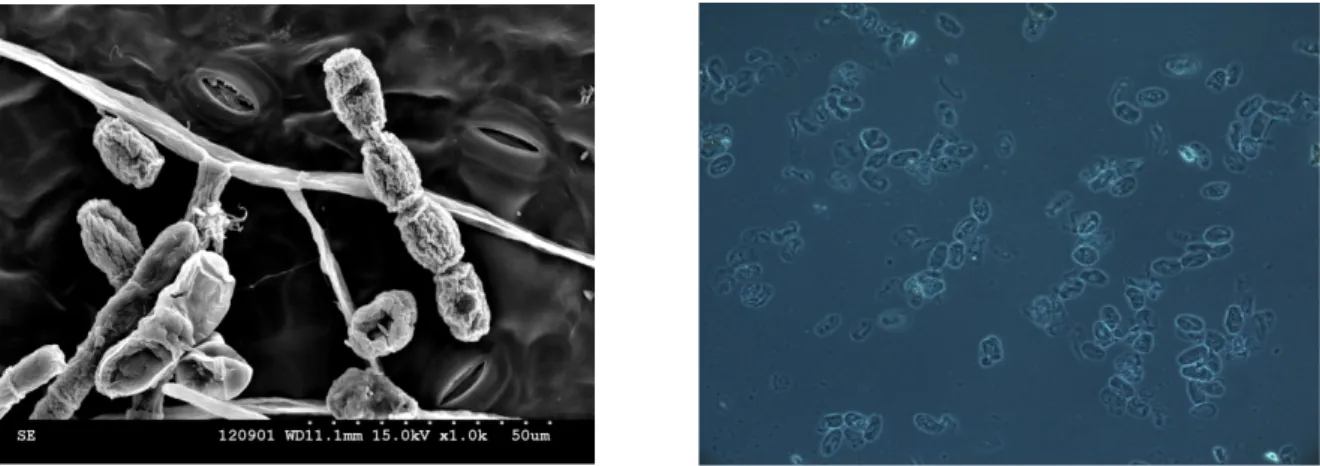
Fig. 2. Powdery mildew spores on the cucumber leaf (left) and those from the gut of Illeis koebelei adult (right) after feeding the cucumber powdery mildew.

Fig. 3. Spore structures of nine species of powdery mildew that Illeis koebelei feeds on.

was 25.6℃ and 20.7℃, respectively.

Spores of cucumber powdery mildew were found in the gut of I. koebelei (Fig. 2). There was no trace of arthropod foods without fungal materials. There are several species of powdery mildews that I. koebelei visiting for feeding. But we could not find any relationships between the structures of powdery mildew and the preference of I. koebelei (Fig. 3, Table 1).

Biological characteristics

Table 3 shows the developmental characteristics and feeding capacity of Illeis koebelei feeding cucumber powdery mildew.

The eggs (1.02 mm) were glued vertically and laid in cluster

(Fig. 4). After embryonic development, the egg color changed to dark yellowish and finally dark greyish before hatching.

There are 4 instars, all similar in appearance. Gray whole body

length of first instar with black hairs was measured 1.38 mm,

and yellowish second instar larvae with blackish dots and

white hairs on the whole body was more elongate flattened and

measured 2.89 mm. From the third instar, their dots become

much darker and body length was 3.96 mm. Fourth instar was

similar to the third, but 5.31 mm in its body length. Pupa was

somewhat smaller than adult in body size and yellow with

black spots on the whole (Fig. 4). The female adult was 4.51

mm in length and it is elongated yellow oval convex appears to

be shielded beetle, and has two black spots appeared on the

(5)

Table 3. Developmental characteristics and feeding amount of each stage of Illeis koebelei that fed on cucumber powdery mildew Stages Body length (mm ± SD) Developmental periods

(day, Mean ± SD) Feeding amount (mm

2

/day ± SD) (%)

Egg 10.2 ± 0.04 3.9 ± 0.6 -

1

st

instar 1.38 ± 0.44 1.2 ± 0.4 45.6 ± 20.1 (10)

2

nd

instar 2.89 ± 0.54 2.3 ± 0.7 144.4 ± 97.8 (21)

3

rd

instar 3.96 ± 0.50 2.3 ± 1.3 372.2 ± 226.9 (79)

4

th

instar 5.31 ± 0.57 4.6 ± 1.4 628.1 ± 340.0 (133)

Pupa ( ♀) 3.68 ± 0.19 4.1 ± 0.4 -

Egg-pupa - 18.4 ± 1.3 -

Adult ( ♀) 4.51 ± 0.25 37.7 ± 31.9 473.7 ± 257.9 (100)

※ Sample size comprised 30 eggs, larvae, pupae, and adults, 3 replications, at 25°C and 16:8 (L:D) h.

Fig. 4. Stages of Illeis koebelei : A. eggs, B. third instar larvae, C. pupa, D. adults.

pronotum (Fig. 3).

Developmental periods of four larval instars and adult feeding cucumber powdery mildew were 1.2, 2.3, 2.3, 4.6, 37.7 days respectively at 25 ℃. Feeding amounts of each stages of I.

koebelei were 45.6, 144.4, 372.2, 628.1, 473.7 mm 2 of cucumber powdery mildew per day. Fourth instar larvae most consumed cucumber powdery mildew.

Discussion

Takeuchi et al. (2000) found that I. koebelei feeds on 11 species of powdery mildews (e.g., Sphaerotheca fusca, S.

cucurbitae, and Phyllactinia moricola), and the kind of feed (powdery mildew) effects on their developmental duration of immature stage and survival rate. It seems to be positive correlation between powdery mildew severity and I. koebelei abundancy (Table 1). However, in spite of the abundant density of cucumber powdery mildew, the I. koebelei density was relatively low. It is supposed to be caused by the chemical or physical control of cucumber powdery mildew for the more harvest.

The characteristics of host plant can influence to the interactions

between insect and their prey (Morath et al., 2012; Weber et al., 2012). The olfactory secondary metabolites emitted from plants infected with powdery mildew could effect on the mycophagous insect by detecting the food easily. Morath et al.

(2012) reported that volatile organic compounds (VOCs) fungi producing play important signaling roles between fungi and plants, arthropods, bacteria, and other fungi.

I. koebelei was detected from early July to early November in pear orchard. In this season, all stage of I. koebelei were observed on the under the surface of pear leaves that powdery mildew occurred severely (Table 1). Although most of ladybirds could be found easily before July in Gyeonggi-do, Korea, we could not find I. koebelei in these seasons. Various circumstances (e.g. species of prey, prey density, temperature) effect on the oviposition selection of adult ladybird (Hodek et al., 2012). It seems that I. koebelei is alive in these seasons by feeding substitution diet e.g. pollen. Because pollen can be the good alternative food source for many ladybeetles (Lundgren, 2009).

We reconfirmed the mycophagous habits through investigating

the feeding cucumber powdery mildew amount of each stages

of I. koebelei. Feeding capacity of each stages can be ranked at

25℃ as follows: fourth instar, adults, third, second and first

(6)

instar. The spores of cucumber powdery mildew in the gut of I.

koebelei were found easily with no trace of arthropod food without fungal materials (Fig. 2). For the mass rearing of I.

koebelei using cucumber powdery mildew for food, the adequate temperature may be 24℃ in the range from 16℃ to 26℃ which is the optimum temperature for powdery mildews (Yarwood et al., 1954).

Powdery mildew disease is one of the most economically important plant pathogens in agricultural ecosystems worldwide.

In this study, We could find the feeding potential of I. koebelei against the cucumber powdery mildew, and further study will be needed to develop this species as a biological control agent e.g. mass rearing skill, selection of low toxic chemical agent for IPM and control effect against powdery mildew in agro- ecosystem.

Acknowledgements

This work was carried out with the support of the Rural Development Administration (ATIS code PJ0091942015).

Literature Cited

Ale-Agha, N., Boyle, H., Braun, U., Butin, H., Jage, H., Kummer, V., Shin, H.D., 2008. Taxonomy, host range and distribution of some powdery mildew fungi (Erysiphales). Schlechtendalia 17, 39-54.

Amano, K., 1986. Host range and geographical distribution of the powdery mildew fungi. Tokyo: Japan Scientific Society Press.

741p.

Anand, T., Chandrasekaran, A., Kuttalam, S., Senthilraja, G., Raguchander, T., & Samiyappan, R., 2008. Effectiveness of azox- ystrobin in the control of Erysiphe cichoracearum and Pseudoper- onospora cubensis on cucumber. Journal of Plant Protection Research, 48(2), 147-159.

Bhattacharjee, S.S., Chakraborty, N., Kumar, C.A., Sahakundu, A.K., 1994. Control of the white powdery mildew, Phyllactinia cor- ylea (Pers) Karst, with the ladybird beetle, Illeis indica Timb.

(Coccinellidae: Coleoptera), Sericologia 34, 485-495.

English-Loeb, G., Norton, A. P., Gadoury, D., Seem, R., and Wilcox, W. 2007. Biological control of grape powdery mildew using my- cophagous mites. Plant Dis. 91:421-429.

Giorgi, J.A., Vandenberg, N.J., McHugh J.V., Forrester J.A., ZlipiDski A., Miller K.B., Shapiro, L.R., Whiting, M.F., 2009.

The evolution of food preferences in Coccinellidae. Biol. Control

51, 215-231.

Glawe, D.A., 2008. The powdery mildews: a review of the world’s most familiar (yet poorly known) plant pathogens. Annu. Rev.

Phytopathol.46, 27-51.

Hegazi, M.A., El-Kot, G.A., 2010. Biological control of powdery mildew on Zinnia (Zinnia elegans, L) using some biocontrol agents and plant extracts, J. Agri. Sci. 2, 221-230.

Hodek, I., Honek, A., van Emden, H. F. 2012. Ecology and behav- iour of the ladybird beetles (Coccinellidae). John Wiley & Sons.

561p.

Karuna K., Y.G., Jagadish, S.K.S., Geetha, K.N., 2013. Severity of powdery mildew infection and population of Illeis cincta F. on sunflower. Insect Environment 19, 207-210.

Kim, J.I., Kwon, Y.J., Paik, J.C., Lee, S.M., Ahn, S.L., Park, H.C., Chu, H.Y., 1994. Order 23, Coleoptera, In: The Entomological Society of Korea and Korean Society of Applied Entomology (ed), Check List of Insects from Korea. Kon-Kuk Univ. Press, Seoul, pp. 117-214.

Kiss, L., 2003. A review of fungal antagonists of powdery mildews and their potential as biocontrol agents. Pest Manag. Sci. 59, 475-83.

Lee, S.Y., Kim, Y.K., Kim, H.G., Shin, H.D., 2007. New hosts of Ampelomyces quisqualis Hyperparasite to powdery mildew in Korea. Research in Plant Disease 13, 183-190.

Lundgren, J.G., 2009. Relationships of natural enemies and non-prey foods. Springer International, Dordrecht.

Men, U.B., Dudhe, Y.H., Kandalkar, H.G., 2002. Record of Illeis cincta Fabricius Coleoptera: Coccinellidae as mycophagous on powdery mildew of Sunflower. Insect Environment 8, 36-37.

Morath, S.U., Hung, R., Bennett, J.W., 2012. Fungal volatile or- ganic compounds: a review with emphasis on their biotechnological potential. Fungal Biol. Rev. 4, 73-83.

Omkar, Bind R.B., 1996. Record of aphid natural enemies complex of Uttar Pradesh. V. The coccinellids. J. Adv. Zool. 17, 44-48.

Razdan, V.K., Sabitha, M., 2009. Integrated disease management:

Concepts and practices. In: Peshin, R., Dhawan, A.K., eds.

Integrated pest management: Innovation-development process.

Dordrecht: Springer. pp. 369-389.

Recuenco-Adorada, J.D., Gapud, V.P., 1998. Philippine species of Illeis Mulsant (Coleoptera: Coccinellidae: Coccinellinae: Psylloborini), Philippine Entomologist 12, 43-53.

Romero, D., de Vicente, A., Zeriouh, H., Cazorla, F.M., Fernández- Ortuño, D., Torés, J.A., Pérez-García, A., 2007. Evaluation of bi- ological control agents for managing cucurbit powdery mildew on greenhouse-grown melon. Plant Pathology 56, 976-986.

Sasaji, H., 1998. Natural history of the ladybirds. Tokyo: University of Tokyo Press. 251pp.

Segarra, G., Reis, M., Casanova, E., Trillas, M.I., 2009. Control of

powdery mildew (Erysiphe polygoni) in tomato by foliar applica-

tions of compost tea. Journal of Plant Pathology 91, 683-689.

(7)

Sharma, P.K., Joshi, P.C., 2010. New records of Coccinellid Beetles (Coccinellidae: Coleoptera) from district Dehradun, (Uttarakhand), India. New York Science Journal 3, 112-120.

Sutherland, A.M., Parrella, M.P., 2009. Mycophagy in Coccinellidae:

review and synthesis. Biological Control 51, 284-293.

Takeuchi, M., Sasaki, Y., Sato, C., Iwakuma, S., Isozaki, A., Tamura, M., 2000. Seasonal host utilization of mycophagous ladybird Illeis koebelei (Coccinellidae: Coleoptera), Japanese Journal of Applied Entomology and Zoology 44, 89-94.

Thite, S.V., Chavan, Y.R., Aparadh, V.T., Kore, B.A., 2013.

Incidence of Illeis cincta (Fabricius) on powdery mildew of Dalbergia sisso and Xanthium strumarium. International Journal of Advanced Research 1, 20-23.

Weber, M.G., Clement, W.L., Donoghue, M.J., Agrawal, A.A., 2012. Phylogenetic and experimental tests of interactions among mutualistic plant defense traits in Viburnum (Adoxaceae) The American Naturalist 180, 450-463.

Wu, W, Liu, D., Zhang, P., Zhang, Z., 2011. Community structure and diversity of ladybugs in Baihualing of Gaoligong Mountain I.

Plant Diseases and Pests 2, 46-48.

Wu, X.B., Guo, X.L., 1987. Primary study on control of powdery mildew by ladybugs, Journal of Northeast Forestry University China 15, 13-17.

Yarwood, C.E., Sidky, S., Cohen, M., Santilli, V., 1954. Temperature

relations of powdery mildews. University of California.

수치

Fig. 1.  Study area investigated for the natural occurrence of  Illeis.
Table 1.  Host plants infected with powdery mildew and the abundance of  Illeis koebelei  in Gyeonggi-do
Fig. 3.  Spore structures of nine species of powdery mildew that  Illeis koebelei  feeds on
Fig. 4.  Stages of  Illeis koebelei : A. eggs, B. third instar larvae, C. pupa, D. adults.

참조

관련 문서