• 검색 결과가 없습니다.

Radiographic Bone Density Around Immediately Placed Titanium Implant on the Extraction Socket of Diabetic and Insulin-Treated Rat Maxilla

N/A
N/A
Protected

Academic year: 2021

Share "Radiographic Bone Density Around Immediately Placed Titanium Implant on the Extraction Socket of Diabetic and Insulin-Treated Rat Maxilla"

Copied!
7
0
0

로드 중.... (전체 텍스트 보기)

전체 글

(1)

Introduction

While patients with controlled diabetes mellitus (DM) do not differ from healthy individuals, hyper- glycemic patients have delayed wound healing and increased risk of infection.

1)

It has been suggested that dental implants are relatively contraindicated in patients with DM and yet no evidence has been pro- vided to support these concern.

2)

The use of dental implants in diabetic patients is controversial.

3,4)

Recently, a comprehensive and criti- cal review of dental implant placement in diabetic

subjects was performed.

3)

The majority of the findings indicated that diabetes did not represent an absolute contraindication to implant placement, provided that there was good glycemic control. No statistically sig- nificant difference was observed for early implant failures when subjects with controlled type 2 diabetes were compared to subject without diabetes.

5)

Conversely, according to the study of Moy et al.,

6)

despite moderate to good glycemic control in most of the 48 diabetic subjects in their study, implants yielded a statistically significantly lower survival rate compared to the non-diabetic subjects. In the diabet- Kun-Hyun Park

1

, Suhyun Park

2

, Sung-Hwy Lee

2

, Sung-Woon Pyo

2

1

Department of Oral and Maxillofacial Surgery, Graduate School of Clinical Dental Science, The Catholic University of Korea,

2
Department of Oral and Maxillofacial Surgery, College of Medicine, The Catholic University of Korea, Bucheon, Korea

Radiographic Bone Density Around Immediately Placed Titanium Implant on the Extraction Socket of Diabetic and Insulin-Treated Rat Maxilla

Purpose: Although it is generally accepted that patients with controlled diabetes have similar rates of suc- cess for dental implants as healthy individuals, the use of dental implants in diabetic patients is controver- sial. In addition, the impact of diabetes on the healing of bone associated with immediately place dental implants is not completely understood. The purpose of this study was to measure bone response to implants radiologically in uncontrolled and insulin-controlled diabetic rats.

Materials and Methods: Twenty rats were divided into control, insulin-treated and diabetic groups. The rats received streptozotocin (60 mg/kg) to induce diabetes; animals in the insulin-treated group also received three units of subcutaneous slow-release insulin. Two titanium implants (1.2 × 3 mm) were placed in the extraction socket of the maxillary first molars of the animals and were harvested at 3 days, 1, 2 and 4 weeks. The bone density was measured by digital radiography using gray-level analysis (histogram) in the regions of interest (ROI) at four points: two mesial and two distal to both sides of the implant.

Results: The results showed that the osseointegration of the implants was impaired in the diabetic rats compared to the control and the insulin-treated rats. The radiographic evidence demonstrated marked destruction of bone around the implants in the diabetic group. Both the control and the insulin-treated groups had a significantly higher bone density on radiograph than the diabetic group from the 1 week of the experiment (P < 0.05 for each comparison).

Conclusion: The present study revealed that the immediate placement of titanium implants in the maxilla of diabetic rat lead to delay in the maturation of bone adjacent to implants. It is expected that the reduced predictability of success of immediate implantation in patient with the uncontrolled diabetes.

Key words: Diabetes, Implant, Insulin, Radiologic bone density

Abstract

(2)

ic subjects, implant loss was reported to occur a few months after placement and to continue for more than 10 years resulting in an implant survival rate of 68.75% with a relative risk ratio of 2.75 compared to healthy subjects. Also, implants in diabetic subjects were significantly associated with an increased risk for peri-implantitis compared to the implants placed in non-diabetic subjects.

7)

Currently, immediate placement of dental implants is an eminent and acknowledged treatment strategy which is extensively being used for the rehabilitation of missing teeth in healthy as well as medically com- promised individuals.

8)

It has gained popularity due to less tissue trauma, reduced overall treatment time, decreased patient's anxiety and discomfort, high patient acceptance and better function and aes- thetics.

9)

It is important to note that there are few references in the literature on the outcome of immediate implantation in the diabetic patient.

10)

In animal studies, it has been shown that uncontrolled diabetes hinders bone formation, bone remodeling, and wound healing

11)

and causes reduction in bone-implant con- tact and bone thickness,

12)

while insulin upregulates bone formation,

13)

and maintains bone-implant con- tact.

14,15)

Nonetheless, as bone density and mineral- ization are adversely affected by diabetes,

16)

it is rea- sonable to expect that the bone healing around the endosseous implants could also be affected.

Numerous studies have reported injection of insulin partially improved the healing process and increased the bone-implant contact area and trabecular bone volume surrounding the implant. Both the total area of new bone formation and the surface contact between bone and implants, were normalized after the treatment of diabetic rats with insulin. Namely, bone repair around endosseous implants appears to be regulated, at least in part, by insulin.

13,17,18)

The above mentioned experimental studies demon- strated that the detrimental effects of diabetes on osseointegration can be modified using insulin.

Therefore, this now raise the question of substantial application of the immediate implant placements in diabetic animals. Besides, to our knowledge, little is known about the tissue response to titanium implan- tation in the rat maxilla

19)

and bone formation around

immediately placed implants.

10)

Different methods have been used to evaluate the performance of dental implants. Most published studies have evaluated the histological and histomor- phological aspects of implants in diabetic and non- diabetic animals.

11,14,18)

Radiographic examination is also an important tool in clinical analysis because it is non-invasive and can be easily performed. A radi- ographic method has been introduced to assess the bone density around dental implants based on gray- level analyses using image software, and this method has shown results similar to histological findings observe in prior studies.

20,21)

The purpose of this study was to address the issue of bone healing around titanium implants in the maxilla after immediate implantation in the type 1 diabetes rat model and to measure the bone response to implants in uncontrolled and insulin-controlled diabetic rats.

Materials and Methods

All experiments were conducted under the guide- lines and protocols of the Ethics Committee for Maintenance and Experimentation on Laboratory Animals of the Bucheon St. Mary’s Hospital, The Catholic University of Korea (HFA09-001).

Animals

Twenty male 8 week old Sprague-Dawley rats of with an average weight of 350 g were obtained from the animal facility. The rats were divided into three groups: control (n = 4), diabetic (n = 8), and insulin- treated (n = 8). Three animals were placed per cage and maintained in a day/night cycle of 12 h, while their weight, blood glucose were monitored at least once a week.

Diabetic induction and insulin treatment

The diabetic group received a peritoneal injection of

streptozotocin (STZ, 60 mg/kg, Sigma, St. Louis,

MO, USA) diluted in 0.2 M citrate buffer. The con-

trol animals received an injection of saline only. The

rats in the insulin-treated group received a single

(3)

daily dose (3 IU) of long acting insulin (Lantus;

Sanofi-Aventis, Frankfurt, Germany) by the subcu- taneous route. Treatment started on the second day after STZ injection and continued throughout the experiment. The blood glucose was monitored from tail-nicked blood samples prior to diabetic induction, at the time of implant surgery, throughout the treat- ment period, and at the time of sacrifice using an electronic glucose meter (Accucheck Advantage;

Roche Diagnostics, Indianapolis, IN, USA). Diabetes was defined as a blood glucose level greater than 300 mg/dl at the time of surgery.

Surgical implant procedure

The implant surgery was performed three days after inducing diabetes and following confirmation of diabetes mellitus. All surgical procedures were done under using general anesthesia with ketamine (44 mg/kg, Ketalar; Yuhan, Seoul, Korea) and xylazine (5 mg/kg, Rompun; Bayer-Korea, Seoul, Korea) intraperitoneal injection.

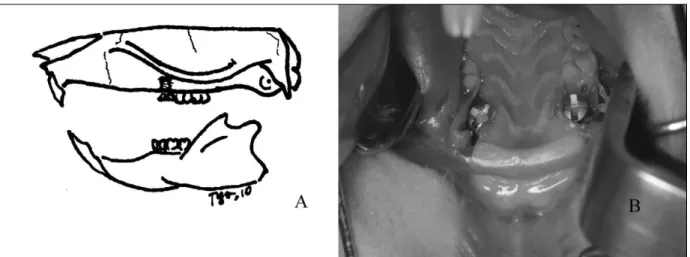
Briefly, the upper first molars on both sides of the maxilla were extracted with a forceps and bone cavi- ties for implantation were created in the interradicu- lar septum of the extraction socket using a 1.0 mm twist drill. Titanium microscrew implants (1.2 × 3 mm, Leibinger-Stryker, Freiburg, Germany) were inserted bilaterally into the prepared cavities by self- threading so that their tops were situated just above

the alveolar crest (Fig. 1). Profuse irrigation with sterilized physiological saline was maintained throughout this process. Experimental animals were sacrificed at 3 days, 1, 2 and 4 weeks 1 rat in control group, 2 rats in insulin treated group and 2 rats in diabetic group respectively and bone blocks including titanium screws were harvested.

Radiographic assessment

Image acquisition and image analysis was per- formed according to the previous report.

22)

In brief, the block of bone with the implants and the sensor were stabilized in a standard fashion with a fixing device. Digital radiographs were obtained using com- plementary metal-oxide semiconductor (CMOS) equipment, with the long vertical axis of the micro- screw implant positioned perpendicular to the central beam and parallel to the sensor at 40 cm focal spot to object distance. The X-ray unit was operated at 65 kVp, 10 mA and 0.3 s (Kodak 1500C; Carestream health, Inc. Rochester, NY, USA). A wooden block of 2 cm thickness was placed between the maxilla and the X-ray source in order to increase the secondary radiation.

The images were imported to digital image software (Adobes Photoshops 7.0; Adobe Systems Incorporated, San Jose, CA, USA). The bone density was determined using gray-level analysis (his- togram) in an area of 5 × 5 pixels for the regions of

Fig. 1. Schematic design of the experiment A and titanium implants placed in the extraction socket of both maxillary first

molars B.

(4)

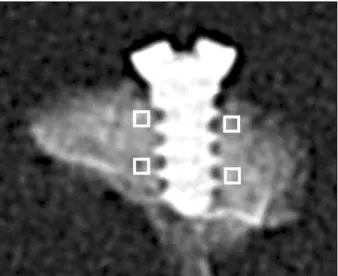
interest (ROI), at four points: two mesial and distal on both sides of the implant (Fig. 2). The average of gray level of the ROIs was divided by the gray level of the implant to compensate for minimal differences among the radiographs. The average radiographic bone densities of the four ROIs were considered together to characterize bone formation. These values were compared among the three groups.

Statistical analysis

Data from the radiographic bone density were ana-

lyzed statistically by Mann-Whitney test for compari- son between groups. SPSS12.0 software (SPSS, Chicago, IL, USA) was used and P-values of less than 0.05 were considered to be statistically significant.

Results Observation

Glucose blood levels and weight changes in the dia- betic group confirmed the onset of diabetic symp- toms. The diabetic animals had significantly higher blood glucose levels and increased weight loss.

However, the diabetic animals controlled by insulin were not significantly different than the controls for these parameters.

In all groups, none of the implants were lost during the four weeks of the study. There was, however, a significant difference among the groups. Considerable bone loss was found around the thread of the implants in the diabetic group at four weeks (Fig. 3).

Bone density around titanium implants

All four measurement sites were considered togeth- er as indicative for osseointegration. On day three, there were no significant differences between the groups. However, the difference in gray scales between diabetic group and the others were gradual- ly increased over time from 1 week of the experme-

Fig. 2. Example of X-rayed sample used for radiographic bone density measurements. White squares represent the 4 selected sites (two mesial and two distal).

Fig. 3. Radiographs for each group at 4 weeks of implant placement; control A, insulin-treated B and diabetic C group. Loss of

bone level around the implant thread was marked with arrows.

(5)

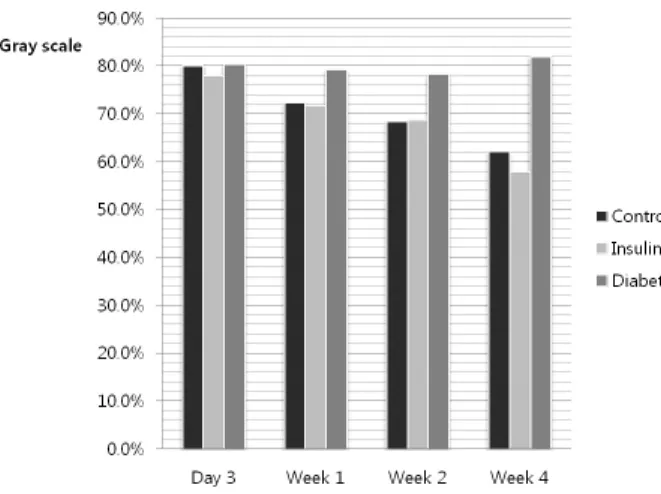
nt. At 4 weeks after implantation, the insulin-treat- ed group had the highest bone density, followed by the control group, and the diabetic group. The aver- age gray scale analysis showed a significantly lower radiographic bone density in the diabetic group region (81.75 ±1.49 gray levels) in relation to the control and insulin-treated groups (60.38± 2.31 and 57.75 ± 3.99 gray-levels, respectively) (Fig. 4).

From the pairwise comparisons between two groups, there was no significant difference between the con- trol group and the insulin treated group. However, the radiographic bone density was significantly high- er for both the control and the insulin-treated group than the diabetic group (P < 0.05) from 1 week after implant placement (Table 1).

Discussion

Studies have demonstrated that systemic condi- tions and habits related to bone loss such as smok- ing, glucocorticoid and cyclosporine treatments, dia- betes and osteoporosis decrease the predictability of osseointegrated implants because healing of the sur- rounding bone may be impaired.

22,23)

In many previous studies, deficient bone healing around titanium implants has been reported in experimental models of diabetes. Yet, there are lacks of studies concerning the effect of diabetes on bone around titanium implants immediately after extrac- tion. In addition, it should be noted that implants were placed in the long bones such as fibula and tibia of rat in the previous study.

11,13,15,18,24,25)

They provide an accessible site for implant placement in the rat model. However, these sites reflect different anatomi- cal and biological properties when compared to the ones in the jaw bone. Thus, observations of tissue reactions should be performed according to the nature of the recipient bone used for implantation.

In the present report, we chose to address the issue of bone healing around titanium implants in the maxilla after immediate implantation in the type 1 diabetes rat model. One of the advantages of this model is its resemblance to the immediate implant situation in the clinical setting. By using this model, we learned no difference between the insulin-treated diabetic and the control animals in regard to bone formation based on the analysis of radiological bone density, while others have reported decreased osseointegration in the type 1 diabetic animals com- pared to controls.

11,12,14)

This discrepancy could be associated with insulin, which plays a metabolic role in the proliferation and differentiation of osteoblasts, and bone formation.

26)

It is known that the inflammatory response around the implants is greater in diabetics, which would be expected for the stimulation for the increased bone resorption and formation rate in diabetics. This is because the activities of osteoblasts and osteoclasts are normally linked. Also, decreased mineral apposi- tion rate has been observed in diabetic animal, which suggests an impaired osteoblastic function or miner- alization defects.

10)

The results of the present study

Fig. 4. Radiographic bone density was measured by quanti- fying pixels (5 x 5) at 4 points using the gray scale method.

Data are presented as the mean values ± SE in Table 1.

Table 1. Mean of radiographic bone density of con- trol, insulin-treated and diabetic groups in the region of interests (ROI)

Group/

Control Insulin Diabetic Gray scale

(n = 4) (n = 8) (n = 8) (%)

Day 3 80.00 ± 1.41 79.50 ± 1.60 80.25 ± 1.16 Week 1 72.63 ± 2.75 71.63 ± 2.31 79.13 ± 1.80*

Week 2 68.75 ± 2.21 68.50 ± 2.26 78.13 ± 2.23*

Week 4 60.38 ± 2.31 57.75 ± 3.99 81.75 ± 1.49*

* P < 0.05

(6)

demonstrated less bone-to-implant contact and more bone destruction around the emergency profile of the placed implants in the diabetic group compared to the control and the insulin-treated group. These findings suggest that the formation of peri-implant bone and establishment of osseointegration would be deteriorated by diabetes.

Diverse methods have been used for evaluation of the conditions of bone tissue around implants. The radiological analysis is an imperative adjunctive tool for the clinical assessment because it is a rapid, non- invasive and low-cost method. Moreover, image soft- ware for radiographic bone analysis, as an implement for the assessment of bone alterations, has been uti- lized for a peri-implant analysis and diagnosis of implant failure.

20)

A gray-scale ranging from 0 to 256 improves the image analysis when compared to the capacity of the human eye.

27)

The method used in this study allows for evaluation of the relative bone density around implants by analyzing gray-levels in a specific area. However, these results need to be correlated with histological findings in future research.

The results of this study showed a negative effect of diabetes on bone which is integrating to titanium implant of the extraction socket. The radiographic images in the control and insulin-treated group con- firmed that all implants had been radiographically integrated to bone (data not shown). Nonetheless, the analysis of radiographic bone density around the titanium implants showed a significantly lower bone density in diabetic compared to the control and the insulin-treated groups. The effect of this decrease was more evident in the late time of experiment than in the early hours.

The lower bone density was characterized by dis- ruption of the cancellous bone architecture and by perforation and disconnection of the trabeculae, with a consequent increase of the medullar space. The trabeculae tend to become thinner and fewer, accom- panied by an apparent decrease in mineral content, producing a disproportional loss of bone strength.

28)

When we took consider the findings of this experi- ment, it could be thought that specific alteration in bone formation and remodeling have been associated with type 1 diabetes. And the effect of insulin

appears to be essential for bone healing process dur- ing osseointegration. In the diabetic group, it revealed the radiographic bone density was similar to those of the control and the insulin-treated group until 1 week after implant placement. However, dur- ing the later stages of the experiments, it showed a quite difference between the diabetic groups and oth- er groups. It indicated that the alterations in bone formation and remodeling have been associated with type 1 diabetes, and they could be modified by administration of insulin through the changes bone healing mechanism.

29)

Regarding clinical application, it is recognized that STZ-induced diabetes in a small animal model may or may not have a direct correlation with the human diabetic clinical situation. However, these data will hopefully add to our knowledge base regarding host, implant, and diabetic interactions. From this study, it is suggested that the diabetic group produce more bone destruction adjacent to implant than the control and the insulin-treated group and this response is thought to be mediated by insulin treatment.

Conclusion

Within the limitation of this study, it was demon- strated that insulin treatment might restore bone formation around immediately placed implants inserted into the rat maxilla of STZ induced diabetes.

Furthermore, the radiographic characteristics of the bone around the implants observed in the insulin- treated rat were similar to the control rats. These results suggest that bone healing and remodeling around the implant is associated with insulin, and imply that control of the metabolic status of the diabet- ic patients is essential for successful osseointegration.

References

1. McMurry JF Jr : Wound healing with diabetes mellitus.

Better glucose control for better wound healing in diabetes.

Surg Clin North Am 64 : 769, 1984.

2. Sugerman PB, Barber MT : Patient selection for endosseous dental implants : oral and systemic considera- tions. Int J Oral Maxillofac Implants 17 : 191, 2002.

3. Kotsovilis S, Karoussis IK, Fourmousis I : A comprehen-

sive and critical review of dental implant placement in dia-

betic animals and patients. Clin Oral Implants Res 17 :

587, 2006.

(7)

4. Mombelli A, Cionca N : Systemic diseases affecting osseointegration therapy. Clin Oral Implants Res 17 : 97, 2006.

5. Alsaadi G, Quirynen M, Komarek A et al : Impact of local and systemic factors on the incidence of oral implant fail- ures, up to abutment connection. J Clin Periodontol 34 : 610, 2007.

6. Moy PK, Medina D, Shetty V et al : Dental implant fail- ure rates and associated risk factors. Int J Oral Maxillofac Implants 20 : 569, 2005.

7. Ferreira SD, Silva GLM, Cortelli JR et al : Prevalence and risk variables for peri-implant disease in Brazilian sub- jects. J Clin Periodontol 33 : 929, 2006.

8. Romanos GE, Testori T, Degidi M et al : Histologic and histomorphometric findings from retrieved, immediately occlusally loaded implants in humans. Compend Contin Educ Dent 76 : 1823, 2005.

9. Chaushu S, Tzohar A, Dayan D : Immediate loading of single-tooth implants : immediate versus non-immediate implantation. A clinical report. Int J Oral Maxillofac Implants 16 : 267, 2001.

10. Shyng YC, Delvin H, Ou KL : Bone formation around immediately placed oral implants in diabetic rats. Int J Prosthodont 19 : 513, 2006.

11. Nevins ML, Karimbux NY, Weber HP et al : Wound heal- ing around endosseous implants in experimental diabetes.

Int J Oral Maxillofac Implants 13 : 620, 1998.

12. Takeshita F, Murai K, Iyama S et al : Uncontrolled dia- betes hinders bone formation around titanium implants in rat tibiae. A light and fluorescence microscopy, and image processing. J Periodontol 69 : 314, 1998.

13. Siqueira JT, Cavalher-Machado SC, Arana-Chavez VE et al : Bone formation around titanium implants in the rat tibia : role of insulin. Implant Dent 12 : 242, 2003.

14. Fiorellinin JP, Nevins ML, Norkin A et al : The effect of insulin therapy on osseointegration in a diabetic rat model.

Clin Oral Implants Res 10 : 362, 1999.

15. Kwon PT, Rahman SS, Kim DM et al : Maintenance of Osseointegration Utilizing Insulin Therapy in a Diabetic Rat Model. J Periodontol 76 : 621, 2005.

16. Graves DT, Al-Mashat H, Liu R : Evidence that diabetes mellitus aggravates periodontal diseases and modifies the response to an oral pathogen in animal models. Compend Contin Educ Dent 25 : 38, 2004.

17. Takeshita F, Iyama S, Ayukawa Y et al : The effects of diabetes on the interface between hydroxyapatite implants and bone in rat tibia. J Periodontol 68 : 180, 1997.

18. McCracken MS, Aponte-Wesson R, Chavali R et al : Bone associated with implants in diabetic and insulin-treated rats. Clin Oral Implants Res 17 : 495, 2006.

19. Masaki S, Noritaka F, Hideo O et al : Tissue response to titanium implantation in the rat maxilla, with special ref- erence to the effects of surface conditions on bone forma- tion. Clin Oral Implants Res 14 : 687, 2003.

20. Taba-Junior M, Novaes AB Jr, Souza SL et al : Radiographic evaluation of dental implants with different surface treat- ments : an experimental study in dogs. Implant Dent 12 : 252, 2003.

21. Novaes AB Jr, Souza SL, Oliveira PT et al : Histomor- phometric analysis of the bone-implant contact obtained with 4 different implant surface treatments placed side by side in the dog mandible. Int J Oral Maxillofac Implants 17 : 377, 2002.

22. Sakakura CE, Margonar R, Holzhausen M et al : Influence of cyclosporin A therapy on bone healing around titanium implants: a histometric and biomechanic study in rabbits. J Periodontol 74 : 976, 2003.

23. van Steenberghe D, Quirynen M, Molly L et al : Impact of systemic diseases and medication on osseointegration.

Periodontol 2000 33 : 163, 2003.

24. Takeshita F, Iyama S, Ayukawa Y et al : The effects of diabetes on the interface between hydroxyapatite implants and bone in rat tibia. J Periodontol 68 : 180, 1997.

25. Hasegawa H, Ozawa S, Hashimoto K et al : Type 2 dia- betes impairs implant osseointegration capacity in rats. Int J Oral Maxillofac Implants 23 : 237, 2008.

26. Follak N, Kloting I, Wolf E et al : Improving metabolic control reverses the histomorphometric and biomechanical abnormalities of an experimentally induced bone defect in spontaneously diabetic rats. Calcif Tissue Int 74 : 551, 2004.

27. Hausmann E : Radiographic and digital imaging in peri- odontal practice. J Periodontol 71 : 497, 2000.

28. Mawatari T, Miura H, Higaki H et al : Effect of vitamin K2 on three-dimensional trabecular microarchitecture in ovariectomized rats. J Bone Miner Res 15 : 1810, 2000.

29. Krakauer JC, McKenna MJ, Buderer NF et al : Bone loss and bone turn over in diabetes. Diabetes 44 : 775, 1995.

저자 연락처

우편번호 420-717

경기도 부천시 원미구 소사동 2

가톨릭대학교 부천성모병원 구강악안면외과 표 성 운

원고 접수일 2010년 08월 04일 게재 확정일 2010년 09월 03일

Reprint Requests Sung-Woon Pyo

Department of Oral and Maxillofacial Surgery, Bucheon St. Mary’s Hospital

2 Sosa-dong, Wonmi-gu, Bucheon, 420-717, Korea Tel: +82-32-340-2134 Fax: +82-32-340-2255 E-mail: [email protected]

Paper received 4 August 2010

Paper accepted 3 September 2010

수치

Fig. 1. Schematic design of the experiment A and titanium implants placed in the extraction socket of both maxillary first molars B.
Fig. 2. Example  of  X-rayed  sample  used  for  radiographic bone density measurements
Fig. 4. Radiographic bone density was measured by quanti- quanti-fying pixels (5 x 5) at 4 points using the gray scale method.

참조

관련 문서