• 검색 결과가 없습니다.

Investigation of the Goals of Graduate Engineering Education

N/A
N/A
Protected

Academic year: 2021

Share "Investigation of the Goals of Graduate Engineering Education"

Copied!
8
0
0

로드 중.... (전체 텍스트 보기)

전체 글

(1)

Investigation of the Goals of Graduate Engineering Education

Hiroshi Noguchi

*,†

*

Kogakuin University

ABSTRACT

Following the collaborator meetings report towards practical engineering education at universities(June 2010), the Pioneering University Reform Project supported by The Ministry of Education, Culture, Sports, Science and Technology(MEXT) of Japan solicited opinions from industry, professional associations, and academia on the goals of the individual fields, as well as common goals, that could be adaptable and applicable for a broad range of universities and curricula. This paper gives an overview of two surveys that were conducted, as well as a summary of the mechanical engineering goals as an example of the individual fields.

Keywords: Engineering Education

I. Backgrounds and purposes 1)

The Ministry of Education, Culture, Sports, Science and Technology(MEXT) of Japan took an initiative to hold collaborator meetings towards practical engineering education at universities(chairman, Isao Taniguchi, President, Kumamoto University) in June 2009. The meetings investigated topics such as enhancing engineering education, the necessity of practical education, and types of engineers that the society needs. A report on the results of the meetings was published in June 2010.

Following this report, MEXT appealed to the public for the investigation research on the goals of engineering education from different fields; this project was known as

“The Pioneering University Reform Project,” which took place in 2010 and 2011. The purpose of the initiative was to provide goals common to all engineering students in practical engineering education at universities to become

“desirable engineers.” After the public hearing, Chiba University analyzed the findings with committee members of the meetings of collaborators mentioned above, as well as with Professor Hiroshi Noguchi, the Dean of the

Received 30 June, 2014; Revised 30 June, 2014 Accepted 30 July, 2014

† Corresponding Author: [email protected]

Graduate School of Engineering there, who spearheaded the working group on Educational Contents. A new group was formed, consisting mainly of the engineering faculty members of Japan's national and private universities, with a mechanism to reflect opinions from industry as well. A grant to conduct this work was awarded in September 2010.

Engineering's link has been the closest with science.

However, in recent years, collaboration with other disciplines has accelerated, namely with medical science, pharmaceutical science, agriculture, and nursing science. The collaboration has also extended to various disciplines in humanities, resulting in “interdisciplinary engineering” and “social engineering.” With this advancement, fields that engineering interacts with have changed from “hard”, which are the core of manufacturing, to “soft” areas, where mechanisms, planning, and ideas are considered. The latter has become essential in innovative technological development. Hence, engineering today requires a transformation from making objects to generating ideas. Following this movement, universities must produce engineers who are capable of acting on their own initiatives.

While engineering fields have been divided into narrower

sub-fields, interdisciplinary and complex fields have been

born, such as urban studies, medical engineering, and

agricultural engineering. One of the reasons for conducting

(2)

this research was a need to organize the increasing volume of knowledge and technologies in engineering. Another motivation was to present goals that engineering students must achieve in response to the changing needs of society towards generating ideas instead of only objects.

II. Goals for different fields

We chose the following seven fields as the traditional fundamental ones in engineering: mechanical, electrical, architectural, civil, chemical, biological, and information and communications engineering. For complex and new fields where some of these fundamental fields are combined, we believe that the readers can apply the same concepts in terms of setting goals in fundamental fields.

Knowledge and abilities in engineering are organized by separating areas that are different in different specializations, and areas that are common to all. Furthermore, based on the discussion of practical engineering education, as well as in response to the evolving societal needs, the goals of graduate engineering education are divided into two stages of “core” and “desirable”. The core goals are considered to be foundational and required, while the desirable ones are more advanced; the latter can be individualized within each university.

The revised version of Blume's taxonomy is a framework to categorize targets of education and to clearly describe them, so that they can be used as indices for courses and their evaluation. The taxonomy is also useful as means to rate student achievement. The depth of learning is said to deepen in the order of: memorizing, understanding, applying, analyzing, evaluating, and creating. In goal-setting, it is best to express the goals in specific and measurable manners, based on these depths of learning, such as “X can perform Y.”

“Goals by field” are intended to be included organically in designing and applying curriculum at universities, so that a certain level of practical engineering education can be secured. Needless to say, the curriculum is to be determined at each university individually and autonomously.

Each university can design its own educational program based on its own educational policy, in accordance with

its philosophy and circumstances, to clearly indicate the contents(both breadth and depth) of its curriculum for students. We hope that these goals are utilized as a starting point in considering educational programs. It is up to each university to decide how they enhance these goals and what specific educational programs they eventually decide to have. In designing actual educational programs at each university, it makes sense to consider the balance with liberal arts programs, to fit each university's circumstances.

III. International acceptance of goals

In order to gain understanding from the international community and to make our goals in engineering education closer to the international standards, we subdivided the goals into the fields of mathematics, natural sciences (physics, chemistry, information literacy, etc.), fundamentals of engineering, and specialized subjects in each field, as well as abilities that go across different specializations, including transferrable skills, attitude and decision- making ability, and comprehensive learning experiences and creative thinking. Standards that we referenced are Tuning Texas, Accreditation Board for Engineering and Technology(ABET), Japan Accreditation Board for Engineering Education(JABEE), and Graduate Attributes from the International Engineering Alliance(IEA). We found that, although the number of our goals differed slightly from those of the above programs, and some were combined, our goals fell in the same broad categories. This suggests that our goals should have international acceptance and relevance.

IV. The matrix of abilities and achievement

Before we enumerate the goals by field, we present a

matrix with the following rows: mathematics, natural sciences

(physics, chemistry, information literacy, etc.), fundamentals

of engineering, and specialized subjects in each field, as

well as abilities that are common to different specializations,

including transferrable skills, attitude and decision-making

ability, and comprehensive learning experiences and creative

thinking, with “core” and “desirable” levels to be attained

in each row. Items in the common fields are grouped together

(3)

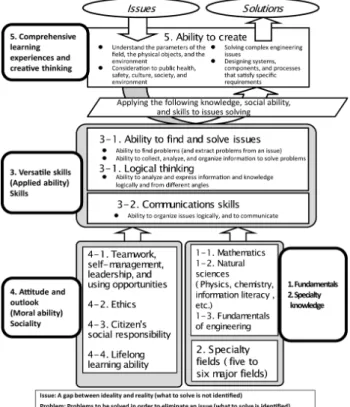
Fig. 1 Relationships between knowledge and abilities to be nurtured in engineering education

Table 1 A list of key components of the goals in the seven fields

Mechanical engineering

Fundamental mechanics (a-d) Mechanical materials and components Processing and manufacturing Control theory and mechatronics Drafting and design

Mechanical systems

Electrical engineering and

electronics

Circuit theory Electromagnetics Measurement and control

Physical properties, materials, and devices Electronics

Electrical energy engineering

Architecture

Planning

History and design Environment Structure

Construction and building

Civil engineering

Civil engineering materials, construction technique, and construction management

Structural engineering, earthquake engineering, and maintenance and management engineering Geotechnical engineering

Hydro engineering

Civil planning and transportation planning Civil environmental system

as much as possible. Important specialized subjects in each field and field-specific expressions are shown in boldface. Fig.1 shows the mutual relationships between knowledge and abilities that should be covered in engineering education. A list of knowledge, abilities, and level to be attained in mechanical engineering is shown in Table 1 as an example.

V. Soliciting opinions from the public

In this research, we have solicited opinions widely from the public regarding the goals of the different fields. We aimed to maintain a fairness and transparency by considering these opinions. Our aim was to set goals by field that are user-friendly for the universities. Opinions from the public on goals common to all fields were solicited in July and August of 2011, and subject-specific goals were solicited from December 2011 to January 2012. We received 94 opinions for the common goals, and 134 opinions for subject-specific goals. Additionally, we made presentations and conducted hearings at the meetings of professional associations, including the Science Council of Japan, Japanese Society for Engineering Education(JSEE) and Japan Accreditation Board for Engineering Education (JABEE). These opinions from the public were reflected in reviewing the goals. The degree of such reflection is noted in the foreword for each field, along with the positions that goals occupy in each field.

VI. Visualization of goal make-up

One of the characteristics of this research is to present

the results in clear manner to the general public and

students. To this end, we visualized the goals using images,

in addition to presenting them as text. Graphical visualization

tools were used to represent the relationships among

goals and abilities, as well as to present relationships

among the subject fields. Their roles in society were

also represented graphically. Figs. 2 and 3 are graphical

representations of the relationship among subjects in

mechanical engineering and biology. While mechanical

engineering is presented in a simple manner, the diagram

(4)

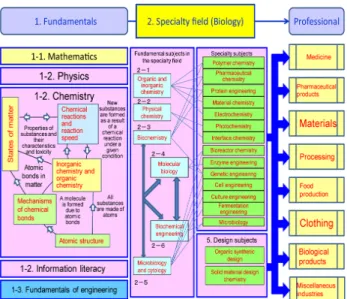
Fig. 2 The relationships among subjects in the mechanical fields

Fig. 3 The relationships among subjects in the biology fields

for biology indicates relationships among fundamental subjects and specialty subjects, as well as career paths after graduation.

VII. The Role of the Graduate Attributes of the International Engineering Alliance

Multiple international standards were referenced in this study in setting up the goals. We felt a need for an official Japanese translation of Graduate Attributes(GA) and Professional Competency Profiles(PC) of the International Engineering Alliance(IEA) in order to disseminate the results of our study. To fulfill the need, the translation- working group was set up in collaboration with the

Professional Education Dept., Higher Education Branch of MEXT, Japan Accreditation Board for Engineering Education (JABEE) and the Institution of Professional Engineers, Japan(IPEJ). The translated version by this working group is available at our following website and the JABEE website:

(http://hneng.ta.chiba-u.jp:8080/) and (http://www.jabee.

org/public_doc/download/?docid=275).

VIII. Sharing information from the report

A report on survey results is available in hard copy, in addition to an electronic version on our website(http://

hneng.ta.chiba-u.jp:8080/). The report can be downloaded separately for the common areas, and by field for each study area, so that it could be utilized widely.

IX. Goal setting 1. General

Goals have been set for the seven fundamental fields (mechanical, electrical, architectural, civil, biological, and information and communication engineering) for the purposes described above. Please refer to the website for the details of the report. In this paper, we provide a list of key components of the goals in the seven fields in Table 2.

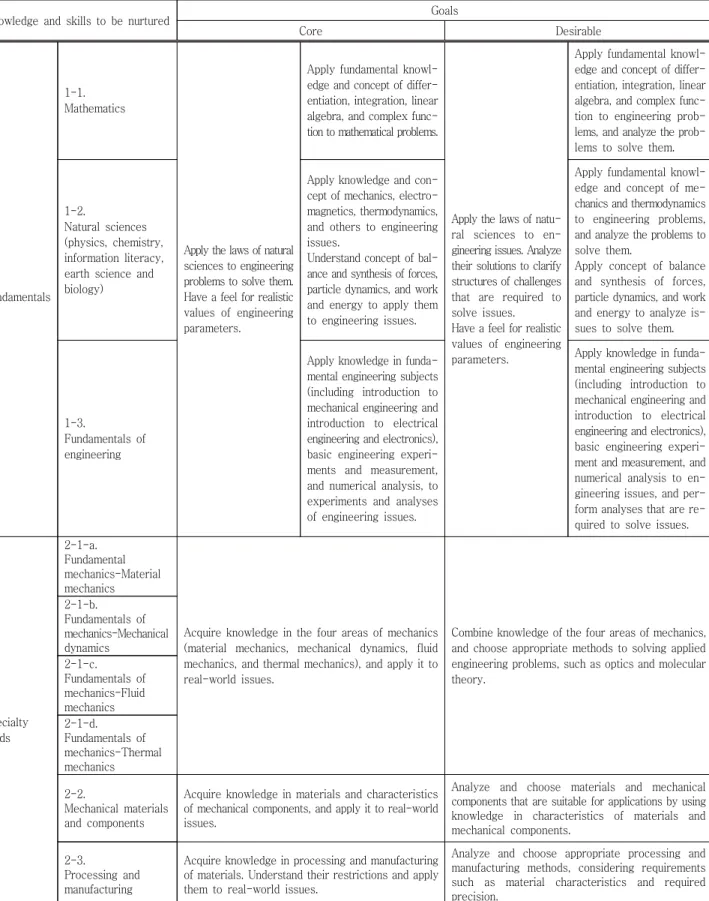
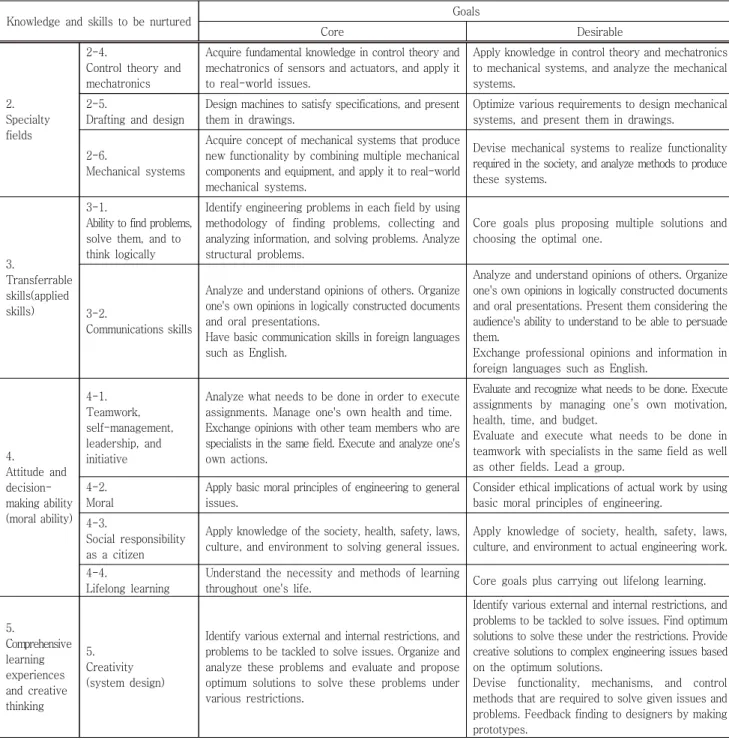
The concept for setting goals in mechanical engineering and the goals’ key components are discussed below as a representative example of goal-setting. Table 3 provides knowledge and skills in mechanical engineering, as well as representative levels of mastery for each goal.

2. Mechanical engineering as a case study

We present the content and the goals at the undergraduate

level in mechanical engineering, in conjunction with

considerations in studying this content. This is a step further

than the certification standards of associations such as

JABEE, in that we specify standard levels of achievement

in terms of knowledge and skills of students who have

graduated from these programs, besides the content of

educational programs.

(5)

Table 2 A list of key components of the goals in the seven fields

Chemistry

Organic chemistry Inorganic chemistry Physical chemistry Analytical chemistry Chemical engineering Reaction chemistry

Biology

Organic and inorganic chemistry Physical chemistry

Biochemistry Molecular biology Microbiology and cytology Biochemical engineering

Information and communications

Basic mathematics for information (A1) Basic mathematics for communications (A2) Programming (C)

Security (D) Network (E)

Computer system (Information) (F1) Computer system (Communications) (F2) Fundamentals of information (B1) Fundamentals of information (B2)

Mechanical engineering is an academic field that is required for the design and manufacture of machines and mechanical systems, as well as healthy growth of the society that includes machines. Due to its vastness, mechanical engineering encompasses a broad range of academic fields. For this reason, educational programs in it and related fields can vary widely, depending on the focus of the program. Program content and goals presented here are only those related to the shared part of all sub-fields of mechanical engineering.

In this section, the following abilities are expected for graduates in mechanical engineering and related fields: to understand the concept of mechanical systems to produce new functionalities by combining multiple components and machinery, and to be able to create systems satisfying required conditions. In order to acquire these, students need to finish courses in fundamental mechanics that are systematically organized into materials mechanics, mechanical dynamics, fluid mechanics, and thermal mechanics(the so- called four mechanics), as well as fundamental sciences

that form the basis of the above, including physics (especially mechanics) and mathematics(especially calculus, linear algebra, as well as probability and statistics). Students also need to acquire knowledge in mechanical materials and components, as well as control theory and mechatronics, and combine them to produce functionalities to meet specified needs, in addition to learning about production and processing to actually realize these functionalities. Moreover, they should be able to apply such knowledge. In addition, students are required to acquire skills in design and drafting to design required mechanical systems and to convey the design to others. They are also required to learn how to conduct experiments and analyses to understand characteristics of mechanical materials, components, and systems, and to be able to consider them logically. By combining the acquired knowledge and abilities, they will be able to understand mechanical systems that society needs and to be able to improve and expand them.

The acquisition of the above knowledge and abilities is interconnected, and they should be acquired in proper order during the educational programs. Fig. 2 shows the schematic diagram indicating interworking among subjects in the mechanical fields and their order in the educational program.

3. Learning goals in mechanical engineering

The major learning goals in mechanical engineering and related fields are summarized into six items below. Details are available in the report at our following web address:

http://hneng.ta.chiba-u.jp:8080/

1. (a) Fundamentals of mechanics - materials mechanics 1. (b) Fundamentals of mechanics - mechanical dynamics 1. (c) Fundamentals of mechanics - fluid mechanics 1. (d) Fundamentals of mechanics - thermal mechanics 2. Mechanical materials and components

3. Processing and manufacturing 4. Control theory and mechatronics 5. Drafting and design

6. Mathematics of mechanical systems and information

(A1)

(6)

Table 3-1 Mechanical fields (knowledge and skills to be nurtured in engineering education and their goals)

Knowledge and skills to be nurtured Goals

Core Desirable

1.

Fundamentals 1-1.

Mathematics

Apply the laws of natural sciences to engineering problems to solve them.

Have a feel for realistic values of engineering parameters.

Apply fundamental knowl- edge and concept of differ- entiation, integration, linear algebra, and complex func- tion to mathematical problems.

Apply the laws of natu- ral sciences to en- gineering issues. Analyze their solutions to clarify structures of challenges that are required to solve issues.

Have a feel for realistic values of engineering parameters.

Apply fundamental knowl- edge and concept of differ- entiation, integration, linear algebra, and complex func- tion to engineering prob- lems, and analyze the prob- lems to solve them.

1-2.

Natural sciences (physics, chemistry, information literacy, earth science and biology)

Apply knowledge and con- cept of mechanics, electro- magnetics, thermodynamics, and others to engineering issues.

Understand concept of bal- ance and synthesis of forces, particle dynamics, and work and energy to apply them to engineering issues.

Apply fundamental knowl- edge and concept of me- chanics and thermodynamics to engineering problems, and analyze the problems to solve them.

Apply concept of balance and synthesis of forces, particle dynamics, and work and energy to analyze is- sues to solve them.

1-3.

Fundamentals of engineering

Apply knowledge in funda- mental engineering subjects (including introduction to mechanical engineering and introduction to electrical engineering and electronics), basic engineering experi- ments and measurement, and numerical analysis, to experiments and analyses of engineering issues.

Apply knowledge in funda- mental engineering subjects (including introduction to mechanical engineering and introduction to electrical engineering and electronics), basic engineering experi- ment and measurement, and numerical analysis to en- gineering issues, and per- form analyses that are re- quired to solve issues.

2.

Specialty fields

2-1-a.

Fundamental mechanics-Material mechanics

Acquire knowledge in the four areas of mechanics (material mechanics, mechanical dynamics, fluid mechanics, and thermal mechanics), and apply it to real-world issues.

Combine knowledge of the four areas of mechanics, and choose appropriate methods to solving applied engineering problems, such as optics and molecular theory.

2-1-b.

Fundamentals of mechanics-Mechanical dynamics

2-1-c.

Fundamentals of mechanics-Fluid mechanics 2-1-d.

Fundamentals of mechanics-Thermal mechanics 2-2.

Mechanical materials and components

Acquire knowledge in materials and characteristics of mechanical components, and apply it to real-world issues.

Analyze and choose materials and mechanical components that are suitable for applications by using knowledge in characteristics of materials and mechanical components.

2-3.

Processing and manufacturing

Acquire knowledge in processing and manufacturing of materials. Understand their restrictions and apply them to real-world issues.

Analyze and choose appropriate processing and

manufacturing methods, considering requirements

such as material characteristics and required

precision.

(7)

Table 3-2 Mechanical fields (knowledge and skills to be nurtured in engineering education and their goals)

Knowledge and skills to be nurtured Goals

Core Desirable

2.

Specialty fields

2-4.

Control theory and mechatronics

Acquire fundamental knowledge in control theory and mechatronics of sensors and actuators, and apply it to real-world issues.

Apply knowledge in control theory and mechatronics to mechanical systems, and analyze the mechanical systems.

2-5.

Drafting and design

Design machines to satisfy specifications, and present them in drawings.

Optimize various requirements to design mechanical systems, and present them in drawings.

2-6.

Mechanical systems

Acquire concept of mechanical systems that produce new functionality by combining multiple mechanical components and equipment, and apply it to real-world mechanical systems.

Devise mechanical systems to realize functionality required in the society, and analyze methods to produce these systems.

3.

Transferrable skills(applied skills)

3-1.

Ability to find problems, solve them, and to think logically

Identify engineering problems in each field by using methodology of finding problems, collecting and analyzing information, and solving problems. Analyze structural problems.

Core goals plus proposing multiple solutions and choosing the optimal one.

3-2.

Communications skills

Analyze and understand opinions of others. Organize one's own opinions in logically constructed documents and oral presentations.

Have basic communication skills in foreign languages such as English.

Analyze and understand opinions of others. Organize one's own opinions in logically constructed documents and oral presentations. Present them considering the audience's ability to understand to be able to persuade them.

Exchange professional opinions and information in foreign languages such as English.

4.

Attitude and decision- making ability (moral ability)

4-1.

Teamwork, self-management, leadership, and initiative

Analyze what needs to be done in order to execute assignments. Manage one's own health and time.

Exchange opinions with other team members who are specialists in the same field. Execute and analyze one's own actions.

Evaluate and recognize what needs to be done. Execute assignments by managing one’s own motivation, health, time, and budget.

Evaluate and execute what needs to be done in teamwork with specialists in the same field as well as other fields. Lead a group.

4-2.

Moral

Apply basic moral principles of engineering to general issues.

Consider ethical implications of actual work by using basic moral principles of engineering.

4-3.

Social responsibility as a citizen

Apply knowledge of the society, health, safety, laws, culture, and environment to solving general issues.

Apply knowledge of society, health, safety, laws, culture, and environment to actual engineering work.

4-4.

Lifelong learning

Understand the necessity and methods of learning

throughout one's life. Core goals plus carrying out lifelong learning.

5.

Comprehensive learning experiences and creative thinking

5.

Creativity (system design)

Identify various external and internal restrictions, and problems to be tackled to solve issues. Organize and analyze these problems and evaluate and propose optimum solutions to solve these problems under various restrictions.

Identify various external and internal restrictions, and problems to be tackled to solve issues. Find optimum solutions to solve these under the restrictions. Provide creative solutions to complex engineering issues based on the optimum solutions.

Devise functionality, mechanisms, and control methods that are required to solve given issues and problems. Feedback finding to designers by making prototypes.

X. Conclusions

This paper presents the content and educational goals for undergraduate engineering programs, in conjunction with items to be considered when studying this content.

This is a step further than the certification standards of associations such as Japan Accreditation Board for

Engineering Education(JABEE), in that we also specify

standard levels of achievement in terms of knowledge

and skills of graduates in different fields. We incorporated

many opinions in our goal-setting - both from surveys

and from public presentations. Additionally, we introduced

our activities to professional associations including the

Science Council of Japan, the Japanese Society for Engineering

(8)

Education(JSEE), and Japan Accreditation Board for Engineering Education(JABEE). Nevertheless, we do not consider the work of goal setting to be finished at this time. We have not yet obtained sufficient level of consensus from all of the parties involved. We hope that our work will encourage active discussions leading to the design of educational programs, as well as further enhanced goal- setting within each field.

XI. Future challenges

1) We expect universities to build a systematic curriculum that will be highly regarded by the international community as a result of the goals set in our study, by referring to our work, including the translation of Graduate Attributes (GA) and Professional Competency Profiles (PC) of the International Engineering Alliance (IEA).

2) We have provided a basic proposal regarding specific educational content as systematic goals in each field. We hope that our proposal will be organically reflected in university curricula, allowing the balance between fundamental and specialty subjects to continue.

3) We hope to utilize existing books and papers, as well as resources from the Japanese Society for Engineering Education(JSEE) in order to nurture future engineers’

independence and ability to find challenges and solve problems.

4) In order to improve course content, we hope that instructors utilize our findings to implement the following:

(a) change the way lectures are given to make them more interactive, along with hands-on lectures to encourage students to be more creative(similar to Project Based Learning(PBL)), (b) offer lectures in such a way that students who came prepared can actively speak up in class, (c) select subjects to ensure high quality of lectures, (d) clearly indicate the level of difficulty and the stage in learning so that students are more motivated, and (e) show the relationships between stages in learning and profession in the society, as given in our report.

5) Establish evaluation methodology such as using rubrics.

6) Guarantee the quality of contents by constructing the Plan-Do-Check-Action (PDCA) cycle.

Establish international equivalence of the quality, content, and level of education.

7) Assure the effectiveness of internal quality control.

Publicize self-evaluation of universities, and verify public certification and evaluation by a third party.

XII. Acknowledgements

The author wishes to express his deepest gratitude to all 34 members of the investigation research committee on the Goals of Graduate Engineering Education, the Pioneering University Reform Project supported by MEXT.

The author is also most grateful to Mr. Toshiya Naito, the manager of the Professional Education Dept., Higher Education Branch of MEXT, Mr. Naokazu Odani, the deputy manager, and Mr. Morito Hata, the section chief.

The investigation research in this paper was carried out with the financial support of the Pioneering University Reform Project by MEXT.

Finally the author wishes to express his gratitude to the administrative support by the secretariat of the Faculty of Engineering, Chiba University.

Hiroishi Noguchi

President, Shizuoka Institute of Science and Technology Received BS(1970), MS(1972) and Ph.D.(1976) in Architectural Engineering from Univ. of Tokyo. His work experiences are Emeritus Professor(2012‐ ), Professor(2012‐2014), Kogakuin Univ., Professor(1991‐2012), Associate Professor(1979‐

1990), Assistant Professor(1977‐1979) , Chiba Univ. and Research Associate (1976‐1977), Univ. of Tokyo. His current research focuses on the aseismic design of reinforced concrete buildings and engineering education.

Phone: +81‐538‐43‐0111

Fax: +981‐538‐45‐0110

E‐mail: [email protected]

수치

Fig.  1  Relationships  between  knowledge  and  abilities  to  be  nurtured  in  engineering  education
Fig.  3  The  relationships  among  subjects  in  the  biology  fields
Table  2  A  list  of  key  components  of  the  goals  in  the  seven  fields Chemistry Organic  chemistry Inorganic  chemistryPhysical  chemistry Analytical  chemistry Chemical  engineering Reaction  chemistry Biology
Table  3-1  Mechanical  fields  (knowledge  and  skills  to  be  nurtured  in  engineering  education  and  their  goals)
+2

참조

관련 문서

week 1 Introduction & Atomic Structure and Interatomic Bonding (Chap.1 & Chap. 7) & Mid-term (Face-to-face examination) week 7 Mechanical Properties of Metals

- Single crystals, Polycrystalline materials, Anisotropy, Noncrystalline solids?. Contents

[Adapted from Binary Alloy Phase Diagrams, 2nd edition, Vol.. Reprinted by permission of ASM International,

 Engineering stress - The applied load, or force, divided by the original cross-sectional area of the material..  Engineering strain - The amount that a material deforms per

(Adapted from Phase Diagrams of Binary Nickel Alloys, P. Reprinted by permission of ASM International, Materials Park, OH.).. 11.3(b), Callister

• The tetrahedral structure of silica (Si0 2 ), which contains covalent bonds between silicon and

[From Binary Alloy Phase Diagrams, 2nd edition, Vol. Reprinted by permission of ASM International, Materials Park, OH.].. 11.23, Callister & Rethwisch 9e.. [From Binary

– extra half-plane of atoms inserted in a crystal structure – b perpendicular (⊥) to dislocation line..