ISSN 0377-9556 (PRINT) ISSN 2383-9457 (ONLINE) 약학회지 제65권 제4호 301~312 (2021)
Yakhak Hoeji Vol. 65, No. 4 DOI 10.17480/psk.2021.65.4.301
종 설(Review)
국내 제약사의 QbD 제도 도입에 대한 인식 및 현황 조사분석
김현아* · 이상호* · 박영준**,# · 김주은*,#
*대구가톨릭대학교 제약공학과, **아주대학교 약학대학
Analysis of Perception and Status Survey on the Introduction of QbD System by Pharmaceutical Companies in Korea
Hyeon-A Kim*, Sang-Ho Lee*, Young-Joon Park**,#, and Joo-Eun Kim*,#
*Department of Pharmaceutical Engineering, Catholic University of Daegu
**College of Pharmacy, Ajou University
(Received April 26, 2021; Revised August 13, 2021; Accepted August 25, 2021)
Abstract The purpose of this study was to investigate and analyze the application status and system introduction perceptions of quality-by-design (QbD) in domestic pharmaceutical companies and confirm the necessity of introducing an effective QbD system. Currently, QbD-applied drug development is an international trend, and the introduction of QbD domestically is urgent because domestic pharmaceutical companies need QbD data even when exporting overseas.
Therefore, 51 domestic pharmaceutical companies were surveyed to analyze their perceptions and opinions on the current status of QbD application and the introduction of the system. The results showed that most pharmaceutical companies, except 4.7% of total respondents, recognized the need for QbD for the following reasons: to improve the quality of medicines, responding to requests from overseas regulatory authorities when exporting products, problem-solving drug development and production, and proactively responding to the introduction of the QbD system by the Ministry of Food and Drug Safety. Although they are aware of its need, respondents are not implementing QbD due to cost and time issues and state that it is challenging to apply the QbD example in practice due to the method and amount of experimentation.
Thus, the results of this study revealed that domestic pharmaceutical companies need QbD experimental and process guidelines and practical QbD examples. These results can be used as the foundation for the introduction and stable settlement of a domestic QbD system in the future.
Keywords Quality by Design, Quality advancement, Perception and status of domestic QbD, Statistics survey, QbD model, Introduction of QbD system
서 론(Introduction)
QbD(Quality by Design, 의약품 설계기반 품질고도화)란, 제품 설계 목표, 프로세스 설계 공간, 제어 및 운영 공간을 기반으로 과학 및 품질 위험 관리에 근거한 체계적인 제품 개발 및 프로 세스 제어에 중점을 둔 시스템 도구이다.
1-4)즉 QbD는 의약품 연구단계 및 생산공정에서 발생할 수 있는 위험성을 사전에 예 측, 관리하고 체계적으로 대처하는 품질관리시스템이다. 이는 QbD 기반 기술인 PAT(Process Analytical Technology, 공정분석
기술)를 확보하여 실시간 제어를 수행할 수 있다.
5-7)또한 QbD 를 실시할 경우, 제품의 품질을 높은 수준으로 향상시켜 제조공 정을 개선하여 효율성을 증대시키고 불량률을 최소화하여 제조 단가를 낮출 수 있으며 공정 중 불필요한 장치의 가동을 최소 화하여 비용을 절감할 수 있다.
4,8,9)또한 QbD를 적용한 의약품 을 개발할 경우 해외진출 시 사후 승인 및 규제사항들에 대한 변경을 쉽게 할 수 있는 장점이 있다.
10,11)QbD 를 적용한 생산 및 품질관리시스템은 이미 해외에서 정착되고 있으며 다국적 글 로벌 대형제약기업들은 QbD 실행 및 확산단계를 넘어 QbD 적 용 의약품을 출시하고 있다.
12-14)미국 FDA (U.S. Food and Drug Administration) 는 2005년 제약기업에 혁신적인 제약 개발, 제조 및 품질보증을 위한 공정 분석 기술(PAT)을 제공함으로써 제조 공정 및 품질의 중요성을 강조하고 있으며, 2011년, 2012년 각 각 조절방출(Modified Release) 및 속방출(Immediate Release)제 형에 대한 예시모델을 제시하였다.
13,15)유럽 EMA (European Medicines Agency) 는 미국 FDA와 함께 ICH를 통하여 품질위험
#
Corresponding authors
Young-Joon Park, College of Pharmacy, Ajou University, Suwon City 443-749, Korea
E-mail: [email protected]
Joo-Eun Kim, Dept. of Pharmaceutical Engineering, Catholic Univer- sity of Daegu, Gyeongbuk 38349, Korea
Tel: +82-53-850-2561, Fax: +82-53-359-6726
E-mail: [email protected]
관리 등 새로운 분야의 가이드라인을 제시하며, ICH Q8, 9 및 10의 중심 개념인 품질시스템 및 제조공정 등의 원리를 실제 의 약품 심사에 반영하기 위하여 전문분야별 전문가들로 구성된 별 도의 EMA-PAT team으로 운영하고 있다.
16-21)반면에, 국내는 PIC/
S 과 ICH 가입을 원동력으로 일관되고 지속적인 수출지원 정책 을 펼치고 있지만, QbD 기술 부재 및 전문인력의 부족 등으로 인해 적용 및 개발이 더딘 상황이다. 현재 2015년부터 정부기관 에서 배포하고 있는 QbD 자료, 교육 및 예시모델을 제약사들이 참고하고 있으나 설명이 쉽지 않고 연구부서, 생산부서, 개발부 서, 품질보증부서, 품질관리부서의 인력이 이해하기에 어려움이 따르며 기초개념을 이해하기 조차 쉽지 않아 대부분의 국내 제 약사들이 QbD를 적용하여 의약품을 개발하기에 한계가 있는 등 어려움을 겪고 있다.
22)현재 QbD를 이해하고 실행하기 위한 실 효성 있는 전문자료 및 예시모델 사례 교육 등 점증적으로 QbD 를 실행할 수 있는 적절한 범위의 가이드라인이 필요한 실정이 다.
23-25)따라서 본 연구에서는 국내 제약기업 51개사를 대상으로 국 내 QbD 적용 실태 파악 및 제도 도입의 인식도에 대한 설문조 사를 시행하고 분석하여 현 상황을 구체적으로 파악하고자 한
다. 나아가 현 상황을 정확히 파악하여 추후 QbD 제도의 실질 적 도입 및 안정적 정착을 위한 정책 개발 및 제약업계 현실 반 영이 가능한 QbD 예시 모델 방향 제시의 기초자료로 활용될 수 있을 것으로 기대된다.
방 법(Methods)
본 연구는 국내 제약기업을 대상으로 의약품 설계기반 품질 고도화(QbD)의 인식 및 수행 현황에 대한 설문조사를 실시하였 고, 그 결과를 분석하였다.
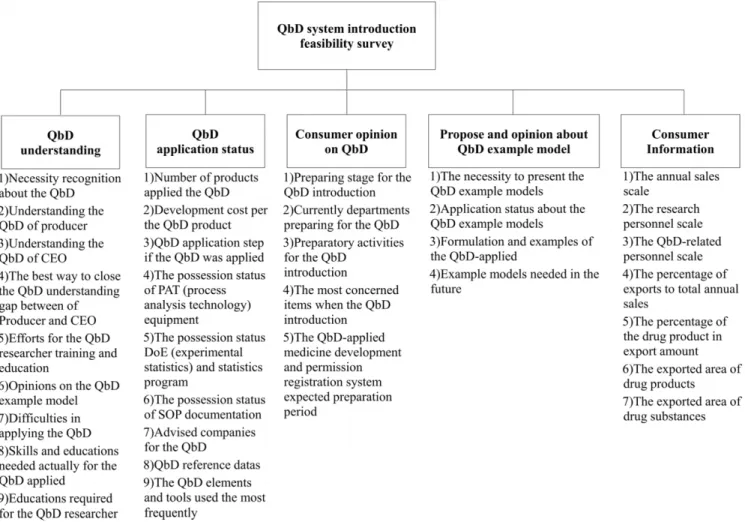
25)설문조사 핵심 문항은 Fig. 1에 나 열하였다. QbD 이해도에 관한 문항 9개, QbD 적용 현황에 관 한 문항 9개, 수요자들의 의견에 관한 문항 5개, QbD 예시 모 델 제시 및 지원 현황에 대한 문항 4개 그리고 제약기업들의 일 반현황에 관한 문항 7개로 총 34개의 문항으로 구성되어 있다.
설문조사는 한국제약바이오협회에 등록된 제약기업을 대상으로 실시되었으며, 2019년 5월 10일부터 2019년 12월 1일까지 국내 제약사 총 51개사에 설문지를 배포하여 51개사 모두 설문에 응 답한 자료를 바탕으로 분석하였다.
Fig 1. Questionnaire items for the introduction of the QbD
국내 QbD 인식 및 현황분석 303
결 과(Results)
제약기업 일반사항
설문조사는 국내 제약사들을 대상으로 QbD에 대한 인식 및 현황부터 조사하였다. 설문조사에 응한 제약기업의 수는 총 51 개 사로, 연간 매출 규모는 ‘1,000억 이상~2,000억 미만’이 28.0%
로 가장 많았고, ‘3,000억 이상’ 24.0%, ‘500억 이상~1,000억 미 만’ 22.0%, ‘2,000억 이상~3,000억 미만’ 14.0% 순으로 나타났다.
연구 인력 규모는 ‘10인 이상~20인 미만’인 회사가 30.61%로 가 장 많았으며, ‘50인 이상~100인 미만’은 24.49%, ‘20인 이상~30
인 미만’인 회사는 16.33% 순으로 나타났다. 반면에, 연구인력 중 QbD 관련 인력 규모에서 ‘해당사항 없음’이 46.0%, ‘1인 이 상~3인 미만’ 24.0% 순으로 조사되었다(Fig. 2).
응답한 제약기업들의 연간 총매출액 중 수출 비율은 ‘10% 미 만’이 60.0%로 가장 많았다. 수출액 중 완제품의 비율에 대한 질문에서는 “80% 이상”이 완제의약품이라 응답한 제약사가 57.14% 로 가장 높게 나타났다. 수출 대상 지역은 완제품의 경 우, ‘동남아시아’ 29.01%, 원료의약품의 경우, ‘일본’과 ‘동남아 시아’ 23.91%이며, 상세한 내용은 Table 1에 나열하였다.
Fig 2. The results of the annual sales (A), the scale of the researcher (B), and the scale of the researchers who understand the QbD (C) of
pharmaceutical companies.
QbD에 대한 국내 제약사 인식조사 결과 및 분석 1) 제약기업의 QbD 이해도
QbD 의 필요성에 대한 질문에서 전체 응답자의 95.28% 제약 사들이 의약품의 품질 향상, 제품 수출 시 해외 규제 당국 요구 에 대한 대응, 의약품 개발 및 생산 단계 문제 해결, 식약처의 QbD 제도 도입에 선제적으로 대처 등의 이유로 QbD 도입이 필 요하다고 응답하였다. 하지만 QbD의 필요성은 인지하고 있지
만, 시간, 비용 등 재정적인 문제로 인해 아직까지는 시행하고 있지 않다고 답하였다. “QbD 제도가 의무가 아니므로 필요 없 음”이라 응답한 제약사는 4.72%였다(Fig. 3A).
생산인력의 QbD 이해도는 ‘자체 또는 외부 교육을 통해 QbD 이론을 이해함’이 41.51%로 가장 많았고, ‘QbD 개념 및 필요성 은 인식하지만 이론적인 부분은 이해하고 있지 않음’이 22.64%
로 두 번째 높았다. ‘QbD 이론은 이해하지만 실제 적용은 어렵 다’ 및 ‘QbD 이론 및 실제 적용에 대해 이해하고 있으며 제품 개발이 가능함’이라고 응답한 제약사는 13.21%로 동일하였으며,
‘QbD 적용하여 제품 개발 완료 경험이 있다.’라고 응답한 제약 사는 9.43%로 가장 낮았다. 경영진의 QbD 이해도는 ‘개념을 이 해하고 있으며 QbD 도입을 준비해야 한다.’가 42.31%로 가장 많았고, ‘이론 및 필요성은 이해하고 있으나 당장 적용하기에는 어렵다.’ 25.00%, ‘이론 및 필요성은 충분히 이해하고 있으며 현 장에서 QbD 적용 강조 및 준비를 한다.’ 19.23%, ‘관심이 없으 며 도입의 필요성을 느끼지 못한다.’ 13.46% 순으로 나타났다.
제약기업의 QbD 인력양성 및 교육을 위한 노력에 대해서는
‘ 외부 전문가를 통해 QbD 교육 프로그램 진행’이 45.10%로 가 장 많았고, ‘QbD 인력양성 및 교육에 관심은 있으나 회사 여건 상 준비하지 못함’ 39.22%, ‘별도의 부서 마련하여 QbD 대응 및 적응 준비’ 7.84%, ‘회사 내부 전문가를 통해 QbD 교육 프 로그램 따로 운영’ 5.88%, ‘QbD 인력 양성 및 교육에 관심이 없으며 필요성을 느끼지 못함’ 1.96%였다(Table 2).
또한, QbD 인력 양성을 위해 필요한 교육은 ‘현재 발행한 제 형 별 QbD 예시 모델 사례 교육 필요’가 50.0%으로 가장 많은 비율을 차지하였고, ‘식약처의 구체적인 가이드라인 교육 필요’
와 ‘제약회사 임직원을 위해 정기적인 QbD 교육 프로그램 필 요’는 각각 27.78%와 22.22%를 차지하였다(Fig. 3B).
하지만, QbD 도입 시 애로사항에 대한 응답으로 ‘QbD 적용 시 시간과 비용이 너무 많이 소요된다’고 응답한 비율이 56.36%
로 가장 높았다(Fig. 3C). 또한, 식약처의 QbD 예시 모델에 대 한 의견은 ‘연구 방법이 어렵고 실험 양이 많아 수행하기 어려 움’이 44.23%로 가장 높았으며, ‘알고 있으나 자세한 내용을 파 악하지 못함’ 32.69%, ‘모두 파악하고 있으나 실제 적용 방법 모름’ 15.38%, ‘QbD 제도 도입 시 즉시 활용 가능’ 7.69% 순으 로 확인되었다(Fig. 3D).
2) 제약기업의 QbD 적용 현황
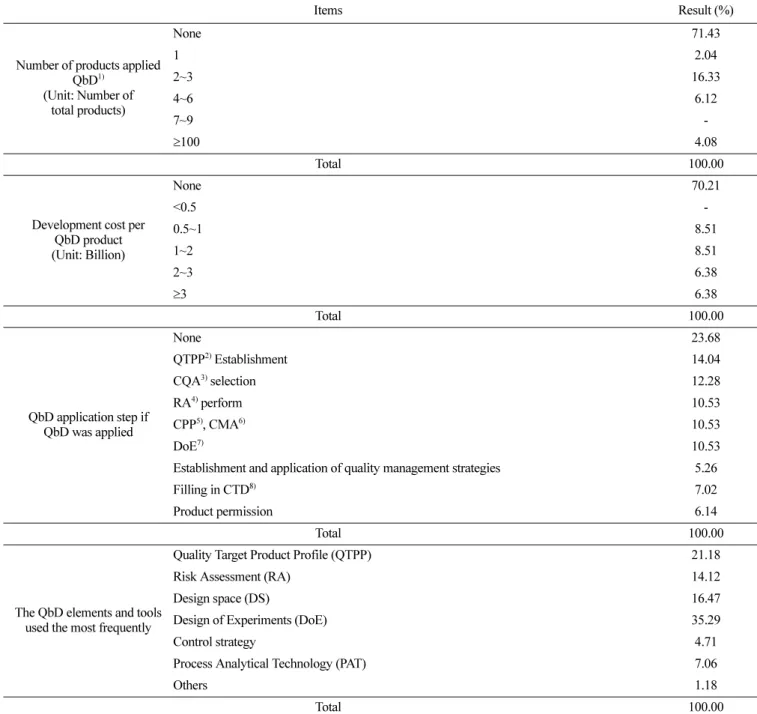
Fig. 4A 에 보여지는 바와 같이, 현재 QbD를 적용한 제품 판 매 또는 개발 중인 제품에 대해서는 71.43%가 ‘판매 및 개발 경험이 없다’고 응답하였다. 제품 개발 경험이 있다고 응답한 28.57% 기업 중 대부분의 기업이 ‘1개 제품부터 10개 제품 이 상’을 판매 또는 개발 경험이 있었으며, 제품 1개당 개발 비용 은 ‘0.5억 이상 ~ 3억 이상’ 든다고 응답하였다. 하지만 공정분 석기술(PAT), 실험 설계를 포함한 통계 프로그램, SOP 문서화와 같은 QbD 도입 및 적용을 위한 시스템의 유무는 대부분의 제 약사가 보유하고 있지 않다고 응답하였다(Fig. 4A, Table 3). 추 Table 1. General information of pharmaceutical companies
Items Result (%)
The ratio of exportation to total annual sales
<10% 60.00
10~20% 22.00
20~30% 10.00
30~40% -
40~50% 2.00
≥50% 6.00
Total 100.00
The ratio of drug products in exportation
None 12.24
≤20% 18.37
20~40% 8.16
40~60% -
60~80% 4.08
≥80% 57.14
Total 100.00
The exported area of drug products
U.S.A 5.34
China 10.69
Japan 10.69
Europe 10.69
Southeast Asia 29.01 India and West Asia
(Middle East) 11.45
Africa 3.82
Australia/Canada 3.05 Latin America 15.27
Total 100.00
The exported area of drug substances
U.S.A 4.35
China 6.52
Japan 23.91
Europe 17.39
Southeast Asia 23.91 India and West Asia
(Middle East) 10.87
Africa -
Australia /Canada 4.35 Latin America 8.70
Total 100.00
국내 QbD 인식 및 현황분석 305
가적으로 QbD를 적용하였다면, 어디까지 적용하였는지에 대한 설문에서는 ‘해당사항 없다’는 의견이 23.68%로 가장 많았으며,
‘ 품질목표 사항(QTPP) 확립’ 14.04%, ‘주요 품질특성(CQA) 선 정’ 12.28%, ‘위해 평가(RA) 수행’, ‘주요 공정변수(CPP), 주요 품질특성(CMA)’와 ‘실험 설계(DoE)’는 10.53%로 동일하였다. 그 밖에도 ‘CTD 작성’ 7.02%, ‘제품 허가’ 6.14%, ‘품질관리 전략 수립 및 적용’ 5.26% 순으로 응답하였다. 가장 자주 사용하는 QbD 요소와 기능으로는 35.29%에 해당되는 기업이 ‘실험 설계 (DoE)’를 선택하였다(Table 3).
Fig. 4B 에 보여지는 바와 같이 응답자 중 42.37%가 ‘식품의약 품안전처 및 정부기관 발표 자료’를 참고하여 QbD 도입 및 적 용에 활용하고 있다 응답하였으며, 33.9%는 ‘QbD 교육 프로그 램의 교육자료’를 참고하고 있다고 응답하였다.
3) 제약기업의 QbD 도입에 대한 의견
76.47% 의 기업은 QbD 도입 및 적용을 위하여 ‘일부 부서 계 획에 따라 QbD 도입 준비 및 진행’을 하고 있으며, 23.53%는
‘ 특별한 계획을 하고 있지 않다’고 응답하였다(Fig. 5A).
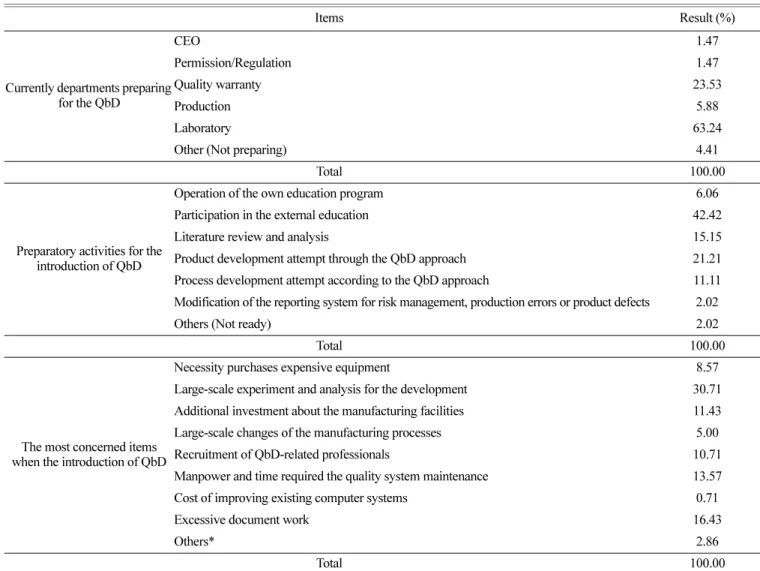
현재 QbD의 회사 내 실행과 관련하여 주도적으로 준비하고 있는 부서는 ‘연구소’가 63.24%로 가장 높게 나타났고, ‘품질보 증’ 23.53%, ‘생산’ 5.88%, ‘기타(해당사항 없음, 준비하고 있지 않음)’ 4.41%, ‘경영진, 허가/규제’ 1.47%를 차지하였다. QbD 도 입을 위해 가장 많이 하고 있는 활동에 대해서는 ‘외부 교육 참 석’이 42.42%로 가장 많았고, ‘QbD 접근법을 통한 제품개발 시
도’ 21.21%, ‘문헌 검토 및 분석’ 15.15%, ‘QbD 접근법을 따른 공정 개발 시도’ 11.11%, ‘자체 교육 프로그램 운영’ 6.06%, ‘위 험관리나 생산 시의 error나 제품 하자에 대한 보고체계 수정, 기타(준비하고 있지 않음)’ 2.02%를 차지하였다. 본격적으로 QbD 도입 시 가장 걱정되는 요소는 ‘개발을 위한 대규모 실험 및 분 석’이 30.71%로 가장 높았으며, ‘품질시스템 및 관리 수준의 향 상으로 인한 과다한 문서작업’ 16.43%, ‘품질시스템 정비에 소 요되는 인력 및 시간’ 13.57%, ‘고가의 장비 구입 필요’ 8.57%,
‘ 제조공정 등의 대대적인 변경’ 5.00%, ‘기타’ 3.57%를 차지하 였다. 그 외에도 ‘기존에 사용되고 있는 컴퓨터 시스템 등에 대 한 개선에 따른 비용’, ‘제네릭 및 개량신약 적용에 한계’, ‘원 료, 품질의 변동성’, ‘품질의 일관성 유지’, ‘과도한 지출과 품목 허가 지연’의 다양한 의견이 있었다(Table 4).
QbD 를 적용한 의약품 개발 및 허가등록시스템 예상 준비 기 간에 대한 질문의 응답으로는 ‘2년 이상~3년 미만’이 50.00%로 가장 높았으며, ‘1년 이상~2년 미만’ 24.00%, ‘3년 이상’ 20.00%,
‘즉시 적용 또는 6개월 미만’ 4.00%, ‘6개월 이상~1년 미만’
2.00%를 차지하였다(Fig. 5B).
4) QbD 예시모델에 대한 활용의견
제약기업이 생각하는 QbD 예시 모델 제시 필요성에 대해서
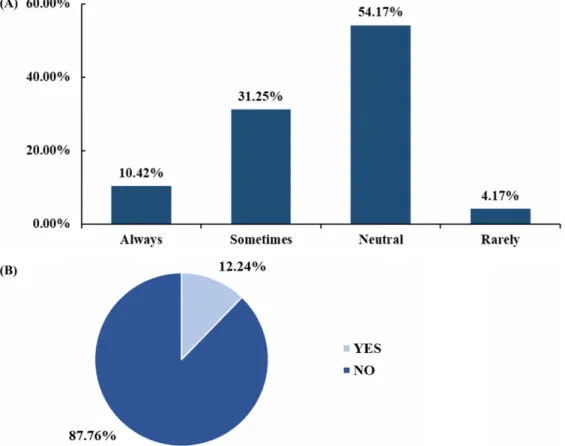
‘ 보통이다’ 54.17%, ‘그렇다’ 31.25%, ‘매우 그렇다’ 10.42%, ‘아 니다’ 4.17%로 대부분의 응답자가 QbD 예시 모델을 제시하는 것이 필요하다고 응답하였다. 또한, 현재까지 식약처에서 제시 Fig 3. The results of the QbD understanding. A: Perception of QbD necessity, B: Educations necessary for the training of QbD researcher, C:
Difficulties in applying QbD, D: Opinions on the QbD example
하였던 QbD 예시 모델 중 적용한 경험에 대한 질문의 응답 결 과 87.76%가 ‘없다’고 응답하였으며, 12.24%만이 QbD 예시 모 델을 적용한 경험이 ‘있다’고 응답하였다(Fig. 6). ‘적용한 경험 이 있다’에 응답한 기업들은 ‘난용성 약물의 분무건조를 통한 생체이용률 개선 일반 방출 정제’, ‘경구제(복합 이층 정) 개발’,
‘CTD에 적용된 QbD’, ‘정제’, ‘정제/캡슐, K 정제/K 캡슐’, ‘정 제, FDA 적용 사례, 제네릭 의약품’의 QbD 예시 모델을 적용 하여 제품을 개발하였다고 응답하였다. 향후 필요한 예시 모델 로는 QbD를 적용한 다양한 제형의 예시 모델과 가이드라인이 필요하다는 의견이 가장 많았으며, 해외 허가심사 고려 항목 사 례, 구체적인 가이드라인 마련, 축약형 예시 모델, 실패 사례 및 해결방안 사례 모델 등 다양한 의견들을 제시하였다. 자세한 내 용은 Table 5에 나열하였다.
고 찰(Discussion)
전 세계적으로 다국적 제약사들은 QbD 시스템을 준비 및 도 입하고 있으며, 특히 미국·유럽·일본 등 해외 규제 기관에서 의
약품 제조의 요구 사항과 관련된 QbD 지침을 수립해 나가고 있 다. 반면에, 국내에서는 PIC/S과 ICH 가입을 원동력으로 일관되 고 지속적인 수출지원 정책을 펼치고 있지만, QbD 기술 및 전 문 인력 부족으로 인해 QbD 적용 의약품 개발의 어려움을 겪 고 있다. 따라서 본 연구에서는 국내 제약기업 대상으로 국내 QbD 적용 실태 파악 및 제도 도입의 인식도에 대한 설문조사 를 시행하고 분석하여 현 상황을 구체적으로 파악하고자 하였다.
설문조사에 참여한 제약기업들의 연간 매출 규모는 100억 이 상부터 3,000억 이상 기업까지 고르게 분포되어 있어 다양한 규 모의 기업을 대상으로 설문조사를 시행하였다. 연구인력 규모는 10인 이상~20인 미만이 30.61%로 가장 많이 차지하였지만, QbD 관련 인원 규모는 해당사항 없음이 46.0%로 국내 제약사의 QbD 전문 인력이 많이 부족하다는 것을 확인하였다.
QbD 이해도에 대한 설문 조사 결과, 95.28%의 제약사들이 제 품 수출 시 해외 규제 당국 요구에 대한 대응, 의약품 개발 및 생산 단계 문제 해결, 식약처의 QbD 제도 도입에 선제적으로 대처 등의 이유로 QbD의 필요성을 인식하고 있으나 전체 응답 자의 22.6%는 QbD 개념 및 필요성을 인식하지만 이론적인 부 Table 2. The results of the understanding of QbD system
Items Result (%)
Necessity recognition about the QbD
Independent introduction is need to improve the quality of the drug products 33.02 To respond to the demands of overseas regulatory agencies 24.53 To solve problems in development and production stages of the drug products 21.70 To proactively cope with the introduction of QbD system 16.04
Not required as it is not an obligation 4.72
Total 100.00
Understanding the QbD of producer
Experience in developing the products of QbD-applied 9.43 Understanding of the theory and practical application, and product development possible 13.21 Understanding the theory, but difficult to apply 13.21 Understand the theory through own or external education 41.51 Recognizes the concept and necessity, but does not understand the theoretical part 22.64
Total 100.00
Understanding the QbD of CEO
Fully understand the theory and necessity, and emphasize and prepare for the QbD application in the field 19.23 Understand the theory and necessity, but it is difficult to apply right away 25.00 Understand the theory and necessity, but not necessary right away - Understanding the concept and preparing to introduce the QbD 42.31
Not interested and necessity 13.46
Total 100.00
Efforts for the QbD researcher training
and education
Arrange a separate department and prepare to respond and adapt of the QbD 7.84 Separately operated the QbD training program through company internal experts 5.88 The QbD education program education through external experts 45.10 Interested but could not prepare due to company conditions. 39.22
Not interested and not feeling the need 1.96
Total 100.00
국내 QbD 인식 및 현황분석 307
분은 이해하지 못하고 있다고 답하였다. 또한 QbD 인력양성 및 교육에 관심은 있으나 회사 여건상 준비하지 못하고 있다고 응 답한 제약사가 39.22%로 상당수를 차지했다. 이는 현재 대부분 의 국내 제약기업들이 QbD 시스템의 중요성 및 필요성에 대해 인지하고 있으며 국내 환경에 맞는 QbD 예시 모델 및 교육 시 스템 도입이 이뤄져야 함을 의미한다.
QbD 예시 모델에 대한 생각, QbD 적용 시 애로사항, QbD 적용을 위해 실제 필요한 기술 및 교육, QbD 인력양성을 위해 필요한 교육에 대한 문항에서 전체 응답자 중 44.2%가 연구 방 법이 어렵고 실험량이 많아 수행하기에 어려움이 있다고 응답 하였으며, 시간과 비용 또한 너무 많이 소요된다고 응답하였다.
또한 제형별 QbD 예시 모델 사례 교육이 필요하다고 응답한 제 약사는 전체 응답자 중 50%를 차지하였다. 이는 적절한 교육 프로그램을 통한 QbD 전문 인력 양성이 요구되는 것을 의미하 며 다양한 제형에 대한 QbD 예시 모델 및 즉시 활용 가능한 QbD 예시 모델 교육 프로그램을 가장 필요로 하고 있는 것으 로 확인되었다.
71.43% 응답자가 QbD 적용 제품을 판매 및 개발 경험이 없 다고 응답하였으며, 제품개발 경험이 있는 제약사들은 제품 1개 당 0.5억~3억 이상까지 개발비용이 든다고 응답하였다. QbD 도
입에 있어 제약기업들의 관심과 의지가 높지만, 시간 및 비용에 대한 부담이 제약사들이 QbD 도입을 어렵게 하는 요소 중 하 나임을 다시 한번 확인하였다. 또한 60.0%의 기업들이 실험 설 계(DoE)를 포함한 통계 프로그램을 보유하고 있지 않다고 응답 하였으며, 보유한 제약사에 한하여 가장 자주 사용하는 QbD 요 소와 수단은 실험 설계(DoE)가 35.29%로 가장 높게 나타났다.
그러나 실제 DoE는 Risk assessment을 수행할 때 위해도를 해 결하기 위한 도구로 사용해야 하나 응답한 대부분의 제약사가 QbD를 실제 적용하지 않아 나오는 응답으로 판단되었다. 제형 연구 및 제조공정 연구를 실시하거나 위해도를 해결하기 위해 통계적 실험설계법을 적용할 수 있으나 DoE가 QbD의 가장 중 요한 요소기술로 포장되고 있는 실정은 아쉬운 사항이었다.
QbD 도입 및 적용을 위한 준비단계는 일부 부서의 계획에 따
라 QbD 도입을 준비 및 진행하고 있다고 응답한 제약사가
76.47% 로 가장 높았으며, 주도적으로 준비하고 있는 부서는 연
구소가 63.24%로 가장 높았다. QbD 도입에 대한 가장 우려되
는 부분은 개발을 위한 대규모 실험 및 분석이 30.71%로 가장
많은 비율을 차지하였으며, 품질시스템 및 관리 수준의 향상으
로 인한 과다한 문서작업, 품질시스템 정비에 소요되는 인력 및
시간 순으로 나타났다. 기타 의견으로는 개발 기간 및 품목 허
Fig 4. The results of the QbD application status. A: QbD product sales or development experience, the possession status of PAT · DoE · SOP
documentation, B: Materials used to introduce the QbD
가 지연에 따른 신제품 출시 지연 등의 다양한 의견을 제시해 주었다. 현재 의약품 개발 시 QbD를 적용할 경우, 대부분의 제 약사들은 제품 출시를 위한 품목허가자료의 양이 매우 많고, 실 험량 또한 매우 광범위하고 PV배치까지 실험설계를 모두 해야 한다고 판단하고 있었다. 그러나 실제 QbD적용 의약품의 IND 자료나 품목허가자료 및 실험량은 기존의 허가자료와 동등하거 나 몇가지 추가되는 실험량이 있을 뿐인데 대부분 국내 제약사 들이 겪어보지 못한 막연한 두려움으로 추정할 수 있었다.
대부분의 제약사가 현재 식약처에서 제시한 QbD 예시 모델 의 제시에 대해서 도움이 된다고 답하였다. 하지만 QbD 예시 모델 적용 경험에 설문에서는 87.76%가 적용 사례가 없다고 응 답하였다. 기타 의견으로는 다양한 제형의 예시 모델 및 축약형 예시 모델이 필요하다고 응답하였다. 이는 현재 제시된 QbD 예 시 모델이 도움은 되지만, 실질적으로 의약품 개발에 적용되기 에는 어려움이 있으며 과도한 시간·비용·실험량으로 인해 실질 적으로 활용하기엔 어려운 구조라고 이해하고 판단하고 있었다.
Table 3. The results of the QbD application status
Items Result (%)
Number of products applied QbD
1)(Unit: Number of total products)
None 71.43
1 2.04
2~3 16.33
4~6 6.12
7~9 -
≥100 4.08
Total 100.00
Development cost per QbD product (Unit: Billion)
None 70.21
<0.5 -
0.5~1 8.51
1~2 8.51
2~3 6.38
≥3 6.38
Total 100.00
QbD application step if QbD was applied
None 23.68
QTPP
2)Establishment 14.04
CQA
3)selection 12.28
RA
4)perform 10.53
CPP
5), CMA
6)10.53
DoE
7)10.53
Establishment and application of quality management strategies 5.26
Filling in CTD
8)7.02
Product permission 6.14
Total 100.00
The QbD elements and tools used the most frequently
Quality Target Product Profile (QTPP) 21.18
Risk Assessment (RA) 14.12
Design space (DS) 16.47
Design of Experiments (DoE) 35.29
Control strategy 4.71
Process Analytical Technology (PAT) 7.06
Others 1.18
Total 100.00
1)
QbD: quality by design;
2)QTPP: quality target product profile;
3)CQA: critical quality attribute;
4)RA: risk assessment;
5)CPP: critical process
parameter;
6)CMA: critical material attribute;
7)DoE: design of experiments;
8)CTD: common technical document
국내 QbD 인식 및 현황분석 309
Fig 5. The opinions on the introduction of QbD. A: Preparation status for introduction and progress of the QbD, B: Expected period of drug development and approval with QbD applied
Fig 6. The utilization opinion on the QbD example. A: Necessity to present a QbD example, B: Experience of an applying QbD
다양한 제형에 대한 축약형 QbD 예시 모델과 같은 실효성 있 는 예시 모델이 필요한 상황으로 요약되고 있으나 현재 식품의 약품안전처의 제형별 QbD예시모델에서 필요한 부분만 작성하 여도 품목허가 시 문제가 없다는 부분에 대한 보도자료나 홍보 자료가 필요할 것으로 판단되었다.
본 연구는 국내 QbD 도입 현황에 대한 희소성 있는 연구로 서, 특히 국내 51개의 제약기업을 대상으로 국내 QbD 적용 현 황 및 제도 도입에 관한 인식도를 조사 및 분석한 국내의 첫 연 구이다. 향후 식품의약품안전처 뿐만 아니라 국내 다품종소량생 산의 제약기업의 QbD 제도 도입 및 안정적인 정착과 정부 정 책 수립 시 기초연구 자료로 활용될 수 있을 것으로 기대된다.
본 연구를 통해 국내 제약기업에는 많은 연구 및 생산인력들 이 있지만, QbD 관련 연구인력은 현저히 부족한 상황임을 짐작 할 수 있었다. 또한 대다수의 기업들은 QbD 도입의 필요성에
대해 인지하고 있었고 시행 계획을 가지고 있으므로 QbD 제도 도입 및 안정적인 정착에 대한 가능성은 높은 것으로 판단되었 다. 현재 식품의약품안전처에서 발행되고 배포된 다양한 제형별 QbD 예시 모델이 있으나 국내 제약기업들이 직접적으로 적용 하고 활용하기엔 쉽지 않으므로 향후 식품의약품안전처의 구체 적인 가이드라인 마련, 다양한 교육사업, 전문 QbD 컨설팅사업, 축약형 QbD 예시 모델 및 다양한 제형의 예시 모델 등과 같이 실효성 있는 방안이 필요할 것으로 판단되었다. 또한 국내 제약 사들이 QbD를 적용한 의약품 개발 시 기존보다는 많은 양의 실 생산 배치 제조가 필요하며, PV3배치 이상의 생산 비용 부담을 느끼고 있기에 국내 제약사의 상황을 고려한 QbD 접근법 허가 기준을 국내 실정에 맞게 조정하여 적용하는 것 또한 QbD 도 입 및 안정적인 정착을 위한 방법으로 사료된다.
Table 4. The opinion on the introduction of QbD
Items Result (%)
Currently departments preparing for the QbD
CEO 1.47
Permission/Regulation 1.47
Quality warranty 23.53
Production 5.88
Laboratory 63.24
Other (Not preparing) 4.41
Total 100.00
Preparatory activities for the introduction of QbD
Operation of the own education program 6.06
Participation in the external education 42.42
Literature review and analysis 15.15
Product development attempt through the QbD approach 21.21 Process development attempt according to the QbD approach 11.11 Modification of the reporting system for risk management, production errors or product defects 2.02
Others (Not ready) 2.02
Total 100.00
The most concerned items when the introduction of QbD
Necessity purchases expensive equipment 8.57
Large-scale experiment and analysis for the development 30.71 Additional investment about the manufacturing facilities 11.43 Large-scale changes of the manufacturing processes 5.00
Recruitment of QbD-related professionals 10.71
Manpower and time required the quality system maintenance 13.57 Cost of improving existing computer systems 0.71
Excessive document work 16.43
Others* 2.86
Total 100.00
*Others: Limits on the application of generics and Improved Modified Drugs, Maintain consistency of quality, Excessive spending, and delay in
item permission of companies about the programs. Also, there are many production cost problems about resolving the differences in risk assessment
(RA) and critical process parameter (CPP) between Lab -Pilot- commercials.
국내 QbD 인식 및 현황분석 311
결 론(Conclusion)
본 연구는 2019년 5월 10일부터 2019년 12월 1일까지 총 51 개의 국내 제약기업을 대상으로 국내 QbD 적용 현황 및 제도 도입에 관한 인식에 대한 설문조사 연구이다. QbD가 도입되고 있는 국제적 추세에 따라가기 위해서는 체계적인 QbD 활성화 방안이 필요하다는 것을 본 연구를 통해 확인하였다. 본 연구 결과는 국내 QbD 제도의 도입 및 안정적 정착을 위한 식품의 약품안전처의 정책 수립 및 국내 제약기업들의 QbD 현황에 대 한 기초자료로 활용할 수 있다. 추후 국내 제약기업들의 QbD 기술역량 및 인력 현황에 맞는 적합한 QbD 제도 도입 및 활성 화를 위한 정책개발에 대한 지표로 활용될 수 있을 것으로 기대된다.
감사의 말씀(Acknowledgment)
본 연구는 2019년도 식품의약품안전평가원의 연구용역개발과 제(33193014800)로 지원받아 수행하였으며, 이에 감사드린다.
Conflict of Interest
모든 저자는 이해 상충을 가지고 있지 않음을 선언한다.
References