Print ISSN: 2288-4637 / Online ISSN 2288-4645 doi:10.13106/jafeb.2021.vol8.no7.0635
Development of Human Resources Competency Components:
An Empirical Study in the Stock Exchange of Thailand
Pruksaya CHINNAPONG
1, Somjintana KOOMPAI
2, Somnuk AUJIRAPONGPAN
3, Supit RITKAEW
4, Jaturon JUTIDHARABONGSE
5Received: March 30, 2021 Revised: June 07, 2021 Accepted: June 17, 2021
Abstract
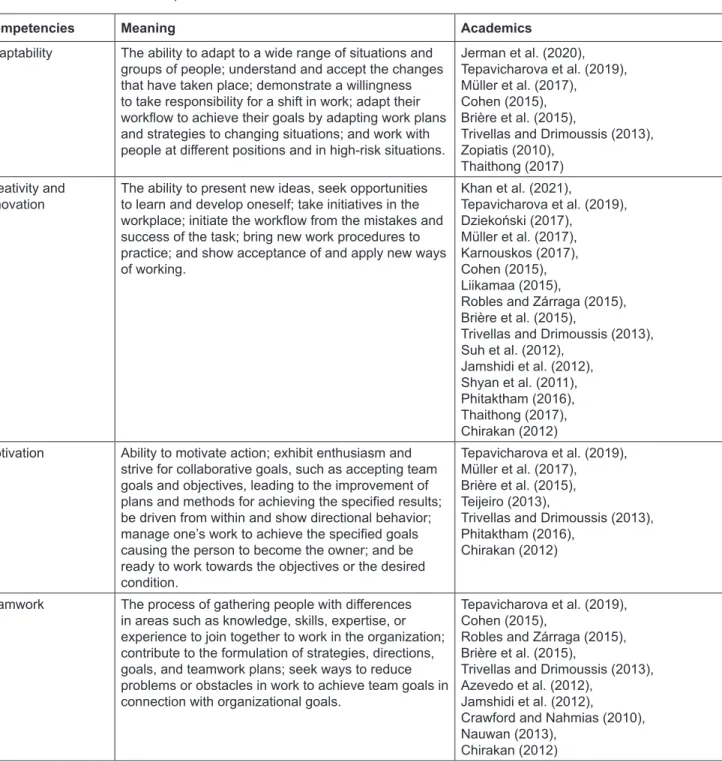
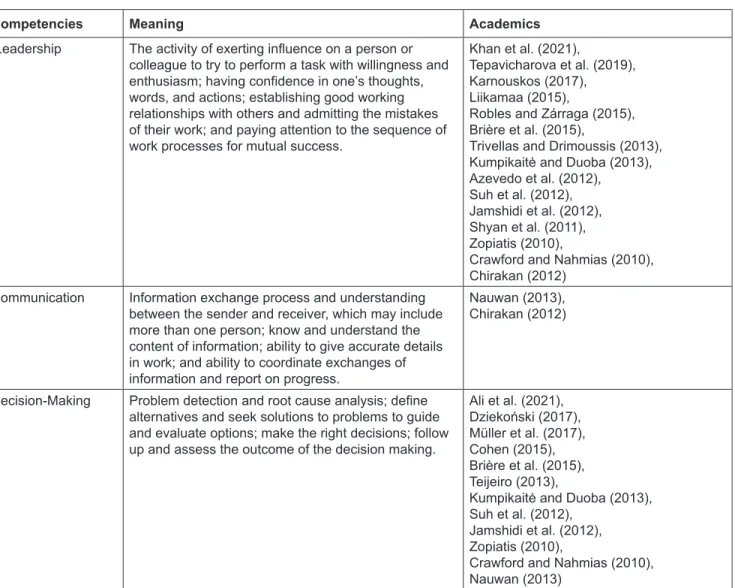
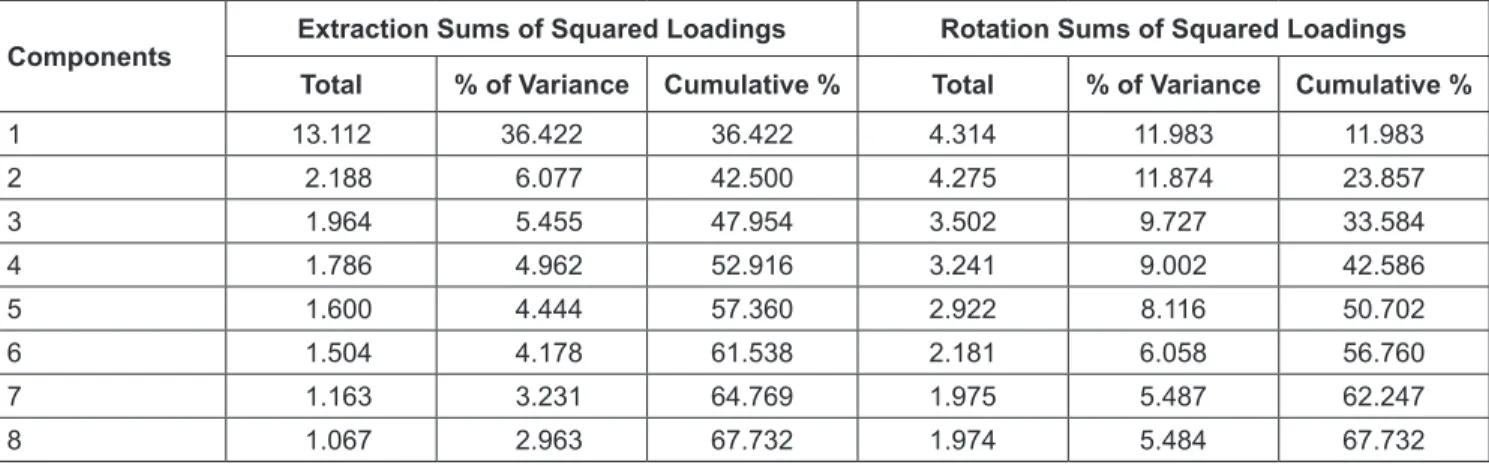
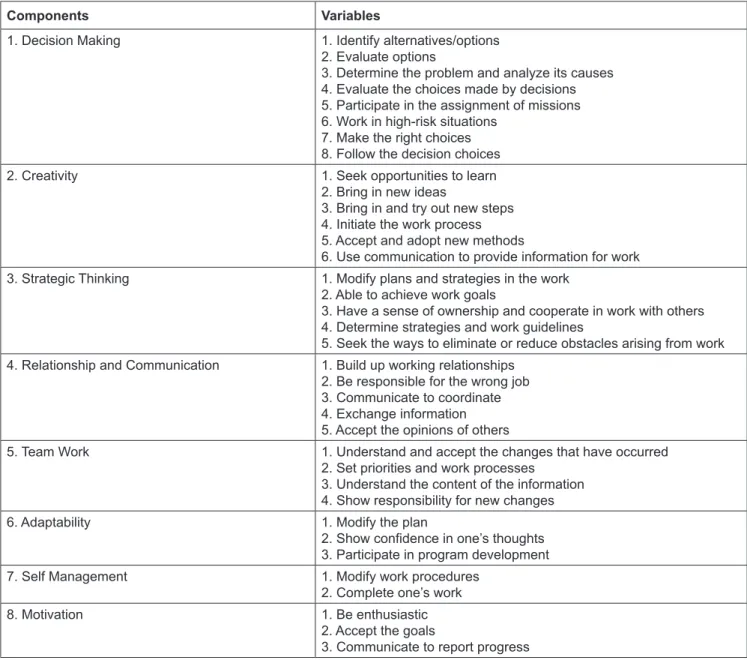
The objectives of this research are to establish and confirm the human resources competency components for listed companies in the Stock Exchange of Thailand. The sample group used in this research includes the company president, business owner, managing director, assistant managing director, general manager or human resources manager of 140 listed companies. The research instrument is a scale-estimated questionnaire. The obtained data were subjected to principal component analysis and were analyzed for the rotation of the perpendicular component using the Varimax method. Results were generated through the analysis of eight components, consisting of decision-making, creativity, strategic thinking, relationship and communication, teamwork, adaptability, self-management, and motivation. The research results demonstrate important components in human resource performance that are critical to the successful development of organizations.
Organizations can apply these components to the development of human resource competencies in accordance with the operations that need to be adjusted to suit the changes that occur. These rapidly-changing conditions are important factors that can be studied and developed into variables and components that affect human resource performance in the future. As a result, organizations need to adjust to be well prepared to face problems and challenges in the harsh competitive environment in the future.
Keywords: Human Resources, Competency, Factor Analysis, Stock Exchange, Thailand JEL Classification Code: J24, L20, M10
Development Council, 2020). Driving the economy through innovation affects both the individual and organizational levels, whether it is the service industry or education.
The tremendous strides in the development of technology and wireless connections have made the world smaller.
People’s lifestyles have changed tremendously in terms of the economy, society, politics, and environment. Volatile and unpredictable circumstances are the driving force behind intensifying business competition, and organizations have to keep up with these changes. Human beings must inevitably be directly involved in these changes, such as by changing to match development, so that they can benefit from the impact that will occur as a result of changes.
Changes occur in lifestyle, working patterns, economic systems, and human resource relationships in society. As a result, all organizations have to be alert and develop their personnel to be well prepared for these changes. Trends in new economic development with the use of technology and knowledge as a developmental basis have forced organizations to accelerate the preparation and creation of a human resources development mechanism so that they can
1
First Author. Ph.D. Candidate, School of Management, Walailak University, Thailand. Email: [email protected]
2
Corresponding Author. Assistant Professor, School of Political Science and Laws, Walailak University, Thailand [Postal Address:
222 Thai Buri, Tha Sala, Nakhon Si Thammarat, 80160, Thailand]
Email: [email protected]
3
Associate Professor, School of Management, Walailak University, Thailand. Email: [email protected]
4
Assistant Professor, School of Management, Walailak University, Thailand. Email: [email protected]
5
Researcher, School of Management, Walailak University, Thailand.
Email: [email protected]
© Copyright: The Author(s)
This is an Open Access article distributed under the terms of the Creative Commons Attribution Non-Commercial License (https://creativecommons.org/licenses/by-nc/4.0/) which permits unrestricted non-commercial use, distribution, and reproduction in any medium, provided the original work is properly cited.