• 검색 결과가 없습니다.

Foreign Direct Investment Projects of Korean Companies

N/A
N/A
Protected

Academic year: 2021

Share "Foreign Direct Investment Projects of Korean Companies"

Copied!
10
0
0

로드 중.... (전체 텍스트 보기)

전체 글

(1)

Print ISSN: 2288-4637 / Online ISSN 2288-4645 doi: 10.13106/jafeb.2016.vol3.no1.5.

Foreign Direct Investment Projects of Korean Companies

1)

Yeana Choi*, Ayşe Yüce**

[Received: October 5, 2015 Revised: October 22, 2015 Accepted: January 18, 2016]

Abstract

This paper investigates announcement effects of the outward foreign direct investment (FDI) projects of the Korean multina- tional companies. Although the FDI is considered corporate ac- tivity that can provide various benefits beyond financial re- sources, the most previous research focused on macro analysis such as country-level and industry-level analysis instead of the firm-level study, which is required to decide the investment proj- ect from a management perspective. Thus, this study examines the relationship between the outward FDI activities of the Korean corporations and their financial performance to fill the gap in this area.

Keywords: Foreign direct investment, Multinational companies, Korea.

JEL Classification Codes: F21, F23, G15

1. Introduction

Global foreign direct investment (FDI) activities have surged exponentially due to the decreased cross-border restrictions on international capital flows (Doukas & Lang, 2003). It is widely believed that foreign direct investment positively affects the na- tional economy as well as the firm’s profitability such as the in- creased productivity, technology transfers, employee training, in- ternational production network, and market expansion (Alfaro, Chanda, Kalemli-Ozcan, & Sayek, 2004). Emerging countries that jumped into the global market later than developed coun- tries, are required to be actively engaged in FDI activities to es- tablish their presence in the competitive global market.

As one of the rapidly industrialized countries in Asia, South Korea (hereafter Korea) is known as an export-focused econom- ic structure. Since Korea started the process of capitalization * First Author. Ted Rogers School of Management, Ryerson University. [350 Victoria Street, Toronto, ON, Canada M5B 2K3. Email: [email protected]]

** Corresponding Author. Department of Finance, Ted Rogers School of Management, Ryerson University. [350 Victoria Street, Toronto, ON, Canada M5B 2K3. Email: [email protected]]

belatedly and lacks natural resources that can be traded inter- nationally, a prior goal of the Korean corporations was to in- crease international capital exchange with foreign countries. This logic is also applied to foreign direct investment of the Korean corporations. As the exports are encouraged by the nationwide economic policies, the Korean firms have focused on the inter- national transactions including FDI as a means to expand their global presence. Outward FDI from the corporations in some fast-developing countries in Asia, represented by Korea and Taiwan, is known to have distinct characteristics compared to other third world multinational enterprises (Dunning, Hoesel, &

Narula, 1997). For example, such outward FDI activities have been supported by the government sponsorships for the purpose of the technology development. As opposed to the Chinese out- ward FDI, which focused on stabilizing the domestic supply of natural resources, the Korean outward FDI mainly aims to the market expansion and the relocation of manufacturing facilities.

From management perspective, FDI can be a double-edged sword generating a great amount of revenues and requiring an enormous capital investment concurrently. Although FDI activities generally have a positive impact on the economic growth, the firm-level study is insufficient to conclude that the corporations can mostly get the advantage of outward FDI activities. Thus, we examine the value creation of the outward FDI to share- holder wealth based on the firms’ financial data. In this paper, we focus on the outward FDI conducted by the major Korean multinational corporations after 1990. The reason to concentrate on the period from the 1990s is that the cross-border capital flows of Korea started to increase significantly from the early 1990s (Cho, 2003).

The first part of the paper reviews the previous studies re- garding the importance of FDI activities on the performance of multinational companies as well as the overall trends of outward FDI from Korea. In the second section, the data and the re- search methodology are illustrated along with the hypothesis.

Lastly, in addition to the result of the analysis, we conclude with a discussion of the findings with the implication on the management decision.

2. Literature Review

Due to the uncertainty of the result, it is important for man-

(2)

agers to decide whether or not to pursue outward FDI to im- prove the firm’s profitability. It has been studied that outward FDI activities generally affect the corporations’ financial perform- ance in a positive way. Dunning (1994) pointed out that the ma- jority of FDI activities originates from countries that are willing to devote themselves on R&D. As a result, FDI enhances the in- novative capacity of the firm, since the government policy pro- moting outward FDI leads to productive R&D and domestic in- novative capacity of the home country.

Some papers focus on the factors that generate active FDI flows using firm-specific data. In general, profitability, efficiency, output, and employment are used as the main criteria to decide whether the FDI was effective enough or not on the firm level (Yüce & Zelaya, 2014). Hayakawa, Lee, and Park (2013) de- termined that home country characteristics played an important role on the firm’s FDI decision-making process based on the firm-level empirical data in Japan, Korea and Taiwan. In three countries, as the wages in the home country increased, more manufacturing firms are likely to shift their production facilities abroad; a 10% increase in the home country wages resulted in a 25% increase in the number of firms investing abroad. On the contrary to this, the host country wages and the number of firms investing abroad turned out to be in inverse relationship.

In other words, this study revealed that the major determinant in FDI is to minimize production costs by relocating the manu- facturing facilities to the countries with lower wages.

In addition, it turned out that the larger and more profitable firms are more willing to take part in FDI, while investing in countries with favorable business environments such as friendlier or simpler regulations (Yüce & Zelaya, 2014). The study inves- tigates the FDI made by the multinational companies into China and India between 2003 and 2008, and concludes that a 10%

increase in the size of the total assets is associated with a 2.1% increase in the size of the FDI projects (Yüce & Zelaya, 2014). This means that the growth of the firm may lead to the increase in FDI activities, or vice versa.

In traditional FDI studies, it is known that firms are more like- ly to invest in less developed countries based on the intention of diversification. Yet, some papers demonstrate that Korean corporations have different motivations according to the target country of FDI; for instance, low-wage and the access to strate- gic assets are major motives in FDI towards developed coun- tries (Kim & Rhee, 2009). Kim and Rhee (2008) points out that the outward FDI should be examined at the firm level, which is one of limitations of their study.

The Korean institution KOTRA (Korea Trade Investment Agency), which supports dealing with global economic issues and conducting research on investment-related laws and regulations, was exemplified as an exceptional case that encouraged domes- tic corporations to promote their outward FDI flows. Although Korea is categorized as part of East Asia, the pattern and mo- tives of outward FDI from Korea is different from the adjacent countries in East Asia. According to the research, Korean corpo- rations prefer investing in economies with higher degree of open- ness, when the domestic GDP is higher (Fung, Garcia-Herrero,

& Siu, 2009). On the other hand, companies in China and

Taiwan placed an importance on the distance between home and host country and foreign reserves are important for Japan (Fung, Garcia-Herrero, & Siu, 2009).

Before 1997 Asian financial crisis, both inward and outward FDI flows of Korea began to increase considerably in the 1990s with outward FDI outpacing inflows before this financial crisis.

After Korea successfully recovered from the financial crisis, out- ward FDI increased continuously by exceeding inflows again be- cause Korean firms, especially those in information and commu- nication technology, developed their R&D capacity overseas. Hill and Jongwanich (2009) also stated that outward FDI from East Asia including Korea has been growing rapidly despite the glob- al financial crisis of 2008, with an increase in cross-border M&A activity by 16.1 percent. Thurbon and Weiss (2006) mentioned iPark initiative as an example of outward FDI from Korea. IPark initiatives are collaborative projects between the Korean govern- ment and IT start-ups to build up world-class IT sector. After the first iPark (iPark Silicon Valley) established with government funding in 2000, Korean companies succeeded to expand into American consumer market through a negotiated partnership with large distributors in the USA (Thurbon & Weiss, 2006).

Park (2014) reported that the total FDI of Korea significantly increased from 2007 onwards, even though the amount of out- ward FDI slightly declined in 2009 due to the global financial crisis. He also analyzed the host country that the outward FDI heading and revealed that the Korean companies have invested mostly in Asia (45%), following North America (24%) from 1995 to 2013. He concluded that the corporations preferred to invest in countries with minimal risk, which was interpreted as the part- nership between the two countries. Dent and Randerson (1997) argues that the large amount of outward FDI from Korea stems from the Korean economic structure, which has inherent struc- tural weaknesses and its dependence on foreign technology.

Thus, Korean conglomerates had experienced the pressure to expand the outward investment. The research analyzed the FDI into Europe in 1990s, and concluded that the corporations raised the outward FDI since they remain under-represented in Europe region.

As shown in the overall trend of outward FDI from Korea, the Korean outward FDI activities were mainly affected by major firms’financial capacities which related to their performance.

Despite the significance of understanding the difference in each company, previous research was mainly conducted based on the aggregated data for the entire country or industry, while treating the firms as a homogenous group. The firm-level study is essential to analyze the impact of FDI on the firm and devel- op empirical theory.

Using firm-level data of the selected manufacturing compa- nies, Lee (2010) identified that outward FDI into less developed countries was associated with lower growth in firm employment and higher growth in capital intensity, which was resulted from the relocation of production lines. On the other hand, outward FDI into developed countries was mainly realized in the purpose of market expansion, so that the parent firm’s activities do not change significantly after the FDI (Lee, 2010).

Furthermore, some distinct patterns are demonstrated accord-

(3)

ing to the destination of FDI from Korean corporations. Shin, Mirza, and Kim (2009) examined the patterns and performance of FDI from Korea to China by industry. Some independent vari- ables such as size of parent company and years of operation did not have distinct relationships with financial performance of the companies, e.g. their operating profit on sales and net profit on sales. On the contrary, the amount of investment and owner- ship were significantly related with performance measures in the electronics industry.

At the firm-level study, the relationship between FDI activities and trades was another major area of interest; whether interna- tional trades either replace or promote FDI, and vice versa. Lim and Moon (2001) focused on individual foreign subsidiaries of the Korean multinational companies and mentioned that outward FDI promoted exports if the subsidiaries are in less developed countries. In addition, the positive relationship between FDI and exports was proved in a declining home country industry (Lim &

Moon, 2001), hence outward FDI may benefit the trade balance of home country under certain conditions. Lee and Yun (2006) analyzed the firm-level data on FDI from Korea and found out that there is little difference in the firm performance by entry modes of FDI, which is contrary to the typical hypothesis. Still, Chang and Rhee (2011) revealed that accelerated FDI activities can be a profitable strategy for firms, especially firms from emerging markets, which need to globalize swiftly to struggle with global competitors.

Outward FDI is a way to enhance long-term profitability for a firm from emerging markets through combining its internal assets and foreign assets synergistically. Although outward FDI has sig- nificant impacts on the firms’performance, many studies have fo- cused on the national characteristics of outward FDI from macro perspectives. Thus, notwithstanding its importance for the corpo- rate management, firm-level studies about impacts of outward FDI are currently insufficient, and this paper will fill this gap through this research.

3. Data Analysis and Methodology

We examine the foreign direct investments of the Korean multinational companies using the Bloomberg database and press releases between 1990 and 2014. We eliminate those transactions that we do not get complete information. The an- nouncement data and issue-specific information such as the size of investment, the target country of investment, and the purpose of FDI were retrieved to verify each case. Due to the domi- nation of the economy by chaebols a large portion of the out- ward FDI was made by the conglomerates. As the data for smaller amount of investment are not available on Bloomberg, only the investments exceeding USD $100 million are included, and the scope of the study is narrowed down to multinational companies. After looking at all the FDI cases from the Korean corporations during the period between 1990 and 2014, we ended up with the 107 projects which have complete data re- quired for the analysis. In addition, some corporations repeated

the investment on the same facility several times; for instance, after building the manufacturing facility, the company built addi- tional factories to increase the capacity and improve the yield at the facilities. To prevent the unnecessary duplication of the sample data, we excluded the second or third investment on the same facility, and included the first investment exclusively.

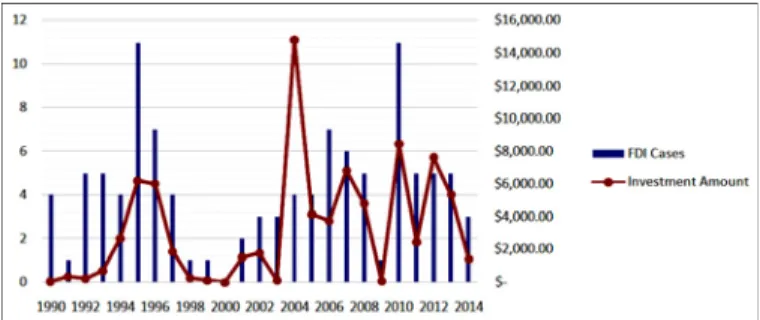
Figure I shows our sample in different years.

<Figure 1> The FDI Cases Categorization by the Announcement Date (in million).

The yearly trend of outward FDI from 1990 to 2014 was fair- ly similar to the previous research (see Figure 1). As Hill and Jongwanich (2009) revealed, the overall amount of outward FDI from Korea has continuously raised since 1990. Yet, the amount occasionally declined due to the national economic condition and the impact of global financial crisis.

The outward FDI of Korea has been actively studied from various perspectives. Nevertheless, most research was based on the macroeconomic scope such as the entire country and the industry. Thus, our study focuses on the firm-level data analysis to develop appropriate FDI strategies for the corporate management.

The total 107 cases of outward FDI are used to calculate ab- normal returns. The detailed case list is included in Table 1.

The total investment amount of the selected cases was $81,783 million, which is equivalent to the average transaction value of

$764 million per case. As shown in Table 2, approximately 85%

of the total projects are made by affiliates of major chaebols;

for instance, Samsung Group has Samsung Electronics,

Samsung SDI, Samsung Electro-mechanics, Samsung C&T, and

so on. Among the chaebol groups, Lotte Group and Posco

made the largest investment. In other words, Lotte and Posco

focused on the heavy industry or primary metal manufacturing

that require the large amount of capital investment in the initial

stages. As shown in Table 3, the most predominant industry is

electronic equipment manufacturing (26%), followed by trans-

portation manufacturing (22%), and computer manufacturing

(13%). The industry categorization is based on the North

American Industry Classification System (NAICS) made by

Canada of Statistics Canada (Minister of Industry, 2012). In

terms of the total transaction value, computer manufacturing is

the largest at $15.8 billion, followed by transportation manu-

facturing ($14.7 billion) and primary metal manufacturing ($12.6

billion). Since Korea expanded its global presence by aiming for

(4)

<Table 1> List of FDI Cases of Korean Corporations for 1990 –2014(in million).

Company Value Date Country Investment

1 LG Electronics 10 1990-01-24 Italy build a refrigerator plant with two Italian firms 2 Samsung Electronics 6.8 1990-06-16 Hungary build a CTV plant as a JV with Orion Electronics 3 Daewoo Heavy Industry 10 1990-09-26 Belgium acquire a hydraulic excavator manufacturer 4 Daewoo Electronics 37 1990-11-23 France establish a CTV sales subsidiary with a home appliance

distributor JBL

5 LG Electronics 351 1991-02-27 US acquire a 5% stake of a US TV maker Zenith

6 Daewoo Electronics 30 1992-02-11 France build a CTV plant

7 Samsung Electronics 15 1992-06-26 UK build a CTV plant with the sponsorship of the British government

8 Samsung SDI 18.5 1992-07-17 Germany acquire a state-owned CTV manufacturer WF

9 SK Chemicals Co 141 1992-12-16 Indonesia build a polyester fabric manufacturing factory as a JV with Batic Keris

10 Samsung Electronics 30 1992-12-27 Portugal build a semiconductor assembly plant with Texas Instruments

11 Hansol Holdings 92 1993-07-16 Australia a 10-year investment in a forestry project

12 Hyundai Electronics 165 1993-08-21 US acquire a 40% stake of Maxtor Corporation

13 Daewoo Corp 300 1993-08-27 China build a cement plant

14 Daewoo Electronics 150 1993-10-31 France build a CTV factory

15 Daewoo Electronics 3.8 1993-11-07 Poland establish a CTV sales subsidiary

16 Samsung SDI 120 1994-08-03 Germany acquire a CRT glass manufacturer FGT

17 Samsung Electronics 723 1994-10-18 UK build an industrial park and consumer electronics plants 18 Hyundai Electronics 340 1994-11-11 US acquire a semiconductor division of AT&T 19 Daewoo Motor 1,500 1994-12-01 China build a car parts factory Yantai Engine Plant

20 Samsung Electronics 378 1995-03-01 US acquire a 40% stake of AST Research

21 Daewoo Heavy Industry 200 1995-03-07 Czech acquire a 50% stake of a commercial vehicle manufacturer Avia

22 LG Electronics 514 1995-07-01 Indonesia build a CRT plant through a subsidiary LGEIN (LG Electronics Indonesia)

23 LG Electronics 99 1995-08-04 China build an air conditioner plant with GE and a Chinese corporation

24 Posco 220 1995-09-30 Brazil establish a 50/50 JV with CVRD (Companhia Vale do Rio

Doce)

25 Samsung Heavy Industry 10.8 1995-10-14 UK build a hydraulic excavator plant

26 Samsung Electronics 1,300 1995-11-05 US build a NAND flash memory wafer plant

27 Daewoo Heavy Industry 1,100 1995-11-16 Poland establish a JV Daewoo FSO Motor

28 Hyundai Motor Co. 1,100 1995-11-23 India build a car manufacturing subsidiary HMIL (Hyundai Motor India Ltd.)

29 Hyundai Electronics 1,300 1995-12-03 US build a semiconductor plant

30 Hyundai Heavy Industries 10 1995-12-09 Belgium build a hydraulic excavator factory 31 Samsung Electronics 231 1996-03-31 Mexico build a consumer electronics complex (CEP)

32 SK Holdings 250 1996-04-09 US build a polyester film factory

33 Daewoo Shipbuilding & Marine

Engineering 53 1996-05-22 Romania acquire a 51% stake of Mangalia shipbuilding facility

34 LG Semiconductors 2,600 1996-07-11 UK build a semiconductor and CEP

35 Hyundai Hysco 1,280 1996-08-26 Malaysia establish a JV with the Terengganu foundation to make

steel and aluminum-coated pipes

(5)

Company Value Date Country Investment

36 Hyundai Electronics 1,500 1996-10-09 UK build a semiconductor and CEP

37 Kumho Tire Co. 120 1996-12-02 China build a radical passenger tire facility

38 Daewoo Electronics 400 1997-03-13 France build a plant to manufacture CRT glasses for CTV 39 Samsung Electro-Mechanics 65 1997-05-09 Philippines build a high-tech components manufacturing plant 40 Daewoo Motor 1,300 1997-09-19 Ukraine establish a JV with AvtoZaz automotive factory to

development of new models

41 Daewoo group 100 1997-11-24 Morocco make an agreement with the Moroccan government for various economic projects

42 Daewoo Motor 267 1998-03-20 UK establish a JV with LDV (Leyland DAF Vans) to build a van manufacturing facility

43 Samsung Electro-Mechanics 140 1999-04-06 Philippines build a high-tech components manufacturing plant 44 LG Electronics 1,500 2001-07-06 Netherlands establish a JV with Koninklijke Philips Electronics N.V. for

CRT manufacturing

45 Hyundai Motor Co. 30 2001-11-13 US establish Hyundai Kia Motors Design and Technical Centre 46 Hyundai Motor Co. 1,700 2002-03-29 US estaglish HMMA (Hyundai Motor Manufacturing Alabama) 47 Samsung Electronics 50 2002-06-15 Mexico build a plant to manufacture home appliances

48 Hyundai Mobis 40 2002-10-30 US build a factory to manufacture car components

49 Hyundai Motor Co. 50 2003-01-28 US establish Hyundai America Technical Centre in the Mojave Desert

50 LG Chem 15 2003-07-01 China build a plant to produce lithium-ion batteries for electronic cars

51 Hyundai Motor Co. 54 2003-09-09 Germany establish the Europe R&D centre and HME (Hyundai Motors Europe)

52 Hynix Semiconductor 2,000 2004-02-27 China build two DRAM manufacturing plants with STMicroelectronics NV

53 Kia Motors 767 2004-03-02 Slovakia build an engine production and assembly plant

54 SK Corporation 42 2004-08-18 Brazil participate in the joint development of an oilfiled with Devon Energy Corp.

55 Posco 12,000 2004-08-20 India build a steel plant as a greenfield investment

56 Hankook Tire 328 2005-05-20 Slovakia build a factory focusing on the automotive and electronic industries

57 LG Philips LCD 1,220 2005-06-23 Poland build an assembly plant of liquid crystal displays 58 Samsung Electronics 20 2005-09-02 Slovakia build a warehouse and logistics centre 59 Honam Petrochemical 2,600 2005-12-29 Qatar build a petrochemical plant with an affiliate of Qatar

Petroleum

60 Posco 262 2006-01-05 Mexico build a galvanizing cold rolling plant with Daewoo

International, POSAM, and local firms

61 Hyundai Motor Co. 1,200 2006-03-13 Czech build a car manufacturing plant as a greenfield investment

62 Kia Motors 1,600 2006-03-13 US establish KMMG (Kia Motors Manufacturing Georgia)

63 Kumho Tire Co. 155 2006-03-29 Vietnam build a tire manufacturing facility at My Phuoc indistrial complex

64 LG Electronics 150 2006-09-06 Russia build a digital household appliance plant

65 Posco 361 2006-10-20 Vietnam build a cold rolling and galvanizing plant at Phu My industrial complex

66 Posco 23 2006-12-27 Australia acquire a 10% stake of the JV operating the Newpac mine

67 Samsung Electronics 525 2007-03-08 Slovakia build a factory for LCD TV module

68 Hyundai Motor Co. 400 2007-06-08 Russia build a plant to manufacture cars

69 SK Gas Corp 44 2007-07-27 China acquire a total 32% stake of Pingding coal mine

70 Doosan Infracore 4,900 2007-07-30 US acquire a heavy industry department of Ingersoll Rand

(6)

Company Value Date Country Investment

71 STX Group 800 2007-10-23 Norway acquire a stake of Aker Yards ASA to start building cruise liners

72 Lotte Shopping 185 2007-12-17 China acquire a Chinese supermarket chain CTA Makro

73 CJ CheilJEdang Corp 2.5 2008-02-19 US acquire a stake of the stem cell research firm Neuralstem

74 LG Display 2,800 2008-04-08 China build a LCD panel fabrication plant

75 LS Cable Ltd 900 2008-06-11 US acquire a wire and cable maker Superior Essex Inc.

76 Posco 404 2008-06-30 Australia acquire a stake of Macarthur Coal

77 Hyundai Motor Co. 700 2008-09-19 Brazil build a plant to manufacture small car models 78 Samsung Electronics 76 2009-12-22 Poland acquire the appliance manufacturing facilities of Amica 79 Posco 1,600 2010-01-17 Australia acquire a 15% stake of the iron ore mining project Roy Hill

Holdings.

80 SK Networks Co. 1,000 2010-01-20 Canada purchase ore with Canada's CLM (Consolidated Thompson Iron Mines)

81 Taekwang Power Holdings 2,000 2010-03-31 Vietnam build a coal power plant with a Saudi Arabian partner ACWA Power

82 KEPCO 340 2010-07-05 Australia acquire Bylong coal mine from Anglo American

83 Honam Petrochemical 1,250 2010-07-16 Malaysia acquire a 72% stake of Titan Chemicals Corp.

84 KEPCO 515 2010-07-21 Indonesia acquire a 20% stake of Bayan Resources

85 Hanwha Chem 370 2010-08-03 China acquire a 50% stake of a Chinese PV cell maker Solarfun Power Holdings Co.

86 STX Energy 144 2010-08-29 Canada acquire a Canadian gas field Maxhamish field

87 SK Networks Co. 700 2010-09-14 Brazil acquire a stake of MMX Mineracao & Metalicos SA

88 Hankook Tire 353 2010-10-22 Indonesia build a tire manufacturing plant

89 SK Engineering & Construction

Co. 175 2010-11-29 Turkey build a power plant as a joint investment with Doganlar Yatirim Holding

90 Posco 350 2011-01-05 Turkey make a partnership agreement for a stainless steel plant with Kibar Holding

91 Daewoo International 350 2011-01-05 Turkey make a partnership agreement for a stainless steel plant with Kibar Holding

92 Posco 477 2011-07-07 Thailand build a stake of Thainox Stainless PCL

93 CJ CheilJEdang Corp 669 2011-08-15 Malaysia invest in a biotechnology plant Kertih Polymer Park with Arkema SA

94 LG Chem 600 2011-08-25 Kazakhstan build a petrochemical complex with local partners 95 Honam Petrochemical 5,000 2012-02-03 Indonesia build an integrated petrochemical complex 96 Samsung Electronics 2,300 2012-03-21 China build a semiconductor facility to manufacture NAND flash

wafer fab

97 SK Hynix 248 2012-06-20 US acquire LAMD (Link a Media Devices)

98 LG group 45 2012-06-28 US acquire a 51% stake of Fuel Cell Systems

99 Hyundai Mobis 33 2012-08-22 Turkey build an automotive module manufacturing plant

100 Samsung Electronics 2,000 2013-02-07 Vietnam build a manufacturing facility for mobile phones 101 LG Electronics 1,500 2013-02-17 Vietnam build an electronic products manufacturing and assembly

factory

102 Samsung Electronics 111 2013-03-06 Japan acquire a 3% stake of Sharp

103 Samsung Electronics 1,000 2013-03-25 Vietnam build a mobile phone factory at Yen Phong industrial complex

104 Samsung Electro-Mechanics 750 2013-07-04 Vietnam build a chip and electronic components plant

105 SK Innovation 367 2014-04-07 US acquire two oilfields in Texas and Oklahoma

106 Kia Motors 1,000 2014-06-03 Mexico build an automated manufacturing plant

107 Dongil Corporation 52 2014-06-30 Vietnam build a textile plant at Loc An-Binh Son Industrial complex

(7)

manufacturing-focused development, most of the industry is clas- sified as part of manufacturing industries. Interestingly, due to the inherent lack of natural resources in Korea, 10 projects of the total investments were made to acquire a stake of mines or oil field projects to secure natural resources.

<Table 2> Sample Statistics of Korean Outward FDI (in millions), 1990-2014.

Companies by

Group Total Number

of Projects Percentage Total Amount

Samsung 21 19.63% $ 9,870.10

Hyundai 19 17.76% $ 13,269.00

Daewoo 15 14.02% $ 5,800.80

LG 13 12.15% $ 11,404.00

SK 10 9.35% $ 4,966.70

Posco 9 8.41% $ 15,697.00

Lotte 4 3.74% $ 9,035.00

CJ 2 1.87% $ 671.50

KEPCO 2 1.87% $ 855.00

Kumho 2 1.87% $ 275.00

Other 10 9.35% $ 9,939.00

Total 107 100% $ 81,783.10

<Table 3> The FDI Cases Categorization by Industry (in millions), 1990-2014.

Projects by Industry Total # of

Projects Percentage Total Amount Electronic equipment

manufacturing 28 26.17% $ 11,855.10

Transportation

manufacturing 24 22.43% $ 14,745.00

Computer manufacturing 14 13.08% $ 15,822.00 Oil extraction and mining 10 9.35% $ 5,134.70

Chemical manufacturing 7 6.54% $ 10,534.00

Metal product

manufacturing 6 5.61% $ 2,721.00

Machinery manufacturing 4 3.74% $ 4,930.80

Primary metal

manufacturing 3 2.80% $ 12,623.00

Plastics products

manufacturing 2 1.87% $ 370.00

Textile mills 2 1.87% $ 193.00

Utilities 2 1.87% $ 2,175.00

Other 5 4.67% $ 679.50

When a firm decides to expand into the foreign market, it is important to decide a mode of entry. In this study, we catego- rize the entry mode of the projects into five types based on the country-specific investment characteristics; overseas manufacture, strategic alliance, joint venture, acquisition, and wholly owned

subsidiary (see Table 4).

<Table 4> The FDI Cases Categorization by Entry Mode (in millions), 1990-2014.

Projects by Entry Mode Total # of Projects Percentage Total Amount

Overseas manufacture 43 40.79% $ 45,707.80

Strategic alliance 17 15.89% $ 9,875.50

Joint venture 11 10.28% $ 7,336.50

Acquisition 27 25.23% $ 14,214.00

Wholly owned

subsidiary 9 8.41% $ 4,649.80

Among them, overseas manufacture accounts for a 40% with 43 projects, and the total transaction amount is particularly large as at approximately $45.7 billion. In other words, it is generally required for the corporation to invest a huge amount of capital to build plants or manufacturing facilities compared to other types of investment. According to the breakdown by the host country, which is shown in Table 5, Europe and Asia account for the largest portion with 34 cases (32%) respectively.

Although the number of investment in Europe and Asia is the same, the total transaction amount is completely different; that of Asia was $41.8 billion, which is three times larger than that of Europe ($15.6 billion). This is because of the geographical distance between Korea and Europe and entry barrier of the European market. Due to this, the Korean corporations are re- quired to organize a joint venture or partnership agreement to enter into Europe, so that the amount invested by one company reduced significantly.

<Table 5> The FDI Cases Categorization by Host Country (in millions), 1990-2014.

Projects by Host Country Total # of Projects Percentage Total Amount

Europe 34 31.78% $ 15,634.90

Asia 34 31.78% $ 41,766.00

North America 20 18.69% $ 15,110.50

South America 8 7.58% $ 3,204.70

Middle East 5 4.67% $ 3,508.00

Oceania 5 4.67% $ 2,459.00

Africa 1 0.93% $ 100.00

Since most of the previous research in this area concentrated

on the overall trends that can explain major determinants or ge-

neric trends of outward FDI, this paper evaluates the impact of

FDI on each company’s profitability. This paper fills the gap in

the knowledge of existing studies and the paper is concerned

with the firm-level financial performance of the outward FDI ac-

tivities made by the Korean companies The majority of the pre-

vious research suggest that outward FDI expansion is likely to

improve the corporations’profitability. Thus, the following hypoth-

(8)

Event

Day Abnormal

Return t-statistic Event

Day Abnormal

Return t-statistic

-20 0.03% .198 1 0.30% 1.617*

-19 0.20% 1.199 2 0.11% .483

-18 -0.16% -.788 3 -0.51% -2.664*

-17 -0.13% -.813 4 0.02% .114

-16 -0.06% -.345 5 0.17% .898

-15 -0.26% -1.453 6 -0.22% -1.380

-14 0.02% .118 7 -0.50% -2.253*

-13 -0.01% -.033 8 0.03% .080

-12 -0.20% -.970 9 0.00% .015

-11 0.08% .460 10 -0.26% -1.131

-10 0.12% .630 11 0.08% .376

-9 -0.11% -.680 12 0.16% .743

esis for the FDI announcements is tested:

Hypothesis: Outward foreign direct investment projects create positive and significant abnormal returns for multinational com- pany shareholders.

The hypothesis is aligned with the traditional findings of the FDI studies investigated so far. It has been proved that larger firms are more likely to benefit through outward FDI since they are more internationalized and effective in the global expansion (Buch, Kleinert, Lipponer, & Toubal, 2005). As the majority of the selected Korean companies are relatively large, it is ex- pected for them to boost their profitability through outward FDI flows.

We use the event study method which examines shareholder wealth gains based on the stock trading prices and abnormal returns. The event study methodology measures the impact of an economic event on the value of firms using the firms’trading prices (MacKinlay, 1997). The firms’financial profitability is judged by changes of the stock prices in relation to changes of the market index during the period that FDI activity is publicly announced. Yüce and Ng (2005) examined the announcement impact of M&A on 1,565 Canadian private and public companies.

Based on the abnormal returns and cumulative abnormal returns of the companies, it was concluded that both the target and ac- quiring company had positive and significant abnormal returns for a two-day holding period (Yüce & Ng, 2005).

We assume that the announcement of FDI to the public will have a positive impact on the stock prices of the firms. During the period between 1990 and 2014, the 107 outward FDI proj- ects done by the publicly listed Korean multinational companies are analyzed We examine the long-term (250 days) performance before the announcement day and the short-term (50 days) per- formance after the announcement day for each case.

The announcement date of each project is collected from the financial press release and the daily closing prices of individual stocks and the market index data are retrieved from Bloomberg and Yahoo Finance. After calculating the returns of stock prices on each day, the abnormal returns (AR) compared to the mar- ket index (KOSPI Index) are computed. The announcement day is represented by t = 0. For each sample project (i = 1 to i = 107), the return on the security (Rit) for each day t, before and after the event, was calculated:

(1) Kit is expected return reflecting changes in the market index, and eitis the component of returns which is unexpected, equiv- alent to the abnormal return. When calculating the abnormal re- turns, the regression analysis is done. In other words, the AR of each day is the same as x-coefficient multiplied by the return on market index plus y-coefficient. The abnormal return for each day (eit) is the same as the difference between the observed return and the expected return:

(2) Thus, the abnormal return is considered as a direct measure of the unexpected change in shareholder wealth triggered by

the event. After calculating the abnormal return for each se- curity, the abnormal return for each event day between day -20 to day 20 (t = -20 to t = 20) is computed:

(3) Lastly, the cumulative abnormal returns (CAR) of some se- lected periods were calculated to test the hypothesis. The CAR for each project (CARi) between certain periods (through day t1 to day t2) is defined as:

(4) The final CAR for the period between t1 and t2 is de- termined as the average of each project:

(5)

4. Results and Discussion

We study the cumulative abnormal returns of the Korean companies that have made foreign direct investment between 1990 and 2004. After calculating each company’s abnormal re- turns, the average abnormal returns for each day of the short-term (40 days) are computed and shown in Table6. The t-statistic of each day is calculated to decide the significance of the value. Interestingly, the shareholders start earning significant returns as early as on day -20 and -19, but the returns are not statistically significant. On day -7, the abnormal return is positive at 0.28%, and the abnormal return is positive and significant at 0.42% at the next day (day -6). Although the return on day -5 was negative, the abnormal returns were continuously positive from day -4 to day 5 except one day (day 3). Thus, the share- holders of the company can benefit from excess returns during approximately two weeks around the announcement date.

<Table 6> FDI Cases Abnormal Returns

(9)

-8 -0.24% -1.394 13 0.14% .575

-7 0.28% 1.245 14 -0.19% -.834

-6 0.42% 2.176* 15 -0.48% -2.359*

-5 -0.25% -1.915* 16 -0.11% -.595

-4 0.19% .956 17 0.12% .553

-3 0.09% .472 18 -0.25% -1.203

-2 0.11% .558 19 -0.06% -.335

-1 0.06% .325 20 -0.10% -.530

0 0.44% 1.867*

* Statistically significant at 0.05 level or less for a two-sided t-test

<Table 7> FDI Cases Cumulative Abnormal Returns

CAR Range Cumulative Abnormal Return t-statistic

CAR (-5, 5) 0.73% 1.148

CAR (-2, 2) 1.01% 1.944*

CAR (0, 2) 0.85% 2.064*

CAR (0, 5) 0.53% 1.091

CAR (0, 10) -0.42% -.610

CAR (0, 20) -1.13% -1.260

CAR (0, 30) -1.78% -1.936*

CAR (-10, 10) 0.23% .233

CAR (-40, 40) -3.02% -2.215*

* Statistically significant at 0.05 level or less for a two-sided t-test

On the announcement day and the next day (day 1), the re- turns are positive at 0.44% and 0.30% respectively, and both of them are statistically significant. On day 3, the abnormal returns turned out to be negative at -0.51%, and we assume that this decline is triggered by the constant price increases from day -4 to day 2.In other words, the investors who have gained excess returns due to the surge in shares are likely to liquidate their securities by selling part of their shares, which resulted in the price reduction. The proceeding price increase between day 4 (0.02%) and day 5 (0.17%) supports our assumption as well.

The slight decline on day 6 (-0.22%) and day 7 (-0.50%) can be explained by the same inference. Thus, the abnormal returns support our hypothesis that the announcement of outward FDI creates positive shareholder returns exceeding the return on market index.

As shown in Table7the holding period returns or cumulative abnormal returns (CAR) are also aligned with the findings of the abnormal returns. During the period of -2 and 2, the companies earn significant and positive return of 1.01%, and the return is also positive and significant within a two-day holding period (CAR 0, 2) at 0.85%. The five-day holding period (CAR 0, 5) and 10-day holding period (CAR -5, 5) also turned out to be positive at 0.53% and 0.73% respectively. However, the positive CAR seems not to last long. For instance, negative returns (-0.42%) started to show up only 10 days after the announce- ment (CAR 0, 10), and the returns (-1.78%) became significant

30 days after the announcement. Thus we can justify the hy- pothesis that the announcement of outward FDI generates sig- nificant and positive cumulative abnormal returns to shareholders of the company during the short-term holding period as long as two weeks.

5. Conclusion

The result of the study proved that the shareholders of the firms were able to earn significant positive returns due to the announcement of outward FDI activities between 1990 and 2014. Especially, the announcement effects on the share- holders’returns were significantly positive for a two-day holding period starting with the announcement day and a four-day holding period starting two days before the announcement. It means that the shareholders of companies would have earned the significant gain resulted from the announcement of FDI projects. This finding is consistent with a number of the previous studies that outward FDI benefits the corporations and their shareholders. Additionally, the corporation is more likely to benefit from not only the in- creased stock trading prices but also the positive and advanta- geous impacts of outward FDI, which were previously proved by numerous studies.

Since there has been no similar firm-level study regarding the Korean multinational companies, this study will assist the corpo- rate management to refine their existing strategies or to decide the market expansion by outward FDI activities. The managers of each company can benefit from the practical guidance which is aligned with the findings of this study. Furthermore, this re- search will be a foundation to develop a comprehensive frame- work concerning the relationship between the amount of outward FDI and the improvement in financial profitability, even though the study was limited to the Korean corporations. As FDI is considered as a major vehicle in market expansion, this paper provides empirical evidence for the international investment decision.

Reference

Alfaro, L., Chanda, A., Kalemli-Ozcan, S., & Sayek, S. (2004).

FDI and economic growth: The role of loal financial markets. Jounal of International Economics, 64(1), 89-112.

Buch, C. M., Kleinert, J., Lipponer, A., & Toubal, F. (2005).

Determinants and effects of foreign direct investment:

Evidence from German Firm-Level Data. Economic Policy, 20(41), 52-110.

Chang, S. J., & Rhee, J. H. (2011). Rapid FDI expansion and firm performance. Journal of International Business Studies, 42, 979-994.

Cho, J. W. (2003). Foreign direct investment: determinants,

trends in flows and promotion policies. Investment

Promotion and Enterprise Development Bulletin for Asia

and the Pacific, 1, 99-112.

(10)

Dent, C. M., & Randerson, C. (1997). Enter the chaebol: The es- calation of Korean direct investment in Europe. European Business Journal, 9(4), 31.

Doukas, J. A., & Lang, L. H. P. (2003). Foreign direct invest- ment, diversification and firm performance. Journal of International Business Studies, 34, 153-172.

Dunning, J. H. (1994). Multinational enterprises and the global- ization of innovatory capacity. Research Policy, 23(1), 67-88.

Dunning, J. H., Hoesel, R. V., & Narula, R. (1997). Explaining the 'new' wave of outward FDI from developing coun- tries: The case of Taiwan and Korea. International Business Review. Retrieved 9 May 2013, from http://edocs.ub.unimaas.nl/loader/file.asp?id=57

Fung, K. C., Garcia-Herrero, A., & Siu, A. (2009). A com- parative empirical examination of outward foreign direct investment from four Asian economies; People's Republic of China, Japan, Republic of Korea, and Taipei, China. Asian Development Review, 26(2), 86-101.

Hayakawa, K., Lee, H., & Park, D. (2013). The role of home and host country characteristics in FDI: Firm-level evi- dence from Japan, Korea and Taiwan. Global Economic Review, 42(2), 99-112.

Hill, H., & Jongwanich, J. (2009). Outward foreign directinvest- ment and the financial crisis in developing East Asia.

Asian Development Review, 26(2), 1-25.

Kim, J., & Rhee, D. K. (2009). Trends and determinants of Korean outward FDI. The Copenhagen Journal of Asian Studies, 27(1), 126-154.

Kim, W. S., & Lee, Y. I. (2008). Korea's FDI-led economic lib- eralism: A critical view. Asian Perspective, 32(1), 165-192.

Lee, H. (2010). The destination of outward FDI and the perform- ance of South Korean multinationals. Emerging Markets Finance & Trade, 46(3), 59-66.

Lee, S. B., & Yun, M. (2006). Does FDI mode of entry matter for economic developments of a host country? The case of Korea. Asian Economic Papers, 5(3), 171-185.

Lim, S. H., & Moon, H. C. (2001). Effects of outward foreign di- rect investment on home country exports: The case of Korean firms. Multinational Business Review, 9(1), 42.

MacKinlay, A. C. (1997). Event studies in economics and finance. Journal of Economic Literature, 35(1), 13-39.

Park, G. W. (2014). A study of the determinants of FDI from Korea: Does ODA attract FDI? International Journal of Trade Economics and Finance, 5(6), 477-481.

Shin, M., Mirza, H., & Kim, K. N. (2009). Foreign direct invest- ment by the Republic of Korea in the People's Republic of China. Asian Development Review, 26(2), 102-124.

Thurbon, E., & Weiss, L. (2006). Investing in openness: The evolution of FDI strategy in South Korea and Taiwan.

New Political Economy, 11(1),1-22.

Yüce, A., & Ng, A. (2005). Effects of private and public Canadian mergers. Canadian Journal of Administration Sciences, 22(2), 111-124.

Yüce, A., & Zelaya, M. (2014). Foreign direct investment deci-

sions of multinational companies. Journal of Global

Business and Technology, 10(1), 38-61.

수치

Figure  I  shows  our  sample  in  different  years.

참조

관련 문서

Results – Significant factors were identified that determine the flows of bilateral foreign direct investment: GDP home country, GDP host country, real

An Empirical study on the Performance and Entry Strategy for Korean Direct Investment in Mongolia..

This study investigates how the legal provisions contained in Bilateral Investment Treaties (BITs) affect foreign direct investment inflows in OECD countries.. This stands in

This study aims to explore the effects of factors, including leadership style, job satisfaction, and work performance, on the organizational commitment in Foreign Direct

The study aims to assess the impact of foreign direct investment (FDI) and international trade (export and import) on Vietnam's economic growth for the 2000-2018 period..

Because some Asian countries have signed the Free Trade Agreement (FTA) with China, this behavior will affect China’s outward foreign direct investment patterns

The empirical results provide strong statistical evidence that foreign direct investment and human capital has a positive impact on labour productivity in Vietnam in long-term..

Key Words : inward foreign direct investment, investment incentive, industrial electricity price, environmental regulation.. 따라서 아직까지 국내 대기 오염