Received:June 7, 2021, Accepted:June 12, 2021
Corresponding to:Sang-Cheol Bae http://orcid.org/0000-0003-4658-1093
Department of Rheumatology, Hanyang University Hospital for Rheumatic Diseases, 222 Wangsimni-ro, Seongdong-gu, Seoul 04763, Korea. E-mail:[email protected]
Copyright ⓒ 2021 by The Korean College of Rheumatology. All rights reserved.
This is an Open Access article, which permits unrestricted non-commerical use, distribution, and reproduction in any medium, provided the original work is properly cited.
Mortality in Korean Patients With Rheumatoid Arthritis
Yeon-Kyung Lee, M.D.1, Sang-Cheol Bae, M.D., Ph.D., MPH1,2
1Hanyang University Institute for Rheumatology Research, 2Department of Reumatology, Hanyang University Hospital for Rheumatic Diseases, Seoul, Korea
Rheumatoid arthritis (RA) is a chronic inflammatory disease in which the abnormal immune system causes arthritis. We re- viewed previous studies about the mortality and causes of death in Korean patients with RA. Also, we discussed the association between comorbidities and mortality in Korean patients with RA. In Korea, a few epidemiologic studies reporting mortality rates in patients with RA have been conducted using large databases. According to these data sources, the estimated mortality rate of Korean patients with RA from 1.29% to 1.65%. Despite substantial improvements in RA management, the mortality rate of patients with RA remains higher than that of the general population. Also, the most common cause of death was malignancy, and respiratory disease and cardiovascular disease followed. The malignancy-specific mortality rate of patient with RA was not higher than that of the general population; however, several causes of death, such as respiratory disease and infections, were associated with a higher mortality rate among patients with RA than among the general population. Therefore, to increase the survival rate of patients with RA, attention should be paid to the management of comorbidities as well as to the RA itself. (J Rheum Dis 2021;28:113-118)
Key Words. Rheumatoid arthritis, Mortality, Republic of Korea
INTRODUCTION
Rheumatoid arthritis (RA) is a chronic inflammatory disease in which an abnormal immune system causes joint symptoms. Although RA is characterized by joint symptoms, other organ systems can also be involved.
Patients with RA have a higher mortality risk than the general population. Many foreign studies have previously confirmed that the mortality rate of individuals with RA is 1.4-to 2.0-fold higher than that of the general pop- ulation [1-5]. In addition, different countries have differ- ent causes of death in patients with RA. Because different countries have different life expectancies, population composition, and causes of death. These differences may be due to genetic factors, environmental factors, socio- economic status, treatment strategies, health insurance, and health care.
Treatment for patients with RA has improved over time.
In the past several decades, the introduction of biologics and a treat-to-target strategy have improved the RA out- comes including improved disease activity and reduced mortality [6-8]. However, despite substantial improve- ments in RA management, the mortality associated with RA is still high.
In this review, we report the mortality and causes of death in Korean patients with RA reported in previous studies. In addition, we discuss the association between comorbidities and mortality in RA.
MAIN SUBJECTS
Mortality rates in Korean patients with RA Three studies have reported the mortality rate in Korean patients with RA [9-11] (Table 1). The study performed by Lee et al. [11] is an extension of the study performed by Kim et al. [9] conducted by the same institution. These
Table 1. Studies of mortality in Korea patients with RA Study Year of
study Study period (yr) Study focus Number of deaths (PY or persons)
Age of study population
Mortality rate (95% CI) Kim et al. [9] 2012 2001∼2007 All RA 57/1,534 persons ≥19 SMR 1.35 (1.02∼1.74) Choi et al. [10] 2019 2002∼2013 Seropositive RA 86/6,700 PY All ages IRR 1.29 (1.02∼1.64) Lee et al. [11] 2020 2001∼2015 All RA 225/2,355 persons ≥19 SMR 1.65 (1.44∼1.87) RA: rheumatoid arthritis, PY: person-year, CI: confidence interval, SMR: standardized mortality ratio, IRR: incidence rate ratio.
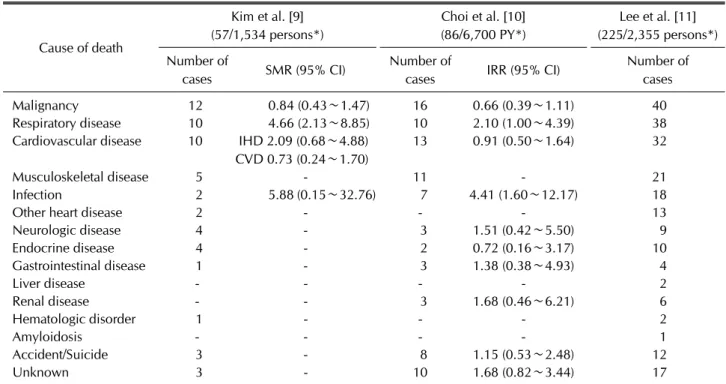
Table 2. Various causes of death in Korea patients with RA
Cause of death
Kim et al. [9]
(57/1,534 persons*)
Choi et al. [10]
(86/6,700 PY*)
Lee et al. [11]
(225/2,355 persons*) Number of
cases SMR (95% CI) Number of
cases IRR (95% CI) Number of
cases
Malignancy 12 0.84 (0.43∼1.47) 16 0.66 (0.39∼1.11) 40
Respiratory disease 10 4.66 (2.13∼8.85) 10 2.10 (1.00∼4.39) 38
Cardiovascular disease 10 IHD 2.09 (0.68∼4.88) CVD 0.73 (0.24∼1.70)
13 0.91 (0.50∼1.64) 32
Musculoskeletal disease 5 - 11 - 21
Infection 2 5.88 (0.15∼32.76) 7 4.41 (1.60∼12.17) 18
Other heart disease 2 - - - 13
Neurologic disease 4 - 3 1.51 (0.42∼5.50) 9
Endocrine disease 4 - 2 0.72 (0.16∼3.17) 10
Gastrointestinal disease 1 - 3 1.38 (0.38∼4.93) 4
Liver disease - - - - 2
Renal disease - - 3 1.68 (0.46∼6.21) 6
Hematologic disorder 1 - - - 2
Amyloidosis - - - - 1
Accident/Suicide 3 - 8 1.15 (0.53∼2.48) 12
Unknown 3 - 10 1.68 (0.82∼3.44) 17
RA: rheumatoid arthritis, PY: person-year, SMR: standardized mortality ratio, IRR: incidence rate ratio, CI: confidence interval, IHD:
ischemic heart disease, CVD: cerebrovascular disease. *Number of deaths (PY or persons).
two studies [9,11] employed a cross-sectional design in a Hanyang BAE (Bae registry of Autoimmune diseases for Epidemiology) RA cohort [9], which is the largest cohort in Korea. The BAE RA cohort is composed of Korean pa- tients with RA who are older than 19 years old, fulfill the 1987 revised American College of Rheumatology criteria [12], and were treated at Hanyang University Hospital for Rheumatic Diseases, which is a tertiary referral center.
These studies calculated of age- and sex- adjusted stand- ardized mortality ratio (SMR). The SMR of the study con- ducted in 2012 [9] was 1.35 (95% confidence interval [CI] 1.02∼1.74), and that of the study conducted in 2020 [11] was 1.65 (95% CI 1.44∼1.87). Another study per- formed by Choi et al. [10] was performed based on the National Health Insurance Service claims data, and an in- cidence rate ratio (IRR) of 1.29 (95% CI 1.02∼1.64) was
calculated.
In addition, many foreign studies have previously con- firmed that the mortality rate of individuals with RA is higher than that of the general population. Sokka and col- leagues [2] published a review in 2008 that analyzed many cohorts from 1953 to 2005. In this review article, the mortality rates of patients with RA were 1.5-1.6-fold higher than that of the general population, with similar patterns observed over 60 years. Similar results were found in subsequent studies. According to a Japanese study conducted in 2010 [3], the SMR was between 1.46 (95% CI 1.32∼1.60) and 1.90 (95% CI 1.75∼2.07) for all patients. In a Canadian study [4], the SMRs for patients with RA in 1996∼1997, 2000∼2001, 2004∼2005, and 2008∼2009 were 1.51 (95% CI 1.43∼1.59), 1.50 (95%
CI 1.43∼1.57), 1.43 (95% CI 1.37∼1.50), and 1.41
(95% CI 1.35∼1.47), respectively. The mortality rate of patients with RA has decreased over time but remains elevated compared with that of the general population, with 40%∼50% more deaths among patients with RA.
Furthermore, in a Dutch study conducted in 2017 [5], the estimated SMR for all-cause mortality was 1.54 (95% CI 1.41∼1.67).
Therefore, the relative excess mortality in RA remained unchanged over time despite substantial improvements in RA management. This shows that excess mortality still occurs in RA.
Causes of death in Korean patients with RA Three Korean studies have reported causes of death in Korean patients with RA [9-11] (Table 2). In all three studies, the most common cause of death was malignancy. Respiratory disease and cardiovascular dis- ease followed. In Western studies, cardiovascular disease was the main cause of death, followed by malignancy and respiratory disease [1,2,5,13,14]. However, in Japan, sim- ilar to in Korea, malignancy and respiratory disease were the main causes of death, followed by cardiovascular dis- ease [3].
In Korea, the malignancy-specific mortality rate of pa- tients with RA was not higher than that of the general population; however, several causes of death, such as res- piratory disease and infections, were associated with a higher mortality rate among patients with RA than among the general population. In a Japanese study [3], malignancy and respiratory disease were the major causes of death in patients with RA, but the malignancy-specific mortality rates were not higher than those of the general population, and the respiratory disease-specific mortality rates were higher than those of the general population. In Western studies, cardiovascular disease is the most com- mon acute cause of death, but infections and pulmonary disease are more common causes of death in patients with RA than in the general population [2].
Malignancy was the most common cause of death in Korean patients with RA. Even in the general population in Korea, the mortality rate from malignancy was the highest in the latest decade of the Korean National Statistical Office data. In 2019, the malignancy-related death rate in the general population was the highest, with 158.2 deaths per 100,000 people, and malignancy-related deaths have continued to increase. In the study per- formed by Kim et al. [9], the malignancy-specific SMR among patients with RA was 0.84 (95% CI 0.43∼1.47),
which was not higher than that in the general population.
Furthermore, in the study performed by Choi et al. [10], the malignancy-specific IRR among patients with RA was 0.66 (95% CI 0.39∼1.11), which was not higher than that in the general population. Therefore, the malig- nancy-related death rate in patients with RA cannot be considered higher than that in the general population.
Even in Japan, malignancy was the main cause of death (24.2%) in patients with RA. In addition, malignancy was the most common cause of death in the general male pop- ulation in Japan, and the malignancy-related death rate in both male and female patients with RA was not higher than that in both males and females in the general pop- ulation [3]. In Western studies, malignancy was the sec- ond most common cause of death in patients with RA.
Outcomes in American patients with RA are similar to those in the general US population because malignancy is the second most common cause of death in general US population [2]. Thus, while malignancy is a major cause of death in patients with RA worldwide, the mortality rate among there patients is not higher than that in the gen- eral population.
In the studies [9,10] that calculated the cause-specific SMR or IRR, determining some causes of death that were more common in patients with RA than in the general population was possible. In both studies, respiratory dis- ease and infections were associated with a higher mortal- ity rate in Korean patients with RA than in the general population. In the study performed by Kim et al. [9], the respiratory disease-specific SMR was 4.66 (95% CI 2.13
∼8.85), and in the study performed by Choi et al. [10], the respiratory disease-specific IRR was 2.10 (95% CI 1.00∼4.39); these values were higher among patients with RA than in the general population. Furthermore, in the study performed by Kim et al. [9], the in- fection-specific SMR was 5.88 (95% CI 0.15∼32.76), and in the study performed by Choi et al. [10], the in- fection-specific IRR was 4.41 (95% CI 1.60∼12.17);
these values were higher among patients with than in the general population. Among respiratory diseases, inter- stitial lung disease (ILD) and pneumonia were the most significant causes. Even in Japan, respiratory disease was the main cause of death (24.2%) in patients with RA.
Similar to the findings of Korean studies, ILD and pneu- monia were the most significant causes. Respiratory dis- ease was a prominent cause of death in both male and fe- male Japanese patients with RA. ILD was also a prom- inent cause of death in patients with RA but was not usu-
ally observed as a cause of death in the general Japanese population [3]. Even in foreign study, respiratory disease and infection were more common in patients with RA than the general population as attributed causes of death.
Among these, infection was the acute cause of death with the highest increased frequency in patients with RA com- pared with the general population: 14.3% of patients with RA compared with 1.0% and 4.4% in the US population in 1977 and 2005, respectively [2]. Treatment for RA should always be selected considering the possibility of ILD and infection. Furthermore, vaccination against in- fluenza and pneumococcus should also be implemented [15,16]. Active diagnosis and treatment of pneumonia and infection may increase the survival rate.
In the study performed by Kim et al. [9], the ischemic heart disease-specific SMR was 2.09 (95% CI 0.68∼
4.88), and the cerebrovascular disease-specific SMR was 0.73 (95% CI 0.24∼1.70). In the study performed by Choi et al. [10], the cardiovascular disease-specific IRR was 0.91 (95% CI 0.50∼1.64). Even in a Japanese study [3], the authors said that cardiovascular disease did not seem to be a prominent cause of death in patients with RA compared with the general Japanese population.
Although in Western studies cardiovascular disease was the most common cause of death in patients with RA, this result was similar to findings in the general US pop- ulation [2]. Thus, the proportion of cardiovascular dis- ease-related deaths among patients with RA was not sub- stantially higher than that in the general population.
Association between comorbidities and mortality in Korean patients with RA
The increased prevalence of comorbidities in patients with RA is associated with mortality. According to a study that confirmed the impact of comorbidities on mortality [11], patients with RA with multiple comorbidities had increased mortality compared with patients without any comorbidities. Compared with patients without any co- morbidities, in patients with one comorbidity, the ad- justed hazard ratio (HR) was 1.05 (95% CI 0.78∼1.41), and in patients with two or more comorbidities, the ad- justed HR was 2.01 (95% CI 1.13∼3.57).
Several studies addressing comorbidities in RA have been published. In a study that confirmed the prevalence of comorbidities in Korean patients with RA using the Korea National Health and Nutrition Examination Survey [17], patients with RA had more comorbidities including hypertension, dyslipidemia, myocardial infarction or an-
gina, stroke, osteoarthritis, lung cancer, colon cancer, pul- monary tuberculosis, asthma, diabetes, depression, thy- roid disease, and chronic kidney disease than the general population. After adjusting for socioeconomic and life- style characteristics, RA was associated with an increased prevalence of myocardial infarction or angina (odds ratio [OR] 1.86, 95% CI 1.17∼2.96), pulmonary tuberculosis (OR 1.95, 95% CI 1.24∼3.09), asthma (OR 1.97, 95% CI 1.05∼3.71), thyroid disease (OR 1.71, 95% CI 1.05∼
2.77), depression (OR 2.38, 95% CI 1.47∼3.85), and hepatitis B (OR 2.34, 95% CI 1.15∼4.80) compared with the general population. All of these comorbidities may af- fect mortality in patients with RA.
Another study related to comorbidity and mortality has been reported in Korea. In a study that confirmed the prevalence of ILD in patients with RA and assessed its ef- fect on mortality [18], the prevalence of ILD in Korean pa- tients with RA was 1.8%. ILD was significantly associated with increased mortality in patients with RA (HR 7.89, 95% CI 3.16∼19.69). ILD is a commonly recognized complication associated with RA that can have a consid- erable effect on morbidity and mortality [19]. ILD is an important risk factor for mortality in patients with RA.
Therefore, to increase the survival rate of patients with RA, attention should be paid to all comorbidities in these patients.
Association between therapies and mortality in Korean patients with RA
There have been few studies in Korea on the association between therapies and mortality in patients with RA.
According to one study [11], biologic usage was con- firmed to have an effect on reducing the mortality rate of patients with RA. The proportion of survivors among bio- logic-experienced patients was higher than that among biologic-naive patients (97.6% vs. 89.6%; p<0.05). In the biologic-experienced patients, the adjusted HR was 0.39 (95% CI 0.17∼0.88). However, the absence of full information of medication and the small sample size of biologic users were limitations of this study. Furthermore, in older patients with RA-ILD, lung complications and death can occur after initial anti-tumor necrosis factor (TNF) treatment [20]. Therefore, anti-TNF therapy should be used with caution in these patients.
There have been many Western studies on the associa- tion between therapies and mortality in patients with RA.
In a study using the UK Clinical Practice Research Datalink [21], the authors examined the incidence of glu-
cocorticoid-related serious adverse events in patients with RA and non-RA patients. In patients with RA, gluco- corticoids were associated with an elevated risk of death (adjusted OR 1.33, 95% CI 1.19∼1.48). On the other hand, therapies for RA, including methotrexate and bio- logic agents, have been reported to be associated with re- duced mortality rates in patients with RA. In 2002, one study reported that patients who responded to metho- trexate had lower mortality than patients who did not re- spond to methotrexate [22], and a study published in the Lancet revealed that proper use of methotrexate reduces mortality from cardiovascular disease to provide sub- stantial survival benefits [23]. In a Spanish study [24], the authors investigated the impact of anti-TNF therapy on the survival of patients with RA. There was a sig- nificant increase in the rate of relevant infections in pa- tients treated with anti-TNF therapy. However, mortality, other than infection, was not higher than expected in pa- tients with RA treated with anti-TNF therapy. According to a meta-analysis published in the Lancet [25], the use of low-dose biologics did not increase the risk of infection, but the use of standard-dose biologics was associated with a 1.31 times increased risk, and the use of high-dose biologics increased the risk of infection by 1.90 times.
Therefore, although biologic therapy is associated with reduced mortality in patients with RA, the use of these therapies should always be chosen with the possibility of infection in mind.
CONCLUSION
Several studies evaluating mortality and causes of death in Korean patients with RA have been conducted. Despite substantial improvements in RA management, the mor- tality in RA is still high. However, the arrival of new an- ti-rheumatoid drugs with better efficacy and fewer side effects than existing drugs may lead to positive progress and an improved prognosis with reduced mortality in pa- tients with RA. Attention to the management of co- morbidities as well as RA itself may also improve the sur- vival of patients with RA.
It is regrettable that there is not much research on mor- tality and causes of death in Korean patients with RA. In the future, further studies of other additional risk factors, predictive markers, and therapies affecting mortality in Korean patients with RA should be performed.
CONFLICT OF INTEREST
No potential conflict of interest relevant to this article was reported.
AUTHOR CONTRIBUTIONS
S.C.B. contributed to the conception and design of the study. S.C.B and Y.K.L. contributed to the acquisition, analysis, or interpretation of data. Two authors were in- volved in drafting and revising the manuscript critically for important intellectual content and final approval of the version to be published.
REFERENCES
1. Björnådal L, Baecklund E, Yin L, Granath F, Klareskog L, Ekbom A. Decreasing mortality in patients with rheuma- toid arthritis: results from a large population based cohort in Sweden, 1964-95. J Rheumatol 2002;29:906-12.
2. Sokka T, Abelson B, Pincus T. Mortality in rheumatoid ar- thritis: 2008 update. Clin Exp Rheumatol 2008;26(5 Suppl 51):S35-61.
3. Nakajima A, Inoue E, Tanaka E, Singh G, Sato E, Hoshi D, et al. Mortality and cause of death in Japanese patients with rheumatoid arthritis based on a large observational cohort, IORRA. Scand J Rheumatol 2010;39:360-7.
4. Widdifield J, Bernatsky S, Paterson JM, Tomlinson G, Tu K, Kuriya B, et al. Trends in excess mortality among patients with rheumatoid arthritis in Ontario, Canada. Arthritis Care Res (Hoboken) 2015;67:1047-53.
5. van den Hoek J, Boshuizen HC, Roorda LD, Tijhuis GJ, Nurmohamed MT, van den Bos GA, et al. Mortality in pa- tients with rheumatoid arthritis: a 15-year prospective co- hort study. Rheumatol Int 2017;37:487-93.
6. An Y, Liu T, He D, Wu L, Li J, Liu Y, et al. The usage of bio- logical DMARDs and clinical remission of rheumatoid ar- thritis in China: a real-world large scale study. Clin Rheumatol 2017;36:35-43.
7. Jacobsson LT, Turesson C, Nilsson JA, Petersson IF, Lindqvist E, Saxne T, et al. Treatment with TNF blockers and mortality risk in patients with rheumatoid arthritis.
Ann Rheum Dis 2007;66:670-5.
8. Lee EB, Fleischmann R, Hall S, Wilkinson B, Bradley JD, Gruben D, et al. Tofacitinib versus methotrexate in rheuma- toid arthritis. N Engl J Med 2014;370:2377-86.
9. Kim YJ, Shim JS, Choi CB, Bae SC. Mortality and incidence of malignancy in Korean patients with rheumatoid arthritis.
J Rheumatol 2012;39:226-32.
10. Choi IA, Lee JS, Song YW, Lee EY. Mortality, disability, and healthcare expenditure of patients with seropositive rheu- matoid arthritis in Korea: a nationwide population-based study. PLoS One 2019;14:e0210471.
11. Lee YK, Ahn GY, Lee J, Shin JM, Lee TH, Park DJ, et al.
Excess mortality persists in patients with rheumatoid arthritis. Int J Rheum Dis 2021;24:364-72.
12. Arnett FC, Edworthy SM, Bloch DA, McShane DJ, Fries JF,
Cooper NS, et al. The American Rheumatism Association 1987 revised criteria for the classification of rheumatoid arthritis. Arthritis Rheum 1988;31:315-24.
13. Pinheiro FA, Souza DC, Sato EI. A study of multiple causes of death in rheumatoid arthritis. J Rheumatol 2015;42:
2221-8.
14. Widdifield J, Paterson JM, Huang A, Bernatsky S. Causes of death in rheumatoid arthritis: how do they compare to the general population? Arthritis Care Res (Hoboken) 2018;70:
1748-55.
15. Shea KM, Edelsberg J, Weycker D, Farkouh RA, Strutton DR, Pelton SI. Rates of pneumococcal disease in adults with chronic medical conditions. Open Forum Infect Dis 2014;1:
ofu024.
16. Singh JA, Saag KG, Bridges SL Jr, Akl EA, Bannuru RR, Sullivan MC, et al. 2015 American College of Rheumatology guideline for the treatment of rheumatoid arthritis.
Arthritis Care Res (Hoboken) 2016;68:1-25.
17. Jeong H, Baek SY, Kim SW, Eun YH, Kim IY, Kim H, et al.
Comorbidities of rheumatoid arthritis: results from the Korean National Health and Nutrition Examination Survey.
PLoS One 2017;12:e0176260.
18. Kim D, Cho SK, Choi CB, Choe JY, Chung WT, Hong SJ, et al. Impact of interstitial lung disease on mortality of patients with rheumatoid arthritis. Rheumatol Int 2017;37:1735-45.
19. Zamora-Legoff JA, Krause ML, Crowson CS, Ryu JH, Matteson EL. Patterns of interstitial lung disease and mor-
tality in rheumatoid arthritis. Rheumatology (Oxford) 2017;56:344-50.
20. Koo BS, Hong S, Kim YJ, Kim YG, Lee CK, Yoo B. Mortality in patients with rheumatoid arthritis-associated interstitial lung disease treated with an anti-tumor necrosis factor agent. Korean J Intern Med 2015;30:104-9.
21. Wilson JC, Sarsour K, Gale S, Pethö-Schramm A, Jick SS, Meier CR. Incidence and risk of glucocorticoid-associated adverse effects in patients with rheumatoid arthritis.
Arthritis Care Res (Hoboken) 2019;71:498-511.
22. Krause D, Schleusser B, Herborn G, Rau R. Response to me- thotrexate treatment is associated with reduced mortality in patients with severe rheumatoid arthritis. Arthritis Rheum 2000;43:14-21.
23. Choi HK, Hernán MA, Seeger JD, Robins JM, Wolfe F.
Methotrexate and mortality in patients with rheumatoid ar- thritis: a prospective study. Lancet 2002;359:1173-7.
24. Carmona L, Descalzo MA, Perez-Pampin E, Ruiz-Montesinos D, Erra A, Cobo T, et al. All-cause and cause-specific mortal- ity in rheumatoid arthritis are not greater than expected when treated with tumour necrosis factor antagonists. Ann Rheum Dis 2007;66:880-5.
25. Singh JA, Cameron C, Noorbaloochi S, Cullis T, Tucker M, Christensen R, et al. Risk of serious infection in biological treatment of patients with rheumatoid arthritis: a system- atic review and meta-analysis. Lancet 2015;386:258-65.