Early and Midterm Results of Arterial Switch Operation for Double-Outlet Right Ventricle with Subpulmonary VSD
Background: Excellent clinical results of the arterial switch operation and the limited availablity of the intraventricular rerouting has recently made an arterial switch operation to become the therapeutic method of choice for the repair of double-outlet right ventricle (DORV) with subpulmonary ventricular septal defect (VSD). The early and midterm outcomes of arterial switch operation for this anomaly were evaluated. Material and Method: Between August 1994 and July 2002, 13 patients underwent an arterial switch operation for the correction of double-outlet right ventricle with subpulmonary VSD at Dong-A university hospital.. The 50% rule was used to define DORV. Median age and mean body weight were 27 days (range, 3 120 days) and 3.8±0.7 kg (range, 2.92 5.3 kg) respectively. Aortic arch anomalies were associated in 6 cases (46.2%), which were all repaired through one-stage operation. The relationship of the great arteries were side-by-side in 8 cases (61.5%) and anteroposterior in 5 (38.5%). Coronary artery patterns were 1LCx-2R in 6 cases, retropulmonary left coronary artery (LCA) in 6, and intramural LCA in 1 respectively. The enlargement of VSD was required in 1 patient and the patch enlargement of right ventricular outflow tract was performed in another one patient. The Lecompte maneuver was used in all but 3 patients with a side by side relationship of the great arteries. Result: Overall postoperative hospital mortality was 23.1% (3/13). All operative deaths were occurred in the patients with aortic arch anomalies. There was one late death related to the postoperative complication of the central nerve system during the mean follow-up of 41.3±30.7 months. Pulmonary valvar stenosis ( 30 mmHg of pressure gradient) developed in 1 patient (10%) and left pulmonary artery stenosis in 2 (20%), among them, one required reoperation 52 months after repair. There was an asymptomatic patient with moderate aortic regurgitation. 5-year survival rate including operative deaths was 68.3%. Conclusion: Although the operative mortality is high in the patients with aortic arch anomaly, the arterial switch operation for DORV with supbpulmonary VSD can be performed with low operative mortality and low reoperation rate in the patients
폐동맥하 심실중격결손을 동반한 양대혈관 우심실기시증에서 동맥전환술의 중단기 결과
without arch anomaly. The arterial switch operation can be considered a good option for this complex anomaly.
(Korean J Thorac Cardiovasc Surg 2004;37:313-321) Key words: 1. Arterial switch operation
2. Taussig-Bing anomaly 3. Heart septal defects 4. Great vessels
Table 1. Patient characteristics
Table 2. Coronary artery patterns and relationship of great arteries
Table 3. Route of VSD closure
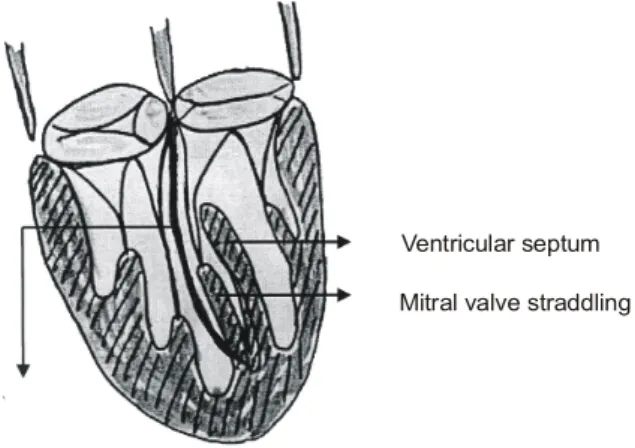
Fig. 1. Closure of ventricular septal defect in the patient with mitral valves straddling.
VSD patch
Ventricular septum Mitral valve straddling
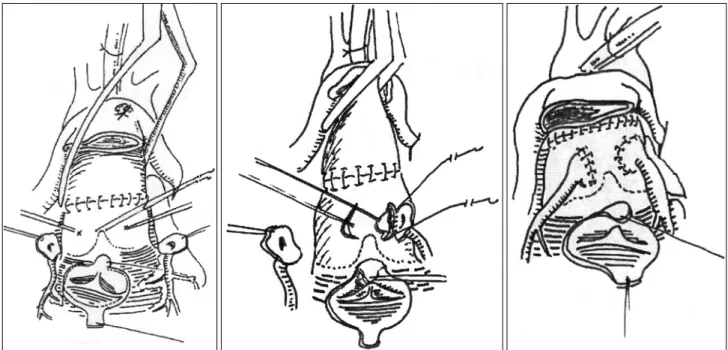
Fig. 2. Modified technique of coronary artery transfer in arterial switch operation; reimplantaton of coronary artery buttons after neoaortic reconstruction.
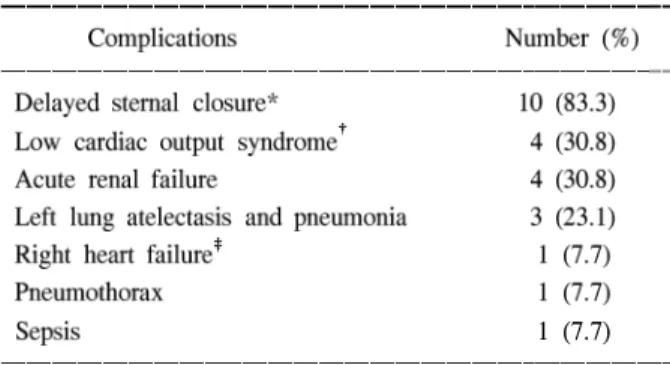
Table 4. Early postoperative complications
Fig. 3. Cumulative survival curve.
0 1.0
80
Cumulative survival %
Months after operation
0 60
68.3%
40 20
.9 .8 .7 .5 .3 .6 .4 .2 .1
Table 5. Mortality cases
=국문 초록=
배경:
대상 및 방법:
결과:
결론:
중심 단어