• 검색 결과가 없습니다.

Air Circulating Oven-drying Characteristics of Hollowed Round-post for Korean Main Conifer Species - Part 2: For Korean red pine hollowed round-post -

N/A
N/A
Protected

Academic year: 2021

Share "Air Circulating Oven-drying Characteristics of Hollowed Round-post for Korean Main Conifer Species - Part 2: For Korean red pine hollowed round-post -"

Copied!
10
0
0

로드 중.... (전체 텍스트 보기)

전체 글

(1)

* 1 Received on November 17, 2011; accepted on January 12, 2012 본 연구는 한국연구재단의 지원에 의하여 수행되었음 (KRF-2006-521-D00627).

* 2 College of Agriculture & Life Sciences, Chonbuk National University, Chonju 561-756, Korea

* 3 Department of Wood Science & Engineering, Beihua University, Jilin 132-013, China

Corresponding author : Nam-Ho LEE (e-mail: [email protected])

Air Circulating Oven-drying Characteristics of Hollowed Round-post for Korean Main Conifer Species.*

1

- Part 2: For Korean red pine hollowed round-post -

Nam-Ho LEE*

2†

, Xue-Feng ZHAO*

3

, Ik-Hyun SHIN*

2

, and Chang-Jin LEE*

2

ABSTRACT

In this study the effect of heartwood-coating (HCO), vapor-dam (VD), bark-remaing (BR) and bark-re- maining-coating (BRC) treatments were evaluated during air circulating oven-drying of hollowed round-post of Korean red pine. Hollowed round-post could be dried from the green condition to approx- imately 6% MC within 84 to 156 hours for the UC, HCO and VD specimens and it took 72 to 240 hours to about 8% MC, which is recommended as the indoor in-use MC. The temperatures in the hole of the Control (UC) and HCO specimens constantly showed a higher-leveled distribution pattern than those inside wood. The vapor pressure in the hole of the UC, HCO and BR specimens was higher than that inside wood and showed difference as highest value of about 20 mbar. The surface checks of all specimens were mild and were observed in increasing order of BRC, BR, UC, VD and HCO specimens.

Keywords : hollowed round-post, heartwood coating treatment, vapor-dam treatment․BR treatment․

BRC treatment ․drying rate․checking

1. INTRODUCTION

There has been growing interests in Korean traditional wooden buildings in Korea, resulting in an increasing need for posts which is one of the most necessary materials for wooden buildings.

It is essential that the timbers be dried to a spe- cific moisture content (MC) consistent with the service conditions. However, it is difficult to avoid checking and cracking during drying due to differential shrinkage stress, internal growth

stress and surface stress during the drying proc- ess (Kubler, 1975; Hsu and Tang, 1984). The presence of surface checks on the post dimin- ishes their appearance and reduces the holding power of the traditional joint. Because the MC inside the wood is higher than that outside after drying, it is difficult to inject preservatives deep into the wood also.

It was reported that a kerfing treatment can

reduce the incidence of checking, particularly

the number of severe checks (Ruddick and Ross,

(2)

Table 1. Dimension, evaporating surface area, heartwood percentage and initial moisture content of Korean red pine specimens for each treatment

Treatment    

D*

(mm)    

T**

(mm)    

Evaporating surface area (cm

2

)    

Heartwood percentage

(%)


Initial MC outer inner end sum (%)

UC 270 30 4239 3297 452 7988 0 109

VD 270 30 4239 0 0 4239 8.49 109.4

HCO 270 30 4239 452 0 115.7

BR 300 30 0 3768 509 4277 0 123.4

BRC   300   30   0 3768 0 3768   0   115.1

* : Diameter.

** : Thickness.

Table 2. Drying schedule

Drying Times (h) 0∼24 24∼48 48∼72 72∼96 96∼168 168∼216 216∼240

Temperature (°C) 55 60 65 70 75 80 85

1979; Evans, 2000). However, the width of the kerf modified to relieve the drying stresses in- creased during drying. Lee and Luo (2002) re- ported that a low pressure steam explosion treatment to enhance the permeability of wood was effective in accelerating the drying rates but was failed to reduce the occurrence of checking during the drying of larch pillars.

Fang (2001) reported that the drying time could be reduced by radio-frequency/ vacuum (RF/V) drying some softwood poles on laboratory scale.

However, RF/V drying is energy consuming and less efficient process with high start-up cost.

According to Lee (2007) excellent results were also obtained during air circulating oven-drying of Royal Paulownia green stock us- ing a Vapor-dam treatment combined with a coating treatment. While drying the hollowed stock with the Vapor- dam treatment, the mois- ture evaporating from the inner surface of a sol- id body can be stored in the hole, and the mois- ture can be supplied to the inner surface the moment tension stresses begin to form on the inner surface. Coating the end surfaces and the

surface of heartwood can prevent splitting, or V-shaped cracks, and reduce the drying rates of heartwood to prevent checking of heartwood.

This study evaluated the effect of heartwood- coating and Vapor-dam treatments during air circulating oven-drying of Hollowed round- posts with short length of Korean red pine (Pinus densiflora, S.et.Z.). Furthermore, temper- ature and vapor pressure distribution were also evaluated.

2. Materials and Methods

2.1. Preparation of Specimens

Two Korean red pine logs 1800 mm-long and

300 mm in diameter at the top end were ob-

tained from a sawmill. Three specimens (untreated

control (UC), heartwood-coating (HCO) treat-

ment and Vapor-dam (VD) treatment speci-

mens), 500 mm in length, were cut from one of

the Korean red pine logs, which were processed

into a round post 270 mm in diameter and two

specimens. Two specimens, 500 mm in length,

were cut from the other red pine log remaining

(3)

250 250 Hole Wood

T

i

; Temperature P

i

; Vapor pressure

500

P2,T2 P1,T1

Side view Front view Ф 210 Ф 270

Fig. 1. Schematic diagram of the Control specimen and the locations of the fiber optic sensors on the specimen. (unit : mm).

the bark. Two 20 mm-long log cross section(L)s were cut from both ends of each specimen to measure the percentage of heartwood and the initial MC. A big hole was drilled at the center of all specimens along axial direction leaving 30 mm thick of wood.

The boundary between heartwood and sap- wood of the Ls cut from both ends of speci- mens were clarified and scanned on graphic pa- per, to estimate the percentage of heartwood.

The Ls were then cut into several 8 mm-thick circumferential slices to measure the radial dis- tribution of the initial MC (Lee, 2007). Table 1 showed the percentage of heartwood and the in- itial MCs of the specimens for each treatment.

2.2. Pretreatment

Both ends of the vapor-dam (VD) specimen were covered with 15 folds of vinyl wrap; and a rubber band, 2 mm in thickness and 15 mm in width, was fixed around the circumferential surface to prevent the moisture evaporating from the inner surface of the specimen. The part of the heartwood on the end surface and inner surface of the heartwood-coating (HCO) specimen were brushed twice with epoxy water- proof paint. Bark was remained to prevent the moisture on the outer surface of the specimen

from evaporating for both Bark-remaining (BR) and Bark-remaining-coating (BRC) specimens and the end surface were brushed twice with epoxy waterproof paint for BRC specimen.

2.3. An Air Circulating Oven-Drying

The internal dimensions of the rectangular chamber of the air circulating-oven used in this experiment were 500 mm in length, 500 mm in width and 600 mm in depth, which could be controlled with an accuracy of ±1°C and fixed air velocities of 1.5 m/s. The specimens were dried individually in each run.

The drying schedule used for this study start- ed from an initial air temperature of 55°C which was increased by 5°C every 24 hours.

After 96 hours, it was increased to 75°C and maintained at that temperature until 168 hours.

The temperature was then increased to 80°C and maintained until the end of the drying test (Table 2).

2.4. Measurement of Temperature and Vapor Pressure

2.4.1. Insertion of Sensors

Fig. 1 showed a schematic diagram of the

methodology for probing the temperatures and

vapor pressures inside wood and in the hole of

the specimen. Initially, a large hole, 13 mm in

diameter from the outer surface along the radial

direction was drilled in the middle of the speci-

men and epoxy resin was injected into the hole

to approximately one of the third depth. After

the epoxy resin was cured sufficiently, a small

hole, 6 mm in diameter was made through the

center of the epoxy resin section. A Teflon

tube, 6 mm in diameter, was then inserted into

the hole and the epoxy resin was injected into

the large hole again. After the epoxy resin was

cured satisfactorily, the entrance of the large

(4)

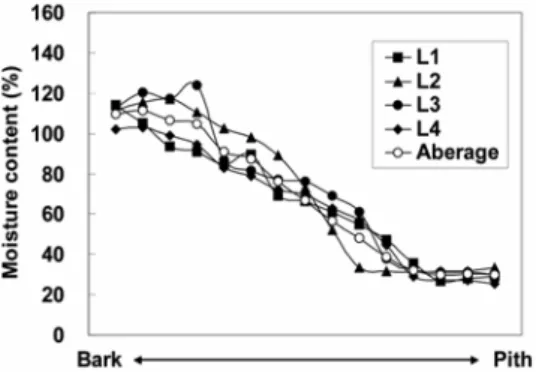
Fig. 2. Radial MC distribution of Ls for UC, HCO and VD specimens.

Fig. 3. Radial MC distribution of Ls for BR and BRC specimens.

hole was sealed with silicone to prevent air flowing into the specimen from the entrance of the hole, during the drying test.

2.4.2. Measurement of Temperature and Vapor Pressure

The temperatures and vapor pressures inside the specimens were measured every 5 minutes during drying test using an optical fiber signal measuring instrument (UMI, FISO Technology, Canada), with a resolution of 0.05°C. It was in a range of -40∼250°C for the temperature sen- sor, and 0.1% at the level scale ranging from 0

∼to 68 kPa for the vapor pressure sensor. After drying, the temperature and vapor pressure dis- tribution were analyzed.

2.5. Drying Curves and Drying Times

Each specimen was weighed every 8 hours until the 72 hours of drying time and then every 12 hours till the end of drying to determine the change in MC during the drying test. The dry- ing time excluded the dead time required for measuring.

2.6. Checks

The total length and number of checks which

occurred in both the inner and outer surfaces were estimated at the same time of measuring the weight, until the lengths of the checks were not accelerated to estimate the accumulated total length of the surface checks.

2.7. Shrinkage

The thickness and circumference shrinkage of the specimens were calculated by measuring the dimensions during drying using a digital vernier caliper and π tape with an accuracy of 0.01 mm.

3. Results and Discussion 3.1. Radial distribution of the initial MC

Figs. 2 and 3 showed the radial distribution of the initial MCs of the Ls cut from both ends of specimens.

For the Ls cut from both ends of UC, HCO and VD specimens, the MC near the pith was as low as 25.4∼33.4% irrespective of the loca- tion on the post and increased rapidly towards the bark, showing a minimum value of 102.0%

and a maximum value of 113.9% near the bark

side. For the Ls cut from both ends of BR and

BRC specimens, the MC near the pith was as

(5)

Fig. 4. Drying curve of specimens during air circulat- ing-oven drying.

Fig. 5. Drying rates of specimens during air circulat- ing-oven drying.

low as 24.8∼54.0% irrespective of the location on the post and increased rapidly till around 1/3 thickness, then presented almost liner dis- tribution showing an average value of 120.7%.

Lee (2002) reported that the initial MC on the identical log cross section showed a steep moisture gradient along the radial direction dur- ing drying, which could result in the production of border checks.

After drilling, the heartwoods of specimens were almost removed and the average MCs of specimens showed as 126.4% for the UC, HCO and VD specimens and 126.5% for the BR and BRC specimens, respectively. Therefore, drilling holes was expected to help decrease the mois- ture gradient to prevent checks.

3.2. Drying Curves and Drying Rates

Fig. 4 showed the distribution of MCs and the drying rates of the specimens during air cir- culating-oven drying as a function of the drying time, respectively.

It took 120, 84 and 156 hours to dry the UC, HCO and VD specimens, respectively, from the initial MC to 6% MC resulting in the possibility that hollowed round-posts can be used as the materials used in-door. The VD specimen re- quired longer drying time than the UC and

HCO specimen, which might be due to the pre- vention of moisture evaporation from the inner surface of the specimens. While it takes 240 hours to dry BR and BRC specimens from the initial MC to the final MC of 12.5% and 11.3%

respectively.

Fig. 5 showed drying rates of specimens. The average drying rates of UC specimen for the beginning of 12 hours was 0.902% and showed much high value compared with BR specimen, which was 0.551% per hour. This may be due to the prevention of moisture loss from outer surface by the bark, because of the reduction in available evaporating surface. This also results in the increment of the distance of moisture movement.

Especially, at the beginning of the 24 hours

of drying, the drying rates of UC specimens

was 3.410% per hour over two times of the dry-

ing rate of BR specimen, which was 1.676%,

because during the early stages of drying, the

drying rate was dominated mainly by the evap-

oration rate from the surface of the wood. The

available evaporating surface area of UC speci-

men was about 1.9 times as much as that of BR

specimen. Hence, there were notable differences

in drying rates between UC and BR specimen.

(6)

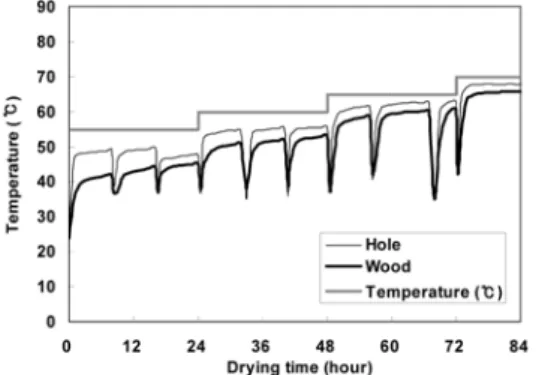
Fig. 6. Temperature distribution of UC specimen dur- ing the drying process.

Fig. 7. Temperature distribution of VD specimen dur- ing the drying process.

Fig. 8. Temperature distribution of HCO specimen during the drying process.

Fig. 9. Temperature distribution of BR specimen dur- ing the drying process.

Fig. 10. Temperature distribution of BRC specimen during the drying process.

3.3. Distribution of Temperature during Air Circulating Oven-drying

Figs. 6∼10 showed the temperature distribution inside the hole and wood of specimens.

The temperatures in the hole of the UC and

HCO specimens constantly showed a higher dis-

tribution pattern than those inside wood. On the

other hand, the temperature in the hole of the

VD specimen showed lower distribution pattern

and reversed from 96 hours of drying. As the

drying progressed, there was little differences in

temperature, between the hole and wood for UC

and HCO specimens. For the BR and BRC

specimens, the differences between the hole and

(7)

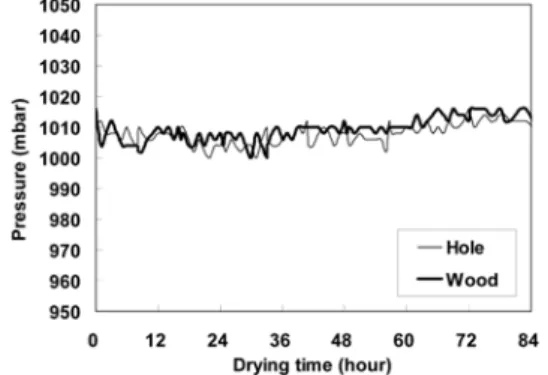
Fig. 11. Vapor pressure distribution of UC specimen during the drying process.

Fig. 12. Vapor pressure distribution of VD specimen during the drying process.

Fig. 13. Vapor pressure distribution of HCO speci- men during the drying process.

Fig. 14. Vapor pressure distribution of BR specimen during the drying process.

Fig. 15. Vapor pressure distribution of BRC speci- men during the drying process.

wood maintained relatively constant. In the case of the UC and HCO specimens, moisture evaporated vigorously from the outer surface in the early stages of drying, and the wet line moved inside the solid body. Therefore, the sol- id body showed no increase in temperature due to the loss of heat by latent heat.

3.4. Distribution of vapor pressure during air circulating oven-drying

Figs. 11∼15 showed the vapor pressure dis- tribution inside the hole and wood of specimens.

The vapor pressure in the hole of the UC, HCO and BR specimens was higher than that

inside wood and showed difference as highest

value being 20 mbar.

(8)

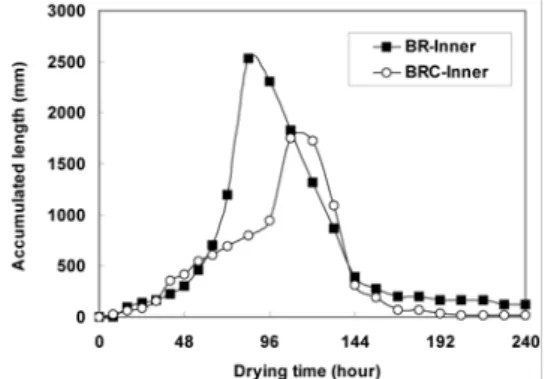
Fig. 17. Accumulated surface checks of BR and BRC specimens during drying.

Fig. 16. Accumulated surface checks of UC, VD and HCO specimens during drying.

Table 3. Anova of check length on the pretreatment for Korean red pine.

Factor S Φ ν F F (0.05)

Check length 4 11001 2750 3.07 0.017 Error 234 209403 895

Total 238 220404      

* : 95% confidence level.

At the beginning of 24 hours, vapor pressure in the hole decreased sharply, showing 950 mbar at the lowest point. This may be due to the development of pressure difference between hole and oven. At the beginning of drying, the temperature in the hole was lower than that in the oven, which resulted in the difference of pressure between inside and outside the hole.

This indicates that the aim of storing moisture in the hole was not effective at the beginning of the drying.

3.5. Surface Checking During Drying

In this study, one way anova analysis were used to test the significance between pretreatments.

The confidence level was 95% and the in- dividual confidence level was 99.36%. The re- sults showed that in confidence level of 95 %, the check lengths were significant on pretreat-

ments and were presented as an important factor to the pretreatments (Table 3).

Figs. 16 and 17 showed the total length of surface checks occurring on the outer and inner surfaces of specimens during drying process.

The surface checks were observed in increas- ing number in the following order: BRC, BR, UC, VD and HCO specimens. For BRC and BR specimens, the accumulated length of both outer and inner surface checks was 635 mm and 125 mm. This was probably because BR and BRC specimens almost consisted of sapwood, and it was expected that prevention of surface checks could be effective even if the thickness of wood was increased or the area was reduced.

The accumulated length of surface checks was presented most severely at 48 hours and 96 hours for UC and BR specimens, respectively, and then decreased sharply. This may be due to tension stress developed on the surface because of the moisture gradient reversed into com- pression stress, which may lead to the closure of the open checks. This will be helpful to the determination of kiln drying schedules.

3.6. Shrinkage

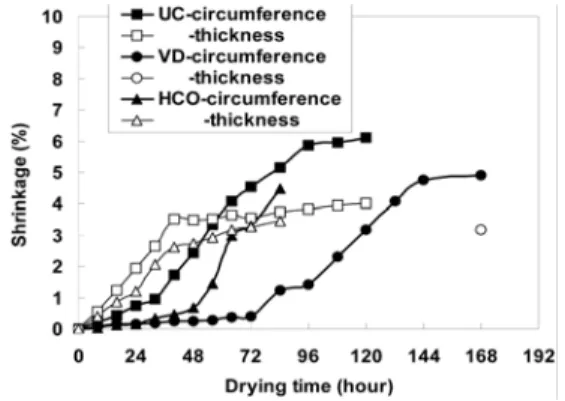
Table 4 and Fig. 18 showed the level of

shrinkage of the circumferential and thickness

(9)

Table 4. Shrinkage after drying of UC, VD and HCO specimens.

Treatment Shrinkage (%)

Cercumfrence

a

Thickness

b

a/b

UC 6.12 4.00 1.53

VD 4.90 3.18 1.54

HCO 4.48 3.47 1.29

Fig. 18. Circumferential and thickness shrinkage of UC, VD and HCO specimens during air cir- culating oven-drying.

of specimens during air circulating-oven drying.

The ratio of circumference and thickness shrinkage was 1.29 for HCO specimen, present- ing less value comparing with UC and VD specimens. Thickness shrinkage of UC and HCO specimens were lower than circumferential shrinkage from beginning of drying until 56 and 72 hours, respectively, and then the values were reversed. This moment the surface checks de- veloped were most severe. At the beginning of drying, circumferential shrinkage was less eval- uated due to the appearance of surface checks.

Then ,some closures of checks leaded to a dras- tic increase in of circumferential shrinkage.

4. CONCLUSIONS

This study evaluated the effect of heartwood- coating (HCO) and VD treatments during air circulating oven-drying of hollowed round-post of Korean red pine. Hollowed round-post could be dried from the green condition to approx- imately 6 % MC within 84 to 156 hours to dry the UC, HCO and VD specimens and it took 72 to 240 hours to about 8 % MC, which is rec- ommended as the indoor in-use MC. The tem- peratures in the hole of the Control and HCO specimens constantly showed a higher dis- tribution pattern than those inside wood. The vapor pressure in the hole of the UC, HCO and BR specimens was higher than that inside wood; and showed difference as highest value of 20 mbar. The surface checks of all speci- mens were mild and the average length of

checks were observed in increasing order of BRC, BR, VD, HCO and UC specimens.

REFERENCES

1. Evans, P. D., R. Wingate-Hill, and S. C. Barry.

2000. The effects of different kerfing and cen- ter-boring treatments on the checking of ACQ treated pine posts exposed to the weather. Forest Products Journal 50(2): 59∼64.

2. Fang, F., J. N. R. Ruddick, and S. Avramidis.

2001. Application of radio-frequency heating to utility poles. Part 1. Radio-frequency/vacuum drying of roundwood. Forest Products Journal 51(7/8): 56∼60.

3. Hsu, N. and R. Tang. 1984. Internal stresses in wood logs due to anisotropic shrinkage. Wood Science 7(1): 43 ∼51.

4. Kubler, H. 1975. Study on drying of tree cross sections. Wood Science 7(3): 173∼181.

5. Lee, N. H. and J. Y. Luo. 2002. Effect of steam explosion treatments on drying rates and moisture distributions during radio-frequency/vacuum dry- ing of larch pillar combined with a longitudinal kerf. Journal of Wood Sciece 48: 270∼276.

6. Lee, N. H., H. S. Jung, K. Hayashi, C. Y. Li, X.

F. Zhao, and U. D. Hwang. 2007. Effect of

Vapor- dam treatment and End-coating treatment

on the air circulating oven drying characteristics

of green stocks for Korean traditional dou-

(10)

ble-headed drum. Journal of Korean Wood Science and Technology 35(1): 17∼26.

7. Ruddick, J. N. R. and N. A. Ross. 1979. Effect of

kerfing on checking of untreated Douglas fir pole

sections. Forest Products Journal 29(9): 27∼30.

수치

Table 1. Dimension, evaporating surface area, heartwood percentage and initial moisture content  of Korean red pine specimens for each treatment
Fig. 1. Schematic diagram of the Control specimen  and the locations of the fiber optic sensors on the specimen
Fig. 3. Radial MC distribution of Ls for BR and  BRC specimens.
Fig. 4. Drying curve of specimens during air circulat- circulat-ing-oven drying.
+5

참조

관련 문서

DGCA General Director Yousef Al-Fouzan said in statement that the first flight of Kuwait Airways to London has departed in the presence of the British Ambassador

The main objective of the Bi Regional Center for SMES Development is oriented towards generating the conditions of cooperation among the countries which

In a statement to Kuwait News Agency (KUNA) on the sidelines of a meeting of the Arab Parliament's Foreign Affairs Political and National Security

The meeting was attended by Assistant Foreign Minister for GCC Affairs, Ambassador, Nasser Al-Muzayyen, and Deputy Assistant Foreign Minister for the Office of the

“ Sheikh Nasser has a written message from HH the Amir, Sheikh Sabah Al-Ahmad Al-Jaber Al-Sabah to the Chinese President, Chi Gen Beng related to enhancing mutual

On his part, CEO of Express Roads Authority, Saud Al-Naqqi said that the heavy rains of the previous day led to clogging parts of the express

Kuwait will celebrate on Sunday the fourth anniversary of the UN honoring and proclamation of His Highness the Amir, Sheikh Sabah Al-Ahmad Al-Jaber Al-Sabah as

The Joseon government designed and promulgated the Taegeukgi as a national flag for diplomatic and political purposes, but it was the independence movement that made it