윤리의식의 학제적 적용을 통한 광고 표현에서의
‘그림자에 의한 실체의 잠식 현상’ 제거 필요성 환기
김철호
청주대학교 미디어콘텐츠학부
Arousing the Need to Remove the ‘Shadow Encroaching Phenomena on the Essence’ in Ad Expression
by Interdisciplinarily Applying Ethicality
Chulho Kim
Division of Media Contents, Cheongju University
요 약 본 연구의 목적은 윤리 의식의 학제적·융합적 적용을 통해, 광고 표현에서의 ‘그림자에 의한 실체의 잠식 현상’ 제거 필요성을 환기시키는데 있다. 정성적 접근을 통해, 광고 표현이 윤리 의식에 대한 충분한 고려 없이 가시적 성과 중심으로 기획, 집행될 경우, 목표 달성의 단기적 효율성은 높일 수 있지만, 의도치 않은 ‘그림자의 부메랑 현상’을 이끌어 내기 쉽고, 이는 소비자의 윤리적 방어기제를 환기시켜, 결국 ‘그림자에 의한 실체의 잠식 현상’을 유발할 수 있음을 제시하고 있다.
결론적으로 본 연구는, 첫째, 자본주의 사회에서의 상업적 이윤 추구가 공동체 사회에서의 윤리 의식 공감대 확보를 전제로 진행되어야 하며, 둘째, 윤리 의식의 교육, 공유, 실천, 및 확인 과정이 통합적으로 전제될 때, 기업은 이윤 추구라는 미시 실용적 목적과 사회와의 생태적 교감이라는 거시 환경적 목적을 병행 달성할 수 있게 되고, 이는 장기적인 측면에서 기업의 지속가능 경영의 토대가 될 것임을 제시하고 있다.
주제어 : 윤리의식, 광고윤리, 광고표현, 그림자에 의한 실체의 잠식, 실체에 대한 그림자의 부메랑효과
Abstract
The purpose of this research is to arouse attention to the importance of eliminating the ‘Shadow Encroaching Phenomena on the Essence’ in advertising expression by interdisciplinarily applying ethicality. This research shows that when advertising expression is planned and executed without enough consideration of ethicality, short-term effectiveness to reach goals can be increased, but it is easy to induce an unintended ‘Shadows’Boomerang Phenomena’. This research also proposes that such processes arouse consumers’ ethical defense mechanisms, possibly causing the ‘Shadow Encroaching Phenomena’ in the end. In conclusion, this research proposes the following. First, the pursuit of commercial profit in a capitalistic society must be done under the premise of securing a consensus of ethicality in a common society. Second, under the premise of an integrated process of education, sharing, execution, and confirmation of ethicality, companies can achieve both the micro-practical goal of profit pursuit and the macro-environmental goal of ecological sympathy.
Key Words :
Ethicality, Ad Ethics, Ad Expression, Shadow Encroaching Phenomena. Shadows, Boomerang Phenomena*Corresponding Author : Chulho Kim([email protected]) Received January 4, 2018
Accepted February 20, 2018
Revised January 31, 2018
Published February 28, 2018
1. 서론
1.1 현대 사회에서 윤리 의식의 학제적·융합적 적용 필요성
윤리 의식의 공유는 한 사회의 질서와 공동체의 가치 관을 유지, 발전, 전승하는데 있어서 필수불가결한 요소 이다. 가시적으로 그 역할과 중요성이 보이지는 않지만, 사회의 틀을 유지하는 정신적 토대이자 행동의 준거 틀 [1]로서 제반 분야의 건전한 활성화와 바람직한 성장·발 전을 지지해 주는, 보이지 않는 사회 체제의 버팀목 역할 과 인간과 사회의 모든 관계가 만들어 내는 비윤리적·비 도덕적 역기능 유발 요인의 거름망 역할을 수행한다.
자본주의 사회에서의 물질적 풍요 우선 중심의 사고 고착화에 따른 인성의 황폐화, 무한 경쟁이라는 성과 위 주의 체제적 조건과 틀이 빚어놓은 자기중심적 이기주의 화, 개인 중심의 서구적 가치관의 유입 및 왜곡된 정착에 따른 공동체 의식의 희석화, 산업화에 따른 전통적 인간 중심 유대감의 계약적, 반대급부적 유대감으로의 변화, 글로벌 환경에서 이종 문화 간 교류의 활성화에 따른 전 통적 가치관·관습의 정체성 모호화, 문화와 종교의 차이 에 따른 윤리의식 개념 적용의 모호성 등 현대의 사회 공 동체를 둘러싼 제반 환경의 급격한 변화는 전통적인 윤 리 의식에 대한 인식과 중요성을 약화시키고 있다. 이러 한 현상들은 우리 사회에서 윤리 의식의 체계적 교육에 대한 제도적 한계와, 관념적으로 형성된 공감대를 실제 적으로 현실에 적용하고 실천하기 위해 필요한 사회적 실천 장치의 부족에 기인한 바 크다. 이러한 측면에서 볼 때, 윤리 의식은 단일 학문으로서의 연구와 실천을 넘어 서서, 학문으로서의 장(場)과 실천으로서의 장(場) 모두 에서, 현대 사회를 구성하는 제 분야에 지속적인 동시에 학제적·융합적으로 적용되어야 할 당위성을 갖고 있다.
광고 산업은 자본주의 사회의 경제 활동 구조를 단적 으로 보여주는 이른바 ‘자본주의의 꽃’으로서, 대중의 문 화와 의식에 영향을 주고, 또 사회의 변화된 패러다임을 꾸준히 반영하고 있는 바, 광고 산업을 바라보는 거시 환 경적 측면과 미시 실용적 측면의 균형적 관점 유지 차원 에서 꾸준히 학제적 관심을 가져야 할 분야이다. 따라서, 광고 산업은 그 상업적 특성과 사회와의 관계성을 함께 고려할 때, 윤리 의식의 공유와 실제적인 적용이 그 무엇 보다도 중요한 분야의 하나이다. 하지만, 현실적으로 자 본주의 사회의 특성 상, 광고 산업에서의 윤리 의식은 지
금까지 광고의 경제적 효과에 대한 연구와 관심에 비해 상대적으로 덜 주목받아 온 것이 사실이고, 나아가, 경쟁 과 불황이 가중되는 비즈니스 환경에서, 때때로 윤리 의 식에 대한 충분한 고려 없이 광고주에 의해 선호되는 가 시적 성과 중심의 전략과 전술은 단기적으로는 목표 달 성에 도움을 줄 수 있지만[2], 때로는 잠재적 부정적 측면 의 영향력[3,4] 때문에 궁극적으로 기업의 철학과 이미지 를 해치는 결과를 초래하기도 한다.
이에 따라 본 연구는, 자본주의 사회의 제화와 서비스 교환 체제를 지지하고 있는 광고 산업에서, 윤리 의식의 학제적·융합적 적용을 통해, 광고 표현에서의 ‘그림자에 의한 실체의 잠식 현상’ 제거 필요성을 환기시키는데 그 목적을 둔다.
2. 본론
2.1 그림자에 의한 실체의 잠식 현상 2.1.1 광고에서의 윤리 의식
광고에서의 윤리 의식은, 광고를 기업 이윤 추구의 효 율적 수단으로 보는 미시 실용적 관점에 대비하여, 광고 를 사회를 구성하는 생태적 시스템의 한 요소로서 보는 거시 환경적 관점과 밀접한 관계가 있다.
광고가 사회의 다양한 현상을 반영하고, 아울러 공통 의 가치관을 공유하는 한 사회의 시대적 패러다임의 변 화를 읽을 수 있는 문화적 코드로도 기능함을 고려할 때, 광고에서의 윤리 의식 제고는 기업, 광고 제작사, 대행사, 관련 미디어 사업주 모두가 공동체 사회에서의 광고의 사회적 책임과 더불어 기업의 지속 가능 경영을 위한 기 획, 실행, 평가에서 필수적으로 우선 고려되어야 할 요소 이다.
하지만 전 세계적인 경제 불황과 이로 인한 투자와 소 비 심리의 위축, 글로벌 환경 하에서의 경쟁 업체의 지속 적 자국 시장 침투와 사회 문화 환경의 끊임없는 변화 등, 실질적인 무한 경쟁 환경은 기업으로 하여금 생존 위주 의 전략적 운영을 우선시하도록 만들고 있고, 이에 따라 광고 역시 기업의 마케팅 목표를 달성하는 데 있어 효율 적인 첨병으로써 그 역할을 기대하는 관점이 현실적으로 우세함은 부인할 수 없는 실정이다.
현대 사회에서 광고의 윤리 의식에 대한 연구가, 광고 의 상업성과 실용적 효과에 대한 연구에 비해 상대적으
로 미진해 온 원인은, 효율성과 실용성 위주의 사회 환경 적 경제 정서와 인식의 영향, 계량적 목표 달성 중심의 미시 실용적 기업·비즈니스 환경, 광고 산업에서의 창의 성과 그 개념의 적용에 대한 인식 차이, 상호작용적 미디 어 확산과 이의 전략적 이용 환경의 트렌드화·보편화, 소 통과 정보 공유 활용의 능동적 참여자 및 기업 활동 평가 자·감시자로서의 소비자 위상 변화에 대한 상대적인 늦 은 인식, 다원적 사회 문화 환경의 보편화 대비 수용에 대한 더딘 인식 변화, 그리고 글로벌 환경에서 윤리 의식 적용의 어려움으로 구분하여 정리해 볼 수 있다. Table 1은 그 동안 광고 윤리에 대한 논의가 더디게 진행되어온 이유를 선행연구[5]를 참조, 정리한 것이고, Table 2는 광 고 산업에서의 윤리 의식 인식 필요성에 대한 연구 방향 을 선행연구[6]를 바탕으로 보완, 정리한 것이다.
Perspective Details
External business perspective
Legislative/Regulatory Ethics
Ethics related to sociocultural influence Symbiotic Perspective:
Regional society related ethics Ad media industry:
Media industry related ethics Ad business targets:
Consumer related ethics
Internal business perspective
Ad business agents:
Advertiser, Ad people ethics
Related to ad business work:
Ethics related to product ads E.g) Alcoholic drinks,
Cigarettes Ethics related to Creative appeal methods E.g) Sexual appeal,
Bluff ad, Comparative ad, Exaggerated ad, Deceptive ad
Table 2. Research direction regarding the necessity of ethicality awareness in the advertising industry
Perspectives Context
Perspective of macro-environmental social sentiment and awareness’s influence
Emotional generalization of the previous political, economic, social environment where prioritization of survival through competition was implicitly tolerated due to the repetition of global recessions and economic depressions
Perspective of influence that the media environment and the change in ad planning and execution have
A trend of research and practicality relatively giving more attention to the micro-practical perspective considering 1) Economic effects following the emergence and integration new media in the short term,
2) The constructing, confirming, and supplementation of a policy-oriented, institutional base to connect these effects with economic vitalization,
3) and constructing an academic base to theoretically support this
Over the social, cultural, ethical influence and the awareness of social responsibility that future industries closely related to the advertising industry have following the rapid development and practicalization of such industries and the generalization of integration and reconstruction among related industries.
Perspective of micro -practical ad activity by advertisers and ad practitioners
Under an environment of fierce competition, even when considering the advertising industry linked with the survival of businesses and the achievement of quantitative goals, the remnants of the micro-practical perspective
Perspective of awareness about creative
Limitations on the application of ethical awareness because of conflicting, coexisting opinions on whether creative expression in advertising is the concept of artistic creativity or the concept of a commercial method.
→ Creative art activity vs. Commercial sales activity Perspective of national
support To obtain national profit and preemptive market control in a global competing society, national implicit support for domestic media industry and related high-tech industries in a deep relationship with advertising
Perspective of awareness about consumer relationships and ethical trust
Despite the changes in consumers’ status as information producers, managers, complementers, and distributors thanks to the vitalization of social network, which expresses and shares various information and messages, A relative lack in the reestablishment and new understanding about mutual ‘ethical trust’ based on the
‘authenticity’ and ‘consideration’ based consumer-oriented ‘relationship’ of consumers, companies(advertisers), agencies, media, and society.
Perspective of generalization and acceptance of pluralistic social culture environment
Regardless of the generalization of a pluralistic social culture environment, slow change about accepting and acknowledging specific groups’ identities and existence values and the socio-cultural remnants of ethical stereotypes following this slow change.
Perspective of ethical
awareness itself Difficulties in generalizing standards for ethical awareness and limited application of universal ethical awareness following this caused by a mix of previous cultures and values and other cultures and values after the generalization of a global social environment.
Table 1. Reasons why research on advertisement ethicality was relatively weaker than research on advertisements’ practical effect
2.1.2 윤리적 쟁점 유발 가능 광고 소구에서의 부 정적 ‘그림자’ 요인
광고 소구와 관련되어, 가시적이고 상업적 이익 추구 우선에 기반 한 정책, 전술(예, 지나친 성 표현 소구) 등 은 단기적으로는 개인이나 조직의 미시 실용적 목표(예, 집객·인지도·구전·매출) 달성에 도움이 될 수 있다.
그러나 이는 가시적 성과 중심 전략의 속성이 내포할 수 있는 부정적 영향의 가능성(예, 성의 상품화)에 의해 의도치 않은 부정적 그림자 구축 현상(예, 비윤리성에 의 한 부정적 인식)를 불러올 수 있고, 이는 결국, 장기적이 고도 거시 환경적 측면에서 해당 개인이나 조직의 실체 (예, 정체성과 호의적 이미지·철학)를 잠식하는 ‘그림자 에 의한 실체의 잠식 현상’[7]을 불러오기 쉽다.
여기서 ‘부정적 그림자 현상‘은, 의도치 않은 부정적 요인(예, 성의 상품화, 비교가 아닌 비방, 허풍이 아닌 기 만 등)에 의해, 본질 혹은 정체성이 왜곡되거나 바람직한 이미지를 상실하는 현상을 의미한다. 예컨대, 가시적 성 과 중심의 광고 표현 전략이 단기적인 목표 달성에 도움 이 될 수 있지만, 장기적인 측면에서 그 부정적 영향에 의해 해당 조직의 정체성, 경영 철학, 기업 이미지 등에 부정적 영향을 미치는 현상을 지적하는 것이다. 동일한 맥락에서, 여기서의 ’실체‘는, 기업 혹은 조직이 장기적인 측면에서 구축/유지/강화하고자 하는 정체성, 경영 철학, 기업 이미지 등 긍정적인 요인을 의미한다. 이에 따라 본 연구에서의 ’실체의 잠식 현상‘은, 상기의 부정적 요인에 의해 기업/조직의 정체성, 경영 철학, 기업 이미지 등이 훼손되는 현상을 의미한다. 광고가 매출 확대만을 위해 기능할 경우 비윤리적일 수 있다는 연구[8]와 광고가 기 본적으로 비윤리적임을 지적한 연구[9] 등이 이를 지지 한다.
공동체 사회의 비즈니스 환경에서, 광고 목표 달성과 연계하여 효율성을 높일 수는 있지만, 한편으로는 의도 치 않은 윤리적 쟁점을 유발하기 쉬운 광고의 전술적 요 소로는 소구 유형 즉, 크리에이티브 표현과 광고 모델을 대표적으로 들 수 있다.
광고에서의 소구·표현은 소비자와의 직접적인 접점을 확보할 수 있는 동기로써, 기업의 경제적 이익 추구 목표 를 가능한 한, 창조적(Creative)이고, 매력적(Attractive) 이며, 독창적(Unique)이고, 강력한(Strong) 아이디어로 전술화 시키는 도구로 기능한다.
소구 유형으로서는, 비교, 성 표현, 과장, 오락적·유희
적 폭력, 패러디 등이 그 효과의 감각적, 즉시적인 장점 과, 단기 접점의 확보를 통한 상업적 이익 확대에의 기여 라는 효율성 때문에 많은 기업들에 의해 이용되고 있다.
하지만, 위에 언급된 장점들에도 불구하고, 이들 소구 유 형이 수반하는 의도치 않은 부정적 그림자 현상으로서의 특징으로는, 비교 광고의 경우 상대방의 비방 광고로, 성 표현의 경우 성의 왜곡과 상품화로, 과장 소구의 경우 허 위 광고로, 오락적 폭력 소구의 경우 폭력의 보편적 일상 화와 정당화로, 패러디 소구는 저작권 침해와 표절로 변 질되거나 악용될 수 있다는 현실적 가능성을 들 수 있다[14].
광고 모델의 경우, 주로 유명인, 연예인, 스포츠 스타 등을 활용한 광고가 이용되고 있는데, 이들을 활용할 경 우 모델의 친근감, 매력성, 호의적 이미지[10,11], 전문 분 야와의 맥락 일치성, 신뢰성[16] 등을 제품에 자연스럽게 연결시키는 전략적 조건화 구축을 통해, 마케팅 목표의 효율적 달성에 기여토록 하는데 중점을 두게 된다.
하지만, 이들 모델 활용 광고가 수반하는 의도치 않은 부정적 그림자 현상으로서의 특징은, 이들이 소비자가 다양한 선택 대안들에 대한 비교 평가할 수 있는 기회를 차단할 수 있으며, 특히 이들 광고 모델이 실버 계층이나 아동·청소년 등 특정 소비자를 대상으로 하는 제품에 전 략적으로 이용될 경우, 예컨대 사고력과 판단력이 상대 적으로 떨어질 수 있는 해당 소비자층의 심리를 상업적 으로 이용할 수 있다는 비윤리적 결과를 초래하기도 한 다는 점이다[7].
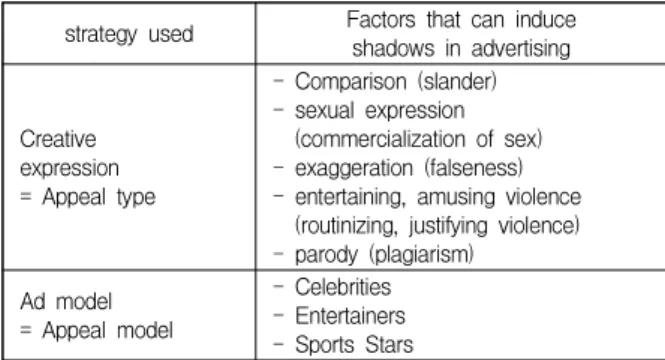
Table 3은 효율성을 기반으로 광고주에 의해 전략적 으로 활용되지만, 윤리적 쟁점을 유발할 수 있는 그림자 요인으로 작용할 수 있는 광고 소구의 전술적 요소를 정 리한 것이다.
strategy used Factors that can induce shadows in advertising
Creative expression
= Appeal type
- Comparison (slander) - sexual expression
(commercialization of sex) - exaggeration (falseness) - entertaining, amusing violence
(routinizing, justifying violence) - parody (plagiarism)
Ad model
= Appeal model
- Celebrities - Entertainers - Sports Stars
Table 3. Factors that possibly induce an unintended
‘shadow’ that has high tangible effectiveness, but can create ethical controversy in advertising expression
2.1.3 윤리적 쟁점 유발 가능 광고소구에서 부정적
‘그림자’에 의해 침식당할 수 있는 ‘실체’ 요인 기업 환경에서 광고 소구의 부정적 그림자에 의해 침 식될 수 있는 ‘실체’로서의 요인들은, 경영, 관리, PR 등의 관점에 비추어 볼 때, 기업 존재 관련 요인, 소비자 시각 관련 요인, 이익 집단 관련 요인으로 정리할 수 있다.
기업 존재 관련 요인은 기업의 거시-철학적 관점과 관 련되며, 기업의 전사적 사명과 철학, 정체성 등 기업을 바 라보는 큰 그림 상에서의 추상적 지향점을 들 수 있다.
소비자 시각 관련 요인은 소비자의 입장에서 평가되는 요인과 관련되며, 기업의 윤리 경영 수행 이미지, 기업의 사회적 책임 수행 이미지, 혹은 대 소비자 우호적 관계 등을 들 수 있다. 이익 집단 관련 요인으로서는, 종업원·
주주·투자자 등과의 관계, 사회 관련 단체들과의 관계, 지 역 사회와의 다양한 관계 등을 들 수 있다. Table 4는 기 업 환경에서 광고 소구에 의한 부정적 그림자 형성 시, 이에 의해 침식될 수 있는 바람직한 ‘실체’로서의 요인들 을 정리한 것이다. 이렇게 볼 때 위에서 언급한, 의도치 않은 부정적 그림자 요인은, 장기적인 측면에서 해당 기 업·조직의 정체성이나 호의적인 대(對) 소비자 이미지 등 바람직한 ‘실체’를 잠식하는, 이른바 ‘그림자에 의한 실체 의 잠식 현상’를 초래하기도 한다.
Classification of Key Factors
Positive key factors in a business environment
(Factors that can easily be encroached on by the shadow)
Factors related to the existence of a company
- Company’s philosophy, Mission
- Company’s identity
Factors related to consumers' perspective
- Impression on executing company’s ethical management - Impression on executing
company’s social responsibility - Positive relationship with
customers
Factors related to interest groups
- Relationships with employees, shareholders, and the government
- Relationships with groups related to society - Relationships with the
community
Table 4. Factors that are the positive ‘essence’
that can be encroached on when a negative shadow is created through advertising expression in a business environment
2.1.4 윤리적 쟁점 유발 가능 광고 소구에서 ‘그림 자’와 ‘실체’의 상호 관계에 영향을 미치는 조절 변인
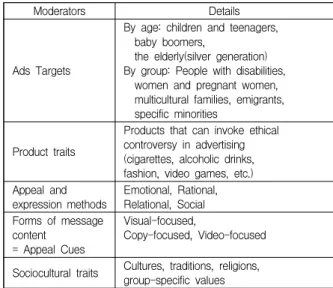
한편, 윤리적 쟁점을 유발하기 쉬운 광고에서, 잠재적 인 부정적 그림자 역할 가능 요인과 바람직한 정체성·이 미지와 관련된 실체 간의 관계를 이해하기 위해서는, 이 들 간의 관계에 영향을 미치는 환경적 요인들을 고려해 야 한다. 광고에서의 윤리성을 제고하기 위해서는, 광고 의 미시실용적인 관리적·상업적 측면과 거시환경적인 사 회적·생태적 측면을 함께 고려해야 하는데[12], 여기에는 특정 사회의 다변성과 다양성에 의한 조절 변인이 항상 존재하고, 이들 변인에 따라 영향의 크기, 방향, 지속성 등이 상이하게 나타날 수 있기 때문이다. 이에 따라, 그림 자와 실체의 관계에 영향을 미칠 수 있는 조절 요인은, 대략적으로 광고의 대상, 제품 특성, 소구 기법, 메시지 콘텐츠 형태 유형(소구 단서), 사회 문화적 특성 등으로 구분할 수 있다. Table 5는 부정적 그림자와 바람직한 실 체 간의 상호 관계에 영향을 미치는 조절 요인들을 정리 한 것이다.
Moderators Details
Ads Targets
By age: children and teenagers, baby boomers,
the elderly(silver generation) By group: People with disabilities,
women and pregnant women, multicultural families, emigrants, specific minorities
Product traits
Products that can invoke ethical controversy in advertising (cigarettes, alcoholic drinks, fashion, video games, etc.) Appeal and
expression methods Emotional, Rational, Relational, Social Forms of message
content
= Appeal Cues
Visual-focused,
Copy-focused, Video-focused Sociocultural traits Cultures, traditions, religions,
group-specific values
Table 5. Moderator variables that influence the mutual relationship between the negative shadow and the positive essence in the advertising industry
2.2 실체에 대한 그림자의 부메랑 현상
앞에서 언급하였듯이, 가시적 성과 중심의 광고 전술 이 실행되면, 관리적 효율성의 단기적 상승효과가 나타 날 수 있지만, 이와 동시에 가시적 성과 중심 해당 전술
의 속성이 만들어 낼 수 있는 의도치 않은 부정적 그림자 현상(예, 비윤리성에 의한 부정적 인식)에 대한 소비자의 윤리적 방어 기제로서, 소비자 스스로의 윤리적 가치관 의 자각(예, "내가 이런 비도덕 이미지의 상품화에 현혹 되면 안 되지")과 공동체 질서 유지에 대한 환기(예, "저 렇게 성을 상품화 하는 제품은 사회의 질서 유지에 도움 이 안 되는 해악")가 자연스럽게 발생하게 된다. 그리고 이러한 현상은, 전술적-상업적 효율성의 단기적 상승효 과의 결과로써 입증된 매출과, 기존의 호의적 기업 이미 지 등의 영역에 대한 부정적 그림자의 부메랑 현상을 불 러오고, 결국 부정적인 그림자의 영향에 의한 실체(예, 기업 이미지·철학·정체성)의 잠식 현상을 유발하게 된다.
아울러, 이러한 과정은, 소비자가 정보처리와 의사결 정 과정[13]에서 자발적 인지 투여에 의해, 스스로 지각 과 인식의 환기에 참여하고, 그 결과로 인식의 생성, 변 화, 강화 등이 발생하는 것인 바, 이 과정을 통해 구축된 소비자의 경험적 인식과 영향력은 상대적으로 장기간, 일관적으로, 강하게 유지, 전파되게 된다. 결국, 가시적 효과 중심 전술의 단기 효율성 상승효과와 동시에 발생 하는 의도치 않은 부정적 프레임 현상에 대한 방어 기제 로서의 윤리 의식의 환기는, 실체(예, 기업 이미지)에 대 한 부메랑 현상을 유발하고, 이에 따라 그림자에 의한 실 체의 잠식 현상은 강한 부정적 효과와 영향력을 장기간 유지, 전파하게 된다.
또한, 실체에 대한 그림자의 부메랑 현상과 그림자에 의한 실체의 잠식 현상은, 가시적 전술의 이용에 의해 유 발될 수 있는 관리적 효율성의 단발적 효과에 비례하여 나타나게 된다. 즉, 가시적 전술에 의해 유발되는 단발적 효과가 클수록, 가시적 전술이 내포할 수 있는 부정적 속 성에 반동해서 형성될 수 있는, 윤리적 방어기제에 의한 부정적 그림자의 영향력 또한 커질 수 있게 되고, 결과적 으로 실체에 대한 그림자의 부메랑 현상과 그림자에 의 한 실체의 잠식 현상 또한 강하게 발생할 수 있게 된다.
Table 6은 가시적 광고 소구에 의한 의도치 않은 부정적 그림자 형성 이후, 윤리적 가치관의 자각과 환기에 의해 잠식될 수 있는 영역과 영향을 정리한 것이다.
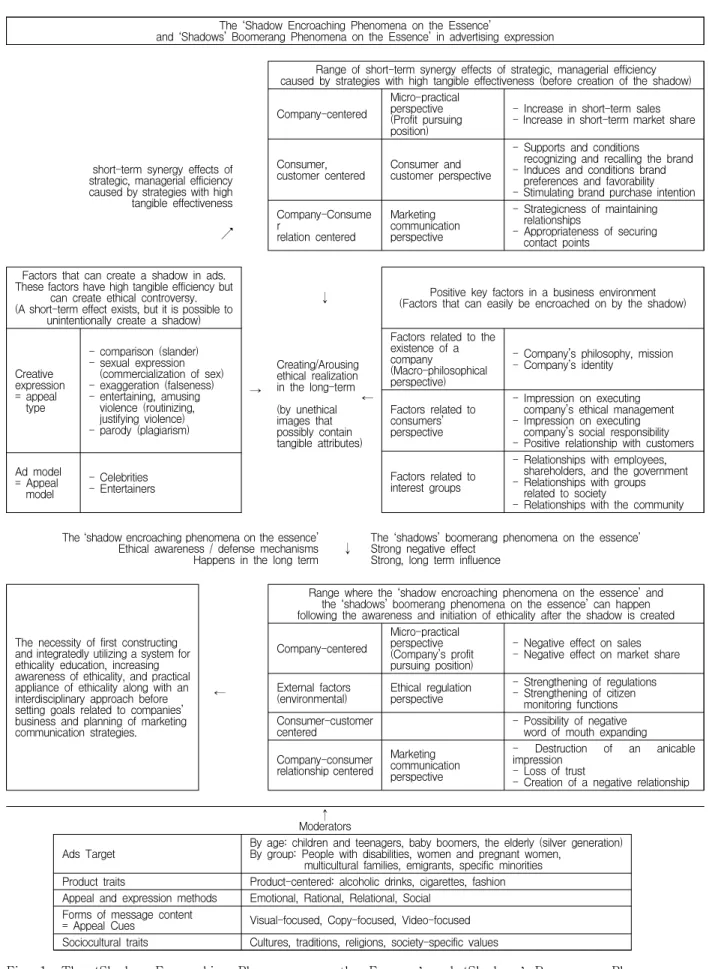
Fig. 1은 광고 소구·표현에서의 실체에 대한 그림자의 부메랑 현상과, 그림자에 의한 실체의 잠식 현상을 정리 한 것이다. 이 그림은 광고에서의 부정적 그림자 현상 유 발 요인들이, 단기적으로는 매출 등에 효율적이고 즉각 적인 효과를 보이지만, 장기적으로는 윤리적 자각 현상
을 불러일으키고, 부메랑 현상에 의해 기업 이미지를 손 상시키고, 심지어 단기적 효과를 보였던 매출마저 잠식 시킬 수 있는 과정을 보여준다.
Perspectives Influence
Company -centered
Micro-practical perspective (Profit pursuing position)
-Negative effect on sales -Negative effect
on market share
External Factors
Ethical regulation perspective
-Strengthening of regulations -Strengthening of
citizen monitoring functions Consumer
-Customer Centered
-Possibility of negative word of mouth expanding Company
-Consumer Relationship Centered
Marketing communication perspective
-Destruction of a amicable impression -Loss of trust -Creation of a
negative relationship
Table 6. Moderator variables that influence themutual relationship between the negative shadow and the positive essence in the ad industry
3. 결론
현대 사회에서 윤리 의식의 필요성과, 공동체 자정 장 치로서의 윤리 의식 공유의 중요성에 대해서는 대부분 사람들이 이견 없는 긍정적 공감대를 형성하고 있다.
하지만 인지 상의 보편적 필요성과 중요성을 넘어서 서, 구체적 적용과 확인이라는 실천 행동으로서의 윤리 의식을 목표·결과 중심의 개인이나 영리 조직에 구체화 하여 접근할 경우, 이는 대부분 개별적인 성과 우선주의 나 상업적·경제적 이익 추구와 상충될 수도 있는 바, 여 전히 껄끄러운 주제로 존재한다. 그럼에도 불구하고 실 천 행동으로서의 윤리 의식의 교육과 현실적 적용 및 지 속적 확인에 대한 공감대 형성 필요성을 강조하는 이유 는, 현대 사회가 갖고 있는 다양한 현재적·잠재적 문제와 이로 인한 갈등의 영향력을 고려해 볼 때, 윤리 의식이라 는 개념이 앞에서 주지했다시피, 단일 학문으로서의 연 구와 논의의 개념을 넘어서서 학문으로서의 장(場)과 실 천으로서의 장(場) 모두에서, 현대 사회를 구성하는 제 분야에 좀 더 학제적으로 적용되어야하기 때문이다.
이러한 맥락에서, 본 연구는 자본주의 사회 경제 활동
The ‘Shadow Encroaching Phenomena on the Essence’
and ‘Shadows’ Boomerang Phenomena on the Essence’ in advertising expression
Range of short-term synergy effects of strategic, managerial efficiency caused by strategies with high tangible effectiveness (before creation of the shadow) Company-centered
Micro-practical perspective (Profit pursuing position)
- Increase in short-term sales - Increase in short-term market share
Consumer,
customer centered Consumer and customer perspective
- Supports and conditions
recognizing and recalling the brand - Induces and conditions brand
preferences and favorability - Stimulating brand purchase intention short-term synergy effects of
strategic, managerial efficiency caused by strategies with high tangible effectiveness
Company-Consume r relation centered
Marketing communication perspective
- Strategicness of maintaining relationships
- Appropriateness of securing contact points
↗
Factors that can create a shadow in ads.
These factors have high tangible efficiency but can create ethical controversy.
(A short-term effect exists, but it is possible to unintentionally create a shadow)
↓ Positive key factors in a business environment (Factors that can easily be encroached on by the shadow)
Creative expression
= appeal type
- comparison (slander) - sexual expression
(commercialization of sex) - exaggeration (falseness) - entertaining, amusing
violence (routinizing, justifying violence) - parody (plagiarism)
→
Creating/Arousing ethical realization in the long-term (by unethical ← images that possibly contain tangible attributes)
Factors related to the existence of a company
(Macro-philosophical perspective)
- Company’s philosophy, mission - Company’s identity
Factors related to consumers’
perspective
- Impression on executing company’s ethical management - Impression on executing
company’s social responsibility - Positive relationship with customers Factors related to
interest groups
- Relationships with employees, shareholders, and the government - Relationships with groups
related to society
- Relationships with the community Ad model
= Appeal model
- Celebrities - Entertainers
The ‘shadow encroaching phenomena on the essence’
Ethical awareness / defense mechanisms
Happens in the long term ↓ The ‘shadows’ boomerang phenomena on the essence’
Strong negative effect Strong, long term influence
The necessity of first constructing and integratedly utilizing a system for ethicality education, increasing awareness of ethicality, and practical appliance of ethicality along with an interdisciplinary approach before setting goals related to companies’
business and planning of marketing communication strategies.
Range where the ‘shadow encroaching phenomena on the essence’ and the ‘shadows’ boomerang phenomena on the essence’ can happen following the awareness and initiation of ethicality after the shadow is created Company-centered
Micro-practical perspective (Company’s profit pursuing position)
- Negative effect on sales - Negative effect on market share
← External factors
(environmental) Ethical regulation perspective
- Strengthening of regulations - Strengthening of citizen
monitoring functions Consumer-customer
centered - Possibility of negative
word of mouth expanding Company-consumer
relationship centered
Marketing communication perspective
- Destruction of an anicable impression
- Loss of trust
- Creation of a negative relationship Moderators ↑
Ads Target By age: children and teenagers, baby boomers, the elderly (silver generation) By group: People with disabilities, women and pregnant women,
multicultural families, emigrants, specific minorities Product traits Product-centered: alcoholic drinks, cigarettes, fashion Appeal and expression methods Emotional, Rational, Relational, Social
Forms of message content
= Appeal Cues Visual-focused, Copy-focused, Video-focused Sociocultural traits Cultures, traditions, religions, society-specific values
Fig. 1. The ‘Shadow Encroaching Phenomena on the Essence’ and ‘Shadows’ Boomerang Phenomena on the Essence’ in advertising expression
의 화려한 매개체로서 기능하고 있는 광고 산업에서, 윤 리의식의 학제적·융합적 적용을 통해, 광고 표현에서의
‘그림자에 의한 실체의 잠식 현상’ 제거 필요성을 탐색적 으로 제시하고 있다.
구체적으로 본 연구는, 비록 광고 소구가 영리 기업 입 장에서 볼 때, 소비자와의 접점을 비교적 쉽게 확보할 수 있는 효율적이고도 가시적인 전술로 기능하지만, 다른 한편으로는 가시적이고도 단기 효율성 중심 전술의 속성 이 내포할 수 있는 잠재적, 부정적 영향력이, 어느 순간 소비자의 윤리 의식과 공동체 사회 질서 유지 필요성을 환기시킬 수 있음을 지적한다. 아울러, 이는 곧 윤리 의식 이 충분히 고려되지 못한, 단기적 효율성 중심의 가시적 전술의 무분별한 이용이 오히려 기업의 호의적 이미지나 정체성을 해칠 수도 있음을 함축적으로 제시하고 있다.
이러한 관점에서, 본 연구의 의의는 다음과 같다. 첫 째, 다소 추상적인 개념인 ‘윤리 의식’을, 사회과학 관련 대표적 실용 분야의 하나인 광고 산업에 학제적으로 적 용하여, 이종 학문 간의 융합적·실용적 상호 발전을 지향 하고 있는 점, 둘째, 목표와 과업 성취 중심의 미시 실용 적 관점에 상대적으로 더 관심을 가져온 광고 산업에, 윤 리 의식의 제고 필요성을 제시하며 거시 환경적 관점과 의 통합적·균형적 시각 유지의 필요성을 환기시키고 있 다는 점, 셋째, 비록 그 동안 광고 윤리에 대한 학문적 연 구가 활발히 진행되어 왔지만, 윤리 의식이 학문으로서 의 장(場)과 실천으로서의 장(場) 모두에서, 현대 사회를 구성하는 제 분야에 여전히 지속적으로 적용되고 확인되 어야 할 당위성을 갖는 개념임을, 광고 표현에의 적용과 더불어 다시금 상기시키고 있다는 점이 그것이다.
이에 따라, 본 연구에서 결론적으로 강조하고자 하는 것은, 첫째, 자본주의 사회에서의 이윤 추구는 합법적인 정당성을 갖고 있는 행위이지만, 공동체 사회에서의 윤 리 의식에 대한 실천적·책임적 공감대 확보를 전제로 진 행되어야 하며, 둘째, 실천 행동으로서의 윤리 의식에 대 한 교육, 공유, 현실적 실천 및 지속적 확인 등의 전반적 과정이 통합적으로 전제 될 때, 기업은 상업적 이윤 추구 라는 미시 실용적 목적과, 사회 공동체 구성 요소로서의 생태적 책임 수행이라는 거시 환경적 목적을 병행하여 달성할 수 있게 되고, 셋째, 이는 장기적인 측면에서 기업 -소비자 간의 상호 공유기대가치[15] 충족과 기업의 지 속가능경영의 토대가 될 것이라는 점이다.
REFERENCES
[1] G. M. Zinkhan. (1994). Advertising Ethics: Emerging Methods and Trends.Journal of Advertising, 23(3),1-4.
[2] M. W. Alexander & B. Judd, Jr. (1978). Do Nudes in Ads Enhance Brand Recall.Journal of Advertising Research, 18(1), 47-51.
[3] R. Peterson & R. Kevin. (1977). The female role in advertisements: Some experimental evidence.Journal of Marketing, 41, 59-73.
[4] D. D. Muehling. (1987). An Investigation of Factors Underlying Attitude-toward-Advertising -in-General.
Journal of Advertising, 16(1), 32-40.
[5] J. S. Kim & C. H. Kim. (2017). Three Perspectives about Ethical Value in Advertising Business. International Journal of Journalism and Mass Communication, 4(1), 124. 2.
[6] C. H. Kim. (2008). The Influence of Ethical Intention and Value Expectation about Advertising on the Preference of Advertising Appeal Types. The Korean Journal of Advertising, 19(6), 215. (Modified).
[7] C. H. Kim. (2011). Ethical Intention on Advertising, Attitude toward Advertising, and Clients’ Social Responsibility (CSR): Concentrated on Silver Business.
Journal of Korean Ethics Study, 82, 213-238.
[8] S. J. Gould. (1994). Sexuality and ethics in Advertising:
A Research Agenda and Policy Guideline Perspective.
Journal of Advertising, 23(3), 73-80.
[9] O. C. Ferrell & L. G. Gresham. (1985). A Contingency Framework for Understanding Ethical Decision Making in Marketing. Journal of Marketing, 49, 87-96.
[10] B. Z. Erdogan, M. J. Baker, & S. Tagg. (2001). Selecting Celebrity Endorsers: The Practitioner’s Perspective.
Journal of Advertising Research, 41(3), 39-48.
[11] C. Amos, G. Holmes, & D. Strutton. (2008). Exploring the relationship between celebrity endorser effects and advertising effectiveness: A quantitative synthesis of effect size. International Journal of Advertising, 27(2), 209-234.
[12] C. H. Kim. (2017).Understanding Advertising Planning with Interdisciplinary, Integrated Symbiology Studies, 20. Seoul : Hankyungsa.
[13] Hak Sik Lee, Kwang Ho Ahn, Yong Won Ha. (2010).
Consumer Behavior: Marketing Strategic Approach. 5th ed, 27-36, Seoul : Bobmunsa.
[14] C. H. Kim. (2014). The Effect of Expected Perspective on the Role of Genne and Attitude toward Utilizing Genre in Broadcast Ad on the Liking of Broadcast Ad
Genne.Journal of Digital Convergence, 12(12),491-506.
[15] C. H. Kim. (2015). Shared Value Expectation on Lifelong Education. Journal of Digital Convergence, 13(12), 325-336.
[16] S. Y. Yu. (2004). The Effect of Advertising Using a Sports Star As An Endorser: Focus on Sports Star Image, The Product Type and Advertisement Visual.
Journal of Media Economics & Culture, 2(2), 47-84.
김 철 호(Kim, Chulho) [정회원]
▪2004년 12월 : University of Southern Mississippi. Mass Communication (박사)
▪2007년 3월 ~ 현재 : 청주대학교 미디어콘텐츠학부 교수
▪관심분야 : 광고 크리에이티브, 광 고 윤리, 미디어 융합
▪E-Mail : [email protected]