흰쥐에서 아퍼제닌이 타목시펜의 생체어용풀에 미처는 영향
김양우
•최준식
^국민 건 강보험 공단, 조선 대 학교 약학대 학
(Received June 23, 2010: Revised September
8, 2010; Accepted September 16, 2010)
Effects of Apigenin, a Flavonoid, on the Bioavailability of Tamoxifen in Rats
Yang-Woo K im and Jun-Shik Choi 우
National Health Insurance Corporation, College of Pharmacy, Chosun University, Gwangju 501-759, Korea
Abstract — — The aim of this study is to investigate the effect of apigenin on the pharmacokinetics of tamoxifen in rats.
Tamoxifen was administered orally (10 mg/kg) or intravenously (2 mg/kg) without or with oral administration of apigenin (0.4, 2.0 or 8.0 mg/kg) to rats. The effect of apigenin on the P-glycoprotein (P-gp) and CYP3A4 activity was also evaluated.
Apigenin inhibited CYP3A4 enzyme activity with 50% inhibition concentration (IC
5 0) of 1.8 pM. In addition, apigenin sig
nificantly enhanced the cellular accumulation of rhodamine 123 in MCF-7/ADR cells overexpressing P-gp. The plasma con
centrations of tamoxifen were increased significantly by apigenin compared to control. The areas under the plasma concentration-time curve (AUC) and the peak concentrations (C^iax) of tamoxifen with apigenin were significantly higher than those of the control group. Consequently, the relative bioavailability (RB%) of tamoxifen with apigenin was 2-3-fold higher than the control, and absolute bioavailability (AB%) of tamoxifen were significantly higher (/?<0.05 with co-admin
istration, p<0.01 with pretreatment) than those of the control. The increased bioavailability of tamoxifen in rats with api
genin might be associated with the inhibition of an efflux pump P-glycoprotein and CYP3A4 by apigenin. From these results, dosage regimen of tamoxifen may be need to adjust when concomitantly administered with apigenin.
Keywords □ tamoxifen, apigenin, pharmacokinetics, bioavailability, rats
폴라보노이드 중에서 아괴제닌은 감글류와 구아■바에 존재하고, 항산화, 항변이원성, 항염증, 항중앙과 항암작용을 포함하여 다 양한 생물학적 활성을 나타낸다.^게다가 아피제닌은 CYP3A4 뿐만 아니라 P-당단백질 유출 펌프도 상호작용을 하는 것으로 보 고되었다.데 Nguyen et a/.베온 Panc-1 세포에서 빈볼라스틴, P- 당단백질 기질의 세포 측척이 상당히 증가했옴을 보고하였으나 억제효과세 대해 약간 애매한 부분어 었다. Ho et a l% CYP3A4 가 대사에 영향을 주는 것에 대해서 아피제닌의 매우 약한 억제 효과률 보고했지만 최근 CYP3A4 활동에 반하여 아피제닌의 강 한 억제효과률 보고했다.^^* 그러나 CYP 효소 활동의 억제에 대 한 아피제닌의 효과는 결론에 이르지 못했다. 이런 이유로 아피 제닌의 CYP3A4에 대한 억제 효과는 CYP 억제 분석법을 용 하였고 , P-당단백질활성 억제효과는 과다발현하는 MCF-7/ADR
***본 논문에 관한문의는 저자에게로
(
전화) 062-230-6365 (
팩스) 062-222-5414 (E-mail) [email protected]
에서 로다민-:123 보유 분석법을 이용하쉬 P-당단백질 활성 억제 효과에 대해서 재평가를 시도했다.
타목시 펜(tamoxifen)은 비스테로이드성 항에스트로겐약물로서 유방암•의 에방과 치료에
1차적으로 사용하는 약물이며 초기 유 방암 환자들의 생존율과 완치율을 향상시킨다."2 타목시펜을 경구f 셔 할 때 간에서 주로 대사 되며 달즙으로 배설된다.*"' 생 체에서 주로 CYP2D6, 2C9와 3A4 효소에 의해서 4-hydroxy- tamoxifen으로 대사되며 CYP3A 효소에 의해 N-demethyl- tamoxifen으로 대사 된 다 . 설 치 류 에 서 타목시펜 농도를 연구 한 결파 mouse에서는 4-hydroxytamoxifen가 고농도로 존재하며 rat에서는 사람에서와 유사한 낮은 농도로 존재하였다.^^그러 므로 rat가 타목•시펜의 약물동태에 관한 연구에는 적합한 동물인 것으로 추측된다. 타목시펜과 그 대사체인 4-hydroxytamoxifen 은 다제내성물질 (multi-drug resistant substance)인 P-당단백질 (P-glycoprotein)의 기질이다.오 "*■ 으 ® 소장에서 P-당단백질은 CYP3A4 와 함께 세포의 점막에 함께 존재한다.^® P-당백질은 그의 기질 약물둘을 소장상피세포에서 장관 내로 유출시키는 단백질로서
370
아피제닌이 타목■시펜
371
기질 약물들이 장관에서 세포 내 재순환 하게 되며 CYP3A4와 의 접촉기회를 증가하늬 CYP3A4에 인한 대사률 촉진하식 흡수 를 감소한다고 보 고 되 었 다 P-당단백질로 인해 항암약물을 포함한 많은 중류의 화합물(기질)들이 소장에서 ^ 되 어 생체이 용률이 감소된다고 보 고 하 였 다 타 목 시 펜 의 생체이용율은 초 회통과효과(대사) 과정에서 주로 CYP3A4와 P-당단백질에 의해 영향을 받으므로 아괴제닌은 CYP3A4와 P-당단백질의 억제효과 가 있는 아피제닌과 병용투여시 타목시펜의 생체이용률에 영향 을 미칠수가 있을것으로 사료되어 흰쥐에서 아피제닌을 타목시 펜과 병용 투여시 타목시펜의 약물동태파라메터에 머처는 영향 을 연구검토 하였다.
실 험 방 법
시료, 시약 및 기기
타목 시 펜(tamoxifen citrate salt), 아피 제 닌(apigenin; 4',5,7- trihydroxyflavone)3f butyl paraben(p-hydroxybenzoic acid n- butyl ester)은 Sigma Chemical사(St. Louis, MO, 머국)에서 구 입하였다. 생리식염수(0.9% NaCl injectable solution)는 중외제 약사(서울, 한국)의 것을 시용하였다. 아세토니트릴과 메탄을은 Merck사 (Darmstadt. 득일)의 HPLC등급을 사용하였다. 기타시 약은 일급시약을 사용하였다.
HPLC 시스템은 Waters사(Milford, MA, 머국)의 자동펌프 (1515 isocratic HPLC Pump), 자동주입기 (717 plus autosampler), 형광검출기 (474 scanning fluorescence detector)률 사용하였고, 그리고 Symmetry® C^g칼럼 (4.6x150 mm, 5 |im, Waters Co., Ireland), 칼럼온도조절기 (Phenomenex Co., CA, 미국), 원심분리 기 (National Labnet Co., NY, 미국), 초옴파세척기 (Bransonic Ultrasonic Co., Danbury, CT, 미국) 교반기 (scientific Industries Co., Bohemia, NY, 미국)률 시용하였다.
실험 동물 및 약몰 투여
매군을
6마리로 하여 일정한 조건에서 사육•한 체중 270~300g 의 Sprague-Dawley계 웅성 흰쥐를 물과 사료률 자유로이 공급 하면서 24시간 절식 시킨 후, 에텔로 마취한 다옴 혈액체취룰 위 해 우즉 대뢰동맥에 polyethylene관(PE-50, Intramedic, Clay Adams, NX USA)을 삽입하였다.
흰쥐룰 대조군(티곡시펜 lO m g/k gi:
2m/ 증류수에 용해시킨 다옴 경구투여), 동시^ 목군(아피제닌 5 mg/kg파 타목시펜 10 mg/
kg을 동시에
2m/ 증류수에 용해시킨 다옴 경구투여), 전처리군 (Im / 증류수에 용해시킨 아피제닌 5 mg/kg을 30분견 경구투여 후 타목시펜 lO m g ^ g i: 경구투여)과 3일 전처러군(Im ; 증류수 에 용해시킨 아피제닌 5 mg/kg으로 3일 동안 경구투여 (1 일2회) 후 타목시펜 lO m g^g울
2m/ 증류수에 용해시킨 다옴 경구투여)
과 정맥투여군(티•목시펜 2m g/kgir 0.5 ml 생리식염수에 용해하 여 대퇴정맥에
1분동안 주입)으로 나누었으며 매 군을
6마리로 하였다.
혈액 샘폴은 경구투여 후, 대퇴동맥으로부터 0, 0.5, 1, 2, 3, 4, 5,
6,
8, 12, 24 및 36시간에서 0.5 m/률 채취하여 13,000 rpm 에서 5 분간 원심분리한 다옴, 혈장 0.2 m/률 취해 HPLC로 분 석하기 전까지 -40°C에서 냉동 보관하였다.
H PLC 분석
타목시펜의 혈중농도는 HPLC과 Fried 등의32^ 방법을 참고로 죽정하였다.
0 . 2m/ 혈장에
8나g/m/ butyl paraben(내부표준물질) 의 50 Mi 및
0 . 2m/의 아세토니트릴 을 넣은 다옴
2분 동안 교반 한 후 13,000 rpm에서 20분간 원심분리 하였다. 50 상층액을 HPLC기기에 주입하였다.
형광검출기는 Ex: 450nm, Em: 360nm 이었고 HPLC 칼럼 온도조절기로 칼럼온도를 30°C에 보존하였다. 이동상은 20 mM 인산수소칼륨완충액 (pH 3 .0 ): 아세토니트릴 (65 : 35, v/v)을 사용 하였으며, 유속은
1.
0m//min로 유지하였다. 타목시펜과 내부표 준액외 피크는 깨끗하게 분리되었으며, 타목시펜의 검량에 영향 을 주는 내인성 피크는 없었다. 내부표준물질과 타목시펜은 각 각 14.7 및 26.6분에서 검출되었다.
검량 곡선은 0.2 ml 타목시펜 10, 20, 50, 100, 200 및 500 ng/
ml 해당농도 혈장으로 위 방법으로 처리한 후 측정하였다. 이렇 게 작성한 검량선은 x=52.96y-5.30(r=0.9997)으로 직선상을 나 타내었다.
CYP inhibition assay
인간의 CYP3A4 효소 활성의 inhibition assay는 CYP inhibition assay kit를 사용한 multiwell plate에서 시행하였다. 간단히 설 명하자면 인간의 CYP 효소는 baculovirus에 감염된 곤충세포률 통해 얻었다. CYP 기질은 potassium phosphate buffer에서 1 pm이의 CYP3A4 효소와 NADPH 생산 체계(1.3|JV[ NADI) 3.54 m M glucose
6-phosphate, 04 U/m/ glucose
6-phosphate dehydrogenase와 3.3 mM MgCl
2)의 빈움 흔합물을 첨가한 것과 첨가하지 않을 것을 배양하였다. 반응은 stop solution을 첨가한 후, 45분 후 중결되었다. 대사체의 농도는 여기파장(excitation wavelength) 409 nm, 형 각 ' ^ (emission wavelength) 530 nmS- 설정하여 형광광도계 (spectrofluorometer)로 죽정하였다. Positive contxol(l |xM ketoconazole)은 같은 plate에서 시행되었고 99%
저해률 나타냈다. 모든 실험은 동일하게 수행하였고 결과는 저 해 퍼센트로 표현하였다.
Rhodamine-123 retention assay
MCF-7/ADR cell을 10금의 seeding 농도로 24-well plates에
Vol. 54. No. 5, 2010
1 0 0 1 0 0 . 1 0 . 0 1
L o g co nce n tratio n (pIVO
Fig. 1 - Inhibitory effect of apigenin on CYP3A4 activity. The experiment was done in duplicate, and the result are expressed as the percent of inhibition.
seed한다. 80%의 융합지점에서 FBS-free DM EM 을 18시간 동 안 배앙한다. 배지률 Hanks' balanced salt solution으로 바꾸 고 cell을 37도에서 30분간 배 양한다. cell에 20 나미보의 rhodamine-123을 첨 가 하 9(>@: 동안 배양한 후, 배지를 완견 히 제거한다. cell은 ice-cold phosphate buffer(pH 7.0)으로 3 번 씻는다. cell lysis 후 lysate된 cell 안의 rhodamine-123은 들든파장(excitation wavelength) 480 nm, 방출파장(emission wavelength) 540nm 으로 측정한다. 형광값은 각각 sample의 총단백질 함량으로 정규화(normalized)하고 control 값에 대한 비율로 표시한다.
약물동태학적 분석
경구투여 후, 타목시펜의 혈장농도는 Non-compartment 모델 을 따르는 잉 •을 보였으며, 약물동태학적 파라메타 분석은 시 간당 혈장농도의 AUC와 를 계산하는 방법인 Lagrange법을 이용하는 LAGRAN computer program을 사용하였다.® 최고혈 중농도(C„^ )와 최고혈중농도 도 달 시 간 실 제 측정치로부 터 조사하쉬 산출하였다. 소실속도정수(K^i)는 배설상의 혈중농 도의 회귀분석에 의해, 소실반감기(ti^)는 0.693/1^1로 구했다. 정 맥투여한 타목시펜과 경구투여한 타목시펜을 비교한 절대적 생 체이용률 계산법은 다옴과 같다. A .B.% =A U C,„/A U Ci,x DosCj^/Doseofgi x
1 0 0.
경구투여한 타목시펜의 상대적 생체이용률의 계산법은 다음과 같다. R.B.% =AU C님th apigenii/으UC(; ontrol^lOO.
통계처러
모든 평균치는 표준편차로 나타내었다(Mean±S.D.). 대조군과 전처리군을 비교하여 큰 차이룰 보이는 것에는 Unpaired Student's t-test를 적용하였다. p값은 0.05보다 작을 때 유의성
있는 처서가 었는 것으로 처리하였다.
실 험 결 과
Inhibitory effect of apigenin on CYP3A4
CYP3A4 활성에 대한 아괴제닌의 저해 효과는 Fig. 1에서 보 여주고 있다. 아퍼제닌은 CYP3A4 효소의 활성을 저해하고 CYP3A4에 대한 아피제닌의 50% 저해 농도값(ICso)은 1-8 이었다.
Rhodamine-123 retention assay
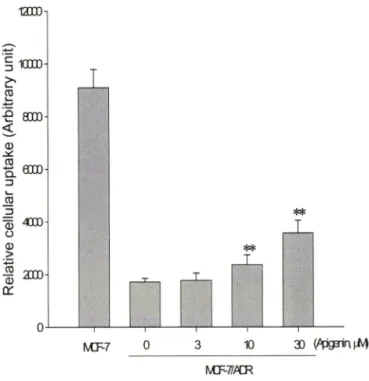
Fig. 2 에서 보여주듯 MCF-7/ADR cell에 p-gp가 overex
pressing 되면 P-gp가 부족한 MCF-7 cell에 비해 Rhodamine- 123 의 측적이 감소함을 알 수 있다. 아피제닌을 병용할 때 농도 의존적으로 Rhodamine-123의 cellular uptake가 증가하였고,
MT7
1 030 (/뻐 ruM
WF-TlfCR
Fig. 2 - Rhodamine-123 retention. MCF-7/ADR cells were pre
incubated with apigenin for 30 min after incubation of MCF-7/ADR cells with 20 R-123 for 90 min. Data represents mean±SD of
6separate samples (significant versus the control MCF-7 cells, **P<0.01).
10-30 |JVI 범위에서 통계학적으로 유의성 (p<0.01)i: 보였다. 이 런 결과는 아피제닌이 P-gp의 활성을 농도 의존적 방법으로 유 의성있게 저해함을 암시한다.
]. Pharm. Soc. Korea
-X
^
취
^왜
-^.
I 족
^
해 께
해
^
께
0iunAJaa!qJ<>^>lro;cln
S -3 - S
TO8^^^ 1
nrdADJ®
§ 1
1
!
%
아피제닌이 타목시펜
373
mg/kg)
동 시 투 여 군 에 서 는 각 각194±31ngta/, 238±38 ng/ml
로 단 득 투 여 군 에 비 해 유 의 성
(p<0.05, p<0.01)
있 게 증 가 되 었 다 . 최 고 혈 중 농 도 도 달 시 간 ( t„ ^ ) 은 대 조군 에 비 해 각 투 여 군 에 서 번화 가 없 었 다 . 반 감 기 ( t i / 2) 는 단 득 투 여 군 에 비 해 각 루 ^ 군 에 서 증
가 는 되 었 으 나 유 의 성 었 는 차 이 가 없 었 다 . 절 대 적 생 체 이 용 률
(AB%>gr
타 목 시 펜 단 득 투 여 군 에 서22.2±3.6%,
아 피 제 닌(2.0,
8mg/kg)
동 시 투 여 군 에 서 는 각 각32.9±5.3%, 40.7±6.5%
로 단 득 투 여 군 에 비 해 유 의 성(p<0.05, pcO.O l)
있 게 증 가 되 었 다 . 상 대 적 생 체 이 용 률(RB%)
은 타 목 시 펜 단 득 투 여 군 에 비 해 아 피 제 닌(2.0,
8
mg/kg)
동 시 투 여 군 에 서1.5~ 1.8
배 로 증 가 하 였 다 .고 찰
1 0
■nmB(h)
Fig. 3 - Mean plasma concentration-time profiles of tamoxifen after oral
( 1 0mg^cg) administration of tamoxifen to rats in the presence or absence of apigenin (0.4, 2 and
8mg/kg) (n=
6
, each). Bars represent the standard deviation; ( # ) Oral administration of tamoxifen (control,
1 0mg/kg); (O ) with 0.4 apigenin mg/kg; (▼ ) with 2 mg/kg apigenin; ( A ) with
8
mg^g of apigenin.
타목시펜의 약물동태학적 파라미터
흰 쥐 에 서 타 목 시 펜 정 맥 투 여 군 ( 2
mg/kg),
단 득 투 여 군 ( 1 0mg/
kg)
파 아 피 제 닌(0.4 mg/kg, 2.0 mg/kg,
8mg/kg)
동 시 투 여 군 에 서 타 목 시 펜 의 약 물 동 태 학 적 파 라 미 터 는Table I
과 같 았 다 . 혈 중 농 도 - 시 간 곡 선 하 면 적(AUC)
은 타 목 시 펜 정 맥 투 여 군 에 서1860 ±316 ng ■ hr/m/,
단 득 '투 ■ 여 군(10 mg/kg)
에 서2061 ±350 ng ■ hr/m/,
아 피 제 닌(2.0,
8mg/kg)
동 시 투 여 군 에 서 는 각 각3061±520ng • hr/m/, 3781±643ng • hr/m/
로 단 득 투 여 군 에 비 해 유 의 성(p<0.05, p<0.01)
있 게 증 가 되 었 다 . 최 고 혈 중 농 도 ( C j^ ) 는 티 곡 시 펜 단 득 투 여 군 ( 1 0mg/kg)
에 서126±20ng/m/,
아 괴 제 닌(
2.
0,
8P-
당 단 백 질 과CYP3A4
는 소 장 점 막 상 피 세 포 에 함 께 존 재 하 고있 다 _3 4 ) P-당 단 백 질 은 그 의 기 질 을 소 장 상 피 세 포 내 에 서 장 관 내
로 유 출 시 키 는 단 백 질 로 서 기 질 약 물 돌 이 장 관 에 서 세 포 내 재
순 환 하 게 되 며
CYP3A4
와 의 접 촉 확 률 을 증 가 하 여CYP3A4
에인 한 대 사 률 촉 진 하 여 흡 수 룰 감 소 한 다 고 보 고 되 었 다 . 3 ®"3 ®
P-
당단 백 질 로 인 해 암 의 물 을 포 함 한 많 은 종 류 의 화 합 물 둘 어 소 장
에 서 유 출 되 어 생 체 이 용 률 이 감 소 된 다 고 보 고 되 었 다 . ^ ® 그 리 하
여 타 목 시 펜 의 장 관 에 서 의 흡 수 도
CYP3A
와P-
당 단 백 질 의 영 향 을 받 는 것 으 로 사 료 된 다 .아 피 제 닌 은
CYP3A4
효 소 의 활 성 을 저 해 하 고CYP3A4
에 대한 아 피 제 닌 의
50%
저 해 농 도 값 ( I C j o) 은1.8 laM
이 었 다 .아 괴 제 닌 을 병 용 할 때 농 도 의 존 적 으 로
Rhodamine-123
의cellular uptake
가 증 가 하 였 고10~30 |iM
범 위 에 서 통 계 학 적 으 로 유 의 성(p<0.01)
을 보 였 다 . 이 런 결 과 는 아 피 제 닌 이P-gp
의 활 성 을 농 도 의 존 적 방 법 으 로 유 의 성 었 게 저 해 함 을 암 시 한 다 .이 러 한 결 과 는 전 에 보 고 한 결 과 와 비 숫 하 였 다 . 나 린 진 은
시 험 관 실 험 에 서
P-
당 단 백 질 의 기 질 인 빈 브 라 스 틴 의 유 출 을 감소 시 킨 다 고 보 고 와 ; « « 나 린 진 은
CYP3A4
가 관 여 하 는saquinavir
의 대 시 를 저 해 하 고 ,
Caco-2
세 포 에 서P-
당 단 백 질 의 수 송 을 억Table 1 - Mean pharmacokinetic parameters of tamoxifen after an oral (10 mg/kg) and iv (2 ms/kg)administration of tamoxifen with apigenin to rats (Mean±S.D., n=
6)
Parameters Control Tamoxifen+Apigenin
0.4 mg/kg
2 . 0mg/kg
8 . 0mg/kg IV
AUC (ng/ml ■
Cmax (ng/m/)
T m a x ( h )
Ti^ (h) AB (%) RB (%)
h) 2061 ±350 126±20
1
.
0 0±
0 . 1 0 1 1.
1±
2 . 022.2±3.6
1 0 0
2398±408 148±24 L
0 0±
0 . 1 0 1 1.
6±
2 . 125.8±4.1 116
3061±520*
194±3P I.00±0.13 II.7±2.1 32.9+5.3*
148
3781±643**
238+38**
I.00±0.13 II.9±2.1 40.7±6.5**
183
1860+316
9.0±1.6
*: P<0.05, PcO.Ol, significant difference compared to the control group.
AUC: area under the plasma concentrationtime curve from 0 h to infinity, peak concentration, T„
concentration, Ty
2- terminal half-life, AB (%): absolute bioavailability, RB (%): relative bioavailability.
time to reach peak
Vol. 54, No. 5, 2010
w
그
iu/5드
u£!XOEe}io c o -^ s
^c s c o o
c s s
제하였다^^*는 보고와도 일치하였다.
본실험에서 아피제닌온 타목시펜의 AUC와 유의성 었
게 증가하였으며 그 결과 타목시펜의 생체이용률을 유의성 있게 증가시 켰다.
과일 쥬스에 많이 함유되어 있고 항산화작용 등의 작■§서 있는 폴라보노이드류인 렐세친과 나린진은 CYP3A4을 억제하며 타목
시펜의 AUC와 유의성 있게 증가하였으며 그 결과 타목
시펜의 생체이용률을 현저히 증가하였다^"'®*는 결과와 일치하였다.
이상의 결과를 총괄하면 타목시펜은 인체와 유사한 대사를 초 래하는 흰쥐에서 아피제닌으로 전처리 하였을 때 타목시펜의 생 체이용률은 현저허 중가하였다. 임상실험에서도 더욱 확인연구 가 필요하다고 사료되며 , 아피제닌은 파일주스에 흔히 존재하는 물질로서 임상에서 빈용되는 타목시펜과 병용시 타목시펜의 약 물동태학적 번화를 고려하는 것이 바람직하다고 사료된다.
결 론
흰쥐에서 타목시펜과 아피제닌을 병용 투여시 타목시펜의 생 체이용률 및 약물동태 파라미터의 변화와 아피제닌이 CYP3A4 효소의 활성억제 및 P-gp의 활성억제 효과률 검토한 결과는 다 옴과 같다.
1. 아괴제닌은 CYP3A4 효소의 활성을 저해하고 CYP3A4에 대한 아피제닌의 50% 저해 농도값(ICso)온 1.8 nM이었다.
2. 아피제닌을 병용 사용할 때 농도 의존적으로 Rhodamine- 123의 cellular uptake가 증가시킨 결과는 아피제닌이 P-gp의 활 성을 유의성 었게 저해 하였다.
3. 혈중농도■ 시간곡선하면적(AUC)은 아피제닌 병용투여군에서 단득투여군에 비해 유의성(p<0.05, p<0.01)었게 증가되었다.
4. 최고혈장농도(C_^)는 병용투쉬군에서 타목시펜 단득투여군 에 비해 각각 유의성(p<0.05, p<0.01) 있게 증가하였다.
3. 절대적 생체이용률(A.B%)g: 아피제닌 병용투여군에서 타목 시펜 단득투여군에 비해 각각 유의성(p<0.05, p<0.01) 있게 증 가하였다.
5. 상대적 생 체 이 은 대조군에 비해 1.5~1.8배로 증 가하였다.
흰쥐에서 타목■시펜과 아괴제닌을 병용투여시 타목시펜의 생체 이용률은 현저하게 유의성 있게 중가하였다. 앞■으로 임상서I서 더 욱 연구가 필요하며 타목시펜을 아피제닌 흑은 아피제닌 성분을 함유하는 식품과 함께 병용할 경우 타목시펜의 투여량을 조정하 는 것이 바람직하다고 사료된다.
감 사 의 글
이 논문은
2 0 1 0년도 조선대학교 학술연구비의 지원을 받아• 연
구되 었옴.
참 고 문 헌
1) Dixon, R. A. and Steele, C. L. : Flavonoids and isoflavonoids - a gold mine for metabolic engineering. Trends Plant Sci. 4,394
(1999).
2) Yin, Y., Gong, E Y, Wu, X. X., Sun, Y., Li, Y. H., Chen, T. and Xu, Q. : Anti-inflammatory and immunosuppressive effect of flavones isolated from Artemisia vestita. /. Ethnopharmacol
1 2 0
,
1(2008).
3) Nafisi, S., Hashemi, M. and Rajabi, M. : DNA Adducts with Antioxidant Flavonoids: Morin, Apigenin, and Naringin. DNA and Cell Biology. 27, 1 (2008).
4) Galati, G., Moridani, M. Y., Chan, T S. and O^brien, R J. : Peroxidative metabolism of apigenin and naringenin versus luteolin and quercetin: glutathione oxidation and conjugation.
Free Radical Biology S : Medicine. 30, 370 (2001).
5) Chuang, C. M., Monie, A., Wu, A. and Hung, C. E : Combination of apigenin treatment with therapeutic HPV DNA vaccination generates enhanced therapeutic antitumor effects. J. Biomed. Sci. 16, 49 (2009).
6
) Jeong, G. S., Lee, S. H., Jeong, S. N., Kim, Y. C. and Kim, E. C. : Anti-inflammatory effects of apigenin on nicotine- and lipopolysaccharide-stimulated human periodontal ligament cells via heme oxygenase-1. Int. ImmunopharmacoL 9, 1374
(2009).
7) Gates, M. A., Vitonis, A. E, Tworoger, S. S., Rosner, B., Titus-Emstoff, L., Hankinson, S. E. and Cramer, D. W. : Flavonoid intake and ovarian cancer risk in a population-based case-control study. Int. J. Cancer. 124, 1918 (2009).
8
) Fukuda, K., Ohta, T, Oshima, Y., Ohashi, N., Yoshikawa, M.
and Yamazoe, Y. : Specific CYP3A4 inhibitors in grapefruit juice: furocoumarin dimers as components of drug interaction.
Pharmacogenetics. 7, 391 (1997).
9) Ho, R C., Saville, D. J. and Wanwimolruk, S. : Inhibition of human CYP3A4 activity by grapefruit flavonoids, furano- coumarins and related compounds. J. Pharm. Pharm. Sci. 4,
217 (2001).
10) Nguyen, H., Zhang, S. and Morris, M. E. : Effect of flavonoids on MRPl-mediated transport in Panc-1 cells. J. Pharm. Sci.
92, 250 (2003).
1 1
) Kimura, Y., Ito, H., Ohnishi, R. and Hatano, X : Inhibitory effects of polyphenols on human cytochrome P450 3A4 and 2C9 activity. Food Chem. Toxicol. 48, 429 (2010).
12) Powles, T. J. : The case for clinical trials of tamoxifen for prevention of breast cancer. Lancet. 340, 1145 (1992).
13) Jaiyesimi, I. A., Buzdar, A. U., Decker D. A. and Hortobagyi, G. N .: Use of tamoxifen for breast cancer: twenty-eight years
}. Pharm. Soc. Korea
아퍼제닌이 타목시펜
375
later. J. Clin. Oncol. 13, 513 (1995).
14) Buckley, M. T. and Goa, K. L. : Tamoxifen: a reappraisal of its pharmacodynamic and pharmacokinetic properties, and therapeutic use. Clin. Pharmacokin. 37, 451 (1989).
15) Lim, C. K., Yuan, Z. X., Lamb, J. H., White, I. N. H., De Matteis, E and Smith, L. L .: A comparative study of tamoxifen metabolim in female rat, mouse and human liver microsomes.
Carcinogenesis. 15, 589 (1994).
16) Mani, C., Gelboin, H. V, Park, S. S., Pearce, R., Parkinson A.
and Kupfer, D. : Metabolism of the antimammary cancer antiestrogenic agent tamoxifen. I. Cytochrome P450-catalysed N-demethylation and 4-hydroxylation. Drug Metab. Dispos. 21,
645 (1993).
17) Mani, C., Pearce, R., I^idnson, A. and Kupfer, D. : Involvement of cytochrome P4503A in catalysis of tamoxifen activation and covalent binding to rat and human liver microsomes.
Carcinogenesis. 15, 2715 (1994).
18) Berthou, E, Dreano, Y., Belloc, C., Kangas, L , Gautier J. C. and Beaune, R : Involvement of cytochrome P4503A enzyme family in the major metabolic pathways of toremifene in human liver microsomes. Biochem. Pharmacol. 47, 1883 (1994).
19) Dehal, S. S. and Kupfer, D. : Cytochrome P-450 3A and 2D6 catalyze ortho hydroxylation of 4-hydroxytamoxifen and 3- hydroxytamoxifen (droloxifene) yielding tamoxifen catechol:
involvement of catechols in covalent binding to hepatic proteins. Drug. Metab. Dispos. 27, 681 (1999).
20) Mani, C., Gelboin, H. V, Park, S. S., Pearce, R., Parkinson, A.
and Kupfer, D. : Metabolism of the antimammary cancer antiestrogenic agent tamoxifen. I. Cytochrome P-450 caralyzed N-demethylation and 4-hydroxylation. Drug Metab. Dispos. 21,
645 (1993).
21) Crewe, H. K., Ellis, S. W, Lennard, M. S. and Tucker, G. T. : Variable contribution of cytochromes P450 2D6, 2C9 and 3A4 to the 4-hydroxylation of tamoxifen by human liver mocrosomes. Biochem. Pharmacol. 53, 171 (1997).
22) Daniel, P. C., Gaskell, J., Bishop, H., Campbell, C. and Nicholson, R. : Determination of tamoxifen and biologically active metabolites in human breast tumour and plasma. Eur. J.
Cancer Clin, Oncol. 17, 1183 (1981).
23) Jordan, V C., Collins, M. M., Rowsby, L. and Prestwich, G. : A monohydroxylated metabolite of tamoxifen with potent antioestrogenic activity. /. Endocrinol 75, 305 (1977).
24) Degreforiom, M. W, Coronado, E. and Osborne, C. K .: Tumor and serum tamoxifen concentrations in the athymic nude mice. Cancer Chemother. Pharmacol. 23,
6 8(1989).
25) Robinson, S. E, Langan-Fahey, S. M. and Jodan, V C. : Implications of tamoxifen metabolism in the athymic mouse for the study of antitumor effects upon human breast cancer xenografts. Eur: J. Cancer Clin. Oncol. 25, 1769 (1989).
26) Gant, T. W, O'Connor, C. K., Corbitt, R., Thorgeirsson, U. and Thorgeirsson, S. S. : In vivo induction of liver P-glycoprotein expression by xenobiotics in monkeys. Toxicol Appl, Pharmacol.
133,
269 (1995).
27) Rao, U. S., Fine, R. L. and Scarborough, G. A. : Antiestxogens and steroid hormones: substrates of the human P-glycoprotein.
Biochem. Pharmacol. 48, 287 (1994).
28) Gottesman, M. M. and Pastan, I. : Biochemistry of multidrug resistance mediated by the multidrug transporter. Annu. Rev.
Biochem, 62, 385 (1993),
29) Gan, L.-S. L., Moseley, M. A., Khosla, B., Augustijns, R E, Bradshaw, T. E, Hendren, R. W. and Thakker, D. R. : CYP3A- Like cytochrome P450-mediated metabolism and polarized efflux of cyclosporin A in Caco-2 cells: interaction between the two biochemical barriers to intestinal transport. Drug Metab.
Dispos. 24, 344 (1996).
30) Watkins, R B. : The barrier function of CYP3A4 and P- glycoprotein in the small bowel. Adv. Drug Deliv. Rev. 27, 161
(1996).
31) Wacher, V H., Silverman, J. A., Zhng, Y. and Benet, L. Z. : Role of P-glycoprotein and cytochrome P450 3A in limiting oral absorption of peptides and peptidominetics. /. Pharm. Sci. 87,
1322 (1998).
32) Fried, K. M. and Wainer, I. W : Direct determination of tamoxifen and its four major metabolites in plasma using coupled column high-performance liquid chromatography. /.
Chromatogr. B. Biomed. Appl. 665, 261 (1994).
33) Yamaoka, K., Tanigawara, Y., Nakagawa, T. and Uno, T. : A pharmacokinetic analysis program (multi) for microcomputer.
/. Pharmacobiodyn. 4, 879 (1981).
34) Reynolds, J. E. E and Martindale : The Extra Pharmacopeia.
Pharmaceutical Press. London (1993).
35) Yin, Y., Gong, E Y., Wu, X. X., Sun, Y., Li, Y. H., Chen, T and Xu, Q. : Anti-inflammatory and immunosuppressive effect of flavones isolated from Artemisia vestita. /. Ethnopharmacol.
1 2 0