https://doi.org/10.6111/JKCGCT.2018.28.2.069
Crystal growth of nanosized α-Fe 2 O 3 particles in frit
Hiroaki-Katsuki, Eun-Kyoung Choi, Won-Jun Lee, Won-Jin Moon*, Ung-Soo Kim, Kwang-Taek Hwang and Woo-Seok Cho †
Korea Institute of Ceramic Engineering & Technology (KICET), Icheon 17303, Korea
*Korea Basic Science Institute (KBSI), Gwangju 61186, Korea (Received January 17, 2018)
(Revised January 24, 2018) (Accepted February 1, 2018)
Abstract Crystal growth of α-Fe
2O
3nanosized particles of 80~90 nm in size, which were hydrothermally prepared from 0.03 M FeCl
3solution at 100
oC, was investigated in Pb-containing and Pb-free frit. By heating α-Fe
2O
3nanosized particles in two frits at 800
oC, the average diameter of particles in frits was increased to 200~210 nm and 150~160 nm, respectively, and the crystal growth due to the aggregation and sintering of several α-Fe
2O
3particles was observed. Formation ratios of larger particles over 100 nm in diameter were 54 % in Pb-free frit and 85 % in Pb-containing frit. After heating α-Fe
2O
3particles in frits at 800
oC, 7~9 nm in average diameter of pores were formed in particles. Theses pores were derived from the porous structure of original α-Fe
2O
3particles and confined in particles during sintering.
Key words Nanosized α-Fe
2O
3, Pb-containing frit, Pore formation, Crystal growth, Raw material
Frit에서의 나노사이즈 α-Fe
2
O3
입자의 결정 성장Hiroaki-Katsuki, 최은경, 이원준, 문원진*, 김응수, 황광택, 조우석 † 한국세라믹기술원 이천분원, 이천, 17303
*한국기초과학지원연구원, 광주, 61186 (2018년 1월 17일 접수)
(2018년 1월 24일 심사완료) (2018 년 2월 1일 게재확정)
요 약 100
oC에서 0.03 M FeCl
3용액을 이용하여 수열법으로 제조한 80~90 nm의 α-Fe
2O
3나노크기 입자의 결정 성장이 유연 frit 및 무연 frit에서 조사되었다. 두 종류의 frit 내에 있는 나노사이즈 α-Fe
2O
3입자를 800
oC로 가열하였고 frit 내의 α-Fe
2O
3입자의 평균 입경이 각각 200~210 nm과 150~160로 증가했다. 또한 α-Fe
2O
3의 응집과 소결로 인해 결정 성장이 촉 진된다는 사실도 확인되었다. 직경이 100 nm를 초과하는 큰 입자의 형성 비는 무연 frit에서 54 %, Pb가 함유된 유연 frit에 서는 85 %였다. 800
oC에서 frits 내에 있는 α-Fe
2O
3입자를 가열함으로써, 평균 직경 7~9 nm의 기공이 α-Fe
2O
3입자 내에 형 성되었다. 이들 기공은 원래의 α-Fe
2O
3입자 내의 한층 더 미세한 기공들로 구성된 다공성 구조에서 유래되었고, 소결 중 이들 미세 기공들은 입자에 갇혀있는 상태에서 서로 결합하여 7~9 nm의 기공 크기로 성장하였다.
1. 서 론
α-Fe 2 O 3 (hematite) 는 청자유, 천목유 및 빨간색 안료의 착색제로 사용되는 도자기에서 중요한 산화물 중 하나이 다. 청자와 천목에서의 색상은 α-Fe 2 O 3 의 양, 입자 크기, 1200~1300 o C 온도에서 환원 및 산화 분위기에서 발생된 유약 속에 있는 Fe 2+ /Fe 3+ 비율에 의해 제어된다[1-5]. 도
자기 용 적색 안료는 보통 15~25 wt%의 α-Fe 2 O 3 분말 과 frit 분말을 혼합 한 후, 백자에 시유하여 800~850 o C 의 온도에서 열처리 된다. 붉은 색의 색조는 응집, 형상, 입자 크기, frit에 함유 된 α-Fe 2 O 3 분말의 양, 그리고 α-Fe 2 O 3 결정과 공존하는 불순물에 크게 영향을 받는다 [6-8]. 이전 연구에서[9, 10] 우리는 백자에서 적색 안료 의 색에 대한 α-Fe 2 O 3 형상의 역할을 조사하였다. 직경 이 53 nm인 α-Fe 2 O 3 분말은 직경이 155 nm인 α-Fe 2 O 3 분말 보다 더 밝은 적황색을 나타내었다. 길이 80~230 nm, 두께 40~100 nm의 응집 결정으로 이루어진 상업용
†
Corresponding author
†
E-mail: [email protected]
2. 실험 방법
우리의 이전 연구에서[9, 10], α-Fe 2 O 3 나노입자는 0.03 M FeCl 3 · 6H 2 O 용액을 사용하여 전통적인 수열 반응을 통해 100 o C 에서 2일 동안 유지하여 합성되었다. Frit 분 말은 전통적인 방법에 의해 몇몇 화학 물질로 제조되었 고, 무연 frit의 주 화학조성은 SiO 2 ; 59 wt%, B 2 O 3 ; 22 wt%, Al 2 O 3 ; 6 wt%, Na 2 O + K 2 O; 11 wt%, CaO + MgO;
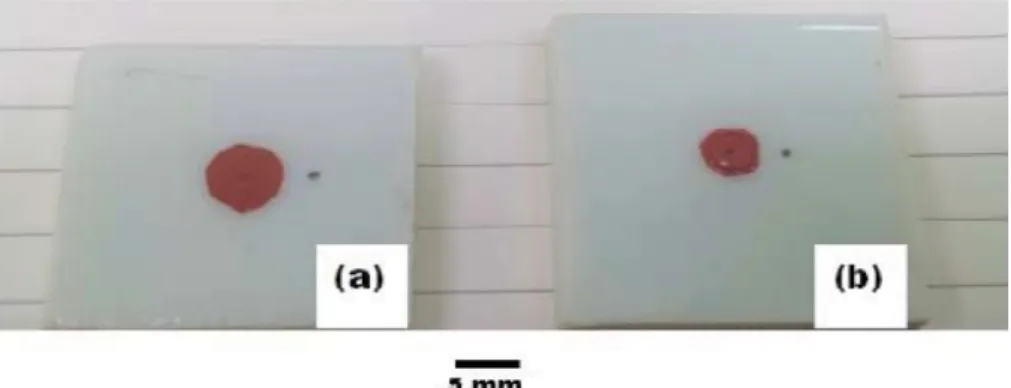
2 wt% 이었다. 이때 frit 분말의 평균 입자 크기는 1.5 μm 이었다. 유연 frit의 경우, 35 wt%의 PbO 분말이 무연 frit 에 첨가되었다. 1 g의 α-Fe 2 O 3 분말을 20 g의 물과 혼 합하고 30분 동안 초음파로 처리하여 분산시켰다. 분산 된 현탁액을 4 g의 frit 분말에 첨가하고, 도자기 유발에 서 3시간 동안 혼합하였다. 1300 o C 의 환원 분위기에서 반투명 유약으로 소성한 백자에 frit와 나노 크기의 α- Fe 2 O 3 분말로 분산된 현탁액을 코팅하여 800 o C 에서 1시 간 동안 소성하였다(Fig. 1).
나노 크기의 α-Fe 2 O 3 분말의 결정상 및 형상은 X-ray diffraction(XRD, Rigaku, D/2500VL/PC, Japan) 과 투과 전자현미경(TEM, JEOL, Japan)을 사용하여 관찰하였다.
공기 중에서 2시간 동안 700 o C 와 800 o C 에서 열처리된 분말의 Brunauer, Emmett and Teller(BET) 비 표면적을 흡착 장치(모델 QUADRASORB SI, Quantachrome, USA) 를 사용하여 측정하였다.
3. 결과 및 고찰
Fig. 2 와 Fig. 3은 0.03 M-FeCl 3 용액으로 100 o C 에서 2 일 동안 유지하여 제조된 나노 사이즈의 α-Fe 2 O 3 분말 의 XRD 패턴과 입자형상을 보여준다.
α-FeOOH와 α-FeOOH 결정상이 공존하지 않는 α-Fe 2 O 3 단일상이 형성되었고(Fig. 2), α-Fe 2 O 3 입자는 균질하고 단분산의 입방 또는 구의 구조이며 평균 입경이 80~90 nm 이었다(Fig. 3). TEM 관찰을 통해, α-Fe 2 O 3 는 수 나 노미터의 1차 입자로 구성된 구형 다공성 응집체라는 사실도 알 수 있었다(Fig. 3(b)).
다공성 α-Fe 2 O 3 형성 과정은 다음과 같이 추측할 수 있다. 수 나노 미터 크기의 1차 α-Fe 2 O 3 입자의 핵 생 성은 100 o C 에서 집중적인 가수 분해로 인해 초기 균질 FeCl 3 수용액에서 발생한다. 이들 일차입자들의 상호 작 용에 의해 80~90 nm 구의 응집체가 생성된다(Fig. 3(b)).
그리고 응집과 재결정의 결과로 많은 작은 기공을 갖는
Fig. 1. α-Fe
2O
3pigment heated at 800
oC for 1 h on white porcelain plates for TEM samples. (a) Pb-free frit and (b) Pb-containing frit.
Fig. 2. XRD pattern of nanosized α-Fe
2O
3powders prepared
from 0.03 M FeCl
3· 6H
2O solution at 100
oC for 2 days.
개개의 α-Fe 2 O 3 입자가 형성된다.
이전 연구에서[11, 12], 40~65 nm의 α-Fe 2 O 3 입자의 소결은 공기 중에서 800 o C 이상의 온도에서 진행되었다.
본 연구에서 100 o C 에서 0.02 M FeCl 3 용액으로 제조된 α-Fe 2 O 3 분말의 비표면적은 15.1 m 2 /g 이었고, 공기 분위 기의 700 o C 및 800 o C 에서 가열 한 후에는 7.0/m 2 및 4.2/m 2 로 감소되었다. 이 결과로부터 나노 크기의 α-Fe 2 O 3 입자는 열적으로 불안정하고 입자의 소결은 열처리에 의 해 급속히 촉진된다는 것을 알 수 있었다.
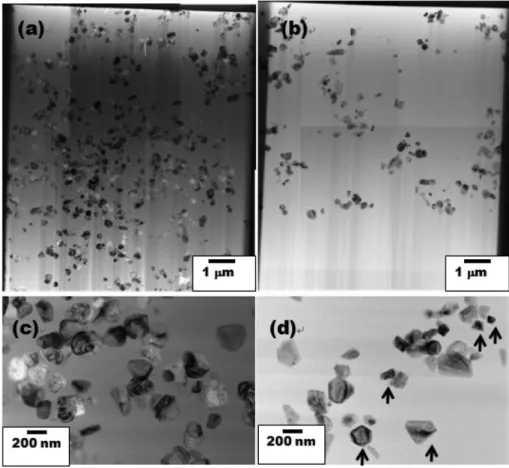
Fig. 4 는 PbO가 있을 때와 없을 때의 α-Fe 2 O 3 안료 층의 단면과 고배율로 확대된 영역을 나타내었다. 나노 사이즈의 α-Fe 2 O 3 와 frit을 유약 표면에서 800 o C 에서 1 시간 가열하였다. Pb-free 및 Pb-containing 안료 층의 두께는 각각 7과 11 μm이었다. Fig. 4(a)와 4(b)에 나타 난 frit 층의 α-Fe 2 O 3 입자 수의 차이는 1시간 동안 frit 파우더와의 불균일 혼합에 기인하는 것으로 확인되었다.
Pb-containing frit 내에 있는 α-Fe 2 O 3 입자는 Pb-free frit 내에 있는 α-Fe 2 O 3 입자에 비하여 약간 둥근 형상을 Fig. 3. Morphology of nanosized α-Fe
2O
3powders prepared from 0.03 M FeCl
3· 6H
2O solution at 100
oC for 2 days.
Fig. 4. Cross section of frit layers with α-Fe
2O
3particles fired at 800
oC. (a), (c) Pb-containing frit and (b), (d) Pb-free frit.
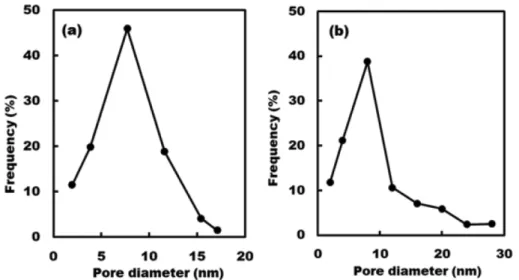
보여 주었다(Fig. 4(d) and 4(c)). 이것은 α-Fe 2 O 3 입자 표 면 일부가 800 o C 에서 1시간 가열하는 동안 Pb-containing frit 에 용해된다는 것을 암시한다. 두 종류의 frit 내에 있 는 α-Fe 2 O 3 입자(N=100)의 입도 분포가 측정되었다 (Fig. 5). Pb-containing 과 Pb-free frit에서 α-Fe 2 O 3 입자 의 평균 직경은 각각 200~210 nm와 150~160 nm이었고 Pb-free frit 보다 Pb-containing frit에서 α-Fe 2 O 3 의 촉진 된 결정 성장이 관찰되었다. 원래의 α-Fe 2 O 3 입자의 직 경과 비교하였을 때(Fig. 1), frit 내의 α-Fe 2 O 3 입자의 직경은 증가하였고 따라서 결정은 성장하였다는 사실이 확인되었다. Pb-Free frit에서의 α-Fe 2 O 3 입자는 결정 성장 후, 입자들은 각형이거나 불규칙한 모양을 보였다(Fig.
4(d) 의 화살표). 직경이 100 nm를 초과하는 큰 입자의 비율은 Pb-free frit에서는 54 %이고 Pb-containing frit 에서는 85 %이었다(Fig. 5). 800 o C 에서 frit을 소성하는 동안 Fig. 3(a)와 같이 부분적으로 응집된 나노 크기의 α-Fe 2 O 3 입자는 frit 내에서 소결되어 더 큰 결정으로 성 장할 수 있다는 사실을 알 수 있었다. 이러한 결과로부 터, α-Fe 2 O 3 입자의 용해와 큰 결정으로 성장하기 위해 frit 에서의 Pb의 역할이 중요하다는 사실을 알 수 있었다.
Fig. 6 및 Fig. 7은 두 개의 frit에서 α-Fe 2 O 3 입자로 형성된 폐쇄 기공의 형상 및 기공 크기 분포를 보여준다.
모든 기공은 α-Fe 2 O 3 입자의 내부에서 형성되었다. 평균 기공 직경은 Pb-containing frit에서 7 nm, Pb-free frit에 서 9 nm이다. 이들 기공은 원래의 α-Fe 2 O 3 입자 내의 한 층 더 미세한 기공들로 구성된 다공성 구조에서 유래되 었고, 소결 중 이들 미세 기공들은 입자에 갇혀있는 상태 에서 서로 결합하여 7~9 nm의 기공 크기로 성장하였다.
향후 α-Fe 2 O 3 의 결정 성장 및 α-Fe 2 O 3 결정의 기공 크 기에 대한 Pb 효과에 대한 추가 연구가 진행될 예정이다.
4. 결 론
100 o C 에서 0.03 M FeCl 3 용액으로부터 수열법으로 제 조된 80~90 nm 크기의 α-Fe 2 O 3 나노 입자의 결정 성장 을 조사하였다. Pb-free frit 및 Pb-containing frit 내에 있는 α-Fe 2 O 3 입자를 800 o C 에서 가열함으로써 frit 내의 Fig. 5. Particle size distribution of α-Fe
2O
3particles in (a) Pb-containing-frit and (b) Pb-free frit.
Fig. 6. Morphology of pores formed at 800
oC in (a) Pb-
containing frit and (b) Pb-free frit.
α-Fe 2 O 3 의 평균 입경이 150~160 nm 및 200~210 nm로 증가하였고, 응집 및 소결로 인해 결정이 성장한 것으로 확인되었다. 직경이 100 nm를 초과하는 큰 입자의 비율 은 Pb-free frit에서 54 %이었고 Pb-containing frit에서 85 % 이었다. frit 내에서 Pb는 α-Fe 2 O 3 입자의 용해와 결 정 성장을 촉진하는 역할을 수행하였다. 800 o C 에서 frit 내의 α-Fe 2 O 3 입자를 가열하여, 평균 지름 7~9 nm의 기 공이 입자 내에 형성되었다. 이 기공은 α-Fe 2 O 3 입자 내 에 이미 존재하고 있던 다공성 구조에서 파생되었고, 소 결 중 이들 미세 기공들은 입자에 갇혀있는 상태에서 서 로 결합하여 7~9 nm의 기공 사이즈로 성장하였다.
감사의 글
본 연구는 산업통상자원부가 한국세라믹기술원 이천분원 에 지원하는 신가치도자산업기반구축사업(BUS010025000) 으로 수행하였습니다.
References