• 검색 결과가 없습니다.

Electrochemical Behavior of TiO<sub>2</sub> Nanotube/Ti Prepared by Anodizing for Micro-Lithium Ion Batteries

N/A
N/A
Protected

Academic year: 2021

Share "Electrochemical Behavior of TiO<sub>2</sub> Nanotube/Ti Prepared by Anodizing for Micro-Lithium Ion Batteries"

Copied!
5
0
0

로드 중.... (전체 텍스트 보기)

전체 글

(1)

Vol. 17, No. 1, 2014, 13-17

http://dx.doi.org/10.5229/JKES.2014.17.1.13

− 13 −

Electrochemical Behavior of TiO 2 Nanotube/Ti Prepared by Anodizing for Micro-Lithium Ion Batteries

Soo-Gil Park

1,

*, Jeong-Jin Yang

1

, Jin-Woo Rho

1

, Hong-Il Kim

2

, and Hiroki Habazaki

3

1

Dept. of Engineering Chemistry, Chungbuk National University, 52 Naesudong-ro, Heungduk-gu, Cheong-ju 361-763, Korea

2

PureEchem co. ltd., Chungbuk Cheongju, Korea

3

Graduate School of Engineering, Hokkaido University, N13-W8, Sapporo 060-8628, Japan (Received September 9, 2013 : Accepted December 15, 2013)

Abstract : The TiO

2

nanotube/Ti electrode are used as an anode in thin-film lithium microbat- teries is known to have high oxidation-reduction potential of 1.8 V (vs. Li/Li

+

). It can prevent from dendrite growth of lithium during charging. The TiO

2

nanotube/Ti electrode was prepared by anodizing at constant voltages for thin-film lithium microbatteries. The capacities of TiO

2

nanotube/Ti anode prepared by anodizing at 10 V, 20 V and 30 V were observed to be 23.9 µ Ah cm

2

, 43.1 µ Ah cm

2

and 74.0 µ Ah cm

2

. We identified it was found that the capacity of TiO

2

nanotube/Ti increases with increasing anodizing voltage and the anatase structure of TiO

2

nanotube/Ti compared with amorphous structure has batter cycle performance than amor- phous TiO

2

nanotube/Ti.

Keywords : TiO

2

, Nanotube, Micro-batteries, Anodizing

1.Introduction

Lithium ion batteries are an electrochemical power source that is capable to convert chemical energy to electrical energy. In an era of ubiquitous computing, there is brisk demand of lithium ion batteries on chip such as RFID (Radio-Frequency Identification) tag and smart card. The required properties on this lithium ion battery are very thin, low toxicity and good cycle abil- ity, and we call this lithium ion battery thin-film micro- battery. The thin-film micro-batteries can apply to backup supply of computer memory chip, sensor and hazard card. First of all, the most important advantage is application to power supply of small electronic part.

Recently, to improve original capacity of thin-film micro-battery which has a limited thickness, three dimensional structure of thin-film micro-battery is sug- gested. The three dimensional structure causes inter- resistance to decrease and enhances ion conductivity because it diminishes a distance of ion movement between cathode and anode throughout three dimen-

sional structures.

1-3)

Many researchers pay attention to thin-film for micro-batteries.

2-7)

TiO

2

is a potential alter- native for the graphite anode, because of its high volt- age operation (ca. 1.75 V vs. Li

+

/Li redox couple). The TiO

2

does not have risk of overcharge that may lead to growth of metallic lithium dendrites. The TiO

2

nanotube with a large surface area can improve properties of TiO

2

. A method of preparation for the TiO

2

nanotube by electrochemical techniques such as anodizing with low fabrication cost and simple fabrication method has been paying a lot of attention to many researchers.

8-11)

In this study, we solved the above problems by using anodizing. We compared with anodizing voltages and crystal structure conditions of TiO

2

nanotube/Ti elec- trodes. We studied electrochemical properties of TiO

2

nanotube/Ti electrodes from the results of cyclic voltam- mograms (CV) and galvanostatic cycling.

2.Experimental

Titanium plates (Ga Hee Metal Co. Ltd) were used as an active material for electrode. Ammonium fluoride (NH

4

F, Junsei chemical Co., Ltd) and lithium acetate dihydrate (C

2

H

3

O

2

Li2H

2

O, Sigma Aldrich Co., Ltd)

*E-mail: [email protected]

(2)

were used as received. LiBF

4

/PC (Cheil Industries Inc.) was used as solvent and organic electrolyte, respectively.

The TiO

2

nanotube/Ti electrodes were obtained by anodizing. The Ti as starting materials was commer- cially available with purity of 98% and thickness of 300 µ m. The experiment of anodizing was carried out by applying constant voltages of 10 V, 20 V, 30 V to a conventional two electrodes during 60 min. The tita- nium was used as a working electrode and platinum plate was used a counter electrode. A distance of both electrodes were kept in 2 cm. and The solution of ethyl- ene glycol containing 0.3 wt% NH

4

F and 2 vol% H

2

O was used as the electrolyte.

9,10)

Prior to the anodizing, the Ti electrodes were cleaned by sonication in acetone and ethanol during 30 min, and afterwards the Ti electrodes were rinsed with distilled water and dried at 60

o

C Annealing treatment was per- formed at 300

o

C in air for 2 h.

The cells for electrochemical measurements were fab- ricated by using conventional three-electrode configura- tion. The Ti was used as a current collector. The TiO

2

nanotube/Ti electrodes were used as the working elec- trode (1 × 1 cm

2

). A lithium metals were used as both the counter and reference electrode. The 1.5 M LiBF

4

in PC was used as the electrolyte. Cyclic voltammetry (CV) was tested with 1.5 M LiBF

4

in PC electrolytes at potential window of 1 V to 3 V. Scan rate of the CV was 0.5 mV s

−1

. Galvanostatic intermittent discharge-charge tests were conducted under constant current conditions by using automatic discharge and charge equipment (WBCS 3000, Won-A Tech. Co.). Cut-off voltages of the discharge processes were 1 V and 3 V (vs. Li/Li

+

), respectively. All the cells for electrochemical experi- ment were fabricated in a argon-filled glove box, and all tests were performed at room temperature.

3. Results and Discussion

SEM pictures of the TiO

2

nanotube/Ti electrodes are shown in Fig. 1(a)~(f). The pore sizes of prepared porous TiO

2

nanotube/Ti electrode is 10~20 nm, 20~30 nm and 30~40 nm at 10 V, 20 V and 30 V, in Fig.

1(a), (c) and (e) respectively. We identified it was found that the pore size of porous TiO

2

/Ti electrode increases with increasing anodizing voltage of titanium electrode.

Fig. 1(b), (d) and (f). show that the prepared TiO

2

nano- tube/Ti electrodes are tube type with length of about

0.6, 2.1 and 2.8 µ m at 10 V, 20 V, 30 V, respectively.

There results imply that the pore sizes and tube lengths increase with increasing anodizing voltage.

Figure 2(a) shows XRD patterns of TiO

2

nanotube/Ti electrodes prepared at 10 V, 20 V and 30 V. For all porous TiO

2

/Ti electrodes, all the peaks correspond with Titanium (JCPDS file No. 5-682). But the weak peaks turn up at about 76

o

and 82

o

; they correspond to (301) and (303) reflections of anatase TiO

2

structure (JCPDS file No. 21-1272).

A thermal treatment (300

o

C, 2 h, air) of the TiO

2

nan- otube/Ti electrodes was prepared at 10, 20 and 30 V. In Fig. 2(b), new intense peaks turn up at about 23.4

o

it correspond to (101) reflections of anatase TiO

2

structure (JCPDS file No. 21-1272).

Figure 3(a) shows cyclic voltammograms which were performed with different anodizing voltages in the 1.5 M LiBF

4

at PC. For the all samples, intercalation/

deintercalation of Li

+

is observed at different anodizing voltages. Due to the open structure of the amorphous oxide, a distribution of diffusion paths for Li

+

intercala- tion looks wide.

11,12)

This fact may be interpreted in terms of an extended

distribution of intercalation rates provided in a disordered

Fig. 1. Surface and cross sectional SEM images of TiO

2

nanotube/Ti electrode prepared at (a) and (b) of 10 V, (c)

and (d) of 20 V, (e) and (f) of 30 V.

(3)

oxide structure. Fig. 3(b) shows cyclic voltammograms of TiO

2

nanotube/Ti electrodes after annealing 300

o

C The reductive/oxidative peaks of TiO

2

nanotube/Ti electrodes (anatase structure) is well-defined at 1.7/2.2 V.

13,14)

From literature, the anodic peak corresponds to the Li

+

release while the cathodic peak is generally ascribed to Ti

4+

reduction combined with Li

+

intercalation.

15)

We observed that the TiO

2

nanotube/Ti electrodes prepared at 30 V have the highest anodic peak. This result clearly shows that the TiO

2

nanotube/Ti electrodes prepared at 30 V present a much better capacity of Li-loading than other anodizing voltages such as 10 V and 20 V in a stor- age device application. It’s because the high anodizing voltage makes surface area of TiO

2

nanotube/Ti increase.

Figure 4 shows the charge/discharge curves of TiO

2

nanotube/Ti electrodes prepared at 10 V, 20 V and 30 V at the potential range of 1~3 V (vs. Li/Li

+

). The dis- charge capacities of 10 V, 20 V and 30 V are 23.9, 43.1 and 74.0 µ Ah cm

−2

, respectively. The capacity of 30 V of TiO

2

nanotube/Ti electrodes is the best due to the sur- face area of it is the highest than others. The potential plateau of it is also invisible. It corresponds to result of cyclic voltammogram in Fig. 3(a).

After annealing at 300

o

C, we observed potential pla- teau at 1.7 V, 2.2 V during charging and discharging in Fig. 5. The TiO

2

nanotube/Ti electrode prepared at 30 V also has the highest capacity because the high pore size and tube length of TiO

2

nanotube/Ti electrode make Li ion diffusion coefficient increase.

The discharge capacity of amorphous structure is higher than that of anatase structure. Therefore, the Li ion diffusion Fig. 2. X-ray diffraction patterns of porous TiO

2

nanotube/Ti electrode prepared at 10 V, 20 V, 30 V before (a) and after (b) annealing 300

o

C.

Fig. 3. Cyclic voltammograms of 10 V, 20 V and 30 V TiO

2

nanotube/Ti electrode before (a) and after (b) annealing 300

o

C, scan rate 0.5 mV s

1

at 3rd cycle in electrolyte, 1.5 M LiBF

4

/PC.

Fig. 4. Charge/discharge curves for prepared TiO

2

nanotube/Ti electrodes at 10 V, 20 V and 30 V, the

potential range between 3 V and 1 V (vs. Li/Li

+

) at

current density, 10 µ A cm

2

at 2nd cycle in electrolyte,

1.5 M LiBF

4

/PC.

(4)

coefficient of amorphous TiO

2

nanotube/Ti electrode is also higher than that of anatase TiO

2

nanotube/Ti electrode.

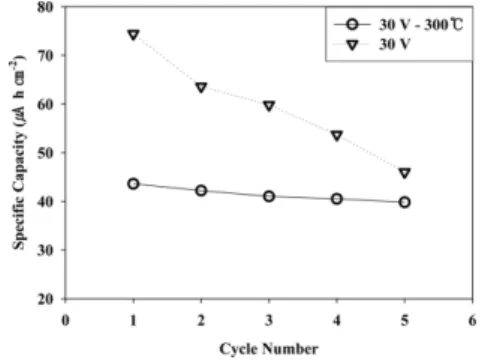
Figure 6 shows results of cycle performance at two different kinetics. The capacity of amorphous TiO

2

nan- otube/Ti electrode is 74 µ Ah cm

−2

and after 5 cycles, efficiency of the capacity is about 62%. The TiO

2

nano- tube/Ti electrode annealed at 300

o

C presents a maxi- mum capacity of 44 µ Ah cm

−2

, and after 5 cycles, the capacity decreases to 40 µ Ah cm

−2

, and efficiency of the capacity is about 91%. These results suggest that amorphous TiO

2

nanotube/Ti electrode can accommo- date extra Li onto it’s structure as compared with annealed TiO

2

nanotube/Ti electrode. It also facilitates an extra lithium insertion. But from Fig. 6 the energy storage mechanism for intercalation reaction of anatase structure has better cycle performance than that of redox reaction of amorphous structure.

4. Conclusion

The TiO

2

nanotube/Ti electrodes were prepared suc- cessfully by anodizing. We identified that the capacities of TiO

2

nanotube/Ti electrodes improve by high pore size and tube length with increasing anodizing voltage.

We also identified that the capacity of TiO

2

nanotube/Ti electrode prepared at 30 V is 74 µ Ah cm

−2

with current density of 10 µ A cm

−2

. The Li ion diffusion coefficients for amorphous structure are higher than that of anatase structure. But the cycle performance of amorphous structure is lower than that of anatase structure. These results suggest that the TiO

2

nanotube/Ti electrode with anodizing voltage of 30 V and anatase structure can be used as an alternative electrode for rechargeable Li-ion micro-batteries.

Acknowledgement

“This research was financially supported by the Min- istry of Education (MOE) and National Research Foun- dation of Korea(NRF) through the Human Resource Training Project for Regional Innovation (No.

2012025592)”

References

1. P. G. Bruce, B. Scrosati, J. M. Tarascon, ‘Nanomaterials for Rechargeable Lithium Batteries’, Angew. Chem., Int.

Ed., 47, 2930 (2008).

2. J. B. Bates, G. R. Gruzalski, N. J. Dudney, C. F. Luck, X.

Yu, ‘Rechargeable thin-film lithium batteries’, Solid State Ionics, 71, 619 (1994).

3. K. H. Hwang, S. H. Lee, S. K, Joo, ‘Fabrication and characterization of LiMnO thin-film cathode for rechargeable lithium microbatteries’, J. Power Sources, 54, 224 (1995).

4. K. Kushida, K. Kuriyama, T. Nozaki, ‘Hundred-micron- sized all-solid-state Li secondary battery arrays embed- ded in a Si substrate’, Appl. Phys. Lett., 81, 5066 (2002).

5. J. B. Bates, N. J. Dudney, D. C. Lubben, G. R. Gruzalski, B. S. Kwak, X. Yu, R. A. Zuhr, ‘Thin-film rechargeable lithium batteries’, J. Power Sources, 54, 58 (1995).

6. K. S. Han, P. Krtil, M. Yoshimura, ‘Soft solution process- ing for fabrication of lithiated thin-film electrodes in a single synthetic step’, J. Mater. Chem., 8, 2043 (1998).

7. J. M. Macak, S. Albu, D. H. Kim, I. Paramasivam, S.

Aldabergerova, P. Schmuki, ‘Multilayer TiO

2

-Nanotube Formation by Two-Step Anodization’, Electrochemical and Solid-state Letters, 10, K28 (2007).

8. J. M. Macak, H. Tsuchiya, P. Schmuki, ‘High-Aspect- Fig. 5. Charge/discharge curves for prepared TiO

2

nanotube/Ti electrodes at 10 V, 20 V and 30 V after annealing 300

o

C, the potential range between 3 V and 1 V (vs. Li/Li

+

) at current density, 50 µ A cm

2

at 2nd cycle in electrolyte, 1.5 M LiBF

4

/PC.

Fig. 6. Cycling performance for prepared TiO

2

nanotube/

Ti electrode at 30 V after annealing at 300

o

C, the

potential range between 3 V and 1 V (vs. Li/Li

+

) at

current density, 10 µ A cm

2

at 1.5 M LiBF

4

/PC.

(5)

Ratio TiO

2

Nanotubes by Anodization of Titanium’, Angew. Chem., Int. Ed., 44, 2100 (2005).

9. S. P. Albu, A. Ghicov, J. M. Macak, R. Hahn, P.

Schmuki, ‘Self-organized, free-standing TiO

2

nanotube membrane for flow-through photocatalytic applications’, Nano Lett., 7, 1286 (2007).

10. G. K. Mor, K. Shankar,M. Paulose, O. K. Varghese, C. A.

Grimes, ‘Use of Highly-Ordered TiO

2

Nanotube Arrays in Dye-Sensitized Solar Cells’, Nano Lett., 6, 215 (2006).

11. Z. Wei, Y. Yao, T. Huang, A. Yu, ‘Solvothermal Growth of Well-Aligned TiO

2

Nanowire Arrays for Dye-Sensi- tized Solar Cell: Dependence of Morphology and Vertical Orientation Upon Substrate Pretreatment’, Int. J. Electro- chem. Sci., 6, 1871 (2011).

12. H. Furukawa, M. Hibino, I. Honma, ‘Electrochemical Properties of Nanostructured Amorphous, Sol-gel-Syn- thesized TiO

2

/Acetylene Black Composite Electrodes’, J.

Electrochem. Soc., 151 A527 (2004).

13. H. Yamada, T. Yamato, I. Moriguchi, T. Kudo, ‘Porous TiO

2

(anatase) Electrodes for High-Power Batteries’, Chem. Lett., 33 1548 (2004).

14. Z. Y. Wang, S. Z. Liu, G. Chen, D. G. Xia, ‘Preparation and Li-Intercalation Properties of Mesoporous Anatase- TiO

2

Sphere’, Electrochem. Solid-State Lett., 10, A77 (2007).

15. A. Hagfeldt, N. Vlachopoulos, M. Gratzel, ‘Fast electro-

chromic switching with nanocrystalline oxide semicon-

ductor films’, J. Electrochem. Soc., 141, L82 (1994).

수치

Figure 4 shows the charge/discharge curves of TiO 2 nanotube/Ti electrodes prepared at 10 V, 20 V and 30 V at the potential range of 1~3 V (vs
Fig. 6. Cycling performance for prepared TiO 2  nanotube/

참조

관련 문서

일반적으로 타이타늄 합금이 대기중에 노출되면 타이타늄 표면에서 산소와 결합 하여 2~5nm의 Ti O 2 라는 자연적인 산화막을 형성하여 내식성을

일반적으로 티타늄 합금이 대기중에 노출되면 순간적으로 Ti표면에서 산 소와 결합하여 2~5㎚의 Ti O 2 라는 자연적인 산화막을 형성하여 내식성을 향

Bactericidal effect of photocatalytic reactor depending on the UV-A illumination time and flow rate of V.. Bactericidal effect of photocatalytic reactor

From the results of Micro Vickers hardness test, Ti- 40Hf alloy showed significantly increasing of hardness and tensile strength than others in the case of

These results suggest that, the ZrN coated Ti-Nb alloy is a good corrosion resistance for dental implant compared with non-coated Ti-Nb alloy... The

The surface of untreated Ti, SLA treated Ti, and AA plasma polymerized SLA/Ti were also examined for their proliferation and differentiation of

These results revealed that TiO 2 NM surface had positive affect on activity of alkaline phosphatase after 15 days cell culturing time... 티타늄은

Null hypotheses of this study was there is no difference in root canal length determination between conventional and heat-treated Ni-Ti files by 2