Trend of STEAM Education-related Domestic Studies Focusing on Physics-related Studies
Songhee Moon · Kyunghee Kang
∗Department of Science Education, Jeju National University, Jeju 63243, Korea (Received 17 September 2015 : revised 22 October 2015 : accepted 30 October 2015)
This study was intended to examine the trend in domestic research on integration and convergence education and the trends in other research on physics-related science, technology, engineering, arts, and mathematics (STEAM) education. To this end, theses were extracted from representative academic sites, and study types, methods, integrated elements, study topics, and study subjects were used as criteria for analysis. Descriptive research was relatively common during the early period, but from 2012, research on program developments and applications increased in physics- related studies. The appearance of physics-related contents in science, technology, engineering, and art-based STEAM research is desirable. However, among the field of physics, subjects related to heat were relatively less found than other topics. If meta-analysis, such as that in this study, is conducted continuously, the direction of physics-related STEAM education can be monitored. Such research can also contribute to the successful implementation and spread of physics-related STEAM education in the future.
PACS numbers: 01.40.Fk
Keywords: STEAM education, Physics-related studies, Study type, Integrated element
I. INTRODUCTION
The 21stcentury is a so-called era of convergence. To- day, many believe that the boundary between science and the humanities should be broken the boundary and that the various scientific disciplines should converge as well.
In particular, the present science and technology-society requires talented, creative persons equipped with refine- ment as citizens who can communicate with the world.
In this context, since 2011, interest in science, technol- ogy, engineering, arts, and mathematics (STEAM) edu- cation has grown in Korea. STEAM education integrates science, technology, engineering, mathematics (STEM), which was developed largely in the United States and Britain, with art; the new approach emphasizes the cre- ative and convergent nurturing of human resources to heighten national competitiveness [1]. Convergence edu- cation is a very meaningful advance in teaching-learning.
∗E-mail: [email protected]
Many theorists have argued that integrated science edu- cation courses will lead to a wider vision and greater cre- ative problem-solving abilities than educational courses divided by subject [2–4].
In the U.S., students’ performances in science and math are declining relative to students’ performances in other countries. This is recognized as a national problem [5]. In addition, students’ interest in areas of education such as engineering and technology is decreasing [6]. Ed- ucators have come to understand the importance of an integrated approach in an attempt to solve this prob- lem. Britain, Finland, and Israel are also implementing STEM education at present.
In the U.S., researchers are actively investigating STEM education. In particular, Clark and Ernst [7]
proposed the Technology Integration Model for Educa- tion (TIME), and the University of Virginia Engineer- ing School has opened an integrated STEM educational course as a major course. In addition, researchers have
This is an Open Access article distributed under the terms of the Creative Commons Attribution Non-Commercial License (http://creativecommons.org/licenses/by-nc/3.0) which permits unrestricted non-commercial use, distribution, and reproduction in any medium, provided the original work is properly cited.
examined the background and policies of STEM educa- tion and related legislative measures [8], and they have explored features that make STEM education work for minority students [9].
STEAM education is not a completely new educational technique; this form combines the art with STS educa- tion, which was emphasized in the 1980s. STEAM edu- cation studies in Korea are currently developing models [10, 11] and designing programs [12, 13] that will facili- tate the fulfillment of the governmentïs commitment to strengthening STEAM education.
However, the understanding of STEAM education is lacking in Korea relative to other countries. In particu- lar, there is no consensus yet about the precise meaning of the term ‘arts’. Although Yakman [14] argued that art in STEAM includes liberal arts as well as fine art and music, STEAM programs actually developed in Ko- rea are limited to the latter areas. In addition, Korean teachers have a positive perception of the need for and effects of integrated education, but there have been few actual applications of such techniques [15–17].
Therefore, reviewing the extant research on integrated and convergent education in Korea is very important be- cause such a review will provide basic data in establishing STEAM education as a paradigm of Korean education.
Understanding the theories, subjects, and methods used to conduct research on STEAM education in Korea is the most effective way to examine the current status of STEAM education. Discussing the possibility of improv- ing research using a meta-analysis is particularly mean- ingful. Moreover, actual data on the direction of research on STEAM education methods will provide the theo- retical basis for activating STEAM education. There- fore, this study focuses on the following: a chronological examination of quantitative changes in research related to integrated and convergent education; an analysis of study methods, topics, and subjects of research related to integrated and convergent education; and an exami- nation of integrated elements and integration-based sub- jects in research and development (R & D) on integrated and convergent education programs.
Today, physics education in schools is disregarded by students [18]. Traditionally, physics has been recognized
as a difficult subject and understood as distant from in- dividuals’ lives. Therefore, multilateral attempts to re- duce the difficulties students feel in the process of learn- ing physics are necessary. STEAM education as one of such attempts is meaningful. In the case of the U.S.
as well, the background of the introduction STEM ed- ucation shows a low level of interest among students in engineering and technology [5]. It is important to ex- amine how STEAM education, as emphasized in recent educational courses can be utilized in terms of teaching- learning. Therefore, it is meaningful to analyze research on STEAM education conducted domestically. In par- ticular, it is meaningful to discuss the improvement di- rection of the research through meta-analysis of research on physics education. In addition, by deriving practical materials on STEAM education’s direction and methods, the theoretical basis for activating STEAM education in the physics education can be provided. Therefore, this study established the following study issues.
First, this study will chronologically identify quanti- tative changes in physics related research among the do- mestic research on STEAM education.
Second, this study will analyze study methods, top- ics, and subjects in research on physics related STEAM education.
Third, this study will analyze integration elements and integration based subjects in research on physics related STEAM programs.
II. METHOD
1. Procedure
This study utilized a literature search and content analysis to examine trends in Korea’s integrated and con- vergent education. The selection of materials used in the analysis was crucial, so this study drew from the Korean Studies Information Service System and the Korea Edu- cation and Research Information Service, which are the primary Korean sites for academic theses.
The keywords STEM education, STEAM education, integrated education, and creative convergent human re- sources education were used to collect theses for analy- sis. The collected theses were classified according to the
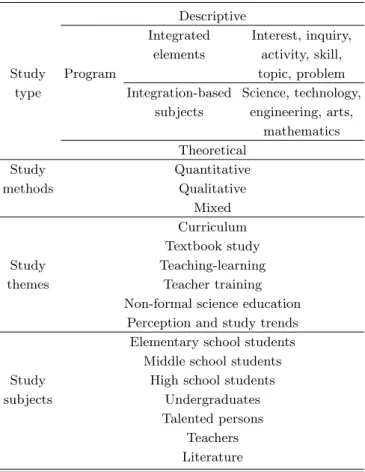
Table 1. Framework for analysis.
Descriptive
Integrated Interest, inquiry, elements activity, skill,
Study Program topic, problem
type Integration-based Science, technology, subjects engineering, arts,
mathematics Theoretical
Study Quantitative
methods Qualitative
Mixed Curriculum Textbook study
Study Teaching-learning
themes Teacher training
Non-formal science education Perception and study trends
Elementary school students Middle school students
Study High school students
subjects Undergraduates
Talented persons Teachers Literature
framework used for the analysis, as determined by a dis- cussion among the researchers. This study also extracted physics education related content based on the contents of the theses selected as analysis subjects. Exchanges of opinion and discussion among researchers helped to heighten the internal consistency of each researcher’s analysis.
2. Subjects
This study analyzed research conducted from 2006 to the end of April 2015. These dates were selected based on the 2007 adoption of a revised curriculum that estab- lished integrated education as a major priority in Ko- rea. The study included theses from the Korean Studies Information Service System [19], the National Assembly site [20] and the Korea Education and Research Informa- tion Service [21]. It also included master’s and doctoral theses related to integrated education. Overlapping the- ses were excluded. Therefore, this study selected papers
from domestic representative academic search sites. In total of 478 theses were selected as the subjects of the analysis.
3. Framework for analysis
The development of the framework used for analysis included a review of previous theses [22–25]. Based on this review, six categories of analysis were established:
study types, study methods, study themes, study sub- jects, integrated elements, and integration-based sub- jects. One professor of a science education department and two science teachers reviewed the analysis scope ex- traction. The content of the analysis category is pre- sented in Table 1. Descriptive research included the cur- rent status of the research, interviews, and questionnaire surveys. Theoretical research included a literature anal- ysis and a historical data analysis. In addition, research on the development and application of teaching-learning programs was classified as program research. A descrip- tive or inferential statistical analysis was conducted to classify research that presented quantitative results as quantitative research and research based on a qualitative data analysis as qualitative research. Instances in which the two methods were utilized together were classified as mixed methods research.
The study topics were classified as curriculum, text- book study, teaching-learning, teacher training, non- formative science education, and perception and study trends. The study subjects were classified as elemen- tary school students, middle school students, high school students, undergraduates, gifted persons, teachers, and literature.
In particular, the characteristics of programs that ap- peared in the research on the development of integrated education were analyzed as integrated elements and integration-based subjects. Integrated elements were subdivided into interest, exploration, experiences, func- tions, topics, and problems. Integration-based subjects were divided into science, technology, engineering, art, and mathematics.
In particular, among the analyzed theses, research that included content related to physics was extracted and classified according to analysis standards. Papers on
Table 2. The number of articles by year.
2007 2008 2009 2010 2011 2012 2013 2014 2015 Total
Domestic STEAM studies 3 3 11 4 26 89 170 135 37 478
Physics related studies 0 1 1 1 4 30 55 29 4 125
STEAM education related to physics were classified ac- cording to whether they included the concept of physics and its principles among the research based on other sub- jects as well as research on physics-based STEAM pro- grams.
III. RESULTS AND DISCUSSION
1. Result of analysis by year
Among the 478 theses analyzed, those from academic journals and conference presentations (n = 292) ac- counted for 61% of the total, while dissertations (n = 186) made up 39%. Theses that examined integrated and convergent education during the analyzed period were first published in 2007. However, the quantity of such theses was very small until 2010, so it is dif- ficult to believe that research on integrated education was conducted in earnest. However, integrated educa- tion was emphasized in the 2009 revised curriculum, and the amount of relevant research slowly increased begin- ning in 2010. The number of research theses by year is presented in Table 2.
The number of theses published greatly increased be- ginning in 2011 and peaked in 2013. This mirrors the trend in research that analyzes the connection between integrated education and science subjects [25]. The in- crease that began in 2011 is closely related to the Min- istry of Education’s official support for a policy that em- phasized STEAM education. During this period, demon- stration and research schools were selected based on the policies of the Ministry of Education, and the STEAM teacher research meeting was formed. The government’s massive support led to an increase in research.
In 2014, fewer papers were published than had been in 2013. An estimate of 2015 totals based on the number of theses issued through April indicates that 2013 is likely to remain the peak year for this type of research.
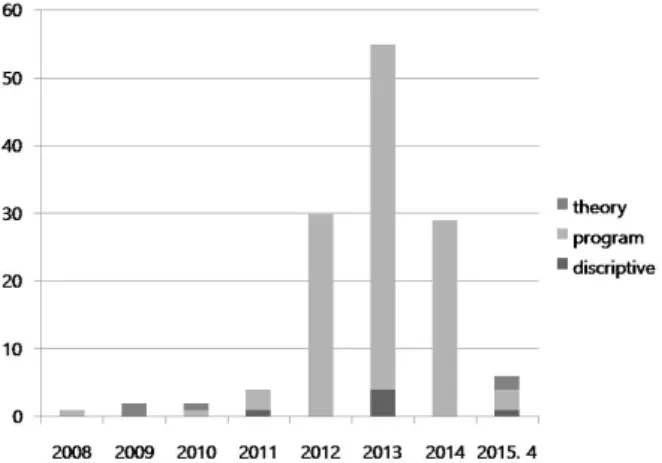
Fig. 1. The number of published papers according to year.
Research on physics education had a similar trend to that of domestic STEAM education research. The num- ber of papers on STEAM education research related to physics reported during the analysis period was 125 in total. Among them, the number of papers issued in 2013 was the greatest at 55 and the number of papers issued in 2012 and 2014 was 30 and 29, respectively. This is inter- preted as activation of researches on STEAM education have an effect on expansion of physics-related STEAM education researches.
2. Result of analysis by study type
1) The trend in study type
Descriptive research was relatively common during the early period, but from 2012, research on program devel- opment and applications increased. This shows that as STEAM education was emphasized on a national cur- riculum level, attempts to introduce STEAM classes in primary and secondary schools expanded. In addi- tion, descriptive research that investigates students’ and teachers’ perceptions of STEAM education has greatly
increased. The rate of descriptive research tended to de- crease. It moved from 25% in 2010 to 27% in 2011, to 30% in 2012, and to 21% in 2013. On the other hand, re- search on the development and application of programs increased from 28% in 2011 to 58% in 2012 and to 73%
in 2013.
While the amount of research on program develop- ment and application increased significantly, the amount of theoretical research on integrated education did not.
This shows that although a theoretical basis should be established for STEAM education to expand continu- ously, emphasis on application research is made in ac- tuality. This trend can be seen as an analog to Park and Kim’s argument [26] that theoretical research is be- ing weakened as science education emphasizes practical application. However, a lack of a theoretical understand- ing of the fundamentals and foundations of STEAM ed- ucation will necessarily limit the technique’s practical success. Therefore, theoretical research on STEAM ed- ucation should be expanded together with research on the development and application of STEAM education programs.
During the analyzed period, the number of technical research studies was five and the number of theoretical research studies was two and the remaining 118 papers were all program development research studies among the research on physics education related to STEAM. In particular, 55 papers, -47% of STEAM education pro- gram research studies including physics contents- were announced in 2013 suggesting that program development during this period was most active.
The active development of programs in physics-related STEAM education research is advantageous in that it increases the applicability of STEAM to the field of ed- ucation. On the other hand, it indicates that STEAM studies are biased in one direction. Therefore, the types of studies should be diversified so that theoretical and descriptive studies that establish the theoretical founda- tion of STEAM research can be continued, because the trend of focusing on application studies with no estab- lished theoretical basis can have negative effects on the activation of STEAM education.
Some scholars [27] pointed out that a considerable amount of time has passed since the introduction of STEM, but the understanding of that program is still
Fig. 2. The number of physics related studies according to study type.
limited. Therefore, surveys on the use of STEAM edu- cation in Korea should be conducted and analyzed con- tinuously in the future.
2) The trend in integrated elements
Research on the development and application of STEAM education programs was also categorized by integration elements. Research greatly increased be- ginning in 2012. The number of skill-centered el- ements, topic-centered elements, inquiry-centered ele- ments, activity-centered elements, problem-centered el- ements, and interest-centered elements was 119, 80, 54, 32, 24, and 2, respectively. In particular, the number of studies that included “interest and problems” among their integration elements was relatively small compared to the number that emphasized other integration ele- ments. The number of activity-centered STEAM educa- tion studies was 17 in 2013, but this number rapidly de- creased to seven in 2014. This reduction reflects the dif- ficulty in performing actual activities on the school field.
In particular, since ‘the Sewol ferry accident’, the consid- eration of potential safety problems has made activity- centered education and experiential learning problem- atic.
The analysis of program development and application by subject reveals that the number of science-based pro- grams was greatest 127. Engineering-based programs were next, at 65, followed by technology-based programs at 51, mathematics-based at 36, and art-based at 32.
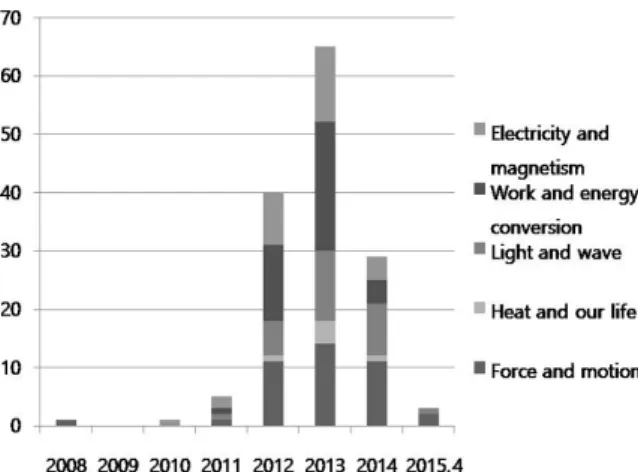
Fig. 3. Physics themes that have been applied in physics related STEAM studies.
This shows that in theory, Korean STEAM education added an emphasis on art to STEM, but in practice, programs still focused on science, engineering, and tech- nology. Programs based on art constituted just 11%
of the total. This ratio shows that not all character- istics of STEAM education were fully utilized. The fact that STEAM education research studies have converged around science, engineering, and technology shows that the indication in the previous study [24] has been some- what resolved. However, insufficiency in the convergence with art and mathematics implies that current STEAM education research has failed to properly implement the direction of convergence education. Therefore, this study shows the need to develop themes and activities to ex- tend integration of STEAM subjects. Furthermore, it implies the need for attempts to build a network of hu- man resources for STEAM education through the expan- sion of exchanges among experts in various areas.
Integration elements and bases were analyzed with re- search including physics content. The number of func- tional elements was greatest at 44, followed by topic el- ements at 35, exploration elements at 21, problem el- ements at 10, and element bases at 7. Regarding in- tegration based subjects, the number of science bases was greatest at 51, followed by technique bases at 31, engineering bases at 22, arts bases at 10, and math bases at 3. In the case of research including physics contents, science, technology, and engineering subjects based STEAM education research accounted for a large portion. Fig. 4 presents the incidence of each integration element in physics-related studies.
Fig. 4. The ratio of integrated elements in physics related studies.
Fig. 5. The ratio of integration-based subjects in physics related studies.
In particular, according to an analysis of the content of program development research which attempted a con- vergence related to physics content, there was a differ- ence in the utilization frequency between physics con- cepts and topics. Physics content utilized in each re- search study was classified based on the 2009 revision to the middle school science unit. According to the analy- sis result, the content of “work and energy conversion”
was most utilized, followed by “force and motion”. The utilization rates of “light and wave” and “electrical en- ergy” were the same and in particular the area of “light and wave” was converged in art based STEAM educa- tion program research. On the other hand, “heat and our life” was least utilized. Physics themes that have been applied in physics related STEAM education studies are presented in Fig. 3. In addition, the incidence of each integration-based subject is presented in Fig. 5.
The utilization of various physics themes in STEAM education research is important in that it increased the possibility of utilizing those themes in future STEAM
research. In particular, the fact that themes, such as
‘force and motion’ and ‘energy convention’, are often being used shows the possibility of STEAM education based on real life and suggests the future direction of STEAM education.
3. Result of analysis by study method
The studies were divided according to whether they utilized quantitative, qualitative, or mixed research.
Those that relied on quantitative research (n = 203) accounted for 42% of the total. Qualitative studies (n
= 186) made up 39%, and mixed research studies (n = 89) comprised 19%. In each year, there was no great difference between the amount of quantitative research and qualitative research. However, the number of quan- titative studies greatly increased from 2012 (when 32 such studies were conducted) to 2013 (when 87 were con- ducted). On the other hand, the proportion of qualita- tive research did not differ greatly from 2012 to 2014. In 2012, such research accounted for 46% of the total. In 2013, it represented 29%, and in 2014, it made up 41%.
This result supports White’s conclusion [28] that in ed- ucational research, deep data collection methods, such as counseling and observation are becoming increasingly popular. In addition, the increasing trend in qualita- tive research affected the expansion of mixed research.
Increases in quantitative research are closely related to increases in perception surveys and research that ana- lyzed program application effects in 2013. That there is no great difference between the amounts of quantitative and qualitative research is a desirable phenomenon: this parity indicates that research did not depend on a single method.
According to the result of analyzing the methods ap- plied in physics related STEAM education research, the number of qualitative research studies was 40 at 32%
and the number of quantitative research studies was 59 at 47%. Such results show a similar trend to the results of analyzing STEAM education research methods and it is interpreted that as research applying STEAM educa- tion programs including physics content was actively on going, the rate of quantitative research increased.
The high percentage of quantitative studies is impor- tant in that program development and data analysis are being actively carried out. However, efforts to develop the theoretical foundation for STEAM education should not be neglected. It is not desirable to expand program application research without established theoretical re- search. Therefore, the findings of this study suggest the need for harmony between theoretical research and im- plementation research through qualitative and quantita- tive studies.
4. Result of analysis by study themes
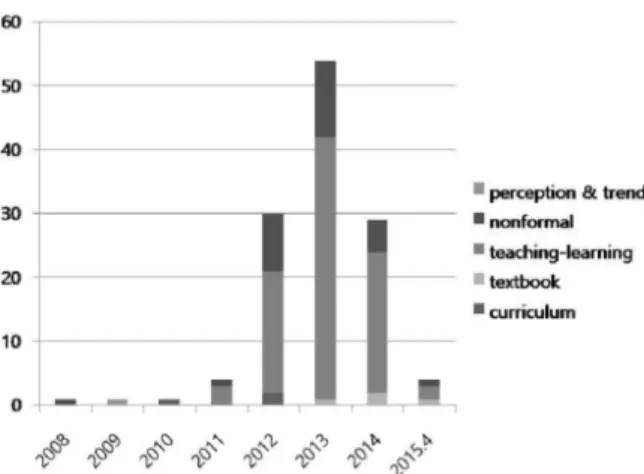
An analysis of the research in the field reveals that too much emphasis was placed on certain topics. The 233 studies related to teaching-learning accounted for 49%
of the total. Studies on non-formative education, such as scientific and cultural activities, numbered 90 (19%);
those that examined perception and study trends in in- tegrated education totaled 83 (17.4%). There were 32 studies (6.7%) on textbook analysis and 31 on curricu- lum analysis (6.4%). On the other hand, the number of papers on STEAM teacher training was only nine (1.9%).
Fig. 5 shows data on study topics by year. The find- ing that research on teaching-learning is most prevalent agrees with the results of a previous study [25]. In ad- dition, the high rate of research on teaching-learning is closely related to the increase in program development and application research.
According to the result of analyzing research topics in physics-related STEAM education research, the number of research studies on teaching-learning was 86, account- ing for 69% of the total. The research that dealt with non-formative education made up 23%, while research on teaching-learning accounted for an overwhelmingly high rate. Such a result is similar to the analysis result of domestic STEAM education research but STEAM edu- cation research related to physics education leans toward teach-learning related topics. Therefore, it is judged that the diversification of research topics such as analyses of the relationship between physics educational courses and STEAM, analyses of textbooks, and investigations into the perceptions of physics teachers, is necessary.
Fig. 6. The number of physics-related studies according to study themes.
5. Result of analysis by subject
An analysis of the subjects was conducted by divid- ing them into elementary school students (including in- fants), middle school students, high school students, col- lege students, gifted persons, teachers (including infant and primary school and secondary school teachers), and literature. In a number of cases, a thesis included more than one subject; therefore, the number of subjects was greater than the number of analyzed theses.
In research on integrated and convergent education, the number of studies that examined elementary school students was greatest. Studies on elementary school stu- dents totaled 171 and accounted for 34.4% of all re- search, while 113 studies (22.7%) focused on literature, 79 (15.9%) on middle school students, 54 (10.9%) on high school students, 42 (8.5%) on teachers, and 37 (7.4%) on gifted persons. Such results are similar to those on inte- grated education related to a science subject [23,24]. In particular, such results are interpreted as having a close relationship with research on teaching-learning account- ing for the greatest portion in analysis by study topics.
In other words, because research on integrated educa- tion is closely related to teaching-learning, such research is prominent in the educational field [29].
According to the result of analyzing physics-related STEAM education research according to study subjects, the number of research studies on elementary school stu- dents was greatest at 56, followed by the number of re- search on middle school students at 35, and the num- ber of research on high school students at 20. The re- sults of an analysis according to subject are presented in
Fig. 7. The number of physics-related studies according to study subject.
Fig. 7. The number of research studies on teachers was just four, including teachers for infants, The number of research studies on teachers was considerably lesser than that on students. In particular, in an analysis on domes- tic STEAM education research, research on literature ac- counted for 22.7% while in an analysis of STEAM educa- tion research related to physics the number of research studies on literature was just five. This shows that a content analysis such as educational course or textbook analyses has been restrictively conducted in the physics education area. The research on developing STEAM ed- ucation programs and applying them to students is very important. However, it is important in that extracting physics-related STEAM content from textbooks and an- alyzing STEAM relevance in physics educational courses may provide a theoretical basis for expanding STEAM education in physics learning in the future. Therefore, the results of this study suggest that research on STEAM education must be conducted multilaterally.
What is interesting about the results of this analysis is that research on students is common, but research on teachers is relatively rare. In addition, there was no re- search on students’ parents. A diversification of subjects in STEAM education research is required. The success of STEAM education in Korea requires the understanding and sympathy of teachers, students, and parents. There- fore, research into the perspectives of all of these groups should be conducted.
The fact that few studies have been conducted on teachers in physics-related STEAM education research
implies the need to make an effort to improve this sit- uation. While it is important to develop programs and check their results in STEAM education, it is also criti- cal to examine the opinions and difficulties of the teach- ers who are the principal actors in STEAM education.
Therefore, the findings of this study indicate the need to diversify the subjects of STEAM education research.
IV. CONCLUSION AND SUGGESTION
This study was intended to examine domestic research trends in integration and convergence education and among others, research trends in physics-related STEAM education. To this end, theses were extracted from rep- resentative academic sites and study types, methods, in- tegrated elements, study topics, and study subjects were used as criteria for an analysis.
Results showed that the number of published theses started to increase greatly in 2011. This is interpreted as a result of the Ministry of Educationïs public specifi- cation of a policy emphasizing STEAM education. The result of analyzing STEAM education research related to physics had a similar trend. This increase is particularly valuable because efforts to apply physics-related STEAM education in the real world are spreading. However, the- oretical research on physics-related STEAM education in Korea still requires greater attention. While the num- ber of studies on teaching-learning was overwhelmingly great, research that analyzed curriculum and teachers’
training was much less common. Such research must be expanded to establish a basis for the development of STEAM education. Extant research has focused mostly on students, though the expansion of research on teach- ers and parents is desirable. An analysis of integration- based subjects in program research showed that science- based research was the most common. However, the rel- evance to art subjects, a crucial component of STEAM education, was low. This proves that the advantages of STEAM education have not been properly differentiated from those of the STEM approach. On the other hand, it is very desirable for physics related contents to ap- pear in science, technology, engineering, and arts based STEAM education research. However, it must be argued that content related to ‘heat’ was utilized relatively less than other topics.
Based on the results of this study, the author in- tends to make a few proposals about physics related STEAM education in Korea. First, a meta-analysis of convergent education should be conducted continuously to understand how physics related STEAM education is unfolding and to study related trends. Organiz- ing the results of a meta-analysis into a database is particularly important. In the U.S., a web site (https://www.nsf.gov/nsb/sei/edTool/explore.html) was created to provide data on STEM education. If such work is conducted in Korea, systemizing data and research on STEAM education is possible. Second, the theoretical research that provides the foundation for physics related STEAM education should be further expanded. As government policies have emphasized STEAM education, relevant research has grown. How- ever, diverse views of the concept of STEAM education and its directing point are still being presented. There- fore, theoretical models of Korea’s STEAM education should be constructed. Third, the subjects of research on physics-related STEAM education studies must be diversified. The fact that few studies have been con- ducted on teachers in physics-related STEAM education research implies the need to make an effort to improve this situation. It is not desirable for STEAM-related research to lean too much on student, as teachers primarily embody STEAM education in the field.
Therefore, research on teachers’ perceptions should be continuously undertaken. In addition, using diverse study subjects, such as parents, college students, and preliminary teachers can ensure that physics-related STEAM education is more activated.
If a meta-analysis like this study is conducted continu- ously, the direction of physics related STEAM education could be monitored. Such research could also contribute to the successful implementation and spread of physics related STEAM education in the future.
REFERENCES
[1] Ministry of Education, Science, and Technology, Fu- ture Korea by Creative Human and Advanced Sci- ence and Technology (2010).
[2] S. M. Drake, Planning Integrated Curriculum (ASCD, Alexandria, 1993).
[3] H. Lee and R. W. Fortner, J. Geoscience Edu. 53, 198 (2005).
[4] H. Lee, R. W. Fortner and V. J. Mayer, Secondary Edu. Research 52, 397 (2004).
[5] M. Sanders, The Tech. Teache, 68, 20 (2009).
[6] G. M. Nicholls, H. Wolfe, M. Besterfield-Sacre, L.
J. Shuman and S. Larpkiattaworn, J. Engineering Edu. 96, 33 (2007).
[7] A. C. Clark and J. V. Ernst, The Tech. Teacher 66, 24 (2007).
[8] J. J. Kuenzi, http://digitalcommons.unl.edu/crsdocs (accessed May 12, 2015).
[9] S. D. Museus, R. T. Palmer, R. J. Davis and D. C.
Maramba, ASHE Higher Edu. Report 36, 1 (2011).
[10] J. Kim, The Korean J. Tech. Edu. 11, 124 (2011).
[11] S. W. Kim, Y. L. Chung, A. J. Woo and H. Lee, J.
Korea Assoc. Sci. Edu. 32, 388 (2012).
[12] S. Bae, The J. Korean Institute of Industrial Edu.
36, 1 (2011).
[13] D. Y. Moon, J. Engineering Edu. Research 11, 90 (2008).
[14] G. G. Yakman, in International Seminar for STEAM Education (Ministry of Education and Sci- ence Technology/The Korea Foundation for the Ad- vancement of Science and Creativity, Ewha Womans University, 25 June, 2011).
[15] J. Ahn and N. Kwon, J. Korea Assoc. Sci. Edu. 33, 708 (2013).
[16] J. Ahn, J. Na and J. Song, J. Korea Assoc. Sci. Edu.
33, 763 (2013).
[17] Y. J. Shin and S. K. Han, Elementary Sci. Edu. 30, 514 (2011).
[18] O. K. Jo and Y. M. Kim. J. Korea Assoc. Sci. Edu.
26, 143 (2006).
[19] Korean Studies Information Service System, http://kiss.kstudy.com (accessed Apr. 14, 2015).
[20] National Assembly Library, http://www.nanet.
go.kr (accessed Apr. 14, 2015).
[21] Korea Education & Research Information Service, http://www.riss.kr/ (accessed Apr. 14, 2015).
[22] D. F. Berlin and H. Lee, School Sci. Math. 105, 15 (2005).
[23] Y. H. Chang, C. Y. Chang and Y. H. Tseng, J. Sci.
Edu. Tech. 19, 315 (2009).
[24] N. Kwon and J. Ahn, J. Korea Assoc. Sci. Edu. 32, 265 (2012).
[25] H. Lee, Y. Kwon, S. Kim, S. Son and W. Han et al., J. Research in Curri. Instruction 18, 295 (2014).
[26] J. Y. Park and H. B. Kim, Bio. Edu. 43, 551 (2007).
[27] R. Brown, J. Brown, K. Reardon and C. Merrill, Tech. Engin. Teacher 7, 5 (2011).
[28] R. White, The Revolution in Research on Science Teaching, Handbook of research on teaching 4th ed., edited by V. Richardson (American Educational Re- search Association, Washington, DC, 2001).
[29] K. H. Kang, J. Korea Assoc. Sci. Edu. 30, 54 (2010).