
Fingerprint Construction and Genetic Diversity Analysis of Tree Peony Collected from Hunan Province Based on SSR Markers
18
0
0
전체 글
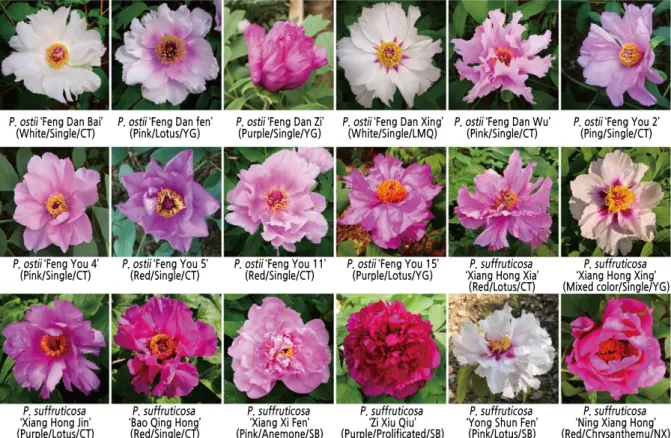
(2) Fingerprint Construction and Genetic Diversity Analysis of Tree Peony Collected from Hunan Province Based on SSR Markers. ornamental tree peony (P. suffruticosa) was grown in northern Xiangxi, and medicinal tree peony (P. ostii) was grown in southern Xiangxi (Hou et al., 2009). Since 2014, our research group has collected Hunan tree peony resources showing excellent characteristics of moisture and heat resistance from Shaoyang and Xiangxi for genetic diversity research and hybrid breeding (Wu et al., 2017; Xu et al., 2020). However, there are many unresolved issues, such as potentially synonymous names and unknown sources of these resources because of their long cultivation history and complex genetic background and the discovery of new mutant strains. Researchers usually distinguish and name different varieties according to their phenotypic characteristics and site of introduction. However, morphological data are greatly influenced by environmental factors and do not reflect all of the genetic diversity inherent in a species (Vassou et al., 2015). To protect and utilize tree peony resources in Hunan Province, China, and reveal genetic differences at the molecular level, it is necessary to conduct genetic diversity analyses and DNA fingerprint construction. Because simple sequence repeat (SSR) markers have extensive distribution, high polymorphism and mutation rates, good reproducibility, codominance, and the absence of environmental restrictions (Powell et al., 1996; Keyser et al., 2010), they have been widely used for cultivar identification, genetic map construction, and molecular marker-assisted selection in many horticultural plants, such as peach (Rojas et al., 2008) and mango (Wahdan et al., 2011). Following the development of fluorescence-based sequencing technology, Schuelke (2000) reported a high-throughput, low-cost SSR product detection system referred to as simple sequence repeat with tailed primer M13 (TP-M13-SSR) technology. This technique solves many problems, such as low analytical flux, cumbersome amplification product detection processes, excessive data recording, and low resolution (Hao et al., 2020), and has been widely used in wheat (Liu et al., 2020), apple (Gao et al., 2016), and other plants. The local tree peony variety resources in Hunan are indispensable materials for breeding and for studying the mechanisms underlying moisture and heat resistance (Zhang et al., 2019). In this study, TP-M13-SSR technology was used to select primers with high polymorphism from a set of developed SSR primers for DNA fingerprint construction and genetic diversity analysis in Hunan tree peony resources. The differences and genetic diversity among local tree peony variety resources in Hunan were revealed at the molecular level. This work provides a reference for the collection and classification of tree peony resources in the future.. Materials and Methods Plant Materials Since 2014, our group has collected tree peony resources from Shaoyang City and Xiangxi Autonomous Prefecture in Hunan Province and introduced them to the flower collection of Hunan Agricultural University. Although medicinal tree peony does not belong to the P. suffruticosa Jiangnan group, it has been cultivated for a long time in Shaoyang, Hunan Province, so it was also included in the study. Through grafting, sowing, and other breeding methods, more than five strains of each germplasm have been generated. Plants with robust growth and stable characteristics were selected, and their harvested petioles were stored frozen at-80°C after quick freezing in liquid nitrogen. Information on the germplasm resource is provided in Fig. 1.. Horticultural Science and Technology. 685.
(3) Fingerprint Construction and Genetic Diversity Analysis of Tree Peony Collected from Hunan Province Based on SSR Markers. Fig. 1. Eighteen samples of peony resources. The flower type, and provenance of the sample are shown in parentheses. CT representatives were introduced from Caitian Village, Li Jiaping Town, Shaoyang County, Hunan Province, China. YG representatives were introduced from Yanggu Village, Wufengpu Town, Shaoyang County, Hunan Province, China. LMQ representatives were introduced from Li Muqiao Village, Li Jiaping Town, Shaoyang County, Hunan Province, China. SB representatives were introduced from Songbai Town, Yongshun County, Hunan Province, China. NX representatives were introduced from Ningxiang County, Changsha City, Hunan Province, China.. DNA Extraction and Primer Screening Genomic DNA was extracted from petioles (0.1 g from each accession) using the modified CTAB method (Allen et al., 2006). The concentration and purity of the DNA were evaluated on agarose gels (1.0%) and with a DeNovix DS-11 spectrophotometer (DeNovix, USA). We selected 131 pairs of tree peony SSR primers that were developed previously as candidate primers (Wang et al., 2009b; Homolka et al., 2010; Hou et al., 2011; Zhang et al., 2011; Yu et al., 2013; Wu et al., 2014; Li, 2019). These primers (PAGE purification) were synthesized by Sangon Biotech (Shanghai) Co., Ltd. Fluorescent primers containing M13 connectors were synthesized by Ruibiotech (Beijing) Co., Ltd. First, 131 pairs of alternative SSR primers were preliminarily screened using genomic DNA from 9 Hunan tree peony varieties as the template. PCR was conducted in 10 µL of a solution containing 5 µL of 2× Taq PCR MasterMix (KT201; TIANGEN, Beijing, China), 1 µL of DNA template (20 ng·µL-1), 0.5 µL of each forward and reverse SSR primer, and 3 µL of ddH2O in a thermocycling system. The PCR conditions were as follows: predenaturing at 94°C for 3 min; 30 cycles of denaturing at 94°C for 30 s, annealing for 30 s, and extension at 72°C for 1 min; extension at 72°C for 5 min; and 4°C ∞. Finally, the products were examined on a 2% agarose gel. The DL500 DNA marker (Cat. No. B600305 Sangon Biotech Co., Shanghai, China.) was used to determine the sizes of the PCR products.. 686. Horticultural Science and Technology.
(4) Fingerprint Construction and Genetic Diversity Analysis of Tree Peony Collected from Hunan Province Based on SSR Markers. The primer information obtained from primary screening was then used to design fluorescently labeled M13 primers, which were synthesized by Ruibiotech (Beijing) Co., Ltd. TP-M13-SSR PCR was subsequently performed using the genomic DNA samples from the 18 tree peony resources as templates. The first round of PCR amplification was performed in a 10-µL reaction volume containing 1 µL of template DNA concentrate, 5 µL of 2× Taq plus PCR MasterMix (Ruibio RB-PCRA01), 0.1 µL (10 µM) of each primer, and 3.8 µL of ddH2O. The thermocycling conditions were as follows: initial denaturation at 95°C for 5 min; 20 cycles of 30 s at 95°C, annealing for 30 s, and 30 s at 72°C; a final extension at 72°C for 10 min; and holding at 4°C. The second round of PCR amplification was performed in a 20-µL reaction volume containing 2 µL of the product of the first reaction, 10 µL of 2× Taq plus PCR MasterMix (Ruibio RB-PCRA01), 0.15 µL (10 µM) of each primer, and 7.7 µL of ddH2O. The thermocycling conditions were as follows: initial denaturation at 95°C for 5 min; 35 cycles of 30 s at 95°C, annealing for 30 s and 30 s at 72°C; a final extension at 72°C for 10 min; and holding at 4°C. Then, 0.3 µL of the PCR product was mixed with 0.5 µL of the GS-500LIZ (ABI 4322682) (Applied Biosystems, USA) internal molecular weight standard and 9.5 µL of deionized formamide (ABI 4311320), followed by denaturation at 95°C for 5 min and chilling on ice immediately thereafter. The alleles of each locus were visualized on an ABI 3730XL capillary DNA sequencer (Applied Biosystems, USA).. Genetic Diversity Analysis and DNA Fingerprint Construction Primers were preliminarily screened by PCR. The products were separated by 2% agarose gel electrophoresis, and a gel imager (Gel DocTMXR+) was used to record images. Then, the running lanes and bands were analyzed manually with Image Lab software. The primers were preliminarily screened according to whether clear bands were amplified near the expected target fragment size. The fluorescent PCR amplification products were detected by capillary electrophoresis on an ABI-3730XL gene analyzer (Applied Biosystems, USA). The original files were imported into GeneMarker 2.2.0 software for analysis, and the peak map and Excel site information table were created. The results were converted into the format required by Popgene1.32 software to analyze genetic parameters such as the observed number of alleles (Na), the effective number of alleles (Ne), and Shannon's information index (I) (Francis et al., 1999). The polymorphism information contents (PICs) of the accessions were quantified using PIC_CALC v.0.6 software (Nagy et al., 2012). NTSYS-pc2.10e software was used to calculate the similarity coefficient, and the unweighted pair-group method with arithmetic mean (UPGMA) was used for cluster analysis to construct a phylogenetic tree (Nei, 1973). DNA fingerprinting code construction was conducted according to Ma's (2012) method with slight modification as follows: according to primer polymorphism in a high to low fixed arrangement, prefixed by the selected SSR primer GenBank accession number, suffixed by the molecular weight of the amplified band from a sample to obtain the band size of each germplasm resource for a certain marker, and SSR fingerprint of the germplasm resource obtained by serially numbering each type. Then, quick response (QR) code-generating software (https://cli.im/img) was used to encode the name, color, pattern, and fingerprinting code of each resource to generate the fingerprinting QR code.. Horticultural Science and Technology. 687.
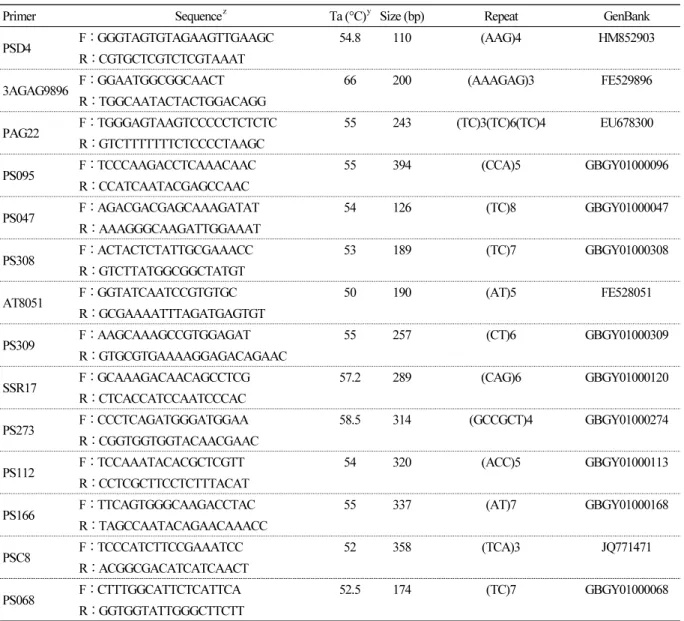
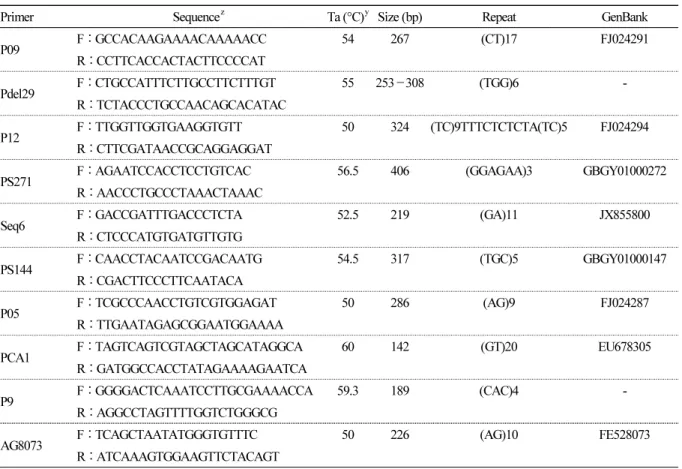
(5) Fingerprint Construction and Genetic Diversity Analysis of Tree Peony Collected from Hunan Province Based on SSR Markers. Results Core Primer Screening Eighteen Hunan tree peony germplasm samples were subjected to PCR amplification, and the products were detected by 2% agarose gel electrophoresis. According to whether a single clear band was amplified near the expected target fragment size, 67 pairs of primers with good amplification effects were selected from 131 pairs of alternative SSR primers. Some primer agarose gel electrophoresis results are provided in Suppl. Fig. 1s. The 67 pairs of primers were labeled with fluorescent dyes containing M13 connectors, and TP-M13-SSR PCR was performed. The amplification products were detected by capillary electrophoresis on an ABI-3730XL gene analyzer. A total of 24 pairs (Table 1) of polymorphic primers with good amplification results were selected on the basis of the amplification results for the 18 tree peony resources accounting for 18.32% of the candidate primers. Part of the primer capillary electrophoresis results are provided in supplement Fig. 2. Table 1. The 24 pairs of core primers in this study Primer PSD4 3AGAG9896 PAG22 PS095 PS047 PS308 AT8051 PS309 SSR17 PS273 PS112 PS166 PSC8 PS068. 688. Sequence z F:GGGTAGTGTAGAAGTTGAAGC. Ta (°C) y Size (bp). Repeat. GenBank. 54.8. 110. (AAG)4. HM852903. 66. 200. (AAAGAG)3. FE529896. 55. 243. (TC)3(TC)6(TC)4. EU678300. 55. 394. (CCA)5. GBGY01000096. 54. 126. (TC)8. GBGY01000047. 53. 189. (TC)7. GBGY01000308. 50. 190. (AT)5. FE528051. 55. 257. (CT)6. GBGY01000309. 57.2. 289. (CAG)6. GBGY01000120. 58.5. 314. (GCCGCT)4. GBGY01000274. 54. 320. (ACC)5. GBGY01000113. 55. 337. (AT)7. GBGY01000168. 52. 358. (TCA)3. JQ771471. 52.5. 174. (TC)7. GBGY01000068. R:CGTGCTCGTCTCGTAAAT F:GGAATGGCGGCAACT R:TGGCAATACTACTGGACAGG F:TGGGAGTAAGTCCCCCTCTCTC R:GTCTTTTTTTCTCCCCTAAGC F:TCCCAAGACCTCAAACAAC R:CCATCAATACGAGCCAAC F:AGACGACGAGCAAAGATAT R:AAAGGGCAAGATTGGAAAT F:ACTACTCTATTGCGAAACC R:GTCTTATGGCGGCTATGT F:GGTATCAATCCGTGTGC R:GCGAAAATTTAGATGAGTGT F:AAGCAAAGCCGTGGAGAT R:GTGCGTGAAAAGGAGACAGAAC F:GCAAAGACAACAGCCTCG R:CTCACCATCCAATCCCAC F:CCCTCAGATGGGATGGAA R:CGGTGGTGGTACAACGAAC F:TCCAAATACACGCTCGTT R:CCTCGCTTCCTCTTTACAT F:TTCAGTGGGCAAGACCTAC R:TAGCCAATACAGAACAAACC F:TCCCATCTTCCGAAATCC R:ACGGCGACATCATCAACT F:CTTTGGCATTCTCATTCA R:GGTGGTATTGGGCTTCTT. Horticultural Science and Technology.
(6) Fingerprint Construction and Genetic Diversity Analysis of Tree Peony Collected from Hunan Province Based on SSR Markers. Table 1. The 24 pairs of core primers in this study (Continued) Primer P09 Pdel29 P12 PS271 Seq6 PS144 P05 PCA1 P9 AG8073. Sequence z F:GCCACAAGAAAACAAAAACC. Ta (°C) y Size (bp). Repeat. GenBank. 54. 267. (CT)17. FJ024291. 55. 253–308. (TGG)6. -. 50. 324. (TC)9TTTCTCTCTA(TC)5. FJ024294. 56.5. 406. (GGAGAA)3. GBGY01000272. 52.5. 219. (GA)11. JX855800. 54.5. 317. (TGC)5. GBGY01000147. 50. 286. (AG)9. FJ024287. 60. 142. (GT)20. EU678305. 59.3. 189. (CAC)4. -. 50. 226. (AG)10. FE528073. R:CCTTCACCACTACTTCCCCAT F:CTGCCATTTCTTGCCTTCTTTGT R:TCTACCCTGCCAACAGCACATAC F:TTGGTTGGTGAAGGTGTT R:CTTCGATAACCGCAGGAGGAT F:AGAATCCACCTCCTGTCAC R:AACCCTGCCCTAAACTAAAC F:GACCGATTTGACCCTCTA R:CTCCCATGTGATGTTGTG F:CAACCTACAATCCGACAATG R:CGACTTCCCTTCAATACA F:TCGCCCAACCTGTCGTGGAGAT R:TTGAATAGAGCGGAATGGAAAA F:TAGTCAGTCGTAGCTAGCATAGGCA R:GATGGCCACCTATAGAAAAGAATCA F:GGGGACTCAAATCCTTGCGAAAACCA R:AGGCCTAGTTTTGGTCTGGGCG F:TCAGCTAATATGGGTGTTTC R:ATCAAAGTGGAAGTTCTACAGT. z. F, forward; R, reverse. y For each primer pair, annealing temperature when run individually (Ta).. Fig. 2. Genetic clustering tree of the 18 tested accessions.. Horticultural Science and Technology. 689.
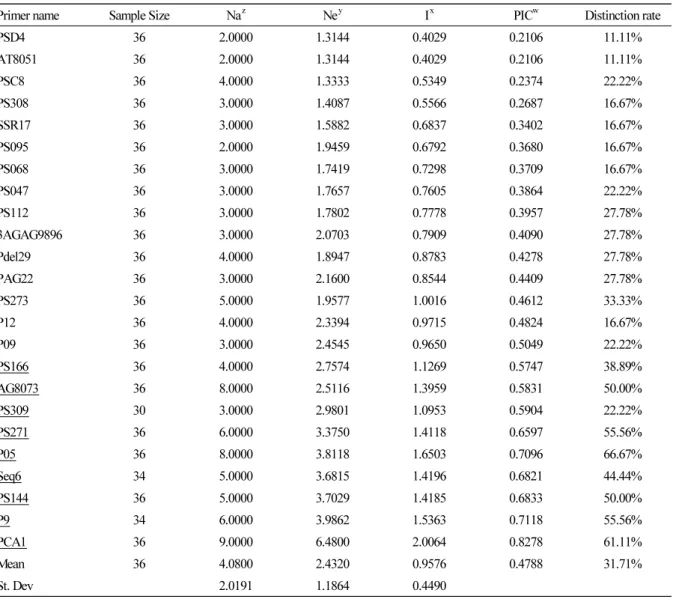
(7) Fingerprint Construction and Genetic Diversity Analysis of Tree Peony Collected from Hunan Province Based on SSR Markers. The 24 pairs of primers revealed 101 alleles (Na) in the 18 tree peony resources. The variation in each pair of primers ranged from 2 to 9, with an average of 4.0800. The effective number of alleles (Ne) ranged from 1.3114 to 6.4800, with an average of 2.4320. The I values ranged from 0.4029 to 2.0064, with a mean of 0.9576. The PICs ranged from 0.2106 (PSD4, AT8051) to 0.8278 (PCA1), with an average of 0.4788. The distinction rate ranged from 11.11% to 66.67%, with an average of 31.71%. Among these measures, the I values, PICs, and differentiation rates of eight pairs of primers were higher than the average values as follows: PS166, AG8073, PS271, P05, Seq6, PS144, P9, and PCA1 (Table 2). These results indicated that these 24 pairs of primers could be used as a polymorphic SSR primer library for genetic diversity analysis of tree peony resources, DNA fingerprinting, and other related studies. Table 2. Polymorphism and genetic diversity of the 24 pairs of SSR primers in 18 tree peony resources Sample Size. Na z. Ne y. Ix. PICw. Distinction rate. PSD4. 36. 2.0000. 1.3144. 0.4029. 0.2106. 11.11%. AT8051. 36. 2.0000. 1.3144. 0.4029. 0.2106. 11.11%. PSC8. 36. 4.0000. 1.3333. 0.5349. 0.2374. 22.22%. PS308. 36. 3.0000. 1.4087. 0.5566. 0.2687. 16.67%. SSR17. 36. 3.0000. 1.5882. 0.6837. 0.3402. 16.67%. PS095. 36. 2.0000. 1.9459. 0.6792. 0.3680. 16.67%. PS068. 36. 3.0000. 1.7419. 0.7298. 0.3709. 16.67%. PS047. 36. 3.0000. 1.7657. 0.7605. 0.3864. 22.22%. PS112. 36. 3.0000. 1.7802. 0.7778. 0.3957. 27.78%. 3AGAG9896. 36. 3.0000. 2.0703. 0.7909. 0.4090. 27.78%. Pdel29. 36. 4.0000. 1.8947. 0.8783. 0.4278. 27.78%. PAG22. 36. 3.0000. 2.1600. 0.8544. 0.4409. 27.78%. PS273. 36. 5.0000. 1.9577. 1.0016. 0.4612. 33.33%. P12. 36. 4.0000. 2.3394. 0.9715. 0.4824. 16.67%. P09. 36. 3.0000. 2.4545. 0.9650. 0.5049. 22.22%. PS166. 36. 4.0000. 2.7574. 1.1269. 0.5747. 38.89%. AG8073. 36. 8.0000. 2.5116. 1.3959. 0.5831. 50.00%. PS309. 30. 3.0000. 2.9801. 1.0953. 0.5904. 22.22%. PS271. 36. 6.0000. 3.3750. 1.4118. 0.6597. 55.56%. P05. 36. 8.0000. 3.8118. 1.6503. 0.7096. 66.67%. Seq6. 34. 5.0000. 3.6815. 1.4196. 0.6821. 44.44%. PS144. 36. 5.0000. 3.7029. 1.4185. 0.6833. 50.00%. P9. 34. 6.0000. 3.9862. 1.5363. 0.7118. 55.56%. PCA1. 36. 9.0000. 6.4800. 2.0064. 0.8278. 61.11%. Mean. 36. 4.0800. 2.4320. 0.9576. 0.4788. 31.71%. 2.0191. 1.1864. 0.4490. Primer name. St. Dev z. Observed number of alleles (Na). y Effective number of alleles (Ne). x Shannon’s information content (I). w Polymorphism information content (PIC). The underlined primers show above average I, PIC, and differentiation value.. 690. Horticultural Science and Technology.
(8) Fingerprint Construction and Genetic Diversity Analysis of Tree Peony Collected from Hunan Province Based on SSR Markers. Clustering Analysis Data for 51 alleles obtained from the 18 accessions of Hunan tree peony resources by amplification with the 8 pairs of primers showing above average I, PIC, and discrimination rate values were used to establish the original matrix. (The eight pairs of primers are PS166, AG8073, PS271, P05, Seq6, PS144, P9, and PCA1.) The genetic similarity coefficient was calculated with NTSYSpc 2.20V software. The genetic similarity coefficients among the 18 tree peony resources ranged from 0.57 to 0.86. P. ostii ‘Feng Dan Wu’ and P. suffruticosa ‘Xiang Hong Xing’, P. ostii ‘Feng Dan Fen’ and P. suffruticosa ‘Xiang Hong Jin’, and P. ostii ‘Feng Dan Xing’ and P. ostii ‘Feng You 2’ showed the highest genetic similarity coefficients, indicating that they were closely related. The P. ostii ‘Feng Dan Xing’ and P. ostii ‘Feng You 2’ UPGMA clustering results showed that 18 tree peony resources could be divided into two groups according to a genetic similarity coefficient of 0.57. The first group included only P. suffruticosa ‘Ning Xiang Hong’, indicating that this species was distantly related to the other 17 tree peony resources tested. The second group could be divided into two subclasses at 0.62. The first subclass included only P. suffruticosa ‘Xiang Xi Fen’ and P. suffruticosa ‘Zi Xiu Qiu’, indicating that these species were distantly related to the 15 tree peony resources (Fig. 2).. Construction of DNA Fingerprinting Among the 24 pairs of core primers, 8 pairs of primers with above average I, PIC, and differentiation rate values were selected. According to the PICs from high to low, they were PCA1, P9, PS144, Seq6, P05, PS271, AG8073, and PS166.. Table 3. DNA fingerprinting codes of local tree peony varieties in Hunan Province Code. z. Name/Color/Flower type. Fingerprinting code z. 1. P. ostii ‘Feng Dan Bai’/White/Single. EU678305(136/138) FJ024287(302/320). 2. P. ostii ‘Feng Dan Fen’/Pink/Lotus. EU678305(156/156) FJ024287(302/310). 3. P. ostii ‘Feng Dan Zi’/Purple/Single. EU678305(162/162) FJ024287(304/314). 4. P. ostii ‘Feng Dan Xing’/White/Single. EU678305(156/156) FJ024287(302/302). 5. P. ostii ‘Feng Dan Wu’/Pink/Single. EU678305(158/158) FJ024287(302/302). 6. P. ostii ‘Feng You 2’/Pink/Single. EU678305(152/160) FJ024287(302/302). 7. P. ostii ‘Feng You 4’/Pink/Single. EU678305(152/160) FJ024287(302/304). 8. P. ostii ‘Feng You 5’/Red/Single. EU678305(158/166) FJ024287(302/302). 9. P. ostii ‘Feng You 11’/Red/Single. EU678305(136/166) FJ024287(302/312). 10. P. ostii ‘Feng You 15’/Purple/Lotus. EU678305(162/176) FJ024287(302/308). 11. P. suffruticosa ‘Xiang Hong Xia’/Red/Lotus. EU678305(158/158) FJ024287(310/314). 12. P. suffruticosa ‘Xiang Hong Xing’/Mixed color/Single. EU678305(162/162) FJ024287(302/310). 13. P. suffruticosa ‘Xiang Hong Jin’/Purple/Lotus. EU678305(162/162) FJ024287(302/304). 14. P. suffruticosa ‘Bao Qing Hong’/Red/Single. EU678305(138/176) FJ024287(308/314). 15. P. suffruticosa ‘Xiang Xi Fen’/Pink/Anemone. EU678305(136/136) FJ024287(304/314). 16. P. suffruticosa ‘Zi Xiu Qiu’/Purple/Prolificated. EU678305(136/162) FJ024287(314/314). 17. P. suffruticosa ‘Yong Shun Fen’/Pink/Lotus. EU678305(136/162) FJ024287(302/314). 18. P. suffruticosa ‘Ning Xiang Hong’/Red/Chrysanthemum. EU678305(156/156) FJ024287(320/322). EU678305 sequence is for PCA1 SSR marker. FJ024287 sequence is for P05 SSR marker. The number in parenthesis is the size of the amplified fragment (bp) of the corresponding primer.. Horticultural Science and Technology. 691.
(9) Fingerprint Construction and Genetic Diversity Analysis of Tree Peony Collected from Hunan Province Based on SSR Markers. Fig. 3. DNA fingerprinting QR codes.. Among these primers, PCA1 showed polymorphism and achieved a differentiation rate of 61.11%. The highest differentiation rate was observed for primer P05 (66.67%) and the lowest for PS166 (38.89%). Primers PCA1 and P05 amplified 9 and 8 valid allelic loci from the 18 tree peony resources, with PIC values of 0.8278 and 0.7096, respectively, showing high polymorphism and discrimination rates and the ability to distinguish the 18 tree peony resources (Table 2). The DNA fingerprinting codes of the 18 tree peony resources obtained via the previously explained methods are shown in Table 3. The original capillary electrophoresis photos of primers PCA1 and P05 corresponding to 18 tested materials are provided in Suppl. Fig. 2s.. Fingerprinting QR Code The QR transcoding tool was used to convert the DNA fingerprinting codes of the 18 local tree peony varieties. The QR code contained information such as the name, color, pattern, and fingerprinting code of the germplasm resource (Fig. 3).. Discussion From 131 pairs of SSR primers, 24 pairs of primers with good polymorphism were selected, among which 8 pairs of primers exhibited above average I, PIC, and discrimination rate values. These 8 pairs of primers were used to analyze the genetic diversity of 51 loci amplified from the 18 tree peony resources. UPGMA clustering results showed that P. suffruticosa ‘Ning Xiang Hong’, introduced in Ningxiang County, Hunan Province, was clustered into a separate group from the other tree peony varieties with a genetic similarity coefficient of 0.57, while the remaining 17 tree peony varieties, introduced in Shaoyang and Xiangxi, were clustered in a large group together. This indicates that the tree peony. 692. Horticultural Science and Technology.
(10) Fingerprint Construction and Genetic Diversity Analysis of Tree Peony Collected from Hunan Province Based on SSR Markers. resources in Hunan show differences due to their different geographical distributions, which is consistent with the results of Zhang et al. (2016b). The second group, consisting of P. suffruticosa ‘Xiang Xi Fen’ and P. suffruticosa ‘Zi Xiu Qiu’, was divided into a subclass with a genetic similarity coefficient of 0.62; this group was not completely clustered with P. suffruticosa ‘Yong Shun Fen’ introduced in Xiangxi. This indicates that the tree peony resources in Hunan show relatively complex genetic relationships (Hong and Pan, 1999). Some P. ostii and P. suffruticosa varieties, such as P. ostii ‘Feng Dan Wu’ and P. suffruticosa ‘Xiang Hong Xing’, clustered into another group, this indicates that the existing ornamental peonies in Hunan are likely hybrid offspring of P. ostii, which is consistent with the results of Zhang et al. (2019). The mixed cluster of P. ostii and P. suffruticosa is due to their close genetic distance because they have many identical alleles. In the long-term introduction and cultivation, P. suffruticosa naturally hybridized with the original P. ostii resources in Hunan Province, resulting in excellent hybrid progenies such as P. suffruticosa ‘Xiang Hong Xing’, P. suffruticosa ‘Xiang Hong Jin’, and P. suffruticosa ‘Yong Shun Fen’. In general, the construction of a DNA fingerprint is based on the principle that fewer primer combinations can achieve maximal identification ability (Zhang et al., 2016b). The PIC and discrimination rate of primers are important bases for the selection of primer combinations (Hao et al., 2020). Therefore, DNA fingerprints of the 18 tree peony resources from Hunan Province were constructed using the combination of primer PCA1, with the highest PIC value, and primer P05, with the highest discrimination rate. Resolved morphological data are greatly influenced by environmental factors and do not reflect the total genetic diversity inherent in a species (Vassou et al., 2015). Since the results obtained by using molecular markers are more realistic and stable, the application of modern molecular biology techniques based on such markers has been increasing (Fan et al., 2020). In this study, the Na, Ne, I, and PIC values of PCA1, which was the best primer in terms of polymorphism, were all higher than those of P05, but the discrimination rate of PCA1 was inferior to that of P05, which was the third best primer in terms of polymorphism (Table 2). This situation occurred because P. ostii ‘Feng You 11’ showed unique allele 312 and P. suffruticosa ‘Ning Xiang Hong’ showed unique allele 322 amplified by P05, but no unique alleles were amplified by PCA1 in the 18 resources. The existence of specific alleles is of great significance for improving the efficiency of germplasm resource discrimination, and 15 (14.85%) unique alleles were found among the 101 alleles amplified by the 24 pairs of primers (Table 2). Six of the 83 (22.9%) alleles identified by Rakshit using 38 SSR markers were specific alleles (Rakshit et al., 2010). Li (2019) found that 53 tree peony materials exhibited specific alleles in a previous DNA fingerprinting study. Gao et al. (2009) found that five varieties presented specific alleles in a study of soybean molecular identity cards. Chen et al. (2011) identified 15 materials containing specific alleles in a peach DNA fingerprinting study. The results of the primer polymorphism information analysis showed that the polymorphism of a given primer in different tree peony populations was slightly different. For example, the Na, Ne, I, and PIC values of primer Seq6 in the present and previous study populations were 5, 3.6815, 1.4196, and 0.6821 and 9, 4.7, 1.771, and 0.794, respectively. This primer was the most polymorphic among the 12 developed by Yu et al. (2013). These results indicated that the tree peony group shows abundant genetic diversity and that the developed primers show good polymorphism and some degree of variability in Paeonia Sect. Moutan (Zhang et al., 2016a). According to the purpose of map construction and the size of the population, the coding method for DNA fingerprinting differs slightly, but there are three main methods applied at present (Ohtsubo and Nakamura, 2007; Chen et al., 2011; Kumar et al., 2020). Fingerprinting can be divided into three levels according to its practical value (Wang et al., 2017). In. Horticultural Science and Technology. 693.
(11) Fingerprint Construction and Genetic Diversity Analysis of Tree Peony Collected from Hunan Province Based on SSR Markers. this study, the serial band encoding method was used to construct the atlas, which was an easy approach for retrieving the original fingerprinting data and reading the allelic information. This method directly issues test results and produces fingerprinting QR codes, and it may be applied to other information from germplasm resources, thus increasing the utility of fingerprinting and contributing to the effectiveness of germplasm resources (Hao et al., 2020).. Conclusion Based on TP-M13-SSR technology, we selected eight pairs of primers with good polymorphism to analyze the genetic diversity of local tree peony varieties in Hunan Province and constructed DNA fingerprints for these resources, providing a research basis for the classification, identification, protection, and utilization of tree peony resources. Compared with other tree peony varieties, local tree peony varieties in Hunan Province are more resistant to dampness and heat. Whether these eight primer-amplified specific sites share this quality needs to be further studied by adding other representative research samples.. Literature Cited Allen GC, Flores-Vergara MA, Krasnyanski S, Kumar S, Thompson WF (2006) A modified protocol for rapid DNA isolation from plant tissues using cetyltrimethylammonium bromide. Nat Protoc 1:2320-2325. doi:10.1038/nprot.2006.384 Chen CW, Cao K, Wang LR, Zhu GR, Fang WC (2011) Molecular ID establishment of main China peach varieties and peach related species. Chin Agric Sci 44:2081-2093. doi:10.3864/j.issn.0578-1752.2011.10.013 Fan YM, Wang Q, Dong ZJ, Yin YJ, Silva JATD, Yu XN (2020) Advances in molecular biology of Paeonia L. Planta 251:47. doi:10.1007/s00 425-019-03299-9 Francis CY, Rong CY, Boyle T (1999) POPGENE, Microsoft Window-based freeware for population genetic analysis. University of Alberta:1-13 Gao Y, Wang K, Wang DJ, Gong X, Liu LJ, Liu FZ (2016) Molecular ID establishment of apple cultivars by TP-M13-SSR. Acta Hortic Sin 43:25-37. doi:10.16420/j.issn.0513-353x.2015-0324 Gao YL, Zhu RS, Liu CY, Li WF, Jiang HW, LI CD, Yao BC, Hu GH, Chen QS (2009) Establishment of molecular ID in soybean varieties in Heilongjiang, China. Acta Agron Sin 35:211-218. doi:10.3724/sp.J.1006.2009.00211 Hao L, Zhai YG, Zhang GS, Lu DY, Huang HG (2020) Efficient fingerprinting of the tetraploid Salix psammophila using SSR markers. For 11:176. doi:10.3390/f11020176 Homolka A, Berenyi M, Burg K, Kopecky D, Fluch S (2010) Microsatellite markers in the tree peony, Paeonia suffruticosa (Paeoniaceae). Am J Bot 97:e42-e44. doi:10.3732/ajb.1000127 Hong DY, Pan KY (1999) Taxonomical history and revision of Paeonia sect. Moutan (Paeoniaceae). Acta Phytotaxon Sin 37:351-368 (Abstract in English) Hou BX, Liu ZX, Yang XK, Li YZ (2009) History of tree peony cultivation and a native tree peony garden in Hunan. J Chi Urb For 7:52-55. (Abstract in English) Hou XG, Guo DL, Cheng SP, Zhang JY (2011) Development of thirty new polymorphic microsatellite primers for Paeonia suffruticosa. Bio Plant 55:708-710. doi:10.1007/s10535-011-0172-x Keyser ED, Shu QY, Bockstaele EV, Riek JD (2010) Multipoint-likelihood maximization mapping on 4 segregating populations to achieve an integrated framework map for QTL analysis in pot azalea (Rhododendron simsii hybrids). BMC Mol Biol 11:1. doi:10.1186/1471-2 199-11-1 Kumar PP, Janakiram T, Bhat KV (2020) Microsatellite based DNA fingerprinting and assessment of genetic diversity in bougainvillea cultivars. Gene 753:144794. doi:10.1016/j.gene.2020.144794 Li Chen (2019) Development of simple sequence repeat (SSR) markers from functional genes and establishment of molecular. MS thesis, Beijing University of Agriculture, Beijing, China Liu LH, Liu YN, Zhang MM, Li HB, Pang BS, Zhao CP (2020) Construction and comparative analysis of SNP and SSR fingerprints of 75 wheat cultivars in China. J Agric Sci Technol 22:15-23. doi:10.13304/j.nykjdb.2019.1023 (Abstract in English) Ma LY, Kong DC, Liu HB, Wang SQ, Li YY, Peng XM (2012) Construction of SSR fingerprint on 36 Chinese jujube cultivars. Acta Hortic. 694. Horticultural Science and Technology.
(12) Fingerprint Construction and Genetic Diversity Analysis of Tree Peony Collected from Hunan Province Based on SSR Markers. Sin 39:647-654. doi:10.16420/j.issn.0513-353x.2012.04.007 (Abstract in English) Nagy S, Poczai P, Cernák I, Gorji AM, Hegedűs G, Taller J (2012) PICcalc: an online program to calculate polymorphic information content for molecular genetic studies. Biochem Genet 50:670-672. doi:10.1007/s10528-012-9509-1 Nei M (1973) Analysis of gene diversity in subdivided populations. Proc Natl Acad Sci USA 70:3321-3323. doi:10.1073/pnas.70.12.3321 Ohtsubo KI, Nakamura S (2007) Cultivar identification of rice (Oryza sativa L.) by polymerase chain reaction method and its application to processed rice products. J Agric Food Chem 55:1501-1509. doi:10.1021/jf062737z Powell W, Machray GC, Provan J (1996) Polymorphism revealed by simple sequence repeat. Trends Plant Sci 1:215-222. doi:10.1016/13 60-1385(96)86898-1 Rakshit A, Rakshit S, Santhy V, Gotmare VP, Mohan P, Singh VV, Singh S, Singh J, Balyan HS, et al. (2010) Evaluation of SSR markers for the assessment of genetic diversity and fingerprinting of Gossypium hirsutum accessions. J Plant Biochem Biotechnol 19:153-160. doi:10.1007/BF03263335 Rojas G, Méndez MA, Munoz C, Lemus G, Hinrichsen P (2008) Identification of a minimal microsatellite marker panel for the fingerprinting of peach and nectarine cultivars. Electron J Biotechnol 11:5. doi:10.2225/vol11-issue5-fulltext-1 Schuelke M (2000) An economic method for the fluorescent labeling of PCR fragments. Nat Biotechnol 18:233-234. doi:10.1038/72708 Vassou SL, Kusuma G, Parani M (2015) DNA barcoding for species identification from dried and powdered plant parts: A case study with authentication of the raw drug market samples of Sida cordifolia. Gene 559:86-93. doi:10.1016/j.gene.2015.01.025 Wahdan MT, Abdelsalam AZ, El-Naggar AA, Hussein MA (2011) Preliminary horticultural studies to describe and identify of two new egyptian mango strains using DNA fingerprint. J Am Sci 7:641-650 Wang FG, Yang Y, Yi HM, Zhao JR, Ren J, Wang L, Ge JR, Jiang B, Zhang XC, et al. (2017) Construction of an SSR-Based standard fingerprint database for corn variety authorized in China. Chin Agric Sci 50:1-14. doi:10.3864/j.issn.0578-1752.2017.01.001 (Abstract in English) Wang J (2009a) Genetic diversity of Paeonia ostia and germplasm resources of tree peony cultivars from Chinese Jiangnan area. PhD thesis, Beijing Forestry University, Beijing, China Wang JX, Xia T, Zhang JM, Zhou SL (2009b) Isolation and characterization of fourteen microsatellites from a tree peony (Paeonia suffruticosa). Conserv Genet 10:1029-1031. doi:10.1007/s10592-008-9680-4 Wu J, Cai CF, Cheng FY, Cui HL, Zhou H (2014) Characterisation and development of EST-SSR markers in tree peony using transcriptome sequences. Mol Breed 34:1853-1866. doi:10.1007/s11032-014-0144-x Wu Lb, Lv CP, Xiao TT, Xu WT, Chen HX, Peng JH (2017) Investigation of germplasm resources of Paeonia suffuticosa in Hunan province. Hunan Agric Sci 1:8-12+15. doi:10.16498/j.cnki.hnnykx.2017.001.003 (Abstract in English) Xu WT, Lv CP, Sun TJ, Chen MJ, Yang ZM, Chen HX, Li YL (2020) Morphological and ISSR molecular markers analysis of nine native peony resources in Hunan province. Mol Plant Breed 18:5038-5045. doi:10.13271/j.mpb.018.005038 (Abstract in English) Yu HP, Cheng FY, Zhong Y, Cai CF, Wu J, Cui HL (2013) Development of simple sequence repeat (SSR) markers from Paeonia ostii to study the genetic relationships among tree peonies (Paeoniaceae). Sci Hortic 164:58-64. doi:10.1016/j.scienta.2013.06.043 Zhai LJ, Shi QQ, Niu LX, Zhang YL (2018) Research progress of wild tree peony resources of Subsect. Vagintae. North Hortic 42:167-174. doi:10.11937/bfyy.20173379 (Abstract in English) Zhang J, Liu AQ, Zhang SL, Xie YR, Liu Y (2016a) Using the SSR with fluorescent labeling to establish SSR molecular ID code for cultivars of the Chinese herbaceous peony. J Beijing For Univ 38:101-109. doi:10.13332/j.1000-1522.20150349 (Abstract in English) Zhang MH, Jin XL, Cheng FY, Lu JH, Wu S (2016b) ISSR analysis on genetic diversity of Paeonia suffruticosa in Hunan province. Chin Tradit Herb Drugs 47:1193-1198. doi:10.7501/j.issn.0253-2670.2016.07.022 (Abstract in English) Zhang MH, Jin XL, Wen YF, Shen SY, Wen X, Wu S, Lu JH, Ye Y (2019) Genetic diversity and relationship of Hunan province of China local tree peonies based on SSR markers. Acta Sci Pol-Hortorum Cultus 18:213-223. doi:10.24326/asphc.2019.4.20 Zhang YL, Wang Y, Li ZH, Ma H (2011) SSRs marking of Paeonia delavayi based on peony EST data. For Res 24:171-175. doi:10.13275/j.c nki.lykxyj.2011.02.008 (Abstract in English). Horticultural Science and Technology. 695.
(13) Fingerprint Construction and Genetic Diversity Analysis of Tree Peony Collected from Hunan Province Based on SSR Markers. A. B. C. Supplementary Fig. 1s. Agarose gel electrophoresis results. M means maker. Numbers 1–9 correspond to the samples numbered 1–9 in Tab. 3. (A) Primers in which the bands were amplified near the expected target fragment. (B) Primers in which the bands were amplified near the expected target fragment and with hetero bands. (C) Primers in which no bands were amplified near the expected target fragment.. Horticultural Science and Technology.
(14) Fingerprint Construction and Genetic Diversity Analysis of Tree Peony Collected from Hunan Province Based on SSR Markers. A. B. C. D. Supplementary Fig. 2s. The capillary electrophoresis photos and fingerprint codes of primers PCA1 and P05 corresponding to 18 tested materials. (A) P. ostii ‘Feng Dan Bai’. (B) P. ostii ‘Feng Dan Fen’. (C) P. ostii ‘Feng Dan Zi’. (D) P. ostii ‘Feng Dan Xing’. (E) P. ostii ‘Feng Dan Wu’. (F) P. ostii ‘Feng You 2’. (G) P. ostii ‘Feng You 4’. (H) P. ostii ‘Feng You 5’. (I) P. ostii ‘Feng You 11’. (J) P. ostii ‘Feng You 15’. (K) P. suffruticosa ‘Xiang Hong Xia’. (L) P. suffruticosa ‘Xiang Hong Xing’. (M) P. suffruticosa ‘Xiang Hong Jin’. (N) P. suffruticosa ‘Bao Qing Hong’. (O) P. suffruticosa ‘Xiang Xi Fen’. (P) P. suffruticosa ‘Zi Xiu Qiu’. (Q) P. suffruticosa ‘Yong Shun Fen’. (R) P. suffruticosa ‘Ning Xiang Hong’.. Horticultural Science and Technology.
(15) Fingerprint Construction and Genetic Diversity Analysis of Tree Peony Collected from Hunan Province Based on SSR Markers. E. F. G. H. Supplementary Fig. 2s. . Continued.. Horticultural Science and Technology.
(16) Fingerprint Construction and Genetic Diversity Analysis of Tree Peony Collected from Hunan Province Based on SSR Markers. I. J. K. L. Supplementary Fig. 2s. . Continued.. Horticultural Science and Technology.
(17) Fingerprint Construction and Genetic Diversity Analysis of Tree Peony Collected from Hunan Province Based on SSR Markers. M. O. N. P. Supplementary Fig. 2s. . Continued.. Horticultural Science and Technology.
(18) Fingerprint Construction and Genetic Diversity Analysis of Tree Peony Collected from Hunan Province Based on SSR Markers. Q. R. Supplementary Fig. 2s. . Continued.. Horticultural Science and Technology.
(19)
수치
+3


관련 문서
1 John Owen, Justification by Faith Alone, in The Works of John Owen, ed. John Bolt, trans. Scott Clark, "Do This and Live: Christ's Active Obedience as the
And based on these results, in order to utilize the witty stories appeared in the novels of Korean Pansori as actual educational texts, the brief analysis
Tullio Scovazzi, “Open Questions on the Exploitation of Genetic Resources in Areas Beyond National Jurisdiction”, Am. Nagoya Protocol on Access to Genetic Resources and the
• Essentially consists of a number of valves to regulate flow and isolate the tree from the well, and monitor the
Based on the experimental results, the execution time in the matching process for 36 fingerprint minutiae, 200 chaff minutiae and 34 authentication fingerprint
The seven steps can be organized in order of selecting local cultural resources of Fujian Province, selecting local design prototypes for character
Just as we achieved good control with a joint-based controller that was based on a linearizing and decoupling model of the arm, we can do the same for the Cartesian case.
Based on this research, I hope that the direction of Korean classical music education, diversity of teaching materials and teaching method of contents area
