| Abstract |
Purpose: This study investigated the correlation between physical function and forward head posture in spastic diplegia.
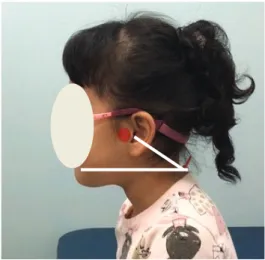
Methods: The subjects of this study were 10 spastic diplegia patients. We took pictures of the subjects’ craniovertebral angle with a digital camera to determine the degree of forward head posture and then analyzed them using the NIH image J program.
The physical function test used the TCMS, the BBT, and a spirometer. The data in this study were measured using SPSS version 23.0, and the statistical significance level α was 0.05. A Pearson correlation coefficient analysis was performed to identify the correlation between the degree of the subject’s head forward position and physical function.
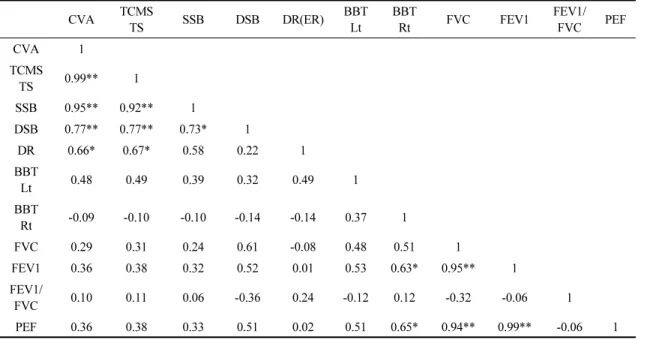
Results: When we performed the BBT and spirometer tests, the subjects’ forward head postures were not correlated (p < 0.05).
However, with the TCMS, there was a strong correlation between the forward position of the head and balance, with balance decreasing as the head position increased (p < 0.05).
Conclusion: Spastic diplegia patients with severe forward head posture showed problems with static balance, dynamic balance, and equilibrium reaction when sitting. Intervention on the right posture and preventive activities will be needed to improve the health of spastic diplegia patients and prevent future problems with physical function.
Key Words: Forward head posture, Sitting balance, Physical function, Spastic diplegia
†Corresponding Author : Eun-Ju Lee ([email protected])
Original Article Open Access
경직형 양하지 뇌성마비 아동의 전방머리자세와 신체기능간의 상관관계