Effect of bilateral infraorbital nerve block on intraoperative anesthetic requirements,
hemodynamics, glycemic levels, and extubation in infants undergoing cheiloplasty under general
anesthesia
Sunil Rajan, Jacob Mathew, Lakshmi Kumar
Department of Anaesthesiology, Amrita Institute of Medical Sciences, Amrita Vishwa Vidyapeetham, Kochi, India
Background: Inappropriate use of intravenous and inhaled anesthetics may be dangerous in infants undergoing facial cleft surgeries. This study primarily aimed to compare the effect of infraorbital nerve block on sevoflurane requirement in infants undergoing cheiloplasty. Intraoperative opioid consumption, hemodynamics, blood glucose levels, extubation time, and delirium were also compared.
Methods: This prospective, randomized, double-blinded study was conducted in 34 infants undergoing cheiloplasty under general anesthesia. After induction, group A received bilateral infraorbital nerve block with 0.5 mL of 0.5% bupivacaine and group B 0.5 mL saline. An increase in heart rate or blood pressure > 20% was managed by increasing sevoflurane by 2–2.5%, followed by fentanyl 0.5 µg/kg bolus. The chi-square test and independent-sample t-test were used where applicable.
Results: Demographics, duration of surgery, and intravenous fluids used were comparable between the groups.
Compared to group A, patients in group B had significantly higher consumption of fentanyl (14.2 ± 4.4 µg vs. 22.1 ± 6.2 µg) and sevoflurane (14.2 ± 4.8 mL vs. 26.8 ± 15.6 mL). Intraoperative hemodynamic parameters were significantly lower in group A, the number of times increases in hemodynamic parameters occurred, and fentanyl supplemental bolus was required remained significantly lower in group A than in group B. Intraoperative glycemic levels remained higher in group B, and the extubation time was significantly shorter in group A than in group B (4.40 ± 1.60 min vs. 9.2 ± 2.18 min). Group A had a lesser occurrence of postoperative delirium.
Conclusion: Supplemental infraorbital block in infants undergoing cheiloplasty under general anesthesia resulted in significantly decreased anesthetic requirements and optimal hemodynamic and glycemic levels with faster extubation and lesser delirium.
Keywords: Cleft Lip; Fentanyl; Infant; Nerve Block; Sevoflurane.
This is an Open Access article distributed under the terms of the Creative Commons Attribution Non-Commercial License (http://creativecommons.org/licenses/by-nc/4.0/) which permits unrestricted non-commercial use, distribution, and reproduction in any medium, provided the original work is properly cited.
Received: January 16, 2021•Revised: February 21, 2021•Accepted: March 2, 2021
Corresponding Author: Sunil Rajan, Department of Anaesthesiology, Amrita Institute of Medical Sciences, Amrita Vishwa Vidyapeetham, Kochi, India E-mail: [email protected], [email protected]
Copyrightⓒ 2021 Journal of Dental Anesthesia and Pain Medicine
INTRODUCTION
The repair of the primary cleft lip promptly is gaining popularity. Due to concerns about the age group and the possibility of associated conditions predisposing to
difficult airways, perioperative pain management in infants undergoing facial cleft surgeries is often considered complicated. Respiratory depression caused by the inappropriate use of opioids or volatile agents could be dangerous [1,2]. Therefore, extubation following cleft repair in infants is usually delayed until the child
is fully awake.
Infraorbital nerve block, if given pre-emptively to augment general anesthesia, reduces the requirements of anesthetic agents during cleft lip surgery [3-6]. The resultant lesser sedation in the immediate postoperative period reduces the risk of respiratory complications. As the surgical stress response becomes blunted with the addition of a regional block to supplement general anesthesia, the intraoperative glycemic levels could remain optimal. We hypothesized that secondary to administration of infraorbital nerve block and proper analgesia, the use of opioids and inhalational agents could be reduced, which would be reflected by a shorter extubation time with less emergence delirium.
This study aimed to primarily compare the effect of supplemental bilateral infraorbital block on intraoperative sevoflurane requirement in infants undergoing cleft lip correction under general anesthesia. The secondary objectives were to assess intraoperative fentanyl con- sumption, changes in the heart rate (HR) and blood pressure (BP), the number of times intervention was required to correct intraoperative hemodynamic changes, the number of times additional fentanyl bolus was required, and blood glucose levels. The extubation time and degree of post-extubation delirium were also compared between the groups.
METHODS
This prospective randomized, double-blinded study was conducted after obtaining approval from the hospital ethical committee (IRB-AIMS-2018-286) and parental consent. It was registered in the Clinical Trial Registry India (CTRI/2019/02/017592). Thirty-four patients who underwent cleft lip surgery under general anesthesia, aged 1 month to 1 year, of American Society of Anesthesio- logists physical status 1, were included in the study.
Those with diabetes, anticipated difficult airway, infants of diabetic mothers, and surgery duration lasting > 3 hours were excluded. Patients were randomly divided into
two equal groups of 17 each based on a computer- generated random sequence of numbers. Sequentially numbered opaque sealed envelopes were used for the conceal allocation.
To the best of our knowledge, no similar studies have been published. A pilot study was initially conducted with 10 infants in each group who underwent cheiloplasty with and without infraorbital block. Sevoflurane consumption during surgery was compared between patients who received preoperative bilateral infraorbital nerve block (13.26 ± 4.49 mL) to those who did not (33.14 ± 17.79 mL). Based on this result, with 90% power and 95%
confidence interval, the sample size was calculated to be 17 per group to obtain statistically significant results.
All infants fasted for 6 h for formula feeds or solids, 4 h for breast milk, and 2 h for clear fluids. The total duration of nil per oral (NPO) attained in all infants was noted. On the day of surgery, all infants received general anesthesia according to a standardized protocol. Once infants were taken into the operation theater, standard preinduction monitors such as electrocardiograms, pulse oximetry, and non-invasive BP monitoring were attached.
All patients were induced with sevoflurane 8% in oxygen at a flow rate of 6 L/min, and intravenous access was obtained with a 22G or 24G cannula. Subsequently, the first random blood sugar (RBS) reading was performed using a standard glucometer from the finger/toe prick before intravenous fluid administration was initiated.
All patients received glycopyrrolate (0.01 mg/kg body weight), fentanyl (2 µg/kg), and propofol (1 mg/kg), following which sevoflurane concentration was reduced to 2% vaporizer dial setting. The volume of sevoflurane required for induction was noted at this point. Muscle relaxation was provided with suxamethonium (1.5 mg/kg body weight), and the patients were intubated with an oral Ring Adair Elwyn endotracheal tube with an internal diameter of 3.5-4.5 mm as appropriate. Anesthesia was maintained with sevoflurane (1.5-2%) in oxygen and nitrous oxide mixture (1:1) at a flow rate of 1 L/min to maintain an end-tidal minimum alveolar concentration (MAC) of 1. A 0.5 mg/kg body weight bolus of tracurium
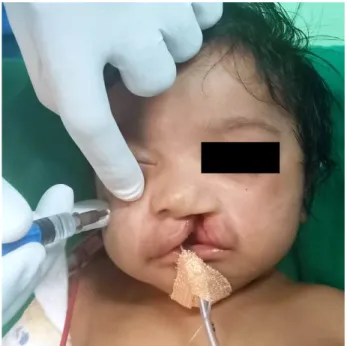
Fig. 1. Infraorbital block being given
was administered after securing the airway, followed by 0.01mg/kg body weight intermittent boluses.
Patients in group A received bilateral infraorbital nerve block with 0.5% bupivacaine (0.5 mL) by the extraoral landmark technique, while the same volume of normal saline was used in group B. The block was administered under sterile conditions using a 26G needle by first palpating the infraorbital rim at a point on a vertical line drawn caudally through the center of the pupil to the angle of the mouth, and the infraorbital foramen was localized by palpation just below the orbital rim. The finger was kept at the infraorbital rim throughout to prevent penetration into the orbit. A cephalo-medial direction was used to infiltrate the infraorbital foramen with 0.5 mL of 0.5% bupivacaine bilaterally (Fig. 1).
Anesthetic management after administration of the block was carried out by another anesthetist, who was blinded to the type of solution used for giving the infraorbital block and collected the subsequent data.
Intraoperative hemodynamic variables such as HR, systolic blood pressure (SBP), and mean arterial pressure (MAP) were documented every 15 min until the end of surgery. Any increase in HR or SBP > 20% of the baseline was initially managed by increasing the
sevoflurane to 2–2.5% to attain an end-tidal MAC of 1.5, and thereafter persistent increase in HR and SBP were considered as inadequate analgesia, and fentanyl 0.5 µg/kg body weight bolus was administered, not exceeding 1 µg/kg in 30 min. The number of times increases in HR, or SBP > 20% from baseline occurred, requiring intervention such as increasing sevoflurane concentration and the number of times fentanyl supplemental bolus was required were noted in both the groups.
Maintenance fluid, Ringers lactate (RL) with 1%
dextrose, was administered according to the bodyweight using the Holliday and Segar formula, and the total volume of intravenous fluid used was noted. RBS levels were checked at hourly intervals of 1, 2, and 3 h or at the end of surgery if the duration of surgery lasted < 3 h, using a standard glucose meter (FreeStyleOptium H System, Copyright © 2015 Abbott Laboratories, Abbott Park, Illinois, USA) with a test strip on capillary blood.
Hypoglycemia (RBS < 65 mg/dL) was managed with 10% dextrose at 2.5 mL/kg body weight, and in the presence of hyperglycemia (RBS > 150 mg/dL), the glucose-containing solution was replaced with plain RL.
The incidence of hyperglycemia and hypoglycemia were documented, and infants presenting with these incidences were excluded from the study.
Thirty minutes before the end of the surgery, paracetamol (15 mg/kg body weight) was administered intravenously to all infants for postoperative analgesia.
At the end of the surgery, infants belonging to group B received bilateral infraorbital nerve block before the inhalational agent was stopped. Reversal of neuro- muscular blockade was performed with neostigmine (0.05 mg/kg) and glycopyrrolate (0.01 mg/kg). Extubation was performed when the infants were fully awake with the return of protective airway reflexes, eye-opening/crying on suctioning with full motor power, and presenting regular and adequate tidal volume generation with a normal respiratory rate. Extubation time was calculated from the time the inhalational agents were discontinued after extubation. The degree of emergence delirium after extubation was assessed using the Pediatric Anesthesia
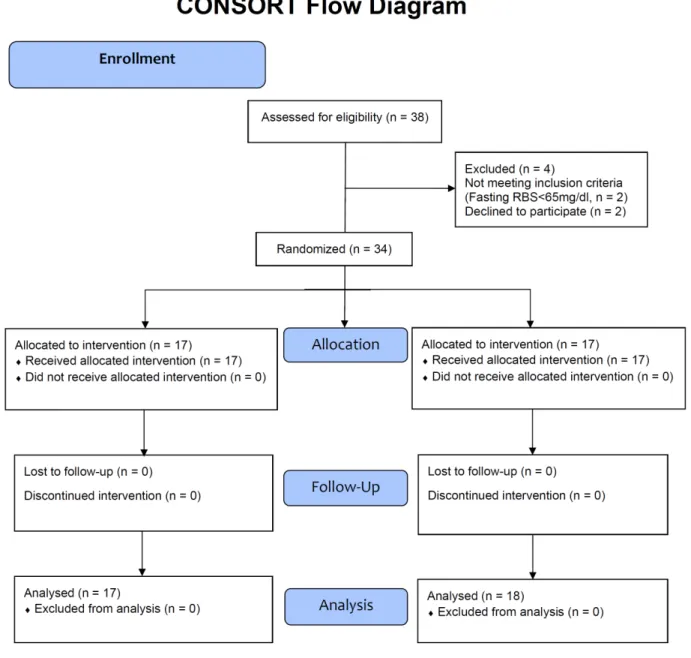
Fig. 2. CONSORT flow chart. RBS, random blood sugar
Emergence Delirium (PAED) scale score [7] at 5 min and 10 min after extubation (minimum score = zero, maximum score = 20).
An Avance CS2 workstation and Tec 7 vaporizer were used to administer anesthesia. At the end of the surgery, the volume of sevoflurane used after induction until the end of surgery was noted from the anesthesia workstation, and fentanyl consumption and surgery duration were also documented. All cases were performed in the same theater using the same anesthesia workstation and vaporizer.
The chi-square test was used to compare the distribution of gender in each group. An independent sample t-test was used to compare variables such as fentanyl and sevoflurane consumption, hemodynamic variables, RBS, age, and weight. The number of times fentanyl was administered and sevoflurane was increased and PAED scores were compared using the Mann-Whitney test. Statistical analyses were conducted using SPSS version 20.0 for Windows (IBM Corporation, Armonk, NY, USA).
Table 1. Comparison of demographic data
Variables Group A Group B
P-value
Mean ± SD Mean ± SD
Age in months 4.6 ± 2.3 5.3 ± 2.2 0.383
Weight in kg 6.3 ± 1.0 6.8 ± 1.4 0.197
Gender n (%) n (%)
Male 6 (35.3) 7 (44.4)
0.836
Female 11 (64.7) 10 (55.6)
SD, standard deviation.
Table 2. Comparison of anesthetic requirements, volume of intravenous fluids, extubation time, durations of NPO, and surgery
Variables Group A Group B
P-value Mean ± SD Mean ± SD
Sevoflurane consumption (mL) 14.2 ± 4.8 26.8 ± 15.6 0.004 Fentanyl consumption (μg) 14.2 ± 4.4 22.1 ± 6.2 < 0.001 Total IVF volume used (mL) 133.1 ± 49.1 137.3 ± 39.3 0.747 Extubation time (minutes) 4.40 ± 1.60 9.2 ± 2.18 < 0.001 Duration of NPO (hours) 4.8 ± 1.2 4.6 ± 1.4 0.597 Duration of surgery (hours) 2.5 ± 0.5 2.6 ± 0.4 0.516 SD, standard deviation; IVF, intravenous fluid; NPO, nil per oral.
Table 3. Number of times sevoflurane concentration increased, fentanyl bolus administered, and PAED score at 5 and 10 min
Variables Group A Group B
P-value
Median IQR (Min-Max) Median IQR (Min-Max)
Number of times fentanyl bolus given 0.0 (0.0-0.5) (0.0-2.0) 2.0 (2.0-2.5) (0.0-7.0) < 0.001 Number of times sevoflurane increased 0.0 (0.0-0.5) (0.0-2.0) 4.0 (3.5-4.0) (0.0-8.0) < 0.001
PAED score at 5min 7.0 (7.0-7.0) (2.0-8.0) 15.0 (15.0-15.0) (12.0-18.0) < 0.001
PAED score at 10 min 6.0 (6.0-6.0) (2.0-7.0) 14.0 (13.5-14.0) (10.0-16.0) < 0.001
PAED, Paediatric Anesthesia Emergence Delirium; Min-Max, Minimum-Maximum; IQR, interquartile range.
Fig. 3. Changes in heart rate. Postind, postinduction
Fig. 4. Changes in systolic blood pressure. SBP, systolic blood pressure;
postind, postinduction
RESULTS
Four children were excluded initially after assessing eligibility as parents of two infants were not willing to participate in the study, and two had a fasting RBS of
< 65 mg/dL and had received 10% dextrose. Data of 34 infants were analyzed (Fig. 2), and the demographic variables were comparable in both the groups (Table 1).
Fentanyl consumption in group A was significantly lower than that in group B (14.2 ± 4.4 µg vs. 22.1 ± 6.2 µg, P < 0.001). Sevoflurane consumed in group A was 14.2
± 4.8 mL and that in group B was 26.8 ± 15.6 mL; the
difference was statistically significant. Extubation time was significantly shorter in group A than in group B (4.40
± 1.60 min vs. 9.2 ± 2.18 min, P < 0.001). The total volume of intravenous fluids used intraoperatively, duration of NPO, and surgery were comparable in both the groups (Table 2).
The number of times an intervention was required, in response to HR and/or BP change of > 20% from baseline, was significantly higher in group B than in group A. The same observation was made by comparing the number of times fentanyl bolus was required
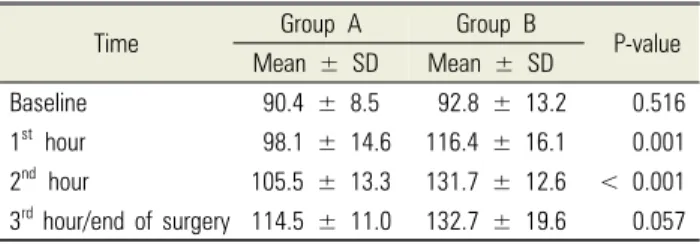
Table 4. Comparison of mean random blood sugar values in mg/dL
Time Group A Group B
P-value Mean ± SD Mean ± SD
Baseline 90.4 ± 8.5 92.8 ± 13.2 0.516
1st hour 98.1 ± 14.6 116.4 ± 16.1 0.001
2nd hour 105.5 ± 13.3 131.7 ± 12.6 < 0.001 3rd hour/end of surgery 114.5 ± 11.0 132.7 ± 19.6 0.057 SD, standard deviation.
intraoperatively (P < 0.001). The PAED scale score at 5 and 10 min after extubation was significantly lower in group A than in group B (P < 0.001, Table 3).
The baseline hemodynamic variables were comparable between the two groups. The mean HR, SBP, and MAP were significantly higher in group B at most time points intraoperatively (Figs. 3 and 4).
Baseline RBS and that at 3 h/end of surgery did not show any significant difference between the groups.
However, RBS at 1 h and 2 h intraoperatively was significantly higher in group B (Table 4). No patient in either group required the use of an additional 10%
dextrose or change of maintenance fluid to RL as RBS of patients remained within the range of 65–150 mg/dL, indicating no incidence of hypoglycemia or hyper- glycemia during the study period.
DISCUSSION
An infraorbital nerve block is commonly performed during cheiloplasties [3,4,8,9]. Two approaches have been described for performing infraorbital nerve block: the intraoral or extraoral technique. However, the extraoral technique is considered safer than the intraoral technique because the risk of orbital globe injury is lower [3,4,8,10].
It is safe and easy to administer the block using the extraoral landmark technique, which provides profound intraoperative and postoperative analgesia. We also observed a significant decrease in intraoperative consumption of anesthetics when the block was administered preoperatively.
As the intraoperative requirement of opioids is reduced,
it decreases the risk of postoperative airway compli- cations such as opioid-induced respiratory depression, desaturation, airway obstruction, and postoperative nausea and vomiting. Due to faster awakening and less delay in extubation, the use of pre-emptive infraorbital block has been shown to ensure early recovery and feeding in infants receiving this block[3,4,8,10]. In our study, we also observed shorter extubation times in such infants.
The degree of emergence delirium after extubation was assessed using the PAED scale score [7]. The degree of emergence delirium increased directly with the total score. Our study showed significantly lower scores at 5 and 10 min after extubation in the block group, which can be interpreted as lesser residual anesthetic effects and better postoperative analgesia.
We used 0.5% bupivacaine (0.5 mL) because we did not use any additives and it has been shown that infraorbital nerve block with 0.5% bupivacaine, when combined with general anesthesia, resulted in significantly reduced consumption of opioids during pediatric cleft lip correction [11]. Various other studies have also shown that infraorbital nerve block supplemented with adjuncts prolonged analgesia and reduced the requirement for opioids. The adjuncts used were clonidine [3] fentanyl, [12], pethidine [13], tramadol [14], ketamine [15], dexamethasone, and dexmede- tomidine [16]. Adjuncts prolong the duration of analgesia and lower the concentration of local anesthetic used.
Higashizawa et al. [17] demonstrated a decreased requirement of inhalational agent, isoflurane, when infraorbital nerve block was pre-emptively administered in adults undergoing functional endoscopic nasal sinus surgery. Eipe et al. [5] and Salloum et al. [6] showed the usefulness of bilateral infraorbital nerve block as the sole anesthetic technique with no requirement of opioids intraoperatively. However, the age of subjects was above 12 years in the study by Eipe et al. [5] and of varying age groups in a trial by Salloum et al. [6]. M N Mayer et al. [18] also showed that general anesthesia for infants with cleft lip using bilateral infraorbital block was a safe,
simple, and quick technique to provide adequate and long-lasting analgesia, which might decrease the risk of respiratory depression, resulting in an immediate and comfortable awakening.
The physiological manifestations of the stress response to anesthesia and surgery are increases in HR and BP [19-21], while the endocrine-metabolic response is hyperglycemia [22,23]. As a supplement to general anesthesia, the infraorbital block reduces the stress response to surgery [24-26]. The blunted stress response physiologically manifests as stable intraoperative hemodynamics [27], optimal glycemic levels [20], and less requirement of intraoperative opioids and inhalational agents. The same observations were made in our study.
Although the RBS values at the third hour/end of surgery were statistically comparable in both the groups, it was observed that the mean values were higher in group B.
We opted for inhalation induction, as these patients usually present to the operation theater without intravenous access, unless indicated, to avoid repeated attempts at wards. The anticipation of a difficult airway was another reason for choosing inhalation induction;
hence, suxamethonium was used. Sevoflurane consumption is maximum during inhalation induction, as higher flows and concentrations are to be used. The time required to secure intravenous access varies among pediatric patients. For these reasons, we compared the volume of sevoflurane used after the block was administered until the end of the surgery. This comparison was expected to provide an accurate account of the effect of the infraorbital block on intraoperative sevoflurane requirement. Age-corrected MAC was not used in our trial, as all our patients were infants and the age distribution was within a narrow range. The concentration of sevoflurane was reduced after obtaining intravenous access and following administration of propofol (1 mg/kg) to avoid overdosing and at the same time to provide adequate depth of anesthesia during laryngoscopy and intubation.
In our study, hemodynamic parameters were documented at fixed time intervals of 15 min. The values
thus recorded might not necessarily have always represented lower values that were observed following interventions intraoperatively. This could be the reason for the persistent increase in HR, SBP, and MAP recorded during most of the time points despite the higher consumption of anesthetic agents.
At the end of the surgery, only group B received bilateral infraorbital nerve block for postoperative analgesia, as they did not receive preoperative block with local anesthetic. Although the performance of the block might have taken a few additional minutes, it did not affect emergence time as the anesthetic agent was discontinued only after the block was performed. This period was not added to the duration of surgery in group B; hence, the duration of surgery remained correct. The assistant who assessed the PAED score was not present in the operation theater during the block administration;
therefore, blinding was maintained throughout the study period.
One major limitation of our study was that there was no evaluation of the duration of postoperative analgesia.
Although the blocks were administered by an anesthetist with more than 15 years of experience, the possibility of unsuccessful blocks could not be completely ruled out because ultrasound was not used, as it was not always immediately available. However, as there were no outliers in group A, it could be assumed that the blocks were successful.
In conclusion, supplemental bilateral infraorbital blocks in infants undergoing cheiloplasty under general anesthesia resulted in significantly decreased intra- operative anesthetic requirements, optimal hemodynamic and glycemic levels, and faster extubation and lesser delirium.
AUTHOR ORCIDs
Sunil Rajan: https://orcid.org/0000-0002-4923-6802 Jacob Mathew: https://orcid.org/0000-0002-1610-9735 Lakshmi Kumar: https://orcid.org/0000-0002-1174-0026
AUTHOR CONTRIBUTIONS
Sunil Rajan: Conceptualization, Data curation, Formal analysis, Investigation, Methodology, Project administration, Supervision, Validation, Writing – original draft, Writing – review & editing Jacob Mathew: Formal analysis, Investigation, Writing – original draft Lakshmi Kumar: Conceptualization, alidation Visualization Writing –
review & editing
Declaration of interest: The authors declare no conflicts of interest.
REFERENCES
1. Reena, Bandyopadhyay KH, Paul A. Postoperative analgesia for cleft lip and palate repair in children. J Anaesthesiol Clin Pharmacol 2016; 32: 5-11.
2. Kulkarni KR, Patil MR, Shirke AM, Jadhav SB.
Perioperative respiratory complications in cleft lip and palate repairs: an audit of 1000 cases under 'Smile Train Project.' Indian J Anaesth 2013; 57: 562-8.
3. Jindal P, Khurana G, Dvivedi S, Sharma JP. Intra and postoperative outcome of adding clonidine to bupivacaine in infraorbital nerve block for young children undergoing cleft lip surgery. Saudi J Anaesth 2011; 5: 289-94.
4. Rajamani A, Kamat V, Rajavel VP, Murthy J, Hussain SA. A comparison of bilateral infraorbital nerve block with intravenous fentanyl for analgesia following cleft lip repair in children. Paediatr Anaesth 2007; 17: 133-9.
5. Eipe N, ChoudhrieA, Pillai AD, Choudhrie R. Regional anesthesia for cleft lip repair: a preliminary study. Cleft Palate Craniofac J 2006; 43: 138-41.
6. Salloum ML, Eberlin KR, Sethna N, Hamdan US.
Combined use of infraorbital and external aasal nerve blocks for effective perioperative pain control during and after cleft lip repair. Cleft Palate Craniofac J 2009; 46:
629-35.
7. Sikich N, Lerman J. Development and psychometric evaluation of the pediatric anesthesia emergence delirium scale. Anesthesiology 2004; 100: 1138-45.
8. Gaonkar V, Daftary SR. Comparison of preoperative
infraorbital block with peri-incisional infiltration for postoperative pain relief in cleft lip surgeries. Indian J Plast Surg 2004; 37: 105-9.
9. Grewal G, Garg K, Grewal A. Bilateral infraorbital nerve block versus intravenous pentazocine: a comparative study on postoperative pain relief following cleft lip surgery. J Clin Diagn Res 2015; 9: 4-6.
10. Takmaz SA, Uysal HY, Uysal A, Kocer U, Dikmen B, Baltaci B. Bilateral extraoral, infraorbital nerve block for postoperative pain relief after cleft lip repair in pediatric patients: a randomized, double-blind controlled study. Ann Plast Surg 2009; 63: 59-62.
11. Bouattour L, Smaoui M, Belhaj S, Khemakhem K, Chikhrouhou H. Infraorbital nerve block for cleft lip surgery, Eur J Anaesthesiol 2007; 24: 100.
12. Mane RS, Sanikop CS, Dhulkhed VK, Gupta T.
Comparison of bupivacaine alone and in combination with fentanyl or pethidine for bilateral infraorbital nerve block for postoperative analgesia in paediatric patients for cleft lip repair: a prospective randomized double blind study.
J Anaesthesiol Clin Pharmacol 2011; 27: 23-6.
13. Jonnavithula N, Durga P, Kulkarni DK, Ramachandran G. Bilateral intra‐oral, infra‐orbital nerve block for postoperative analgesia following cleft lip repair in paediatric patients: comparison of bupivacaine vs bupivacaine–pethidine combination. Anaesthesia 2007; 62:
581-5.
14. Cekic B, Geze S, Erturk E, Akdogan A, Eroglu A. A comparison of levobupivacaine and levobupivacaine - tramadol combination in bilateral infraorbital nerve block for postoperative analgesia after nasal surgery. Ann Plast Surg 2013; 70: 131-4.
15. Abdel-Ghaffar HS, Abdel-Aziz NGE, Mostafa MF, Osman AK, Thabet NM. Ketamine as an adjunct to bupivacaine in infra-orbital nerve block analgesia after cleft lip repair.
Rev Bras Anestesiol 2018; 68: 266-73.
16. El-Emam EM, El Motlb EAA. Comparative evaluation of dexamethasone and dexmedetomidine as adjuvants for bupivacaine in ultrasound-guided Infraorbital nerve block for cleft lip repair: a prospective, randomized, double-blind study. Anesth Essays Res 2019; 13: 354-8.
17. Higashizawa T, Koga Y. Effect of infraorbital nerve block under general anesthesia on consumption of isoflurane and postoperative pain in endoscopic endonasal maxillary sinus surgery. J Anesth 2001; 15: 136-8.
18. Mayer MN, Bennaceur S, Barrier G, Couly G. Infra-orbital nerve block in early primary cheiloplasty. Rev Stomatol Chir Maxillofac 1997; 98: 246-7.
19. Leelanukrom R, Cunliffe M. Intraoperative fluid and glucose management in children. Paediatr Anaesth 2000;
10: 353-9.
20. Datta PK, Aravindan A. Glucose for children during surgery: pros, cons and protocols: a postgraduate educational review. Anesth Essays Res 2017; 11: 539-43.
21. Solak M, Ulusoy H, Sarihan H. Effects of caudal block on cortisol and prolactin responses to postoperative pain.
Eur J Pediatr Surg 2000; 10: 219-23.
22. Wolf AR, Doyle E, Thomas E. Modifying infant stress responses to major surgery: spinal vs extradural vs opioid
analgesia. Paediatr Anaesth 1998; 8: 305-11.
23. Geze S, Yilmaz AA, Tuzuner F. The effect of scalp block and local infiltration on the haemodynamic and stress response to skull-pin placement for craniotomy. Eur J Anaesthesiol 2009; 26: 298-303.
24. Shenkman Z, Berkenstadt H. Peri-operative stress response and peri-operative analgesia in children. Harefuah 2008;
147: 543-6, 573, 572.
25. Bosenberg A. Benefits of regional anesthesia in children.
Paediatr Anaesth 2012; 22: 10-18.
26. Berde CB, Jaksic T, Lynn AM, Maxwell LG, Soriano SG, Tibboel D. Anesthesia and analgesia during and after surgery in neonates. Clin Ther 2005; 27: 900-21.
27. Carli F, Kehlet H, Baldini G, Steel A, McRae K, Slinger P, et al. Evidence basis for regional anesthesia in multidisciplinary fast track surgical care pathways. Reg Anesth Pain Med 2011; 36: 63-72.