Association between Dietary Patterns and Blood Lipid Profiles in Korean Adults with Type 2 Diabetes
We aimed to explore the associations of dietary patterns with blood lipid profiles and obesity in adults with type 2 diabetes. The data were obtained from the Forth Korean National Health and Nutrition Examination Survey, 2007-2008. Adults 30 yr or older, from which had both biochemical and dietary data were obtained. Among them, 680 subjects were defined as having diabetes based on criteria of fasting glucose ≥ 126 mg/dL, anti- diabetic treatment, or previously diagnosed diabetes. Dietary data from a 24-hr recall were used to derive dietary patterns by factor analysis. Four dietary patterns by factor analysis were identified: ‘Bread & Meat & Alcohol’, ‘Noodles & Seafood’, ‘Rice & Vegetables’, and
‘Korean Healthy’ patterns. Serum cholesterol levels in the highest quartile of the ‘Bread &
Meat & Alcohol’ pattern were significantly higher compared with those in the lowest quartile. In addition, total cholesterol and triglyceride levels in the highest quartile of the
‘Korean Healthy’ pattern were significantly lower after adjusting for potential confounders.
Dietary patterns of adults with diabetes were found to be associated with blood lipid profiles. ‘Korean Healthy’ pattern including whole grains, legumes, vegetables, and fruits could thus improve lipid profiles among those with type 2 diabetes.
Key Words: Dietary Pattern; Factor Analysis; Diabetes Mellitus, Type 2; Blood Lipid Profiles
Jeong Hyun Lim1, Yeon-Sook Lee2, Hak Chul Chang3, Min Kyong Moon4 and YoonJu Song5
1Departments of Food Service and Nutrition Care and 2Food and Nutrition/Research Institute of Human Ecology, Seoul National University, Seoul;
3Department of Internal Medicine, Seoul National University College of Medicine, Bundang Hospital, Seongnam; 4Department of Internal Medicine, Seoul National University College of Medicine, Seoul;
5Major in Food and Nutrition, School of Human Ecology, The Catholic University of Korea, Bucheon, Korea
Received: 24 May 2011 Accepted: 13 July 2011 Address for Correspondence:
YoonJu Song, PhD
Major in Food and Nutrition, School of Human Ecology, The Catholic University of Korea, 43 Jibong-ro, Wonmi-gu, Bucheon 420-730, Korea
Tel: +82.2-2164-4681, Fax: +82.2-2164-4310 E-mail: [email protected]
This work was supported by the Catholic University of Korea, Research Fund, 2010. None of the authors have conflicts of interest to disclose.
http://dx.doi.org/10.3346/jkms.2011.26.9.1201 • J Korean Med Sci 2011; 26: 1201-1208
INTRODUCTION
Diabetes has emerged as an important social issue worldwide, particularly in Asian countries (1, 2). According to the Diabetes Atlas of the International Diabetes Federation, the prevalence of diabetes in China and Japan were estimated to be 4.5% and 7.3% in 2010 and have been forecasted to increase up to 5.8%
and 8.0% by 2030, respectively (3). In Korea, the prevalence of diabetes already reached 10.0% among the adult population according to the Korean National Health and Nutrition Exami- nation Survey (KNHANES) 2009 (4), and this is a dramatic in- crease since the early 1990s (1).
Type 2 diabetes is a well-known disease in which diet play an important role in etiology and management. Until now, numer- ous studies on the association between diet and diabetes have been reported, mainly focusing on nutrients or single food/food group intake. Regarding the quality of carbohydrate intake, low glycemic index, high fiber, and whole grain intake were report- ed to reduce the risk of diabetes (5-8). Calcium or magnesium intake was also reported to be inversely associated with diabe-
tes (8, 9). Regarding food intake, fruit and vegetable intake among US adults (10) as well as dairy food intake among French adults (9) were reported to be inverse association with type 2 diabetes.
As diet is a complex exposure variable, various approaches are required to examine the relationship between diet and dis- ease risk. The traditional approach to investigating diet-disease associations focuses on single dietary components, such as sin- gle nutrients or foods. Individuals, however, eat combinations of foods as meals instead of consuming single nutrients or foods, making it difficult to interpret the effects of dietary factors. Re- cently, dietary pattern analysis, which captures the overall pic- ture of an individual’s diet, has been applied to address the ef- fects of diet on health outcomes. The two most commonly used approaches are factor analysis and cluster analysis, both of which are data-driven methods that do not depend on how the authors define a healthful pattern. Factor analysis gathers food variables based on the degree to which they are correlated with each oth- er. Individuals have scores for each factor, which allows catego- rization into groups such as quartiles; on the other hand, clus- ter analysis aggregates individuals into groups (clusters) (11).
Recently, several studies on dietary patterns and diabetes have been reported. In one such study, a prudent dietary pat- tern was found to be associated with a modestly lower risk of type 2 diabetes, whereas a Western dietary pattern was associ- ated with increased risk of type 2 diabetes in US men (6). Fur- ther, a dietary pattern low in staple foods and high in dairy milk was found to be associated with lower incidence of type 2 dia- betes in the Shanghai Women’s Health Study (12). A ‘fat and meat’ pattern was found to be associated with diabetes risk in all ethnic groups in a multiethnic cohort (13). A Westernized breakfast pattern characterized by higher consumption of bread was observed to be negatively associated with A1C concentra- tions in Japanese middle-aged adults, whereas a seafood dietary pattern was shown to be positively associated with Hemoglobin A1C only men (14). The Japanese dietary pattern was shown to be positively associated with impaired glucose tolerance, and a dietary pattern characterized by frequent consumption of dairy products and fruits and vegetables but low alcohol intake was found to be associated with decreased risk of developing glucose tolerance abnormalities (15).
However, there have been few studies that have examined the dietary patterns among patients with diabetes. Since dietary pat- tern analysis provides patterns of food consumption among tar- get populations, it could be very useful in establishing practical dietary guidelines for diabetics. The goals of nutrition recom- mendations for diabetics are to achieve and maintain favorable blood glucose levels, lipid profiles, and a healthy body weight in order to prevent chronic diabetic complications.
Thus, the purpose of this study was to identify dietary patterns among adults with type 2 diabetes and explore the associations of the dietary patterns with blood lipid profiles and abdominal obesity for the purpose of lowering the risks of diabetes-associ- ated complications.
MATERIALS AND METHODS Study population
This study was based on data from The 4th KNHANES among non-institutionalized civilians in the Republic of Korea, which was conducted by the Korea Centers for Disease Control and Prevention. KNAHNES was a nationwide representative study using a stratified, multistage probability sampling design for the selection of household units. It was composed of three surveys;
general and health-related questionnaires, health examination, and a dietary survey. The 4th KNHANES was designed as three year-round surveys and each survey had an independent sam- pling frame. Our data were obtained from the surveys conduct- ed in 2007 and 2008. A total of 14,338 (4,594 in 2007 and 9,744 in 2008) individuals who had participated mainly in both the health examination and dietary survey with general questionnaires were included in this analysis. Among eligible respondents, we
included the respondents to those over 30 yr of age who had completed a 24-hr recall in the dietary survey and undergone a health examination with anthropometric measurements.
Definition of diabetes
We used the definition of diabetes diagnosis from the American Diabetes Association, in which diabetes is defined as a fasting plasma glucose ≥ 126 mg/dL and/or using anti-diabetic treat- ments and/or physician-diagnosed diabetes. The final 680 sub- jects with diabetes were analyzed; 204 from the 2007 survey and 476 from the 2008 survey.
Diabetes treatment and management
Since the subjects were patients with diabetes, four variables were considered in this study regarding the treatment and man- agement of diabetes. Duration of diabetes was determined based upon how long the patients had diabetes. Treatment was deter- mined based on whether or not they had previously used anti- diabetic medication. For management, we used the definition of a well-controlled patient with A1C < 6.5% reflecting adequate glucose control. We also checked education of diabetes. The sub- jects were asked whether or not they had received education on diabetes in any setting, including at clinics, community centers, etc, and those who answered once or more were assigned as
‘Yes’ while others were assigned as ‘No’. All of these variables were run as covariates in the models, and both variables of du- ration of diabetes and treatment were used in the final models.
Health examination
Height, weight, and waist circumference were obtained using standardized techniques and equipment by well-trained exam- iners. Body mass index (BMI) was calculated as weight divided by the square of height (kg/m2). Blood pressure was measured by standard methods using a sphygmomanometer with the pa- tient in a sitting position. Three measurements were made on all subjects at 5-min intervals; the average of the second and third measurements was used in the analysis. Blood samples were collected in the morning after fasting for at least 8 hr. Fasting glu- cose, A1C, total cholesterol, HDL-cholesterol, and triglycerides were measured.
Dietary pattern analysis
In this study, dietary data from a 24-hr recall method was used.
Those subjects reporting implausible energy intakes (< 700 or
≥ 5,000 kcal per day) were excluded.
To identify dietary patterns, food input variables were gener- ated since we used quantitative dietary data based on 24-hr re- call. Individual data from 24-hr recall were first categorized into common food groups based on classification in the Korean Nu- trient Database. As grain and its products accounted for almost 50% of the total energy intake, four subgroups were created: white
rice, other grains, noodles, and bread. This allowed us to further examine what kind of staple foods the Korean adults consumed.
Among vegetables, Kimchi (traditional fermented cabbage) was separated into a single group since it is a commonly eaten tra- ditional side dish and was helpful in identifying dietary patterns.
Alcohol was also separated into a single group from the rest of the beverages. The amount of each food group was calculated, and 22 input variables were used.
We used principal components analysis, a form of factor anal- ysis, and the number of factors was determined based on eigen values, scree test, and the interpretability of the derived factors.
The obtained factors were linear combinations of the included variables, explaining as much of the variation in the original vari- ables as possible. Four distinct dietary patterns were identified, and factor scores were obtained for each participant. Then, in- dividuals were categorized based upon their factor scores into four groups with quartiles. The subjects in the highest quartile of a pattern were more likely to have that dietary pattern.
Other factors as potential confounders
Socio-demographic variables such as age, gender, education, region, and income were considered, and these data came from the general questionnaire in KNHANES. Education level was combined into three categories: people who had an ‘elementa- ry or lower’, ‘secondary’, or ‘college or higher’ education level.
Region was classified into three categories: metropolitan, city (small or middle-sized), and rural areas. For income, household income was assessed by quartiles using national standards but was regrouped into low, middle, and high, as there were few peo- ple in the second and third quartiles.
Among health-related questionnaires, smoking and physical activity were used in this study. Smoking status was assessed using the question, ‘Do you smoke currently?’ and dichotomized into ‘Yes’ and ‘No’. Regarding physical activity, subjects were asked about the intensity as well as duration of exercise. Sub- jects who were active more than 30 min per session at moder- ate intensity and performed five or more sessions per week were assigned as ‘Yes’ for being physical active, whereas others were assigned as ‘No’. All of these variables were used as covariates in the models.
Statistical analyses
All statistical analyses were conducted using SAS (release 9.1;
SAS, Cary, NC, USA). Dietary patterns were identified using fac- tor analysis based on principle components with varimax rota- tion (PROC FACTOR). Before factor analysis, all input variables were standardized (PROC STANDARD).
Categorical variables were compared using the chi-square test by quartiles of dietary pattern scores. Continuous variables such as age, nutrient intake, and other dietary behaviors were compared using the generalized linear model based on the quar-
tiles of the dietary pattern scores. Covariates considered as po- tential confounders were age, sex, BMI, energy intake, educa- tional level, household income, smoking, physical activity, du- ration of diabetes, and diabetes treatment in all models.
Ethics statement
We used de-identified data on 2007 and 2008 KNHNES which were opened to the public through the websites. This study pro- tocol was exempted by the institutional review board of the Seoul National University Hospital.
RESULTS
Basal characteristics of study population
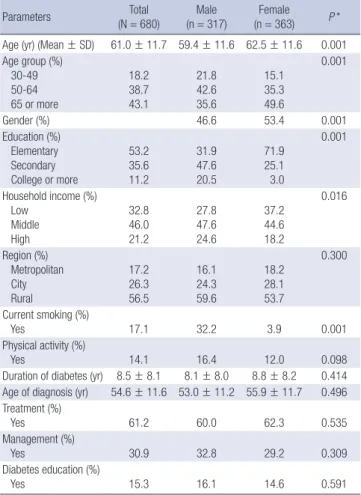
Table 1 shows the demographic characteristics of the subjects.
The mean age was 61 yr, and the proportion of females was 53.4%.
The proportion of those who had an elementary education level was 53.2%, residing in a rural area 56.5%, and classified as low income 32.8%. The proportion of smokers was 17.1% and of those physically active 14.1%. There were gender differences according to age, education level, income, and smoking status but not physical activity.
Table 1. Demographic characteristics of the subjects
Parameters Total
(N = 680) Male
(n = 317) Female (n = 363) P * Age (yr) (Mean ± SD) 61.0 ± 11.7 59.4 ± 11.6 62.5 ± 11.6 0.001 Age group (%)
30-49 50-64 65 or more
18.2 38.7 43.1
21.8 42.6 35.6
15.1 35.3 49.6
0.001
Gender (%) 46.6 53.4 0.001 Education (%)
Elementary Secondary College or more
53.2 35.6 11.2
31.9 47.6 20.5
71.9 25.1 3.0
0.001
Household income (%) Low
Middle High
32.8 46.0 21.2
27.8 47.6 24.6
37.2 44.6 18.2
0.016
Region (%) Metropolitan City Rural
17.2 26.3 56.5
16.1 24.3 59.6
18.2 28.1 53.7
0.300
Current smoking (%)
Yes 17.1 32.2 3.9 0.001
Physical activity (%)
Yes 14.1 16.4 12.0 0.098
Duration of diabetes (yr) 8.5 ± 8.1 8.1 ± 8.0 8.8 ± 8.2 0.414 Age of diagnosis (yr) 54.6 ± 11.6 53.0 ± 11.2 55.9 ± 11.7 0.496 Treatment (%)
Yes 61.2 60.0
62.3 0.535 Management (%)
Yes 30.9 32.8 29.2 0.309
Diabetes education (%)
Yes 15.3 16.1 14.6 0.591
*P from chi-square test by gender.
Regarding diabetes treatment and management, the mean duration of diabetes was 8.5 yr in this population, and the pro-
portion of subjects who received anti-diabetic treatment was 61.2% and subjects with A1C less than 6.5% was 30.9%. For dia- betes education, 191 subjects among the 489 who answered had not received instruction, but about 15.3% of the subjects had received diabetes education at least once or more. There was no gender difference according to diabetic condition.
Factor analysis and dietary patterns
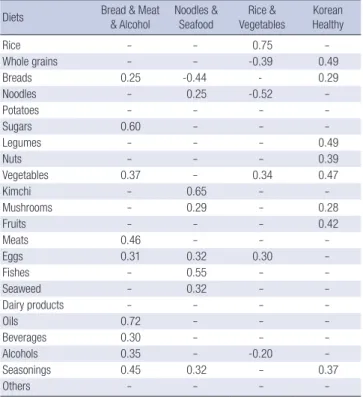
We identified four major dietary patterns by factor analysis in Korean adults with type 2 diabetes, and the factor loadings are presented in Table 2. The first factor was characterized by high consumption of breads, sugars, meats, oil, beverage, and alco- hols, such that it was labeled the ‘Bread & Meat & Alcohol’ pat- tern. The second factor was characterized by high consumption of noodles, kimchi, fish, and seaweed, such that it was labeled the ‘Noodle & Seafood’ pattern. The third factor represented the highest loading of rice and considerable high loading of vegeta- bles and egg, but as egg appeared in other patterns, this pattern was labeled the ‘Rice & Vegetable’ pattern. The last pattern was characterized by high consumption of whole grains, legumes, nuts, vegetables, mushrooms, and fruit, such that it was labeled the ‘Korean Healthy’ pattern.
General characteristics of subject by dietary pattern General characteristics across quartiles of the dietary pattern are shown in Table 3. Compared with diabetic subjects in the low- Table 2. Factor-loading matrix for dietary patterns identified by principal component
analysis
Diets Bread & Meat
& Alcohol
Noodles &
Seafood
Rice &
Vegetables
Korean Healthy
Rice - - 0.75 -
Whole grains - - -0.39 0.49
Breads 0.25 -0.44 - 0.29
Noodles - 0.25 -0.52 -
Potatoes - - - -
Sugars 0.60 - - -
Legumes - - - 0.49
Nuts - - - 0.39
Vegetables 0.37 - 0.34 0.47
Kimchi - 0.65 - -
Mushrooms - 0.29 - 0.28
Fruits - - - 0.42
Meats 0.46 - - -
Eggs 0.31 0.32 0.30 -
Fishes - 0.55 - -
Seaweed - 0.32 - -
Dairy products - - - -
Oils 0.72 - - -
Beverages 0.30 - - -
Alcohols 0.35 - -0.20 -
Seasonings 0.45 0.32 - 0.37
Others - - - -
Factor loadings more than 0.20 were represented for simplicity.
Table 3. General characteristics of the subjects by dietary pattern
Variables Bread & Meat & Alcohol Noodles & Seafood Rice & Vegetables Korean Healthy Quartile 1 Quartile 4 P Quartile 1 Quartile 4 P Quartile 1 Quartile 4 P Quartile 1 Quartile 4 P Age (yr)
(Mean ± SD)
63.6 ± 10.4
56.5 ± 12.4
< 0.001 62.2 ± 11.3
57.7 ± 11.8
0.012 60.6 ±
11.8
59.2 ± 12.3
0. 899 61.3 ±
12.3
59.3 ± 11.8
0. 944 Gender (%)
Male 38.8 57.7 0.002 45.3 57.1 0.001 42.4 61.2 0.001 41.8 52.9 0.059
Education (%) Elementary Secondary College or more
66.5 29.4 4.1
37.7 44.1 18.2
< 0.001 58.8 31.2 10.0
39.4 43.5 17.1
0.001 49.4
41.8 8.8
43.5 41.2 15.3
0.001 60.6
33.5 5.9
41.2 41.7 17.1
< 0.001
Region (%) Metropolitan City Rural
17.6 22.4 60.0
15.3 27.1 57.6
0.457 14.7 32.4 52.9
17.1 22.9 60.0
0.444 22.3
27.1 50.6
13.5 28.2 58.2
0.120 12.9
25.9 61.2
18.2 26.5 55.3
0.499
Household income (%) Low
Middle High
44.1 41.2 14.7
22.9 49.4 27.7
0.001 34.7 47.1 18.2
24.7 46.5 28.8
0.001 31.8
44.1 24.1
33.5 46.5 20.0
0.594 39.4
45.3 15.3
26.5 47.6 25.9
0.018
Current smoking (%)
Yes 15.3 24.1 0.064 14.7 26.5 0.004 16.5 21.2 0.380 20.0 15.9 0.641
Physical activity (%)
Yes 14.3 14.2 0.760 9.5 16.5 0.198 10.7 11.8 0.119 17.9 12.4 0.421
DM duration (yr)*
(Mean ± SD) 9.6 ±
9.1 7.9 ±
7.7 0.101 7.8 ±
7.7 8.5 ±
8.3 0.574 8.5 ±
8.5 8.6 ±
8.7 0.915 9.3 ±
9.7 8.6 ±
7.6 0.843 DM treatment (%)*
Yes 64.7 58.8 0.018 62.4 54.7 0.704 64.7 58.2 0.873 64.7 55.9 0.216
DM management (%)*
A1C < 6.5% 34.7 33.5 0.888 31.2 29.4 0.986 32.9 27.7 0.358 33.5 31.2 0.504
P from ANOVA for continuous variables and P from chi-square test for categorical variables. *P for trend after adjusted for age, gender, education, household income, and smoking.
est quartile in the ‘Bread & Meat & Alcohol’ pattern, those in the highest quartile were more likely to be younger and have a higher level of education and household income. As compared to sub- jects in the lowest quartile of the ‘Noodles & Seafood’ pattern, those in the highest quartile were more likely to be younger with a higher level of education and household income. Compared with subjects in the lowest quartile of the ‘Rice & Vegetables’ pat- tern, those in the highest quartile were more likely to be male with a higher level of education. Compared with subjects in the lowest quartile of the ‘Korean Healthy’ pattern, those in the high- est quartile were more likely to have a higher level of education and household income. Regarding health-related behaviors, currently smoking was only related to the ‘Noodles & Seafood’
pattern score. There was no association between physical activ-
ity and any of the dietary patterns. These results show that some of the demographic variables showed association with dietary patterns.
Regarding diabetes treatment and management, duration of diabetes, treatment, and management were not associated with any of the patterns, except the ‘Bread & Meat & Alcohol’ pattern.
Only the proportion of those who received treatment was asso- ciated with the ‘Bread & Meat & Alcohol’ pattern, and those in the lowest quartile received more treatment, whereas the other variables such as duration of diabetes and management were not associated.
Table 4 shows nutrient intakes according to dietary pattern.
Regarding nutrient intake, those in the highest quartile in all of the dietary patterns had significantly higher energy intake than
Table 4. Nutrient intakes of subjects by dietary pattern
Variables Bread & Meat & Alcohol Noodles & Seafood Rice & Vegetables Korean Healthy Quartile 1 Quartile 4 P trend Quartile 1 Quartile 4 P trend Quartile 1 Quartile 4 P trend Quartile 1 Quartile 4 P trend Energy (kcal)
Protein (%) Fat (%) Carbohydrate (%)
1,503.1 ± 500.0 11.9 ±
3.6 8.7 ±
5.6 80.2 ±
8.2
2,137.6 ± 714.9 15.3 ±
4.0 18.4 ±
8.3 61.2 ±
14.2
< 0.001
< 0.001
< 0.001
< 0.001
1,659.6 ± 722.1 13.7 ±
4.3 11.8 ±
7.6 70.6 ±
15.6
1,963.2 ± 638.3 15.4 ±
4.1 14.8 ±
7.5 68.9 ±
12.3
0.001 0.002 0.029 0.204
1,634.4 ± 683.7 14.3 ±
4.1 14.5 ±
7.5 67.3 ±
15.8
2,065.9 ± 610.1 13.7 ±
3.5 13.4 ±
7.3 72.3 ±
11.0
< 0.001 0.015 0.001
< 0.001
1,485.8 ± 571.6 12.5 ±
3.5 12.6 ±
8.3 71.1 ±
13.7
2,079.8 ± 710.2 15.5 ±
4.4 14.2 ±
7.2 69.3 ±
14.8
< 0.001
< 0.001 0.858 0.033 Calcium (mg) 314.2 ±
212.7 581.5 ±
358.2 0.001 414.7 ±
309.3 622.7 ±
394.4 < 0.001 447.4 ±
314.2 510.9 ±
337.4 0.412 320 ±
216.2 623.1 ± 411.6 < 0.001
Iron (mg) 10.9 ±
9.3
16.1 ± 10.3
0.713 13.0 ± 8.9
16.8 ± 9.5
0.021 12.6 ± 9.5
15.7 ± 10.5
0.681 8.3 ± 4.9
20.1 ± 12.4
< 0.001 Vitamin A (µg RE) 529.8 ±
992.8 958.4 ±
771.6 0.236 597.1 ±
620.2 978.7 ±
1371.2 0.012 731.7 ±
1532.1 871.3 ±
759.5 0.560 466.8 ±
566.2 969.3 ± 1069.0 0.011 Vitamin C (mg) 79.2 ±
69.6 111.7 ±
79.0 0.341 94.8 ±
77.1 108.2 ±
65.6 0.436 77.3 ±
54.3 118.6 ±
84.6 0.001 56.8 ±
49.7 125.9 ± 76.5 < 0.001 Mean ± SD; P for trend after adjusted for age, gender, education, household income, smoking, physical activity, DM duration, DM treatment, BMI, and energy intake.
Table 5. Body indices and blood profiles of subjects by dietary pattern
Variables Bread & Meat & Alcohol Noodles & Seafood Rice & Vegetables Korean Healthy Quartile 1 Quartile 4 P trend Quartile 1 Quartile 4 P trend Quartile 1 Quartile 4 P trend Quartile 1 Quartile 4 P trend Body mass index
(kg/m2)
25.2 ± 3.3
25.6 ± 3.5
0.551 25.3 ±
3.1
25.3 ± 3.4
0.406 25.3 ±
3.4
25.4 ± 3.3
0.934 24.9 ±
3.1
25.5 ± 3.1
0.825 Waist circumference
(cm) 88.2 ±
8.7 89.4 ±
8.6 0.459 88.4 ±
8.5 88.2 ±
8.7 0.306 88.1 ±
9.0 89.2 ±
8.7 0.862 87.6 ±
8.8 88.7 ±
8.1 0.607
Fasting blood sugar (mg/dL)
148.2 ± 47.9
151.4 ± 46.9
0.655 141.9 ±
46.7
150.3 ± 45.3
0.293 143.7 ± 49.2
146.5 ± 45.8
0.779 142.8 ±
43.9
148.6 ± 53.5
0.971 Hemoglobin A1c (%) 7.5 ±
1.7
7.5 ± 1.7
0.686 7.2 ±
1.5
7.4 ± 1.5
0.555 7.4 ±
1.7
7.4 ± 1.7
0.431 7.3 ±
1.7
7.4 ± 1.8
0.822 Cholesterol (mg/dL) 191.9 ±
42.3 201.8 ±
41.8 0.002 195.1 ±
49.0 194.7 ±
40.6 0.518 198.8 ±
44.8 192.1 ±
41.1 0.784 202.5 ±
44.7 188.4 ± 40.3 0.004 Triglyceride (mg/dL) 175.9 ±
109.9
189.8 ± 125.2
0.804 177.3 ±
128.7
179.9 ± 125.8
0.864 175.2 ± 118.2
166.7 ± 104.6
0.499 188.9 ±
149.0
162.2 ± 89.2
0.030 HDL cholesterol
(mg/dL) 42.9 ±
9.4 44.7 ±
10.1 0.001 43.1 ±
9.0 43.9 ±
9.0 0.347 43.6 ±
10.0 43.1 ±
8.9 0.285 44.3 ±
10.0 44.2 ±
8.8 0.674
Systolic blood
pressure (mmHg) 126.9 ±
17.4 126.8 ±
17.8 0.181 127.7 ±
17.8 125.6 ±
15.9 0.983 126.6 ±
18.2 125.5 ±
15.8 0.814 126.8 ±
18.6 126.3 ± 17.6 0.495 Diastolic blood
pressure (mmHg) 76 ±
10.4
78.8 ± 11.9
0.468 76.2 ±
11.3
78.6 ± 9.8
0.080 78 ±
11.9
76.8 ± 10.2
0.107 76.4 ± 11.3
77.8 ± 10.4
0.840
Mean ± SD; P for trend after adjusted for age, gender, education, household income, smoking, physical activity, DM duration, DM treatment, BMI, and energy intake.
those in the lowest quartile.
The percentage of carbohydrates of the total energy intake was determined for each dietary pattern, and it also affected fat and protein intake. The percent of carbohydrate intake among the highest quartiles of each dietary pattern, the highest was 72.3%
in the ‘Rice & Vegetables’ pattern and the lowest 61.2% in the
‘Bread & Meat & Alcohol’ pattern. The highest quartiles of the
‘Noodles & Seafood’ and ‘Korean Healthy’ patterns were 68%- 69%. On the other hand, the percent of fat intake among the high- est quartile of each dietary pattern, the highest was 18.4% in the
‘Bread & Meat & Alcohol’ pattern and the lowest 13.4% in the
‘Rice & Vegetables’ pattern.
Intake of calcium, iron, and vitamin C increased across the quartiles of each dietary pattern. Among the highest quartile of each dietary pattern, calcium, iron, and vitamin C intake levels were highest in the ‘Korean Healthy’ pattern, whereas vitamin A intake was highest in the ‘Noodles & Seafood’ pattern.
Association between dietary pattern and lipid profiles Table 5 shows obesity indices and metabolic profiles among di- abetic subjects according to dietary pattern. BMI and waist cir- cumference were not associated with any of the dietary patterns after adjusting for all potential confounders. Neither fasting blood glucose nor A1C was associated with the dietary patterns.
Regarding blood lipid profiles, serum cholesterol levels in the highest quartile of the ‘Bread & Meat & Alcohol’ pattern were significantly higher than those in the lowest quartile, whereas those in the highest quartile of the ‘Korean Healthy’ pattern were significantly lower than those in the lowest quartile. Serum tri- glyceride levels were slightly increased in the ‘Bread & Meat &
Alcohol’ pattern, but this difference was not significant. On the other hand, serum triglyceride levels were significantly decreased in the ‘Korean Healthy’ pattern. HDL cholesterol levels were sig- nificantly increased across all quartiles in the ‘Bread & Meat &
Alcohol’ pattern, whereas other patterns were not associated with the HDL cholesterol level.
Regarding blood pressure, including both systolic and dia- stolic, no dietary patterns were associated with blood pressure.
Since we confirmed an association between dietary pattern and blood lipid levels, we conducted sub-analysis for subjects with- out lipid-lowering medicines and found a similar association.
DISCUSSION
In this study, we observed that the dietary patterns were asso- ciated with blood lipid profiles in type 2 diabetic subjects. We obtained data from 680 people with type 2 diabetes from the Forth Korean National Health and Nutrition Examination Sur- vey (KNAHNES) and their identified dietary patterns. Even though some dietary patterns were associated with socio-demographic variables, the duration of diabetes or treatment, fasting blood
glucose, and hemoglobin A1C levels, which are key variables of diabetes diagnosis and management, were not significantly dif- ferent according to dietary pattern after adjusting for confound- ing factors. In the dietary pattern analysis, four patterns were derived: ‘Bread & Meat & Alcohol’, ‘Noodles & Seafood’, ‘Rice &
Vegetables’, and ‘Korean Healthy’. These patterns were similar to those of other studies for the adult Korean population (16, 17).
Cho et al. (16) reported three dietary patterns (Western, Healthy, and Traditional) for 4,984 middle-aged Korean women, and Song and Joung (17) also reported three dietary patterns (Rice & vege- tables, Meats & Alcohol, Korean Healthy) for 4,731 Korean adults using data from the third KNHANES. Even though there are meth- odological differences between these studies, major dietary pat- terns among Korean adults can be summarized into a rice-ori- ented pattern, rice-based but various foods-included pattern, and Westernized or meat-rich pattern. We found that diabetics also had similar dietary patterns with entire Korean population.
There have been a few studies on the dietary patterns for dia- betes-related risks in Asian populations. According to a prospec- tive Shanghai women study, a fruit-rich dietary pattern reduced total mortality and mortality caused by cardiovascular disease and diabetes, whereas a meat-rich dietary pattern increased the risk of all-cause mortality, and especially mortality caused by diabetes and colorectal cancer (18). This group also reported an- other study in which a dietary pattern low in staple foods and high in dairy milk was found to be associated with lower risk of type 2 diabetes (12). An additional study on Chinese subjects using national health and nutrition survey data confirmed four distinct patterns in which the prevalence of glucose tolerance abnormalities was higher in ‘New Affluence’ or ‘Western Adopt- er’ dietary patterns compared to traditional patterns such as
‘Green Water’ or ‘Yellow Earth’ (19).
A study on Japanese subjects reported that a dietary pattern characterized by lower intake of rice is associated with lower levels of A1C (13). Another study on Japanese men reported that a dietary pattern characterized by high intake of dairy, fruits, veg- etables, and starch and low intake of alcohol is inversely associ- ated with glucose intolerance, whereas a Japanese dietary pat- tern high in refined carbohydrates and low in protein is positive- ly associated with impaired glucose tolerance (14). This implies that high carbohydrate intake accompanied by excessive rice in- take is associated with risks of diabetes and cardiovascular dis- ease in Asian populations.
There has been no study on the association of rice intake with diabetes in Korean subjects, but Park et al. (20) reported that Korean women who highly consumed carbohydrates (> 70%
of energy) had a 2.5 fold higher risk of diabetes mellitus com- pared to normal intake (55%-70% of energy, recommended by Korean Dietary Reference Intake). In this study, both the ‘Kore- an Healthy’ and ‘Noodles & Seafood’ patterns showed similar carbohydrate intakes of 68%-69% of energy, however only the
‘Korean Healthy’ pattern had favorable effects on blood lipid profiles by lowering serum cholesterol and triglycerides. The difference was due to the composition of food items in the di- etary patterns.
In terms of diet and risk of type 2 diabetes, Hu et al. (21) insist- ed that dietary recommendations for carbohydrate intake should focus more on quality rather than quantity alone. Anderson et al., (7) did a meta-analysis of 25 studies, which were mostly con- ducted on Western populations, and reported that a high car- bohydrate-high fiber diet is associated with lower values for fast- ing and postprandial blood glucose, A1C, and blood lipid indices compared to a moderate carbohydrate-low fiber diet. This has led to a low fat-high carbohydrate diet in combination with regular exercise as the traditional recommendation for diabetes (22).
However, for Asian people, a high carbohydrate diet should be addressed with caution. According to Anderson et al., a ma- jority of the international diabetes community supports 50%- 60% of energy from carbohydrates (7). On the other hand in this study the ‘Korean Healthy’ pattern had 69% of energy from car- bohydrates in the highest quartile, showing lower blood choles- terol and triglycerides. Thus, further studies on the specific ranges of carbohydrates as well as quality for Asian populations should be examined.
We found that the ‘Bread & Meat & Alcohol’ pattern was sig- nificantly associated with increased levels of total cholesterol.
This pattern was also featured in another Korean study (17), in which the ‘Meat & Alcohol’ pattern was found to be associated with being male, middle-aged, living in a metropolitan area, cur- rently smoking, and high fat intake. This population may have formed due to the undergoing nutrition transitions in Korea ac- companied by rapid economic growth. Recently, Cho (1) claimed that a dramatic increase in gross national income in Korea since 1970 paralleled as a similar trend in the prevalence of diabetes.
This rapid increase could have been the result of various artifacts rather than being the consequence of risk factors.
In this study, we found that subjects with diabetes had similar dietary patterns as the general Korean population. In addition, the ‘Korean Healthy’ pattern can be considered as another typi- cal Korean pattern that includes mixed rice instead of white rice and various side dishes such as legumes, mushrooms, and fresh vegetables. According to Lewis et al. (22), people with chronic diseases generally report better nutrition awareness, but this does not consistently translate into healthy eating behaviors. Thus, more practical dietary strategies are necessary. This study would provide information for planning dietary menu for diabetes.
The strengths of the present study include a national sample with wide ranging socio-demographic and nutrient data. The use of dietary pattern analysis facilitates the interpretation of dietary variables in diabetes-related risks, and our findings may provide useful data for the development of practical dietary guide- lines for diabetes management or treatment in Asian populations.
This study also has several limitations. First, the study had a cross-sectional design, which hinders any causal inferences.
More observational and intervention studies are thus needed to confirm our findings and develop useful dietary strategies for the management and treatment of diabetes. Second, we defined diabetes based on the criteria of the American Diabetes Associ- ation, which may have caused some misclassification of the sub- jects, in particular with respect to using a single measurement of fasting blood glucose as well as self-reported treatment. This may have attenuated the association between dietary patterns and diabetes-related risks. Third, we considered treatment vari- ables as covariates, but the information was limited since this data came from NHANES. Detailed information about the type of treatment, dose of medicine, and so on should be included in future studies.
Last, we used factor analysis to derive the dietary patterns where subjectivity in nature and reliability has been a criticism in other populations. However, similar dietary patterns were re- ported for other Korean populations (16, 17), and there have been several studies on the stability of dietary patterns (23, 24).
In summary, determined dietary patterns were associated with blood lipid profiles among Korean type 2 diabetes. The ‘Ko- rean Healthy’ pattern is associated with favorable blood lipid profiles and consisted of grains, legumes, nuts, vegetables, and fruits. Further studies are necessary to confirm the benefits of the ‘Korean healthy’ pattern and develop practical dietary guide- line for diabetes.
REFERENCES
1. Cho NH. The epidemiology of diabetes in Korea: from the economics to genetics. Korean Diabetes J 2010; 34: 10-5.
2. Choi YJ, Kim HC, Kim HM, Park SW, Kim J, Kim DJ. Prevalence and man- agement of diabetes in Korean adults: Korea National Health and Nutri- tion Examination Surveys 1998-2005. Diabetes Care 2009; 32: 2016-20.
3. Unwin N, Whiting D, Gan D, Jacqmain O, Ghyoot G, editors. IDF diabe- tes atlas. 4th ed. Brussels: International Diabetes Federation, 2009.
4. Ministry of Health and Welfare. Center for Disease Control. National Health Nutrition Examination Survey Report 2009. Seoul: 2011.
5. Villegas R, Liu S, Gao YT, Yang G, Li H, Zheng W, Shu XO. Prospective study of dietary carbohydrates, glycemic index, glycemic load, and inci- dence of type 2 diabetes mellitus in middle-aged Chinese women. Arch Intern Med 2007; 167: 2310-6.
6. Liu S, Manson JE, Stampfer MJ, Hu FB, Giovannucci E, Colditz GA, Hen- nekens CH, Willett WC. A prospective study of whole-grain intake an d risk of type 2 diabetes mellitus in US women. Am J Public Health 2000;
90: 1409-15.
7. Anderson JW, Randles KM, Kendall CW, Jenkins DJ. Carbohydrate and fiber recommendations for individuals with diabetes: a quantitative as- sessment and meta-analysis of the evidence. J Am Coll Nutr 2004; 23:
5-17.
8. Song Y, Buring JE, Manson JE, Liu S. Dietary magnesium intake in rela-
tion to plasma insulin levels and risk of type 2 diabetes in women. Dia- betes Care 2004; 27: 59-65.
9. Fumeron F, Lamri A, Abi Khalil C, Jaziri R, Porchay-Baldérelli I, Lantieri O, Vol S, Balkau B, Marre M. Dairy consumption and the incidence of hy- perglycemia and the metabolic syndrome: results from a French prospec- tive study, Data from the Epidemiological Study on the Insulin Resistance Syndrome (DESIR). Diabetes Care 2011; 34: 813-7.
10. Ford ES, Mokdad AH. Fruit and vegetable consumption and diabetes mellitus incidence among U.S. adults. Prev Med 2001; 32: 33-9.
11. Newby PK, Tucker KL. Empirically derived eating patterns using factor or cluster analysis: a review. Nutr Rev 2004; 62: 177-203.
12. Villegas R, Yang G, Gao YT, Cai H, Li H, Zheng W, Shu XO. Dietary pat- terns are associated with lower incidence of type 2 diabetes in middle-aged women: the Shanghai Women’s Health Study. Int J Epidemiol 2010; 39:
889-99.
13. Erber E, Hopping BN, Grandinetti A, Park SY, Kolonel LN, Maskarinec G. Dietary patterns and risk for diabetes: the multiethnic cohort. Diabe- tes Care 2010; 33: 532-8.
14. Nanri A, Mizoue T, Yoshida D, Takahashi R, Takayanagi R. Dietary pat- terns and A1C in Japanese men and women. Diabetes Care 2008; 31:
1568-73.
15. Mizoue T, Yamaji T, Tabata S, Yamaguchi K, Ogawa S, Mineshita M, Kono S. Dietary patterns and glucose tolerance abnormalities in Japanese men.
J Nutr 2006; 136: 1352-8.
16. Cho YA, Kim J, Cho ER, Shin A. Dietary patterns and the prevalence of metabolic syndrome in Korean women. Nutr Metab Cardiovasc Dis 2010.
doi:10.1016/j.numecd.2010.02.018.
17. Song Y, Joung H. A traditional Korean dietary pattern and metabolic syndrome abnormalities. Nutr Metab Cardiovasc Dis 2010. doi:10.1016/
j.numecd.2010.09.
18. Cai H, Shu XO, Gao YT, Li H, Yang G, Zheng W. A prospective study of dietary patterns and mortality in Chinese women. Epidemiology 2007;
18: 393-401.
19. He Y, Ma G, Zhai F, Li Y, Hu Y, Feskens EJ, Yang X. Dietary patterns and glucose tolerance abnormalities in Chinese adults. Diabetes Care 2009;
32: 1972-6.
20. Park SH, Lee KS, Park HY. Dietary carbohydrate intake is associated with cardiovascular disease risk in Korean: analysis of the third Korea Nation- al Health and Nutrition Examination Survey (KNHANES III). Int J Car- diol 2010; 139: 234-40.
21. Hu FB, van Dam RM, Liu S. Diet and risk of type II diabetes: the role of types of fat and carbohydrate. Diabetologia 2001; 44: 805-17.
22. Lewis JE, Arheart KL, LeBlanc WG, Fleming LE, Lee DJ, Davila EP, Caban- Martinez AJ, Dietz NA, McCollister KE, Bandiera FC, Clark JD Jr. Food label use and awareness of nutritional information and recommendations among persons with chronic disease. Am J Clin Nutr 2009; 90: 1351-7.
23. Borland SE, Robinson SM, Crozier SR, Inskip HM. Stability of dietary patterns in young women over a 2-year period. Eur J Clin Nutr 2008; 62:
119-26.
24. Newby PK, Weismayer C, Akesson A, Tucker KL, Wolk A. Long-term sta- bility of food patterns identified by use of factor analysis among Swedish women. J Nutr 2006; 136: 626-33.
AUTHOR SUMMARY
Association between Dietary Patterns and Blood Lipid Profiles in Korean Adults with Type 2 Diabetes
Jeong Hyun Lim, Yeon-Sook Lee, Hak Chul Chang, Min Kyong Moon and YoonJu Song
We investigated the association of dietary patterns with blood lipid profiles and obesity in Korean adults (> 30 yr) with type 2 diabetes. Serum cholesterol levels were positively associated with ‘Bread & Meat & Alcohol’ pattern. In contrast, total cholesterol and triglyceride levels were negatively associated with ‘Korean Healthy’ pattern. Our study found that the dietary patterns among subjets with diabetes were similar to general Korean adult population and associated with blood lipid profiles.