위암 발생의 위험요인이 위상피 이형성 발생에 미치는 영향
허정윤, 박영진, 한성호, 박주성, 배은진
동아대학교 의과대학 가정의학과
Influence of Stomach Cancer Risk Factors on the Development of Gastric Dysplasia
Jeong Yun Heo, Young Jin Park, Seong Ho Han, Joo Sung Park, Eun Jin Bae Department of Family Medicine, Dong-A University College of Medicine, Busan, Korea
Background: Both atrophic gastritis and intestinal metaplasia may progress to gastric dysplasia. This study aimed to analyze the factors influencing progression of atrophic gastritis and intestinal metaplasia to dysplasia.
Methods: People diagnosed with atrophic gastritis and intestinal metaplasia for the first time received a fol- low-up endoscopy and were investigated for the cumulative incidence rate of gastric dysplasia by age, gender, smoking habit, alcohol intake, rice consumption and family history of stomach cancer.
Results: The cumulative incidence rate increased with age, consuming ≥3 bowls of rice per day and family his- tory of stomach cancer. Multivariate analysis showed that the cumulative incidence rate of gastric dysplasia in- creased in subjects >61 years (RR=2.54, P=0.014), in those consuming ≥3 bowls of rice per day (RR=1.46, P=0.021) and in those with a family history of stomach cancer (RR=1.31, P=0.037).
Conclusions: More active management, such as intensive endoscopic follow-up examinations, lifestyle change and education regarding gastric dysplasia, are required in those older than 61 years, having a higher intake of grain or with a family history of stomach cancer.
Korean J Health Promot 2011;11(4):177-183
Keywords: Atrophic gastritis, Metaplasia, Stomach neoplasm
■ Received:October 17, 2011 ■ Accepted:December 15, 2011
■ Corresponding author:Young Jin Park, MD, PhD
Department of Family Medicine, Dong-A University Medical Center, Dong-A University College of Medicine, 26 Daesingongwon-ro, Seo-gu, Busan 602-715, Korea
Tel: +82-51-240-5293, Fax: +82-51-255-8282 E-mail: [email protected]
INTRODUCTION
Stomach cancer is the most common cancer in Korea, having a frequency of occurrence of 20.9%.1) Early gastric neoplasia has a good prognosis because, like progressive cancer, complete recovery is possible. However, there is a gradual increase of financial burden and death rate as the condition progresses from a precancerous lesion to ad- vanced cancer.2,3)
According to a domestic report, both atrophic gastritis and intestitnal metaplasia are now common diseases. Their in-
cidence rates in males and females, respectively, are 42.7% and 38.1%, for the former, and 42.5% and 32.7%, for the latter.4)
Both chronic atrophic gastritis and intestinal metaplasia are high-risk factors for stomach cancer.5,6) However, accord- ing to Lifetime Health Care Program published in 2003, the optimal interval for endoscopic screening is not known in people with these conditions.7)
Gastric dysplasia is a change in the gastric mucous mem- brane characterized by remarkable atypia of cells and architecture.8,9) If gastric dysplasia is discovered through en- doscopic diagnosis, gastrectomy or local endoscopic re- section should be considered followed by strict endoscopic surveillance.10)
Stomach cancer is known to occur subsequent to atrophic gastritis, intestinal metaplasia and gastric dysplasia.11,12)
This study aimed to analyze the factors influencing the development of gastric dysplasia from atrophic gastritis or
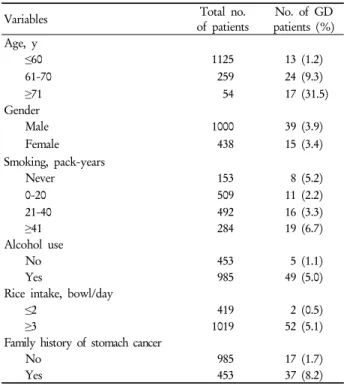
Table 1. Variables associated with occurrence of GD
Variables Total no.
of patients No. of GD patients (%) Age, y
≤60 1125 13 (1.2)
61-70 259 24 (9.3)
≥71 54 17 (31.5)
Gender
Male 1000 39 (3.9)
Female 438 15 (3.4)
Smoking, pack-years
Never 153 8 (5.2)
0-20 509 11 (2.2)
21-40 492 16 (3.3)
≥41 284 19 (6.7)
Alcohol use
No 453 5 (1.1)
Yes 985 49 (5.0)
Rice intake, bowl/day
≤2 419 2 (0.5)
≥3 1019 52 (5.1)
Family history of stomach cancer
No 985 17 (1.7)
Yes 453 37 (8.2)
Abbreviation: GD, gastric dysplasia.
intestinal metaplasia by analyzing patients receiving en- doscopy at a selected Health Promotion Center over a five-year period.
METHODS
1. Study subjects
Of the 4642 people undergoing endoscopy from January 2004 to December 2008 at a Health Promotion Center, 1438 people diagnosed with atrophic gastritis or intestinal metaplasia for the first time and receiving follow-up endo- scopic examinations were analyzed.
2. Study method
Data were from the medical records at the University Medical Center in Pusan, Korea. Subjects visited this Health Promotion Center to undergo a general health screening.
Computerized medical records were used to collect pa- tient information including gender, age, gross pathology on endoscopy, results of tissue biopsy, follow-up recom- mendations, pack-years of smoking, number of drinks per week regardless of alcohol type, number of bowls of rice consumed per day and family history of stomach cancer.
Diagnosis was made primarily based on biopsy results, unless biopsy information was not provided. In cases where biopsy was not performed, diagnosis was made based on endoscopic findings. However, in cases of gastric dysplasia, all diagnoses were made according to biopsy results.
Subjects were grouped into several different groups ac- cording to various factors and then analyzed. Based on age at the initial endoscopy, subjects were divided into 3 groups: ≤60 years, 61-70 years, and ≥71 years. Based on the number of pack-years of smoking, subjects were divided into the following groups: 0-20, 21-40 and ≥41 pack-years.
Based on their history of alcohol use, subjects were divided into drinking and non-drinking groups. According to the number of bowls of rice consumed per day, subjects were divided into ≤2 bowls/day and ≥3 bowls/day. Family his- tory of stomach cancer was limited to parents and siblings.
3. Statistical analysis
Using the above data, a survival analysis was performed.
For the cumulative rate of occurrence, gastric dysplasia was considered as the final event, and the data were illus- trated with a timetable. The factors that influenced cumu- lative incidence rate were analyzed with multivariate anal- ysis using the Cox proportional hazard model. This model facilitates multi-analysis of variables with significant prob- ability less than 0.05 according to the Kaplan-Meier meth- od of univariate analysis. The standard for variable in- clusion was statistical significance of 0.05, and SPSS sta- tistics program was used for statistical analysis (version 17.0, SPSS Inc., Chicago, IL, USA).
RESULTS
1. General characteristics of the subjects
Of the 1438 subjects, 1000 (69.5%) were male and 438 (30.5%) were female. Their ages ranged from 34 to 83 years (average, 56±38 years). At the time of the first endoscopy, 1125 people (78.2%) were ≤60 years, 259 people (18.0%) were between 61 and 70 years and 54 people (3.8%) were
≥71 years (Table 1).
Figure 1. Overall cumulative incidence rates of GD
Cumulative rates for gastric dysplasia in 1438 subjects were 1% after 1 year, 4% after 2 years and 30% after 5 years.
GD indicates gastric dysplasia.
Figure 2. Cumulative incidence rates of GD according to age
The cumulative rates at 1, 2 and 5 years in subjects younger than 60 years were 1%, 1% and 15%, respectively. In subjects aged 61-70 years, the rates were 3%, 6% and 59%, re- spectively; and in those older than 71 years, the rates were 21%, 32% and 62%, respectively (P<0.001).
GD indicates gastric dysplasia.
Figure 3. Cumulative incidence rates of GD according to daily rice consumption
The group consuming more than 3 bowls of rice per day had a high- er occurrence of gastric dysplasia in the survival curve (P=0.008).
GD indicates gastric dysplasia.
Figure 4. Cumulative incidence rates of GD according to family history of gastric cancer
The group with a family history of gastric cancer showed a higher occurrence of gastric dysplasia in the survival curve (P=0.008).
GD indicates gastric dysplasia.
2. Follow-up results of the subjects
The follow-up results of the 1438 subjects were as fol- lows: 1384 had both atrophic gastritis and intestinal meta- plasia, 50 had gastric dysplasia and 4 had cancer. The aver- age age of the subjects who had progressed to gastric dys- plasia was 64 years with 39 (3.90%) being male and 15 (3.42%) being female. Subjects showed an increased fre- quency of developing gastric dysplasia with increasing age, alcohol consumption, intake of ≥3 bowls of rice per day and family history of stomach cancer. There was no sig- nificant difference with gender and smoking (Table 1).
3. Cumulative occurrence rate of gastric dysplasia
The cumulative occurrence rate of gastric dysplasia in our subjects was 1% after one year, 4% after two years, and 30% after five years (Figure 1). These rates showed a gender difference: 2%, 4% and 31%, respectively, in males and 1%, 2% and 19%, respectively, in females. The cumu- lative rate was higher in males than in females, but this was not statistically significant (P=0.571). The cumulative rate by age was as follows: rates on the 1st, 2nd and 5th year in subjects ≤60 years were 1%, 1% and 15%, respectively; in subjects aged 61-70 years, the rates were 3%, 6% and 59%,
P<0.001
P=0.008
71 ≤60
61-70
≥71
NoYes
≤2/day
≥3/day Rice ≤2 bowl Rice ≥3 bowl
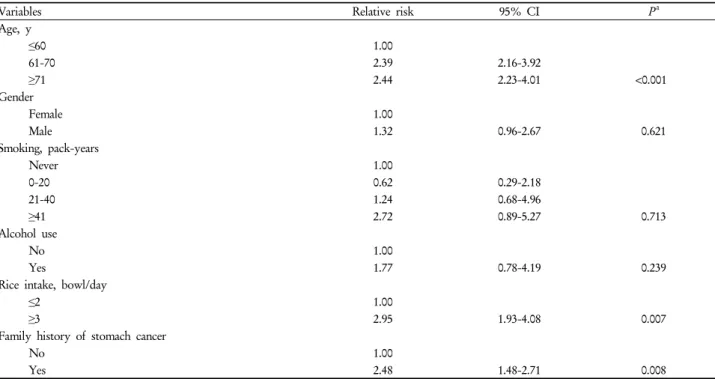
Table 2. Univariate analysis on the variables affecting GD occurrence
Variables Relative risk 95% CI Pa
Age, y
≤60 1.00
61-70 2.39 2.16-3.92
≥71 2.44 2.23-4.01 <0.001
Gender
Female 1.00
Male 1.32 0.96-2.67 0.621
Smoking, pack-years
Never 1.00
0-20 0.62 0.29-2.18
21-40 1.24 0.68-4.96
≥41 2.72 0.89-5.27 0.713
Alcohol use
No 1.00
Yes 1.77 0.78-4.19 0.239
Rice intake, bowl/day
≤2 1.00
≥3 2.95 1.93-4.08 0.007
Family history of stomach cancer
No 1.00
Yes 2.48 1.48-2.71 0.008
Abbreviations: GD, gastric dysplasia; CI, confidence interval.
aCalculated by log-rank test.
respectively; and in those ≥71 years, the rates were 21%, 32% and 62%, respectively. The cumulative rate was sig- nificantly higher with age (P<0.001)(Figure 2). The occur- rence of gastric dysplasia in the drinking group was higher than that in the non-drinking group, but this difference was not statistically significant (P=0.183). The group con- suming ≥3 bowls of rice per day (P=0.008)(Figure 3) and the group with a family history of gastric cancer (P=0.008) (Figure 4) showed higher occurrences of gastric dysplasia in the survival curve. The difference seen in smoking (pack-year) was not statistically significant (P=0.609).
4. Factors influencing the cumulative rate of gastric dysplasia
The results of the univariate analysis on the factors influ- encing the development of gastric dysplasia from atrophic gastritis or intestinal metaplasia showed that the cumu- lative incidence rate increased with aging (P<0.001), in those consuming ≥3 bowls of rice per day (P=0.008) and in those with a family history of stomach cancer (P=0.008) (Table 2). However, the differences seen in each group of smoking (pack-year), gender and alcohol consumption was not statistically significant.
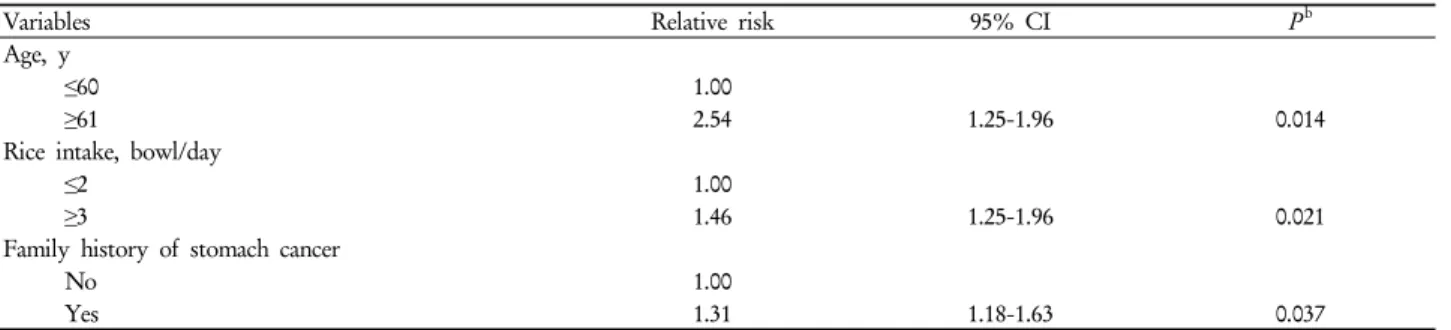
Multivariate analysis performed to analyze independent prognostic factors with significant data in the univariate analysis revealed indices to predict gastric dysplasia in sub- jects ≥61 years (RR=2.54, P=0.014), consuming ≥3 bowls of rice per day (RR=1.46, P=0.021) and with a family history of cancer (RR=1.31, P=0.037)(Table 3).
DISCUSSION
To diagnose cancer early, screening the general pop- ulation and examining those in the high-risk category is necessary. High-risk factors include the presence of atro- phic gastritis and intestinal metaplasia, gastric adenoma, or gastric ulcer;5,6) methods of preserving, cooking and sea- soning foods, including pickled and spicy foods, salty foods, roasted meats and grilled fish; and a family history of cancer, smoking, radiation, Helicobacter pylori (H. py- lori) infection, direct exposure to asbestos fiber or metal dust and a history of gastrectomy. H. pylori infection is a much stronger risk factor for non-cardial gastric adenocarcinoma. However, further studies are needed to determine whether these factors are required to cause gas- tric cancer.13)
Stomach cancer occurs subsequent to atrophic gastritis,
Table 3. Multivariate analysis on the variables in occurrence of GDa
Variables Relative risk 95% CI Pb
Age, y
≤60 1.00
≥61 2.54 1.25-1.96 0.014
Rice intake, bowl/day
≤2 1.00
≥3 1.46 1.25-1.96 0.021
Family history of stomach cancer
No 1.00
Yes 1.31 1.18-1.63 0.037
Abbreviations: GD, gastric dysplasia; CI, confidence interval.
aAdjusted for sex.
bCalculated using Cox proportional hazards model.
intestinal metaplasia or gastric dysplasia.14,15) In the study by Inoue et al. chronic atrophic gastritis increased the risk of cancer by 5.73 times in a 4.4-year trace.16,17)
In this study, the factors associated with the develop- ment of gastric dysplasia from atrophic gastritis or in- testinal metaplasia were age ≥61 years, consuming ≥3 bowls of rice per day and a family history of cancer.
Subjects ≥61 years at the time of their first endoscopy were 2.54 times more likely to develop gastric dysplasia compared to those ≤60 years. This indicates that age is a significant predictive factor. In gender distribution, males tended to show a higher occurrence rate of gastric dysplasia. The incidence of cancer differed by age and gender. More specifically, in subjects over 40 years old, there was a marked increase in the incidence of cancer in both males and females, particularly in males between 65 and 74 years.
In the study by Kneller et al.18) subjects who smoked cig- arettes regularly had a 2.6 times higher risk for cancer than the non-smoking group. In a dose-dependent manner, sub- jects smoking >30 cigarettes/day had 5 times higher in- cidence of stomach cancer. Though smoking was found not to be a predictive factor for gastric dysplasia in this study, its influence on the occurrence of stomach cancer is still controversial.
In the study by Hoey et al.19) the risk of stomach cancer was increased by 6.9 times with alcohol use, regardless of type, and specifically, 6.3 times with wine. On the con- trary, in the study by Kneller et al.18) alcohol use did not in- fluence the occurrence of stomach cancer. A study by Tramacere found that moderate drinking is not associated with gastric cancer. There was, however, a positive correla- tion with heavy drinking (≥4 drinks/day).20) In our study,
the alcohol use group did show a higher occurrence of dys- plasia, although not statistically significant.
Within the spectrum of subjects from those with low glycemic load and high fruit/vegetable intake to those with high glycemic load and low fruit/vegetable intake, the odds ratio rose across the strata up to 5.0.21) Analysis on the in- fluence of carbohydrate intake is significant in Asian coun- tries, such as Korea and Japan, where rice is a staple diet. In this study, the relative risk for gastric dysplasia was 1.46 times higher in individuals having ≥3 bowls of rice per day.
Rice consumption was not an independent variable because the diet of subjects might have included foods associated with gastric cancer such as pickled or salty foods, roasted meat and grilled fish. Intake of fruits and vegetables, also, was not documented in our research. However, our study may help to explain the direct relation observed in several studies between starchy foods and gastric cancer risk.
There are a few limitations to our study. First, the histo- logic grade was not determined, while it is known that atrophic gastritis and gastric dysplasia progress into cancer as the grade becomes more severe. Second, atrophic gas- tritis and intestinal metaplasia are diagnosed on the basis of gross endoscopic findings, which provide low false-neg- atives but high false-positives compared to histologic findings.13,14) And it would have been useful to have had da- ta on H. pylori infection in our subjects and to have in- cluded information on the relationship between H. pylori infection and atrophic gastritis/gastric dysplasia. But re- gardless of H. pylori infection, persons ≥61 years, having a higher intake of grain or with a family history of stomach cancer still had an increased risk for gastric cancer, and thus, could reasonably be regarded as high-risk population.
Regular check-ups are crucial in improving the rate of
complete recovery through early diagnosis of the disease.
Effective health check-ups depend on proper selection of subjects and investigations according to optimal timing, in- tervals and methods.
In the review of gastric cancer risk factors in patients with common variable immunodeficiency disorders (CVIDs),22) these studies proposed that all patients diagnosed with CVIDs undergo screening for H. pylori using the urea breath test at diagnosis and the protocol for surveillance of gastric cancer- no follow-up endoscopy for normal histo- pathology and repeat endoscopy in five years for chronic antral gastritis, in three years for atrophic pan-gastritis, in one to three years for intestinal metaplasia and in 6-12 months for dysplastic lesions. Patients with CVIDs have a 10-fold increased risk of gastric cancer and are, therefore, a high-risk population regardless of the presence of H. pylori infection.
According to the Lifetime Health Care Program (2003), men over 40 years old and women over 50 years old should undergo endoscopic gastric cancer screening and upper gastrointestinal tract examination every 2 years, and the high-risk group should be encouraged to reduce this inter- val according to the discretion of the attending physician.7) But the optimal interval for endoscopic screening is un- known in people with these conditions. The study by Lee et al.23) found that the optimum screening interval for dis- ease-free survival for gastric cancer in a normal population is 3 years; however, a screening interval of 2 years should be used for patients with intestinal metaplasia in Korea.
Gastric cancer risk is increased in Korea. We suggest that people falling within the high-risk category be encouraged to undergo rechecks in shorter intervals, with more sensi- tive methods like the above surveillance programme.
In conclusion, more active management is required in those ≥61 years, having a higher intake of grain or with a family history of stomach cancer. For these people, intensive endoscopic follow-up examinations, lifestyle change and education re- garding gastric dysplasia and its association with increased occurrence of the precancerous stage of stomach cancer should be recommended. A strategy for selected screening and surveillance for gastric cancer affords a systematic ap- proach to the high-risk population. This may help reduce morbidity from gastric pathology and the risk of cancer.
요 약
연구배경: 위축성 위염 및 장상피 화생은 흔하게 접할 수 있는 질환으로 위상피 이형성을 거쳐 위암으로 발전될 가능성이 있는 것으로 알려져 있다.
방법: 2004년 1월부터 2008년 12월까지 위내시경 검사로 위축성 위염 및 장상피 화생이 진단된 후 내시경 검사를 받은 1438명을 대상으로 연령, 성별, 흡연량, 음주력, 곡류
섭취량, 위암 가족력에 따른 위상피 이형성 누적발생률을
조사하였다.
결과: 연령이 증가할수록(P<0.001), 하루 3공기 이상의 곡류 섭취(P=0.008), 위암의 가족력이 있는 군(P=0.008)에
서 이형성 발생률이 높았고, 위상피 이형성 발생률을 예측
하는 지표는 61세 이상 연령(RR=2.54, P=0.014), 하루 3공 기 이상의 곡류 섭취량(RR=1.46, P=0.021), 위암의 가족력 (RR=1.31, P=0.037)이었다.
결론: 위축성위염 및 장상피화생이 있는 경우에 61세 이 상, 하루 세 공기 이상의 곡류 섭취, 위암의 가족력이 있는 환자에서 위상피 이형성 발생률이 증가하였다. 따라서 이 러한 위험요인이 있는 경우 위암 전구 단계인 이형성 발생 률이 증가한다는 것에 대한 교육과 함께 금연 등의 생활습
관 교정이 필요하겠다.
중심단어: 만성 위축성 위염, 장상피 화생, 위암
REFERENCES
1. Shin HR, Jung KW, Won YJ, Kong HJ, Yim SH, Sung SH, et al.
National cancer incidence for the year 2002 in Korea. Cancer Res Treat 2007;39(4):139-49.
2. Hartwell L, Mankoff D, Paulovich A, Ramsey S, Swisher E.
Cancer biomarkers: a systems approach. Nat Biotechnol 2006;
24(8):905-8.
3. Jeong IS, Hong YS. Screening for early detection of gastric cancer. J Korean Med Assoc 1996;39(8):933-6.
4. Kim HJ, Choi BY, Byun TJ, Eun CS, Song KS, Kim YS, et al.
The prevalence of atrophic gastritis and intestinal metaplasia ac- cording to gender, age and Helicobacter pylori infection in a ru- ral population. J Prev Med Public Health 2008;41(6):373-9.
5. Lauwers GY, Srivastava A. Gastric preneoplastic lesions and ep- ithelial dysplasia. Gastroenterol Clin North Am 2007;36(4):813-29.
6. Compare D, Rocco A, Nardone G. Risk factors in gastric cancer. Eur Rev Med Pharmacol Sci 2010;14(4):302-8.
7. Kim YS. Lifetime Health Maintenance Program for Koreans. J Korean Med Assoc 2003;46(11):1035-46.
8. Cornaggia M, Testino G. Gastric epithelial dysplasia. G Chir 2000;21(8-9):349-52.
9. Misdraji J, Lauwers GY. Gastric epithelial dysplasia. Semin Diaqn Pathol 2002;19(1):20-30.
10. Vilkin A, Half B, Moshkowitz M, Kariv R, Levi Z. Surveillance
of patients with gastric intestinal metaplasia and dysplasia.
Harefuah 2011;150(3):266-8.
11. Dixon MF, Genta RM, Yardley JH, Correa P. Classification and grading of gastritis. The updated Sydney system. International Workshop on the Histopathology of Gastritis, Houston 1994.
Am J Surg Pathol 1996;20(10):1161-81.
12. Lauwers GY. Defining the pathologic diagnosis of metaplasia, atrophy, dysplasia, and gastric adenocarcinoma. J Clin Gastroenterol 2003;36(5 Suppl):S37-43.
13. Persson C, Jia Y, Pettersson H, Dillner J, Nyrén O, Ye W. H.
pylori seropositivity before age 40 and subsequent risk of stom- ach cancer: a glimpse of the true relationship? PLoS One 2011;
6(3):e17404.
14. Busuttil RA, Boussioutas A. Intestinal metaplasia: a premalig- nant lesion involved in gastric carcinogenesis. J Gastroenterol Hepatol 2009;24(2):193-201.
15. Tosi P, Filipe MI, Luzi P, Miracco C, Santopietro R, Lio R, et al.
Gastric intestinal metaplasia type Ⅲ cases are classified as low-grade dysplasia on the basis of morphometry. J Pathol 1993;169(1):73-8.
16. Kato I, Tominaga S, Ito Y, Kobayashi S, Yoshii Y, Matsuura A, et al. A prospective study of atrophic gastritis and stomach can-
cer risk. Jpn J Cancer Res 1992;83(11):1137-42.
17. Inoue M, Tajima K, Matsuura A, Suzuki T, Nakamura T, Ohashi K, et al. Severity of chronic atrophic gastritis and sub- sequent gastric cancer occurrence: a 10-year prospective cohort study in Japan. Cancer Lett 2000;161(1):105-12.
18. Kneller RW, McLaughlin JK, Bjelke E, Schuman LM, Blot WJ, Wacholder S, et al. A cohort study of stomach cancer in high-risk American population. Cancer 1991;68(3):672-8.
19. Hoey J, Montvernay C, Lambert R. Wine and tobacco: risk fac- tors for gastric cancer in France. Am J Epidemiol 1981;113(6):668-74.
20. Tramacere I, Negri E, Pelucchi C, Bagnardi V, Rota M, Scotti L, et al. A meta-analysis on alcohol drinking and gastric cancer risk. Ann Oncol 2012;23(1):28-36.
21. Bertuccio P, Praud D, Chatenoud L. Dietary glycemic load and gastric cancer risk in Italy. Br J Cancer 2009;100(3):558-61.
22. Dhalla F, da Silva SP, Lucas M, Travis S, Chapel H. Review of gastric cancer risk factors in patients with common variable im- munodeficiency disorders, resulting in a proposal for a surveil- lance programme. Clin Exp Immunol 2011;165(1):1-7.
23. Lee H, Min BH, Lee JH, Son HJ, Kim JJ, Rhee JC, et al. Survival outcome associated with the screening interval for gastric cancer in Korea. Digestion 2011;84(2):142-8.