• 검색 결과가 없습니다.

Molecular characterization of Escherichia coli O157:H7 strains isolated from different sources and geographic regions

N/A
N/A
Protected

Academic year: 2022

Share "Molecular characterization of Escherichia coli O157:H7 strains isolated from different sources and geographic regions"

Copied!
6
0
0

로드 중.... (전체 텍스트 보기)

전체 글

(1)

Veterinary Science

http://dx.doi.org/10.4142/jvs.2012.13.2.139

Received: 26 Apr. 2011, Revised: 24 Jul. 2011, Accepted: 6 Jan. 2012

Original Article

*Corresponding author: Tel: +55-21-2564-8985; Fax: +55-21-2564-8985; E-mail: [email protected]

2012 The Korean Society of Veterinary Science.

This is an Open Access article distributed under the terms of the Creative Commons Attribution Non-Commercial License (http://creativecommons.org/licenses/by-nc/3.0) which permits unrestricted non-commercial use, distribution, and reproduction in any medium, provided the original work is properly cited.

Molecular characterization of Escherichia coli O157:H7 strains isolated from different sources and geographic regions

Adriana Hamond Regua-Mangia

1,

*, Alice Gonçalves M. Gonzalez

2

, Aloysio M. F. Cerqueira

3

, João Ramos C.

Andrade

4

1

Departamento de Ciências Biológicas, Fundação Oswaldo Cruz, CEP 21041-210, Rio de Janeiro, Brazil

Departamento de

2

Bromatologia e

3

Microbiologia e Parasitologia, Universidade Federal Fluminense, CEP 24220-008, Rio de Janeiro, Brazil

4

Departamento de Microbiologia e Imunologia, Universidade do Estado do Rio de Janeiro, CEP 20550-030, Rio de Janeiro, Brazil

Escherichia (E.) coli serotype O157:H7 is a globally

distributed human enteropathogen and is comprised of microorganisms with closely related genotypes. The main reservoir for this group is bovine bowels, and infection mainly occurs after ingestion of contaminated water and food. Virulence genetic markers of 28 O157:H7 strains were investigated and multilocus enzyme electrophoresis (MLEE) was used to evaluate the clonal structure. O157:H7 strains from several countries were isolated from food, human and bovine feces. According to MLEE, O157:H7 strains clustered into two main clonal groups designated A and B. Subcluster A1 included 82% of the O157:H7 strains exhibiting identical MLEE pattern. Most enterohemorrhagic E. coli (EHEC) O157:H7 strains from Brazil and Argentina were in the same MLEE subgroup. Bovine and food strains carried virulence genes associated with EHEC pathogenicity in humans.

Keywords: enterohemorrhagic Escherichia coli, molecular characterization, O157:H7, virulence

Introduction

Enterohemorrhagic Escherichia (E.) coli (EHEC) belong to a subset of Shiga toxin (Stx)-producing E. coli (STEC) serotypes that are associated with bloody diarrhea and hemolytic uremic syndrome [23]. Epidemiologically, O157:H7 is considered a highly pathogenic serotype responsible for severe human diseases, usually occurring as outbreaks, and as a prototypical EHEC [8,9,23]. Besides expressing Stx, EHEC produces a variety of virulence

factors encoded by lysogenic toxigenic bacteriophages along with virulence chromosomal pathogenicity islands and plasmids [2-4,11,23]. Unlike other E. coli pathotypes, cattle are the main reservoirs of EHEC, and are the major source of direct and indirect transmission [23].

Genotypic and phenotypic methods have been employed to investigate the clonal relationship and virulence properties of O157:H7 strains. Epidemiological and phylogenetic studies have revealed that E. coli O157:H7 strains form a clonal complex of related genotypes found worldwide and exhibit differences in virulence characteristics or transmissibility between lineages [10,13,16,21,25,26,28]. Among the molecular systems used, isoenzyme electrophoresis known as multilocus enzyme electrophoresis (MLEE) has been traditionally used for phylogenetic studies of E. coli and provides important information about the virulence background of particular lineages [16,18-20,24].

Isoenzymes play an essential role in housekeeping metabolic activities which make them useful for conducting evolutionary studies of many bacterial populations, particularly among strains belonging to E. coli pathotypes.

Isoenzymes also participate in specific steps of the infection

processes of many pathogens, including colonization,

persistency, and invasion of the host tissue [14]. In the

present study, isoenzymatic type and virulence potential

were examined in order to evaluate the diversity and clonal

relationships of a set of E. coli O157:H7 strains isolated

during distinct periods and from different sources. Of

particular interest was the comparison between O157:H7

strains recovered from healthy cattle in Brazil and strains

isolated from humans.

(2)

Table 1. General characteristics of Escherichia coli O157 strains Pathotype

(strain)

Geographic area

Brazilian locations*

/year isolated Serotype Zymovar MLEE group (subgroup)

Virulence genotype

Source of isolation EHEC

YB20 B1/1 B18/1 GC148

581/1 579//3 691/1 902/1 1728/1 2004/1 1770/1 2228/1 111/1 440/1 678/1 685/1 872/1 869/1 956/1 356/1 ME18/96 TRA 71/96

145/98 ME135/99

E30138 E40705 EDL931 EDL933 EPEC

116I

Brazil Brazil Brazil Brazil Brazil Brazil Brazil Brazil Brazil Brazil Brazil Brazil Brazil Brazil Brazil Brazil Brazil Brazil Brazil Brazil Argentina Argentina Argentina Argentina

UK UK USA USA Brazil

SP/1997 RJ/1997 RJ/1997 RJ/1997 RJ/1999 RJ/1999 RJ/1999 RJ/1999 RJ/2000 RJ/2000 RJ/2000 RJ/2000 RS/2001 RS/2001 RS/2001 RS/2001 RS/2001 RS/2001 RS/2001 RS/2001 1996 1996 1998 1999

RS

O157:H7 O157:H7 O157:H7 O157:H7 O157:H7 O157:H7 O157:H7 O157:H7 O157:H7 O157:H7 O157:H7 O157:H7 O157:H7 O157:H7 O157:H7 O157:H7 O157:H7 O157:H7 O157:H7 O157:H7 O157:H7 O157:H7 O157:H7 O157:H7 O157:H7 O157:H7 O157:H7 O157:H7 O157:H-

5 1 3 6 1 1 2 1 1 1 1 1 1 1 1 1 1 1 1 1 1 1 1 1 1 1 1 4 7

B (B2) A (A1) A (A3) B (B2) A (A1) A (A1) A (A2) A (A1) A (A1) A (A1) A (A1) A (A1) A (A1) A (A1) A (A1) A (A1) A (A1) A (A1) A (A1) A (A1) A (A1) A (A1) A (A1) A (A1) A (A1) A (A1) A (A1) B (B1)

C

stx1, stx2c, eae γ, ehlyA stx2c, eae γ, ehlyA stx2c, eae γ, ehlyA stx2, eae γ, ehlyA stx2c, eae γ, ehlyA stx2c, eae γ, ehlyA stx2c, eae γ, ehlyA,

stx2c, eae γ, ehlyA stx2c, eae γ, ehlyA stx2c, eae γ, ehlyA stx2c, eae γ, ehlyA stx2c, eae γ, ehlyA stx2c, eae γ, ehlyA stx2c, eae γ, ehlyA stx2c, eae γ, ehlyA stx2c, eae γ, ehlyA stx1, stx2c, eae γ, ehlyA stx1, stx2c, eae γ, ehlyA

stx2c, eae γ, ehlyA stx1, stx2, eae γ, ehlyA stx2, stx2c, eae γ, ehlyA stx2, stx2c, eae γ, ehlyA

stx2c, eae γ, ehlyA stx1, stx2, stx2c, eae γ, ehlyA

stx2, stx2c, eae γ, ehlyA stx1, eae γ, ehlyA stx1, stx2, eae γ, ehlyA stx1, stx2, eae γ, ehlyA

eae α

Bovine Bovine Bovine Bovine Bovine Bovine Bovine Bovine Bovine Bovine Bovine Bovine Bovine Bovine Bovine Bovine Bovine Bovine Bovine Bovine Human Food Bovine Human Human Human Human Food Human

*RJ: Rio de Janeiro, SP: São Paulo, RS: Rio Grande do Sul. stx1: Shiga toxin type 1, stx2: Shiga toxin type 2, stx2c: Shiga toxin type 2c, eae γ: gamma intimin, eae α: alpha intimin, ehlyA: enterohemolysin. MLEE: multilocus enzyme electrophoresis, EHEC: enterohemorrhagic E. coli, EPEC: enteropathogenic E. coli.

Materials and Methods Bacterial strains

The study included 28 E. coli O157:H7 strains isolated from diverse geographic regions. These included Argentina (n = 4), UK (n = 2), USA (n = 2), and three Brazilian states [São Paulo (n = 1), Rio Grande do Sul (n = 8), and Rio de Janeiro (n = 11)]. Among the total number of strains, two were isolated from food, five from patients, and 21 from bovine feces (Table 1). Brazilian bovine strains were isolated between 1999 and 2001 from distinct farms located in 13 rural counties. Only one strain from each farm was included in this analysis. EHEC strains from Argentina, the

UK, and USA were kindly donated by Dr. Marta Rivas (Administración Nacional de Laboratorios e Institutos de Salud, Argentina) and Dr. Sylvia Scotland (Central Public Health Laboratory, UK). EPEC strain 116I (O157:H-, sorbitol fermenting, stx-, eae+, EAF+, bfpA+) was included in this study for comparison [17] .

Detection of virulence genes

Multiplex PCR assays were used to detect Shiga toxin

(stx), intimin (eae), and enterohemolysin (E-hlyA) genes as

previously described [5,25].

(3)

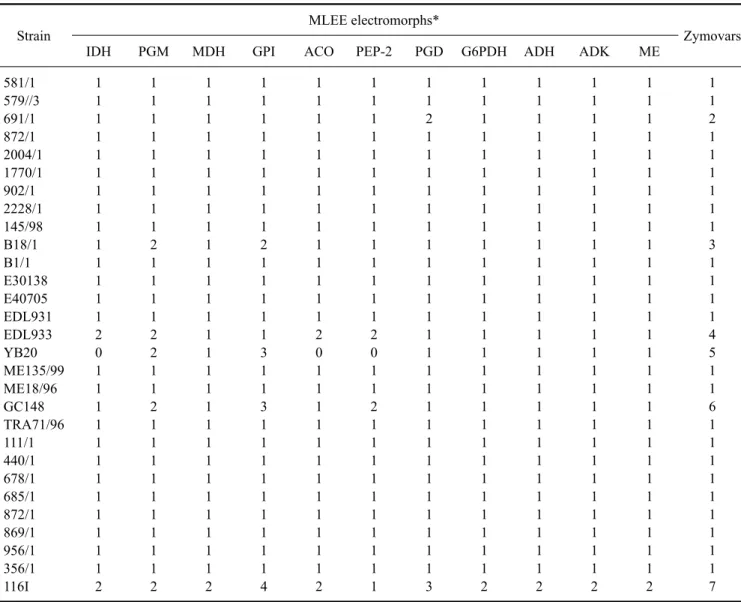
Table 2. Numerical representation of electromorphs and zymovars according to MLEE analysis of E. coli O157 strains

Strain MLEE electromorphs*

Zymovars

IDH PGM MDH GPI ACO PEP-2 PGD G6PDH ADH ADK ME

581/1 579//3 691/1 872/1 2004/1 1770/1 902/1 2228/1 145/98 B18/1 B1/1 E30138 E40705 EDL931 EDL933 YB20 ME135/99 ME18/96 GC148 TRA71/96 111/1 440/1 678/1 685/1 872/1 869/1 956/1 356/1 116I

1 1 1 1 1 1 1 1 1 1 1 1 1 1 2 0 1 1 1 1 1 1 1 1 1 1 1 1 2

1 1 1 1 1 1 1 1 1 2 1 1 1 1 2 2 1 1 2 1 1 1 1 1 1 1 1 1 2

1 1 1 1 1 1 1 1 1 1 1 1 1 1 1 1 1 1 1 1 1 1 1 1 1 1 1 1 2

1 1 1 1 1 1 1 1 1 2 1 1 1 1 1 3 1 1 3 1 1 1 1 1 1 1 1 1 4

1 1 1 1 1 1 1 1 1 1 1 1 1 1 2 0 1 1 1 1 1 1 1 1 1 1 1 1 2

1 1 1 1 1 1 1 1 1 1 1 1 1 1 2 0 1 1 2 1 1 1 1 1 1 1 1 1 1

1 1 2 1 1 1 1 1 1 1 1 1 1 1 1 1 1 1 1 1 1 1 1 1 1 1 1 1 3

1 1 1 1 1 1 1 1 1 1 1 1 1 1 1 1 1 1 1 1 1 1 1 1 1 1 1 1 2

1 1 1 1 1 1 1 1 1 1 1 1 1 1 1 1 1 1 1 1 1 1 1 1 1 1 1 1 2

1 1 1 1 1 1 1 1 1 1 1 1 1 1 1 1 1 1 1 1 1 1 1 1 1 1 1 1 2

1 1 1 1 1 1 1 1 1 1 1 1 1 1 1 1 1 1 1 1 1 1 1 1 1 1 1 1 2

1 1 2 1 1 1 1 1 1 3 1 1 1 1 4 5 1 1 6 1 1 1 1 1 1 1 1 1 7

*IDH: isocitrate dehydrogenase, PGM: phosphoglucomutase, MDH: malate dehydrogenase, GPI: glucose phosphate isomerase, ACO:

aconitase, PEP-2: leucyl amino peptidase, PGD: 6-phosphogluconate dehydrogenase, G6PDH: glucose-6-phosphate dehydrogenase, ADH:

alcohol dehydrogenase, ADK: adenylate kinase, ME: malic enzyme.

Isoenzyme electrophoresis

Bacterial cells were typed according to variation of eleven isoenzymes [16]. The following enzymatic isoenzymes were evaluated: malate dehydrogenase (MDH), aconitase (ACO), adenylate kinase (ADK), isocitrate dehydrogenase (IDH), leucyl amino peptidase (PEP-2), alcohol dehydrogenase (ADH), glucose phosphate isomerase (GPI), glucose- 6-phosphate dehydrogenase (G6PDH), 6-phosphogluconate dehydrogenase (PGD), phosphoglucomutase (PGM) and malic enzyme (ME). Cluster analysis was performed using the unweight pair group average method, UPGMA of the NTSYS pc software package (ver. 2.0; Exeter Software, USA). Isolates lacking detectable enzyme activity were designated as being in a null state at the locus in question.

Electrophoretic types (ETs) were defined based on combinations of isoenzymic markers. A numerical index measuring the discriminatory ability of MLEE typing method was calculated with the Simpson’s Index of Diversity equation [22].

Results

Multiplex PCR revealed that out of the 28 O157:H7

strains, 20 carried stx2, seven strains were positive for both

stx1 and stx2, and one strain of human origin was positive

for stx1 alone. EHEC O157:H7 carrying the stx2 sequence

was obtained from bovines (21 strains), humans (four

strains), and food (two strains). Strains carrying both stx1

(4)

Fig. 1. Isoenzymatic relationships among the Escherichia coli O157 strains.

and stx2 were isolated from bovines (four strains), humans (two strains) and from food (one strain). The enterohemolysin (E-hlyA) gene was detected in all EHEC O157:H7 strains that also carried the eae γ gene variant.

The control EPEC strain 116I (O157:H-) carried only the eae α gene (Table 1).

MLEE typing based on 11 isoenzymatic systems identified six distinct ETs in the EHEC O157:H7 population that was analyzed (Table 2). Enzymes G6PDH, ME, MDH, ADH, and ADK were monomorphic. The others were polymorphic with the number of electromorphs ranging from two (PEP-2, ACO, PGM, PGD and IDH) to three (GPI). Specific isoenzymatic variants of MDH, GPI, PGD, G6PDH, ADH, ADK, and ME were observed in the EPEC O157 strain alone. MLEE typing had a discriminatory index of 0.3768.

The dendrogram based on isoenzymatic markers segregated the O157:H7 strains into two main clonal groups, designated A and B, exhibiting a 75% similarity. Cluster A included strains more closely related and was subdivided into subgroups A1∼A3 while cluster B into B1∼B2 subgroups (Fig. 1). Subgroup A1 included 86% of the studied strains that exhibited similar isoenzymatic types.

These O157:H7 strains were isolated from cattle and humans, and were obtained from different Brazilian localities (Rio de Janeiro and Rio Grande do Sul) and other geographic regions (Argentina, UK, and USA). Subgroups A2 and A3 each had a single representative strain of bovine origin isolated from Rio de Janeiro. Group B included only three strains which were subdivided into subgroup B1, including the O157:H7 prototype strain EDL933 isolated from food, and subgroup B2, composed of strains recovered from cattle in Brazil. MLEE clustering was not

associated with the period of isolation. The outgroup, represented by the non-motile O157 EPEC strain 116I, was found to be distantly related to the EHEC O157:H7 strains.

Discussion

In order to determine the clonal relationships and potential virulence of the EHEC O157:H7, strains isolated from distinct sources and geographic regions were submitted for isoenzymatic typing and virulence genotyping.

Several basic criteria such as typeability, reproducibility, discriminatory power, availability, cost, and technical requirements must be taken into account for typing procedures. Genetic approaches are used worldwide due to their higher discriminatory power and standardized global data. Unlike some genetic methods for bacterial typing, isoenzymatic characterization relies on the analysis of housekeeping enzymes which can indicate distinct rates of diversification within a complex evolutionary process; this procedure may thus have lower discriminatory potential [7]. Currently, genotyping techniques are more frequently performed and better appreciated than phenotypical approaches typically used for epidemiology and evolutionary studies [7,24]. MLEE is the exception and has historically been the technique of choice for E. coli characterization.

This method provides relevant information about the metabolic background of potentially virulent bacterial populations [14,16,21]. This methodology is strongly recommended for long-term epidemiological studies due to the conserved nature of the molecular targets [21,24].

In the present investigation, the bacterial population we analyzed included epidemiologically independent strains representing differences in time of isolation, geographical origin, sources, and possibly distinct evolutionary lineages.

Isoenzymatic typing detected variability within the O157:H7 serotype that divided the strains into subgroups.

Identical isoenzymatic electrophoretic profiles were shared by O157:H7 strains presenting distinct ecological and epidemiological features. In order to achieve greater accuracy and determine the precise relationship of such strains, additional enzymatic systems could be used.

Subtyping genetic methods based on the analysis of nucleotide polymorphisms have also demonstrated diversity within the O157:H7 serotype. Additionally, specific variants and distinct lineages were found to be more commonly associated with particular disease phenotypes [4,6,21,25,28].

Genomic divergence from an ancestral form and the

occurrence of genetic events, mostly related to lateral gene

transfer, are thought to have promoted the evolution of

O157:H7 lineages [12,15,21,27]. Despite its limited

discriminatory power, the methodology employed in the

present study has also been used in molecular studies

conducted on E. coli epidemiology and strongly correlated

MLEE data and pulsed-field gel electrophoresis (PFGE)

(5)

genotypes. PFGE is a DNA typing methodology considered to be a reference system for evaluating genetic variability and the overall chromosomal relatedness of several microorganisms, including E. coli populations [18,19].

Comparison of virulence and isoenzymatic profiles of strains isolated in Argentina and Brazil represents a particularly important approach. This is because O157:H7 is the most prevalent EHEC serotype associated with cattle and human diseases in Argentina whereas O157:H7 strains were rarely found to be associated with human disease in Brazil [8,23]. An early PFGE analysis of Argentinean and Brazilian O157:H7 strains isolated before 1999 (YB20, B1/1, B18/1, and GC148) showed that only one strain (YB20) is related to the Argentinean strains [7]. Most EHEC O157:H7 strains isolated from Brazil and Argentina after 1999 belong to the same MLEE subgroup, A1.

However, the first O157:H7 isolates from Brazilian locations obtained in 1997 exhibited distinct MLEE types (B2, A3, and A2), suggesting the circulation and transmission of a new bacterial lineage, possibly of Argentinean origin, among Brazilian cattle reservoirs.

When considering virulence potential, bovine and food strains carry virulence genes encoding Shiga toxin, intimin, and enterohemolysin that are associated with EHEC pathogenicity in humans [1,2,8,23]. However, most Argentinean O157:H7 strains isolated from animals, food [8], and humans [11] are of the stx2/stx2c genotype. In contrast, most Brazilian strains are of the stx2c genotypes alone or carry stx1. STEC strains carrying only stx2c are less virulent in humans than strains carrying stx2 or stx2/stx2c genes [6,11].

Despite the relatively small number of strains analyzed in the present study, our results reinforce previous observations by detecting diversification within the serotype. We also identified bacterial clonal dissemination of potential virulent strains in distinct geographic regions, especially among different locations in Brazil. These findings underscore the need for more effective surveillance of bovine EHEC O157:H7 isolates in Brazil, especially considering the pathogenicity attributed to these microorganisms. Studies of additional enzymatic systems as well as a broader set of virulence genes is recommended for determining precise lineage specificities.

Acknowledgments

This work was supported by the Fundação de Amparo à Pesquisa do Estado do Rio de Janeiro, Brazil.

References

1. Armstrong GL, Hollingsworth J, Morris JG Jr. Emerging foodborne pathogens: Escherichia coli O157:H7 as a model of entry of a new pathogen into the food supply of the

developed world. Epidemiol Rev 1996, 18, 29-51.

2. Barrett TJ, Kaper JB, Jerse AE, Wachsmuth IK.

Virulence factors in Shiga-like toxin-producing Escherichia coli isolated from humans and cattle. J Infect Dis 1992, 165, 979-980.

3. Beutin L, Aleksic S, Zimmermann S, Gleier K. Virulence factors and phenotypical traits of verotoxigenic strains of Escherichia coli isolated from human patients in Germany.

Med Microbiol Immunol 1994, 183, 13-21.

4. Boerlin P, McEwen SA, Boerlin-Petzold F, Wilson JB, Johnson RP, Gyles CL. Associations between virulence factors of Shiga toxin-producing Escherichia coli and disease in humans. J Clin Microbiol 1999, 37, 497-503.

5. China B, Pirson V, Mainil J. Typing of bovine attaching and effacing Escherichia coli by multiplex in vitro amplification of virulence-associated genes. Appl Environ Microbiol 1996, 62, 3462-3465.

6. Friedrich AW, Bielaszewska M, Zhang WL, Pulz M, Kuczius T, Ammon A, Karch H. Escherichia coli harboring Shiga toxin 2 gene variants: frequency and association with clinical symptoms. J Infect Dis 2002, 185, 74-84.

7. Gürtler V, Mayall BC. Genomic approaches to typing, taxonomy and evolution of bacterial isolates. Int J Syst Evol Microbiol 2001, 51, 3-16.

8. Guth BEC, Chinen I, Miliwebsky E, Cerqueira AMF, Chillemi G, Andrade JRC, Baschkier A, Rivas M.

Serotypes and Shiga toxin genotypes among Escherichia coli isolated from animals and food in Argentina and Brazil.

Vet Microbiol 2003, 92, 335-439.

9. Irino K, Vaz TMI, Kato MAMF, Naves ZVF, Lara RR, Marco MEC, Rocha MMM, Moreira TP, Gomes TAT, Guth BEC. O157:H7 Shiga toxin-producing Escherichia coli strains associated with sporadic cases of diarrhea in São Paulo, Brazil. Emerg Infect Dis 2002, 8, 446-447.

10. Karmali MA. Infection by verocytotoxin-producing Escherichia coli. Clin Microbiol Rev 1989, 2, 15-38.

11. Leotta GA, Miliwebsky ES, Chinen I, Espinosa EM, Azzopardi K, Tennant SM, Robins-Browne RM, Rivas M. Characterisation of Shiga toxin-producing Escherichia coli O157 strains isolated from humans in Argentina, Australia and New Zealand. BMC Microbiol 2008, 8, 46-54.

12. Mellies JL, Barron AMS, Carmona AM. Enteropathogenic and enterohemorrhagic Escherichia coli virulence gene regulation. Infect Immun 2007, 75, 4199-4210.

13. Nishikawa Y, Hase A, Ogasawara J, Cheasty T, Willshaw GA, Smith HR, Tatsumi Y, Yasukawa A. Phage typing and DNA-based comparison of strains of enterohemorrhagic Escherichia coli O157 from apparently sporadic infections in Osaka City, Japan, 1996. Jpn J Infect Dis 2001, 54, 140-143.

14. Pancholi V, Chhatwal GS. Housekeeping enzymes as virulence factors for pathogens. Int J Med Microbiol 2003, 293, 391-401.

15. Paton AW, Voss E, Manning PA, Paton JC. Shiga toxin-producing Escherichia coli isolates from cases of human disease show enhanced adherence to intestinal epithelial (Henle 407) cells. Infect Immun 1997, 65, 3799-3805.

16. Pupo GM, Karaolis DKR, Lan R, Reeves PR. Evolutionary

(6)

relationships among pathogenic and nonpathogenic Escherichia coli strains inferred from multilocus enzyme electrophoresis and mdh sequence studies. Infect Immun 1997, 65, 2685-2692.

17. Regua-Mangia AH, Gomes TAT, Vieira MAM, Andrade JRC, Irino K, Teixeira LM. Frequency and characteristics of diarrhoeagenic Escherichia coli strains isolated from children with and without diarrhoea in Rio de Janeiro, Brazil.

J Infect 2004, 48, 161-167.

18. Regua-Mangia AH, Gomes TAT, Vieira MAM, Irino K, Teixeira LM. Molecular typing and virulence of enteroaggregative Escherichia coli strains isolated from children with and without diarrhoea in Rio de Janeiro city, Brazil. J Med Microbiol 2009, 58, 414-422.

19. Regua-Mangia AH, Guth BC, da Costa Andrade JR, Irino K, Pacheco ABF, Ferreira LCS, Zahner V, Teixeira LM. Genotypic and phenotypic characterization of enterotoxigenic Escherichia coli (ETEC) strains isolated in Rio de Janeiro city, Brazil. FEMS Immunol Med Microbiol 2004, 40, 155-162.

20. Regua-Mangia AH, Irino K, da Silva Pacheco R, Pimentel Bezerra RM, Santos Périssé AR, Teixeira LM. Molecular characterization of uropathogenic and diarrheagenic Escherichia coli pathotypes. J Basic Microbiol 2010, 50 (Suppl 1), S107-115.

21. Reid SD, Herbelin CJ, Bumbaugh AC, Selander RK, Whittam TS. Parallel evolution of virulence in pathogenic

Escherichia coli. Nature 2000, 406, 64-67.

22. Simpson EH. Measurement of diversity. Nature 1949, 163, 688.

23. Torres AG. Pathogenic Escherichia coli in Latin America.

pp. 223-248, Bentham e Books, Oak Park, 2010.

24. van Belkum A, Struelens M, de Visser A, Verbrugh H, Tibayrenc M. Role of genomic typing in taxonomy, evolutionary genetics, and microbial epidemiology. Clin Microbiol Rev 2001, 14, 547-560.

25. Wang G, Clark CG, Rodgers FG. Detection in Escherichia coli of the genes encoding the major virulence factors, the genes defining the O157:H7 serotype, and components of the type 2 Shiga toxin family by multiplex PCR. J Clin Microbiol 2002, 40, 3613-3619.

26. Whittam TS, Wolfe ML, Wachsmuth IK, Ørskov F, Ørskov I, Wilson RA. Clonal relationships among Escherichia coli strains that cause hemorrhagic colitis and infantile diarrhea. Infect Immun 1993, 61, 1619-1629.

27. Whittam TS. Evolution of Escherichia coli O157:H7 and other Shiga toxin-producing E. coli strains. In: Kaper JB, O’Brien AD (eds.). Escherichia coli O157:H7 and Other Shiga Toxin-Producing E. coli Strains. pp. 195-209, American Society for Microbiology, Washington, 1998.

28. Zhang Y, Laing C, Steele M, Ziebell K, Johnson R,

Benson AK, Taboada E, Gannon VPJ. Genome evolution

in major Escherichia coli O157:H7 lineages. BMC

Genomics 2007, 8, 121.

수치

Table 1. General characteristics of Escherichia coli O157 strains  Pathotype (strain) Geographic area Brazilian locations*
Table 2. Numerical representation of electromorphs and zymovars according to MLEE analysis of E
Fig. 1.  Isoenzymatic relationships among the Escherichia coli  O157 strains.

참조

관련 문서