Veterinary Science
http://dx.doi.org/10.4142/jvs.2011.12.4.363
Received: 6 Dec. 2010, Revised: 19 Jan. 2011, Accepted: 20 May 2011
Original Article
*Corresponding author
Tel: +98-261-4502849; Fax: +98-261-4552194 E-mail: [email protected]
Molecular characterization of a 13-amino acid deletion in VP1 (1D) protein and novel amino acid substitutions in 3D polymerase protein of foot and mouth disease virus subtype A/Iran87
Majid Esmaelizad
1,*, Saber Jelokhani-Niaraki
1, Khadije Hashemnejad
1, Morteza Kamalzadeh
2, Mohsen Lotfi
2Departments of
1Biotechnology, and
2Quality Control, Razi Vaccine and Serum Research Institute, Karaj 3197619751, Iran
The nucleotide sequence of the VP1 (1D) and partial 3D polymerase (3D
pol) coding regions of the foot and mouth disease virus (FMDV) vaccine strain A/Iran87, a highly passaged isolate (∼150 passages), was determined and aligned with previously published FMDV serotype A sequences. Overall analysis of the amino acid substitutions revealed that the partial 3D
polcoding region contained four amino acid alterations. Amino acid sequence comparison of the VP1 coding region of the field isolates revealed deletions in the highly passaged Iranian isolate (A/Iran87). The prominent G-H loop of the FMDV VP1 protein contains the conserved arginine-glycine-aspartic acid (RGD) tripeptide, which is a well-known ligand for a specific cell surface integrin. Despite losing the RGD sequence of the VP1 protein and an Asp
26→Glu substitution in a beta sheet located within a small groove of the 3D
polprotein, the virus grew in BHK 21 suspension cell cultures. Since this strain has been used as a vaccine strain, it may be inferred that the RGD deletion has no critical role in virus attachment to the cell during the initiation of infection. It is probable that this FMDV subtype can utilize other pathways for cell attachment.
Keywords: 3D
polprotein, deletion, RGD, VP1 protein
Introduction
Foot and mouth disease (FMD) is an economically important disease of cloven-hoofed livestock such as cattle, sheep, and other domestic animals in addition to several wild-life species. The causative agent of the FMD is the foot and mouth disease virus (FMDV) [9,11,18]. The disease is considered one of the most important barriers to
the worldwide trade of livestock and animal products [12].
FMDV isolates sampled from the world have been categorized into seven different serotypes, A, O, C, Asia1, and South African Territories 1 (SAT1), SAT2, and SAT3, according to antigenic levels; and a large number of variants have appeared within each serotype. Out of the three serotypes (O, A, and Asia1) found to be prevalent in Iran in recent years, serotype A has been found to be more antigenically and genetically diverse than the others [6,10,14].
The FMDV possesses a single-stranded RNA molecule consisting of about 8,200 nucleotides within an icosahedral capsid composed of structural proteins [12].
The open reading frame encodes a single polyprotein which can be cleaved into four structural proteins (VP4, VP2, VP3, and VP1) and eight non-structural proteins (L, 2A, 2B, 2C, 3A, 3B, 3C, and 3D polymerase [3D
pol]). In general, structural proteins are more variable than non- structural proteins. Mutations or deletions in structural proteins may help the FMDV to evade immune responses of the host whereas mutations or deletions in non-structural proteins can inhibit viral replication and protein processing [5].
The FMDV usually infects cells by binding to integrin receptors via a long flexible loop (G-H loop) of VP1 (1D).
The sequence of this loop contains a conserved arginine-
glycine-aspartic acid (RGD) tripeptide motif which is
characteristic of ligands that bind to integrin receptors
[16]. The VP1 protein is encoded by the VP1 coding region
of viral RNA; this coding region is 627∼639 bp long and
produces a protein containing 209∼213 amino acid
residues depending on the serotype [6]. The 3D
polgene
sequence is 1,410 nucleotides in length. This gene contains
a TAA stop codon and is responsible for encoding a protein
containing 470 amino acid residues [4]. Similar to other
picornaviruses, the FMDV 3D
polprotein is a viral-encoded
RNA polymerase. Among the different FMDV serotypes
and subtypes, both the nucleotide and amino acid
364 Majid Esmaelizad et al.
sequences of 3D
polare highly conserved [14]. Uninterrupted co-circulation of the virus in the environment and the absence of viral polymerase proofreading activity during the replication process lead to the appearance of various genetic isolates [2]. Analysis of the viral genome sequence is a crucially important approach for monitoring field isolates in areas where the disease is endemic.
Previous studies have shown that Iran has one of the highest reported rates of FMD cases per year [17]. In Iran, FMD is largely controlled by vaccinating cattle and sheep with vaccines prepared against isolates that are likely to be encountered in the region. Spread of the disease is promoted by the presence of large populations of susceptible animals, low vaccination rates, prevalence of multiple serotypes (including serotypes A, Asia1, and O), and unlimited movement of susceptible animals in the country. Furthermore, there is endemic co-circulation of multiple genotypes of type A virus [19]. The high incidence of FMD has allowed the identification of new variants of the virus over the last 7 years [17]. The general objective of this study was to determine the nucleotide sequences of genes encoding VP1 and 3D
polproteins of a type A FMDV (A/Iran87) highly adapted to cell culturing, and to compare them to other corresponding sequences available in the GenBank database.
Materials and Methods
The Razi Vaccine and Serum Research Institute (Iran) generously provided samples of the FMDV used for our study. Clinical specimens of FMDV which included samples in tongue epithelium tissue were collected in 1987 from infected calves displaying clinical symptoms of FMD in an Iranian field located in Tehran. The A/Iran87 strain was initially detected and isolated nearly more than two decades ago. Thus, the highly passaged virus investigated in this study was not virus isolated from the field. The tissue samples were used to infect baby hamster kidney 21 (BHK-21) cells. The virulent isolate was passaged in BA (cell line derived from pig kidney) and BHK-21 cell monolayers. Propagation steps included six passages in BA cells and then four passages in BHK-21 cells.
Thereafter, it has been used for the development of FMD vaccines during the past years as a vaccine seed. The infected cell culture supernatant from the ∼150th passage was clarified and stored at 70
oC before use.
RNA extraction and reverse transcription-polymerase chain reaction (RT-PCR)
Total RNA was extracted from FMDV-infected BHK-21 cells using an RNX plus kit (Cinnagen, Iran) according to the manufacturer’s instructions. Briefly, the cell culture was centrifuged at 85,000× g at 4
oC for 2 h. The pellet was resuspended in 200 μL of PBS, mixed well with 400 μL of
RNX reagent, and incubated at room temperature for 5 min. RNA was extracted with 0.2 μL chloroform : isoamylalcohol (24 : 1). RNA in the aqueous solution was precipitated by adding an equal volume of isopropanol.
The mixture was then centrifuged at 10,000 × g for 20 min.
The pellet was washed with 75% ethanol and dissolved in 20 μL of RNase-free water.
RT-PCR was carried out in 50 μL of reaction mixture containing 10 μL of 5× reaction buffer, 4 μL of mixed dNTPs (2.5 mM each), 1 μL of AMV enzyme (Titan One Tube RT-PCR system kit; Roche Diagnostic, Germany), 1 μL of each primer (10 pmol each), 4 μL of RNA template, 2.5 μL DTT, 3 μL 25mM MgCl
2, and 23.5 μL of H
2O. The following conditions were used for amplification: 42
oC for 30 min, 94
oC for 3 min; 30 cycles of 94
oC for 30 sec, 52
oC for 30 sec, 72
oC for 40 sec; then followed by 72
oC for 5 min. The VP1 and 3D
polcoding regions of FMDV (621 and 690 bp, respectively) were amplified using standard methods with a one-step RT-PCR system and specific primer combinations. Primers sequences were as follows:
forward: 3FMG6 5´-ctctggtaccatcaacctgcac-3´ and reverse:
Nk61 5´-gacatgtcctggtgcatctg-3´ for 3D
pol, and forward:
FMG13 5´-accaggatgatgattggcag-3´ and reverse: FM15 5´-tttcactcctacggtgtcgc-3´ for VP1. Amplified PCR products of the expected length were separated by electrophoresis in a 1% agarose gel, stained with ethidium bromide, and visualized under a UV transilluminator.
Cloning of the PCR product, DNA sequencing, and sequence analysis
After successful amplification of the target DNA sequences, fragments were purified using a gel extraction kit (Roche, Germany) following the recommendations of the supplier. Ligation was performed with plasmid vector pTZ57R/T (Fermentas, Germany) in 0.165 μg, 0.18 pmol ends and 0.54 pmol ends purified PCR fragment in 1×
ligation buffer, polyethylene glycol (PEG 4000), 5 units of T4 DNA ligase, and up to 30 μL of deionized water at 22
oC for 16 h. The ligated products were used to transform chemically competent cells (XL1-Blue cells) and white colonies grown on LB plates were randomly selected. The cloned PCR products were purified using plasmid purification kit (Roche Diagnostics, Germany) according to the manufacturer’s instructions and sequencing was carried out in both directions using a T7 promoter primer (MWG Biotech, Germany).
The published sequences of 66 FMDV type A isolates
recovered from different parts of the world were included
in this analysis and compared to the corresponding sequence
of the A/Iran87 isolate. Reference FMDV sequences were
obtained from the National Center for Biotechnology
Information (NCBI, USA). The sequences used for each
gene were first examined to exclude ambiguous sequences
which were incomplete or frame-shifted. To determine the
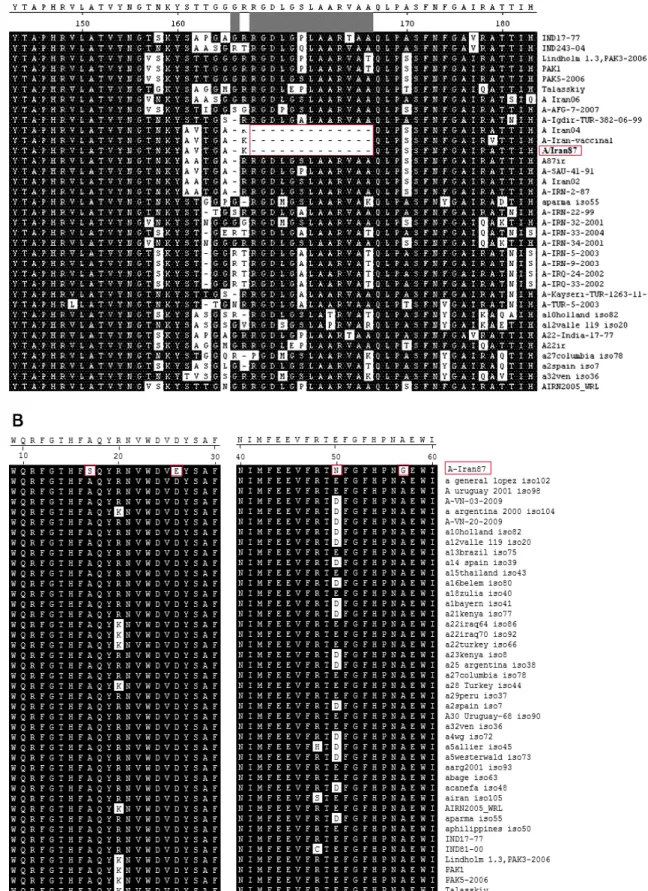
Fig. 1. Alignment of the translated amino acid sequences of the (A) VP1 and (B) 3D polymerase (3D
pol) genes. Dashes () represent
absent amino acids. Differences in amino acids among the isolates are indicated by a single letter code. Red boxes indicate amino acid
deletions and substitutions in the consensus sequence (A/Iran87) relative to the other isolates.
366 Majid Esmaelizad et al.
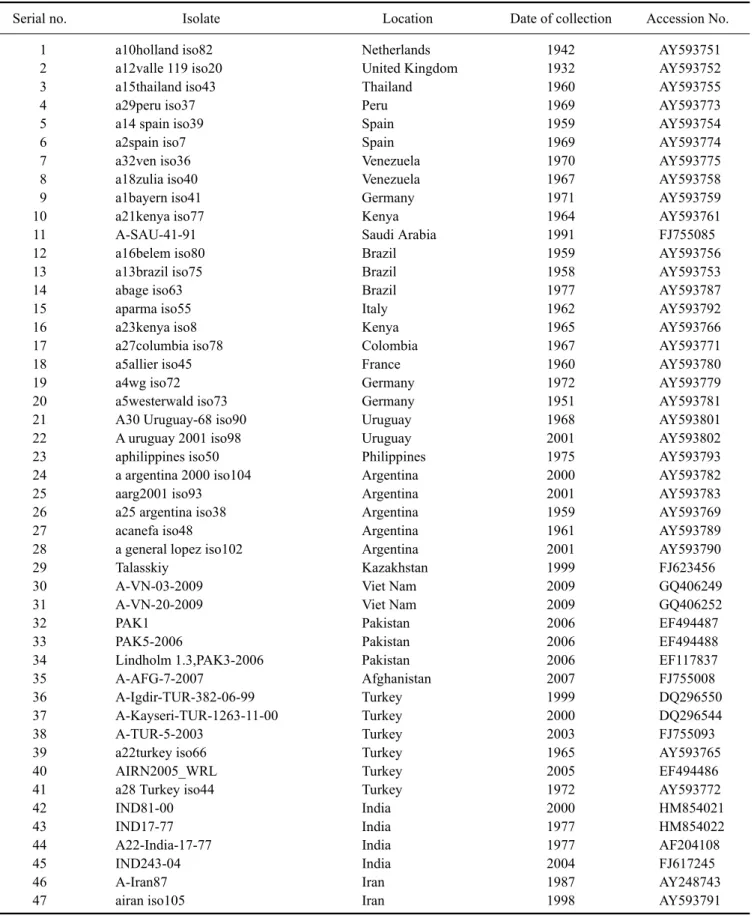
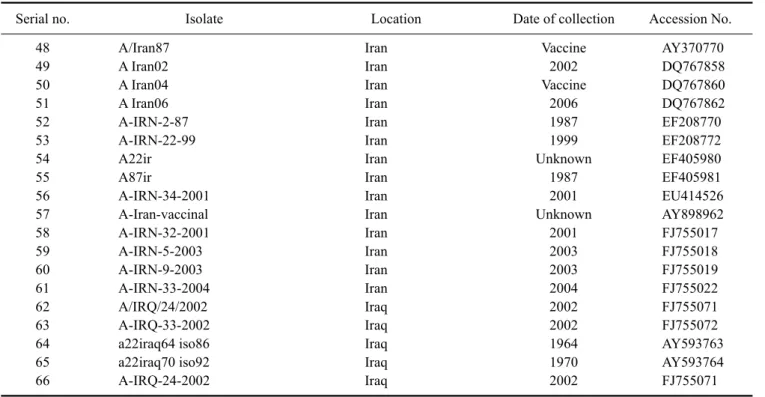
Table 1. Description of type A field isolates used to determine the sequence variability in the protein VP1 and 3D polymerase coding regions
Serial no. Isolate Location Date of collection Accession No.
1 a10holland iso82 Netherlands 1942 AY593751
2 a12valle 119 iso20 United Kingdom 1932 AY593752
3 a15thailand iso43 Thailand 1960 AY593755
4 a29peru iso37 Peru 1969 AY593773
5 a14 spain iso39 Spain 1959 AY593754
6 a2spain iso7 Spain 1969 AY593774
7 a32ven iso36 Venezuela 1970 AY593775
8 a18zulia iso40 Venezuela 1967 AY593758
9 a1bayern iso41 Germany 1971 AY593759
10 a21kenya iso77 Kenya 1964 AY593761
11 A-SAU-41-91 Saudi Arabia 1991 FJ755085
12 a16belem iso80 Brazil 1959 AY593756
13 a13brazil iso75 Brazil 1958 AY593753
14 abage iso63 Brazil 1977 AY593787
15 aparma iso55 Italy 1962 AY593792
16 a23kenya iso8 Kenya 1965 AY593766
17 a27columbia iso78 Colombia 1967 AY593771
18 a5allier iso45 France 1960 AY593780
19 a4wg iso72 Germany 1972 AY593779
20 a5westerwald iso73 Germany 1951 AY593781
21 A30 Uruguay-68 iso90 Uruguay 1968 AY593801
22 A uruguay 2001 iso98 Uruguay 2001 AY593802
23 aphilippines iso50 Philippines 1975 AY593793
24 a argentina 2000 iso104 Argentina 2000 AY593782
25 aarg2001 iso93 Argentina 2001 AY593783
26 a25 argentina iso38 Argentina 1959 AY593769
27 acanefa iso48 Argentina 1961 AY593789
28 a general lopez iso102 Argentina 2001 AY593790
29 Talasskiy Kazakhstan 1999 FJ623456
30 A-VN-03-2009 Viet Nam 2009 GQ406249
31 A-VN-20-2009 Viet Nam 2009 GQ406252
32 PAK1 Pakistan 2006 EF494487
33 PAK5-2006 Pakistan 2006 EF494488
34 Lindholm 1.3,PAK3-2006 Pakistan 2006 EF117837
35 A-AFG-7-2007 Afghanistan 2007 FJ755008
36 A-Igdir-TUR-382-06-99 Turkey 1999 DQ296550
37 A-Kayseri-TUR-1263-11-00 Turkey 2000 DQ296544
38 A-TUR-5-2003 Turkey 2003 FJ755093
39 a22turkey iso66 Turkey 1965 AY593765
40 AIRN2005_WRL Turkey 2005 EF494486
41 a28 Turkey iso44 Turkey 1972 AY593772
42 IND81-00 India 2000 HM854021
43 IND17-77 India 1977 HM854022
44 A22-India-17-77 India 1977 AF204108
45 IND243-04 India 2004 FJ617245
46 A-Iran87 Iran 1987 AY248743
47 airan iso105 Iran 1998 AY593791
Table 1. Continued
Serial no. Isolate Location Date of collection Accession No.
48 A/Iran87 Iran Vaccine AY370770
49 A Iran02 Iran 2002 DQ767858
50 A Iran04 Iran Vaccine DQ767860
51 A Iran06 Iran 2006 DQ767862
52 A-IRN-2-87 Iran 1987 EF208770
53 A-IRN-22-99 Iran 1999 EF208772
54 A22ir Iran Unknown EF405980
55 A87ir Iran 1987 EF405981
56 A-IRN-34-2001 Iran 2001 EU414526
57 A-Iran-vaccinal Iran Unknown AY898962
58 A-IRN-32-2001 Iran 2001 FJ755017
59 A-IRN-5-2003 Iran 2003 FJ755018
60 A-IRN-9-2003 Iran 2003 FJ755019
61 A-IRN-33-2004 Iran 2004 FJ755022
62 A/IRQ/24/2002 Iraq 2002 FJ755071
63 A-IRQ-33-2002 Iraq 2002 FJ755072
64 a22iraq64 iso86 Iraq 1964 AY593763
65 a22iraq70 iso92 Iraq 1970 AY593764
66 A-IRQ-24-2002 Iraq 2002 FJ755071
degree to which genetic diversity was observed in the VP1 and 3D
polproteins, multiple alignments and comparisons of the predicted amino acid sequences of isolates were carried out (Fig. 1). Nucleotide sequence homology/
divergence was calculated using the MegAlign project of the DNAStar software package (ver 5.1; DNAStar, USA;
data not shown). The histories of the type A FMDV field isolates, including year of isolation, accession number, and geographical distribution, are presented in Table 1. The nucleotide sequences of the VP1 and 3D
polcoding regions of A/Iran87 have been submitted to GenBank (accession No. AY370770 and AY248743, respectively).
Results
Genetic comparison of the field isolates to the vaccine strain is of significant importance for testing the usefulness of the existing vaccine strain as well as selecting new vaccine strain(s). During virus circulation, amino acid substitutions accumulate at the different positions of the protein sequence. In the present study, a highly passaged field isolate of FMDV (A/Iran87) named Mardabad or A87 isolate was selected for genetic analysis. Sequences of the protein coding regions (VP1 and 3D
pol) from the high- passage cell-adapted vaccine strain were determined by PCR amplification and sequencing. Comparison of the amino acid sequences revealed amino acid changes in both structural and non-structural proteins. The number of sequence differences exhibited by each of the isolates
showed that A/Iran87 contains four amino acid substitutions at positions 17, 26, 50, and 57 in the 3D
polcoding region (Fig. 1). There is clear evidence of novel amino acid substitutions (Ala→Ser, Asp→Glu, Glu→
Asn, and Ala→Gly) in two domains of the 3D
polprotein.
Comparison of the VP1 protein among different variants showed that A-Iran-vaccinal contained a change at position 179. At this position, Ala was replaced with Val.
Fig. 1A shows that amino acid changes among the VP1 genes of the field isolates consist of numerous nucleotide substitutions and deletions compared to the consensus sequence. Comparison of the predicted amino acid sequences of VP1 region in the field isolates revealed amino acid deletions in three Iranian vaccine isolates (A-Iran-vaccinal, A Iran04, and A/Iran87). As shown in Fig. 1A, deletions occurred within the 13 amino acid positions (168 to 180) of the VP1 region. Three- dimensional analysis of 3D
polprotein showed that the Asp
→Glu substitution occurred in a beta sheet located in a small groove of the protein.
The variations were not distributed uniformly along the genes; there were areas of high and low incidence of nucleotide sequence variation (data not shown). The region of the VP1 gene between amino acids 157 and 183 contained a high degree of variation and encoded an important immunogenic site on the viral surface.
Consequently, nucleotide changes in this region are most
likely involved in the appearance of new antigenic
variants. The VP1 and 3D
polnucleotide sequences of the
368 Majid Esmaelizad et al.
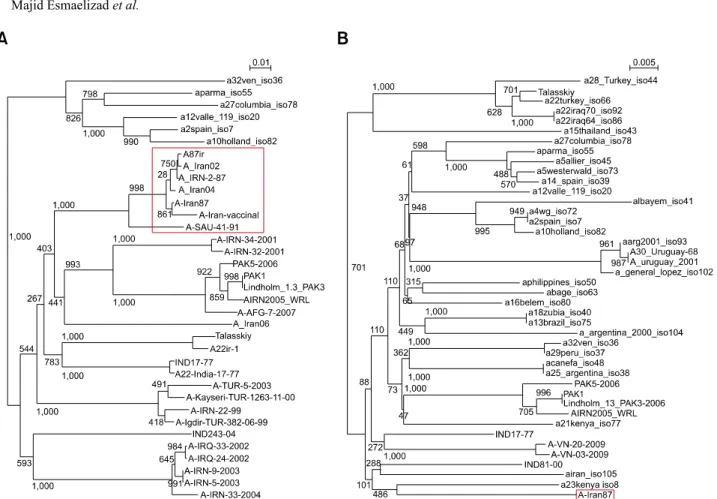
Fig. 2. Phylogenetic tree showing relationships among different A field viruses according to the (A) VP1 and (B) 3D
polgene sequences.
Lineages and bootstrap values are shown on the tree.
selected FMDV-A subtypes isolated from outbreaks in Iran and other countries were used to construct a FMDV-A VP1 and 3D
pol-based sequence similarity tree. Fig. 2 shows a phylogenetic tree that was constructed based on the sequence alignment of 35 genomes of the VP1 region and 42 genomes in the 3D
polregion which are distinctly divided into different lineages. As depicted in Fig. 2A, the A/Iran87 isolate clustered with a Saudi Arabian and five Iranian isolates into a branch separate from other type A isolates.
Fig. 2B demonstrates that A/Iran87 and all isolates examined in the present study originated from different geographical areas and did not cluster in relatively similar lineages based on 3D
polsequences. All the field isolates shared comparatively lower homology (90∼93%) with the A/Iran87 isolate in the 3D
polcoding region (data not shown). The topology of the phylogenetic tree indicated that there was no remarkable similarity between A/Iran87 and all other isolates in the 3D
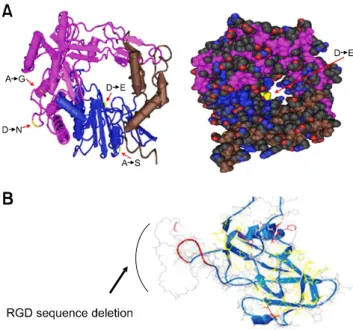
polcoding region. Space- filling and worm styles of the three-dimensional structures of the 3D
poland VP1 proteins from the A/Iran87 isolate were observed. Analysis of the 3D
polprotein structure showed that the Asp→Glu substitution occurred in a beta
sheet located within a small groove of the protein. In order to examine the long amino acid deletion in the three- dimensional structure of the VP1 protein, homology-based modeling of the protein domains was carried out (Fig. 3). It indicated that, 13 amino acid deletions in the VP1 protein of A/Iran87 isolate caused a change in three-dimensional structure of protein in the G-H loop region.
Discussion
Detailed knowledge of the molecular characteristics of
the major FMDV immunogenic components would be
useful for monitoring various processes like evolution,
genetic diversity, and virus origin, and for developing
protective vaccines. Among the FMDV serotypes,
serotype A has been found to include the greatest number
of recently developed variants. Extreme genetic heterogeneity
is largely due to the absence of viral polymerase
proofreading activity [2]. FMDV variants also appear
during continuous infection of animals on farms or
proliferation in cell cultures. Furthermore, genetic
diversification among FMDV subtypes can be caused by
events occurring during recombination.
Fig. 3. (A) The predicted three-dimensional space-filling and worm style structures of the 3D
polprotein of the A/Iran87 isolate.
Novel amino acid substitutions are marked in yellow. (B) The predicted three-dimensional VP1 structure of the A/Iran87 isolate determined by homology-based modeling. The arrow indicates 13-amino acid deletions including the arginine- glycine-aspartic acid (RGD) sequence in the G-H loop.
Along with above mechanisms, there is continuous co-circulation of multiple genotypes of FMDV type A which may lead to recombination; this progresses gradually between closely related isolates when multiple viral genotypes co-infect the host. Exchange of different genomic regions between FMDVs by recombination is directly linked to FMDV diversification. Recombination, particularly in the structural protein-coding region, may offer selective advantages to the virus. This can be great concern to areas where multiple FMDV genotypes co-circulate [19]. The presence of extensive antigenic variation among different FMDV isolates can hinder vaccination against FMDV [1,13].
Genetic polymorphisms amongst different type A subtypes demonstrated that four nucleotides in the 3D
polcoding region of isolate A/Iran87 (49, 78, 148, and 170) were changed from G to T, C to A, G to A, and C to G, respectively, resulting in amino acid substitutions Ala
17→ Ser, Asp
26→Glu, Glu
50→Asn, and Ala
57→Gly, respectively.
In contrast to the A/Iran87 isolate, the remaining 41 isolates showed no corresponding changes at these positions. Analysis of the sequence data revealed that the A/Iran87 isolate also contained 30 nucleotide deletions in region 501∼540 of the VP1 nucleotide sequence, which led to long amino acid deletions (RGDLGSLAARVAA) in the G-H loop. It should be noted that the RGD sequence was deleted from the G-H loop. The three-dimensional and
antigenic structures of many different serotypes of the FMDV have been examined [8]. In spite of losing the RGD sequence and acquiring a Asp
26→Glu substitution in a beta sheet located in a small groove of the 3D
polprotein, the virus grew in a BHK-21 suspension cell culture and exerted cytopathic effects after 16∼18 h. Since this strain is used as a vaccine strain, it may be inferred that the RGD does not have a key role in the virus binding to cells during infection. This virus subtype can probably use other pathways for cell attachment. As RGD sequence was found to be deleted, such a natural deletion in VP1 gene of FMDV is a novel phenomenon and has not been previously reported in compared isolates.
The VP1 capsid protein contains a mobile loop between the βG and βH strands on the virus surface; this protein not only contains the major immunodominant epitopes of the virion but also a highly conserved RGD amino acid sequence motif. RGD participates in binding FMDV to susceptible cells. Several studies using different approaches have indicated that naturally developed FMDV isolates attach to cells via the highly conserved RGD motif.
FMDVs have been shown to use multiple RGD-dependent integrins of the αv subgroup to initiate infection; these include αvβ3, αvβ6, αvβ1, and αvβ8. On the other hand, these viruses are capable of entering cells via non-integrin pathways. Tissue culture-adapted FMDVs are able to utilize heparan sulfate (a glycosaminoglycan found on the cell surface) as a receptor for entering the cells. It has recently been found that FMDV can utilize unknown receptors except for integrin and heparan sulfate. This indicates the presence of other receptors and possible alternative mechanisms for viral particle entrance into the cells. This conclusion is also supported by the finding that destruction of the βG-βH loop RGD motif by site-directed mutagenesis created viruses which were able to replicate and assemble, but were not capable of initiating further infection cycles because of their inability to interact with cell receptors [18].
Previous findings from studies of synthetic peptides
suggested that the carboxy-terminus of the VP1 protein
situated in the vicinity of the RGD motif is required for
RGD-mediated cell binding [3]. The G-H loop of the VP1
protein on the viral particle surface is considered to be the
dominant epitope for several FMDV types and the most
variable part of the particle. Antibody-based responses
against the loop have the ability to neutralize FMDVs in
vitro and are protective in vivo. For example, replacing the
whole or partial G-H loop leads to the doubling of antibody
titers against type A virus. New findings in this field are in
complete agreement with a previous report documenting
that the only mutation which did not increase heterologous
responses was deletion of the RGD-motif (3A) [8]. In
another study, the RGD sequence was deleted from a
genetically engineered FMDV (Type A
12), thereby
370 Majid Esmaelizad et al.