Ⅰ. 서 론
치과 치료에 대한 공포 혹은 불안은 매우 흔한 것으로 알 려져 있다. 치과에 대한 공포나 불안을 가진 사람의 50~60%는 치과시술에 대한 두려움 때문이지만, 나머지의
경우 정신과적 질환을 가진 사람들이라는 보고가 있다1). 치 과 공포는 치과에 대한 불안 및 정신과적 증상 모두 관여되 므로, 환자가 가지고 있는 문제의 심각성을 정확히 평가하 는 것이 중요하다2).
치과 치료에 대한 불안과 공포 그리고 이에 따른 치료의 회피는 환자의 구강건강에 매우 큰 영향을 미치게 된다. 치 과치료가 장기간 미루어짐에 따라 환자의 구강건강은 더욱 악화될 것이며 발치, 수술 등 보다 침습적인 치료의 가능성 이 높아진다. 침습적인 치료는 또한 환자의 감정적인 안정 에 결정적인 영향을 미치게 된다. 따라서 치과 환자를 평가
◆ 증 례
정신장애 환자에서 난발치 중의 불안장애와 과환기 관리 : 증례보고
오지현1∙유재하1*∙김종배2
1연세대학교 원주세브란스기독병원 치과학교실, 2계명대학교 의과대학 동산의료원 치과학교실
CARE OF ANXIETY DISORDER AND HYPERVENTILATION DURING REFRACTORY TOOTH EXTRACTION IN A PSYCHOLOGIC DISABLED PATIENT
Ji-Hyeon Oh
1, Jae-Ha Yoo
1*, Jong-Bae Kim
21
Department of Dentistry, Wonju Severance Christian Hospital, Yonsei University, Wonju, Korea
2
Department of Dentistry, Dong San Medical Center, Keimyung University, Daegu, Korea
Hyperventilation is produced by several distinct causes: anxiety, respiratory alkalosis, increased blood catecholamine levels, and a decrease in the level of the ionized calcium in the blood. The dental fears about acute pain, bleeding, needle, drill and dental surgery lead to the severe anxiety and increased blood catecholamine level.
Therefore, the most dental patient should be cared gently as the stress reduction protocol. In spite of the gentle care, a hyperventilation were occurred during the surgical extraction of impacted third molar with pericoronitis.
We suggest that the dental patients with anxiety disorder must be attention for the manifestation of hyperventilation, especially in the psychologic disabled patient. [J Korean Dis Oral Health Vol.10, No.2: 106-
113, December 2014
]Key words :
Anxiety disorder, Dental fears, Hyperventilation, Surgical extractionAbstract
Corresponding author : Jae-Ha Yoo 162 Ilsan-dong, Wonju, 220-701, Korea
Department of Dentistry, Wonju Severance Christian Hospital, Yonsei University
Tel: +82-33-741-1434, Fax: +82-33-742-3245
E-mail: [email protected]
할 때 환자의 대처능력, 동기 등 심리적인 상태를 평가하는 것이 필요하며, 환자의 치과 공포가 단지 치과 치료에 대해 국한된 것인지, 정신과적인 증상을 보이는 것인지를 평가하 는 것이 중요하다3). 또한 치과의사가 불안 경향을 가지는 환 자를 치료할 때 일반 환자보다 훨씬 다루기가 어렵고, 많은 시간이 투입되게 된다. 이들을 치료하는 치과의사는 좌절감 과 많은 스트레스를 가지게 된다. 따라서 치과의사는 이러 한 치과 불안에 대해 정확히 이해하고, 적절한 대처법을 잘 알아야 할 것이다.
모든 치과시술이 환자가 두려워 할 수 있는 요인들이 되 지만, 특히 동통과 드릴에 대한 공포, 미지에 대한 공포, 무 력증과 의존성에 대한 공포, 신체변화와 손상에 대한 공포, 심지어 죽음에 대한 공포까지 문제가 될 수 있으므로, 임상 에서는 이를 반드시 고려한 진료가 필요하다4). 치과의사는 환자의 불안을 예측하고, 조절하게 하여 불안을 감소시키는 치료 방법에 익숙해야 하며 환자를 배려하고, 불가피한 통 증을 최소화할 책임이 있다5). 많은 경우 환자에게 무엇이 발 생할 것이고 어떤 종류의 경험을 할지에 대한 정확한 설명 과 정보를 제공해 주는 것만으로도 상당부분의 불안을 경감 시켜 줄 수 있다. 환자 역시 치료를 받아들이기 위해 효과적 인 이완기법을 배울 수 있으며, 치과의사와의 의사소통을 보다 효율적으로 가져야 한다6). 심한 불안을 나타내는 경우 적절한 대처전략을 교육시키고, 실행시키는 것도 필요하다7). 그리하여 임상에서는 비약물적 불안해소법으로 심호흡 교 육 같은 호흡법, 최면술, 바이오 피드백, 탈감각 등의 방법 과 진료시 스트레스 감소법 등을 철저히 활용하려고 노력하 지만8,9), 불가항력적으로 과환기증이 발생되어 임상의와 의 료진 모두를 당혹스럽게 만든다10).
이에 저자 등은 개원 치과의원에서(#48) 매복지치 발치 시행 도중, 발치시간이 길어지고 발치창 주위조직 출혈도 과도하면서, 환자가 불안 증상을 나타내어 전원된 환자에 서, 압박지혈 시행 중 과환기 증상을 나타낸 불안장애 환자 를 치험했기에 이를 보고한다.
Ⅱ. 증례 보고
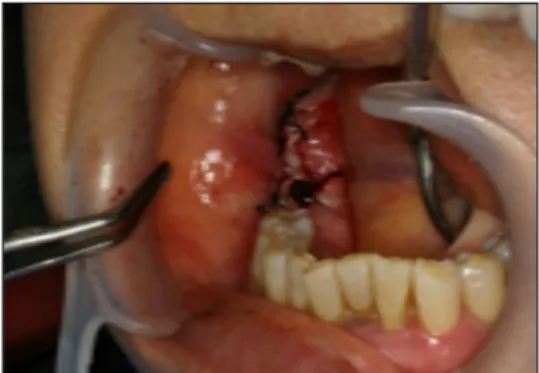
57세 여자 환자로 개원 치과의원에서 매복지치의 발치를 시도하다가 피가 많이나고 아파서 본 치과로 내원했다(Fig.
1). 병력상 약 10년 전부터 반복성 우울장애 등 정신장애를 앓아 왔으며, 투약은 약 1년간 시행하다가 최근엔 경과 양 호해 투약은 중단 상태였다.
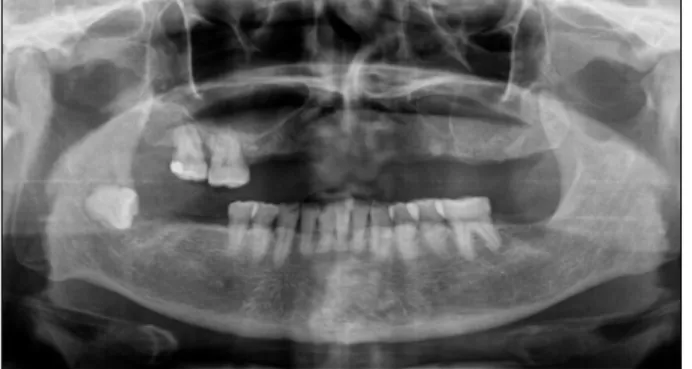
현증으로는 구강내 과도 출혈, 통증이 있고, 온 전신을 부 들부들 떨고 있는 진전(tremor) 상태를 보였고, 방사선 사 진상 심부 매복지치(#48)가 잔존된 상태를 나타냈다(Fig.
2). 치과 외래에서 응급진료가 불가능 했기에 우선 환자를 응급실로 이동시켜서 임상병리검사 및 수액 약물요법을 시 행키로 했고, 우선 과환기 증상의 감소와 정맥주사의 안정 된 주입을 위해 진정제(Ativan) 근육주사를 시행했다. 다음 에 5% Dextrose solution 1000cc 정맥주사, cleocin 0.6g 정맥주사, ketorac 1ampule 근육주사를 시행한 다음에, 보 다 확실한 진정을 위해 Diazepam 1ampule과 증류수 20cc를 혼합한 것을 1/2씩 서서히 정맥주사 했다.
그 결과 심신의 안정(의식 및 생징후 안정) 상태가 되어 서 치과용 국소마취제(2% lidocaine HCL 3.6cc 1:100,000 epinephrine)로 하악 전달마취를 시행했고, 발 치창상 내부 확인 결과 골수강내 출혈이 과도해서 골납 (bone wax) 적용, 창상세정, 봉합 및 배액술을 완료한 다 음에 습윤 거즈 압박술(wet gauze biting)을 시행했다 (Fig. 3, 4). 그후 약 30분 경과후 압박거즈를 제거해 보니 과도한 출혈은 멈추었지만, 스며나오는 oozing type의 미세 출혈은 지속되었기에 좀 더 장시간의 지혈처치를 계속했다.
그리하여 습윤압박거즈(Wet gauze biting) 3시간 경과시 임상병리 검사결과 약간의 감염소견 있었지만 생징후 정상 이고, 불안장애, 과환기증, 동통과 출혈조절 됨을 확인했으 며(Fig. 5), 습윤거즈 압박(gauze biting)없이 약 2시간 경 과 관찰로 정상 심신으로 회복되어 귀가하게 되었다.
그후에는 3일마다 발치창 내부에 삽입 되었던 드레인
Fig. 1. Initial oral view. Fig. 2. Initial panoramic view.
(rubber & iodoform gauze)을 교환하다가 약 2주 후 드레 인 모두 제거했고, 약 3개월 후 최종 창상점검해 정상치유 를 관찰할 수 있어서 가철성 국소의치를 장착하기로 하고, 잔존된(#48) 매복지치는 경과를 관찰하면서 발치 여부를 판단키로 했다.
Ⅲ. 고 찰
장애인 복지법에 따른 장애의 범주에서 정신적 장애는 정 신지체, 정신장애, 발달장애로 구분되며, 정신장애에는 정 신분열증, 분열정동장애, 양극성 정동장애, 반복성 우울장 애가 포함된다11,12).
본 증례의 환자도 초진 시에는 정신장애의 사실을 알려주 지 않아서 개원 치과의원서 난발치를 시도했고, 본 치과에 서도 처음엔 이 사실을 몰랐다가 나중 응급실에서 위험한 불안장애와 과환기증이 감소되고 나서, 이 사실을 알려주어 서 정신장애에 관심을 가지게 되었다.
한편 정상인에서도 불안은 공포(fear)와 더불어 동물이나 인간이 어떤 위협을 느낄 때 일어나는 생물학적 반응으로
나타나는 정상적인 감정이다. 동물이나 인간은 위협이 감지 되었을 때 불안과 두려움을 느끼게 된다. 이때 안절부절 못 하고 가만히 앉아있지 못하고 초조해하는 것은 심리적인 느 낌 때문만이 아니고, 자율신경계의 활성화로 생기는 심계항 진, 과호흡, 두통, 가슴 답답함 등의 신체적 변화가 동반되 기 때문이다13). 이와 같은 반응은 위험에 처했을 때, 투쟁하 거나 도망가거나 또는 꼼짝 못하거나 하는 대처를 통해, 생 존을 위한 준비와 적응과정이라고 할 수 있다. 현대인의 경 우 급작스러운 생명을 위협하는 상황보다는 일상생활에서 발생하는 갈등, 스트레스에 의해서 이러한 불안 반응이 더 많이 발생하게 된다. 인간이면 누구나 생활에서 어느 정도 의 정상적인 불안을 겪으며 살고 있고, 이 불안을 처리하기 위해 심리적, 인지적 행동적인 대응책들이 각 개인 나름대 로 발달되어 있다14). 일반적으로 정상 불안의 극단적인 형태 를 공포라고 말하며, 통상적으로 위험도가 적은 어떤 대상 이나 처치에 대한 심한 공포를 공포증(phobia)으로 표현하 기도 한다15).
주지하는 대로 치과공포증에는 통증의 공포, 드릴의 공 포, 주사침의 공포, 수술의 공포, 치아상실의 공포가 있고, 그 외에도 치과치료에 대한 이해부족에서 오는 미지의 공 포, 자기 자신을 어찌할 수 없는 무력증과 의존성의 공포, 치과치료로 인한 신체 손상 및 변화의 공포가 있다4,16). 이들 가운데 가장 문제가 되는 것은 치과질환 자체로 인한 통증, 종창에 의한 안모비대칭과 추형, 개구 및 연하장애 등과 치 과진료 중 통증과 출혈 및 진료 후 감염 등에 의한 합병증일 것이다. 왜냐하면 구강악안면영역은 인체에서 감각신경의 분포밀도가 매우 높고 예민한 삼차신경이 분포되고 있으며, 혈행도 풍부해 혈관벽에 분포된 교감신경과 부교감 신경의 존재도 지속적인 통증형성에 기여하기 때문이다.
본 증례의 환자도 발치 중 출혈과다로 탈진상태에서 시술 시간이 지연되어서 국소마취도 풀리는 등 통증도 발생해 상 당한 불안 공포의 스트레스가 있었을 것으로 생각된다. 과 도한 스트레스에 대한 신경내분비 반응을 보면, 우선 교감
Fig. 3. Primary wound care in the surgical extraction site(#48). Fig. 5. Intraoral bleeding control view on the extraction wound
(#48).
Fig. 4. Primary wet gauze biting view for bleeding control.
신경계를 자극하고 부신수질에 이르며, 부신수질에서는 에 피네프린과 노어에피네프린 같은 내인성 카테콜라민을 방 출해서 빈맥, 혈관수축, 심박출량 증가, 과환기, 내장의 허 혈 등이 발생된다(Table 1). 이어서 뇌하수체 전엽이 자극 되어 부신피질자극 호르몬을 방출하며, 부신피질 호르몬 (cortisol 등)의 영향으로 과혈당증, 단백질의 분해 및 요내 배출, 요량 감소, 전해질 불균형 등의 현상이 초래될 우려도 있다4,6). 이런 관점에서 본 증례에서 발생된 과환기 현상도, 급성통증에 의한 심한 불안과 증가된 카테콜라민 혈중농도 증가가, 원인으로 작용했을 가능성이 높다고 볼 수 있다. 통 증은 불안의 근원이 되며 불안은 통증을 상승시키고, 통증 이 증가되면 불안을 더욱 가중시키고, 격렬한 신경내분비 반응이 초래될 수 있기 때문이다.
특히 불안증상이 자주 나타나는 기질적 질병이 동반된 경 우는 임상에서 주의를 기울여야 되는데(Table 2)13), 본 증 례의 환자도 장기간의 지치 주위염으로 불편감을 겪은데다, 병력상 반복성 우울장애도 있어 치과진료시 불안감이 과도 했던 것으로 판단된다. 불안은 호흡수와 호흡 깊이의 증가 를 일으키고 혈중 카테콜라민인 에피네프린, 노르에피네프 린을 증가시킨다. 이러한 호흡 변화에 대한 신체의 일차적 인 반응은 폐에서 산소-이산화탄소 교환이 증가되는 것인 데, 그 결과 체내 이산화탄소가 과도하게 배출된다. 이산화 탄소분압은 정상수치인 35~45torr에서 35torr이하로 감
소된다(저탄산호흡증, 저이산화탄소혈증). 감소된 이산화탄 소 수준은 혈중 pH를 7.55까지 증가시키는데, 이를 호흡성 알칼리증이라 하며, 과환기 증상이 표출된다16,17).
호흡성 알칼리증은 혈중 칼슘이온농도에도 영향을 미친 다. 비록 칼슘의 총 혈장 농도는 정상이어도 혈액의 pH가 증가함에 따라 칼슘이온의 농도는 감소한다. 감소된 혈중 칼슘이온은 근신경계의 민감도와 흥분도를 증가시키고, 손, 발, 입 주위의 저림과 감각 이상과 같은 다양한 증상을 유발 하는데 손발의 강직 경련(tetany), 경련 발작 등도 생길 수
있다8,18). 저탄산호흡증은 뇌혈관을 수축시키고 어느 정도
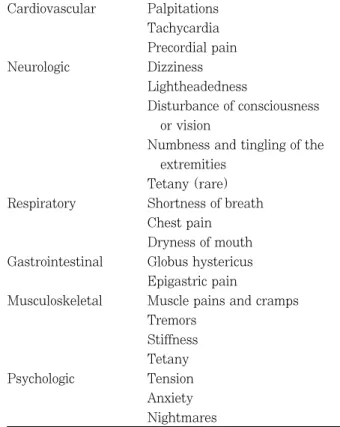
뇌허혈을 유도하는데, 이 때문에 과환기와 연관된 두통, 어 지러움, 현기증 등이 생긴다. 아울러 불안은 카테콜라민의 혈중 농도를 증가시키는데 이 때문에 심계항진, 전흉부압 박, 떨림, 발한 등이 과환기증 환자들에게 잘 발생되며 (Table 3), 본 증례도 과환기증의 다양한 증상들이 표출되 었다. 치과진료실에서 과환기증은 자신의 두려움을 의사에 게 숨기려 하고, 그것을 속으로 떨쳐내려고 하는 약간 걱정 스러운 환자에게서 잘 발생한다. 자신의 두려움을 시인하 고, 의사에게 스트레스를 감소시키는 시술을 요구하는 성인 에게는, 과환기증이 잘 발생하지 않는다. 과환기증은 소아 에서도 잘 나타나지 않는데, 이것은 기본적으로 아이들은 두려움을 숨기려 하지 않기 때문이다.
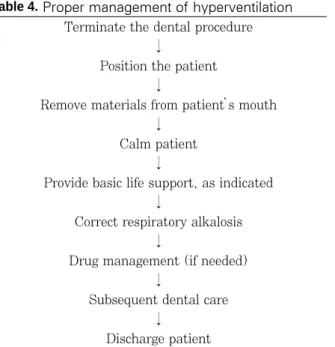
한편 과환기 증상이 발현된 상태에서 적절한 처치법
Table 1. Neuroendocrine response to stress 1) Lung : hyperventilation
2) Heart : tachycardia
3) Splanchna : ischemia (nausea & vomiting) 4) Liver : gluconeogenesis
5) Kidney : antidiuresis 6) Fat : lipolysis
Table 2. Common diseases associated with anxiety 1) Hyperthyroidism
2) Tumor of adrenal medulla 3) Hypertension
4) Cerebral atherosclerosis 5) Pakinson’ s disease 6) Melancholia (depression) 7) Schizophrenia
8) Cerebral concussion
Table 3. Clinical manifestations of hyperventilation Cardiovascular Palpitations
Tachycardia Precordial pain
Neurologic Dizziness
Lightheadedness
Disturbance of consciousness or vision
Numbness and tingling of the extremities
Tetany (rare) Respiratory Shortness of breath
Chest pain Dryness of mouth Gastrointestinal Globus hystericus
Epigastric pain
Musculoskeletal Muscle pains and cramps Tremors
Stiffness Tetany
Psychologic Tension
Anxiety
Nightmares
(Table 4)에 대해서는 이미 여러 문헌에 체계적으로 언급 되고 있으나8,9,17), 본 증례들에서는 단계적인 접근법을 실행 하면서도, 과환기증 상황을 빨리 개선시키고자 약제 투여를 서둘러 실시한 면이 있는데, 그 이유는 치과 진료 환경상 여 러 환자들이 동시에 진료받고 있는 상황에서, 과환기증 환 자가 다양한 임상증상들(현기증, 시각장애, 경련, 감각이상, 손목과 발의 수축, 호흡곤란 등)을 호소하면서 당황스러운 모습을 나타낼 경우, 인근 환자들에게도 상당한 불안과 공 포를 가져오므로, 과환기증 환자의 빠른 회복이 긴요하기 때문이었다.
그러나 모든 의학적 응급상황은 항상 사전에 방지하려는 유비무환의 정신이 중요하다. 이런 면에서 환자의 불안 조 사표(anxiety questionaire)(Table 5)와 환자의 불안감을 신체증상을 통해 간편하게 파악하는 방법(Table 6, 7) 및 관리방법(Table 8)은 임상에서 크게 유용하리라 생각된다.
더욱이 약물요법을 통한 정신안정법에서는 흔히 벤조다이 아제핀(benzodiazepine)이 사용되는데, 이 약물의 진정효 과도 크지만, 때로는 부작용들도 있기에 임상에서는 이를 대비하는 자세가 긴요하다(Table 9)19,20).
아울러 치과질환 자체로 인한 환자의 고통이나 치과치료 과정으로 인한 불안, 공포 등이 환자에게는 모두 스트레스 로 작용되는 만큼, 치과임상에서는 국소마취 과정이나 치과 진료 전, 중, 후 기간에, 항상 스트레스를 감소시키는 방법 에 주의를 기울여야 할 것이다(Table 10)5,8). 또한 스트레 스의 개념도 정신적, 정서적 스트레스에만 국한시키지 말 고, 인간의 삶의 과정에서 전체적으로 경험하는 다양한 스 트레스를 포괄적으로 고려하는 안목이 필요하다(Table
11)6). 왜냐하면 치과질환의 치료 자체가 환자에게 외상을 가하는 물리적 스트레스, 약물요법의 화학적 스트레스, 무 수한 세균에 의한 생물학적 스트레스, 치료 후 합병증 발생 으로 인한 음식물 섭취곤란(생리적 스트레스)과 치료자체의 공포(정서적 스트레스) 등 다양한 스트레스 과정에 연관되 기 때문이다.
Table 4. Proper management of hyperventilation Terminate the dental procedure
↓
Position the patient
↓
Remove materials from patient’ s mouth
↓ Calm patient
↓
Provide basic life support, as indicated
↓
Correct respiratory alkalosis
↓
Drug management (if needed)
↓
Subsequent dental care
↓ Discharge patient
Table 5. Anxiety questionaires
1. If you had to go to the dentist tomorrow, how would you feel about it?
a. I would look forward to it as a reasonably enjoy- able experience.
b. I would not care one way or the other.
c. I would be very uneasy about it.
d. I would be afraid that it would be unpleasant and painful.
e. I would be very frightened of what the dentist might do.
2. When you are waiting in the dentist’ s office for your turn in the chair, how do you feel?
a. Relaxed b. A little uneasy c. Tense
d. Anxious
e. So anxious that I almost break out in a sweat or almost feel physically sick
3. When you are in the dentist’ s chair waiting for him or her to get the drill ready and begin working on your teeth, how do you feel?
a. Relaxed b. A little uneasy c. Tense
d. Anxious
e. So anxious that I almost break out in a sweat or almost feel physically sick
4. You are in the dentist’ s chair to have your teeth cleaned. While you are waiting and the dentist is getting out the instruments with which to scrape your teeth around the gums, how do you feel?
a. Relaxed b. A little uneasy c. Tense
d. Anxious
e. So anxious that I almost break out in a sweat or almost feel physically sick
5. In general, do you feel uncomfortable or nervous about receiving dental treatment?
a. Yes
b. No
아울러 치과의사는 환자의 치과 치료에 대한 불안감과 그 불안감의 기저 원인인 감정적 문제나 더 심각한 정신적 문 제들에 대해 예민하여야 한다. 예를 들면 항우울제, 항불안 제, 항정신병적 약물이 필요한 경우를 말한다. 어떠한 경우 는 치과적 치료가 불가능한 경우가 있는데, 장기간 지속되 거나 심각한 정신적 문제를 가지고 있는 경우로, 망상이나 환각이 있거나 이전에 있었던 충격적 경험에 대한 강렬한 기억이 지속되는 경우이다11,13).
Ⅳ. 요 약
저자 등은 개원 치과의원에서 하악 매복지치 발치중 유발 된 불안장애와 과환기증 및 발치 창상 주위 출혈과 동통을 보였던 57세 여환을 신속한 정신안정법 적용하에 수액 약물 요법과 외과적 처치(잔존 치근 남긴채 창상 지혈, 봉합, 배 액술 등)로 관리하여 양호한 경과를 치험하면서, 평소 진료 시 정신과적 장애문제에 큰 관심을 가져야 하며, 특히 수술 시 스트레스 감소법에 더욱 유념하게 되었다.
Table 6. Physical signs & symptoms of anxiety 1) Hypertension & tachycardia
2) Trembling
3) Excessive sweating 4) Dilated pupil 5) Cold, clammy hands 6) Palpitation
7) Dizziness 8) Hyperreflexia 9) Diarrhea 10) Restlessness 11) Syncope 12) Gastric disorder 13) Polyuria
Table 7. Clinical signs of moderate anxiety In reception area
1. Questions to receptionist regarding injections or use of sedation
2. Overhearing patients talking in waiting room 3. History of emergency dental care only
4. History of canceled appointments for nonemer- gency treatment
5. Shaking hands with patient: cold, sweaty palms In dental chair
1. Unnaturally stiff posture
2. Nervous play with tissue or handkerchief 3. White-knuckle syndrome
4. Perspiration noted on forehead and hands 5. Overly willing to cooperate with doctor 6. Answers questions too quickly
Table 8. Management protocol about dental anxiety 1) Anxiety reduction attitudes
(1) Rapport (2) Modelling
(3) Offer of real information 2) Iatrosedation
(1) Paced breathing (2) Brief relaxation (3) Biofeedback (4) Desensitization 3) Pharmacosedation
(1) Premedication (benzodiazepine, barbiturate, opioid) (2) N
2O sedation
4) Education & training about control measure (1) Attention diversion
(2) Relaxation (progressive) (3) Systemic desensitization
(4) Stress inoculation training (education, rehersal, application)
Table 9. Side effect (toxicity) of benzodiazepines 1) Excessive sedation
2) Anterograde amnesia 3) Motor cognitive disturbance
- In older person
- Impaired brain (dementia, head injury, MR etc.) 4) Respiratory suppression
- Pulmonary disease who retain CO
2- Pt with sleep apnea
5) Inhibition of the gag reflex - Increasing the risk for aspiration
6) Hyperexcitability, treatment-emergent hostility (dis- inhibition)
7) Prolonged PTT
8) Tolerance and withdrawal
- Substance abuse Hx (esp. Alcohol)
참고문헌
1. Scott DS : Historical antecedents of dental anxi- ety. J Am Dent Assoc, 108:42-45, 1984.
2. Kvale G, Raadal M, Vika M : Treatment of den- tal anxiety disorders. Outcome related to DSM- IV diagnoses. Eur J Oral Sci, 110:69-74, 2002.
3. De Jongh A, Adair P, Meijerink-Anderson M : Clinical management of dental anxiety : What works for whom? International Dental Journal, 55:73-80, 2005.
4. McCarthy FM : Medical emergencies in dentistry.
Philadelphia, WB Saunders. 220-343, 1982.
5. Kim GS : Local anesthesiology in dentistry.
Seoul, Jee Sung Publishing Co. 285-332, 2000.
6. Kim J, Yoo JH, Yoon JH, Chung WG, Choi GR : Clinical guideline of dental treatment for med- ically compromised patient. Seoul, Koon Ja Publishing Co. 3-32, 2007.
7. Wardle J : Psychological management of anxiety and pain during dental treatment. J Psychosom Res, 27:399-402, 1983.
8. Malamed SF : Medical emergencies in the dental office, 4th ed. Saint Louis, CV Mosby. 1-49, 187- 193, 1993.
9. Missri JC, Alexander S : Hyperventilation syn- drome: A brief review. JAMA, 240:2093-2096, 1978.
10. Peterson LJ : Complex odontogenic infections.
In: Contemporary oral & maxillofacial surgery.
Edited by Peterson LJ, Ellis Ⅲ E, Hupp JR, Tucker MR : Saint Louis, CV Mosby. 409-423, 1988.
11. Min SG : Modern psychiatry, 5th ed. Seoul, Il Cho Gak. 323-375, 2006.
12. The foundation of smile : Dental professions’
guidelines for disabled persons. Seoul, Koonja Publishing Co. 11-33, 145-150, 2007.
13. Lee JG : Psychology. Seoul, IL Cho Gak. 212- 305, 1983.
14. Ham BJ : Definition and control of anxiety and fear. J Korean Dental Society Anesthesiology, 7:107-113, 2007.
15. Korean Association of Family Medicine : Family
Table 10. Stress reduction protocol : Medical risk patient
1. Recognize the patient’ s degree of medical risk.
2. Complete medical consultation before dental therapy, as needed.
3. Schedule the patient’ s appointment in the morning.
4. Monitor and record preoperative and postoperative vital signs.
5. Use psychosedation during therapy, as needed.
6. Use adequate pain control during therapy.
7. Length of appointment -variable; do not exceed the patient’ s limits of tolerance.
8. Follow up with postoperative pain/anxiety control.
9. Telephone the higher medical risk patient later on the same day that treatment was given.
10. Arrange the appointment for the highly anxious or fearful moderate-to-high-risk patient during the first few days of the week when the office will be open for emergency care and when the treating doctor is available.
Table 11. Various stresses in human life
1) Physical stress : change of atmospheric temperature & pressure, acceleration, trauma 2) Chemical stress : drugs, gas, enviromental pollution
3) Biological stress : virus, bacteria, fungus
4) Physiologic stress : starvation, thirst, insomnia, fatigue 5) Emotional stress : Tension, agony, fear, anxiety
6) Social stress : Economic crisis, political instability, social insecurity, war
medicine, clinical part. Seoul, Gaechook Publishing Co. 372-400, 2003.
16. Wheatly CE : Hyperventilation syndrome: a fre- quent cause of chest pain. Chest, 68:195-200, 1975.
17. Korean Dental Society of Anesthesiology : Medical emergencies in the dental office, sixth edition. Seoul, Dae Han Narae Publishing Co.
209-214, 2009.
18. Yoo JH, Kim HS, Back SH, Yoo TM, Lee JW, Chung WG, et al : Hyperventilation during local
anesthesia in acute odontogenic infectious lesion.
J Korean Dental Society Anesthesiology. 107- 113, 2002.
19. Divoll M, Greenblatt DJ, Ochs HR, Shader RI : Absolute bioavailability of oral and intramuscular diazepam: effect of age and sex. Anesth Analg, 62:1-8, 1983.
20. Thom A, Sartory G, Johren P : Comparison be- tween one session psychological treatment and benzodiazepine in dental phobia. J Clin Psychol, 68:378-387, 2000.