Journal of Internet Computing and Services(JICS) 2019. Jun.: 20(3): 69-75 69
Methods of Extracting and Providing R&D Documentation Guideline for Licensing Medical
Device Software
DongYeop Kim
1Byungjeong Lee
2Jung-Won Lee
1*ABSTRACT
The safety and performance of medical device software is managed through life-cycle processes, which represent the entire process of research and development (R&D). The life-cycle process of medical device software is represented by an international standard called IEC 62304, ISO/IEC 12207. In order to license the product, the manufacturer must have document artifacts that comply with the IEC 62304 standard. However, these standards only describe the content of the activity and do not provide a method or procedure for documentation. Therefore, this paper suggests R&D documentation guidelines that assist medical device software developers to have R&D documents conforming to the standards. For this purpose, this study identifies the requirements related to documentation among the requirements existing in the standard and extracts them in the form of guidelines showing only the core information of the requirements. In addition, through the Web framework implemented based on this research, the developer can evaluate whether the technical documents are written in accordance with the R&D document guidelines. Medical device software manufacturers can efficiently produce high-quality research and development documents through R&D documentation guidelines, and they can have standards-compliantresearch and development documentation required for licensing procedures.
☞ keyword : Medical Device Software, Standard, IEC 62304, ISO/IEC 12207, Documentation Guideline
1. Introduction
Medical device software must be more tightly controlled in safety and performance than software in other areas. For this, Korea and many countries in Europe have made sure that the research and development(R&D)of the product has been properly performed during the licensing of medical device software, and have enacted the international standard of IEC 62304 as a guideline for R&D. Therefore, medical device software manufacturers comply with standards related to medical device software including IEC 62304, and they are licensed through documents artifacts [1]. IEC 62304 is a
1Department of Electrical and Computer Engineering, Ajou University, Suwon, 16499, Korea.
2Department of Science and Engineering, The University of Seoul, Seoul, 02504, Korea.
* Corresponding author: ([email protected])
[Received 31 December 2018, Reviewed 23 January 2019(R2 20 March 2019), Accepted 27 May 2019]
☆ This research was supported by Next-Generation Information Computing Development Program through the National Research Foundation of Korea(NRF) funded by the Ministry of Science, ICT & Future Planning (NRF-2014M3C4A7030504).
☆ A preliminary version of this paper was presented at APIC-IST 2018 and was selected as an outstanding paper.
standard for the medical device software life-cycle process [2]. It ensures the safety and performance of medical device software through verification of software artifacts and validation of all software life cycle. In other words, this standard requires not only a testing-based activity represented by the V&V(Verification & Validation) model, but also all R&D procedures which are performed correctly. In addition, ISO / IEC 12207 international standard is a standard that developers refer to for research and development of medical device software. ISO / IEC 12207 is the standard for presenting life-cycle processes for general software [3], which is the basis of the contents of IEC 62304.
However, these international standards only abstractly describe the activity of the process, but do not specifically describe the methodor procedure for R&D documentation.
That is, the developer knows the requirements of the life-cycle process from the standard, but does not provide the scope or method of the document artifacts that must be created for licensing. In addition, research on software engineering methodologies such as testing and configuration management required to fulfill the requirements of the standard is active [4, 5], and there is little research on
ISSN 1598-0170 (Print) / ISSN 2287-1136 (Online)http://www.jics.or.kr Copyright ⓒ 2019 KSII
documenting them. Therefore, manufacturers have difficulty in preparing R&D documents that meet the standard requirements. In addition, the evaluation of the written R&D documents depends on the domain experts, and there is a need for a method for manufacturers to perform qualitative evaluation of R&D documents themselves [6, 7].
This paper extracts the specification that requires documentation among the contents of the standard with the concept of 'R&D Documentation Guideline', and enables medical device software stakeholders to write and evaluate R&D documents that comply directly with the standards.
Chapter 3 merges the configurations of IEC 62304 and ISO/IEC 12207 and defines the documentation guidelines from the documentation requirements. Chapter 4 proposes a method for providing the defined R&D documentation guidelines, then we confirm the possibility of the proposed method by confirming that the developer has written and evaluated the record document through the guidelines.
Following the documentation guidelines, developers can have technical documents that complies with all standards, and they can efficiently prepare the licensing procedures of medical device software.
2. Related Work
There is an ISO/IEC 15504 standard called 'Software Process Performance Evaluation Framework (SPICE)' for evaluating software R & D [8]. (MDevSPICE), which specializes in medical device software [9]. These studies assess the level of research and development processes by comparing requirements specifications and software artifacts based on ISO/IEC 12207 and IEC 62304 standards.
However, it evaluates only the list of products such as codes and documents, but does not evaluate the contents of research and development documents qualitatively.
In addition, there is a study on the Standard Conformity Framework (SCF) that enables research and development records to be written in conformity with standards [10,11].
These studies provide a proper template for document artifacts, allowing developer to create documents that conform to standards. However, because it is not a framework defined based on standards in the software field,
there is a limitation that software life-cycle process requirements can not be covered.
Therefore, this paper suggests R&D documentation guidelines to overcome the limitation that the standard based R & D document can not be written through the previous studies. The requirements for documentation in the requirements of the standard are extracted as a guideline of the type presented in this study to enable the qualitative assessment of whether the document meets the requirements of the standard as well as the R & D document .
3. Method for Extracting R&D Documentation Guideline
The IEC 62304 standard specifies five processes (development, risk management, configuration management, defect management, maintenance) in the medical device software life cycle from Chapters 5 to 9. ISO/IEC 12207 defines the life cycle process for general software R&D in chapters 6 to 7. They present the contents of software research and development, and they are composed of 'Process-Activity-Task' levels. Task means 'requirements' which is the minimum unit. This chapter identifies only the items with the guidance of documentation among the standard requirements and extracts them in the form of documentation guidelines that provide only the core information.
3.1 Standard based R&D Specification
The framework proposed in this study allows medical
device software developers to comply with two international
standards (IEC 62304, ISO/IEC 12207). IEC 62304 is a
standard established to reflect the characteristics of medical
device software, and ISO/IEC 12207 is a standard for general
purpose software that presents more abstract and
comprehensive R&D requirements. This study presents the
contents of a new R&D process reflecting the characteristics
of these two standards. The list of Table 1 is the processes
that merged the table of contents of IEC 62304 based on the
contents of ISO/IEC 12207. Then the framework developed
by this study presents the R&D specification of the two
standards to the developer as shown in this table.
(Table 1) Contents of ISO/IEC 12207 and IEC 62304 Contents
6. Medical Device Software - Research Process 6,1 Agreement Processes
Acquisition Process Supply Process
6.2 Organizational Project-Enabling Processes Life Cycle Model Management Process Infrastructure Management Process Project Portfolio Management Process Human Resource Management Process Quality Management Process 6.3 Project Processes
Project Planning Process
Project Assessment and Control Process Decision Management Process
Risk Management Process *
Configuration Management Process * Information Management Process
Measurement Process 6.4 Technical Processes
Stakeholder Requirements Definition Process
System Requirements Analysis Process * System Architectural Design Process * Implementation Process
System Integration Process System Qualification Testing Process Software Installation Process Software Acceptance Support Process Software Operation Process Software Maintenance Process Software Disposal Process
7. Medical Device Software - Development Process 7.1 Software Implementation Processes
Software Implementation Process * Software Requirements Analysis Process * Software Architectural Design Process * Software Detailed Design Process * Software Construction Process
Software Integration Process. *
Software Qualification Testing Process 7.2 Software Support Processes
Software Documentation Management Process
Software Configuration Management Process * Software Quality Assurance Process
Software Verification Process *
Software Validation Process *
Software Review Process Software Audit Process
Software Problem Resolution Process * Software Reuse Processes
* : Indicates where IEC 62304 processes are merged from the table of contents in ISO/IEC 12207
3.2 Documentation Requirement
IEC 62304 and ISO/IEC 12207 have 215 and 620 requirements, respectively, of which there are requirements to be specifically documented. In order to define the documentation guidelines, we extract requirements that contain the contents for recording activity result. This is done on the basis of the use of the words "document" or "make record" in the content of the requirement.In addition, 'M(Mandatory) / O(Optional)' attributes are given depending on whether the documentation requirements should be performed unconditionally. This is distinguished by whether the requirement has the word "shall" or "should". Table 2 shows the configuration for the documentation requirements extracted from the standard, which indicates that the manufacturer must perform documentation by a total of 124mandatory requirements. The following examples are the requirements of the two standards with thecharacteristics of the documentation requirements.
ex1) ISO / IEC 12207-6.4.1.3.5.1 The project shall record the stakeholder requirement.
ex2) IEC 62304-5.2.6 The MANUFACTURER shall verify and document that the software requirements:
(Table 2) Configurations of Documentation Requirements for Standards
Category DR(M) DR(O)
6. Research Process
ISO/IEC 12207 33 6
IEC 62304 16 3
7. Development Process
ISO/IEC 12207 40 2
IEC 62304 35 7
Total 124 18
DR: Documentation Requirement M/O: Mandatory/Optional
3.3 Documentation Guideline
Documentation guidelines are descriptive texts that enable
users to easily create and evaluate R&D documents through
core information of the documentation requirements. The
documentation guidelines are structured to providea variety
of information on the requirements, as shown in Figure 1.
Especially, the requirement has a ‘document keyword’
information, which allows the user to create or evaluate a document based on whether or not the document content includes keywords.
(Figure 1) Format and Example of Documentation Guideline
Figure 1 (a), the documentation guidelines have a total of four main information items.
-source of documentation guideline
: Indicates the source for the developer to see the contents of the standard directly if they want to read the detailed description.
- mandatorily / optionally
: Indicates whether the developer should document the contents of the guideline, and is used as important information to prepare for licensing of the product.
- target document
: Indicates the title of the document so that it can record research and development activities in the appropriate document from the list of documents the manufacturer has.
- document keyword
: The developer will recommend keywords that should be included in the document so that they can write documents that meet the standard requirements after the R&D activities. In addition to providing information on document preparation, this item is used as a basis for document evaluation described below.
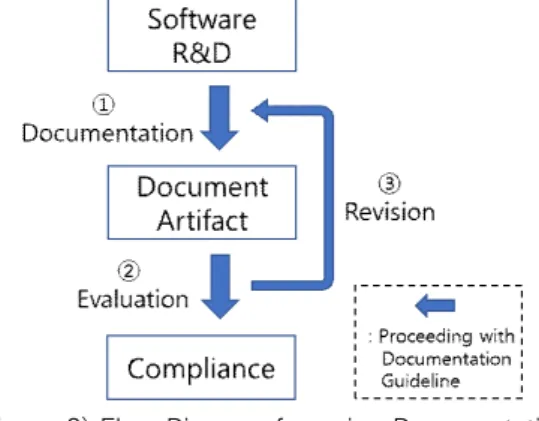
Figure 2 shows the flow diagram for usage of documentation guideline. The user follows the instructions of the documentation guidelines during the R&D. For example, in the case of Figure 1 (b), the developer must record R&D activities in the SRS, including the keyword 'System of medical device, System requirement'. Subsequently, the R&D documents are evaluated as to whether or not keywords are included in the content, and if not, the contents are revised to include all the keywords. This means that the evaluation of the document through the keyword can guarantee the conformity to the standard.
(Figure 2) Flow Diagram for using Documentation Guideline
4. Methods for Providing R&D Documentation Guideline
Through documentation guidelines, users can create and evaluate medical software R&D document that complies with the documentation requirements specified by IEC 62304.
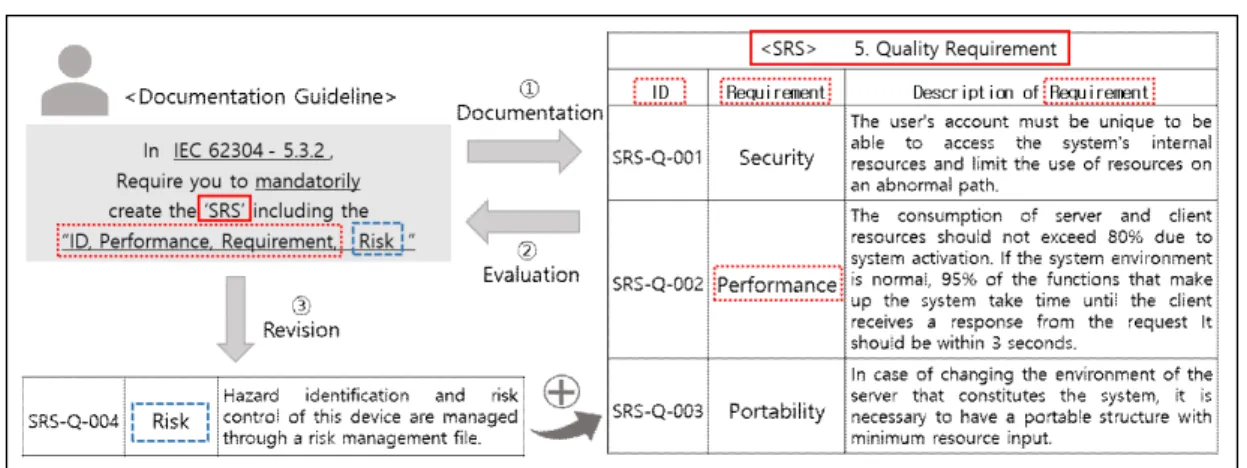
Figure 3 shows the scenarios according to the flow chart, details of whichare as follows:
① Documentation: During the research and development of medical device software, users can generate documents and compose a list of documents that conform to the standards without having to directly analyze the contents of the standards through the documentation guidelines.
② Evaluation: Documentation guidelines are evaluated by
examining whether the document indicated by the
keyword contains all of the keywords. This can be
(Figure 3) Scenario for applying Documentation Guideline
(Figure 4) Web-based R&D Documentation Guidelines Framework
automated based on searching macro or similarity evaluations of the document content.
③ Revision: Evaluation result of document. Figure 4 shows that the keyword 'RISK' is missing from the keyword 'ID, Performance, Requirement, Risk' in 'SRS'. The guideline has the attribute 'Mnadatorily', so the developer must document all keywords. Therefore, the developer should understand the details of the requirements through the standard source information, conduct research and development on 'RISK', and revise the document to include the keyword 'RISK'.
The process of ① through ③ is repeated until all research and development documents meet the documentation guidelines, which enables manufacturers to efficiently provide high quality research and development documents.
Figure 4 is an example of a web-based framework
provided to the user according to the scenario of Figure
3.The developer will proceed with the R&D in the order of
the process composition table of the two standards in Table
1, and the contents of the requirements to be documented in
each list can be provided through the documentation
guidelines. Once all the R&D documents have been written, the developer can perform document evaluation by checking that the document contains the keywords required by the documentation guidelines, and the resulting output is shown in Figure 4(a). The framework indicates how much documentation guidelines have been achieved for each document, which is the degree of conformity of the R&D document.
In this example, the developer creates documents named
‘R&D Plan’ and ‘SRS’ into the documentation guideline evaluation framework. The evaluation framework checks whether all the keywords required by the standard are included in the ‘R&D Plan’ document and checks whether all the keywords required by the standard are included in the
‘SRS’ document. In the IEC62304 standard, there are a total of 36 documentation guidelines for the ‘R&D Plan’ and 27 documentation guidelines for ‘SRS’, which figure that we have satisfied the documentation specifications for 27 and 24 of these.
In addition, the developer can revise the document through the evaluation result. The framework shows the documentation guidelines that the user did not grasp and did not satisfy as shown in Fig. 4 (b). Developers will be able to modify their R&D documents to meet the standard requirements through the key information provided by the R&D documentation guidelines. The evaluation-revision process is repeated until all the documentation guidelines are satisfied.
5. Conclusion and Further Research Issues
This paper defines the documentation guidelines by extracting the core information of the requirements for documentation so that the research and development documents can be produced according to the requirements of the two international standards, IEC 62304 and ISO/IEC 12207. The documentation guidelines assist in the creation and evaluation of R&D documents through corekeywords of the requirements. This allows medical device software manufacturers to construct standards-compliant research and development documents and to have high-quality research
and development documentation to ensure the quality of medical device software and to provide the necessary records for licensing procedures.
Future research will include research on extracting R&D documentation guidelines from standard requirements by applying text mining techniques. By automating the methodology presented in this study, we canautomatically extract the R&D documentation guidelines when the user enters the standard. And we will improve the method of evaluating the written R&D documents.
References
[1] Li, Wei, CW Jung, JT Park, "IoT Healthcare Communication System for IEEE 11073 PHD and IHE PCD-01 Integration Using CoAP," KSII Transactions on Internet & Information Systems, Vol.12, No.4, pp.1396-1414, 2018.
http://dx.doi.org/10.3837/tiis.2018.04.001 [2] IEC 62304. Medical Device Software Life-Cycle
Processes, Geneva, 2006.
[3] ISO/IEC 12207:2008, Systems and software engineering – Software life cycle processes, Geneva, 2008.
[4] Baek DS, BJ Lee, JW Lee, "Content-based Configuration Management System for Software Research and Development Document Artifacts," KSII Transactions on Internet & Information Systems, Vol 10, No.3, pp.1404-1415, 2016.
http://dx.doi.org/10.3837/tiis.2016.03.027
[5] Amarmend Dashbalbar, SM Song, JW Lee, BJLee,
"Towards Enacting a SPEM-based Test Process with Maturity Levels," KSII Transactions on Internet and Information Systems, vol. 11, no. 2, pp. 1217-1233, 2017.
http://dx.doi.org/10.3837/tiis.2017.02.034
[6] Ryu TK et al. "A study on quality measures of patents for evaluating national research and development programs", Jinhan M&B, 2014
[7] Park SD, Jeong SK, Park SH, "Future Strategy Software Technology Development Project,"KISTEP, 2010
[8] ISO/IEC 15504-4:2004, Information technology —
◐ 저 자 소 개 ◑
김 동 엽(DongYeop Kim)
2018년 아주대학교 전자공학과(학사)2018년~현재 아주대학교 전자공학과(석사 과정) 관심분야 : 의료기기 소프트웨어, 의료 영상처리 E-mail : [email protected]
이 병 정(Byungjeong Lee)
1990년 서울대학교 계산통계학과(학사) 1990년~1998년 (주)하이닉스반도체 연구원 1998년 서울대학교 전산과학과(석사) 2002년 서울대학교 전기‧컴퓨터공학부(박사) 2002년~현재 서울시립대 컴퓨터과학부 교수관심분야 : 소프트웨어테스트, 소프트웨어 진화, 소프트웨어공학 E-mail : [email protected]
이 정 원(Jung-Won Lee)
1993년 이화여자대학교 전자계산학과(학사) 1995년 이화여자대학교 전자계산학과(석사) 1995년~1997년 LG종합기술원 주임연구원 2003년 이화여자대학교 컴퓨터학과(박사)
2003년~2006년 이화여자대학교 컴퓨터학과 BK교수, 전임강사(대우) 2006년~현재 아주대학교 전자공학과 교수
관심분야 : Embedded Software, Automotive Software, Bio·Medical Data Modeling E-mail : [email protected]