Effect on Cryopreservation Stability of Kimchi Duruchigi Supplemented with Rubus coreanus Miquel Extract
Mi Ra Yang
1, Gun Ryoung No
1, Suk-Nam Kang
2, Sam Woong Kim
1* and Il-Suk Kim
1*
1Department of Animal Resources Technology, Gyeongnam National University of Science and Technology, Gyeongnam 660-758, Korea
2Department of Animal Resource, Daegu University, Gyeongsan 712-714, Korea.
Received June 2, 2015 /Revised November 16, 2015 /Accepted December 15, 2015
The goal of this study was done for evaluating stability according to low-temperature storage of kim- chi duruchigi supplemented with a hot water extract of Rubus coreanus Miquel (RCM). Total poly- phenol and flavonoid contents in the RCM extract prepared from the hot water were detected by 293.34 μg CA/mg and 90.57 μg quecetin/mg, respectively. DPPH and superoxide radical scavenging activities of the extract were showed by relatively high values of 70.63 and 57.87%, respectively.
Kimchi duruchigi was designed by control (non-treated), T1 (3% RCM extract), T2 (6% RCM extract), and T3 (0.1% ascorbic acid, a positive control). When compared with control and T3 groups, pHs of T1 and T2 groups supplemented with the RCM extract were gently changed depending on the storage time, and water holding capacities of T1 and T2 groups were improved in comparison with control group. Although meat color showed a tendency to most of increase according to the elapsed time, T1 and T2 groups showed less changes than that of control group. Lipid peroxidation appeared in a little bit changes regardless of the processing and storage days, but protein spoilages in T1 and T2 groups were found by lower changes when compared with the control group. As the results of sen- sory evaluation, T1 and T2 groups during storage had the better taste, flavor and acceptability than those of control and T3 groups. Therefore, we suggest that kimchi duruchigi supplemented with the RCM extract is a possible of improving the storage stability and product preference.
Key words :
Antioxidant activity, hot water extraction, kimchi duruchigi, sensory evaluation, storage stability
*Corresponding authors
*Tel : +82-55-751-3288, Fax : +82-55-751-3280
*E-mail : [email protected] (Sam Woong Kim) [email protected] (Il-Suk Kim)
This is an Open-Access article distributed under the terms of the Creative Commons Attribution Non-Commercial License (http://creativecommons.org/licenses/by-nc/3.0) which permits unrestricted non-commercial use, distribution, and reproduction in any medium, provided the original work is properly cited.
Journal of Life Science 2015 Vol. 25. No. 12. 1362~1369 DOI : http://dx.doi.org/10.5352/JLS.2015.25.12.1362
Introduction
As accumulation of active oxygen causes oxidative dam- age by attacking lipid, protein, carbohydrate, DNA and RNA, various diseases and aging induce through interfer- ence with normal cellular functions [12, 20]. The intake of foods to maintain a rich phenolic compound is positively correlated with decrease of risk and mortality from cancer, heart disease, and Alzheimer’s disease [12]. Many of the plants have been used in Korean traditional medicine for treatments of anti-inflammatory, analgesics, emmenagogues, antispasmodics, sedatives, and health-improving agents.
Especially, as oxidative stress is estimated to associate with these diseases, researchers have suggested that antioxidant
activities in these plants play an important role in the treat- ment of the diseases [16].
RCM has been discovered in the southern area of South Korea, and its immature fruit has been used for centuries for the treatment of ashma, allergy, and inflammation as an herbal medicine, especially, for stamina improvement [23].
Antioxidants in RCM have been identified by saponins in- cluding 19α–hydroxyursanetype triterpenoids and their glycosides, anthocyanins, epicatechin, ellagic acid, and ferul- ic acid [13, 24]. Niga-ichigoside F1 and 23-hydroxytormentic acid induce anti-nociceptive, anti-inflammatory, anti-gastro- pathic, and anti-rheumatic effects [6, 15, 22]. In addition, these materials decrease lipid peroxidation and hydroxyl radical levels in gastric tissues, but increases the activities of superoxide dismutase (SOD) and glutathione peroxidase [15]. Antioxidant potential through the formula intake of berries is partially associated with cardiovascular disease, obesity, cancer, and other degenerative diseases [11, 21, 28, 30].
Duruchigi is a food fried using a variety of food materials
corresponding to the intermediate degree of jjigae and
jeongol. Kimchi duruchigi is a food with increased nutri-
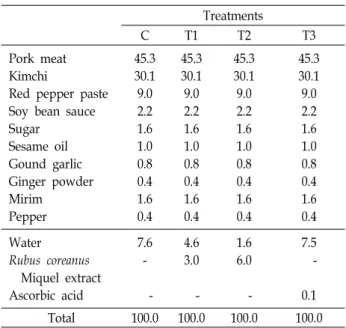
Table 1. Formula of Kimchi duruchigi for evaluation of process- ing suitability (unit: g)
Treatments
C T1 T2 T3
Pork meat Kimchi
Red pepper paste Soy bean sauce Sugar
Sesame oil Gound garlic Ginger powder Mirim
Pepper
45.3 30.1 9.0 2.2 1.6 1.0 0.8 0.4 1.6 0.4
45.3 30.1 9.0 2.2 1.6 1.0 0.8 0.4 1.6 0.4
45.3 30.1 9.0 2.2 1.6 1.0 0.8 0.4 1.6 0.4
45.3 30.1 9.0 2.2 1.6 1.0 0.8 0.4 1.6 0.4 Water
Rubus coreanus Miquel extract Ascorbic acid
7.6 - -
4.6 3.0 -
1.6 6.0 -
7.5 - 0.1
Total 100.0 100.0 100.0 100.0
tional properties by adding kimchi to these materials. In this study, we tried to improve the storage stability of kimchi duruchigi by adding the RCM extract. We examined the storage stability via physicochemical properties and sensory evaluation.
Materials and Methods
Extraction of RCM
The applied RCM was purchased from a traditional mar- ket at Jinju in South Korea. Air-dried RCM was additionally dried by a dry oven for 2 hr at 100℃. The ground RCM was mixed with water of 3 volume and then extracted by 3 times for 3 hr at 100℃. The extract was concentrated by an evaporator and then powdered by a freeze-dryer (RW-0252G 4000/G1, Heidolph, Germany). The lyophilized powder was used by dilution to 0~1,000 μg/ml for assay.
Total polyphenol and flavonoid contents
Total polyphenol content was determined by method of Peschel et al. [27]. The reaction solution was prepared with 0.1 ml of the extract (100 μg/ml), 7.9 ml of distilled water, 0.5 ml of Folin–Ciocalteu’s reagent, and then 1.5 ml of a 20% sodium carbonate anhydrous solution was added at 2 min after addition of the Folin–Ciocalteu’s reagent. The treated solution was reacted for 2 hr, and then measured at 765 nm with a microplate reader (Multiscan GO, Thermo Scientific co. ltd., USA). Total polyphenol content was pre- sented as an mg galic acid/g equivalent.
Total flavonoid content was evaluated by method of Chang et al. [5]. The reaction solution was mixed with 0.5 ml of 100 μg/ml extract, 1.5 ml of 95% ethanol, 0.1 ml of 10% aluminum chloride, 0.1 ml of 1 M potassium acetate, and 2.8 ml of distilled water. The mixed solution was reacted for 30 min at room temperature, and then measured at 415 nm with a microplate reader (Multiscan GO, Thermo Scientific co. ltd., USA). Total flavonoid content was in- dicated as an mg catechine (CE)/g equivalent.
Preparation of a kimchi duruchigi supplemented with the RCM extract
The kimchi duruchigi was prepared by a formula as shown in Table 1, and then each analysis was done during storages of 1, 5 and 10 days. The applied longissimus dorsi muscle was purchased from an industrial market, which the meat was elapsed in 24 hr post-mortem. The prepared kim-
chi duruchigi was stored at a refrigerator adjusted to 4℃.
Radical scavenging ability
DPPH radical scavenging activity was determined by a few modified method of Brand-Williams et al. [3] and eval- uated for reducing power of sample owing to an electron-do- nating effect to 1,1-diphenyl-2-picrylhydrazyl (DPPH).
Hydroxyl radical, Superoxide anion radical, and nitrite scavenging abilities were evaluated by methods of Halliwell
et al. [8], Liu et al. [17], and Gray and Dugan [7], respectively.Evaluations of pH and meat color
For an assay of pH, the meat in kimchi duruchigi was minced, mixed with water of 9 fold, and then homogenized with a homogenizer (T25basic, IKA Malaysisa) for 1 min at 14,000 rpm. The pH value of the treated sample was de- termined by a pH-meter (MP230, Mettler Toledo, Swiss).
Meat color was measured by 3 times for surface meat col- or with a Minolta Chromameter (CR-300, Minolta Co. LTD.
Japan). A light source of illuminant C (2° observer) was standardized to white standard plate (L* = 93.5, a* = 0.3132, b* = 0.3198).
Lipid peroxidation
Lipid peroxidation (Thiobarbituric acid reactive sub-
stances, TBARS) was measured by method of Buege and
Aust [4]. Briefly, 5 g sample was mixed with 50 μL of the
butylated hydroxyanisole (BHA) and 15 ml of the distilled
Table 2. Results of analysis for the extracted Rubus coreanus Miquel
Assay Content
extraction yield (mg/100 ml)
total polyphenol content (mg CA/mg) total flavonoid content
(mg quecetin/mg) DPPH (%)
superoxide radical (%) hydorxyl radical (%) Nitrite radical (%)
116.25±1.77 293.94±24.18 90.57±8.96 70.63±0.19 57.87±0.32 10.00±5.77 11.39±4.76
water, and then homogenized by a homogenizer (T25basic,
IKA Malaysisa) for 10 sec at 13,500 rpm. An aliquot (2 ml) of the homogenized solution was completely mixed with 4 ml of thiobarbituric acid (TBA)/trichloroacetic acid (TCA), boiled for 15 min at 90℃, cooled into room temperature, and then centrifuged for 15 min at 3,000 rpm. The centri- fuged supernatant was recovered, measured at 531 nm using a spectrophotometer (Spectronic model Genesys 5, USA), and then presented by mg malonaldehyde (MA)/kg sample.
Volatile basic nitrogen (VBN)
VBN was evaluated by a few modification of micro-dif- fusion method described by Pearson [26]. Each sample (10 g) was mixed with 90 ml of the distilled water, homogenized by a homogenizer (T25basic, IKA Malaysisa) for 1 min at 75,000 rpm, and filtered through Whatman No. 2 filter paper.
One milliliter of the filtrate was pipetted into the Conway dish occupied with 1 ml-saturated K
2CO
3solution and then allowed for reaction at 37℃ for 120 min. Boric acid solution with an indicator (methyl red and bromocresol green) was used to absorb volatile nitrogen. The solution was titrated with 0.01 N HCl and VBN value was expressed as mg VBN/100 g of the sample.
Sensory evaluation of pork patty
Samples were assessed by 10-trained panelists. To ac- quaint panelists with product attributes and intensities, 6 training sessions, 1 hr each, took place over a week period prior to sample testing. During this phase, samples from a variety of manufacturers corresponding to maximum and minimum intensities that might be found for each attribute (1: extremely undesirable, to 10: extremely desirable) were presented to panelists. To test the panel reproducibility, one additional sample was presented at each session. It was the replicate of the second sample of the set and was served at the end of the session. Slices (3 mm thick) of randomly coded samples were obtained and served on plates to panelists. The color, flavor and overall acceptability of the samples were evaluated using a 10-point descriptive scale where (1) refers to extremely undesirable and (10) refers to extremely desirable. Panelists were required to cleanse pal- ate between samples with water and bread. Three samples from different packages at 1, 5 and 10 days of storage were successively evaluated in each session. The sample order was randomized within sessions at room temperature.
Statistical analysis
An analysis of variance was performed according to the general linear model procedure of the SAS statistical pack- age [29]. The Duncan’s multiple range test (p<0.05) was ap- plied for significant assay between means of treatments.
Results and Discussion
Change of pH during storage of kimchi duruchigi supplemented with the RCM extract
RCM maintains a lot of materials to have the better anti- oxidant and antibacterial activities, as well as a variety of organic acids and mineral substances [13, 15, 24]. It is esti- mated that RCM is possible to improve the storage and func- tionality of the food owing to various functional substances.
Therefore, functional substances of RCM was extracted by hot water, and yield of the extraction was showed by 116.25 mg/100 g. Total polyphenol and flavonoid contents in the RCM extract were showed by 293.94 μg CA/mg and 90.57 μg quecetin/mg, respectively (Table 2). The evaluated radi- cal scavenging activity was detected by higher values of 70.63% and 57.87% in DPPH and superoxide radicals, re- spectively (Table 2). Especially, DPPH radical scavenging ac- tivity showed relative high activity by 84% of ascorbic acid activity, which the activity of ascorbic acid was detected by 84.23% (data not shown).
In order to evaluate the storage stability of kimchi dur-
uchigi, the RCM extract was added into the kimchi dur-
uchigi with 3% (T1) and 6% (T2) (Table 1). As a result of
pH changes during storage, the initial pHs of T1 and T2
groups treated with the RCM extracts appeared significantly
lower than that of control (Table 3). Furthermore, the initial
pHs of T3 group treated with ascorbic acid had significantly
lower pH value than those of T1 and T2 groups. As the same
phenomenon, the initial pH value is detected by lower value
Table 3. Changes of pH and water holding capacity in cryopreservation storage of Kimchi duruchigi supplemented with Rubus coreanus fruit powder
Traits Storage
(days)
Treatments
C T1 T2 T3 p
pH
1 5 10
p
5.46±0.09Aa 4.53±0.02Bb 4.02±0.02Cbc 0.01
5.18±0.03Ab 4.49±0.01Bb 4.00±0.02Cc 0.01
5.24±0.05Ab 4.54±0.01Bb 4.04±0.01Cab 0.01
4.96±0.02Ac 4.68±0.07Ba 4.06±0.02Ca 0.01
0.01 0.01 0.05 Water holding
capacity
1 5 10
p
60.65±5.09Aa 43.22±3.60Bb 36.27±0.52Bb 0.01
52.45±6.62Aa 44.09±2.81Ab 34.37±3.07Bb 0.01
59.84±2.16Aa 49.87±3.39Bab 48.86±0.83Ba 0.01
41.47±4.59Bb 52.23±3.91Aa 47.93±1.80ABa 0.05
0.01 0.05 0.01
a-cValues are significantly different in the same column from each other.
A-CValues are significantly different in the same row from each other.
when compared to the control group in the study of addition of tomato powder [14]. Therefore, in this study, it is assumed that pH of the kimchi duruchigi tends to decrease due to acidity of kimchi and the acidic substances in the RCM extract.
In experimental results of storage for pork patty supple- mented with tomato powder, the patty do not decrease pH even if the storage period has elapsed, on the contrary, it tends to be maintained or slightly increased [14]. In this study, pH values at 5 and 10 days in control group were reduced by 0.93 and 1.44, respectively. However, pH values at 5 and 10 days in T1, T2 and T3 were decreased by 0.69, 0.7 and 0.28, and 1.18, 1.2 and 0.9, respectively. T1 and T2 showed lower pH changes than those of control, but higher changes than those of positive control. Therefore, it is as- sumed that the RCM extract is a possible to play a buffering role to pH change
Change of water holding capacity
Since water holding capacity is an important indicator to determine the state of meat as an important element of meat quality trait [9, 10], we measured water holding capacity in cryopreservation of kimchi duruchigi supplemented with the RCM extract (Table 3). The changes of water holding capacity at 5 and 10 days for control, T1, T2 and T3 were presented by results of 17.43, 8.36, 9.97 and -10.76, and 24.38, 18.08, 10.98 and -6.46, respectively. Water holding capacity of fresh meat is influenced by lateral and transverse shrink- age of rigor myofibrils, range of interfilament spacing, mem- brane permeation of water, occurrences of drip channels and external space, and skeletal protein degradation post mor- tem [10]. Catechins improves water holding capacity via in-
crease of heat stability of collagen through hydrogen bond and hydrophobic interaction [19].
In this study, all of the treated groups showed lower changes of water holding capacity than those of control.
Therefore, we suggest that antioxidant reaction of poly- phenol compounds in RCM prevents water loss from intra- cellular molecules and space owing to inhibition of spoilage for intracellular polymeric substances. Especially, it is as- sumed that the lower initial water holding capacity in T3 group supplemented with ascorbic acid results in rapid wa- ter loss due to weak acidity of ascorbic acid. It is estimated to be similar to the exudative corresponding to lower pH post mortem [25]. However, it is assumed that water holding capacity tends to rather increase owing to antioxidant activ- ity and loss of this material during storage. This property was matched with phenomenon of sharply decreased pH of T3 group as shown in Table 3. Furthermore, it was also consistent with partially reduced pH trends at T1 and T2 groups.
Change of meat color
Since change of meat color during storage is directly cor- related with meat quality [9, 10], we examined change of meat color during storage at low temperature of kimchi dur- uchigi supplemented with the RCM extract (Table 4). The initial meat colors in the sample groups were not sig- nificantly different in lightness (L*), redness (a*), yellowness (b*) and hue angle. However, chroma values maintained lower in control and T2, but higher in T1 and T3.
Lightness and yellowness in the storage period were sig-
nificantly higher at 10 day than those of initial meat colors
(p<0.05). Redness of T1 group appeared significantly differ-
Table 4. Changes of meat color in cryopreservation storage of Kimchi duruchigi supplemented with Rubus coreanus fruit powder
Index Storage
(days)
Treatments
C T1 T2 T3 p
L*
1 5 10
p
48.53±1.99b 52.10±1.56a 54.63±1.06Aa 0.01
47.23±0.57b 49.80±0.92a 49.33±1.19Ca 0.05
48.53±1.42b 51.37±1.04ab 52.60±0.56Ba 0.01
48.60±0.72c 51.40±0.35ab 54.33±0.55Aa 0.01
0.01
a*
1 5 10
p
13.70±1.06 15.83±1.40 13.90±0.87B
14.80±0.69b 16.50±1.06b 19.03±1.15Aa 0.01
12.37±1.34 14.00±1.39 14.97±1.90B
14.20±0.70 16.03±1.66 16.00±1.21B
0.01
b*
1 5 10
p
12.37±1.79b 19.43±0.61BCa 19.67±2.11a 0.01
14.63±1.45b 20.80±0.62ABa 21.47±1.31a 0.01
13.73±1.96b 18.13±1.37Ca 19.87±2.08a 0.05
15.93±0.87b 21.53±0.67Aa 21.33±1.42a 0.01
0.01
Chroma
1 5 10
p
18.03±1.07Bc 25.10±0.53ABa 23.40±0.75Cb 0.01
20.80±1.56Ab 26.53±0.96Aa 28.73±0.75Aa 0.01
16.83±1.86Bb 22.90±1.85Ba 25.03±2.40BCa 0.01
21.37±0.76Ab 26.90±0.95Aa 26.63±1.85ABa 0.01
0.01 0.05 0.05 Hue
angle
1 5 10
p
48.37±2.24 50.87±3.30 53.20±2.74
46.87±3.19 51.57±1.53 48.40±3.22
50.73±3.87 52.30±1.23 53.33±3.23
48.20±2.23 53.33±3.31
53.23±0.31
a-cValues are significantly different in the same column from each other.
A-CValues are significantly different in the same row from each other.
ences depending on the storage period. Discoloration during storage of meat patty is mainly defined by the loss of redness [18]. In this study, we suggest that the sample groups sup- plemented with the RCM extract to have similar or higher redness, when compared to the control group, are an effect of preventing discoloration owing to physiologically active substances in RCM. The chroma values in T1 and T3 groups in all of the storage period were significantly higher than those of control group. The chroma values in the treated groups presented significantly higher values at 5 and 10 days than those of the initial products (p<0.01). The hue val- ues were not significant differences in the treated groups and in storage days.
Lipid peroxidation and protein spoilage
Since the value of lipid peroxidation during storage serves as a reference for evaluation in meat quality [1], we exam- ined the changes in lipid oxidation during storage of kimchi duruchigi supplemented with the RCM extract (Table 5). As a result of analysis, lipid peroxidation of products was sig- nificant differences depending on all the storage period, but TBARS values of the test groups were reduced rather with the exception T3 group. The lower pH values (pH 5.5~6.5)
is not coordinated to the oxidation of lipids because of in- ducting rapid re-arrangement in intra-molecules via cross- linkage between globin (myoglobin and hemoglobin) and prosthetic group [2]. In this study, it is estimated that this trend is prevented lipid from rancidity owing to antioxidant function of organic acid in the added kimchi, of the RCM extract, and of ascorbic acid.
As the results of protein spoilage during storage of kim- chi duruchigi supplemented with the RCM extract, the changes of protein spoilages at 5 and 10 days in control, T1, T2, and T3 groups were presented by 7.47, 6.59, 7.0, and 6.39 and 10.51, 7.75, 6.81, and 6.93, respectively (Table 5).
The changes of protein spoilage from this result were de- creased in all of the treated groups when compared with those of control group. Perferrylmyoglobin [MbFe (IV)], a product of myoglobin oxidation, is possible to provide a pro- tein radical for the other proteins, and to generate reactive secondary protein radicals of extremely long half-lives [1].
Therefore, it is assumed that low pH in this study reduces
the protein spoilage due to fact that disrupts the distribution
of the radical [2] and the protein deterioration values in each
group are associated with the change values of pH.
Table 6. Changes of sensory evaluation in cryopreservation storage of Kimchi duruchigi supplemented with Rubus coreanus fruit powder
Index Storage
(days)
Treatments
C T1 T2 T3 p
Color
1 5 10
p
4.50±1.00a 6.50±1.73a 5.13±2.52b 0.05
5.00±1.41a 5.00±0.82a 4.00±1.00b 0.05
5.75±2.36a 5.25±0.96a 3.50±1.32b 0.05
5.00±1.41a 6.50±2.65a 4.17±1.61a 0.05
Taste
1 5 10
p
5.50±1.29a 5.88±1.44a 2.00±1.73b 0.01
5.25±1.85a 6.38±1.80a 3.17±1.44b 0.01
6.25±1.94a 6.00±0.82a 3.83±1.89b 0.01
6.13±2.39a 6.13±0.63a 3.67±2.08b 0.01
Flavor
1 5 10
p
4.50±1.00a 4.00±2.00a 3.00±0.00b 0.05
4.25±0.96a 5.75±1.71a 3.83±1.26b 0.05
5.75±0.96a 5.50±1.73a 3.00±2.00b 0.05
5.13±1.03a 4.63±1.60a 2.33±2.08b 0.05
Juiciness
1 5 10
p
5.75±1.50a 4.75±2.06a 2.33±0.58a 0.05
6.13±2.17a 4.88±1.03a 3.33±0.58b 0.05
5.63±2.29a 5.25±1.89a 3.67±2.02b 0.05
5.50±2.12a 4.75±1.26a 3.00±1.73b 0.05
Texture
1 5 10
p
6.00±1.41a 4.88±1.31ab 3.33±2.52b 0.05
5.75±1.26a 6.13±1.44a 3.83±0.76b 0.01
6.88±1.55a 5.75±0.96a 3.17±1.02b 0.05
6.50±2.12a 5.00±1.41a 2.33±0.58b 0.05
Accept-ability
1 5 10
p
6.00±1.22a 5.00±2.16a 2.33±1.89b 0.05
5.88±1.65a 6.50±1.73a 2.00±1.46b 0.05
7.25±1.50a 6.25±0.50a 3.00±1.36b 0.05
5.75±1.50a 5.75±1.50a 2.33±1.79b 0.05
a-cValues are significantly different in the same column from each other.
Table 5. Changes of lipid peroxidation and protein spoilage in cryopreservation storage of Kimchi duruchigi supplemented with Rubus coreanus fruit powder
Traits Storage Treatments
C T1 T2 T3 p
TBARS
1 5 10
p
0.87±0.08Aa 0.70±0.04Ab 0.58±0.01Cc 0.01
0.84±0.02Aa 0.76±0.03Bb 0.69±0.04Cb 0.01
0.74±0.05b 0.69±0.10 0.65±0.00
0.81±0.03Bab 1.07±0.07Aa 0.82±0.03Ba 0.01
0.05 0.01 0.01
VBN
1 5 10
p
5.99±0.06Cc 13.46±1.29b 16.50±1.44a 0.01
7.58±0.50b 14.17±3.01a 15.33±1.15a 0.01
7.84±1.46b 14.84±0.87a 14.65±0.62a 0.01
8.23±1.20b 14.62±1.11a 15.16±0.34a 0.01
a-cValues are significantly different in the same column from each other.
A-CValues are significantly different in the same row from each other.
Sensory evaluation
Sensory evaluation was done for analysis of sensory prop- erties of kimchi duruchigi supplemented with the RCM ex- tract (Table 6). Meat color increased temporarily at 5 day in control and T3 groups, and then T3 group at 10 day re-
duced below the start point, whereas control group pre-
sented higher than that of the start point. T1 and T2 groups
showed a tendency to decrease. Although T2 group showed
the highest value in the initial meat color, the group reduced
to the lowest value at the end. Although taste maintained
similar or slightly higher level at 5 day, it showed a tendency to rapidly decrease at 10 day, especially, which was highly reduced in control group. All the treated groups maintained high taste values at 10 day when compared with control group, especially, which T2 group showed the highest value.
Flavor showed the same tendency with taste, but T2 group maintained the highest value at 10 day. Pork patty including tomato powder maintains proper flavor during storage peri- od [14]. In this study, it is assumed that functional substance of the RCM extract lowers the reducing rate of flavor.
Juiciness and texture in all the group were decreased in response to passage of time, except for T2 of texture.
Juiciness had the lowest value in control group at 10 day, but the highest value in T2 group. Texture had the lowest value in T3 group at 10 day, but the highest value in T1 group. Total acceptability showed the best values in T2, T1 and T2 groups at 1, 5 and 10 days, respectively, but the worst values in T3, control and control/T3 groups at each day, respectively. Pork patty including tomato powder improves total acceptability [14]. In this study, we suggest that total acceptability and storage stability improve owing to sweet- ness and a variety of anti-oxidizing substance of the RCM extract.
Conclusions
Kimchi duruchigi supplemented with the RCM extract oc- curred in mild change of pH. Water holding capacity in the treated groups was excellent after a lapse of the pre- determined time for storage period. Lipid peroxidation was not detected in any applied groups, and protein spoilages were lower than those of control. Overall acceptability was excellently evaluated by groups treated with the RCM ex- tract when compared with control and positive control.
Acknowledgement
This work was supported by Gyeongnam National University of Science and Technology Grant 2014.
References
1. Baron, C. P. and Andersen, H. J. 2002. Myoglobin-induced lipid oxidation. A review. J. Agr. Food Chem. 50, 3887-3897.
2. Baron, C. P., Skibsted, L. H. and Andersen, H. J. 1997.
Prooxidative activity of myoglobin species in linoleic acid emulsions. J. Agr. Food Chem. 45, 1704-1710.
3. Brand-Williams, W., Cuvelier, M. E. and Berset, C. 1995. Use of a free radical method to evaluate antioxidant activity.
Lebensm. Wisse. Technol. 28, 25-30.
4. Buege, J. A. and Aust, J. D. 1978. Microsomal lipid peroxidation. Methods Enzymol. 52, 302-309.
5. Chang, C. C., Yang, M. H., Wen, H. M. and Chern, J. C.
2002. Estimation of total flavonoid content in propolis by two complementary colorimetric methods. J. Food Drug Anal. 10, 178-182.
6. Choi, J., Lee, K. T., Ha, J., Yun, S. Y., Ko, C. D., Jung, H.
J. and Park, H. 2003. Antinociceptive and antiinflammatory effects of Niga-ichigoside F1 and 23-hydroxytormentic acid obtained from Rubus coreanus. J. Biol. Pharm. Bull. 26, 1436- 1441.
7. Gray, J. I. 1975. Dugan LR. Inhibition of N-nitrosamine for- mation in model food systems. J. Food Sci. 40, 981-984.
8. Halliwell, B., Gutteridge, J. M. C. and Arurma, O. I. 1987.
The deoxyribose method: a simple “test-tube” assay for de- termination of rate constants for reactions of hydroxyl radicals. Anal. Biochem. 165, 215-219.
9. Hughes, J. M., Kearney, G. and Warner, R. D. 2014. Improv- ing beef meat color scores at carcass grading. Anim. Prod.
Sci. 54, 422-429.
10. Hughes, J. M., Oiseth, S. K., Purslow, P. P. and Warner, R. D. 2014. A structural approach to understanding the in- teractions between colour, water-holding capacity and tenderness. Meat Sci. 98, 520-532.
11. Huntley, A. L. 2009. The health benefits of berry flavonoids for menopausal women: Cardiovascular disease, cancer and cognition. Maturitas 63, 297-301.
12. Im, S. E., Nam, T. G., Lee, H., Han, M. W., Heo, H. J., Koo, S. I., Lee, C. Y. and Kim, D. O. 2013. Anthocyanins in the ripe fruits of Rubus coreanus Miquel and their protective ef- fect on neuronal PC-12 cells. Food Chem. 139, 604-610.
13. Jung, Y. J., Youn, J. Y., Ryu, J. C. and Surh, Y. J. 2001.
Salsolinol, a naturally occurring tetrahydroisoquinoline al- kaloid, induces DNA damage and chromosomal aberrations in cultured Chinese hamster lung fibroblast cells. Mutat. Res.
474, 25-33.
14. Kim, I. S., Jin, S. K., Yang, M. R., Chu, G. M., Park, J. H., Rashid, R. H., Kim, J. Y. and Kang, S. N. 2013. Efficacy of tomato powder as antioxidant in cooked pork patties.
Asian-Australas J. Anim. Sci. 26, 1339-1346.
15. Kim, Y. H., Choi, J. H., Rim, H. K., Kang, H. J., Chang, S. G., Park, J. H., Park, H. J., Choi, J. W., Kim, S. D. and Lee, K. T. 2011. 23-Hydroxytormentic acid and niga-ichgo- side f₁isolated from Rubus coreanus attenuate cisplatin-in- duced cytotoxicity by reducing oxidative stress in renal epi- thelial LLC-PK₁cells. Biol. Pharm. Bull 34, 906-911.
16. Ko, S. H., Choi, S. W., Ye, S. K., Yoo, S., Kim, H. S. and Chung, M. H. 2008. Comparison of anti-oxidant activities of seventy herbs that have been used in Korean traditional medicine. Nutr. Res. Pract. 2, 143-151.
17. Liu, F., Ooi, V. E. C. and Chang, S. T. 1997. Free radical scavenging activity of mushroom polysaccharide extracts.
Life Sci. 60, 763-771.
초록:복분자 추출물을 포함하는 김치 두루치기의 저온 저장 특성
양미라
1․노건영
1․강석남
2․김삼웅
1*․김일석
1*
(1경남과학기술대학교 동물소재공학과, 2대구대학교 동물자원학과)
본 연구는 열수 추출된 복분자 분말을 김치두루치기에 첨가한 후 저온저장에 따른 품질 안정성을 평가하기 위 해 수행되었다. 복분자 추출물의 DPPH와 수퍼옥사이드 라디칼 소거 활성은 70.63%와 57.87%로 각각 비교적 높 게 나타났다. 샘플은 대조구(무처리), T1 (15% 복분자 추출물), T2 (30 복분자 추출물), T3 (0.5% 아스코르빅산;
양성대조구)를 첨가하여 제조하였다. 복분자 추출물 첨가 샘플은 대조구와 양성 대조구에 비교하여 저장 기간에 따라 pH는 온화하게 변화되는 것으로 나타났고, 대조구에 비교하여 보수력이 개선되었다. 육색은 대부분 시간 경과가 될수록 증가되는 경향성을 보였으며, 대조구보다 더 낮은 변화의 폭을 보였다. 지질 과산화는 저장일수와 처리에 상관없이 거의 변화가 없는 것으로 나타났으며, 단백질 변패도는 대조구에 비교하여 낮은 것으로 나타났 다. 관능분석 결과 T1과 T2는 대조구와 양성대조구에 비교하여 더 좋은 맛과 풍미를 가지며, 전체 기호도가 더 좋은 것으로 나타났다. 따라서 복분자 첨가 김치 두루치기는 제품의 저장 안정성을 개선하고, 제품의 기호도를 개선하는 것이 가능한 것으로 제의된다.
18. Lorenzo, J. M., Sineiro, J., Amado, I. R. and Franco, D. 2014.
Influence of natural extracts on the shelf life of modified atmosphere-packaged pork patties. Meat Sci. 96, 526-534.
19. Madhan, B., Subramanian, V., Raghava, R. J., Balachandran, U. N. and Ramasami, T. 2005. Stabilization of collagen using plant polyphenol: Role of catechin. Int. J. Biol. Macromol.
37, 47-53.
20. Markesbery, W. R. and Carney, J. M. 1999. Oxidative alter- ations in Alzheimer’s disease. Brain Pathol. 9, 133-146.
21. Mcdougall, G. J., Ross, H. A., Ikeji, M. and Stewart, D. 2008.
Berry extracts exert different antiproliferative effects against cervical and colon cancer cells grown in vitro. J. Agr. Food Chem. 56, 3016-3023.
22. Nam, J. H., Jung, H. J., Choi, J., Lee, K. T. and Park, H.
J. 2006. The anti-gastropathic and anti-rheumatic effect of niga-ichigoside F1 and 23-hydroxytormentic acid isolated from the unripe fruits of Rubus coreanus in a rat model. Biol.
Pharm. Bull. 29, 967-970.
23. Oh, M. S., Yang, W. M., Chang, M. S., Park, W., Kim, R., Lee, H. K., Kim, W. N. and Park, S. K. 2007. Effects of Rubus coreanus on sperm parameters and cAMP-responsive ele- ment modulator (CREM) expression in rat testes. J.
Ethnopharmacol. 114, 463-467.
24. Park, H. J., Jung, W. T., Basnet, P., Kadota, S. and Namba, T. J. 1996. Syringin 4-O-beta-glucoside, a new phenyl-
propanoid glycoside, and costunolide, a nitric oxide syn- thase inhibitor, from the stem bark of Magnolia sieboldii. Nat.
Prod. 59, 1128-1130.
25. Pearce, K. L., Rosenvold, K., Andersen, H. J. and Hopkins, D. L. 2011. Water distribution and mobility in meat during the conversion of muscle to meat and ageing and the im- pacts on fresh meat quality attributes- a review. Meat Sci.
89, 111-124.
26. Pearson, D. 1968. Application of chemical methods for the assessments of beef quality. J. Sci. Food Agr. 19, 366-369.
27. Peschel, W., Sanchez-Rabaneda, F., Diekmann, W., Plescher, A., Gartzia, I., Jimenez, D., Lamuela-Raventos, R., Buxade- ras, S. and Codina, C. 2006. An industrial approach in the search of natural antioxidants from vegetable and fruit wastes. Food Chem. 97, 137-150.
28. Prior, R. L., Wu, X., Gu, L., Hager, T. J., Hager, A. and Howard, L. R. 2008. Whole berries versus berry anthocya- nins: Interactions with dietary fat levels in the C57BL/6J mouse model of obesity. J. Agr. Food Chem. 56, 647-653.
29. SAS. 1999. SAS/STAT Software for PC. Release 6.11, SAS Institute, Cary, NC, USA.
30. Seeram, N. P. 2008. Berry fruits: Compositional elements, biochemical activities, and the impact of their intake on hu- man health, performance, and disease. J. Agr. Food Chem.
56, 627-629.