• 검색 결과가 없습니다.

Value of Bronchoalveolar Lavage Fluid Cytology in the Diagnosis of Pneumocystis jirovecii Pneumonia: A Review of 30 Cases

N/A
N/A
Protected

Academic year: 2021

Share "Value of Bronchoalveolar Lavage Fluid Cytology in the Diagnosis of Pneumocystis jirovecii Pneumonia: A Review of 30 Cases"

Copied!
6
0
0

로드 중.... (전체 텍스트 보기)

전체 글

(1)

Tuberc Respir Dis 2011;71:322-327

CopyrightⒸ2011. The Korean Academy of Tuberculosis and Respiratory Diseases. All rights reserved.

Value of Bronchoalveolar Lavage Fluid Cytology in the Diagnosis of Pneumocystis jirovecii Pneumonia: A Review of 30 Cases

Ji-Youn Sung, M.D.

1

, Joungho Han, M.D.

1

, Young Lyun Oh, M.D.

1

, Gee Young Suh, M.D.

2

, Kyeongman Jeon, M.D.

2

, Taeeun Kim, M.D.

3

1

Department of Pathology, and

2

Division of Pulmonary and Critical Care Medicine, Department of Medicine, Samsung Medical Center, Sungkyunkwan University School of Medicine, Seoul,

3

Department of Pathology, Gachon University Gil Hospital, Incheon, Korea

Background: Pneumocystis jirovecii is a fungus that has become an important cause of opportunistic infections.

We present a summary of the clinical status and findings from bronchoalveolar lavage (BAL) of patients with Pneumocystis jirovecii pneumonia (PJP).

Methods: We selected 30 cases of PJP that were proven through a surgical specimen evaluation. BAL fluid cytology was reviewed, and agreement with the initial diagnosis was evaluated.

Results: All 30 cases of PJP occurred in immunocompromised patients. Only 15 of the 30 cases were initially diagnosed as PJP. We found PJP in 13 of the 15 cases that were negative at the initial diagnosis. The most characteristic finding of PJP was frothy exudates, and BAL fluid tended to show rare neutrophils. Two of seven patients with PJP and diffuse alveolar damage (DAD) revealed no frothy exudates in BAL fluid.

Conclusion: BAL fluid cytology was reconfirmed as a sensitive and rapid method to diagnose PJP. We must be aware of the possibility of PJP to maintain high diagnostic sensitivity. We cannot exclude PJP in cases of PJP with DAD, even if frothy exudates are not observed in the BAL fluid.

Key Words: Pneumocystis carinii; Pneumocystis jirovecii; Bronchoalveolar Lavage Fluid; Pathology

Address for correspondence: Joungho Han, M.D.

Department of Pathology, Samsung Medical Center, Sung- kyunkwan University School of Medicine, 50, Irwon-dong, Gangnam-gu, Seoul 135-710, Korea

Phone: 82-2-3410-2765, Fax: 82-2-3410-0025 E-mail: [email protected]

Received: May 6, 2011 Accepted: Aug. 9, 2011

Introduction

Pneumocystis species were initially regarded as pro- tozoa and are now classified as fungi based on DNA sequence analysis of srRNA genes

1

. The Pneumocystis species that infects humans was recently renamed Pneumocystis jirovecii , while the old name, P. carinii , is reserved for species that infect other animals. P. jir- ovecii is a pathogen that has become an increasingly important cause of opportunistic infection

2

. So far, defi- nite diagnosis of P. jirovecii pneumonia (PJP) requires morphological identification of the organism because

serologic tests are not reliable and culture of the patho- gen is very difficult

3

. Because most patients with PJP are immunocompromised, diagnosis without invasive procedures is favored in order to avoid unnecessary complications. Although transbronchial lung biopsy (TBLB) has an equivalent yield for the detection of PJP as bronchoalveolar lavage (BAL) cytology, it is asso- ciated with a greater frequency of complications, such as hemorrhage and pneumothorax, especially in pa- tients with human immunodeficiency virus (HIV)

3

. There- fore, noninvasive methods with high sensitivity for the diagnosis of PJP, such as BAL fluid cytology, are re- quired for better management of PJP patients.

In this study, we reviewed BAL fluid cytology from

PJP cases seen at our institution between 2004 and 2010

that were proven to be PJP by surgical biopsy. In this

report, we summarize the clinical status and findings of

BAL fluid cytology of these patients and evaluate the

sensitivity of BAL fluid analysis for diagnosis of PJP.

(2)

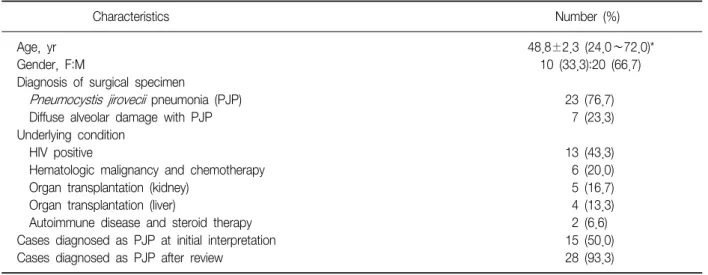
Table 1. Characteristics of the study sample (n=30)

Characteristics Number (%)

Age, yr 48.8±2.3 (24.0∼72.0)*

Gender, F:M 10 (33.3):20 (66.7)

Diagnosis of surgical specimen

Pneumocystis jirovecii pneumonia (PJP) 23 (76.7)

Diffuse alveolar damage with PJP 7 (23.3)

Underlying condition

HIV positive 13 (43.3)

Hematologic malignancy and chemotherapy 6 (20.0)

Organ transplantation (kidney) 5 (16.7)

Organ transplantation (liver) 4 (13.3)

Autoimmune disease and steroid therapy 2 (6.6)

Cases diagnosed as PJP at initial interpretation 15 (50.0)

Cases diagnosed as PJP after review 28 (93.3)

*Values are presented as Mean±SE (range).

Materials and Methods 1. Patients

This study included 30 patients with PJP who were diagnosed through surgical biopsy, including TBLB (29 cases) and video-associated thoracoscopic surgery (VATS) assisted lung biopsy (one case). Clinical data were collected by retrospective review. Twenty-five pa- tients with pulmonary infiltrates on radiology without evidence of PJP were enrolled as the control group. The control group was consisted of 16 with community ac- quired pneumonia, 7 hospital acquired pneumonia and 2 with acute respiratory distress syndrome associated with malignancy and hemodynamic disorder.

2. Review of BAL fluid

The BAL fluids analyzed in this study were prepared with the conventional cytospin method. Hematoxylin and eosin (H&E) stain was used for all specimens.

Gomori's methenamine silver (GMS) staining and im- munohistochemical staining for P. jirovecii were per- formed in only three and one case(s), respectively.

Two pathologists (JY Sung and J Han) reviewed the BAL fluid samples from both the PJP and control cases.

The concordance rate between the initial cytologic diag- nosis and review diagnosis was also evaluated. All PJP

and control cases were reviewed for cytologic findings, including low power pattern, frothy exudates, hemosi- derin-laden macrophages, fibrinoid materials, and the kinds of infiltrated inflammatory cells. For the parame- ters of hemosiderin-laden macrophages, fibrinoid mate- rials, and the kinds of infiltrated inflammatory cells, we classified "easily found" (with the proportion of more than 25% of all of the cell population in BAL fluid) and

"rare" (less than 25%).

3. Statistical analysis

We used Statistical Product and Services Solutions (SPSS version 18.0; SPSS Inc., Chicago, IL, USA) stat- istical software to carry out the statistical analysis. The Pearson χ

2

test and Fisher's exact test (for analysis of frothy exudates) were used to identify the cytologic findings that showed statistically significant differences between the PJP and control groups. The tests were two-sided. Differences were considered statistically sig- nificant when the p-value was <0.05.

Results 1. Patient characteristics

The patient characteristics of the 30 PJP cases are

summarized in Table 1. The mean age was 48.8±2.3

(3)

Table 2. Comparison of cytologic findings in the PJP cases and the control group

Characteristics

Group of patients

Control PJP p-value*

Pattern

Scattered 10 (34.5) 19 (65.5) 0.084 Grouped 15 (57.7) 11 (42.3)

Frothy exudate

Absent 25 (92.6) 2 (7.4) <0.001

Present 0 (0.0) 28 (100.0) Hemosiderin-laden macrophages

Rare 12 (37.5) 20 (62.5) 0.162

Easily found 13 (56.5) 10 (43.5) Fibrinoid materials

Rare 17 (43.6) 22 (56.4) 0.665

Easily found 8 (50.0) 8 (50.0) Lymphocytes

Rare 8 (42.1) 11 (57.9) 0.717

Easily found 17 (47.2) 19 (52.8) Neutrophils

Rare 9 (31.0) 20 (69.0) 0.023

Easily found 16 (61.5) 10 (38.5)

*Calculated by Pearson's χ

2

test,

Calculated by Fisher's ex- act test.

PJP: Pneumocystis jirovecii pneumonia.

Table 3. Cases of diffuse alveolar damage associated with PJP

No Age Gender Underlying condition Frothy

exudates Lymphocytes Neutrophils Initial diagnosis

Review diagnosis 1 60 M Hematologic malignancy and chemotherapy Present Easily found Rare Negative PJP

2 43 M Organ transplantation (kidney) Present Easily found Rare PJP PJP

3 43 M Organ transplantation (liver) Present Rare Rare PJP PJP

4 72 M HIV (+) Absent Easily found Rare Negative Negative

5 66 M Hematologic malignancy and chemotherapy Absent Easily found Rare Negative Negative 6 53 M Autoimmune disease and steroid therapy Present Easily found Easily found Negative PJP

7 48 M HIV (+) Present Easily found Rare Negative PJP

HIV: human immunodeficiency virus; PJP: Pneumocystis jirovecii pneumonia.

years (range, 24.0∼72.0; data shown as median±

standard error) and 10 of the 30 patients were female.

All patients with PJP were immunocompromised. The underlying clinical conditions of PJP patients were as follows: HIV positive, 13 (43.3%); hematologic malig- nancy and chemotherapy, 6 (20.0%); organ transplan- tation, 9 (30.0%); and autoimmune disease and steroid

therapy, 2 (6.6%). Seven of the 30 PJP patients were also diagnosed with diffuse alveolar damage (DAD) in addition to PJP.

2. Result of review of cytologic findings in PJP pat- ients

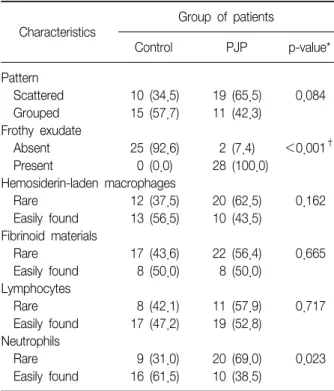
Table 2 summarizes comparisons of the cytological findings between the PJP patients and the control group. In the BAL fluid samples from PJP patients, frothy exudates were identified (p<0.001) whereas none of the control cases showed frothy exudates. And rare neutrophils were present (p=0.023) in those from PJP patients. The rest of the cytological findings, such as low power pattern, easily detected hemosider- in-laden macrophages, fibrinoid materials, and lympho- cytes, were not correlated with PJP.

Among 30 patients with PJP, seven patients were di- agnosed with DAD with associated PJP (Table 3). The DAD patients had different findings in their BAL fluid.

Two (28.6%) showed no frothy exudates, which are the characteristic finding of PJP. Therefore, we were unable to make diagnoses of PJP from the BAL fluid of these two patients.

Discussion

A study from the United States reported that PJP was

the most prevalent opportunistic disease

4

. According to

Choe et al.

5

, who analyzed opportunistic infections in

HIV-infected patients in Korea between 1985 and 1998,

(4)

Figure 1. Characteristic PJP findings in surgical specimens (A∼D) and bronchoalveolar fluid (E∼H). (A, B) Frothy, foamy, or honeycomb exudates (arrow) within the alveolar spaces (A, H&E, ×100; B, H&E, ×200). (C, D) GMS staining and immunohistochemistry for Pneumocystis highlights PJP organisms (C, GMS, ×400; D, immunohistochemistry, ×400).

(E∼H) Scattered frothy exudates intermixed with inflammatory cells (E, H&E, ×40; F, H&E, ×100; H, H&E, ×400).

PJP: Pneumocystis jirovecii pneumonia; GMS: gomori methenamine-silver.

tuberculosis was the most frequent opportunistic in- fection (25%), followed by candidiasis (21%), herpes zoster (20%), and PJP (10%). Cho et al.

6

reported that the most prevalent (21.6%) opportunistic disease in HIV-infected patients from 1985 to 2000 was candidiasis, followed by PJP (15.9%), tuberculosis (12.5%), and cy- tomegalovirus (CMV) infection (9.1%).

Although Pneumocystis is one of the important caus- es of opportunistic infection, there are presently few re- views of data regarding PJP in Korea. In our study, the patients with PJP had immunodeficiency associated with AIDS (13, 43.3%), organ transplantation (9, 30.0%), hematologic malignancy (6, 20.0%), and autoimmune disease (2, 6.6%). AIDS was the most frequent predis- posing factor, but organ transplantation and malignancy are also common risk factors for PJP.

As shown in Figure 1, the characteristic findings of PJP for both cytologic and surgical specimens are foamy alveolar casts called frothy exudates

3,7,8

. When this find- ing was noted, we can diagnose the case as PJP. The

term of "honeycomb exudates" also used to describe this finding and the honeycomb texture is derived from the presence of the PJP cysts in the intra-alveolar protei- naceous material. With statistical significance, the frothy exudate was found in 93.3% of PJP whereas none of control case showed it. So, the diagnostic value of frothy exudates for PJP is reconfirmed in our review of BAL fluid. Additionally, we found that BAL fluid from PJP patients has a tendency to have rare neutrophils in comparison with a group of pneumonia patients with- out evidence of PJP.

BAL fluid cytology is easy to prepare and can yield

more rapid results than surgical procedures. Further-

more, the sensitivity for detection of PJP by BAL is

known to be high, ranging from 79% to 98%

9-11

. When

we reviewed the BAL fluids of PJP patients in our in-

stitute, the sensitivity was 93.3%. However, the sensi-

tivity of the initial interpretation of BAL fluid was 50.0%,

and the concordance rate was 56.7%. Because patholo-

gists usually concentrate on ruling out malignancy, an

(5)

event like this can occasionally occur. Another reason may be a lack of ancillary tests, including special and immunohistochemical stains. Among 30 cases, 27 (14 diagnosed as negative at initial diagnosis and 13 diag- nosed as positive at initial diagnosis) did not undergo any special or immunohistochemical staining. Chechani et al.

12

previously reported that the diagnostic yield of BAL fluid cytology may be increased by use of special stains, such as Gram-Weigert and GMS stains. Recently, the use of immunohistochemical staining for P. jirovecii is increasing, and it is reported to be helpful in the diag- nosis of PJP

13

. However, when we reviewed our 30 cas- es, diagnosis of PJP was not difficult even though we did not perform additional special or immunohistoche- mical staining. Therefore, if pathologists are aware of the possibility of PJP, they can reduce the false negative rate even if special or immunohistochemical staining is unavailable.

Another common histologic manifestation of PJP is DAD, which is most often seen in non-AIDS patients

14

. In cases of PJP with DAD, intra-alveolar frothy exudates may be focal and scanty and, thus, difficult to find

15

. The results in our study concur with a previous report.

Among 30 cases of PJP in our institute, seven cases pre- sented with DAD and two of these were patients with HIV (Table 3). Two out of seven cases with DAD showed a scanty amount of frothy exudates in surgical specimens. As expected, we were unable to find any diagnostic findings, such as frothy exudates, in BAL flu- id from these patients. This result suggests that even if there is no evidence of PJP in the BAL fluid, PJP cannot be excluded in cases of immunocompromised patients with DAD, especially non-HIV infected patients. Clinic- ians need to be alert to this possibility because the pro- portion of non-HIV infected immunocompromised pa- tients is increasing.

In this study, we reviewed BAL fluid samples from 30 PJP patients at an institute in Korea. In addition to HIV infection, organ transplantation and malignancy are also important causes of PJP. Especially, in the cases with information of immunodeficiency, we need to be aware of the possibility of PJP and careful cytologic ex-

amination should be done. So the communication be- tween pathologist and clinician is very important. For the evaluation for PJP, BAL fluid cytology is re- commemded, because it is very rapid than surgical process and has high sensitivity. Finally, in the case of PJP with DAD, we cannot exclude PJP even if there are no frothy exudates in the BAL fluid.

References

1. Sidhu GS, Cassai ND, Pei Z. Pneumocystis carinii: an update. Ultrastruct Pathol 2003;27:115-22.

2. Haque AK. Fungal disease. In: Zander DS, Farver CF, editors. Pulmonary pathology. 1st ed. Philadelphia:

Churchill Livingstone; 2008. p. 236-9.

3. Willebrand Ev, Lautenschlager I. Organ transplantation.

In: Gray W, Kocjan G, editors. Diagnostic cytopath- ology. 3rd ed. Edinburgh: Chrchill Livingstone/Elsev- ier; 2010. p. 475-6.

4. Jones JL, Hanson DL, Dworkin MS, Alderton DL, Fleming PL, Kaplan JE, et al. Surveillance for AIDS-de- fining opportunistic illnesses, 1992-1997. MMWR CDC Surveill Summ 1999;48:1-22.

5. Choe KW, Oh MD, Park SW, Kim HB, Kim US, Kang SW, et al. Opportunistic infections and malignancies in 173 patients with HIV infection. Korean J Infect Dis 1998;30:507-15.

6. Cho GJ, Hong SK, Chang KH, Chung JS, Choi YH, Song YG, et al. Epidemiology and clinical features of HIV infection/AIDS in Korea. YMJ 2003;44:363-70.

7. Greaves TS, Strigle SM. The recognition of Pneumocys- tis carinii in routine Papanicolaou-stained smears. Acta Cytol 1985;29:714-20.

8. Price RA, Hughes WT. Histopathology of Pneumocystis carinii infestation and infection in malignant disease in childhood. Hum Pathol 1974;5:737-52.

9. Broaddus C, Dake MD, Stulbarg MS, Blumenfeld W, Hadley WK, Golden JA, et al. Bronchoalveolar lavage and transbronchial biopsy for the diagnosis of pulmo- nary infections in the acquired immunodeficiency syndrome. Ann Intern Med 1985;102:747-52.

10. Golden JA, Hollander H, Stulbarg MS, Gamsu G.

Bronchoalveolar lavage as the exclusive diagnostic mo- dality for Pneumocystis carinii pneumonia. A prospec- tive study among patients with acquired immuno- deficiency syndrome. Chest 1986;90:18-22.

11. Orenstein M, Webber CA, Cash M, Heurich AE. Value

of bronchoalveolar lavage in the diagnosis of pulmo-

(6)

nary infection in acquired immune deficiency synd- rome. Thorax 1986;41:345-9.

12. Chechani V, Allam AA, Haseeb MA, Kamholz SL.

Pneumocystis carinii pneumonia in patients with AIDS:

evaluation of lavage and staining techniques in dia- gnosis. J Acquir Immune Defic Syndr 1991;4:250-3.

13. Lee JH, Lee JY, Shin MR, Ahn HK, Kim CW, Kim I.

Immunohistochemical identification of pneumocystis jirovecii in liquid-based cytology of bronchoalveolar

lavage: nine cases report. Korean J Pathol 2011;45:

115-8.

14. Ziefer A, Abramowitz JA. Pneumocystis carinii pneumo- nia in HIV-positive and HIV-negative patients. An epi- demiological, clinical and histopathological study of 18 patients. S Afr Med J 1989;76:308-13.

15. Burke BA, Good RA. Pneumocystis carinii infection.

Medicine (Baltimore) 1973;52:23-51.

수치

Table  1.  Characteristics  of  the  study  sample  (n=30)
Table 2. Comparison of cytologic findings in the PJP cases and  the  control  group
Figure 1. Characteristic PJP findings in surgical specimens (A∼D) and bronchoalveolar fluid (E∼H)

참조

관련 문서