http://dx.doi.org/10.9724/kfcs.2014.30.4.394
우육포의 품질에 영향을 미치는 연잎추출물 첨가효과
박경숙 ․ 이재상1 ․ 박현숙 ․ 최영준 ․ 박성숙2 ․ 정인철†
대구공업대학교 호텔외식조리계열, 1(주)롯데호텔, 2세화요리아카데미
Adding Effect of Lotus Leaf Extract on the Quality of Beef Jerky
Kyung-Sook Park ․ Jae-Sang Lee1 ․ Hyun-Suk Park ․ Young-Joon Choi ․ Sung-Suk Park2 ․ In-Chul Jung† Division of Hotel Culinary Arts, Daegu Technical College, Daegu 704-721, Korea
1Lotte Hotel Co., Seoul 100-721, Korea
2Sehwa Cooking Academy, Daegu 700-819, Korea
Abstract
This study was carried out in order to investigate the effects of lotus leaf extracts on the quality characteristics of beef jerky, such as chemical composition, free amino acid, Hunter’s color, physical properties, water activity, pH, TBARS value, VBN content, total bacterial count and sensory score. According to the results, there were no significant differences in moisture, protein, fat, ash, L-value, b-value, hardness, springiness, cohesiveness, gumminess, chewiness, water activity, pH, flavor, taste, texture, juiciness and overall acceptability. Total free amino acid content was highest in T0 and, lowest in T3 (p<0.05). The a-value was highest in T3 (p<0.05). The TBARS value and total bacterial count of T2 and T3 were significantly lower than those of T0 and T1 (p<0.05). The VBN content was lowest in T3 (p<0.05) and the sensory color was highest in T3 (p<0.05).
Key words: lotus leaf extract, beef jerky, quality characteristics
†Corresponding author: In-Chul Jung, Division of Hotel Food Service and Culinary Arts, Daegu Technical College, 205 Songhyun-Ro, Dalseo-gu, Daegu 704-721, Korea
Tel: +82-53-560-3851 Fax: +82-53-560-3859 E-mail: [email protected]
Ⅰ.
서 론우리나라 전통방식으로 제조하는 육포는 조미를 위해 소금, 간장, 향신료, 물엿 등을 첨가한다. 그리고 제조과 정에서는 건조, 포장 등을 하게 된다. 이러한 일련의 과 정들은 낮은 수분활성도, 낮은 pH, 삼투압 등을 부여하 여 부패미생물에 대한 저해작용을 하도록 하는 hurdle technology, 즉 부패미생물의 생육을 연속적으로 제어한 다(Leistner L 2001). 따라서 육포는 지질함량은 낮고 단 백질함량이 풍부하며, 상온저장이 가능한 식품으로 식육 을 이용한 대표적인 건조식품이다. 육포는 고기를 얇게 저미거나 다져서 일정한 형태로 성형한 후 건조한 우리 나라 전통식품으로서 간식용, 술안주, 폐백음식 등으로 이 용하고 있다. 전통적인 제조방법과는 달리 공업적인 육포 제조방법은 신선육색의 안정화 및 발색을 위하여 질산염 이나 아질산염 등의 발색제를 첨가하게 되는데(Tsoukalas DS 등 2011) 발색제는 정균작용(Cui H 등 2010), 독소 생
성억제(Sebranek JG와 Bacus JN 2007), 산패취 억제 (Arneth W 2001) 등의 부가작용도 있다. 그리고 저장 중 품질유지를 위하여 보존료로서는 sorbic acid(Montesinos- Herroro C 등 2009), 산화방지제로서는 BHA, BHT, propyl gallate 등(MaCarthy TL 등 2001, Minussi RC 등 2003)을 사용하고 있다. 그러나 육포의 품질향상을 위하여 첨가하 는 합성식품첨가물들에 대한 인체의 위해성이 알려지면 서(Mirvish SS 등 2000) 이들을 대체할 수 있는 천연 첨 가물을 이용하는 연구가 지속적으로 이루어지고 있다.
육포에 천연첨가물을 이용한 연구로서는 녹차추출물 및 자몽종자추출물(Kim HS 등 2012), 파프리카 및 매실 추출액(Oh JS 등 2007), 솔잎 및 쑥즙(Jung IC 등 2008), 배, 파인애플, 키위농축액(Yang CY 2006), 건포도 추출물 (Bower CK 등 2003) 등이 있다. 이들의 연구는 대부분 천연색소, 천연 항산화제, 천연 항균제 등으로서의 이용 가능성에 대하여 연구하였다. 최근에 육제품의 품질향상 을 위하여 연잎도 그 대안으로 연구가 시도되고 있다.
연(Nelumbo nucifera)은 우리나라에서 대량으로 생산되 는 수생식물로서 여러 종류의 flavonoid류와 alkaloid류 를 함유하고 있다(Ono Y 등 2006). 그 중 연잎은 인체에 대하여 다양한 약리작용을 나타내며(Ma WY 등 2010), 식품에서는 항균작용과 항산화작용이 있는 것으로 알려
Ingredients Beef jerky1)
T0 T1 T2 T3
Beef (g) 3,000 3,000 3,000 3,000
Soy sauce (mL) 390 390 390 390
Sugar (g) 60 60 60 60
Starch syrup (g) 60 60 60 60
Ginger (g) 10 10 10 10
Hot pepper (g) 10 10 10 10
Black pepper (g) 10 10 10 10
Laurel leaf (g) 1 1 1 1
Water (mL) 100 60 40 0
10% Lotus leaf extract (mL) 0 40 60 100
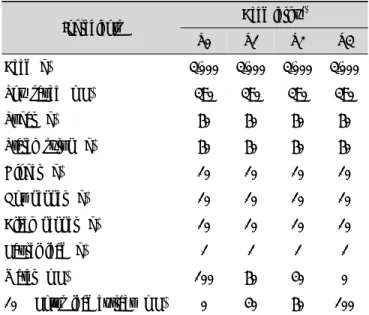
1)T0: control, beef jerky with water 100 mL, T1: beef jerky with water 60 mL and lotus leaf extract 40 mL, T2: beef jerky with water 40 mL and lotus leaf extract 60 mL, T3: beef jerky with lotus leaf extract 100 mL.
Table 1. Formula for the preparation of beef jerky 져 있다(Huang B 등 2010). 이들의 성분은 armepavine,
lotusine, aporphine, roemerine, nuciferine, nornuciferine, liensinine, neferine, isoliensinine 등(Kashiwada Y 등 2005, Luo X 등 2005)이다. 몇몇 연구자들은 이러한 연잎의 유효성분을 육제품에 활용하여 품질향상을 꾀하고자 하 는 연구를 시도하고 있다. Huang B 등(2011)은 연잎추 출물을 돼지 및 소 분쇄육에 첨가하여 지방산화 억제와 metmyoglobin의 형성지연 효과를 보고하였으며, Choi JH 등(2011)은 돼지 분쇄육에 연잎분말을 첨가하여 지방산화 억제를, Lee KS 등(2013)은 돼지 분쇄육에 연잎추출물을 첨가하여 지방산화 및 단백질 부패 억제, 색깔개선 등의 결과를 보고하였다.
본 연구에서는 우육포 제조과정에 합성식품첨가물을 사용하지 않고 전통적인 방법으로 향신료 및 양념류 배 합에 필요한 물 대신 연잎 열수추출물을 이용하여 제조 한 우육포의 이화학적 품질특성을 검토하였다.
Ⅱ.
재료 및 방법1. 우육포 제조
본 실험에 사용된 원료육은 우둔부위로서 대구시내 대 형마트에서 판매되고 있는 호주산 수입동결우육을 사용 하였다. 원료육의 과도한 지방과 결체조직은 제거하였으 며 근섬유 방향으로 5 mm 두께로 절단하였다. 연잎추출 물을 제조하기 위한 연잎은 동결건조하여 분쇄한 분말을
㈜다연(Inchon, Korea)에서 구입하였다. 연잎추출물은 증 류수 1 L에 연잎분말 100 g을 넣고, 30분간 가열 추출하 였으며, 실온에서 1시간 방치한 후 여과하여 이용하였다.
육포 제조를 위한 원부재료의 배합비율은 Table 1과 같 다. 즉, 우둔살 3,000 g에 대하여 진간장 390 mL, 설탕 60 g, 물엿 60 g, 생강, 홍고추 및 흑후추 각각 10 g, 월계 수 잎 1 g에 대조군(T0)은 물 100 mL, T1은 물 60 mL와 연잎추출물 40 mL, T2는 물 40 mL와 연잎추출물 60 mL 그리고 T3는 연잎추출물 100 mL를 첨가하였다. 육포제 조는 배합한 양념이 우둔부위에 골고루 스며들도록 한 후 모양을 다듬고 실온에서 3일간 건조하였다. 건조된 우 육포는 1일간 압착하여 형태를 일정하게 하고, 다시 실온 에서 1일간 건조하여 제조하였다. 제조된 우육포는 한지 로 포장한 후 폴리에틸렌 백에 넣고 실온에서 저장하면 서 실험재료로 이용하였다.
2. 일반성분 분석
우육포의 수분함량은 상압가열건조법으로 분석하였고, 조단백질은 단백질분석기(Kjeltec Auto 1030 Analyzer, Tecator, Hoganas, Sweden), 조지방은 지방분석기(Soxtec system 1046, Tecator, Hoganas, Sweden)을 이용하였으며,
조회분은 직접회화법으로 분석하였다(KFDA 2009).
3. 표면색깔 측정
우육포의 표면색깔은 색차계(Chromameter CR-200b, Minolta Camera Co., Osaka, Japan)를 이용하여 명도 (lightness, L-value), 적색도(redness, a-value) 및 황색도 (yellowness, b-value)를 측정하였다. 색 보정을 위해 사용 된 calibration plate의 L-, a- 및 b-value는 각각 97.5, -6.1 및 7.4이었다.
4. 유리아미노산 함량 측정
유리아미노산 함량은 육포 0.2 g을 75% ethanol로 30분 간 진탕시키고 10,000 rpm으로 10분간 원심분리하여 상 층액을 얻은 다음 남은 잔사에 다시 75% ethanol을 가하 여 얻어진 상층액과 함께 감압 농축하여 ethanol을 제거 하였다. 이 여액을 25% trichloroacetic acid로 단백질을 제거하고, ethyl ether로 여액 중의 trichloroacetic acid를 제거한 다음 감압 농축하여 잔류하고 있는 ethyl ether를 제거하였다. 이 여액을 Amberlite IR 120(H+) 수지가 충 전된 칼럼에 통과시켜 아미노산을 흡착시킨 다음 0.2 N lithium citrate buffer(pH 2.2)로 용해시켜 여과하고, 아미 노산분석기(LKB 4150 Alpha plus, Pharmacia, Uppsala, Sweden)로 분석하였다. 유리아미노산 분석에 사용된 column 은 cation exchange column 4151 series II (200×4.6 mm, Pharmacia, Uppsala, Sweden)이었으며, lithium citrate
Items Beef jerky1)
T0 T1 T2 T3 F-value
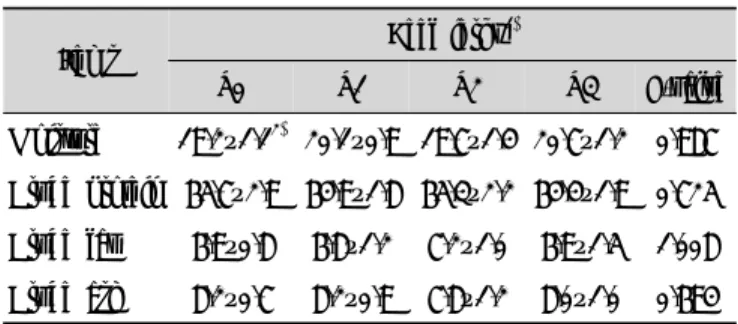
Moisture 19.2±1.12) 20.1±0.9 19.7±1.4 20.7±1.2 0.987 Crude protein 65.7±2.9 64.9±1.8 65.3±2.2 64.4±1.9 0.725 Crude fat 6.9±0.8 6.8±1.2 7.2±1.0 6.9±1.5 1.008 Crude ash 8.2±0.7 8.2±0.9 7.8±1.2 8.0±1.0 0.694
1)T0: control, beef jerky with water 100 mL, T1: beef jerky with water 60 mL and lotus leaf extract 40 mL, T2: beef jerky with water 40 mL and lotus leaf extract 60 mL, T3:
beef jerky with lotus leaf extract 100 mL.
2)Mean±S.D.
Table 2. Chemical composition of beef jerky (%) hydrate buffer A pH 2.85, lithium citrate hydrate buffer B
pH 4.2, lithium chloride buffer pH 3.3을 이용하여 15 mL/min의 유속으로 용출시켰다(Lee HJ 등 2000).
5. 기계적 물성 측정
우육포의 기계적 물성은 rheometer(CR-200D, SUN Scientific Co., Tokyo, Japan)를 이용하여 측정하였다. 경 도(hardness), 탄성(springiness), 응집성(cohesiveness)은 round adapter 25번을 이용하여 table speed 120 mm/min, graph interval 30 m/sec, load cell(Max) 2 kg의 조건으로 측정하 였다. 뭉침성(gumminess)은 peak max × cohesiveness값으로, 저작성(chewiness)은 (peak max ÷ distance) × cohesiveness
× springiness값으로 나타내었다.
6. 수분활성도 측정
수분활성도는 수분활성도 측정기(Water activity measuring S, Rotronic, Basserdorf, Swiss)를 이용하여 측정하였다.
즉, 측정기 내부 감지기 온도를 25°C로 고정하여 10분 간 격으로 측정기의 상대습도를 측정하고, 상대습도의 끝자 리 수가 30분 동안 변동이 없는 점을 측정값으로 하였다.
7. pH측정
우육포의 pH측정은 대기온도에서 pH 4.00과 7.00 buffer 로 보정한 유리전극이 부착된 pH meter(ATI Orion 370, Beverly, MA, USA)를 이용하여 측정하였다. 즉, 시료를 분쇄한 후 10 g을 취하여 증류수 40 mL와 함께 혼합한 후 측정하였다.
8. TBARS값 측정
우육포의 TBARS(2-thiobarbituric acid reactive substances) 는 시료 2 g을 perchloric acid 18 mL 및 BHT 50 μL와 함 께 균질하고 여과한 여과액 2 mL에 TBA 2 mL를 가하고 531 nm에서 흡광도를 측정하여 나타난 값을 시료 kg 당 반응물 mg malonaldehyde로 계산하였다(Buege AJ와 Aust SD 1978).
9. VBN함량 측정
우육포의 VBN(volatile basic nitrogen) 함량은 Conway unit를 이용한 미량확산법(KFDA 2009)에 의하여 측정하 였다. 즉 시료 2 g을 증류수 16 mL와 20% perchloric acid 2 mL를 넣고 균질화한 후 3,000 rpm에서 15분 동안 원심 분리하여 상층액을 취하였다. 상층액 1 mL와 50% K2CO3
1 mL를 Conway unit 외실에 넣고, 내실에는 10% 붕산흡 수제 1 mL를 가한 후 37°C에서 80분 동안 방치한 다음 0.01 N-NaOH로 적정하여 구하였다.
10. 총균수 측정
우육포의 총균수 측정은 plate count agar를 이용한 표 준평판법으로 37°C에서 48시간 동안 배양하고 colony수 를 계측하여 측정하였다(KFDA 2009).
11. 관능검사 및 통계처리
관능검사는 훈련된 10명의 관능 평가원에 의하여 측정 하였는데, 풍미, 맛, 색깔, 연도, 다즙성 및 종합적인 기호 도에 대하여 가장 좋다(like extremely)를 7점, 가장 나쁘 다(dislike extremely)를 1점으로 하는 7점 기호척도법으로 하였다(Stone H와 Sidel ZL 1985). 각 실험은 3회 이상 반 복 측정한 후 SPSS 14.0(statistical package for social science, SPSS Inc., Chicago II., USA)을 사용하여 통계처 리 하였으며, 각각의 시료에 대하여 평균±표준편차로 나 타내었다. 각 시료에 대한 유의성 검정은 분산분석을 한 후 p<0.05 수준에서 Duncan’s multiple test를 실시하였다.
Ⅲ.
결과 및 고찰1. 우육포의 일반성분
우육포를 제조할 때 부재료들과 함께 사용된 물을 대 체하여 연잎추출물을 첨가한 경우의 일반성분 분석 결과 는 Table 2와 같다. 수분함량은 19.1~20.7%, 조단백질 함 량은 64.4~65.7%, 조지방 함량은 6.8~7.2%, 조회분 함량 은 7.8~8.2%로 시료들 사이에 유의한 차이가 없었으며, 연잎추출물의 첨가가 우육포의 일반성분에 영향을 미치 지 않았다. 육포의 일반성분은 첨가하는 부재료, 건조온 도, 건조시간 등에 따라서 다르게 나타나는 것으로 보고 되고 있는데, Park GS 등(2002)은 당의 종류에 따라서 수 분함량에 차이가 있다고 하였으며, Han DJ 등(2007)은 건 조조건에 따라서 수분함량은 19.22~23.74%, 단백질 53.78
Items Beef jerky1)
T0 T1 T2 T3 F-value
Phosphoserine 59.6±4.62)a3) 53.1±2.3ab 50.4±3.2bc 45.3±2.7c 4.987*
Taurine 521.2±36.1a 503.7±21.1ab 488.7±18.9b 495.5±25.2b 12.364**
Aspartic acid 5.8±1.3 6.2±0.9 6.5±1.5 6.0±0.3 1.179
Threonine 45.3±3.6 41.7±2.2 42.3±1.3 44.2±1.1 0.942
Serine 31.7±2.9 30.9±0.5 29.5±0.9 32.3±1.3 2.012
Asparagine 316.3±21.2a 298.9±32.2ab 273.7±19.6bc 258.3±11.9c 5.636*
Glutamic acid 119.3±7.5a 117.4±5.5a 102.6±8.8b 104.2±4.3b 13.094**
Proline 35.4±3.1a 33.7±1.6a 29.8±2.2b 25.1±1.5c 10.341**
Glycine 101.3±5.1a 89.4±3.6d 94.8±4.2bc 92.2±3.9cd 7.212**
Alanine 201.7±11.7 198.4±9.7 212.6±11.1 205.3±13.7 1.463
Valine 37.3±3.4 33.9±2.1 35.3±1.8 35.6±1.1 0.826
Isoleucine 35.7±2.9 36.3±1.2 35.2±0.5 33.1±1.3 0.779
Leucine 60.1±3.3 61.5±2.9 64.1±2.1 61.7±1.9 1.032
Tyrosine 29.1±1.6ab 28.2±0.8b 30.8±1.3a 27.5±0.9b 3.634*
Phenylalanine 38.2±1.9a 37.4±1.3a 35.3±0.9b 31.2±1.5c 4.277*
Aminobutyric acid 3.7±0.2c 4.3±0.4b 5.1±0.5a 4.8±0.3ab 8.363**
Histidine 32.9±2.1 30.7±1.9 32.1±0.9 29.4±1.5 1.117
Carnosine 5.8±0.6b 7.2±1.1a 6.3±0.2ab 6.5±0.9ab 9.212**
Ornithine 4.2±0.2 4.4±0.1 3.9±0.3 3.8±0.3 1.854
Lysine 31.9±1.1ab 29.8±1.3b 32.1±0.7a 30.4±1.1ab 3.721*
Arginine 23.9±1.3ab 25.2±1.5a 22.7±1.1b 21.8±1.3b 3.665*
Total 1,740.4±111.7a 1,672.3±79.5ab 1,633.8±92.1ab 1,594.2±55.7b 9.879**
1)T0: control, beef jerky with water 100 mL, T1: beef jerky with water 60 mL and lotus leaf extract 40 mL, T2: beef jerky with water 40 mL and lotus leaf extract 60 mL, T3: beef jerky with lotus leaf extract 100 mL.
2)Mean±S.D.
3)Means with different superscripts in the same row significantly differ at p<0.05.
Table 3. Free amino acid content of beef jerky (ppm)
~56.81%, 지방 7.89~8.19%, 회분 6.26~6.68%라고 하였다.
본 연구는 와인 숙성 우육포의 수분함량 19.4~20.8%, 단 백질 64.0~64.9%, 지방 7.0~7.7%, 회분 7.6~8.2%라고 보 고한 Lee KS 등(2008)의 결과와 일치하는 경향이었다.
2. 우육포의 유리아미노산 함량
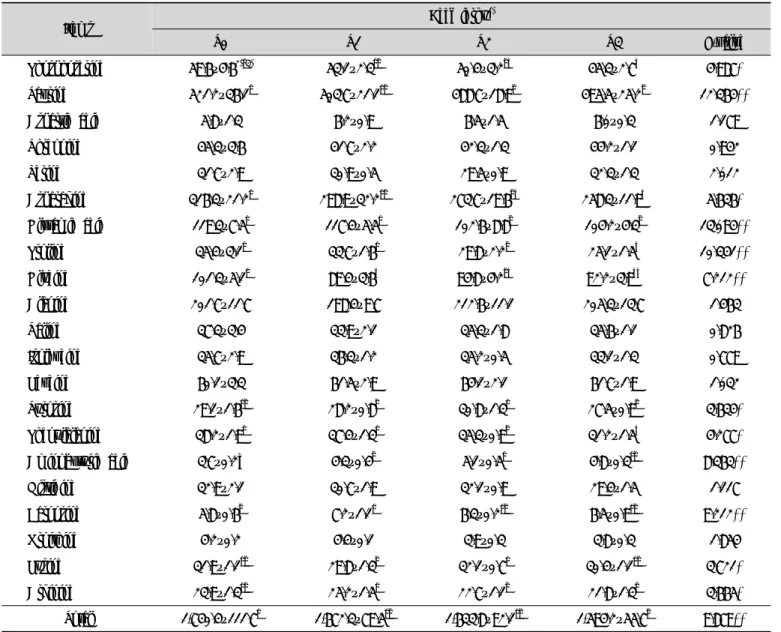
우육포의 유리아미노산 함량을 측정한 결과는 Table 3 과 같다. T0, T1, T2 및 T3의 유리아미노산 총량은 각각 1,740.4, 1,672.3, 1,633.8 및 1,594.2 ppm으로 물을 사용 한 T0가 가장 높고, 연잎추출물 만을 사용한 T3가 가장 낮아서(p<0.05) 연잎추출물의 첨가는 유리아미노산 함량
에 영향을 미치는 것을 알 수 있었다. 가장 많이 함유된 유리아미노산은 taurine, asparagine, alanine 순이었으며, taurine과 asparagine은 T0가 가장 높았고, alanine은 시료 들 사이에 유의한 차이가 없었다(p<0.05). 유리아미노산 은 종류에 따라서 단맛, 신맛, 쓴맛, 감칠맛을 나타내는 데, 단맛은 serine, alanine, threonine, proline, glycine, 신 맛은 aspartic acid, 쓴맛은 leucine, isoleucine, methionine, phenylalanine, lysine, valine, histidine, arginine, 그리고 감 칠맛은 glutamic acid인 것으로 알려져 있다(Kim SI 등 2011, Lee SW 등 2011). 따라서 물을 사용한 T0의 유리 아미노산 총량이 가장 많은 것으로 보아 시료들 사이에
Items Beef jerky1)
T0 T1 T2 T3 F-value
Hardness (g/cm2) 7.1±1.22) 6.9±0.9 7.4±1.5 6.8±0.7 1.035
Springiness (%) 58.7±3.3 60.4±4.1 61.6±2.9 59.4±2.4 0.954
Cohesiveness (%) 38.7±3.1 36.9±±1.9 38.1±2.1 37.4±3.3 1.117
Gumminess (kg) 476.5±27.3 463.7±33.5 498.3±22.4 469.1±41.7 1.959
Chewiness (g) 189.4±19.3 201.7±24.5 188.5±29.1 193.1±23.1 0.894
1)T0: control, beef jerky with water 100 mL, T1: beef jerky with water 60 mL and lotus leaf extract 40 mL, T2: beef jerky with water 40 mL and lotus leaf extract 60 mL, T3: beef jerky with lotus leaf extract 100 mL.
2)Mean±S.D.
Table 5. Textural properties of beef jerky
Items Beef jerky1)
T0 T1 T2 T3 F-value
L-value 27.3±0.92) 28.1±1.2 28.7±1,5 27.1±0.7 0.425
a-value 1.2±0.7c3) 1.9±0.5bc 2.6±1.2ab 3.1±0.7a 3.654*
b-value 4.5±1.1 5.3±0.9 4.7±1.5 5.1±0.9 1.276
1)T0: control, beef jerky with water 100 mL, T1: beef jerky with water 60 mL and lotus leaf extract 40 mL, T2: beef jerky with water 40 mL and lotus leaf extract 60 mL, T3: beef jerky with lotus leaf extract 100 mL.
2)Mean±S.D.
3)Means with different superscripts in the same row significantly differ at p<0.05.
Table 4. Surface color of beef jerky
풍미 차이가 있을 것으로 예상된다. 식육의 유리아미노산 은 단백질 분해효소에 의하여 생성되는데(Nowak A와 Piotrowska M 2012), 본 연구에서 연잎추출물 만을 첨가 한 T3의 유리아미노산이 가장 적은 것은 연잎에 항균물 질이 함유된 것으로 보아(Ohkoshi E 등 2007) 이들이 단 백질 분해작용을 억제하여 나타난 결과로 추측된다.
3. 우육포의 표면색깔
우육포의 표면색깔을 측정하고 그 결과를 Table 4에 나 타내었다. 명도를 나타내는 L-value는 27.1~28.7, 황색도를 나타내는 b-value는 4.5~5.3으로 시료들 사이에 유의한 차 이가 없었다. 그러나 적색도를 나타내는 a-value는 대조군 (T0)이 1.2이고 연잎추출물의 첨가량이 많을수록 a-value 는 높아져 물을 전부 대체하여 연잎추출물을 첨가한 T3는 3.1로 가장 높았다(p<0.05). 육제품의 색깔은 육제품에 존 재하는 진홍색의 deoxymyoglobin, 선홍색의 oxymyoglobin, 그리고 암갈색의 metmyoglobin의 비율이 L-, a- 및 b-value에 영향을 미친다(Lindahl G 등 2004). 육제품의 적색도는 특히 산화에 의하여 생성되는 metmyoglobin이 영향을 미치는데(Sánchez-Escalante A 등 2003), 본 연구
의 연잎추출물 첨가량이 많은 T3의 a-value가 높은 것은 연잎에 함유된 항산화물질이 지방의 산화를 억제함으로 서(Luo X 등 2005) metmyoglobin의 형성이 억제되어 나 타난 결과로 판단된다.
4. 우육포의 조직감
우육포의 기계적 조직감으로 경도(hardness), 탄성(springi- ness), 응집성(cohesiveness), 검성(gumminess) 및 씹힘성 (chewiness)을 측정한 결과는 Table 5와 같다. 우육포의 경 도는 6.8~7.4 g/cm2, 탄성 58.7~61.6%, 응집성 36.9~38.7%, 검성 463.7~498.3 kg, 그리고 씹힘성 188.5~201.7 g으로 시료들 사이에 유의성이 없었으며, 연잎추출물의 첨가가 우육포의 기계적 조직감에는 영향을 미치지 않았다. 육제 품의 기계적 조직감은 수분, 단백질, 지방 등의 일반성분, 원료육의 상태, 첨가물의 종류 등이 영향을 미친다(Song HI 등 2000). 특히 지방함량이 높으면 경도 및 씹힘성이 낮아진다고 보고되고 있다(Song HI 등 2002).
5. 우육포의 수분활성도, pH, TBARS, VBN 및 총균수 우육포의 수분활성도, pH, TBARS, VBN 및 총균수를
Items Beef jerky1)
T0 T1 T2 T3 F-value
Flavor 4.3±0.82) 4.2±0.6 4.2±1.2 4.0±0.5 1.004
Taste 4.0±1.2 4.6±0.8 4.2±0.4 4.0±0.7 1.765
Color 3.6±1.0b3) 3.9±0.7b 4.6±0.6ab 5.2±0.5a 5.673*
Texture 4.0±0.7 3.8±1.2 3.8±0.8 4.1±0.5 0.994
Juiciness 5.0±0.8 5.2±1.1 4.9±0.7 5.2±1.0 0.912
Overall acceptability 4.5±0.5 5.0±0.8 5.7±1.2 5.6±0.8 1.369
1)T0: control, beef jerky with water 100 mL, T1: beef jerky with water 60 mL and lotus leaf extract 40 mL, T2: beef jerky with water 40 mL and lotus leaf extract 60 mL, T3: beef jerky with lotus leaf extract 100 mL.
2)Mean±S.D.
3)Means with different superscripts in the same row significantly differ at p<0.05.
Table 7. Sensory score of beef jerky
Items Beef jerky1)
T0 T1 T2 T3 F-value
Water activity 0.69±0.022) 0.71±0.01 0.70±0.091 0.70±0.01 0.637
pH 5.84±0.01 5.85±0.01 5.84±0.02 5.83±0.02 1.565
TBARS value (mg/kg) 0.23±0.02a3) 0.23±0.01a 0.19±0.01b 0.16±0.01b 7.774**
VBN content (mg%) 18.76±1.2a 17.94±1.7ab 16.12±0.9bc 15.01±1.0c 4.215*
Total bacterial count (log CFU/g) 3.54±0.06a 3.47±0.08a 3.21±0.01b 3.19±0.04b 3.725*
1)T0: control, beef jerky with water 100 mL, T1: beef jerky with water 60 mL and lotus leaf extract 40 mL, T2: beef jerky with water 40 mL and lotus leaf extract 60 mL, T3: beef jerky with lotus leaf extract 100 mL.
2)Mean±S.D.
3)Means with different superscripts in the same row significantly differ at p<0.05.
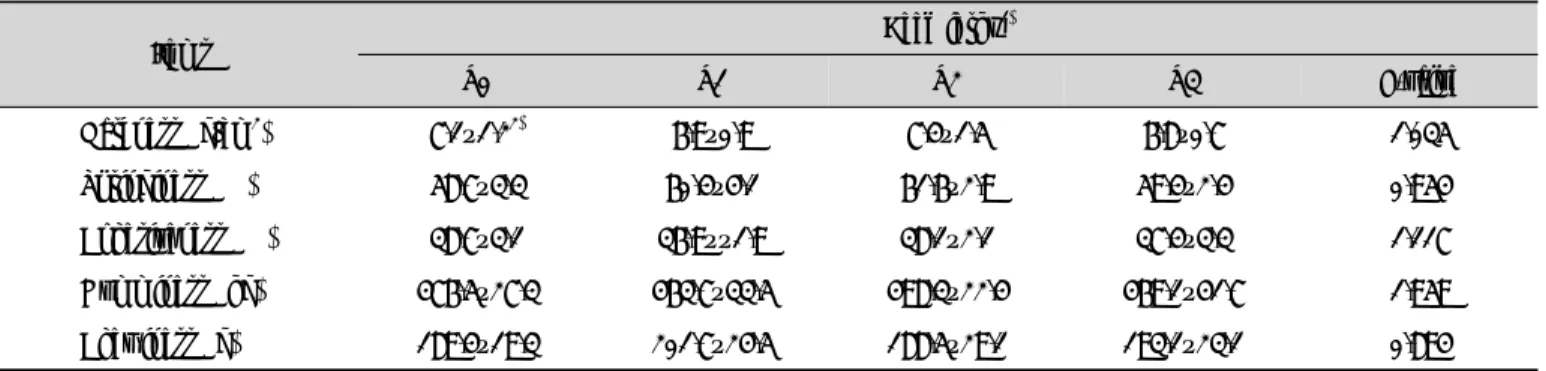
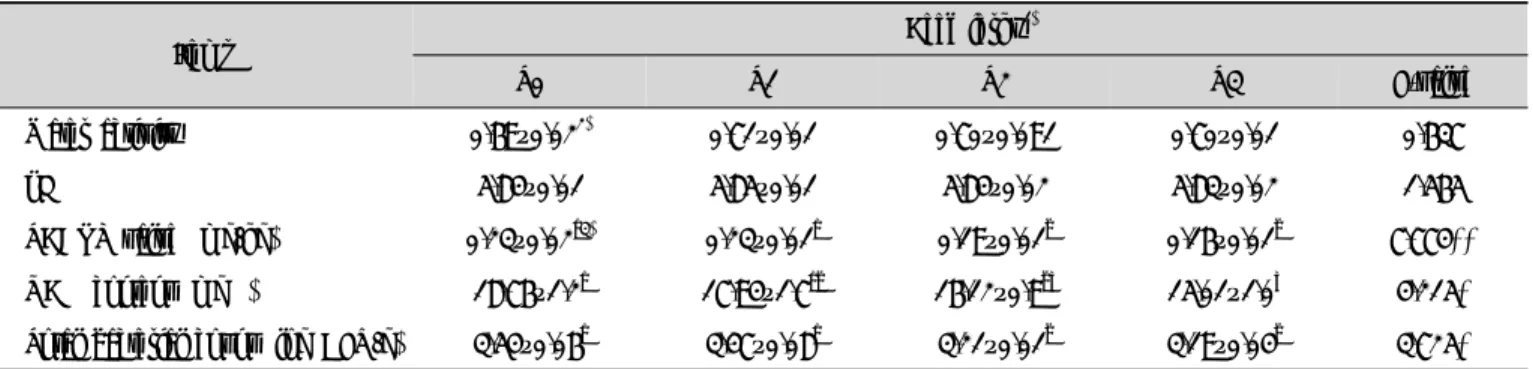
Table 6. Water activity, pH, TBARS value, VBN content and total bacterial count of beef jerky 측정한 결과는 Table 6과 같다. 시료들의 수분활성도는
0.69~0.71, pH는 5.83~5.85로 시료들 사이에 유의한 차이 가 없었다. TBARS는 T0, T1, T2 및 T3가 각각 0.23, 0.23, 0.19 및 0.16 mg/kg으로 T0 및 T1보다 T2 및 T3가 유의하게 낮았다(p<0.05). VBN 함량은 T0, T1, T2 및 T3 가 각각 18.76, 17.94, 16.12 및 15.01 mg%로 물 대신 연 잎추출물을 전부 사용한 T3가 가장 낮았다(p<0.05). 총균 수는 T0, T1, T2 및 T3가 각각 3.54, 3.47, 3.21 및 3.19 log CFU/g으로 T2 및 T3가 T0 및 T1보다 유의하게 낮았 다(p<0.05). Table 5의 결과에서 연잎추출물의 첨가가 우 육포의 수분활성도와 pH에는 영향을 미치지 않았다. 그 리고 지질산화의 지표로 이용되는 TBARS는 지질산화의 이차 대사산물을 측정한 값으로서(Juntachote T 등 2007) TBARS값이 크면 관능특성과 영양가를 변화시키기 때문 에 육제품의 품질에 나쁜 영향을 미친다(Nuñez de Gonzalez MT 등 2008). VBN 함량은 분해된 단백질의 저분자 화합
물들이 세균의 환원작용으로 생성된 물질로서(Park CI와 Kim YJ 2008) 세균증식과 효소작용이 원인이기 때문에 육제품의 부패지표로 이용된다(Jin SK 등 2003). 따라서 연잎추출물을 첨가량이 많은 우육포의 TBARS, VBN이 낮고, 총균수가 적은 것은 연잎에 함유된 폴리페놀화합물 의 항산화작용 및 항균작용(Luo X 등 2005)에 의한 것으 로 판단된다.
6. 우육포의 관능특성
우육포의 관능특성으로서 풍미, 맛, 색깔, 조직감, 다즙 성 및 전체적인 기호성을 측정하고 그 결과를 Table 7에 나타내었다. 풍미, 맛, 조직감, 다즙성 및 전체적인 기호 성은 시료들 사이에 유의한 차이가 없었다. 그러나 관능 적 색깔은 물을 대체하여 연잎추출물을 모두 첨가한 T3 가 가장 높았다(p<0.05). 본 연구에서 T3의 관능적 색깔 이 우수한 것은 연잎추출물의 지방산화 억제효과로 Table
4의 적색도가 우수한 것과 관련이 있는 것으로 판단된다.
그러나 Table 3의 유리아미노산 함량결과에서는 대조군의 총 유리아미노산이 가장 높아 맛과 풍미가 더 우수할 것 으로 예상하였으나 시료들 사이에 유의성이 없었다. 이러 한 결과는 육제품의 관능특성은 유리아미노산, 지방산, 펩티드, 당, 유기산, 핵산 등이 복합적으로 영향을 미치기 때문에(Kang SJ 등 2004) 향후 지방산, 핵산, 유리당, 유 기산 등에 관한 연구가 지속되어야 하겠다.
이상의 결과에서 물을 대체하여 10% 연잎추출물을 우 육포 제조과정에 첨가하면 적색도가 향상되고, TBARS 값, VBN함량, 총균수 등을 낮게 하여 저장성을 연장시킬 수 있을 것으로 판단되며, 관능적 색깔을 우수하게 유지 하였다. 따라서 우육포를 제조할 때에 연잎추출물을 사용 하면 발색제, 산화방지제, 보존료 등 합성식품첨가물의 대체 사용이 가능할 것으로 사료된다.
Ⅳ.
요 약본 연구는 연잎추출물이 우육포의 품질특성에 미치는 영향을 검토하였다. 우육포는 물 100 mL 첨가(T0), 물 60 mL와 연잎추출물 40 mL 첨가(T1), 물 40 mL와 연잎추 출물 60 mL 첨가(T2) 그리고 연잎추출물 100 mL 첨가 (T3)한 것 등 네 종류를 제조하였다. 우육포의 수분, 단백 질, 지방 및 회분은 시료들 사이에 유의한 차이가 없었다.
총 유리아미노산함량은 T0가 가장 높고, T3가 가장 낮았 다(p<0.05). 표면색깔 중 L- 및 b-value는 시료들 사이에 유의한 차이가 없었지만 a-value는 T3가 가장 높았다 (p<0.05). 경도, 탄성, 응집성, 뭉침성 및 씹힘성은 시료들 사이에 유의한 차이가 없었다. 수분활성도 및 pH는 시료 들 사이에 유의한 차이가 없었다. TBARS값 및 총균수는 T0 및 T1보다 T2 및 T3가 유의하게 낮았다(p<0.05).
VBN함량은 T3가 가장 낮았다(p<0.05). 풍미, 맛, 조직감, 다즙성 및 전체적인 기호성은 시료들 사이에 유의한 차 이가 없었지만 색깔은 T3가 가장 우수하였다(p<0.05).
References
Arneth W. 2001. Chemistry curing meat flavour. Fleschwirtschaft 81(1):85-87
Bower CK, Schilke KF, Daeschel MA. 2003. Antimicrobial properties of raisins in beef jerky preservation. J Food Sci 68(4):1484-1489
Buege AJ, Aust SD. 1978. Microsomal Lipid Peroxidation, In methods in Enzymology, Gleischer S. and Parker L. (ed.), Academic Press Inc., New York, pp 302-310
Choi JH, Jang ER, Lee ES, Choi JH, Choi YS, Han DJ, Kim HY, Lee MA, Shim SY, Kim CJ. 2011. Oxidative and color stability of cooked ground pork containing lotus leaf lotus
(Nelumbo nucifera) and barley leaf (Hordeum vulgare) powder during refrigerated storage. Meat Sci 87(1):12-18 Cui H, Gabriel AA, Nakano H. 2010. Antimicrobial efficacies of
plant extracts and sodium nitrite against Clostridium botulinum. Food Control 21(7):1030-1036
Han DJ, Jeong JY, Choi JH, Choi YS, Kim HY, Lee MA, Lee ES, Paik HD, Kim CJ. 2007. Effects of drying conditions on quality properties of pork jerky. Korean J Food Sci Ani Resour 27(1):29-34
Huang B, Ban XQ, He JS, Tong J, Tian J, Yang YW. 2010.
Hepatoprotective and antioxidant activity of ethanolic extracts of edible lotus (Nelumbo nucifera) leaves. Food Chem 120(3):873-878
Huang B, He JS, Ban XQ, Zeng H, Yao XC, Wang YW. 2011, Antioxidant activity of bovine and porcine meat treated with extracts from edible lotus (Nelumbo nucifera) rhizome knot and leaf. Meat Sci 87(1):46-53
Jin SK, Kim IS, Song YM, Hah KH. 2003. Effects of dietary oil and tocopherol supplementation on fatty acid, amino acid, TBARS, VBN and sensory characteristics of pork meat. J Anim Sci Technol 45(2):297-308
Jung IC, Park HS, Lee KS, Moon YH. 2008. Changes in the quality of beef jerky containing additional pine needle or mugwort juice during storage. Korean J Life Sci 18(1):
63-68
Juntachote T, Berghofer E, Siebenhandl S, Bauer F. 2007.
Antioxidative effect of added dried holy basil and its ethanolic extracts on susceptibility of cooked ground pork to lipid oxidation. Food Chem 100(1):129-135
Kang SJ, Moon YH, Jung IC. 2004. Effect of carcass grade and addition of mugwort on the physicochemical properties and palatability of loin ham. Korean J Life Sci 14(2):239-244 Kashiwada Y, Aoshima A, Ikeshiro Y, Chen YP, Furukawa H,
Itoigawa M, Fujioka T, Mihashi K, Cosentino LM, Morris- Natschke SL, Lee KH. 2005. Anti-HIV benzylisoquinoline alkaloids and flavonoids from the leaves of Nelumbo nucifera, and structure-activity correlations with related alkaloids.
Bioorgan Med Chem 13(2):443-448
Kim HS, Seong PN, Kim MH. 2012. Effect of cochineal color, green tea extract and grapefruit seed extract additions on pork jerky quality. Food Eng Progress 16(3): 219-225 Kim SI, Jung KK, Kim DY, Kim YJ, Choi CB. 2011. Effects of
supplementation of rice bran and roasted soybean in the diet on physico-chemical and sensory characteristics of M.
longissimus dorsi of Hanwoo steers. Korean J Food Sci Ani Resour 31(3):451-549
KFDA. 2009. Food Code, Munyoungsa, Seoul, pp 212-251 Lee HJ, Yoo BS, Byun SY. 2000. Differences in phenolic acids
between Korean ginsengs and mountain ginsengs. Korean J Biotechnol Bioeng 15(2):323-328
Lee KS, Kim JN, Jung IC. 2013. Physicochemical properties of ground pork with lotus leaf extract during refrigerated
storage. J East Asian Soc Dietary Life 23(4): 477-486 Lee KS, Moon YH, Jung IC. 2008. Effect of the Quality
characteristics of beef jerky ripened by wine. Korean J Life Sci 18(11):1582-1542
Lee SW, Yoon SR, Kim GR, Kyung HK, Jeong YJ, Yeo SH, Kwon JH, 2011. Effect of Nuruks and crude amylolytic enzyme on free amino acid and volatile components of brown rice vinegar prepared by static culture. Korean J Food Sci Technol 43(5):570-576
Leistner L. 2001. Basic aspects of food preservation by hurdle technology. Int J Food Microbiol 55(1):181-186
Lindahl G, Enfält AC, von Seth G, Joseli Å, Hedebro-Velander I, Andersen HJ, Braunschweig M, Andersson A, Lundström K. 2004. A second mutant allele (V1991) at the PRKAG3 (RN) lotus-II. Effect on colour characteristics of pork loin.
Meat Sci 66(3):621-627
Luo X, Chen B, Liu JJ, Yao SZ. 2005. Simultaneous analysis of N-nornuciferine, O-nornuciferine, nuciferine, and roemerine in leaves of Nelumbo nucifere Geartn by high-performance liquid chromatography-photodiode array detection- electrospray mass apectrometry. Analytica Chimica Acta 538(1):129-133
Ma WY, Lu YB, Hu RL, Chen JH, Zhang ZZ, Pan YJ. 2010.
Application of ionic liquids based microwave-assisted extraction of three alkaloids N-nornuciferine, O-nornuciferine, and nuciferine from lotus leaf. Talanta 80(3):1292-1297 MaCarthy TL, Kerry JP, Lynch PB, Buckley DJ. 2001. Assessment
of the antioxidation potential of natural food and plant extracts in fresh and previously frozen pork patties. Meat Sci 57(2):177-184
Minussi RC, Rossi M, Bologna L, Cordi L, Rptilio D, Pastore GM, Duran N. 2003. Phenolic compounds and total antioxidant potential of commercial wine. Food Chem 82(3):409-416
Mirvish SS, Reimers KJ, Kutter B, Chen SC, Haorah J, Morris CE. 2000. Nitrate and nitrite concentrations in human saliva for men and women at different ages and times of the day and their 286 consistency over time. European J Cancer Prevention 9(2):335-342
Montesinos-Herroro C, del Río MA, Pastor C, Brunetti O, Palou L, 2009. Evaluation of brief potassium sorbate dips to control postharvest Penicillium decay on major citrus species and cultivars. Postharvest Biol Technol 52(1):117- 125
Nowak A, Piotrowska M. 2012. Biochemical activities of Brochothrix thermosphacta. Meat Sci 90(2):410-413
Nuñez de Gonzalez MT, Boleman RM, Miller RK, Keeton JT,
Rhee KS. 2008. Antioxidant properties of dried plum ingredients in raw and precooked pork sausage. J Food Sci 73(5):H63-71
Oh JS, Park JN, Kim JH, Lee JW, Byun MW, Chun SS. 2007.
Quality characteristics of pork jerky added with Capsicum annuum L. and Prunus mume Sueb. et Zucc. extract. J Korean Soc Food Sci Nutr 36(1):81-86
Ohkoshi E, Miyazaki H, Shindo K, Watanabe H, Yoshida A, Yajima H. 2007. Constituents from the leaves of Nelumbo nucifera stimulate lipolysis in the white adipose tissue of mice. Plant Medica 73(12):1255-1259
Ono Y, Hattori E, Fukaya Y, Imai S, Ohizumi Y. 2006.
Anti-obesty effect of Nelumbo nucifera leaves extract in mice and rats. J Ethnopharmacology. 106(2):238-244 Park CI, Kim YJ. 2008. Effects of dietary mugwort powder on
the VBN, TBARS, and fatty acid composition of chicken meat during refrigerated storage. Korean J Food Sci Ani Resour 28(4):505-511
Park GS, Lee SJ, Jeong ES. 2002. The quality characteristics of beef jerky according to the kinds of saccharides and the concentrations of green tea powder. J Korean Soc Food Sci Nutr 31(2):230-235
Sánchez-Escalante A, Torrescano G, Djenane D, Beltrán JA, Roncalés P. 2003. Stabilization of colour and odour of beef patties by using lycopene-rich tomato and peppers as a source of antioxidants. J Sci Food Agric 83(3):187-194 Sebranek JG, Bacus JN. 2007. Cured meat products without direct
addition of nitrate or nitrite: what are the issue? Meat Sci 77(1):136-147
Song HI, Moon GI, Moon YH, Jung IC. 2000. Quality and storage stability of hamburger during low temperature storage. Korean J Food Sci Ani Resour 20(1):72-78 Song HI, Park CK, Nam JH, Yang JB, Kim DS, Moon YH, Jung
IC. 2002. Quality and palatability of beef patty containing gums. J Korean Soc Food Sci Nutr 31(1): 64-68
Stone H, Sidel ZL. 1985. Sensory evaluation practices. Academic press INC., New York, USA, p 45
Tsoukalas DS, Katsanidis E, Marantidou S, Bloukas JG. 2011.
Effect of freeze-dried leek powder (FDLP) and nitrite level on processing and quality characteristics of fermented sausage. Meat Sci 87(1):140-145
Yang CY. 2006. Physicochemical properties of chicken jerky with pear, pineapple and kiwi extracts. Korean J Culinary Res 12(3):237-250
Received on Apr.24, 2014/ Revised on June18, 2014/ Accepted on June25, 2014