The Role of Robotic Surgery for Rectal Cancer: Overcoming Technical Challenges in Laparoscopic Surgery by Advanced Techniques
The conventional laparoscopic approach to rectal surgery has several limitations, and therefore many colorectal surgeons have great expectations for the robotic surgical system as an alternative modality in overcoming challenges of laparoscopic surgery and thus enhancing oncologic and functional outcomes. This review explores the possibility of robotic surgery as an alternative approach in laparoscopic surgery for rectal cancer. The da Vinci® Surgical System was developed specifically to compensate for the technical limitations of laparoscopic instruments in rectal surgery. The robotic rectal surgery is associated with comparable or better oncologic and pathologic outcomes, as well as low morbidity and mortality. The robotic surgery is generally easier to learn than laparoscopic surgery, improving the probability of autonomic nerve preservation and genitourinary function recovery. Furthermore, in very complex procedures such as intersphincteric dissections and transabdominal transections of the levator muscle, the robotic approach is associated with increased performance and safety compared to laparoscopic surgery. The robotic surgery for rectal cancer is an advanced technique that may resolve the issues associated with laparoscopic surgery. However, high cost of robotic surgery must be addressed before it can become the new standard treatment.
Keywords: Rectal Neoplasms; Robotic Surgery; Laparoscopic Surgery; Advantage;
Disadvantage Seungwan Park and Nam Kyu Kim
Division of Colon and Rectal Surgery, Department of Surgery, Severance Hospital, Yonsei University College of Medicine, Seoul, Korea
Received: 18 November 2014 Accepted: 17 February 2015 Address for Correspondence:
Nam Kyu Kim, MD
Division of Colon and Rectal Surgery, Department of Surgery, Severance Hospital, Yonsei University College of Medicine, 50 Yonsei-ro, Seodaemun-gu, Seoul 120-752, Korea Tel: +82.2-2228-2117, Fax: +82.2-313-8289 E-mail: [email protected]
http://dx.doi.org/10.3346/jkms.2015.30.7.837 • J Korean Med Sci 2015; 30: 837-846
INTRODUCTION
Rectal cancer surgery can be a very difficult procedure and in
volves attempting to radically excise the cancer without damag
ing the surrounding tissue. For this reason, functional and on
cologic outcomes are not always favorable. However, after de
velopment of total mesorectal excision (TME), functional out
comes and the rate of local recurrences have improved remark
ably (1).
Neoadjuvant chemoradiation therapy for rectal cancer increa
ses resectability, allowing for performance of sphinctersaving curative resections, decreasing the locoregional recurrence rate, and improving survival rate. This modality has become com
mon in most countries, according to National Comprehensive Cancer Network (NCCN) guideline (24).
Several randomized controlled trials and reviews confirmed that laparoscopic colorectal resection results in improved early postoperative outcomes including reduction in intraoperative blood loss, postoperative pain, ileus and duration of hospital stay (5). Large randomized trials such as the CLASICC trial and the COREAN trial found minimally invasive approaches to be feasible and oncologically safe (6, 7). However, some random
ized trials that evaluated longterm clinical outcomes of rectal cancer did not observe an increase in overall survival or in dis
easefree survival in patients who underwent laparoscopicas
sisted treatment (810). In addition, a previous study suggested that laparoscopicassisted rectal surgery should not be used rou
tinely because circumferential resection margin (CRM) positiv
ity was higher in the laparoscopic group than in the open sur
gery group (6).
Unplanned intraoperative conversions from laparoscopic to open surgery indicate issues with the safety and feasibility of laparoscopic methods (6, 11). However, in Asian countries, many surgeons showed the conversion rate less than 5%. Kim et al.
(12) reported that only two of 170 patients (1.2%) who underwent laparoscopic surgery were converted to open surgery. However, those results have some limitations because the laparoscopic surgery was performed by highly skilled laparoscopic special
ists, and the study was performed in patients with limited on
cologic risk due to the exclusion of cT4 lesions and focus on pa
tients with a relatively low BMI. Kwak et al. (13) reported that two of 59 laparoscopic surgeries for rectal cancer were convert
ed to open surgery (2/59, 3.4%). Even though the conversion rate was relatively low, they acknowledged that laparoscopic REVIEW ARTICLE
Surgery
fine pelvic dissection is very difficult and can cause bleeding from the lateral pelvic wall, rectal perforations, and unintended injury to adjacent organs.
Laparoscopic surgery has been used for more than 20 yr in the field of rectal cancer surgery, but there has been no signifi
cant improvement in the postoperative complication rate over time. This may be due to the inherently high morbidity associat
ed with rectal surgery or to limitations of current laparoscopic instruments (14). The conventional laparoscopic approach is particularly difficult because it involves unarticulated rigid in
struments, an assistantdependent, unstable, twodimensional view, and poor ergonomics. In addition, surgical outcomes can be negatively impacted if the surgeon performing the surgery experiences tremors or is unable to perform highprecision su
turing. These limitations are particularly remarkable during rec
tal dissection in the pelvis as they result in poor nerve visualiza
tion, traction injury, rectal cross stapling, difficult retraction, and crowding of the instruments. Because the pelvis is a relatively confined space, the operative view can be obscured by conden
sation, which often results in fogging of the camera that can slow the progress of an already technicallydemanding procedure (5).
Since the first prospective randomized trial comparing robo
tic low anterior resection and laparoscopic low anterior resec
tion was launched by Baik et al. in 2006, several metaanalyses have been published on this technique, indicating a marked in
terest in robotic surgery for rectal cancer. The studies demon
strated the feasibility and safety of robotic low anterior resec
tion and reported a better mesorectal grade in the robotic low anterior resection group (1517).
This review aims to explore the possibility of robotic surgery as a new standard treatment to overcome challenges associated with laparoscopic surgery for rectal cancer.
LITERATURE SEARCH
A literature search of electronic databases was performed using the terms ‘robot,’ ‘laparoscopic,’ ‘rectal surgery,’ ‘colonic surgery,’
‘total mesorectal excision’ and ‘proctectomy.’ Reference lists from papers identified in the first literature search were then reviewed for additional articles. Original articles, review articles and two case reports were included; all articles were published in English. Data from these studies are critically analyzed and summarized in this paper.
ROBOTIC SURGERY OF RECTAL CANCER
What are the potential benefits of the robotic system in rectal cancer surgery?
Limitations of current laparoscopic rectal surgery
There is some concern about the higher rate of circumferential resection margin (CRM) involvement among rectal cancer pa
tients undergoing low anterior resection with laparoscopic sur
gery (12.4%) compared to that of open surgery (6.3%) in the CLASICC trial. In addition, the rectal laparoscopic subgroup had a higher conversion rate than the colon laparoscopic sub
group (34% vs. 25%). Furthermore, in the CLASICC trial, mor
tality and morbidity rates were highest in colon and rectal can
cer patients who were converted from laparoscopic to open sur
gery. Patients who underwent conversion had a higher mortali
ty rate than open or laparoscopic patients (9% vs. 5% and 1%, respectively, P = 0.34). The complication rate was also higher in converted patients compared to nonconverted patients and patients who underwent open surgery (P = 0.002). This suggests that there are still technical issues that need to be addressed for the use of the laparoscopic approach for rectal cancer (6, 18). In addition, the COLOR II trial reported noninferior oncological outcomes but a high conversion rate (17%) in patients under
going laparoscopic rectal surgery, although the conversion rate was decreased compared with previous studies. The study was a large multicentric randomized trial, but it was performed in selected patients treated by skilled surgeons (11).
Technical advantages and disadvantages of robotic surgery
The da Vinci® Surgical System was developed specifically to compensate for the technical limitations of laparoscopic instru
ments. The system provides an ergonomic position, elimina
tion of physiologic tremors, improved dexterity, seven degrees of freedom, motion scaling, stable camera, platform and stereo
scopic views, and threedimensional imaging (19). TME is the secure dissection of an avascular plane between the Waldeyer fascia and fascia propria or Denonvillier fascia and fascia pro
pria without injuring the proper fascia of the rectum. Thus, the da Vinci surgical system is an excellent tool for performing TME in rectal cancer patients (20).
However, the da Vinci system has some technical drawbacks.
First, there is a lack of tactile sensation and tensile feedback to the surgeon. Consequently, tissue damage can occur easily dur
ing traction by the robotic arm and during movement of the ro
botic instrument. Moreover, suture material may be cut because there is no tensile feedback during suturing. Nevertheless, these technical disadvantages can be overcome by visual feedback, assuming the surgeon has sufficient experience (16).
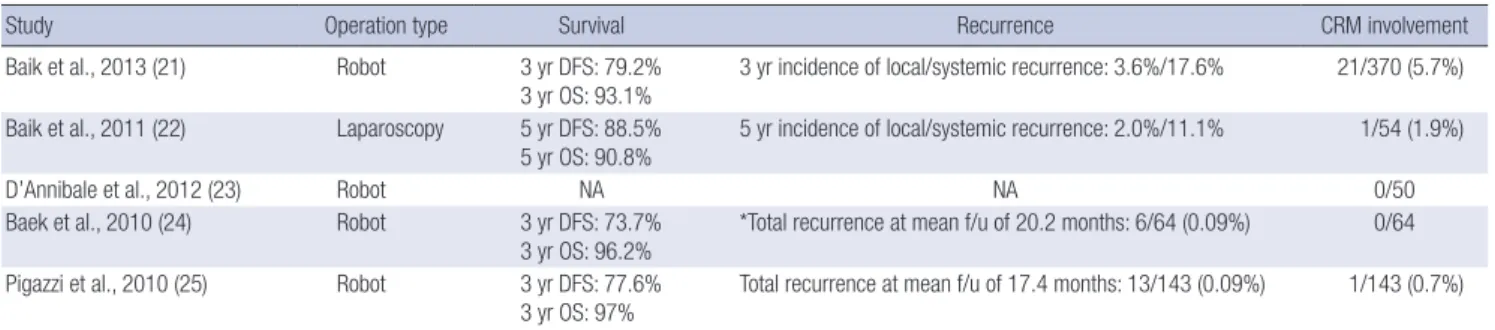
Comparable or improved oncologic outcomes of robotic surgery In several nonrandomized studies using participants from a single health center in Korea, robotic surgery for rectal cancer is associated with better oncologic outcomes. Baik et al. (21) re
ported that the threeyear overall survival and threeyear dis
easefree survival rates in patients who underwent robotic rec
tal surgery were 93.1% and 79.2%, respectively. In the present study, the CRM involvement rate, which represents a negative impact on oncologic outcomes, was 5.7%, and the threeyear
Park S, et al. • Role of Robotic Surgery for Rectal Cancer
cumulative incidence of local recurrence was 3.6%. These re
sults are similar to previous studies that evaluated the oncologic outcomes of conventional laparoscopic surgery for rectal can
cer (22). Besides, there are some studies showing totally nega
tive circumferential resection margin which lead to favorable oncologic outcomes. The authors in these studies claim that the negative resection margin rate may reflect better visualization and ergonomics with robotic technology (23, 24). In a multi
centric study of robotic TME by Pigazzi et al. (25), remarkable shortterm clinical outcomes were identified. The threeyear overall survival rate was 97% in 143 consecutive patients with rectal cancer who underwent robotic surgery, and no isolated local recurrence was found during the mean followup period of 17.4 months. This study did not have a control group, had a relatively short followup period, and involved the extensive use of neoadjuvant chemoradiation. However, the results indi
cate that robotic surgery improves survival rate and patient qual
ity of life (Table 1).
Robotic-assisted rectal surgery may be a good treatment option in the future
Totally robotic rectal surgery-single docking technique
We briefly describe the procedure of totally robotic rectal sur
gery with a singledocking technique as performed in our insti
tution. Totally robotic rectal surgeries using the da Vinci Surgi
cal System consist of two phases: the lateral phase and the pel
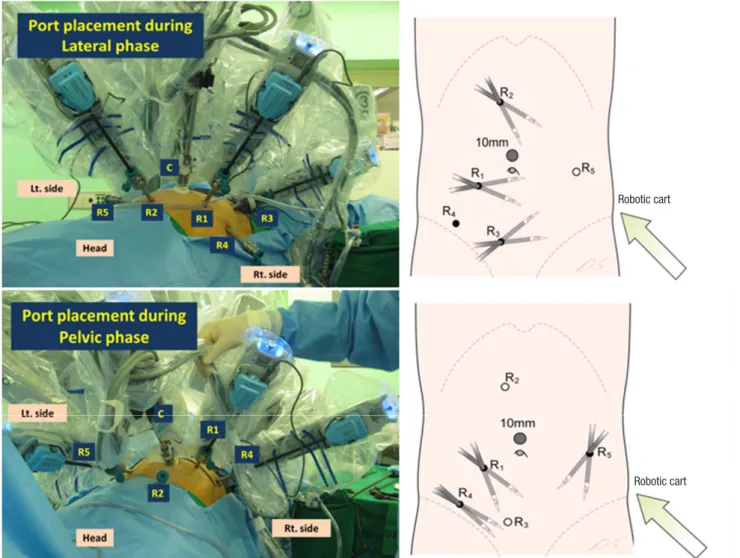
vic phase. During all processes, the robotic surgical cart is fixed, and the patient’s position does not change. The robotic surgical cart is located at the left caudal side of the surgical table. An as
sistant stands at the patient’s right side in order to avoid mirror imaging during the operation. We used a sixport system includ
ing a camera port to perform rectal cancer surgery from the sple
nic flexure to the pelvic diaphragm without any change in the initial setup. Of the five working ports, one is used for dissec
tion, another is used for traction and a third is used for the sur
geon’s nondominant hand. The remaining ports are used for the assistant’s hand or application of the endolinear stapler at the end of the pelvic phase (Fig. 1).
The procedure during the lateral phase includes medial to
lateral dissection from the sacral promontory to the splenic flex
ure along the avascular plane, dissection of tissuebearing lymph nodes around the root of the inferior mesenteric artery, ligation and division of the inferior mesenteric artery, and splenic flex
ure mobilization if needed. Procedures during the pelvic phase include dissection of the pelvic cavity along the plane between the mesorectal fascia proper and the parietal pelvic fascia pre
serving the pelvic autonomic nerve plexus, division of the me
sorectum if needed, and division of the rectum with the endolin
ear stapler. Finally, anastomosis is performed laparoscopically or under direct vision after removal of the specimen through the Pfannelstiel skin incision made by extension of the port site (26).
Improved performance and safety for intracorporeal suturing Stefanidis et al. (27) showed that robotic assistance led to im
proved suturing performance by novice surgeons, limited the number of inadvertent injuries to structures outside the operat
ing field, and decreased operator workload in a live animal mo
del. They also showed a shorter learning curve for intracorpo
real suturing with robotic assistance compared with laparosco
py. Suturing and knottying with robotic assistance were easier as evidenced by the higher participant performance scores, im
proved ability to complete the task within the allowed time, and rapid improvement in score from the first to third attempt. An
other study comparing robotic suture technique to laparoscop
ic suture techniq ue showed that the advantage about intracor
poreal suturing in robot was presented not only in novice group but also in expert group. This result means that robotic device is feasible regardless of amount of laparoscopic experience (28).
The intracorporeal suture technique could allow for greater tech
nical performance and accuracy in delicate operative fields. Dur
ing an operation, surgeons sometime encounter unwanted events, such as bowel injury and bleeding, and robotic suturing could help surgeons to resolve these difficult situations, especially in narrow spaces. Additionally, the improved performance and accuracy afforded by robotic instruments allows surgeons to get closer to a natural orifice transluminal endoscopic surgery.
Previously, Park et al. reported on the usefulness of a hybrid technique that eliminated the need for minilaparotomy for re
Table 1. Oncologic outcomes of robotic surgery
Study Operation type Survival Recurrence CRM involvement
Baik et al., 2013 (21) Robot 3 yr DFS: 79.2%
3 yr OS: 93.1%
3 yr incidence of local/systemic recurrence: 3.6%/17.6% 21/370 (5.7%) Baik et al., 2011 (22) Laparoscopy 5 yr DFS: 88.5%
5 yr OS: 90.8% 5 yr incidence of local/systemic recurrence: 2.0%/11.1% 1/54 (1.9%)
D’Annibale et al., 2012 (23) Robot NA NA 0/50
Baek et al., 2010 (24) Robot 3 yr DFS: 73.7%
3 yr OS: 96.2% *Total recurrence at mean f/u of 20.2 months: 6/64 (0.09%) 0/64 Pigazzi et al., 2010 (25) Robot 3 yr DFS: 77.6%
3 yr OS: 97%
Total recurrence at mean f/u of 17.4 months: 13/143 (0.09%) 1/143 (0.7%)
*Percentage of total recurrence counts during entire F/U period. DFS, disease free survival; OS, overall survival; CRM, circumferential resection margin.
moval a specimen through the anus or vagina after complete intracorporeal resection and anastomosis in the rectal cancer using robotic intracorporeal suture (29, 30). This study showed not only how easy a surgeon manipulated the robotic devices but also how accurate movement of the robotic device was dur
ing an operation.
Robotics to reduce conversion rate
A metaanalysis undertaken by Memon et al. (31) included sev
en refined review articles and analyzed a total of 353 robotas
sisted laparoscopic proctectomies and 401 conventional lapa
roscopic proctectomies. The overall conversion rate was higher for laparoscopic surgery compared to robotic surgery in all stud
ies (total risk difference:0.07 (95%CI, 0.12 ~ 0.01), Heteroge
neity, I² = 80%, P = 0.03), and overall operation time was not significantly different (total risk difference, 2.96 [95%CI, 0.12 ~
0.01], Heterogeneity, I² = 95%, P = 0.19). Scarpinata et al. (32) reported that the conversion rate in robotic rectal surgery (1%
to 7.3%) was lower than in laparoscopic rectal surgery (3% to 22%), and the author claimed that the robotic approach was
more optimal in difficult cases such as previous abdominal sur
gery, lower rectal cancers, lower rectal cancers and previous chemoradiation therapy.
Baek et al. (33) performed a retrospective study comparing shortterm and longterm outcomes between robotic and lapa
roscopic ultralow anterior resection with or without coloanal anastomosis. They showed that robotic surgery is a safe and fea
sible approach with a lower conversion rate, a shorter hospital stay and similar oncologic outcomes compared with laparosco
pic surgery. As previously mentioned, conversions have been associated suboptimal outcomes in terms of morbidity and mor
tality. Therefore, a relatively low conversion rate in robotic rec
tal surgery may indicate favorable longterm clinical outcomes.
Learning curve
In a study analyzed a learning curve in laparoscopic surgery us
ing the moving average method for operative time, they showed that the surgeon typically became proficient in laparoscopic low anterior resection for rectal cancer after 50 cases. This was simi
lar to previous studies, in which the learning curve for laparo
Fig. 1. Placement of ports for totally robotic rectal surgery.
Robotic cart
Robotic cart
Park S, et al. • Role of Robotic Surgery for Rectal Cancer
scopic colectomy ranged from 30 to 70 cases (34).
In some studies focused on the learning curve for robotic rec
tal surgery, operative time and console time decreased remark
ably after about 20 cases. The threedimensional view and the ability of the robot to transfer the surgeon’s hand movements to the tips of the surgical instruments might greatly decrease the learning curve of robotic surgery compared to that of laparosco
pic colorectal surgery. In addition, the technical advantages de
scribed above enable inexperienced laparoscopic surgeons to operate the robot safely and easily (5, 3537). However, recent studies of a large number of patients, in which multiple meth
ods for evaluating learning curves were analyzed, have shown different results. The studies used not only operative time but also surgical outcomes related to risk factors as a tool for evalu
ating learning curves. Among the results of a multidimensional analysis, studies have shown that there is multiphasic learning curve and initial learning period up to 3244 cases (3840). In these studies, the reason why the learning curve of robotic rec
tal surgery is not shorter than conventional laparoscopic sur
gery, despite easy manipulation of the robotic console, was ab
sence of haptic sensation. If this drawback is overcome, the learn
ing curve is expected to be shortened due to the technical ad
vantages described above. Additionally, the reason why the learn
ing curve consisted of two peaks and three phases was that tech
nical competence to reduce an operative time was achieved in
the initial phase. Surgical completion to overcome difficult cas
es, such as lower tumor location and obese patients, or to reduce surgical failure was achieved in the second phase. Hereafter, a comparative analysis of learning curves between robot and lap
aroscopy using a multidimensional analytic method is neces
sary to demonstrate the advantages of robotic techniques.
Preservation of autonomic nerve system
Some studies have raised the concern that laparoscopic meso
rectal excisions may be associated with urinary and sexual dys
function, which is not typically an issue in conventional open surgery. Sexual function and behavior after laparoscopic total mesorectal excision were remarkably reduced compared to those before the operation or after open surgery (4143).
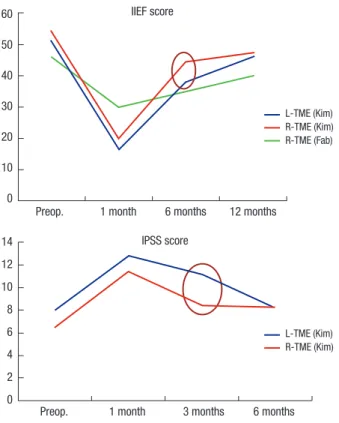
Three studies evaluating genitourinary function after robotic rectal surgery reported that postoperative sexual dysfunction improved one month after surgery and recovered gradually there
after. Kim et al. reported that the robotic group showed earlier functional recovery than the laparoscopic group (Fig. 2), and D’Annibale et al. reported that erectile function was restored completely in the robotic group and partially restored in the laparoscopic group. All of the authors agreed that it was easier to identify the nerves and the planes of dissection using the ro
Fig. 2. Changes in IIEF score and IPSS before surgery and several months after sur- gery. IIEF, international index of erectile function; IPSS, international prostate symptom score; L/R-TME, laparoscopic/robot-assisted total mesorectal excision. Red circle, R- TME allowed for an earlier recovery. Kim (43); Fab (44).
Preop. 1 month 6 months 12 months 60
50 40 30 20 10 0
IIEF score
L-TME (Kim) R-TME (Kim) R-TME (Fab)
IPSS score
Preop. 1 month 3 months 6 months 14
12 10 8 6 4 2 0
L-TME (Kim) R-TME (Kim)
Fig. 3. Preservation of autonomic nerve system related to genitourinary function (43).
botic system (Fig. 3) (23, 44, 45).
Anatomic deep pelvic dissection
Robotic pelvic lymph node dissection for locally advanced rectal cancer
Studies about lateral pelvic sidewall recurrence in advanced rectal cancer advocate that lateral pelvic lymph node dissection should be performed, because the overall incidence of metas
tasis to lateral pelvic lymph nodes ranges from 8.6 to 27%. This result associates with positive nodes which are not cleared in patients who undergo TME only (4648). One recent study sug
gested that lateral pelvic side wall recurrence is a major cause of locoregional recurrence in patients treated with neoadjuvant chemoradiotherapy followed by TME (49). However, lateral pel
vic lymph node dissection, in itself, can increase blood loss, uri
nary and sexual dysfunction, and longer operation times with
out survival benefits (47, 50, 51). Nonetheless, surgeons have demonstrated the feasibility and safety of a robotic approach for pelvic lymph node dissection for radical surgery, although these reports are outside the field of colorectal surgery (52, 53).
If precise lymphovascular dissection with advanced robotic tech
niques applies to locally advanced rectal cancer requiring pel
vic lymph node dissection, then radical surgery can be perform
ed more safely and more easily.
Sphincter preservation and intersphincteric dissection Intersphincteric dissection is one of the hardest forms of rectal surgical procedures. The procedure is associated with favorable longterm oncological and functional outcomes (54, 55). The technical advantages of robotic surgery, including accurate dis
section and clear visibility, are particularly useful qualities dur
ing pelvic dissection, especially because the cul de sac is very confined, and the pelvic structures adjacent to the rectum are easily injured (56). In addition, the robotic approach helps im
prove intersphincteric dissection, which in turns decreases the duration of the perineal procedure. As a result, robotic intersph
incteric dissection has led to several improved functional out
comes (57). Further prospective randomized trials are needed to clarify the findings of recent studies about robotic intersphinc
teric dissection.
Transabdominal division of the levator muscle
One study suggested new criteria to preserve the sphincter in ultralow rectal cancer at the levator muscle level. Technically, the procedure is challenging, but with the endowrist advan
tage of the robotic system, the abdominal phase becomes easi
er. Also, perineal phase dissection can be simplified via an ap
proach to the levator ani from the abdominal phase and divi
sion at its origin. This method allows a preferred shallow shape of the levator ani plate, complicating the perineal phase due to the high location of the levator origin. This procedure preserv
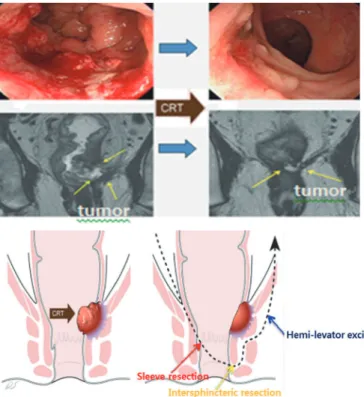
ing anus can be safe and feasible in the cases which were down
sized after chemoradiation therapy (Fig. 4). However, longterm functional and oncological outcomes still need to be assessed after loop ileostomy reversal (58).
The lower rectum has a relatively thin mesorectal envelope because the mesorectum cones along the levator muscles end at the level of the puborectalis muscle. Poor visibility and inad
equate surgical exposure in the deep pelvis as well as this ana
tomical coning result in high circumferential margin (CRM) pos
itivity of tumors within 5 cm of the anal verge. Abdominal peri
neal resection (APR) can lead to higher CRM positivity than low anterior resection because it involves the blind perineal approach phase. CRM positivity is a predictive factor for local recurrence and diseasefree survival (59). The extralevator approach to APR is associated with lower CRM positivity and incidence of rectal perforation, and as a result, the rate of local recurrence may de
crease. However, approaching the levator muscles through the perineum remains difficult due to the blind approach. This can be overcome using robotic assistance to perform the transab
dominal transection of levator muscles under direct visualiza
tion (Fig. 5). Marecik et al. (60) reported excellent immediate postoperative and pathological results of robotic abdomino
perineal resection with transabdominal levator transection in
volving wide excision of the levator muscles, even though it was a small study with only five participants. An intact fascia propria and negative circumferential resection margin were achieved in all cases, and all specimens had a cylindrical shape.
Fig. 4. Multimodality treatment preserving anus: Neoadjuvant chemoradiation therapy and robotic rectal sleeve resection with colo-anal anastomosis (57).
Park S, et al. • Role of Robotic Surgery for Rectal Cancer
The use of indocyanine green fluorescence imaging methods in robotic surgery
Anastomotic leakage is a major lifethreatening complication that can lead to frequent reoperations, multiple drainage pro
cedures, and in rare cases, death. There are many factors asso
ciated with anastomotic leakage including male gender, level of anastomosis (less than 5 cm), and preoperative radiation (61).
Furthermore, perfusion abnormalities and technical factors which is caused by surgeons may become additional adverse factors (62).
Predictive tests for anastomotic leakage include active bleed
ing from the resection margin, palpable pulsation in the mes
entery and lack of discoloration. However, these measures are highly unreliable and fail to accurately predict postoperative leakage. (63). Indocyanine green (ICG) is a sterile, watersolu
ble, tricarnocyanine compound that absorbs near infrared (NIR) light with a peak spectral absorption at 800 nm. When ICG is injected intravenously, it rapidly and extensively binds to plas
ma protein and remains intravascular with minimal leakage into the interstitium. ICG fluorescene can be seen by the NIR camera system (64). Jafari et al. (65) showed that determination of resection point by ICG fluorescene during robotassisted low anterior resection decreased anastomotic leakage. Kudszus et al. (66) used laser fluorescene angiography with ICG and a la
sermounted scope to visualize the tissue perfusion and report
ed a 60% reduction in reoperation for anastomotic leaks. ICG
imaging can also be applied to vessel division and ligation with
out adjacent tissue injury (67).
Cost effectiveness of robotic surgery
Cost is a major drawback of robotic rectal surgery. In a costcom
parison analysis between robotic rectal surgery and laparosco
pic rectal surgery, Baek et al. (68) reported that robotic surgery is significantly more expensive than laparoscopic surgery for rectal cancer, with total hospital charges approximately 1.5 times higher in the robotic group compared to the laparoscopic group (13,644 USD vs. 9,065 USD, respectively; P < 0.001). Moreover, actual payments by patients were also significantly higher in the robotic group than the laparoscopic group, which the pay
ment was almost three times as much in the robotic group com
pared to the laparoscopic group (11,540 USD vs. 3,956 USD, re
spectively; P < 0.001), but the total hospital charge and payment were decreasing according to accumulation of cases. In addi
tion, hospital profit was significantly lower in the robotic group (689 USD vs. 1,671 USD respectively; P < 0.001) (Fig. 6). How
ever, the authors pointed out that this was not a costeffective
ness study, but a costanalysis study.
For the popularization of robotic surgery, first of all, medical insurance cost should be adjusted and then patients sharing of the medical cost should be down. Second, in order to justify the high cost of robotic surgery, it must be shown that robotic sur
gery is significantly better than other methods in terms of onco
logic and functional outcomes, especially in difficult cases such as those involving preoperative chemoradiation therapy, obese patients, patients with a relatively narrow pelvis, or large tumors.
Fig. 5. The difference between conventional abdominoperineal resection and extrale- vator abdominoperineal resection using robotic assistance.
Figure 5
Conventional abdominoperineal resection
Extralevator abdominoperineal resection using robotic assistance
Transabdominal approach
Transabdominal approach Perineal approach
Perineal approach Fig. 6. Changes of cost according to accumulation of cases in robotic surgery (67).
Total hospital charges and payments (USD)
Period (50 cases)
Early Mid Late
18,000 16,000 14,000 12,000 10,000 8,000 6,000 4,000 2,000 0
Total hospital charges (Robot) Compensated charges (Robot) Payments (Robot)
Total hospital charges (Laparoscopy) Compensated charges (Laparoscopy) Payments (Laparoscopy)
CONCLUSION
In conclusion, robotic surgery for rectal cancer is a novel tech
nique that has advanced the treatment of rectal cancer. Robotic surgery seems to address most of the shortcomings of laparo
scopic surgery and is proven to be safe, easy to learn, and physi
cal less taxing for surgeons. However, the high cost of robotic surgery is a major drawback. Robotic surgery may not become widespread until its obvious superiority over other methods is demonstrated in terms of oncologic and functional outcomes.
Presently, randomized trials to support roboticassisted sur
gery for rectal cancer such as the Robotic versus LAparoscopic Resection for Rectal cancer (ROLARR) trial and Comparison of LaparoscopicAssisted vs. RobotAssisted surgery for rectal can
cer study Group (COLARAR) trial are ongoing to address this issue. We expect that the results from these trials will help es
tablish the robotic approach as the new standard treatment in rectal cancer surgery.
DISCLOSURE
The authors have no potential conflicts of interest or financial ties to disclose.
AUTHOR CONTRIBUTION
Design of article: Kim NK. Writing first draft: Park S. Revision:
Kim NK. Approval of final manuscript and agreement of sub
mission: Kim NK, Park S.
ORCID
Seungwan Park http://orcid.org/0000-0002-0350-2829 Nam Kyu Kim http://orcid.org/0000-0003-0639-5632
REFERENCES
1. Kim NK, Kim MS, AlAsari SF. Update and debate issues in surgical treat- ment of middle and low rectal cancer. J Korean Soc Coloproctol 2012; 28:
230-40.
2. Kim NK, Baik SH, Seong JS, Kim H, Roh JK, Lee KY, Sohn SK, Cho CH.
Oncologic outcomes after neoadjuvant chemoradiation followed by cu- rative resection with tumor-specific mesorectal excision for fixed locally advanced rectal cancer: Impact of postirradiated pathologic downstag- ing on local recurrence and survival. Ann Surg 2006; 244: 1024-30.
3. Engstrom PF, Arnoletti JP, Benson AB 3rd, Chen YJ, Choti MA, Cooper HS, Covey A, Dilawari RA, Early DS, Enzinger PC, et al.; National Com
prehensive Cancer Network. NCCN Clinical Practice Guidelines in On- cology: rectal cancer. J Natl Compr Canc Netw 2009; 7: 838-81.
4. van Gijn W, Marijnen CA, Nagtegaal ID, Kranenbarg EM, Putter H, Wig
gers T, Rutten HJ, Påhlman L, Glimelius B, van de Velde CJ, et al.; Dutch Colorectal Cancer Group. Preoperative radiotherapy combined with to-
tal mesorectal excision for resectable rectal cancer: 12-year follow-up of the multicentre, randomised controlled TME trial. Lancet Oncol 2011;
12: 575-82.
5. Aly EH. Robotic colorectal surgery: summary of the current evidence. Int J Colorectal Dis 2014; 29: 1-8.
6. Guillou PJ, Quirke P, Thorpe H, Walker J, Jayne DG, Smith AM, Heath RM, Brown JM; MRC CLASICC trial group. Short-term endpoints of con- ventional versus laparoscopic-assisted surgery in patients with colorectal cancer (MRC CLASICC trial): multicentre, randomised controlled trial.
Lancet 2005; 365: 1718-26.
7. Kang SB, Park JW, Jeong SY, Nam BH, Choi HS, Kim DW, Lim SB, Lee TG, Kim DY, Kim JS, et al. Open versus laparoscopic surgery for mid or low rectal cancer after neoadjuvant chemoradiotherapy (COREAN tri- al): short-term outcomes of an open-label randomised controlled trial.
Lancet Oncol 2010; 11: 637-45.
8. Clinical Outcomes of Surgical Therapy Study Group. A comparison of laparoscopically assisted and open colectomy for colon cancer. N Engl J Med 2004; 350: 2050-9.
9. Leung KL, Kwok SP, Lam SC, Lee JF, Yiu RY, Ng SS, Lai PB, Lau WY. Lap- aroscopic resection of rectosigmoid carcinoma: prospective randomised trial. Lancet 2004; 363: 1187-92.
10. Milsom JW, Böhm B, Hammerhofer KA, Fazio V, Steiger E, Elson P. A prospective, randomized trial comparing laparoscopic versus conven- tional techniques in colorectal cancer surgery: a preliminary report. J Am Coll Surg 1998; 187: 46-54; discussion -5.
11. van der Pas MH, Haglind E, Cuesta MA, Fürst A, Lacy AM, Hop WC, Bonjer HJ, COlorectal cancer Laparoscopic or Open Resection II (COL
OR II) Study Group. Laparoscopic versus open surgery for rectal cancer (COLOR II): short-term outcomes of a randomised, phase 3 trial. Lancet Oncol 2013; 14: 210-8.
12. Kim NK, Kang J. Optimal Total Mesorectal Excision for Rectal Cancer:
the Role of Robotic Surgery from an Expert’s View. J Korean Soc Colo- proctol 2010; 26: 377-87.
13. Kwak JM, Kim SH, Kim J, Son DN, Baek SJ, Cho JS. Robotic vs laparo- scopic resection of rectal cancer: short-term outcomes of a case-control study. Dis Colon Rectum 2011; 54: 151-6.
14. Shearer R, Gale M, Aly O, Aly E. Have early postoperative complications from laparoscopic rectal cancer surgery improved over the past 20 years?
Colorectal Dis 2013; 15: 1211-26.
15. Kim SH, Kwak JM. Robotic total mesorectal excision: operative technique and review of the literature. Tech Coloproctol 2013; 17: S47-53.
16. Baik SH. Robotic colorectal surgery. Yonsei Med J 2008; 49: 891-6.
17. Bianchi PP, Luca F, Petz W, Valvo M, Cenciarelli S, Zuccaro M, Biffi R.
The role of the robotic technique in minimally invasive surgery in rectal cancer. Ecancermedicalscience 2013; 7: 357.
18. Rottoli M, Bona S, Rosati R, Elmore U, Bianchi PP, Spinelli A, Bartolucci C, Montorsi M. Laparoscopic rectal resection for cancer: effects of con- version on short-term outcome and survival. Ann Surg Oncol 2009; 16:
1279-86.
19. Baik SH, Ko YT, Kang CM, Lee WJ, Kim NK, Sohn SK, Chi HS, Cho CH.
Robotic tumor-specific mesorectal excision of rectal cancer: short-term outcome of a pilot randomized trial. Surg Endosc 2008; 22: 1601-8.
20. Baik SH, Lee WJ, Rha KH, Kim NK, Sohn SK, Chi HS, Cho CH, Lee SK, Cheon JH, Ahn JB, et al. Robotic total mesorectal excision for rectal can- cer using four robotic arms. Surg Endosc 2008; 22: 792-7.
Park S, et al. • Role of Robotic Surgery for Rectal Cancer
21. Baik SH, Kim NK, Lim DR, Hur H, Min BS, Lee KY. Oncologic outcomes and perioperative clinicopathologic results after robot-assisted tumor- specific mesorectal excision for rectal cancer. Ann Surg Oncol 2013; 20:
2625-32.
22. Baik SH, Gincherman M, Mutch MG, Birnbaum EH, Fleshman JW. Lap- aroscopic vs open resection for patients with rectal cancer: comparison of perioperative outcomes and long-term survival. Dis Colon Rectum 2011; 54: 6-14.
23. D’Annibale A, Pernazza G, Monsellato I, Pende V, Lucandri G, Mazzoc
chi P, Alfano G. Total mesorectal excision: a comparison of oncological and functional outcomes between robotic and laparoscopic surgery for rectal cancer. Surg Endosc 2013; 27: 1887-95.
24. Baek JH, McKenzie S, GarciaAguilar J, Pigazzi A. Oncologic outcomes of robotic-assisted total mesorectal excision for the treatment of rectal can- cer. Ann Surg 2010; 251: 882-6.
25. Pigazzi A, Luca F, Patriti A, Valvo M, Ceccarelli G, Casciola L, Biffi R, Gar
ciaAguilar J, Baek JH. Multicentric study on robotic tumor-specific me- sorectal excision for the treatment of rectal cancer. Ann Surg Oncol 2010;
17: 1614-20.
26. Park YA, Kim JM, Kim SA, Min BS, Kim NK, Sohn SK, Lee KY. Totally robotic surgery for rectal cancer: from splenic flexure to pelvic floor in one setup. Surg Endosc 2010; 24: 715-20.
27. Stefanidis D, Wang F, Korndorffer JR Jr, Dunne JB, Scott DJ. Robotic as- sistance improves intracorporeal suturing performance and safety in the operating room while decreasing operator workload. Surg Endosc 2010;
24: 377-82.
28. Chandra V, Nehra D, Parent R, Woo R, Reyes R, HernandezBoussard T, Dutta S. A comparison of laparoscopic and robotic assisted suturing per- formance by experts and novices. Surgery 2010; 147: 830-9.
29. Choi GS, Park IJ, Kang BM, Lim KH, Jun SH. A novel approach of robot- ic-assisted anterior resection with transanal or transvaginal retrieval of the specimen for colorectal cancer. Surg Endosc 2009; 23: 2831-5.
30. Park JS, Choi GS, Lim KH, Jang YS, Jun SH. S052: a comparison of robot- assisted, laparoscopic, and open surgery in the treatment of rectal can- cer. Surg Endosc 2011; 25: 240-8.
31. Memon S, Heriot AG, Murphy DG, Bressel M, Lynch AC. Robotic versus laparoscopic proctectomy for rectal cancer: a meta-analysis. Ann Surg Oncol 2012; 19: 2095-101.
32. Scarpinata R, Aly EH. Does robotic rectal cancer surgery offer improved early postoperative outcomes? Dis Colon Rectum 2013; 56: 253-62.
33. Baek SJ, AlAsari S, Jeong DH, Hur H, Min BS, Baik SH, Kim NK. Robotic versus laparoscopic coloanal anastomosis with or without intersphinc- teric resection for rectal cancer. Surg Endosc 2013; 27: 4157-63.
34. Kayano H, Okuda J, Tanaka K, Kondo K, Tanigawa N. Evaluation of the learning curve in laparoscopic low anterior resection for rectal cancer.
Surg Endosc 2011; 25: 2972-9.
35. JiménezRodríguez RM, DíazPavón JM, de la Portilla de Juan F, Prendes
Sillero E, Dussort HC, Padillo J. Learning curve for robotic-assisted lapa- roscopic rectal cancer surgery. Int J Colorectal Dis 2013; 28: 815-21.
36. Kim YW, Lee HM, Kim NK, Min BS, Lee KY. The learning curve for ro- bot-assisted total mesorectal excision for rectal cancer. Surg Laparosc Endosc Percutan Tech 2012; 22: 400-5.
37. Bokhari MB, Patel CB, RamosValadez DI, Ragupathi M, Haas EM. Learn- ing curve for robotic-assisted laparoscopic colorectal surgery. Surg En- dosc 2011; 25: 855-60.
38. Park EJ, Kim CW, Cho MS, Baik SH, Kim DW, Min BS, Lee KY, Kim NK.
Multidimensional analyses of the learning curve of robotic low anterior resection for rectal cancer: 3-phase learning process comparison. Surg Endosc 2014; 28: 2821-31.
39. Kim HJ, Choi GS, Park JS, Park SY. Multidimensional analysis of the learn- ing curve for robotic total mesorectal excision for rectal cancer: lessons from a single surgeon’s experience. Dis Colon Rectum 2014; 57: 1066-74.
40. Sng KK, Hara M, Shin JW, Yoo BE, Yang KS, Kim SH. The multiphasic learning curve for robot-assisted rectal surgery. Surg Endosc 2013; 27:
3297-307.
41. Jayne DG, Brown JM, Thorpe H, Walker J, Quirke P, Guillou PJ. Bladder and sexual function following resection for rectal cancer in a random- ized clinical trial of laparoscopic versus open technique. Br J Surg 2005;
92: 1124-32.
42. Sartori CA, Sartori A, Vigna S, Occhipinti R, Baiocchi GL. Urinary and sexual disorders after laparoscopic TME for rectal cancer in males. J Gas- trointest Surg 2011; 15: 637-43.
43. Morino M, Parini U, Allaix ME, Monasterolo G, Brachet Contul R, Gar
rone C. Male sexual and urinary function after laparoscopic total meso- rectal excision. Surg Endosc 2009; 23: 1233-40.
44. Kim JY, Kim NK, Lee KY, Hur H, Min BS, Kim JH. A comparative study of voiding and sexual function after total mesorectal excision with auto- nomic nerve preservation for rectal cancer: laparoscopic versus robotic surgery. Ann Surg Oncol 2012; 19: 2485-93.
45. Luca F, Valvo M, Ghezzi TL, Zuccaro M, Cenciarelli S, Trovato C, Son
zogni A, Biffi R. Impact of robotic surgery on sexual and urinary func- tions after fully robotic nerve-sparing total mesorectal excision for rectal cancer. Ann Surg 2013; 257: 672-8.
46. Ueno H, Mochizuki H, Hashiguchi Y, Hase K. Prognostic determinants of patients with lateral nodal involvement by rectal cancer. Ann Surg 2001; 234: 190-7.
47. Fujita S, Yamamoto S, Akasu T, Moriya Y. Lateral pelvic lymph node dis- section for advanced lower rectal cancer. Br J Surg 2003; 90: 1580-5.
48. Moriya Y, Sugihara K, Akasu T, Fujita S. Importance of extended lymph- adenectomy with lateral node dissection for advanced lower rectal can- cer. World J Surg 1997; 21: 728-32.
49. Kim TH, Jeong SY, Choi DH, Kim DY, Jung KH, Moon SH, Chang HJ, Lim SB, Choi HS, Park JG. Lateral lymph node metastasis is a major cause of locoregional recurrence in rectal cancer treated with preoperative che- moradiotherapy and curative resection. Ann Surg Oncol 2008; 15: 729- 37.
50. Stearns MW Jr, Deddish MR. Five-year results of abdominopelvic lymph node dissection for carcinoma of the rectum. Dis Colon Rectum 1959; 2:
169-72.
51. Moriya Y, Hojo K, Sawada T, Koyama Y. Significance of lateral node dis- section for advanced rectal carcinoma at or below the peritoneal reflec- tion. Dis Colon Rectum 1989; 32: 307-15.
52. Marshall SJ, Hayn MH, Stegemann AP, Agarwal PK, Badani KK, Balbay MD, Dasgupta P, Hemal AK, Hollenbeck BK, Kibel AS, et al. Impact of surgeon and volume on extended lymphadenectomy at the time of robot- assisted radical cystectomy: results from the International Robotic Cys- tectomy Consortium (IRCC). BJU Int 2013; 111: 1075-80.
53. Lee YS, Chong GO, Lee YH, Hong DG, Cho YL, Park IS. Robot-assisted total preservation of the pelvic autonomic nerve with extended system- atic lymphadenectomy as part of nerve-sparing radical hysterectomy for
cervical cancer. Int J Gynecol Cancer 2013; 23: 1133-8.
54. Zhang YJ, Yin L, Huang L, Zhang HB, Han Y, Lin MB. Long-term results of intersphincteric resection for low rectal cancer. J Invest Surg 2013; 26:
217-22.
55. Yamada K, Ogata S, Saiki Y, Fukunaga M, Tsuji Y, Takano M. Long-term results of intersphincteric resection for low rectal cancer. Dis Colon Rec- tum 2009; 52: 1065-71.
56. Pigazzi A, Ellenhorn JD, Ballantyne GH, Paz IB. Robotic-assisted lapa- roscopic low anterior resection with total mesorectal excision for rectal cancer. Surg Endosc 2006; 20: 1521-5.
57. Park SY, Choi GS, Park JS, Kim HJ, Ryuk JP. Short-term clinical outcome of robot-assisted intersphincteric resection for low rectal cancer: a retro- spective comparison with conventional laparoscopy. Surg Endosc 2013;
27: 48-55.
58. AlAsari S, Lim D, Kim N. Robotic hemi-levator excision for low rectal can- cer: a novel technique for sphincter preservation. OA Robot Surg 2013; 1: 3.
59. Marr R, Birbeck K, Garvican J, Macklin CP, Tiffin NJ, Parsons WJ, Dixon MF, Mapstone NP, SebagMontefiore D, Scott N, et al. The modern ab- dominoperineal excision: the next challenge after total mesorectal exci- sion. Ann Surg 2005; 242: 74-82.
60. Marecik SJ, Zawadzki M, Desouza AL, Park JJ, Abcarian H, Prasad LM.
Robotic cylindrical abdominoperineal resection with transabdominal levator transection. Dis Colon Rectum 2011; 54: 1320-5.
61. Choi HK, Law WL, Ho JW. Leakage after resection and intraperitoneal
anastomosis for colorectal malignancy: analysis of risk factors. Dis Co- lon Rectum 2006; 49: 1719-25.
62. Kingham TP, Pachter HL. Colonic anastomotic leak: risk factors, diag- nosis, and treatment. J Am Coll Surg 2009; 208: 269-78.
63. Karliczek A, Harlaar NJ, Zeebregts CJ, Wiggers T, Baas PC, van Dam GM.
Surgeons lack predictive accuracy for anastomotic leakage in gastroin- testinal surgery. Int J Colorectal Dis 2009; 24: 569-76.
64. Alander JT, Kaartinen I, Laakso A, Pätilä T, Spillmann T, Tuchin VV, Ve
nermo M, Välisuo P. A review of indocyanine green fluorescent imaging in surgery. Int J Biomed Imaging 2012; 2012: 940585.
65. Jafari MD, Lee KH, Halabi WJ, Mills SD, Carmichael JC, Stamos MJ, Pi
gazzi A. The use of indocyanine green fluorescence to assess anastomotic perfusion during robotic assisted laparoscopic rectal surgery. Surg En- dosc 2013; 27: 3003-8.
66. Kudszus S, Roesel C, Schachtrupp A, Höer JJ. Intraoperative laser fluo- rescence angiography in colorectal surgery: a noninvasive analysis to re- duce the rate of anastomotic leakage. Langenbecks Arch Surg 2010; 395:
1025-30.
67. Bae SU, Baek SJ, Hur H, Baik SH, Kim NK, Min BS. Intraoperative near infrared fluorescence imaging in robotic low anterior resection: three case reports. Yonsei Med J 2013; 54: 1066-9.
68. Baek SJ, Kim SH, Cho JS, Shin JW, Kim J. Robotic versus conventional laparoscopic surgery for rectal cancer: a cost analysis from a single insti- tute in Korea. World J Surg 2012; 36: 2722-9.