ABSTRACT
Background: Exposure to organic dust has been widely investigated as a potential risk
factor for asthma with different results. To clarify a potential relationship, we performed the present meta-analysis to integrate the results of studies examining the association of organic dust exposure with asthma.
Methods: A comprehensive literature search in the electronic databases including EMBASE,
PubMed and Cochrane Library databases (up to August 2018) was conducted. The adjusted odds ratios (ORs) with corresponding 95% confidence interval (CI) for organic dust exposure and asthma were retrieved and pooled to generate summary effect estimates in Revman 5.2.
Results: Database searches retrieved 1,016 records. A total of 17 studies containing 3,619
cases and 6,585 controls were finally included in our meta-analysis. The summary estimates suggested that organic dust exposure was positively associated with asthma (OR, 1.48; 95%
CI, 1.26–1.75; P < 0.00001), whether among population-based case-control studies (OR, 1.24;
95% CI, 1.13–1.35; P < 0.00001) or hospital-based case-control studies (OR, 2.79; 95% CI, 1.27–6.12; P = 0.01). Subgroup analysis showed that paper/wood (OR, 1.62; 95% CI, 1.38–1.90;
P < 0.00001), flour/grain (OR, 1.48; 95% CI, 1.11–1.97; P = 0.008), and textile dust (OR, 1.50;
95% CI, 1.08–2.09; P = 0.02) exposure were significantly associated with asthma.
Conclusions: Based on the studies evaluated, our meta-analysis results prompt that organic
dust exposure is a risk factor inducing asthma, although precise analysis focus on specific organic dust materials is still warranted.
Keywords:
Asthma; dust; meta-analysis; case-control studies
INTRODUCTION
Organic dust is an aggregate of viable and non-viable particulate matter from microbial (bacteria, fungi, viruses and protozoa), their metabolites (mycotoxins, peptidoglycans, endotoxins, glucans, enzymes, etc.), plant or animal origin (allergens including pollens, vegetal fibers, and epidermis).
1It is a well-established major air pollutant within different workplaces due to its containing of bacteria, moulds and pollens. Inhaled organic dust leads to respiratory inflammatory responses,
2with the potential mechanism of serving as a favorable medium for the numerous bacteria and microscopic fungi.
3Original Article
Received: May 30, 2018 Revised: Sep 10, 2018 Accepted: Sep 13, 2018 Correspondence to Yan Zhang, MD
Department of Emergency, Jinan Children's Hospital, Qilu Children's Hospital of Shandong University, Jinan 250022, China.
Tel: +86-0531-87964990 Fax: +86-0531-87964990
E-mail: [email protected] Copyright © 2019 The Korean Academy of Asthma, Allergy and Clinical Immunology • The Korean Academy of Pediatric Allergy and Respiratory Disease
This is an Open Access article distributed under the terms of the Creative Commons Attribution Non-Commercial License (https://
creativecommons.org/licenses/by-nc/4.0/) which permits unrestricted non-commercial use, distribution, and reproduction in any medium, provided the original work is properly cited.
ORCID iDs Hongling Zheng
https://orcid.org/0000-0003-1926-3145 Disclosure
There are no financial or other issues that might lead to conflict of interest.
Yan Zhang
*, Bing Ye, Hongling Zheng , Wei Zhang, Lin Han, Peng Yuan, Chao Zhang
Department of Emergency, Jinan Children's Hospital, Qilu Children's Hospital of Shandong University, Jinan 250022, China
Association Between Organic Dust Exposure and Adult-Asthma:
A Systematic Review and Meta-Analysis
of Case-Control Studies
However, epidemiological results are inconclusive. Several studies confirmed the asthma- inducing effect of organic dust exposure, while other articles reported the ambiguous results.
A late recent meta-analysis similar to our topic also showed limited evidence of a causal association existing between long-term excess decline in pulmonary function and general exposure to organic dust.
4Given the inconsistencies of existing epidemiological studies, we performed the present meta-analysis to examine the association between organic dust and asthma among case- control studies. This is the first meta-analysis on this topic to our knowledge, using a unique manner to the existing literature by quantitatively synthesizing observational studies on asthma and organic dust.
MATERIALS AND METHODS
Data sources and searches
To estimate the odds of asthma associated with organic dust exposure, we searched EMBASE, PubMed and Cochrane Library databases, using the keywords “asthma” and “case-referent”
or “case-control” and “organic dust” or “wood/paper/flour/grain/baker/agriculture/farm/
soybean/textile dust” up to August 2018. We screened the list of references in previous reviews and selected papers to identify additional relevant studies besides databases searched above. The decision whether an identified article would be eligible for the review was made prior to initiating the search.
Study selection
Studies meeting the following criteria were included in the meta-analysis: case-control studies published in English that contained or reported the odds of asthma related to organic dust exposure with corresponding 95% confidence interval (CI). The control group of individual studies was from either healthy community members (population-based) or inpatients without asthma (hospital-based). The first 2 authors screened the titles and abstracts to identify relevant investigations independently according to the selection criteria, and resolved discrepancies on whether to include a study by consensus. We excluded the studies focused on childhood.
Quality assessment
The Newcastle-Ottawa Scale (NOS) was used to assess the quality of the studies enrolled.
This tool comprises 3 parameters: selection, comparability and outcome.
5Each parameter consists of subcategorized questions: selection (a maximum of 4 stars), comparability (a maximum of 2 stars), and exposure or outcome (a maximum of 3 stars). A study can be awarded a maximum of 9 stars, indicating the highest quality. The authors independently evaluated the quality of all the studies.
Data extraction
The authors retrieved data from each article independently on the first author's name, the
year of publication, source of controls, age, sex, country, organic dust type, case/controls,
NOS score, asthma diagnosis, exposure duration and covariates/confounders. The adjusted
odds ratio (OR) for asthma reported was used for this meta-analysis. Data from the more
recent one was selected in the analysis if different studies share the same population.
Statistical analysis
ORs were combined by means of a weighted average to generate summary estimates by RevMan (version 5.2; The Cochrane Collaboration, Oxford, UK). The I
2was determined to quantify the percentage of variation across studies attributable to heterogeneity.
6We chose the fixed-effects model when I
2< 50%. In contrast, a random-effects model was applied.
Studies were identified as outliers if the 95% CI of their effect size did not overlap with the estimate line of the summary estimate on the forest plot.
7Potential publication bias was evaluated using funnel plots.
Ethics approval
Human subjects' institutional review and approval was got from Institutional Review Board of Qilu Children's Hospital of Shandong University (approval No. 2016026).
RESULTS
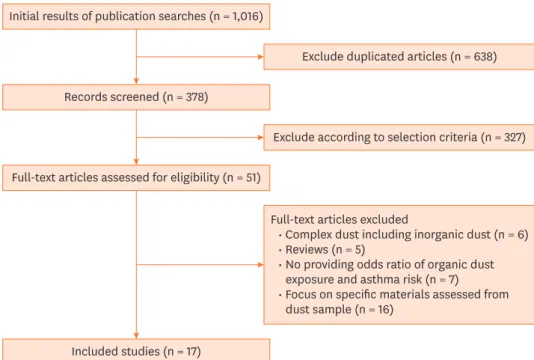
The steps of our literature search are shown in Fig. 1. Briefly, the search yielded a total of 1,016 articles from EMBASE, PubMed, and Cochrane Library databases. No additional article was identified from articles' references screening. After full text screening, 17 studies
8-24containing 3,619 cases and 6,585 controls met our inclusion criteria. The studies included in this review were of the same case-control design and applied different types of organic dust exposure (Table, Supplementary Table S1).
The studies that were included in our meta-analysis were published between 1994 and 2015.
They were conducted mainly in Europe,
10,14,17-24but also in North America,
15,16China,
9,12Thailand
11,13and Singapore.
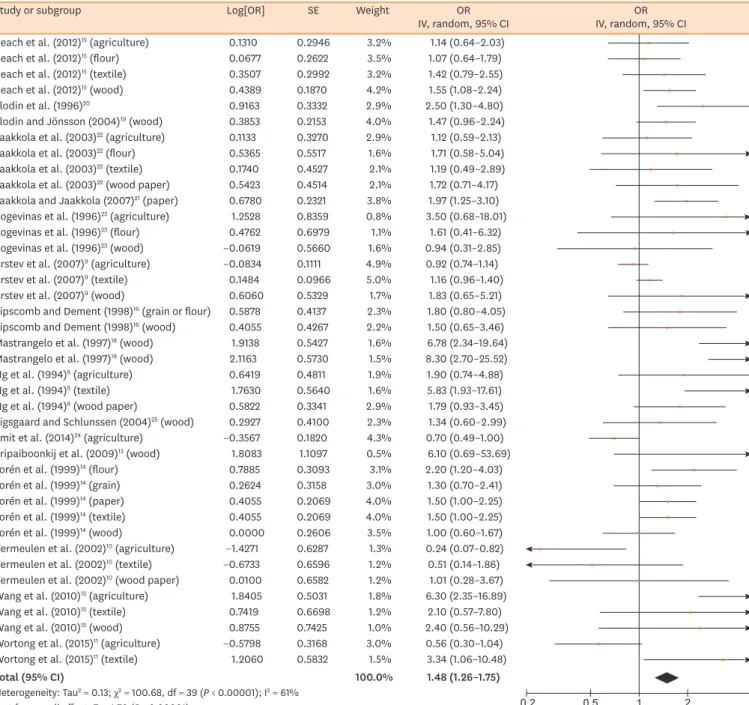
8The risk of asthma increased by 48% among those exposed to organic dust (OR, 1.48; 95% CI, 1.26–1.75; P < 0.00001) (Fig. 2). Subgroup analysis showed
Initial results of publication searches (n = 1,016)
Exclude duplicated articles (n = 638) Records screened (n = 378)
Full-text articles assessed for eligibility (n = 51)
Included studies (n = 17)
Exclude according to selection criteria (n = 327)
Full-text articles excluded
• Complex dust including inorganic dust (n = 6)
• Reviews (n = 5)
• No providing odds ratio of organic dust exposure and asthma risk (n = 7)
• Focus on specific materials assessed from dust sample (n = 16)
Fig. 1. Flow diagram of the literature search and study selection process.
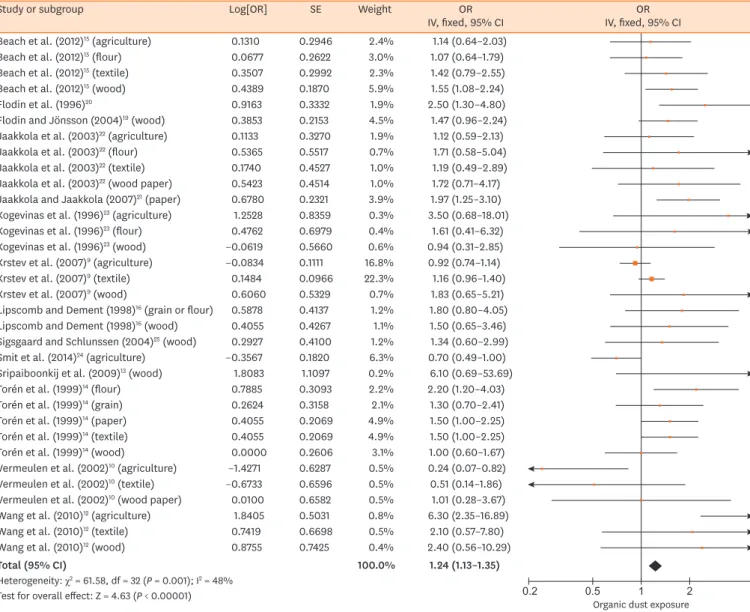
that the risk of asthma increased by 24% among population-based case-control studies (OR, 1.24; 95% CI, 1.13–1.35; P < 0.00001) (Fig. 3) and by 179% among hospital-based case-control studies (OR, 2.79; 95% CI, 1.27–6.12; P = 0.01) (Fig. 4). Agriculture dust exposure was not significantly associated with an increased/reduced risk of asthma (OR, 1.06; 95% CI, 0.72–
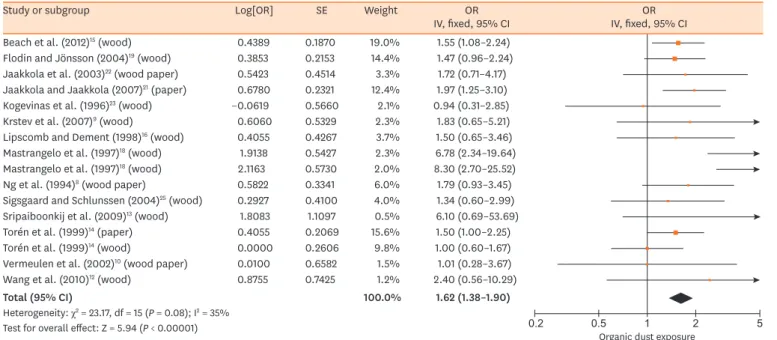
1.56; P = 0.76; Fig. 5), while strong relationship was found between asthma and paper/wood (OR, 1.62; 95% CI, 1.38–1.90; P < 0.00001) (Fig. 6), flour/grain (OR, 1.48; 95% CI,1.11–1.97; P
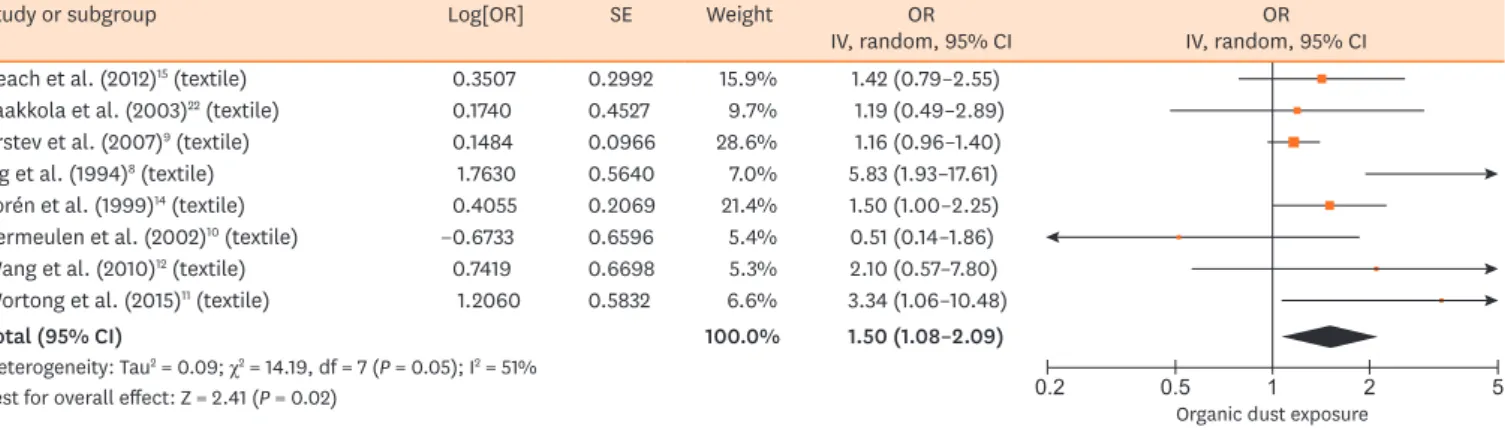
= 0.008) (Fig. 7), and textile dust exposure (OR, 1.50; 95% CI, 1.08–2.09; P = 0.02) (Fig. 8).
Other subgroup analysis according to asthma diagnosis revealed that organic dust exposure was closely associated with asthma diagnosed with classic symptoms and objective outcomes from pulmonary function (OR, 1.77; 95% CI, 1.19–2.62; P = 0.005). When we focused on the cases whose exposure duration was not less than 3 years, no positive relationship could be found between organic dust exposure and asthma (OR, 0.95; 95% CI, 0.62–1.46; P = 0.81), which may be due to different exposure extents and incomplete data.
Table. Characteristics of included individual studies
Author/year Source of
control Country Type of OD Age (yr) Male (%) Case/controls NOS score
Beach et al. (2012)15 P Canada Wood 48.3 74/48 9
Flour 18–65 93.4 30/28
Agriculture 40.4 25/22
Textile 21.7 27/19
Flodin et al. (1996)20 P Sweden - 20–65 N/A 79/304 9
Flodin and Jönsson (2004)19 P Sweden Wood 20–65 57.7 53/156 7
Jaakkola and Jaakkola (2007)21 P Finland Paper 21–63 45.4 133/316 7
Jaakkola et al. (2003)22 P Finland Paper wood 20–64 42.2 9/14 8
Textile 9/13
Flour 7/7
Agriculture 15/35
Kogevinas et al. (1996)23 P Spain Wood 20–44 48.2 136/1,799 8
Agriculture Flour
Krstev et al. (2007)9 P China Wood 37 N/A 6/24 8
Textile 183/732
Agriculture 143/572
Lipscomb and Dement (1998)16 P USA Wood 40 97.1 109/225 8
Grain flour 12/19
Mastrangelo et al. (1997)18 H Italy Wood 15–64 N/A 387/387 8
325/325
Ng et al. (1994)8 H Singapore Wood textile agriculture 20–54 42.4 787/1,591 8
Sigsgaard and Schlunssen (2004)25 P Denmark Wood 37 76.0 222/129 7
Smit et al. (2014)24 P Netherland Agriculture 50 35.7 269/546 9
Sripaiboonkij et al. (2009)13 P Thailand Wood 18–60 55.3 103/76 9
Torén et al. (1999)14 P Sweden Wood paper grain flour textile 38 47.5 111/2,044 8
Vermeulen et al. (2002)10 P Netherland Paper wood agriculture textile 48 47.0 274/274 8
Wood 50 45.6 8/4
Wang et al. (2010)12 P China Agriculture 40/7 8
Textile 9/4
Wortong et al. (2015)11 H Thailand Textile 55 34.9 11/8 9
Agricultural 23/124
N/A, not available; OD, organic dust; H, hospital controls; P, population controls; NOS, Newcastle-Ottawa Scale.
0.2 0.5 1 2 5 Organic dust exposure
Study or subgroup Log[OR] SE Weight OR
IV, random, 95% CI OR
IV, random, 95% CI Beach et al. (2012)15 (agriculture) 0.1310 0.2946 3.2% 1.14 (0.64–2.03)
Beach et al. (2012)15 (flour) 0.0677 0.2622 3.5% 1.07 (0.64–1.79)
Beach et al. (2012)15 (textile) 0.3507 0.2992 3.2% 1.42 (0.79–2.55)
Beach et al. (2012)15 (wood) 0.4389 0.1870 4.2% 1.55 (1.08–2.24)
Flodin et al. (1996)20 0.9163 0.3332 2.9% 2.50 (1.30–4.80)
Flodin and Jönsson (2004)19 (wood) 0.3853 0.2153 4.0% 1.47 (0.96–2.24) Jaakkola et al. (2003)22 (agriculture) 0.1133 0.3270 2.9% 1.12 (0.59–2.13) Jaakkola et al. (2003)22 (flour) 0.5365 0.5517 1.6% 1.71 (0.58–5.04) Jaakkola et al. (2003)22 (textile) 0.1740 0.4527 2.1% 1.19 (0.49–2.89) Jaakkola et al. (2003)22 (wood paper) 0.5423 0.4514 2.1% 1.72 (0.71–4.17) Jaakkola and Jaakkola (2007)21 (paper) 0.6780 0.2321 3.8% 1.97 (1.25–3.10) Kogevinas et al. (1996)23 (agriculture) 1.2528 0.8359 0.8% 3.50 (0.68–18.01) Kogevinas et al. (1996)23 (flour) 0.4762 0.6979 1.1% 1.61 (0.41–6.32) Kogevinas et al. (1996)23 (wood) −0.0619 0.5660 1.6% 0.94 (0.31–2.85) Krstev et al. (2007)9 (agriculture) −0.0834 0.1111 4.9% 0.92 (0.74–1.14) Krstev et al. (2007)9 (textile) 0.1484 0.0966 5.0% 1.16 (0.96–1.40)
Krstev et al. (2007)9 (wood) 0.6060 0.5329 1.7% 1.83 (0.65–5.21)
Lipscomb and Dement (1998)16 (grain or flour) 0.5878 0.4137 2.3% 1.80 (0.80–4.05) Lipscomb and Dement (1998)16 (wood) 0.4055 0.4267 2.2% 1.50 (0.65–3.46) Mastrangelo et al. (1997)18 (wood) 1.9138 0.5427 1.6% 6.78 (2.34–19.64) Mastrangelo et al. (1997)18 (wood) 2.1163 0.5730 1.5% 8.30 (2.70–25.52) Ng et al. (1994)8 (agriculture) 0.6419 0.4811 1.9% 1.90 (0.74–4.88)
Ng et al. (1994)8 (textile) 1.7630 0.5640 1.6% 5.83 (1.93–17.61)
Ng et al. (1994)8 (wood paper) 0.5822 0.3341 2.9% 1.79 (0.93–3.45)
Sigsgaard and Schlunssen (2004)25 (wood) 0.2927 0.4100 2.3% 1.34 (0.60–2.99) Smit et al. (2014)24 (agriculture) −0.3567 0.1820 4.3% 0.70 (0.49–1.00) Sripaiboonkij et al. (2009)13 (wood) 1.8083 1.1097 0.5% 6.10 (0.69–53.69)
Torén et al. (1999)14 (flour) 0.7885 0.3093 3.1% 2.20 (1.20–4.03)
Torén et al. (1999)14 (grain) 0.2624 0.3158 3.0% 1.30 (0.70–2.41)
Torén et al. (1999)14 (paper) 0.4055 0.2069 4.0% 1.50 (1.00–2.25)
Torén et al. (1999)14 (textile) 0.4055 0.2069 4.0% 1.50 (1.00–2.25)
Torén et al. (1999)14 (wood) 0.0000 0.2606 3.5% 1.00 (0.60–1.67)
Vermeulen et al. (2002)10 (agriculture) −1.4271 0.6287 1.3% 0.24 (0.07–0.82) Vermeulen et al. (2002)10 (textile) −0.6733 0.6596 1.2% 0.51 (0.14–1.86) Vermeulen et al. (2002)10 (wood paper) 0.0100 0.6582 1.2% 1.01 (0.28–3.67) Wang et al. (2010)12 (agriculture) 1.8405 0.5031 1.8% 6.30 (2.35–16.89)
Wang et al. (2010)12 (textile) 0.7419 0.6698 1.2% 2.10 (0.57–7.80)
Wang et al. (2010)12 (wood) 0.8755 0.7425 1.0% 2.40 (0.56–10.29)
Wortong et al. (2015)11 (agriculture) −0.5798 0.3168 3.0% 0.56 (0.30–1.04) Wortong et al. (2015)11 (textile) 1.2060 0.5832 1.5% 3.34 (1.06–10.48)
Total (95% CI) 100.0% 1.48 (1.26–1.75)
Heterogeneity: Tau2 = 0.13; χ2 = 100.68, df = 39 (P < 0.00001); I2 = 61%
Test for overall effect: Z = 4.70 (P < 0.00001)
Fig. 2. Summary of the OR of the association between the risk of asthma and organic dust exposure.
SE, standard error; OR, odds ratio; CI, confidence interval.
0.2 0.5 1 2 5 Organic dust exposure
Study or subgroup Log[OR] SE Weight OR
IV, fixed, 95% CI OR
IV, fixed, 95% CI Beach et al. (2012)15 (agriculture) 0.1310 0.2946 2.4% 1.14 (0.64–2.03)
Beach et al. (2012)15 (flour) 0.0677 0.2622 3.0% 1.07 (0.64–1.79)
Beach et al. (2012)15 (textile) 0.3507 0.2992 2.3% 1.42 (0.79–2.55)
Beach et al. (2012)15 (wood) 0.4389 0.1870 5.9% 1.55 (1.08–2.24)
Flodin et al. (1996)20 0.9163 0.3332 1.9% 2.50 (1.30–4.80)
Flodin and Jönsson (2004)19 (wood) 0.3853 0.2153 4.5% 1.47 (0.96–2.24) Jaakkola et al. (2003)22 (agriculture) 0.1133 0.3270 1.9% 1.12 (0.59–2.13) Jaakkola et al. (2003)22 (flour) 0.5365 0.5517 0.7% 1.71 (0.58–5.04) Jaakkola et al. (2003)22 (textile) 0.1740 0.4527 1.0% 1.19 (0.49–2.89) Jaakkola et al. (2003)22 (wood paper) 0.5423 0.4514 1.0% 1.72 (0.71–4.17) Jaakkola and Jaakkola (2007)21 (paper) 0.6780 0.2321 3.9% 1.97 (1.25–3.10) Kogevinas et al. (1996)23 (agriculture) 1.2528 0.8359 0.3% 3.50 (0.68–18.01) Kogevinas et al. (1996)23 (flour) 0.4762 0.6979 0.4% 1.61 (0.41–6.32) Kogevinas et al. (1996)23 (wood) −0.0619 0.5660 0.6% 0.94 (0.31–2.85) Krstev et al. (2007)9 (agriculture) −0.0834 0.1111 16.8% 0.92 (0.74–1.14) Krstev et al. (2007)9 (textile) 0.1484 0.0966 22.3% 1.16 (0.96–1.40)
Krstev et al. (2007)9 (wood) 0.6060 0.5329 0.7% 1.83 (0.65–5.21)
Lipscomb and Dement (1998)16 (grain or flour) 0.5878 0.4137 1.2% 1.80 (0.80–4.05) Lipscomb and Dement (1998)16 (wood) 0.4055 0.4267 1.1% 1.50 (0.65–3.46) Sigsgaard and Schlunssen (2004)25 (wood) 0.2927 0.4100 1.2% 1.34 (0.60–2.99) Smit et al. (2014)24 (agriculture) −0.3567 0.1820 6.3% 0.70 (0.49–1.00) Sripaiboonkij et al. (2009)13 (wood) 1.8083 1.1097 0.2% 6.10 (0.69–53.69)
Torén et al. (1999)14 (flour) 0.7885 0.3093 2.2% 2.20 (1.20–4.03)
Torén et al. (1999)14 (grain) 0.2624 0.3158 2.1% 1.30 (0.70–2.41)
Torén et al. (1999)14 (paper) 0.4055 0.2069 4.9% 1.50 (1.00–2.25)
Torén et al. (1999)14 (textile) 0.4055 0.2069 4.9% 1.50 (1.00–2.25)
Torén et al. (1999)14 (wood) 0.0000 0.2606 3.1% 1.00 (0.60–1.67)
Vermeulen et al. (2002)10 (agriculture) −1.4271 0.6287 0.5% 0.24 (0.07–0.82) Vermeulen et al. (2002)10 (textile) −0.6733 0.6596 0.5% 0.51 (0.14–1.86) Vermeulen et al. (2002)10 (wood paper) 0.0100 0.6582 0.5% 1.01 (0.28–3.67) Wang et al. (2010)12 (agriculture) 1.8405 0.5031 0.8% 6.30 (2.35–16.89)
Wang et al. (2010)12 (textile) 0.7419 0.6698 0.5% 2.10 (0.57–7.80)
Wang et al. (2010)12 (wood) 0.8755 0.7425 0.4% 2.40 (0.56–10.29)
Total (95% CI) 100.0% 1.24 (1.13–1.35)
Heterogeneity: χ2 = 61.58, df = 32 (P = 0.001); I2 = 48%
Test for overall effect: Z = 4.63 (P < 0.00001)
Fig. 3. Summary of the OR of the association between the risk of asthma and organic dust exposure among population-based case-control studies.
SE, standard error; OR, odds ratio; CI, confidence interval.
Study or subgroup Log[OR] SE Weight OR
IV, random, 95% CI OR
IV, random, 95% CI Mastrangelo et al. (1997)18 (wood) 1.9138 0.5427 13.6% 6.78 (2.34–19.64)
Mastrangelo et al. (1997)18 (wood) 2.1163 0.5730 13.2% 8.30 (2.70–25.52) Ng et al. (1994)8 (agriculture) 0.6419 0.4811 14.4% 1.90 (0.74–4.88)
Ng et al. (1994)8 (textile) 1.7630 0.5640 13.3% 5.83 (1.93–17.61)
Ng et al. (1994)8 (wood paper) 0.5822 0.3341 16.1% 1.79 (0.93–3.45) Wortong et al. (2015)11 (agriculture) −0.5798 0.3168 16.3% 0.56 (0.30–1.04) Wortong et al. (2015)11 (textile) 1.2060 0.5832 13.1% 3.34 (1.06–10.48)
Total (95% CI) 100.0% 2.79 (1.27–6.12)
Heterogeneity: Tau2 = 0.89; χ2 = 31.86, df = 6 (P < 0.0001); I2 = 81%
Test for overall effect: Z = 2.56 (P = 0.01) 0.01 0.1 1 10 100
Organic dust exposure Fig. 4. Summary of the OR of the association between the risk of asthma and organic dust exposure among hospital-based case-control studies.
SE, standard error; OR, odds ratio; CI, confidence interval.
0.01 0.01 1 10 100 Organic dust exposure
Study or subgroup Log[OR] SE Weight OR
IV, random, 95% CI OR
IV, random, 95% CI Beach et al. (2012)15 (agriculture) 0.1310 0.2946 13.2% 1.14 (0.64–2.03)
Jaakkola et al. (2003)22 (agriculture) 0.1133 0.3270 12.4% 1.12 (0.59–2.13) Kogevinas et al. (1996)23 (agriculture) 1.2528 0.8359 4.3% 3.50 (0.68–18.01) Krstev et al. (2007)9 (agriculture) −0.0834 0.1111 17.6% 0.92 (0.74–1.14) Ng et al. (1994)8 (agriculture) 0.6419 0.4811 8.9% 1.90 (0.74–4.88) Smit et al. (2014)24 (agriculture) −0.3567 0.1820 16.1% 0.70 (0.49–1.00) Vermeulen et al. (2002)10 (agriculture) −1.4271 0.6287 6.5% 0.24 (0.07–0.82) Wang et al. (2010)12 (agriculture) 1.8405 0.5031 8.4% 6.30 (2.35–16.89) Wortong et al. (2015)11 (agriculture) −0.5798 0.3168 12.6% 0.56 (0.30–1.04)
Total (95% CI) 100.0% 1.06 (0.72–1.56)
Heterogeneity: Tau2 = 0.21; χ2 = 29.62, df = 8 (P = 0.0002); I2 = 73%
Test for overall effect: Z = 0.30 (P = 0.76)
Fig. 5. Summary of the OR of the association between the risk of asthma and agriculture dust exposure.
SE, standard error; OR, odds ratio; CI, confidence interval.
0.2 0.5 1 2 5
Organic dust exposure
Study or subgroup Log[OR] SE Weight OR
IV, fixed, 95% CI OR
IV, fixed, 95% CI
Beach et al. (2012)15 (wood) 0.4389 0.1870 19.0% 1.55 (1.08–2.24)
Flodin and Jönsson (2004)19 (wood) 0.3853 0.2153 14.4% 1.47 (0.96–2.24) Jaakkola et al. (2003)22 (wood paper) 0.5423 0.4514 3.3% 1.72 (0.71–4.17) Jaakkola and Jaakkola (2007)21 (paper) 0.6780 0.2321 12.4% 1.97 (1.25–3.10) Kogevinas et al. (1996)23 (wood) −0.0619 0.5660 2.1% 0.94 (0.31–2.85)
Krstev et al. (2007)9 (wood) 0.6060 0.5329 2.3% 1.83 (0.65–5.21)
Lipscomb and Dement (1998)16 (wood) 0.4055 0.4267 3.7% 1.50 (0.65–3.46) Mastrangelo et al. (1997)18 (wood) 1.9138 0.5427 2.3% 6.78 (2.34–19.64) Mastrangelo et al. (1997)18 (wood) 2.1163 0.5730 2.0% 8.30 (2.70–25.52)
Ng et al. (1994)8 (wood paper) 0.5822 0.3341 6.0% 1.79 (0.93–3.45)
Sigsgaard and Schlunssen (2004)25 (wood) 0.2927 0.4100 4.0% 1.34 (0.60–2.99) Sripaiboonkij et al. (2009)13 (wood) 1.8083 1.1097 0.5% 6.10 (0.69–53.69)
Torén et al. (1999)14 (paper) 0.4055 0.2069 15.6% 1.50 (1.00–2.25)
Torén et al. (1999)14 (wood) 0.0000 0.2606 9.8% 1.00 (0.60–1.67)
Vermeulen et al. (2002)10 (wood paper) 0.0100 0.6582 1.5% 1.01 (0.28–3.67)
Wang et al. (2010)12 (wood) 0.8755 0.7425 1.2% 2.40 (0.56–10.29)
Total (95% CI) 100.0% 1.62 (1.38–1.90)
Heterogeneity: χ2 = 23.17, df = 15 (P = 0.08); I2 = 35%
Test for overall effect: Z = 5.94 (P < 0.00001)
Fig. 6. Summary of the OR of the association between the risk of asthma and paper/wood dust exposure.
SE, standard error; OR, odds ratio; CI, confidence interval.
0.2 0.5 1 2 5
Organic dust exposure
Study or subgroup Log[OR] SE Weight OR
IV, fixed, 95% CI OR
IV, fixed, 95% CI
Beach et al. (2012)15 (flour) 0.0677 0.2622 31.5% 1.07 (0.64–1.79)
Jaakkola et al. (2003)22 (flour) 0.5365 0.5517 7.1% 1.71 (0.58–5.04) Kogevinas et al. (1996)23 (flour) 0.4762 0.6979 4.4% 1.61 (0.41–6.32) Lipscomb and Dement (1998)16 (grain or flour) 0.5878 0.4137 12.6% 1.80 (0.80–4.05)
Torén et al. (1999)14 (flour) 0.7885 0.3093 22.6% 2.20 (1.20–4.03)
Torén et al. (1999)14 (grain) 0.2624 0.3158 21.7% 1.30 (0.70–2.41)
Total (95% CI) 100.0% 1.48 (1.11–1.97)
Heterogeneity: χ2 = 3.65, df = 5 (P = 0.60); I2 = 0%
Test for overall effect: Z = 2.65 (P = 0.008)
Fig. 7. Summary of the OR of the association between the risk of asthma and grain/flour dust exposure.
SE, standard error; OR, odds ratio; CI, confidence interval.
DISCUSSION
Our results showed that organic dust exposure was positively associated with asthma, whether among population-based case-control studies or hospital-based case-control studies. Subgroup analysis indicated that paper/wood, flour/grain, and textile dust exposure, namely, most varieties of organic dust are related with asthma significantly.
Workers who are recurrently exposed to organic dust are at increased risk for several respiratory symptoms, including asthma.
25A recent research revealed that sensitization to dust extracellular vesicles was an independent risk factor for non-eosinophilic asthma (adjusted OR, 3.3; 95% CI, 1.1–10.0), and even chronic obstructive pulmonary disease and lung cancer.
26Agricultural work and multiple types of livestock are independent risk factors for developing asthma in adults.
27Self-reported exposure to any gas, smoke or dust, organic dust, dampness and mold, cold conditions and physically strenuous work, and jobs handling low molecular weight agents were associated with exacerbation of asthma. Reduction in such occupational exposures may help reduce exacerbation of asthma.
28A study from Norway revealed that dust exposure was associated with an increased incidence of work-related asthma-like symptoms.
29Garshick et al.
30reported exposure to vehicular emissions by living near heavily trafficked roadways might contribute to symptoms of chronic respiratory disease including persistent wheeze.
A previous study confirmed that exposure to inhaled organic dusts would activate inflammatory responses of monocyte, macrophages and epithelial cells through rapidly stimulating secretion of tumor necrosis factor.
31Neutrophil recruitment, pyrexia and airway epithelial cells activation could be induced by monocyte/macrophage-derived inflammatory mediators and lead to direct bronchial hyperreaction.
32Toll-like receptor 2,
33myeloid differentiation factor 88-dependent signaling
34and pattern recognition scavenger receptor A/CD204 all participate in the regulation of organic dust-induced airway inflammation. Robbe et al.
35demonstrated that exposure to agriculture dust would increase the proportion of interleukin-17 and interferon-γ positive T cells, with similar results presenting the increased frequency of activated lung macrophages (CD11c+/CD11b+) obtained from animal models exposure to organic dust extracts.
36,37Poole et al.
38found that a mixed T helper cell (Th)1 and Th17 immune response was induced by repeated intranasal organic dust exposure in a murine model.
0.2 0.5 1 2 5
Organic dust exposure
Study or subgroup Log[OR] SE Weight OR
IV, random, 95% CI OR
IV, random, 95% CI Beach et al. (2012)15 (textile) 0.3507 0.2992 15.9% 1.42 (0.79–2.55)
Jaakkola et al. (2003)22 (textile) 0.1740 0.4527 9.7% 1.19 (0.49–2.89) Krstev et al. (2007)9 (textile) 0.1484 0.0966 28.6% 1.16 (0.96–1.40)
Ng et al. (1994)8 (textile) 1.7630 0.5640 7.0% 5.83 (1.93–17.61)
Torén et al. (1999)14 (textile) 0.4055 0.2069 21.4% 1.50 (1.00–2.25) Vermeulen et al. (2002)10 (textile) −0.6733 0.6596 5.4% 0.51 (0.14–1.86)
Wang et al. (2010)12 (textile) 0.7419 0.6698 5.3% 2.10 (0.57–7.80)
Wortong et al. (2015)11 (textile) 1.2060 0.5832 6.6% 3.34 (1.06–10.48)
Total (95% CI) 100.0% 1.50 (1.08–2.09)
Heterogeneity: Tau2 = 0.09; χ2 = 14.19, df = 7 (P = 0.05); I2 = 51%
Test for overall effect: Z = 2.41 (P = 0.02)
Fig. 8. Summary of the OR of the association between the risk of asthma and textile dust exposure.
SE, standard error; OR, odds ratio; CI, confidence interval.
Guillam et al.
39found that Hatchery workers in sorting rooms were at increased risk of compromised respiratory health such as asthma and rhinitis due to dust exposure. Hinson et al.
40indicated that medical interventions and technical prevention should be encouraged in the place where textile industry upgrades the local economic status such as Benin. Christiani et al.
41conducted a longitudinal study of 445 cotton workers over 11 years and found a decrease in forced expiratory volume 1 in individuals exposed to cotton dust. Moreover, respiratory functions decreased depending on the concentration and time of dust exposure in the workplace.
42The higher risks for women compared to men for asthma onset were robust, regardless of work exposure categories.
43Poultry farm workers are more prone to suffer from respiratory disorders due to higher concentrations of particulate matter in dust.
44Different from our results, a recent cohort study from Canada provided further evidence that living in a farming environment during childhood is protective of asthma incidence in adolescence and adulthood and supports the protective effect of the farm environment on asthma.
45Furthermore, farm exposure may have immunomodulatory effects by decreasing mDC proportions and asthma incidence as well.
46We think the difference in inclusion criteria may have been responsible for the discrepancy. We enrolled the studies aiming at adulthood and failed to get the positive results because exposure during childhood may be a protective factor, whereas prolonged exposure during adulthood did not influence the risk of asthma.
Considering the harm brought by organic dust, intervention programs aimed at reducing exposure to dust will ameliorate occupational working conditions and improve health conditions. The value of measuring organic dust content in occupational settings was emphasized to make differences in health effects for exposed workers.
47Another recent study
48proposed the extraction method using Tris/EDTA to more accurately assess the endotoxin content and pro-inflammatory potential.
In conclusion, our meta-analysis revealed an overall asthma susceptibility rate in excess of 48% among individuals exposed to organic dust compared with controls, especially for those exposed to paper/wood, flour/grain and textile dust.
SUPPLEMENTARY MATERIAL
Supplementary Table S1
Asthma diagnosis, exposure duration and covariates of included individual studies
Click here to viewREFERENCES
1. Wouters IM, Spaan S, Douwes J, Doekes G, Heederik D. Overview of personal occupational exposure levels to inhalable dust, endotoxin, beta(1-->3)-glucan and fungal extracellular polysaccharides in the waste management chain. Ann Occup Hyg 2006;50:39-53.
PUBMED
2. Langley RL. Consequences of respiratory exposures in the farm environment. N C Med J 2011;72:477-80.
PUBMED
3. Millner PD. Bioaerosols associated with animal production operations. Bioresour Technol 2009;100:5379-85.
PUBMED | CROSSREF
4. Bolund AC, Miller MR, Sigsgaard T, Schlünssen V. The effect of organic dust exposure on long-term change in lung function: a systematic review and meta-analysis. Occup Environ Med 2017;74:531-42.
PUBMED | CROSSREF
5. Stang A. Critical evaluation of the Newcastle-Ottawa scale for the assessment of the quality of nonrandomized studies in meta-analyses. Eur J Epidemiol 2010;25:603-5.
PUBMED | CROSSREF
6. Higgins JP, Thompson SG, Deeks JJ, Altman DG. Measuring inconsistency in meta-analyses. BMJ 2003;327:557-60.
PUBMED | CROSSREF
7. Gumedze FN, Jackson D. A random effects variance shift model for detecting and accommodating outliers in meta-analysis. BMC Med Res Methodol 2011;11:19.
PUBMED | CROSSREF
8. Ng TP, Hong CY, Goh LG, Wong ML, Koh KT, Ling SL. Risks of asthma associated with occupations in a community-based case-control study. Am J Ind Med 1994;25:709-18.
PUBMED | CROSSREF
9. Krstev S, Ji BT, Shu XO, Blair A, Zheng W, Lubin J, et al. Occupation and adult-onset asthma among Chinese women in a population-based cohort. Am J Ind Med 2007;50:265-73.
PUBMED | CROSSREF
10. Vermeulen R, Heederik D, Kromhout H, Smit HA. Respiratory symptoms and occupation: a cross- sectional study of the general population. Environ Health 2002;1:5.
PUBMED | CROSSREF
11. Wortong D, Chaiear N, Boonsawat W. Risk of asthma in relation to occupation: a hospital-based case- control study. Asian Pac J Allergy Immunol 2015;33:152-60.
PUBMED
12. Wang TN, Lin MC, Wu CC, Leung SY, Huang MS, Chuang HY, et al. Risks of exposure to occupational asthmogens in atopic and nonatopic asthma: a case-control study in Taiwan. Am J Respir Crit Care Med 2010;182:1369-76.
PUBMED | CROSSREF
13. Sripaiboonkij P, Phanprasit W, Jaakkola MS. Respiratory and skin effects of exposure to wood dust from the rubber tree Hevea brasiliensis. Occup Environ Med 2009;66:442-7.
PUBMED | CROSSREF
14. Torén K, Järvholm B, Brisman J, Hagberg S, Hermansson BA, Lillienberg L. Adult-onset asthma and occupational exposures. Scand J Work Environ Health 1999;25:430-5.
PUBMED | CROSSREF
15. Beach J, Burstyn I, Cherry N. Estimating the extent and distribution of new-onset adult asthma in British Columbia using frequentist and Bayesian approaches. Ann Occup Hyg 2012;56:719-27.
PUBMED
16. Lipscomb HJ, Dement JM. Respiratory diseases among union carpenters: cohort and case-control analyses. Am J Ind Med 1998;33:131-50.
PUBMED | CROSSREF
17. Schlünssen V, Schaumburg I, Heederik D, Taudorf E, Sigsgaard T. Indices of asthma among atopic and non-atopic woodworkers. Occup Environ Med 2004;61:504-11.
PUBMED | CROSSREF
18. Mastrangelo G, Bombana S, Priante E, Gallo A, Saia B. Repeated case-control studies as a method of surveillance for asthma in occupations. J Occup Environ Med 1997;39:51-7.
PUBMED | CROSSREF
19. Flodin U, Jönsson P. Non-sensitising air pollution at workplaces and adult onset asthma. Int Arch Occup Environ Health 2004;77:17-22.
PUBMED | CROSSREF
20. Flodin U, Ziegler J, Jönsson P, Axelson O. Bronchial asthma and air pollution at workplaces. Scand J Work Environ Health 1996;22:451-6.
PUBMED | CROSSREF
21. Jaakkola MS, Jaakkola JJ. Office work exposures and adult-onset asthma. Environ Health Perspect 2007;115:1007-11.
PUBMED | CROSSREF
22. Jaakkola JJ, Piipari R, Jaakkola MS. Occupation and asthma: a population-based incident case-control study. Am J Epidemiol 2003;158:981-7.
PUBMED | CROSSREF
23. Kogevinas M, Antó JM, Soriano JB, Tobias A, Burney P. The risk of asthma attributable to occupational exposures. A population-based study in Spain. Spanish Group of the European Asthma Study. Am J Respir Crit Care Med 1996;154:137-43.
PUBMED | CROSSREF
24. Smit LA, Hooiveld M, van der Sman-de Beer F, Opstal-van Winden AW, Beekhuizen J, Wouters IM, et al. Air pollution from livestock farms, and asthma, allergic rhinitis and COPD among neighbouring residents. Occup Environ Med 2014;71:134-40.
PUBMED | CROSSREF
25. Sigsgaard T, Schlunssen V. Occupational asthma diagnosis in workers exposed to organic dust. Ann Agric Environ Med 2004;11:1-7.
PUBMED
26. Kim YS, Choi JP, Kim MH, Park HK, Yang S, Kim YS, et al. IgG sensitization to extracellular vesicles in indoor dust is closely associated with the prevalence of non-eosinophilic asthma, COPD, and lung cancer.
Allergy Asthma Immunol Res 2016;8:198-205.
PUBMED | CROSSREF
27. Wunschel J, Poole JA. Occupational agriculture organic dust exposure and its relationship to asthma and airway inflammation in adults. J Asthma 2016;53:471-7.
PUBMED | CROSSREF
28. Kim JL, Henneberger PK, Lohman S, Olin AC, Dahlman-Höglund A, Andersson E, et al. Impact of occupational exposures on exacerbation of asthma: a population-based asthma cohort study. BMC Pulm Med 2016;16:148.
PUBMED | CROSSREF
29. Søyseth V, Johnsen HL, Henneberger PK, Kongerud J. The incidence of work-related asthma-like symptoms and dust exposure in Norwegian smelters. Am J Respir Crit Care Med 2012;185:1280-5.
PUBMED | CROSSREF
30. Garshick E, Laden F, Hart JE, Caron A. Residence near a major road and respiratory symptoms in U.S.
veterans. Epidemiology 2003;14:728-36.
PUBMED | CROSSREF
31. Poole JA, Dooley GP, Saito R, Burrell AM, Bailey KL, Romberger DJ, et al. Muramic acid, endotoxin, 3-hydroxy fatty acids, and ergosterol content explain monocyte and epithelial cell inflammatory responses to agricultural dusts. J Toxicol Environ Health A 2010;73:684-700.
PUBMED | CROSSREF
32. Poole JA, Wyatt TA, Von Essen SG, Hervert J, Parks C, Mathisen T, et al. Repeat organic dust exposure- induced monocyte inflammation is associated with protein kinase C activity. J Allergy Clin Immunol 2007;120:366-73.
PUBMED | CROSSREF
33. Poole JA, Wyatt TA, Kielian T, Oldenburg P, Gleason AM, Bauer A, et al. Toll-like receptor 2 regulates organic dust-induced airway inflammation. Am J Respir Cell Mol Biol 2011;45:711-9.
PUBMED | CROSSREF
34. Bauer C, Kielian T, Wyatt TA, Romberger DJ, West WW, Gleason AM, et al. Myeloid differentiation factor 88-dependent signaling is critical for acute organic dust-induced airway inflammation in mice. Am J Respir Cell Mol Biol 2013;48:781-9.
PUBMED | CROSSREF
35. Robbe P, Spierenburg EA, Draijer C, Brandsma CA, Telenga E, van Oosterhout AJ, et al. Shifted T-cell polarisation after agricultural dust exposure in mice and men. Thorax 2014;69:630-7.
PUBMED | CROSSREF
36. Poole JA, Gleason AM, Bauer C, West WW, Alexis N, van Rooijen N, et al. CD11c(+)/CD11b(+) cells are critical for organic dust-elicited murine lung inflammation. Am J Respir Cell Mol Biol 2012;47:652-9.
PUBMED | CROSSREF
37. Robbe P, Draijer C, Borg TR, Luinge M, Timens W, Wouters IM, et al. Distinct macrophage phenotypes in allergic and nonallergic lung inflammation. Am J Physiol Lung Cell Mol Physiol 2015;308:L358-67.
PUBMED | CROSSREF
38. Poole JA, Gleason AM, Bauer C, West WW, Alexis N, Reynolds SJ, et al. αβ T cells and a mixed Th1/
Th17 response are important in organic dust-induced airway disease. Ann Allergy Asthma Immunol 2012;109:266-273.e2.
PUBMED | CROSSREF
39. Guillam MT, Martin S, Le Guelennec M, Puterflam J, Le Bouquin S, Huneau-Salaün A. Dust exposure and health of workers in duck hatcheries. Ann Agric Environ Med 2017;24:360-5.
PUBMED
40. Hinson AV, Lokossou VK, Schlünssen V, Agodokpessi G, Sigsgaard T, Fayomi B. Cotton dust exposure and respiratory disorders among textile workers at a textile company in the southern part of Benin. Int J Environ Res Public Health 2016;13:E895.
PUBMED | CROSSREF
41. Christiani DC, Ye TT, Zhang S, Wegman DH, Eisen EA, Ryan LA, et al. Cotton dust and endotoxin exposure and long-term decline in lung function: results of a longitudinal study. Am J Ind Med 1999;35:321-31.
PUBMED | CROSSREF
42. Glindmeyer HW, Lefante JJ, Jones RN, Rando RJ, Abdel Kader HM, Weill H. Exposure-related declines in the lung function of cotton textile workers. Relationship to current workplace standards. Am Rev Respir Dis 1991;144:675-83.
PUBMED | CROSSREF
43. Dimich-Ward H, Beking K, DyBuncio A, Chan-Yeung M, Du W, Karlen B, et al. Occupational exposure influences on gender differences in respiratory health. Lung 2012;190:147-54.
PUBMED | CROSSREF
44. Viegas S, Faísca VM, Dias H, Clérigo A, Carolino E, Viegas C. Occupational exposure to poultry dust and effects on the respiratory system in workers. J Toxicol Environ Health A 2013;76:230-9.
PUBMED | CROSSREF
45. Parsons MA, Beach J, Senthilselvan A. Association of living in a farming environment with asthma incidence in Canadian children. J Asthma 2017;54:239-49.
PUBMED | CROSSREF
46. Kääriö H, Nieminen JK, Karvonen AM, Huttunen K, Schröder PC, Vaarala O, et al. Circulating dendritic cells, farm exposure and asthma at early age. Scand J Immunol 2016;83:18-25.
PUBMED | CROSSREF
47. Viegas S, Caetano LA, Korkalainen M, Faria T, Pacífico C, Carolino E, et al. Cytotoxic and inflammatory potential of air samples from occupational settings with exposure to organic dust. Toxics 2017;5:E8.
PUBMED | CROSSREF
48. Hoppe Parr KA, Hađina S, Kilburg-Basnyat B, Wang Y, Chavez D, Thorne PS, et al. Modification of sample processing for the Limulus amebocyte lysate assay enhances detection of inflammogenic endotoxin in intact bacteria and organic dust. Innate Immun 2017;23:307-18.
PUBMED | CROSSREF