• 검색 결과가 없습니다.

Evaluation of Complications after Surgical Treatment of Thoracic Outlet Syndrome

N/A
N/A
Protected

Academic year: 2021

Share "Evaluation of Complications after Surgical Treatment of Thoracic Outlet Syndrome"

Copied!
5
0
0

로드 중.... (전체 텍스트 보기)

전체 글

(1)

ISSN: 2233-601X (Print) ISSN: 2093-6516 (Online)

Received: October 24, 2016, Revised: December 2, 2016, Accepted: December 5, 2016, Published online: February 5, 2017

Corresponding author: Mohammad Ali Hosseinian, Department of General Surgery, Emam Hosein Hospital, Shahid Beheshti University of Medical Sciences, Arabi Ave, Daneshjoo Blvd, Velenjak, Tehran 198396-3113, Iran

(Tel) 98-9127244717 (Fax) 98-2188644213 (E-mail) [email protected]

© The Korean Society for Thoracic and Cardiovascular Surgery. 2017. All right reserved.

This is an open access article distributed under the terms of the Creative Commons Attribution Non-Commercial License (http://creativecommons.org/

licenses/by-nc/4.0) which permits unrestricted non-commercial use, distribution, and reproduction in any medium, provided the original work is properly cited.

Evaluation of Complications after Surgical Treatment of Thoracic Outlet Syndrome

Mohammad Ali Hosseinian, M.D. 1 , Ali Gharibi Loron, M.D. 1,2 , Yalda Soleimanifard, M.D. 1

1

Department of General Surgery, Emam Hosein Hospital, Shahid Beheshti University of Medical Sciences,

2

Shahed University School of Medicine

Background: Surgical treatment of thoracic outlet syndrome (TOS) is necessary when non-surgical treatments fail. Complications of surgical procedures vary from short-term post-surgical pain to permanent disability. The outcome of TOS surgery is affected by the visibility during the operation. In this study, we have compared the complications arising during the supraclavicular and the transaxillary approaches to determine the appro- priate approach for TOS surgery. Methods: In this study, 448 patients with symptoms of TOS were assessed.

The male-to-female ratio was approximately 1:4, and the mean age was 34.5 years. Overall, 102 operations were performed, including unilateral, bilateral, and reoperations, and the patients were retrospectively evaluated. Of the 102 patients, 63 underwent the supraclavicular approach, 32 underwent the transaxillary approach, and 7 underwent the transaxillary approach followed by the supraclavicular approach. Complications were evaluated over 24 months. Results: The prevalence of pneumothorax, hemothorax, and vessel injuries in the transaxillary and the supraclavicular approaches was equal. We found more permanent and transient bra- chial plexus injuries in the case of the transaxillary approach than in the case of the supraclavicular ap- proach, but the difference was not statistically significant. Persistent pain and symptoms were significantly more common in patients who underwent the transaxillary approach (p<0.05). Conclusion: The supra- clavicular approach seems to be the more effective technique of the two because it offers the surgeon better access to the brachial plexus and a direct view. This approach for a TOS operation offers a better surgical outcome and lower reoperation rates than the transaxillary method. Our results showed the supraclavicular approach to be the preferred method for TOS operations.

Key words: 1. Thoracic outlet syndrome 2. Thoracic outlet

3. Intraoperative complications

Introduction

Thoracic outlet syndrome (TOS) refers to com- pression of the subclavian vessels and nerves of the brachial plexus in the region around the neck and the collarbone [1,2]. Non-operative treatment is the first-line treatment, and surgical treatment is per- formed as a treatment of choice for patients in whom

conservative therapy has failed. Moreover, patients with a non-work-related etiology of TOS, such as traumatic TOS, respond better to TOS operations [3].

Excision of the cervical rib is a surgical technique ex- plained by Coote [4] in 1861. Adson and Coffey [5]

described an anterior scalenotomy technique in 1962.

Clagelt advocated the resection of the first rib via a

posterior approach [6,7]. A transaxillary approach for

https://doi.org/10.5090/kjtcs.2017.50.1.36

(2)

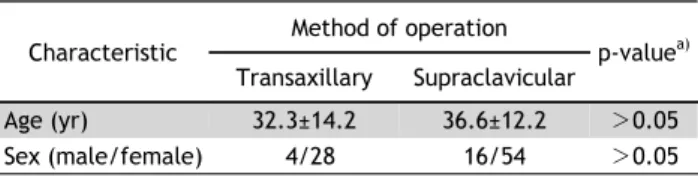
Table 1. Patient demographics Characteristic

Method of operation

p-value

a)

Transaxillary Supraclavicular

Age (yr) 32.3±14.2 36.6±12.2 >0.05

Sex (male/female) 4/28 16/54 >0.05

Values are presented as mean±standard deviation.

a)

Based on the Fisher exact test.

such a resection was introduced by Roos [8] in 1966.

A TOS operation should be well thought-out, and an accurate diagnosis should be made before consider- ing decompression surgery to be the final solution [9]. Complications of TOS surgery include the re- currence of symptoms, brachial plexus, phrenic nerve, long thoracic nerve, complete or transient paralysis, subclavian artery and vein injuries, axillary artery thrombosis, hemothorax, pneumothorax, chylothorax, permanent damage to the brachial plexus, severe se- quelae such as causalgia and weak ness of the hand muscles, sensory deficits, autonomic dysfunction, and at times even death [10-12]. Further, some brachial plexus injuries require reoperation [13,14].

The supraclavicular approach allows better access to the brachial plexus [15], but recently, the trans- axillary approach has been used widely. Surgical re- sults correlate directly with an identification of re- sidual anomalous anatomical structures, such as a fi- brous band extending from the first rib and tenting up the subclavian artery and the brachial plexus [13].

This study evaluates the clinical outcomes of these 2 methods.

Methods

This retrospective long-term study examines pa- tients who presented with symptoms of TOS between 2004 and 2011. Patients who complained of pain and numbness in the arm, forearm, or hand are included.

TOS is one of the most intriguing clinical entities. A thorough history with specific attention to previous traumas to the shoulder region and prolonged use of the upper extremities was taken. Careful physical ex- aminations including a visual inspection for asymme- try or deformity, percussion, or symptoms induced by pressure to the supraclavicular area, as well as a complete neurologic examination with a range of mo- tion and strength tests were performed. Symptoms worsened when the patients’ arms were positioned overhead. The ulnar-nerve current velocity in these patients was below 60 m/sec [16]. A magnetic reso- nance imaging evaluation of the neck for discopathy indicated normal intervertebral disk anatomy.

In this study, a total of 448 patients were studied;

of these, 357 were females and 91 were males.

Recalcitrant functional impairment after 6 months of non-surgical treatment and progressive neurologic

dysfunction were observed in 69 patients; therefore, they met our institute’s criteria for surgical therapy [16]. Four patients presented with vascular symp- toms including coolness, pallor, and diminished pulse (arterial TOS) in 1 patient and swelling, uncom- fortable heaviness, and distended superficial veins (venous TOS) in 3 patients. The rest of the patients were diagnosed with neurologic TOS; they reported an array of symptoms including numbness, pain, weakness, and paresthesia. The classical form of neu- rologic TOS is interosseous, thenar, and hypothenar weakness and/or atrophy, as well as antebrachial cu- taneous hypoesthesia. Nerve conduction studies have revealed unobtainable or decreased median and ulnar antebrachial cutaneous sensory nerve action poten- tials in TOS patients. The C8–T1 nerves have been found to be the most affected. The ulnar-nerve cur- rent velocity in these patients was below 60 m/sec [17]. Bilateral TOS was diagnosed in 26 patients, which increased the number of operations to 95.

Sixty-three operations using the supraclavicular ap- proach were performed on 48 females and 15 males.

Thirty-two operations were performed using the transaxillary approach on 28 females and 4 males.

Further details are presented in Table 1.

A brief description of the surgical technique is pre- sented below. In the supraclavicular approach, an in- cision was made in the supraclavicular fossa, 2 cm above the clavicle. The supraclavicular nerve was identified and mobilized. The scalene muscle and the brachial plexus were easily palpated after the omo- hyoid division and the elevation of the supraclavicular fat pads. Then, the lateral portion of the sternoclei- domastoid was divided. The phrenic nerve and the subclavian artery were noted, and the anterior sca- lene muscle was divided. The brachial plexus was gently mobilized, the long thoracic and its branches identified, and the middle scalene muscle divided.

Then, the lower trunk of the brachial plexus and the

(3)

Table 2. Surgical complications other than brachial plexus Complications

Method of operation Difference

(95% confidence interval) p-value

a)

Transaxillary (n=32) Supraclavicular (n=63)

Vessel injury 1 (3) 2 (3) 0.3 ( −6.9 to 7.4) >0.05

Hemothorax 2 (6) 3 (4) 2 (8 to 12) >0.05

Pneumothorax 11 (34) 25 (36) −2 (−22 to 17) >0.05

Hemothorax with pneumothorax 2 (6) 0 6 ( −2 to 14) >0.05

Values are presented as number (%), unless otherwise stated.

a)

Based on the Fisher exact test.

Table 3. Brachial plexus complications Complications

Method of operation Difference (95%

confidence interval) p-value

a)

Transaxillary (n=32) Supraclavicular (n=63)

Transient paralysis due to T1 root compression 2 (6) 3 (4) 2 ( −8 to 12) >0.05

Permanent paralysis due to T1 root compression 1 (3) 0 3 ( −3 to 9) >0.05

Remaining pain and symptoms after 6 months (failure rate and need for reoperation)

8 (25) 0 −22 (7.5 to 36.2) <0.05

Values are presented as number (%), unless otherwise stated.

a)
Based on the Fisher exact test.

congenital bands and thickenings in the Sibson fascia were easily visualized. The first rib was divided, and the posterior segment of the rib was removed to its spinal attachments by using a rongeur technique.

Then, the soft tissue attachments to the first rib were separated, and the entire aspect of the rib was removed. The anterior portion of the rib, cervical ribs, or long transverse processes were removed us- ing the same technique. A complete decompression of the neurovascular elements was then confirmed.

In contrast, in the axillary approach, an incision was made between the latissimus dorsi and the pec- toralis major, below the hairline. The intercosto-bra- chial-cutaneous nerve was retracted. Then, the in- cision was extended to the third rib, and the dis- section processed the cephalad to the first rib. The brachial plexus, subclavian artery, scalenus anterior muscle, and the subclavian vein were visualized and pulled upwards during the resection of the first rib.

The phrenic and long thoracic nerves were noted, and the scalenus anterior and medius muscles were cut. Then, the first rib was sectioned, and the entire aspect was removed. If a cervical rib were present, it was dissected to its transverse process and removed.

In both techniques, the cervical bands were re- moved before the rib resection. All patients under-

going the operation were evaluated monthly up to 6 months, and subsequently, every 3 months up to a total of 24 months. Among the group that underwent the transaxillary method, 7 patients underwent reop- eration with the supraclavicular method because of the recurrence of complications. All procedures were performed by the same experienced surgical team.

Furthermore, the research protocol was approved by the institutional review board and ethical committee of the Emam Hosein Clinical Research Development Center (IRB approval no. 13866275).

Results

Among the patients treated with the supraclavicular approach, the postoperative complications were pneu- mothorax in 25 cases, and hemothorax with pneumo- thorax in 3 cases. The complications in this group were traced to an injured vessel in 2 cases, including a partial subclavian vein cut in one and a complete subclavian artery cut in the other (Table 2). These vessels were repaired without any complications.

Two patients experienced causalgia around the neck, which was treated using a tranquilizer and sedative agents (Table 3).

In the transaxillary approach group, there were 11

(4)

cases of pneumothorax and 2 of hemothorax with pneumothorax. A subclavian vein injury was ob- served in 1 case (Table 2). Eight patients in this group complained of pain and paresthesia around the neck and the upper extremities for more than 6 months (Table 3). As a result, they were admitted for reoperation using the supraclavicular approach.

We found the following causes for the unsuccessful results. One case had an upward position (displace- ment) of the head of the first rib compressing the T1 root. After excision of the head of the first rib, the root was neurolysed; the pain and paresthesia dis- appeared after 3 months. In 1 case, there was an avulsion problem in C7 and fibrosis around the bra- chial plexus. In this case, the brachial plexus was neurolysed and the C7 root element was repaired us- ing end-to-side anastomosis to the C6 root. This treat- ment was successful, and the pain and paresthesia disappeared after 4 months. In 1 cases, a fibrotic band was present from the transverse process of the ver- tebra, extending over the upper trunk. The fibrotic bands were resected, and the upper plexus trunks were neurolysed. In 1 case, the distal end of the rib remained and compressed the brachial plexus. This segment of the rib was excised, followed by neurolysis of the brachial plexus. In 2 cases, fibrotic tissues were observed around the brachial plexus. The in- volved brachial elements were neurolysed and cov- ered with a fat wrap. Two months after the operation, the patients were satisfied with the results. The last case had a flail arm for more than 14 months. This patient refused to undergo a secondary procedure.

Discussion

Non-surgical treatment must be attempted as the first line of treatment for all patients with TOS. Many patients respond to this conservative therapy; how- ever, others need surgical treatment. Prior to the op- eration, patients should be monitored for diseases such as carpal tunnel syndrome, cubital tunnel syn- drome, cervical disc, and tendinitis of the rotator cuff that can occur with or without TOS. If first-rib re- section is to be performed, it is important to find the best operative approach with relatively few complica- tions [9]. The experience of the surgical team is an important factor affecting surgical outcomes; there- fore, the same experienced team performed the oper-

ations, and no chronological differences existed be- tween the deployments of the two techniques.

An evaluation of the 2 operative approaches used in this study group indicated that both the incidence of complications, such as pneumothorax, hemothorax, and injury to the vessels, and the safety of the tech- niques were similar between the 1 groups. However, as there were fewer surgical failures causing the need for reoperation in patients who underwent the supraclavicular technique (p<0.01), this technique proved to be more efficient.

Spontaneous recurrence was most likely caused by the scar tissue in surgical area [18], which was di- rectly related to the surgical approach. In the failed operations, pseudo-recurrences such as technical er- rors in the initial surgery may have occurred because of the inadequate exposure of the operation. The aforementioned technical errors include a resection of a cervical rib with an abnormal first rib or a re- section of the first rib with a cervical rib left in place [19], incomplete first-rib resection, ectopic rib, pectoralis minor tendon, and an adherent residual scalene muscle [20]. In the supraclavicular approach, the likelihood of intraoperative iatrogenic damage was diminished because neither the surgeon nor the patient was obligated to assume a strained position [21]. Furthermore, Sanders and Hammond [15] and Hempel et al. [21] mentioned additional procedures such as neurolysis, neck exploration, sympathectomy, and anterior and middle scalenectomy as the advan- tages of the supraclavicular approach as compared to the transaxillary approach [15,21]. Moreover, patients with a non-work-related etiology of TOS, such as trau- matic TOS, respond better to TOS operations [3,22].

The transaxillary approach provides better cos-

metic results [17], but the higher rate of post-

operative surgical failures in transaxillary operations

could be caused by a suboptimal view of the surgical

field and compression of the brachial plexus during

the operation. The supraclavicular approach seems to

be the preferred surgical approach [23] and allows

better access to the proximal plexus. It also allows

access to the proximal region of the cervical rib and

the proximal nerve that may be compressed by an

anomalous head of the rib. Moreover, identification

of other residual anomalous anatomy, such as the

presence of a fibrous band from the transverse proc-

ess of the vertebra, is possible in this approach. This

(5)

technique allows access to supraclavicular fat, which can be used for wrapping the plexus after neurolysis in order to reduce the probability of symptom recurrence. Although the supraclavicular approach seems to be the preferable method in most TOS op- erations, further studies are recommended to obtain more clinical evidence.

Conflict of interest

No potential conflicts of interest relevant to this article are reported.

Acknowledgments

This study was funded by Shahid Beheshti Univer- sity of Medical Sciences (no grant number). We would like to express our sincere gratitude to Mr. Sasan Tavakkol for his help in writing and editing the final draft of this article.

References

1. Yavuzer S, Atinkaya C, Tokat O. Clinical predictors of sur- gical outcome in patients with thoracic outlet syndrome operated on via transaxillary approach. Eur J Cardiothorac Surg 2004;25:173-8.

2. Povlsen B, Hansson T, Povlsen SD. Treatment for thoracic outlet syndrome. Cochrane Database Syst Rev 2014;(11):

CD007218.

3. Sanders RJ. Results of the surgical treatment for thoracic outlet syndrome. Semin Thorac Cardiovasc Surg 1996;8:

221-8.

4. Coote HO. Pressure on the axillary vessels and nerve by an exostosis from a cervical rib; interference with the circu- lation of the arm; removal of the rib and exostosis;

recovery. Med Times Gaz 1861;2:108.

5. Adson AW, Coffey JR. Cervical rib: a method of anterior approach for relief of symptoms by division of the scale- nus anticus. Ann Surg 1927;85:839-57.

6. Clagett OT. Research and prosearch. J Thorac Cardiovasc Surg 1962;44:153-66.

7. Urschel HC, Kourlis H. Thoracic outlet syndrome: a 50-year experience at Baylor University Medical Center. Proc (Bayl Univ Med Cent) 2007;20:125-35.

8. Roos DB. Congenital anomalies associated with thoracic

outlet syndrome: anatomy, symptoms, diagnosis, and treatment. Am J Surg 1976;132:771-8.

9. Boezaart AP, Haller A, Laduzenski S, Koyyalamudi VB, Ihnatsenka B, Wright T. Neurogenic thoracic outlet syn- drome: a case report and review of the literature. Int J Shoulder Surg 2010;4:27-35.

10. Melliere D, Becquemin JP, Etienne G, Le Cheviller B.

Severe injuries resulting from operations for thoracic out- let syndrome: can they be avoided? J Cardiovasc Surg (Torino) 1991;32:599-603.

11. Horowitz SH. Brachial plexus injuries with causalgia re- sulting from transaxillary rib resection. Arch Surg 1985;

120:1189-91.

12. Qvarfordt PG, Ehrenfeld WK, Stoney RJ. Supraclavicular radical scalenectomy and transaxillary first rib resection for the thoracic outlet syndrome: a combined approach.

Am J Surg 1984;148:111-6.

13. Cheng SW, Stoney RJ. Supraclavicular reoperation for neu- rogenic thoracic outlet syndrome. J Vasc Surg 1994;19:

565-72.

14. Degeorges R, Reynaud C, Becquemin JP. Thoracic outlet syndrome surgery: long-term functional results. Ann Vasc Surg 2004;18:558-65.

15. Sanders RJ, Hammond SL. Supraclavicular first rib re- section and total scalenectomy: technique and results.

Hand Clin 2004;20:61-70.

16. Ozoa G, Alves D, Fish DE. Thoracic outlet syndrome. Phys Med Rehabil Clin N Am 2011;22:473-83, viii-ix.

17. Han S, Yildirim E, Dural K, Ozisik K, Yazkan R, Sakinci U.

Transaxillary approach in thoracic outlet syndrome: the importance of resection of the first-rib. Eur J Cardiothorac Surg 2003;24:428-33.

18. Atasoy E. Recurrent thoracic outlet syndrome. Hand Clin 2004;20:99-105.

19. Urschel HC Jr, Razzuk MA. The failed operation for thora- cic outlet syndrome: the difficulty of diagnosis and management. Ann Thorac Surg 1986;42:523-8.

20. Ambrad-Chalela E, Thomas GI, Johansen KH. Recurrent neurogenic thoracic outlet syndrome. Am J Surg 2004;

187:505-10.

21. Hempel GK, Rusher AH Jr, Wheeler CG, Hunt DG, Bukhari HI. Supraclavicular resection of the first rib for thoracic outlet syndrome. Am J Surg 1981;141:213-5.

22. Lee TY, Cho HM, Kim YJ, Ryu HY. A case of traumatic thoracic outlet syndrome. Korean J Thorac Cardiovasc Surg 2012;45:412-4.

23. Hempel GK, Shutze WP, Anderson JF, Bukhari HI. 770 con-

secutive supraclavicular first rib resections for thoracic

outlet syndrome. Ann Vasc Surg 1996;10:456-63.

수치

Table 1. Patient demographics Characteristic Method of operation p-value a) Transaxillary Supraclavicular Age (yr) 32.3±14.2 36.6±12.2 >0.05 Sex (male/female) 4/28 16/54 >0.05
Table 2. Surgical complications other than brachial plexus Complications

참조

관련 문서
