Ⅰ. Introduction
Since Branemark et al.1published landmark research docu- menting the successful osseointegration of endosseous titani- um implants in 1969, the reliability of dental implants has markedly improved following the development of implant sys- tems and improvement of surgical technique. The success rates of implants have been reported to be 93.9-98.7%.2-4 However, it is necessary to investigate the causes of implant failures for improving these success rates. Implant failures are divided into early and late failures according to the time of the implant fail- ure. Early failures are defined as those occurring between first- and second-stage surgery and late failures are defined as those occurring after second-stage surgery.5The causes of early implant failures are varied, and include bone overheating, latent infection by surgical trauma, the factors related with the
implant, reactivity to bone grafting materials, and overcom- pression.6-8
Thermally induced bone necrosis is a rare phenomenon and is one of the causes of early implant failure. The frictional heat generated at the time of surgery causes a certain degree of necrosis of the surrounding differentiated and undifferentiated cells, thereby representing a significant risk for the failure of bone integration.9Eriksson and Albrektsson reported that bone is more susceptible to thermal injury, and established that the temperature threshold level for bone survival during implant site preparation is 44-47℃, and with a drilling time of less than 1 min.10,11Since then, several studies have been performed both in vivo and in vitro for investigating this issue.12-20In vivo studies have demonstrated the harmful role of heat production in subsequent bone healing and the critical temperature that the bone can tolerate without necrosis.14,17,18In vitro studies have revealed the factors that affect heat generation by simultane- ously comparing 1 or 2 factors.12,13,15,16,19,20However, few case reports describing implant failure due to bone overheating have been published. Piattelli et al.21reported 8 cases of failed implants due to suspected thermally induced bone necrosis, wherein they presented 6 histologic features in their specimens and proposed that the most probable cause for failure was bone overheating, even if other causes could not be excluded.
정 정 권
139-707 서울시 노원구 상계6,7동761-1
인제대학교 의과대학 상계백병원 구강악안면외과학 교실 Jeong-Kwon Cheong
Department of Oral & Maxillofacial Surgery, Sanggye Paik Hospital 761-1, Sanggye 6,7-dong, Nowon-gu, Seoul, Korea
TEL: +82-2-950-1164 FAX: +82-2-950-1167 E-mail: [email protected]
Thermally induced bone necrosis during implant surgery: 3 case reports
Kyu-Hong Jo1, Kyh-Ho Yoon1, Kwan-Soo Park1, Jung-Ho Bae1, Kyung-Ha You1, Ji-Hoon Han1, Jae-Myung Shin2, Jee-Seon Baik2, In-Seong Jeon3, Jeong-Kwon Cheong1
1Department of Oral and Maxillofacial Surgery, Sanggye Paik Hospital, College of Medicine, Inje University, Seoul,
2Department of Oral and Maxillofacial Surgery, Ilsan Paik Hospital, College of Medicine, Inje University, Goyang,
3S & H Dental Clinic, Seoul, Korea
Thermally induced bone necrosis during implant surgery is a rare phenomenon and a potential contributing factor to implant failure. The frictional heat generated at the time of surgery causes a certain degree of necrosis of the surrounding differentiated and undifferentiated cells. The bone necro- sis occurred in the mandible in all three cases, leading to a soft tissue lesion and pain. In each case, radiolucent areas appeared in the middle and api- cal portions of the implant 4 weeks after surgery. Thermally induced bone necrosis did not improve following systemic antibiotic medication, neces- sitating surgical treatment. The nonintegrated implants were removed, and meticulous debridement of dead bone and granulation tissue was per- formed. Then, new implants were implanted along with the placement of autogenous and xenogenic bone covered with a collagen membrane. No further complications occurred after re-operation. The radiolucencies around the new implants gradually resolved entirely, and the soft tissue lesions healed successfully. At 4-5 months after reoperation, implant loading was initiated and the implant-supported restorations have been functioning.
The aim of this case report is to present the successful clinical treatment of three cases suspected to be caused by thermally induced bone necrosis after implant drilling.
Key words: Osteonecrosis, Heat stress, Dental implants.
[paper submitted 2011. 5. 30 / revised 2011. 9. 2 / accepted 2011. 9. 29]
Abstract (J Korean Assoc Oral Maxillofac Surg 2011;37:406-14)
Thermally induced bone necrosis during implant surgery: 3 case reports
Another case report22 regarding implant-related periapical lesions has been published, wherein the authors suggest a com- bination of bone overheating and bone chip compression dur- ing implant placement as the reason for implant failure.
Penarrocha-Diage et al.23 also presented an implant-related periapical lesion due to unknown causes, in which one of the suspected causes was excessive heating of the bone during surgery. Because implant failures may be caused by a combi- nation of multiple factors and because it is not always possible to accurately control each factor, as can be done in in vivo studies, it is difficult to determine the exact etiology. Thus, although the exact cause of implant failure in our case report remains undetermined, thermally induced bone necrosis may be the most likely cause of implant failure. This article pre- sents three cases of implant failures suspected to be caused by thermally induced bone necrosis during implant surgery.
Ⅱ. Case report
Between 2005 and 2009, two surgeons in the same operating room placed approximately 2400 implants using conventional- ly protocol under abundant irrigation with saline solution.
Thermally induced bone necrosis was suspected in 4 cases;
however, 1 case was excluded from this report because of the lack of radiologic findings. In the 3 cases, bone necrosis was noted in the mandible with no previous periapical pathology noted in the preoperative radiographs. We used the Osstem implant system (Osstem Comp. Ltd., Seoul, Korea) with the KaVo handpiece (KaVo INTRAsurg 300; Biberach, Germany). The manufacturer’s specifications were followed
during implant site preparation. Drill speed was maintained constant at 1,000 rpm, and normal saline solution at room tem- perature was used to irrigate the site and maintained continu- ously throughout drilling. Care was taken to avoid inserting the implant at torque values beyond the manufacturer’s recom- mendations.(SS type: 50N, GS type: 30N; Osstem implant sys- tem). All the implants were submerged, and primary stability was achieved. Small buccal dehiscence was grafted using xenogenic bone, and a bioabsorbable collagen membrane was placed over the graft.
Case 1
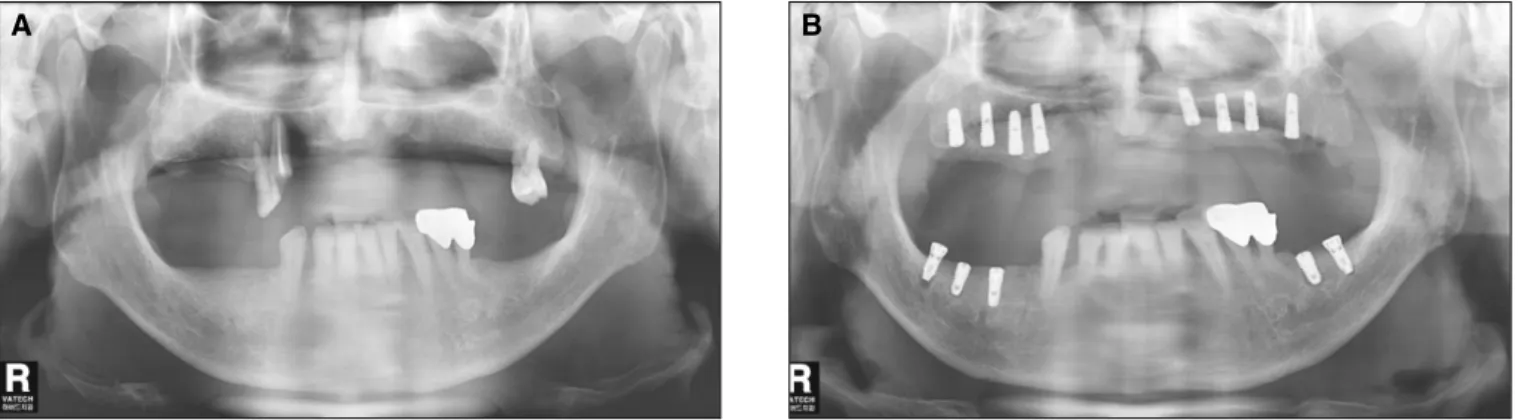
A 63-year-old man with no medical history presented with a partially edentulous lower jaw. No previous periapical patholo- gy was noted in the mandible in the preoperative radiographs.
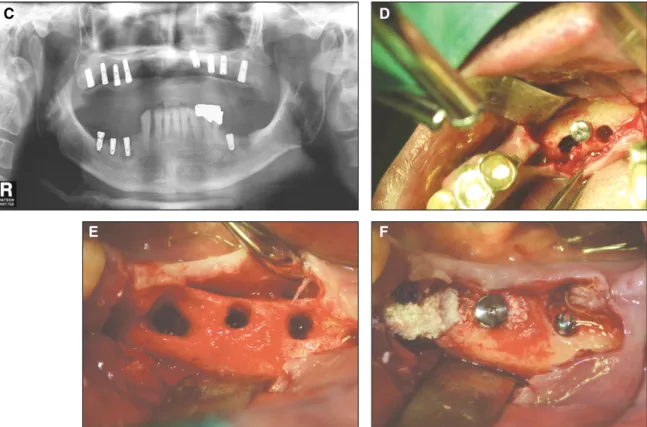
(Fig. 1. A) Osstem implants were placed in the positions #36, 37, 45, 46, and 47.(Fig. 1. B) The patient complained of pain within 7 days of surgery despite the administration of antibi- otics and analgesics. Swelling and suppuration were not observed; however, periapical radiographs showed increased radiolucency in the middle and apical portions of the implants after 4 weeks. In particular, peri-implant radiolucencies on sites #37 and, 45 were noticeable.(Fig. 1. C) Reoperation was performed immediately after noting the radiolucencies. During the surgery, a large bone defect was noted around the implants, and a high grade of implant mobility was detected at site #37.
(Fig. 1. D) No implant mobility was noted for the positions
#44, 45, and 46; however, the implants could be removed easi- ly without any resistance by reverse torque.(Figs. 1. E, F)
A B
Fig. 1. A: Preoperative radiography. B: Postoperative radiography. Implants were placed on areas #36, 37, 45, 46, and 47 in the mandible.
Kyu-Hong Jo et al: Thermally induced bone necrosis during implant surgery: 3 case reports. J Korean Assoc Oral Maxillofac Surg 2011
Case 2
A 57-year-old woman with a medical history of hypertension presented with a partially edentulous lower jaw. Implants were placed in the positions #45 and 47(Fig. 2. C), and implant fail- ure occurred in area #45.(Fig. 2. D) The patient complained of continuous pain that did not subside with persistent gingival inflammation on area #45 despite antibiotic and analgesic
treatment.(Fig. 2. A) After 4 weeks, a large radiolucent area was noted, with a larger diameter in the middle portion of the implants as compared to the coronal and apical portions.
Reoperation was performed, and a new implant was placed on area #46 because of a large bone defect in area #45(Figs. 2. B, D), following which the gingival inflammation and pain sub- sided. Two months after reoperation, a new implant was placed deep within area #45 for achieving primary stability to com-
Fig. 1. C: The radiolucency around the middle portion of the #37, 45, 46, and #47 implants was noted, and was particularly remarkable at #37 and #45. D: Actual photograph at 4 weeks. The implants were removed, and a large bony defect was seen. E: Actual photograph at 4 weeks. The implants were removed, and a large bony defect was seen. F: New implants were placed along with bone grafts.
Kyu-Hong Jo et al: Thermally induced bone necrosis during implant surgery: 3 case reports. J Korean Assoc Oral Maxillofac Surg 2011
C D
E F
A B
Fig. 2.A: After 3 weeks, gingival inflammation was noted along with continuous pain. B: The implant was removed (after 1 month), and a large bony defect was seen.
Kyu-Hong Jo et al: Thermally induced bone necrosis during implant surgery: 3 case reports. J Korean Assoc Oral Maxillofac Surg 2011
Thermally induced bone necrosis during implant surgery: 3 case reports
Fig. 2.C: First surgery radiography: Implant was successfully placed on areas #45 and 47. D: After 1 month, a new implant was placed on area #46 because a large bony defect was present at area #45, which manifested as a large radiolucency with the middle portion being larger than the coronal and apical portions. E: After 2 months, a new implant was placed on area #45. F: At 5 months after the second surgery, the final prosthesis was delivered.
Kyu-Hong Jo et al: Thermally induced bone necrosis during implant surgery: 3 case reports. J Korean Assoc Oral Maxillofac Surg 2011
C D
E F
A B
pensate for the bone defect.(Fig. 2. E) The radiolucencies grad- ually resolved, and implant loading was initiated at 5 months after implant placement on area #45.(Fig. 2. F)
Case 3
A 58-year-old woman with no significant medical history presented with a partially edentulous lower jaw. Two implants
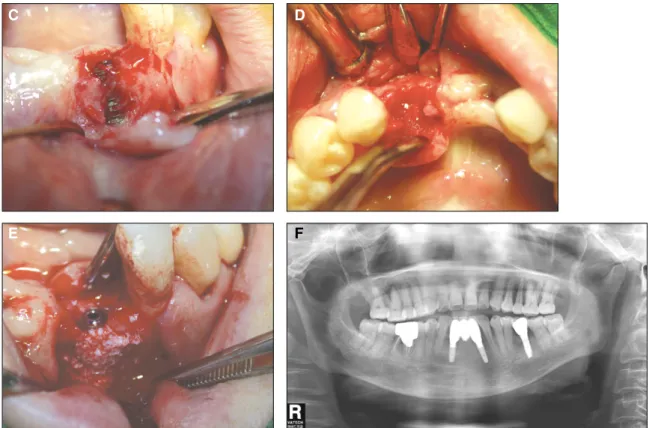
were placed on the mandibular incisor area, and implant failure occurred in area #32(Fig. 3. A), with the patient complaining of pain. A radiolucent area, which was particularly noticeable in the middle portion of the implant, was noted on radiogra- phy.(Fig. 3. B) Reoperation was performed, and bone dehis- cence was found during the surgery.(Figs. 3. C-E) After the surgery, the symptoms subsided, and the final prosthesis was delivered 4 months after the second surgery.(Fig. 3. F)
Fig. 3. A: First surgery: Post operative radiography. B: A radiolucent area appeared on the radiograph 3 weeks after surgery.
The middle portion of #32 implant was remarkably radiolucent.
Kyu-Hong Jo et al: Thermally induced bone necrosis during implant surgery: 3 case reports. J Korean Assoc Oral Maxillofac Surg 2011
Surgical procedure
Surgery was performed under local anesthesia (2% lidocaine with 1:100,000 epinephrine), raising a full thickness flap in the affected zone. Implants were removed easily by reverse torque, and curettage of the inflamed tissue and necrotic bone was per- formed. The surgical bed was adequately irrigated with sterile saline solution. A new implant was placed in each site wherein a failed implant was removed. If achieving primary stability was difficult due to a bone defect, the new implant was placed in another site near the failed implant; alternatively, the place- ment of the implant was delayed. The exposed part of the implant surface was grafted with autogenous bone. Xenogenic bone material and a bioabsorbable collagen membrane were placed over the autogenous bone. At 4-5 months after reopera- tion, prosthetic rehabilitation of the implants was performed.
Ⅲ. Discussion
The patients’clinical characteristics are summarized in Table 1. Each of the patients experienced pain within 1 week after surgery, which did not subside despite the administration
of antibiotics and analgesics. In 1 patient, persistent gingival inflammation was noted; however, no noticeable swelling or suppuration was observed in any of the patients. Although 1 implant was mobile, no mobility was noted in the others. After 3-4 weeks, the obvious changes of radiolucency were con- firmed on radiologic study, and the middle portion of the radi- olucency was noted to be greater than the coronal and apical portions in each case. On raising the flap, varying degrees of bone loss were noted; in some instances(Figs. 1. E, F; Figs. 2.
D, F), a large amount of bone destruction including that of the buccal plate was observed within 3-4 weeks, which might make it difficult to place the new implants in the reoperation.
Penarrocha-Diage et al. suggested the periapical surgery to gain access to apex through an ostectomy window, but it was not assured to remove the granular tissue completely.23 Thus, we removed the implants and approached the surgical field through the site of implant extraction. However, this approach was also difficult to gain access to debride the inflamed tissue and necrotic bone in the cases with intact crestal bone, which could not be removed to secure a surgical sight because the crestal bone was important to achieve primary stability. A large bone defect in the crestal bone at some of cases made it
Fig. 3.C: Bony dehiscence was noted after 4 weeks. D: The implant was removed, and a bone defect was observed. E: The Osstem implant (GS type 3.5×11.5 mm) was replaced with GBR. F: At 4 months after the second surgery, the final prosthe- sis was delivered.
Kyu-Hong Jo et al: Thermally induced bone necrosis during implant surgery: 3 case reports. J Korean Assoc Oral Maxillofac Surg 2011
C D
E F
Thermally induced bone necrosis during implant surgery: 3 case reports
more easier to debride the surgical site, but it was difficult to achieve the primary stability, which resulted in placing the implant deeply.(Fig. 2. E) After the reoperation, the pain and inflammation subsided in each patient. The radiolucencies gradually resolved entirely. At 4-5 months after reoperation, implant loading was initiated.
Implant failures can occur for a variety of reasons. In partic- ular, the suppression of peri-implant bone formation directly affects the success of dental implants. Because of the absence of an obvious cause in this case report, it is necessary to inves- tigate all possible causes of implant failure, the potential expla- nations for which are systemic factors in patients, latent infec- tion activated by surgical trauma, the factors related with the implant, overcompression, reactivity to bone graft material, and bone overheating.6-8
Systemic factors of patients that may influence implant fail- ure include smoking, alcoholism, steroid therapy, metabolic disease (diabetes), systemic illness, and chemotherapy/radio- therapy.6Among our patients, one was a smoker and another had a medical history of hypertension without any other sys- temic illness. None of the 3 patients had a history of alco- holism, steroid therapy, diabetes, chemotherapy, or radiothera- py. Sverzut et al.24suggested that tobacco use alone cannot be
considered as a risk for early implant failure, since early implant loss rates were 3.32% in the nonsmoking group and 2.81% in the smoking group in their study. Although undiag- nosed systemic disease may have existed, it appears unlikely for all patients to have had undiagnosed systemic disease affecting implant healing.
It is possible that a latent infection was activated at the time of implant placement. Although noticeable swelling and sup- puration were not observed in any of the patients, persistent gingival inflammation and continuous pain were noted in the second case. Swelling and suppuration cannot be detected unless the defects reach the cortical bone. However, bone dehiscence was found after raising the flap in the third case;
however, swelling and suppuration were not observed.
Although maxillary surgery is more complex than the mandibular surgery performed in the first case, inflammatory processes occurred only in the mandible.
Another factor for implant failure is contamination prior to implant placement. Possible sources of direct bacterial contam- ination during surgery are the surgical instruments, gloves, air in the operating room, air exhaled by the patient, saliva in the oral cavity, and peri-oral skin.8Such infections can result in an abscess around an implant, eventually accompanied by a fistu- Table 1.Clinical characteristics of patients
Case 1 Case 2 Case 3
Age (Years) 63 57 58
Gender Male Female Female
Systemic factor Smoking1 Hypertension None
Location2 #37, 45, 46, 47 #45 #32
Implant Type, Diameter, and Length #37: SS 4.1×7 mm3 #45: SS 4.1×10 mm #32: GS 3.5×11.5 mm
#45: SS 4.1×7 mm
#46: GS 4.0×8.5 mm
#47: GS 4.0×10 mm
Submerged Yes Yes Yes
Symptoms
Pain Yes Yes Yes
Mobility Yes No No
Suppuration No No No
Radiotransparency Yes Yes Yes
Replaced implant Type, Diameter, and Length #37: SS 4.1×7 mm #46: GS 4.0×10 mm #32: GS 3.5×11.5 mm
#45: GS 3.5×11.5 mm
#46: SS 4.1×7 mm
#47: GS 4.5×7 mm
Loading after reoperation 5 months 4 months
1. He did not smoke more than 10 cigarettes per day.
2. Implant localization in accordance with international system of dental formula.
3. Osstem implant system (SS type, GS type) and implant diameter × length.
Kyu-Hong Jo et al: Thermally induced bone necrosis during implant surgery: 3 case reports. J Korean Assoc Oral Maxillofac Surg 2011
la.25However, in the first case, it is difficult to understand why only the mandibular implants (four implants among five implants) failed in spite of placing multiple implants on the upper and lower jaws at the same time.
Diameter and length of implants may be related with the ear- ly implant failures. Alsaadi et al. reported that significantly more failures were detected in implants with a wide platform (5 mm) when compared with implant with regular platform (4 mm).26Short implants showed significant statistical differences with early loss of implant (6-9 mm) compared with longer implants.26,27Implants with a wide platform was not used in the present cases, but short implants was used in the first case.
Therefore, it is considered length of implants as the factor of the failure, especially in the first case. The surface treatment is an important issue. Pommer et al. reported that rough-surfaced implants showed significantly lower early implant failure rates than machined ones.27The Osstem implant system used in these cases has rough-surface which is set by the resorbable blast media (RBM) treatment. Also, in the aspect of marginal bone loss, Jung et al. showed that no significant difference was observed between the Osstem implant system and the Straumann dental implant system (Institut Straumann AG, Basel, Switzerland) before functional loading.28 Thus, the diameter and surface treatment of implants may not be consid- ered the factor of implant failure of the present cases.
Overcompression of bone occurs early in the healing phase and may lead to necrosis.7However, it first leads to crestal bone loss because the crestal cortical bone area receives maxi- mal pressure. If overcompression was the primary cause of failure, radiographic changes in the crestal bone should have appeared first. In the present cases, radiolucency was observed to be greater in the middle or apical portion of implant than the crestal portion although a large bone defect was seen in the crestal bone at some of cases.(Fig. 1. E; Fig. 2. B)
Overheating of the bone is one of the causes of early implant failures and can contribute to necrosis around implants. This critical temperature has been popularly believed to be around 56℃ because alkaline phosphatase is denatured at this temper- ature level.29,30Eriksson and Albrektsson reported that bone is more susceptible to thermal injury, and established that the threshold level for bone survival during implant site prepara- tion is 44-47℃, with a drilling time of less than 1 min.10,11 In addition, heat stress at 50℃ for 1 min or 47℃ for more than 1 min hinders osteoblast regeneration and causes bone resorption and conversion to adipocytes, thus leading to failure of osseous tissue formation. However, there has been some controversy regarding the influence of overheating according to a recent study. Yoshida et al.18experimented with rat calvaria heated to
37℃, 43℃, 45℃, and 48℃ for 15 min. The authors concluded that while heating osseous tissue delays bone formation on the bone surface in a temperature-dependent manner, new bone formation is eventually achieved. However, Yoshida et al. sug- gested that such a delay in bone formation may lead to implant failure in the clinical setting.
It is generally considered that temperature increase in corti- cal bone is higher because the cortical bone is stronger and has a higher coefficient of friction as compared with spongious bone; however, spongious bone is exposed to greater heat in the clinical setting due to irrigation. Cem Sener et al.19reported that temperature increases were higher in the cortical bone without irrigation, but higher in spongious bone with irriga- tion. Mirsir et al.20reported that significantly greater tempera- ture increases were observed at 6- and 9-mm depths as com- pared with 3-mm depth. This result was consistent with the findings of Cordioli and Majzoub, who reported higher tem- peratures at a 8-mm depth versus a 4-mm depth using twist drills.15These results may explain why radiolucency was noted to be greater in the middle or apical portion of implant.
Eriksson & Albreksson reported that thermally induced bony change is not an immediate occurrence but a slow-developing process that extends over a period of 4 weeks10. In an experi- mental study11, Eriksson & Albreksson inserted test implants in rabbit tibia, and heated them to 44℃, 47℃, and 50℃ for 1 min. They inserted control implants in the contralateral tibia, with no heat being applied to the control implants. After a healing period of 4 weeks, the animals were anesthetized, and the implant site was exposed. The test implants (50℃ for 1 min), unlike the control implants, could be easily rotated with a pair of tweezers; moreover, a significant number of test implants were considerably unstable. In our cases, radiograph- ic changes were confirmed after 3-4 weeks, and no overt infec- tion was noted. Only one implant showed mobility, and all the implants were easily removed without any resistance by reverse torque.
The main limitation in our case report is the lack of histopathological diagnoses. Piattelli et al. reported that aseptic necrosis is a key feature of non-infectious trauma to bone.22 Therefore, the lack of histological findings leads to a tentative diagnosis in this case report.
Finally, a bone graft could have prevented an adequate blood supply, resulting in necrosis and implant failure. Further, extensive bone grafts made primary flap closure more difficult.
Thus, this remains a potential reason of implant failure although none of our patients required extensive bone grafts.
Multiple factors have been implicated in the production of heat during osteotomy preparation. These factors include drill
Thermally induced bone necrosis during implant surgery: 3 case reports
speed, bone density, drill sharpness, drill force, drill depth, drill design, drill diameter, and irrigation.12-20
In this case report, a drill speed of 1,000 rpm was used.
Sharawy et al.12evaluated the heat generation from 3 drilling speeds (1,225, 1,667, and 2,500 rpm) and reported that 2,500 rpm could decrease the risk of osseous damage. The tempera- ture difference between 1,225 rpm and 2,500 rpm was less than 2℃; therefore, we consider that the drill speed may not be a primary cause of heat generation.
A recent study concerning bone density demonstrated that the anterior site of the mandible has the highest bone density (927 ± 237 HU), followed by the posterior mandible (721 ± 291 HU), the anterior maxilla (708 ± 277 HU), and the poste- rior maxilla (505 ± 274 HU).31In our case report, bone necro- sis was observed in the mandible and not in the maxilla.
Although the implants were placed in the mandible and maxil- la simultaneously in the first case, implant failures suspected to be caused by thermally induced bone necrosis were found only in the mandible. Therefore, care should be taken to avoid heat when placing implants into dense bone.
It was difficult to estimate the drilling force used in our clin- ic because there was no device for measuring the drill force.
Tehemar noted that low hand pressure that falls in the range of 2 kg should be applied throughout the complete bony housing preparation to generate lower heat.32
Chacon et al. suggested that drill design affects heat genera- tion by measuring the heat generated in bone using 3 implant drill systems.13 The drill system wherein the temperature increase was highest among the 3 systems lacked a relief angle and clearance angle that tended not to rub against the work- piece, resulting in lower frictional heat. The drill design of the implant system used in this case report was a triple twist drill with a relief angle that was similar to system A, which contin- ued to maintain drill temperatures below 47℃ in the study of Chacon and coworkers.
To overcome thermal damage, the drilling area is irrigated with saline solution.33Ercoli et al. reported that bone tempera- ture during drilling is influenced more by coolant availability and temperature than by drill design.16 Lavelle and Wedgwood34reported that internal irrigation was more effec- tive in reducing frictional heat generated during bone drilling as compared with external irrigation. Sutter and associates found no difference in the recorded temperatures when drilling with internally or externally cooled twist drills.35Cem Sener et al.19showed that external irrigation with saline solution at 25℃
resulted in temperatures well below the critical level of 47℃
and suggested that external irrigation appeared to be more effec- tive than internal irrigation. They also reported that external irri-
gation was more effective with saline at 10℃ than with saline at 25℃. In our patients, we used a Kavo engine and handpiece with an external irrigation system, and irrigated the operating site sufficiently with normal saline at room temperature.
Increased heat production cause by worn drills may result in primary failure to achieve osseointegration. Mirsir et al.20 found that the thermal rise was significantly higher at 45 and 50 uses, and Queiroz et al.17reported that the repeated use of drills altered the protein balance, after 30 perforations. Chacon et al.13supported the fact that as the use of the drill increased, the temperature also increased. Although systems A and C continued to maintain drilling temperatures below 47℃ in the study of Chacon and coworkers, the maximum temperature of system C was 46.6℃ after 25 uses. If the drills were used more than 25 times, the temperature could be increased above 47℃
by the worn drills. Because of the shortage of information on the longevity of implant surgical drills, the surgeon’s decision regarding the replacement of the drill is arbitrary. In our cases, we were unable to determine how many times the drills had been used. Therefore, we consider that worn drills are the most likely cause of heat generation.
Ⅳ. Conclusion
Implants may fail for a variety of reasons. No obvious cause was determined in this case report. However, we carefully diagnosed these cases as thermally induced bone necrosis based on the clinical findings and radiologic evidences.
Surgical trauma is significantly reduced with the use of well- sharpened drills under saline cooling and graduated-step drilling. More research is needed to establish the criteria for replacing drills and to clarify the effect of heat on bone mar- row rather than on cortical bone.
References
1. Branemark PI, Adell R, Breine U, Hansson BO, Lindstrom J, Ohlsson A. Intra-osseous anchorage of dental prostheses. I.
Experimental studies. Scand J Plast Reconstr Surg 1969;3:81- 100.
2. Higuchi KW, Folmer T, Kultje C. Implant survival rates in par- tially edentulous patients: A 3-year prospective multicenter study. J Oral Maxillofac Surg 1995;53:264-268.
3. Mazzocchi A, Passi L, Moretti R. Retrospective analysis of 736 implants inserted without antibiotic therapy. J Oral Maxillofac Surg 2007;65:2321-2323.
4. Li W, Chow J, Hui E, Lee PKH, Cjow R. Resprospective study on immediate functional loading of edentulous maxillas and mandibles with 690 implants, up to 71 months of follow-up. J Oral Maxillofac Surg 2009;67:2653-2662.
5. Buser D, Schenk RK, Steinemann S, Fiorellini JP, Fox CH, Stich H. Influence of surface characteristics on bone integration of tita- nium implants. A histomorphometric study in miniature pigs. J
Biomed Mater Res 1991;25:889-902.
6. Pye AD, Lockhart DEA, Dawson MP, Murray CA, Smith AJ. A review of dental implants and infection. J of Hospital Infection 2009;72:104-110.
7. Bashutski JD, D`Silva NJ, Wang HL. Implant compression necrosis: Current understanding and case report. J Periodontol 2009;80:700-704.
8. Quirynen M, De Soete M, Van Steenberghe D. Infectious risks for oral implants: A review of the literature. Clin Oral Implants Res 2002;13:1-19.
9. Branemark PI, Zarb GA, Albrektsson T. Tissue integrated pros- theses: Osseointegration in clinical dentistry. Chicago, IL:
Quintessence 1985:129-143.
10. Eriksson R, Albrektsson T. Temperature thresholds for heat in- duced bone tissue injury: A vital-microscopic study in the rabbit.
J Prosthet Dent 1983;50:101-107.
11. Eriksson R, Albrektsson T. The effect of heat on bone regenera- tion: An experimental study in the rabbit using the bone growth chamber. J Oral Maxillofac Surg 1984;42:705-711.
12. Sharawy M, Misch CE, Weller N, Tehemer S. Heat generation during implant drilling: The significance of motor speed. J Oral Maxillofac Surg 2002;60:1160-1169.
13. Chacon GE, Bower DL, Larsen PR, McGlumphy EA, Beck FM.
Heat production by 3 implant drill systems after repeated drilling and sterilization. J Oral Maxillofac Surg 2006; 64:265-269.
14. Eriksson R, Adell R. Temperatures during for the placement of implants using the osseointegration technique. J Oral Maxillofac Surg 1986;44:4-7.
15. Cordioli G, Majzoub Z. Heat generation during implant site preparation: An in vitro study. Int J Oral Maxillofac Implants 1997;12:186-193.
16. Ercoli C, Funkenbusch PD, Lee HJ, Moss ME, Graser GN. The influence of drill wear on cutting efficiency and heat production during osteotomy preparation for dental implants: A study of drill durability. Int J Oral Maxillofac Implants 2004;19:335-349.
17. Queiroz TP, Souza FA, Okamoto R, Margonar R, Pereira-Filho VA, Garcia Junior IR et al. Evaluation of immediate bone-cell viability and of drill wear after implant osteotomies:
Immunohistochemistry and scanning electron microscopy analy- sis. J Oral Maxillofac Surg 2008;66:1233-1240.
18. Yoshida K, Uoshima K, Oda K, Maeda T. Influence of heat stress to matrix on bone formation. Clin. Oral Impl. Res.
2009;20:782-790.
19. Cem Sener B, Dergin G, Gursoy B, Kelesoglu E, Slih I. Effects of irrigation temperature on heat control in vitro at different drilling depths. Clin. Oral Impl. Res. 2009;20:294-298.
20. Misir AF, Sumer M, Yenisey M, Ergioglu E. Effect of surgical drill guide on heat generated from implant drilling. J Oral Maxillofac Surg 2009;67:2663-2668.
21. Piattelli A, Piattelli M, Mangano C, Scarano A. A histologic evaluation of eight cases of failed dental implants: Is bone over- heating the most probable cause? Biomaterials 1998;19:683-690.
22. Piattelli A, Scarano A, Balleri P, Favero GA. Clinical and histo- logic evaluation of an active “Implant Periapical Lesion”: A case report. Int J Oral Maxiilofac Implants 1998;13:713-716.
23. Penarrocha-Diage M, Boronat-Lopez A, Garcia-Mira B.
Inflammatory implant periapical lesion: Etiology, diagnosis, and treatment - presentation of 7 cases. J Oral Maxillofac Surg 2009;67:168-173.
24. Sverzut AT, Vitti Stabile GA, Moraes M, Mazzonetto R, Fernandes Moreira RW. The influence of tobacco on early dental implant failure. J Oral Maxillofac Surg 2008;66:1004-1009.
25. Piattelli A, Scarano A, Piattelli M. Abscess formation around the apex of a maxillary root form implant: Cinical and microscopical aspects. A case report. J Periodontol 1995;66:899-903.
26. Alsaadi G, Quirynen M, Komarek A, van Steenberghe D. Impact of local and systemic factors on the incidence of oral implant failures, up to abutment connection. J Clin Periodontol. 2007;34:
610-617.
27. Pommer B, Frantal S, Willer J, Posch M, Watzek G, Tepper G..
Impact of dental implant length on early failure rates: a meta- analysis of observational studies. J Clin Periodontol. 2011;
38:856-863.
28. Park JC, Ha SR, Kim SM, Kim MJ, Lee JB, Lee JH. A random- ized clinical 1-year trial comparing two types of non-submerged dental implants. Clin Oral Implants Res. 2010;21:228-236.
29. Matthews LS, Hirsch C. Temperature measured in human corti- cal bone when drilling. J Bone joint Surg[Am] 1972;54:297-308.
30. Rhinelander F, Nelson CL, Steward RD, Steward CL.
Experimental reaming of the proximal femur and acrylic cement implantation. Vascular and histologic effects. Clin Orthop 1979;141:74-89.
31. Turkyilmaz I, Sennerby L, McGlumphy EA, Tozum TF.
Biomechanical aspects of primary implant stability: A human ca- daver study. Clin Implant Dent Relat Res 2009;11:113-119.
32. Tehemar SH. Factors affecting heat generation during implant site preparation: A review of biologic observations and future considerations. Int J Oral Maxillofac Implants 1999;14:127-136.
33. Lundskog J. Heat and bone tissue. An experimental investigation of the thermal properties of bone and threshold levels for thermal injury. Scand J Plast Reconstr Surg 1972;9:1-80.
34. Lavelle C, Wedgwood D. Effect of internal irrigation on friction- al heat generated from bone drilling. J Oral Surg 1980;38:499- 503.
35. Sutter F, Krekeler G, Schwammberger AE, Sutter FJ. Atraumatic surgical technique and implant bed preparation. Quintessence Int 1992;23:811-816.