Development of A Freezing Resistant and High-yielding Wheat-Rye 1RS Translocation Cultivar ‘TRANS’
Yong Weon Seo * , Yong Jin Lee, and Dae Yeon Kim
Division of Biotechnology, College of Life Sciences and Biotechnology, Korea University, Seoul, Republic of Korea
내한성 및 다수확 호밀 1RS 전좌 밀 신품종 ‘TRANS’
서용원
*
⋅이용진⋅김대연고려대학교 생명과학대학 생명공학부
Abstract : The wheat-rye translocations are world widely used in wheat breeding. Among the various forms of wheat-rye translocation, the 1RS (short arm of rye chromosome 1) translocations are the most widely used because of the valuable genes (e.g. biotic / abiotic resistance genes) introduced from rye. We have developed a new wheat-rye cultivar ‘TRANS’ which have freezing resistance and high yield in this study. ‘TRANS’ is a new wheat-rye translocation cultivar developed by crossing between common wheat ‘Keumkangmil’ and ‘951188-G3-G1’, a 1AL.1RS translocation derived from ‘Fleming’ with the aim of high yield and resistant genes to various unfavorable environments carried by 1RS. ‘TRNAS’ have clearly different genetic and agronomic traits to the control cultivar ‘Keumkangmil’. The heading date and maturity of ‘TRANS’ are later than that of
‘Keumkangmil’. ‘TRANS’ has 1023 spike number per square meters and grain yield of 541 kg/10a, which are higher than
‘Keumkangmil’ (904 spike number/m
2and 504 kg/10a yield). ‘TRANS’ showed winter hardiness and powdery mildew resistance in artificial infection test and field evaluation. ‘TRANS’ gives lower flour yield than ‘Keumkangmil’ but ash and protein content were similar to that of ‘Keumkangmil’. The color of flour and noodle dough of ‘TRANS’ were darker than ‘Keumkangmil’.
Quality parameters related to milling, flour quality, noodle dough and end-use quality of ‘TRANS’ indicates that ‘TRANS’ is soft wheat suitable for noodle making. ‘TRANS’ can be cultivated in entire part of Korea.
Registration Grant No.: 4695
Keywords : Common wheat, ‘TRANS’, Wheat-rye translocation, 1RS
*Corresponding author (E-mail: [email protected], Tel: +82-2- 3290-3005. Fax: +82-2-3290-3501)
(Received on June 11, 2016. Accepted on July 6, 2016.)
Copyright ⓒ 2016 by the Korean Society of Breeding Science
This is an Open-Access article distributed under the terms of the Creative Commons Attribution Non-Commercial License (http://creativecommons.org/licenses/by-nc/3.0) which permits unrestricted non-commercial use, distribution, and reproduction in any medium, provided the original work is properly cited.
Introduction
Wheat is the third most produced food crop in the world, followed maize and rice (FAO 2013). In Korea, the proportion of wheat in the annual grain consumption per capita is increasing (28.9% in 2015). However, despite the increasing importance of wheat, the self-sufficiency of wheat (forage excluded) is only 1.1% (Ministry of Agriculture, Food and Rural Affairs 2015). Unfavorable environments are one of the main problems for cultivating wheat in Korea, such as
cold winter, the overlap of rainy season and harvesting, as well as the lack of management systems after production and harvest.
Common wheat is consisted of three subgenome set of A, B and D derived from three each ancestor species Triticum urartu, Aegilops speltoides, and Aegilops tauschii, respectively.
The short arms and long arms of 7 chromosomes of each
A, B, and D subgenome are named as 1AS (for short arm
of subgenome A chromosome 1), 7DL (for long arm of
subgenome D chromosome 7), etc. Likewise, the 1RS is short
arm of rye chromosome 1, and can be translocated to wheat
homoeologous group 1 (1A, 1B, and 1D). Introduction of
1RS using wheat-rye translocations is reported to have
defective effects on bread-baking quality (Martin & Stewart 1986) because of the secalin, the seed storage prolamin of rye (Carrillo et al. 1992). Despite of these disadvantages, 1RS is the most widely used alien resources in wheat breeding to overcome the limited gene pool of cultivated wheat. 1RS is well known to carry rust, powdery mildew, green bugs resistance and other agronomically useful genes (Schlegel
& Korzun 1997, Zeller et al. 1973). The 1RS wheat-rye translocation also exhibit higher grain yield (Carver &
Rayburn 1994, Villareal et al. 1998, Lee & Seo 2015).
Here we report the development of a new 1AL.1RS translocation cultivar ‘TRANS’ that was obtained from the cross between ‘Keumkangmil (widely used cultivar in Korea)’ and the experimental wheat-rye translocation breeding line ‘951188-G3-G1’ to enhance various resistances including freezing tolerance and yield.
Materials and methods
Plant materials
The progeny population for ‘TRANS’ were produced by cross between Korean hard white winter wheat (HWWW) cv. ‘Keumkangmil’ as maternal line (Song et al. 1997, Nam et al. 1998) and an experimental wheat-rye translocation breed ing line 951188-G3-G1 as a paternal line. A breeding line 951188-G3-G1 is selected from ‘Fleming’*4/3/PIO2580//T83 103*2/’Hamlet’ and its 1RS was derived from ‘Fleming’.
‘Fleming’ (Reg. no. CV-878, PI 599615), the soft red winter wheat (SRWW), was made from the cross between Georgia breeding lines GA821264-2 and GA79102 in 1990 and has 1RS derived from ‘Amigo’ (Johnson et al. 2000).
Evaluation of genetic, agronomic traits and quality characteristics
The selection of progenies and evaluation of agronomic characteristics were performed in the Korea University research field (1997 – 2004, 2008 – 2011) and in National Institute Crop Science (NICS, 2005 – 2007) according to
the guidelines of Korea Seed & Variety Service (1997) and the experts’ opinion. Evaluation of the end-use quality was carried out in NICS according to the quality evaluation manual (NICS 2009).
Determination of low temperature tolerance levels Low temperature tolerance levels were determined according to Båga et al. (2007) and Monroy et al. (2007) with some modifications. Seeds of ‘TRANS’ and
‘Keumkangmil’ were sown in vermiculite and soil (1:1, v/v) and germinated. Seedlings of 2 cultivars were vernalized at 4°C for 4 weeks and then 2°C for 12 hours. The artificial freeze test was performed by reducing the temperature at a rate of 2°C per 2 hours down to -22°C. Eight plants per cultivar were removed at each of eight temperatures: -8, -10, -12, -14, -16, -18, -20 and -22°C. After freezing, seedlings were placed at 4°C for 12 hours and then placed in the greenhouse at 20°C for regrowth. Survival was scored as the proportion of plants to regrow after 3 weeks. Plant recovery (alive vs dead) was rated for each cultivar and low temperature was expressed as the LT
50, or lethal temperature 50%. The experiment was replicated three times.
Identification of 1RS chromatin
To identify the presence or absence of 1RS chromatin in translocation, genomic DNAs of ‘Keumkangmil’, ‘TRANS’,
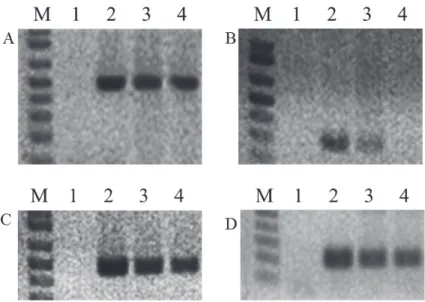
‘Imperial’ (rye) and ‘Kavkaz’ (1BL.1RS translocation) were extracted using the i-genomic PLANT DNA Extraction Mini Kit (INTRON, Korea). The gene-based 1RS specific markers and PCR analysis were performed according to Lee & Seo (2015).
To identify 1RS specific protein subunits, we used A-PAGE
(Acid-Polyacrylamide gel electrophoresis) analysis. The
prolamin fraction were extracted from the 20 mg flour of
each ‘Keumkangmil’ and ‘TRANS’ with 100 μl of 1.5 M
dimethylformamide (DMF) for 1 hour at room temperature
with occasional vortexing, followed by centrifugation 14,000g
for 10 min. The 50 μl of supernatant containing prolamin
was mixed with sample buffer (4 μl of 1% methylgreen and
Year ‘97 ‘98 –
‘99
‘99 –
‘00
‘00 -
‘01
‘01 -
‘02
‘02 -
‘03
‘03 -
‘04
‘04 -
‘05
‘05 -
‘06
‘06 -
‘07
‘07 -
‘08
‘08 -
‘09
‘09 -
‘10
Generations F
1F
2F
3F
4F
5F
6F
7F
8F
9F
10F
11F
12F
13‘Keumkangmil’
× 951188-G3-G1
97072
(32-1) SHS
zSHS SHR
ySHR SHR SHR PYT
xPYT PYT PYT SI
wSI
z
SHS: Single head selection
y
SHR: Single head row
x
PYT: Preliminary yield trial
w
SI: Seed increase
Table 1. Breeding scheme of a new wheat-rye translocation cultivar ‘TRANS’.
Cultivar Heading date Maturity Leaf color Seed coat color
‘TRANS’ May 3 June 15 Light green Red
‘Keumkangmil’ April 27 June 11 Green White
Table 2. Characteristics of ‘TRANS’.
25 μl of 70% glycerol). Gel electrophoresis analysis followed the method of Lookhart et al. (1982).
Results and discussion
Production and selection of cross derivatives and development of ‘TRANS’
The ‘TRANS’ is developed with the aim of high-yield and disease/insect resistance. Its breeding scheme is shown in Table 1. The F
2population was obtained from the cross between ‘Keumkangmil’ and 951188-G3-G1 using
‘Keumkangmil’ as the maternal part in 1997. From F
2population, the single head selection (SHS) was performed for 2 years and the selected spikes were sown in single head row (SHR) in 2000. The uniformity and agronomic traits of selected head rows were evaluated, and if needed, we performed SHS continuously for 3 years. In 2004, we selected F
7rows that showed high performance on field trial and superior agronomic traits, followed by preliminary yield trial (PYT) from 2005 to 2007 in National Institute Crop Science (NICS). The selected lines were sown (2007) and traits of the lines were evaluated (2008 – 2011) in Korea University research field. The final selection was made in 2005 and the highest yielding line named as ‘TRANS’ was entered regional tests. ‘TRANS’ was applied for protection of new
varieties (application No.: 2011-432) in 2011 and consequently the plant variety right was registered (grant No.:
4695).
Most of 1RS translocations were originated from two wheat varieties ‘Amigo’ (‘Insave’ rye source) and ‘Kavkaz’
(‘Petkus’ rye source), for 1AL.1RS and 1BL.1RS, respectively (Berzonsky et al. 1991, Schlegel & Korzun 1997). More than 50% of registered wheats or commercial varieties are possessing 1RS (Villareal et al. 1998, Hoffmann 2008). In Korea, the 1BL.1RS translocation ‘Seri 82’ from CIMMYT was used for development of ‘Jokyoung’ (Kang et al. 2006), and a new 1BL.1RS translocation derived from Korean rye cultivar ‘Paldanghomil’ was developed (Ko et al. 2002). In this study we developed a new 1AL.1RS wheat-rye translocation cultivar where 1RS has been derived from
‘Amigo’.
Measurement of genetic, agronomic traits and low temperature tolerance
The average (‘05 –’07) heading date of ‘TRANS’ is about 6 days later than the control cultivar ‘Keumkangmil’ in southern part of Korea. Maturity is about 4 days later than
‘Keumkangmil’. ‘TRANS’ is winter habit, awned spike, fine leaf of light green color and red seed coat color (Table 2).
The major agronomic traits are evaluated as described in
Cultivar Plant height (cm)
Spike length (cm)
Spike No.
(No./m
2)
Liter weight (g/L)
1000-kernel weight (g)
Yield (kg/10a)
‘TRANS’ 92.2 8.2 1023 763.33 40.7 541
‘Keumkangmil’ 88.8 7.8 904 788.67 45.4 504
Table 3. Agronomic traits and yield components of ‘TRANS’.
Cultivar
Noodle dough Texture of cooked noodle
Bread volume (ml)
Confection diameter Thickness (mm)
(mm)
Color (L)
Hardness (N)
Elasticity (%)
Viscosity (%)
‘TRANS’ 1.92 77.07 4.1 0.91 0.61 725 70.53
‘Keumkangmil’ 1.87 80.52 4.4 0.92 0.62 863 77.50
Table 6. End-use quality parameters of ‘TRANS’.
Cultivar Flour yield (%)
Ash content (%)
Protein content (%)
Sedimentation value
(ml)
Flour color (CIE)
zL a b
‘TRANS’ 66.0 0.51 10.5 35.9 90.04 -1.39 12.44
‘Keumkangmil’ 72.0 0.53 10.9 53.5 91.48 -1.07 10.02
z
L: lightness, a: redness-greenness, b: yellowness-blueness Table 5. Milling and flour quality parameters of ‘TRANS’.
Cultivar Winter hardiness
zPowdery mildew
yArtificial infection Field evaluation
‘TRANS’ 1 MR R
‘Keumkangmil’ 3 S S
z
1: Resistant, 9: Susceptible
y