| Abstract |
Purpose: Functional ankle instability (FAI) causes tension in the joints, ligaments, and tendons, and the impact on visual and vestibular organs leads to imbalance. This study compared the effects of a traditional balance training program to virtual reality training to improve FAI.
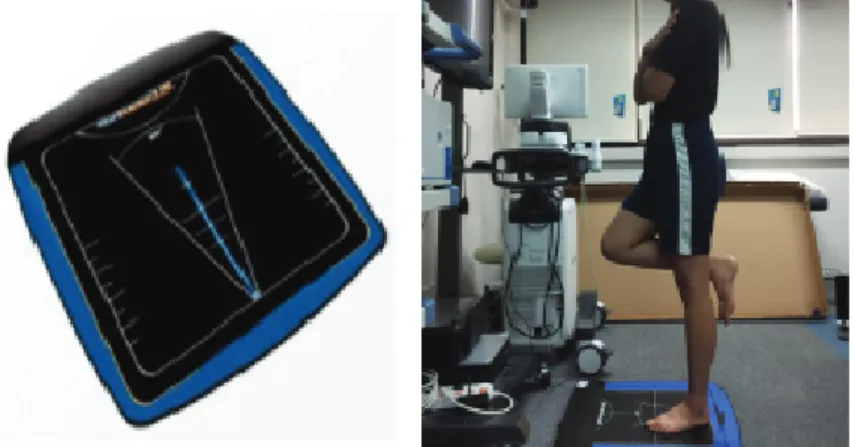
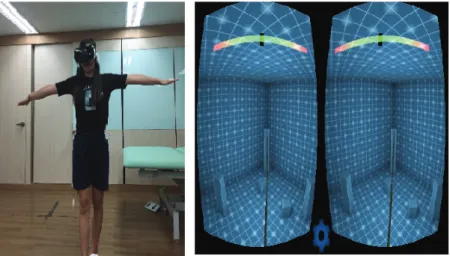
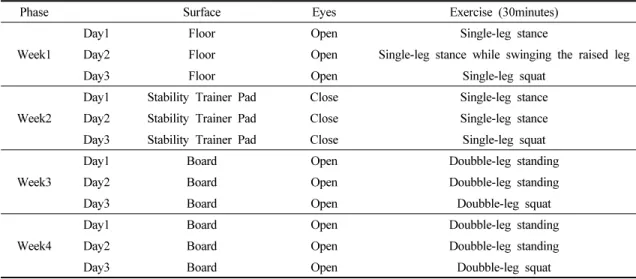
Methods: Twenty-four participants with FAI (CAIT score < 24) were assigned to a virtual reality training group (n = 13) and a traditional balance training group (n = 11). Both groups pursued their respective training program for four weeks. After a ten-minute warm-up, participants completed a 30-minute training session, three times per week. The traditional balance training group underwent static and dynamic training using a balance board and a stability trainer pad while the virtual reality group underwent balance training using a virtual reality program. Biorescue was used to measure changes in the speed and length of center of pressure (COP) for single-leg stance pre- and post-training.
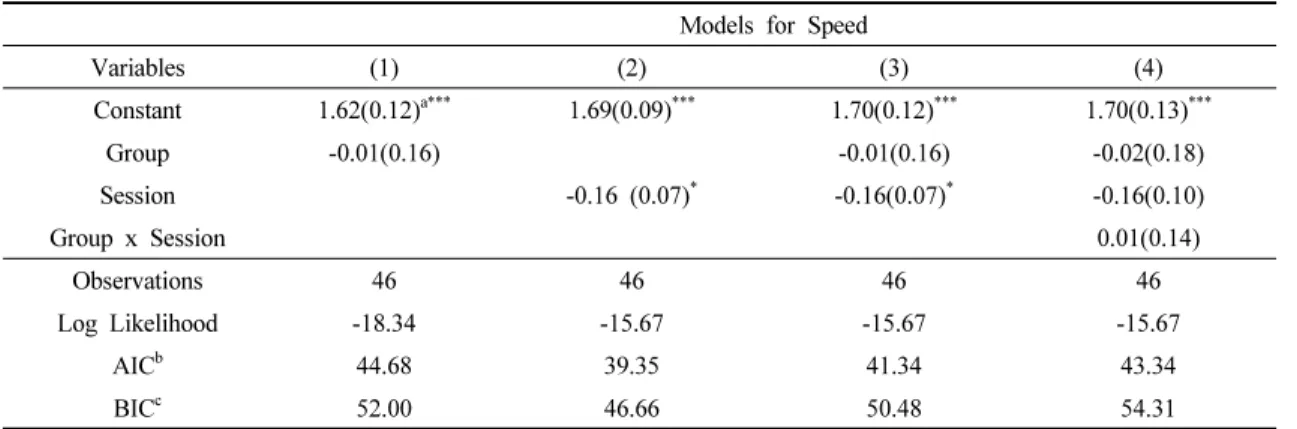
Results: The speed and length of COP improved significantly in both groups after training as compared to before (p < 0.05).
However, there were no significant differences in these outcomes between the virtual reality training group and the traditional balance training group (p>0.05).
Conclusion: The study findings confirm the effectiveness of both virtual reality training and traditional balance training in reducing ankle instability, with no difference in treatment effects.
Key Words: Balance, Functional ankle instability, Traditional exercise, Virtual reality
†Corresponding Author : Su-Jin Kin ([email protected])
Original Article Open Access
가상현실과 전통적 균형훈련이
기능적 발목 불안정성 환자의 균형에 미치는 효과