http://dx.doi.org/10.5468/ogs.2016.59.3.201 pISSN 2287-8572 · eISSN 2287-8580
Introduction
The success rates for in vitro fertilization (IVF) and embryo transfer (ET) in humans have increased because of improve- ments in ovulation induction medications, regimens, and culture technology [1]. Advances in human embryo culture technology have evolved continuously over the years with bet- ter culture media and culture systems [1-3]. These have led to an increase in blastocyst formation and pregnancy rates, but several factors that contribute to embryo development and implantation have not yet been determined [1,4,5]. Sequential media have taken into account the changes in embryo physiol-
Efficacy of hyaluronan-rich transfer medium on
implantation and pregnancy rates in fresh and frozen- thawed blastocyst transfers in Korean women with previous implantation failure
Sungwook Chun
1, Jung Eun Seo
2, Yun Jeung Rim
2, Jae Hong Joo
2, Yong Chan Lee
2, Yun Hee Koo
21Department of Obstetrics and Gynecology, Inje University Haeundae Paik Hospital, Busan; 2Busan Maria Fertility Clinic, Busan, Korea
Objective
To evaluate the effect of hyaluronan-rich transfer medium on pregnancy and implantation rates in fresh and frozen- thawed embryo transfers in Korean women with previous implantation failure.
Methods
This retrospective study included 283 blastocyst transfers in patients with previous embryo transfer failure at a private fertility clinic. In the study group (n=88), blastocyst transfers were performed using an hyaluronan-rich transfer medium prior to transfer, whereas blastocyst transfers without any treatment served as controls (n=195). According to the type of transfer (fresh elective or frozen-thawed), all the blastocyst transfers were divided into two study and two control groups.
Results
The patient’s mean age, serum anti-Müllerian hormone level, causes of infertility, embryo quality, and the number of transferred embryos were comparable between the study and control groups. There were no significant differences in clinical pregnancy rate (45.5% vs. 43.1%), implantation rate (28.9% vs. 28.8%), and clinical abortion rate (10.0% vs.
8.3%) between the two groups, and these findings were not changed after subgroup analysis according to the type of transfer.
Conclusion
The use of hyaluronan-rich transfer medium in the blastocyst transfer does not appear to have any significant effect on the implantation and pregnancy rates in patients with previous implantation failure.
Keywords: Blastocyst; Embryo transfer; Hyaluronic acid; Implantation; Pregnancy
Articles published in Obstet Gynecol Sci are open-access, distributed under the terms of the Creative Commons Attribution Non-Commercial License (http://creativecommons.
org/licenses/by-nc/3.0/) which permits unrestricted non-commercial use, distribution, and reproduction in any medium, provided the original work is properly cited.
Copyright © 2016 Korean Society of Obstetrics and Gynecology Received: 2015.9.30. Revised: 2015.12.22. Accepted: 2015.12.29.
Corresponding author: Yun Hee Koo
Busan Maria Fertility Clinic, 125 World cup-daero, Yeonje-gu, Busan 47596, Korea
Tel: +82-51-441-6555 Fax: +82-51-441-0638 E-mail: [email protected]
http://orcid.org/0000-0002-3968-6439
ogy and nutritional requirements that occur during prolonged in vitro culture [3,6], and have progressed with optimization of amino acid, vitamin, and ionic composition, and more recent- ly, with the addition of macromolecules [1-3,6]. Both in animal and human embryo culture systems, macromolecules such as albumin have traditionally been supplemented as a source of energy necessary for embryo development and as reservoirs for vitamins and minerals [5,7].
Hyaluronan (HA) is a naturally existing macromolecule, and is abundant in human fluid secretions and extracellular matrix in the female reproductive tract [4,8,9]. The addition of HA to culture media was shown to increase both embryo devel- opment and implantation in animals [10-12]. Several human studies have assessed the impact of HA-rich culture and trans- fer medium in ET on implantation and clinical pregnancy rates, but the results of these studies are inconsistent [4,5,7,13-15].
A recent Cochrane review demonstrated an improved clinical pregnancy rate when high concentrations of HA in transfer media were used [16].
The aim of this study was to evaluate the efficacy of HA- rich transfer medium in fresh and frozen-thawed blastocyst transfer on the implantation and pregnancy rates in Korean women with a history of previous implantation failure.
Materials and methods
1. Subjects
This retrospective case-control study was approved by the institutional review board of Maria Fertility Clinic. Unselected patients aged 26 to 44 years who had at least one episode of previous ET failure and underwent fresh cycle blastocyst transfer or frozen-thawed blastocyst transfer at Busan Maria Fertility Clinic were included in this study. Oocyte retrievals were performed after controlled ovarian hyperstimulation using a recombinant follicle-stimulating hormone (Gonal-F, Serono, Istanbul, Turkey; Follitrope, LG, Seoul, Korea), with a gonadotropin-releasing hormone agonist long protocol or a gonadotropin-releasing hormone antagonist short protocol, followed by conventional IVF or IVF via intracytoplasmic sperm injection. Basal serum anti-Müllerian hormone (AMH) level was measured using the AMH Gen II assay (Beckman Coulter Inc., Brea, CA, USA).
A total of 88 blastocyst transfers using a commercially avail- able HA-rich transfer medium containing 0.5 mg/mL HA (Em-
bryoGlue, VitroLife, Kungsbacka, Sweden) between October 2012 and April 2014 were included in the study group, and 195 blastocyst transfers conducted without additional transfer media between October 2012 and April 2014 served as con- trols. All transfers were divided into two study groups and two control groups according to the type of transfer (fresh elec- tive or frozen-thawed). Pregnancy was confirmed by a serum β-human chorionic gonadotropin (hCG) test using the ARCHI- TECT i4000SR (Abbott, Abbott Park, IL, USA) 9-10 days after blastocyst transfer. Blood samples were collected from all sub- jects in accordance with the Declaration of Helsinki guidelines, and both the intra- and inter-assay coefficients of variation for serum AMH and β-hCG were below 5.0%.
2. Procedures of embryo transfer
Embryo culture and cryopreservation in fresh and frozen- thawed cycles, and warming of blastocysts in frozen-thawed cycles, were performed as previously described elsewhere [17,18]. In fresh ET, good quality embryos were selected on the morning of day 5 by blastocyst grading criteria described by Gardner and Schoolcraft [19]. Blastocysts were then placed in a well containing pre-equilibrated HA-rich transfer medium for at least 30 minutes at 37°C in a 5% CO
2environment prior to transfer in the study group; in the control group, blastocysts were transferred without using additional transfer medium.
In frozen-thawed ET, good quality embryos were selected
in the same manner as in fresh ET. HA-rich transfer medium
(0.5 mL) was added to the dish and equilibrated at 37°C in
5% CO
2for 4 to 12 hours on the day before ET in the study
group. Frozen embryos were transferred for 5 minutes to
warming solution 1 containing 0.5 M sucrose dissolved in
Dulbecco’s phosphate buffered saline and supplemented
with 20% human follicle fluid. The embryos were then trans-
ferred to warming solution 2 in Dulbecco’s phosphate buff-
ered saline supplemented with 20% human follicle fluid for
5 minutes. Embryos were then transferred into equilibrated
blastocyst medium (Cook Medical, Brisbane, Australia), and
cultured at 37°C in 5% CO
2. The post-thawing survival of
the embryos was observed under an inverted microscope 3
to 24 hours after warming. In the study group, embryos were
placed in a well containing pre-equilibrated HA-rich transfer
medium for at least 30 minutes at 37°C in 5% CO
2on the
day of transfer.
3. Outcome measures related to pregnancy and implantation
Rates of clinical pregnancy, clinical abortion, and implantation were compared between study and control groups. Clinical pregnancy was defined in the present study when a gesta- tional sac could be seen on ultrasonography examination.
The clinical pregnancy rate was defined as the number of cases with evidence of at least one gestational sac divided by the number of transfers, the clinical abortion rate was defined as the number of clinical pregnancy losses including ectopic pregnancy before the 20th week of gestation divided by the total number of clinical pregnancies, and the implan- tation rate was defined as the number of gestational sacs confirmed by transvaginal ultrasonography divided by the
number of embryos transferred [20].
4. Statistical analysis
All data are expressed as the mean±standard deviation. All statistical analyses were performed using PASW ver. 18.0 (SPSS Inc., Chicago, IL, USA). An unpaired t-test and a Mann- Whitney U-test were used for the comparison of the clinical parameters between study and control groups, and com- parisons of the proportion of causes of infertility and embryo quality, implantation rate, clinical pregnancy rate, and clinical abortion rate between the two groups were performed using a chi-square test and a Fisher’s exact test. P-values <0.05 were considered significant for all analyses.
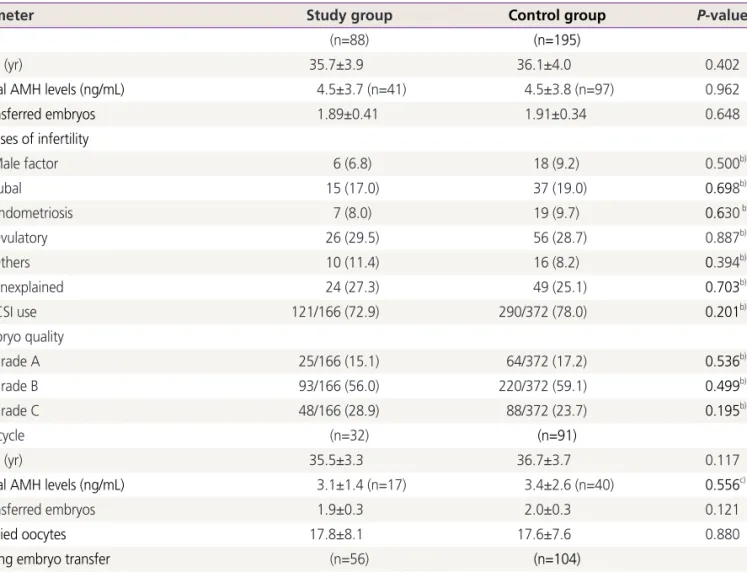
Table 1. Baseline clinical parameters of the study and control groups
Parameter Study group Control group P-valuea)
Total (n=88) (n=195)
Age (yr) 35.7±3.9 36.1±4.0 0.402
Basal AMH levels (ng/mL) 4.5±3.7 (n=41) 4.5±3.8 (n=97) 0.962
Transferred embryos 1.89±0.41 1.91±0.34 0.648
Causes of infertility
Male factor 6 (6.8) 18 (9.2) 0.500b)
Tubal 15 (17.0) 37 (19.0) 0.698b)
Endometriosis 7 (8.0) 19 (9.7) 0.630 b)
Ovulatory 26 (29.5) 56 (28.7) 0.887b)
Others 10 (11.4) 16 (8.2) 0.394b)
Unexplained 24 (27.3) 49 (25.1) 0.703b)
ICSI use 121/166 (72.9) 290/372 (78.0) 0.201b)
Embryo quality
Grade A 25/166 (15.1) 64/372 (17.2) 0.536b)
Grade B 93/166 (56.0) 220/372 (59.1) 0.499b)
Grade C 48/166 (28.9) 88/372 (23.7) 0.195b)
Fresh cycle (n=32) (n=91)
Age (yr) 35.5±3.3 36.7±3.7 0.117
Basal AMH levels (ng/mL) 3.1±1.4 (n=17) 3.4±2.6 (n=40) 0.556c)
Transferred embryos 1.9±0.3 2.0±0.3 0.121
Retried oocytes 17.8±8.1 17.6±7.6 0.880
Thawing embryo transfer (n=56) (n=104)
Age (yr) 35.8±4.2 35.6±4.1 0.807
Basal AMH levels (ng/mL) 5.5±4.5 (n=24) 5.3±4.2 (n=57) 0.869c)
Transferred embryos 1.9±0.5 1.8±0.4 0.496
Values are mean±standard deviation or number (%).
AMH, anti-Müllerian hormone; ICSI, intracytoplasmic sperm injection.
a)Unpaired t-test; b)Chi-square test; c)Mann-Whitney U-test.
Results
Clinical parameters were similar between the study and con- trol groups (Table 1). No significant difference in the number of transferred embryos or number of oocytes retrieved in the fresh cycles was found between the two groups. The propor- tions of causes of infertility and embryo quality were compa- rable between the two groups.
In Table 2, the implantation rate in the study group (28.9%) was not different from that of the control group (28.8%), and there were no statistically significant differences in the clini- cal pregnancy rate (45.5% vs. 43.1%, P=0.709) and clinical abortion rate (10.0% vs. 8.3%, P=0.745) between the two groups. In subgroup analysis according to the transfer type, no significant differences were found in the implantation rate between the study and control groups after fresh elective transfers (30.0% and 27.2%, respectively) or frozen-thawed transfers (28.3% and 30.2%, respectively). Neither the clinical pregnancy rate nor clinical abortion rate after fresh elective transfers or frozen-thawed transfers was different between the two groups.
Discussion
Implantation is one of the cardinal components of human re- production, and successful implantation requires a functionally
normal embryo at the blastocyst stage, a receptive endome- trium, and communication between embryo and endome- trium [21]. Optimal management of infertility patients with previous unsuccessful implantations in spite of transferring good quality embryos remains undetermined, suggesting that implantation remains a major limiting step in the success of human assisted reproductive technology [4,15]. Several approaches have been attempted, including changing the ovarian stimulation protocol, performing vitrified-warmed ET as opposed to fresh ET, or increasing the number of embryos transferred [15]. However, because impaired interaction be- tween the embryo and endometrium might be an underlying problem, these methods are prone to fail in patients with multiple ET failures [9,15]. Thus, it is necessary to search for alternative approaches to improve implantation of human embryos in the IVF-ET procedure. In an attempt to optimize human in vitro embryo culture systems, supplementation of proteins which provide a source of energy for embryo development and act as reservoirs for vitamins and minerals has traditionally been performed [2,3]. Albumin, which is abundant in the female reproductive tract, is the most com- monly used protein source for human in vitro embryo culture systems, and sources for culture media are the patient’s own serum, commercially pooled human serum albumin (HSA), and recombinant human albumin [2,5,13,14].
Recently, HA supplementation in ET media has emerged as a promising option for the improvement of implantation and
Table 2. Clinical outcomes after fresh and frozen-thawed blastocyst transfer in the study and control groupsParameter Study group Control group P-valuea)
Total
Implantation rate 48/166 (28.9) 107/ 372 (28.8 ) 0.971
Clinical pregnancy rate 40/88 (45.5) 84/195 (43.1) 0.709
Clinical abortion rate 4 /40 (10.0) 7/84 (8.3) 0.745b)
Fresh cycle
Implantation rate 18/60 (30.0) 49/180 (27.2) 0.678
Clinical pregnancy rate 15/32 (46.9) 35/91 (38.5) 0.405
Clinical abortion rate 2/15 (13.3) 3/35 (8.6) 0.629b)
Thawing embryo transfer
Implantation rate 30/106 (28.3) 58/192 (30.2) 0.730
Clinical pregnancy rate 25/56 (44.6) 49/104 (47.1) 0.765
Clinical abortion rate 2/25 (8.0) 4/49 (8.2) 1.000b)
Values are number (%).
a)Chi-square test; b)Fishers’ exact test.