JDCS Vol. 18, No. 8, pp. 1585-1591, Dec. 2017
가상현실 기술의 전시 공간 적용에 관한 연구
이 재 영1 · 권 준 식2*
1
(주)미디어앤아트 기술운영팀
2
세명대학교 전기공학과
A study on the application of virtual reality technology to exhibition space
Jae-Young Lee
1· Jun-Sik Kwon
2*1
Technical & Management team, MediaNArt Co. Ltd., Seoul 06184, Korea
2
*Dept. of Electrical Eng., Semyung University, Jecheon 27136, Korea
[요 약]
본 연구에서는 전시공간에서 가상환경 기술을 적용한 전시 콘텐츠의 적용을 제안한다. 가상환경에 대한 연구는 지속적으로 이 루어지고 있다. 특히, 가상현실 기술의 연구는 가장 활발하게 이루어지는 연구 분야 중 하나이다. 스마트폰의 보급으로 증강현실 기술의 연구와 개발이 이루어지면서 가상현실 기술에 대한 연구도 게임과 상호작용성에 중점을 두고 많은 발전을 이루고 있다. 특 히 올해에는 다양한 강상현실 체험 장비들 특히 HMD(Head Mounted Device) 장비의 개발과 신제품 발표 등 하드웨어와 소프트웨 어 그리고 콘텐츠 분야의 발전이 더욱 가속화 되고 있다. 우리는 이러한 가상현실 기술 기반의 시스템이 전시공간에서 사용자에게 더욱 친근하게 다가가고 경험할 수 있는 환경을 연구하고 적용하고자 한다.
[Abstract]
In this study, we propose the application of exhibition contents using virtual environment technology in exhibition space.
Research on the virtual environment is continuing. Particularly, research on virtual reality technology is one of the most active research fields. As researches and developments of augmented reality technologies have been carried out with the spread of smart phones, researches on virtual reality technologies have also made a lot of progress with emphasis on games and interactivity.
Especially, development of hardware, software, and content is accelerating this year, including the development of various types of physical reality devices, especially HMD (Head Mounted Device) equipment and new product announcements. We want to study and apply the environment in which the system based on this virtual reality technology can approach and experience more user friendly in the exhibition space.
색인어 :
가상현실, 모바일, HMD, 상호작용, 전시공간
Key word : Virtual Reality, Mobile, HMD, Interaction, Exhibition Space
http://dx.doi.org/10.9728/dcs.2017.18.8.1585
This is an Open Access article distributed under the terms of the Creative Commons Attribution Non-CommercialLicense(http://creativecommons .org/licenses/by-nc/3.0/) which permits unrestricted non-commercial use, distribution, and reproduction in any medium, provided the original work is properly cited.
Received 13 December 2017; Revised 24 December 2017 Accepted 25 December 2017
*Corresponding Author; Jun-Sik Kwon Tel: +82-43-649-1304
E-mail: [email protected]
Ⅰ. Introduction
Virtual reality refers to space created by graphics that looks like reality but is not realistic. Virtual reality has been tested in an experimental space, where virtual reality is used to experience parts that are difficult to test directly, such as spaces in online games or aerial simulations. If the spaces of games or movies were an environment for experiencing virtual reality, it is now becoming an area where individuals can experience anywhere and anytime with equipment and programs.[1],[2]
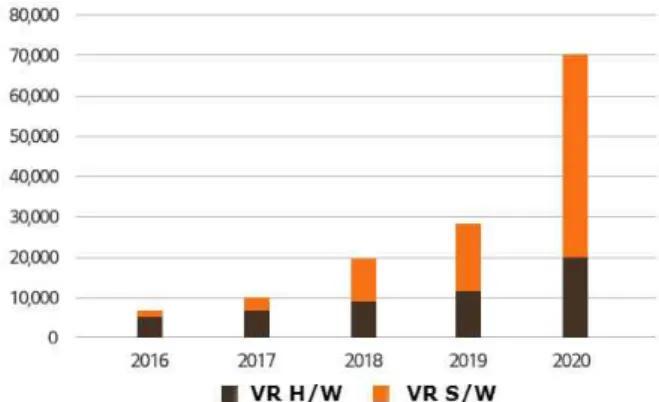
Fig. 1. Global Virtual Reality Market Size
In Fig.1 the growth of the virtual reality market is very large.
A global consumer electronics company is also developing virtual reality technology and platform. These technologies are naturally approaching to the general public as well as research. This phenomenon can be seen in exhibitions, which are a part of popular culture.[3]
In the exhibition space, the viewer watched and watched the works of the artist. Without prior knowledge of the artist or work, it was difficult to confirm the contents. However, as the virtual reality technology is utilized in the exhibition space, it is possible to explain additional information about the part or the work that the viewer could not learn. This will enhance understanding and satisfaction of the exhibition. [4]
The importance and utility of virtual reality contents can be described as follows. With the release of hardware related to virtual reality, technology and content development to control and apply hardware can lead to new market. The virtual reality industry is expanding due to the expansion of investment in the virtual reality market.
In the film field, you can feel the immersive feeling in the actual movie space with the effect of using the virtual reality technology to see the video in the theater. In fact, at the Comiccon 2014 exhibition, Hollywood movie studios used the Oculus lift to hold an event where they could actually experience
a scene in a movie. In the field of education, it is expected that education will be possible beyond the limit of space by listening to class and discussing in virtual classroom. It is expected that virtual reality technology will be utilized in history culture tour and geography education. In the field of exhibition, it is possible to experience famous art museums of all over the world reproduced by virtual reality technology in virtual reality without actually seeing them, and to see virtual art museum in virtual reality. In the field of SNS, virtual reality social network service that uses avatar in virtual space will be released. In the health care field, it is expected that virtual reality technology can be utilized for medical purposes such as remote consultation of physicians, medical treatment, patient treatment. Finally, it is possible to use virtual reality technology in architectural design, architectural simulation, and corporate teleconferencing.[5]-[7]
Ⅱ. Virtuality Reality
2-1 Classification of Virtual Reality
Virtual reality systems can be divided into Immersive VR, Desktop VR, Projected VR, Telepresence VR and Augmented VR, etc., depending on the type.
In the immersive virtual reality, the user can feel the virtual reality space by wearing special equipment such as HMD and Data Glove on the body. In this case, you can directly manipulate the object using special equipment that you wear. These environments show the highest immersion experience and require special equipment for this. The visual information is replaced with the HMD, blocking the view from the real world, and manipulating it in a virtual space. In the past, it was expensive equipment, but now it is also being used as a personal terminal.
Non-immersive virtual reality is a form of desktop virtual reality that interacts with the user through PC monitor images.
Feeling the stereoscopic effect with the visual image on the monitor, anyone can easily configure the hardware and operate it.[8]
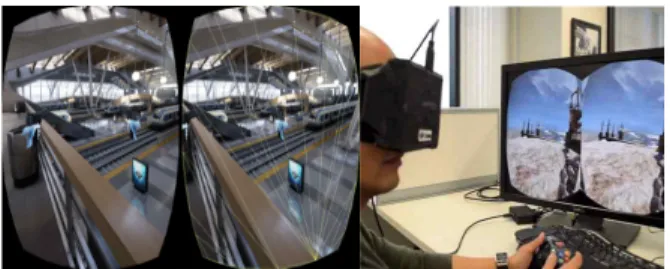
Fig. 2. Examples of military training using virtual reality
technology
The two types of virtual reality mentioned above can be explained by taking the image of Fig.2 as an example. Military simulations, for example, are a way of seeing and firing virtual enemies by eye, and each is a virtual training with HMD equipment. It is a non-immersive virtual reality that constitutes a specific virtual space and uses military figures in this space. On the contrary, it is the training method using the immersive virtual reality technology in the virtual space where each person can see in the space without any space.
2-2 Implementing Virtual Reality Content
In order to create a virtual reality environment, contents are created and applied using visual characteristics and eyes of a person. A virtual three-dimensional space is created using graphic technology, and a user wearing a virtual reality device in the space recognizes a parallax image input with two eyes. It is able to behave in a virtual space and experience a reaction through the various sensors of the device.
Fig. 3. Systems that make up a virtual space
The method of constructing virtual contents is as follows. First, the virtual space is created graphically based on the modeling work to construct a virtual environment. This environment consists of all things such as the floor, the building, the wall, the sunlight, the gravity, the chair, and the laws of the environment.
The second is the simulation of human movements (joints, muscles, etc.) with the implementation of animation (movement).
The third is the algorithm for forming the 3D sensation according to the user's binocular disparity and the process of hardware application. It is a step for applying to the various hardware of the produced contents. Finally, it is the step of creating the environment and effect according to the interaction. It is to build an algorithm that responds to environment and animation parts for interaction and hardware inputs (sensors, switches). Fig.3 and Fig.4 show some of these processes.[9],[10]
Fig. 4. Image examples & examples for VR implementation
2-3 Virtual Reality Equipment
HMD is a head-mounted display-based device. In addition to a binocular display, sensors such as a gyroscope and a GPS accelerometer are added to confirm user movement. Such equipment requires expensive equipment for research purposes and various equipment for use. There were many environmental difficulties for the general public to use individually. However, with the development of technology, miniaturization of equipment and various types of HMD have been developed, so that ordinary people can easily access virtual reality technology.[11] Typical equipment include Oculus Lift series, Samsung's Gear VR and HTC VIVE. These three products can experience virtual reality and can be experienced by the general public at a relatively low price. Our research also tests Samsung Gear VR equipment among them. The other two products are HMDs with built-in displays, which are expensive in terms of price. Samsung Gear VR uses the liquid crystal of the mobile phone and can use the personal mobile phone. Also, there is no problem in terms of performance with the same specifications as Table 1.[12]
Fig. 5. Oculus Lift DK2, HTC VIVE Samsung Gear VR
Table 1. Samsung Gear VR Specification
Spec. Samsung Gear VR
Size/Weight 201.9 × 116.4 × 92.6mm / 310g
Lens Filed of View(FOV) 96
Sensor Gyro sensor / Proximity sensor
Phone Connection Micro USB
Compatible models Galaxy Note 5, Galaxy S6
Ⅲ. Virtual reality of exhibition environment
3-1 Examples in application space
There are various attempts and approaches to apply virtual reality in the exhibition space. In Fig.6, the VR equipment prepared by ordinary citizens at the Suwon Museum will be used to experience the space of a virtual Suwon Hwaseong Fortress.
There is an example of applying the virtual reality such as walking in the virtual space of Seokguram, which is a cultural asset, to the experiential space by combining it with various contents.
Fig. 6. VR Experience at Suwon Museum / Seokgulam walking in virtual reality(Clicked, Inc)
3-2 Virtual reality application in exhibition space
There are two ways to apply virtual reality in the exhibition space from the aspect of contents. It is a method of making a virtual space by shooting a real space and a method of creating a virtual space using computer graphics. The first method is to take images of different angles in a real space and attach them using a stitching technique to create a three-dimensional space of 360 degrees. The second method is to graphically create a virtual space and apply a natural physical environment.
The first method has the advantage that the viewer can feel the impression of reality more and can experience the feeling and touching even after the exhibition ends. However, depending on the location and space constraints in the production process, it may not be seen or distorted. The second method is that the user can perform various motions or interactions in a virtual space.
You can put as many infinitely many elements you want as much as you have created them. However, there is no factual element that is wrong with the first method, so it can get bored soon.
There are various attempts and approaches to apply these two methods to virtual reality in the experience space. In Fig.6, there is an example of wearing a VR device prepared by ordinary citizens at the Suwon Museum and pretending to be a virtual space. In addition, there is an example to walk a virtual monument of Seokguram which is cultural property. In this way, there is an example of applying the virtual reality to the experiential space by combining various contents.
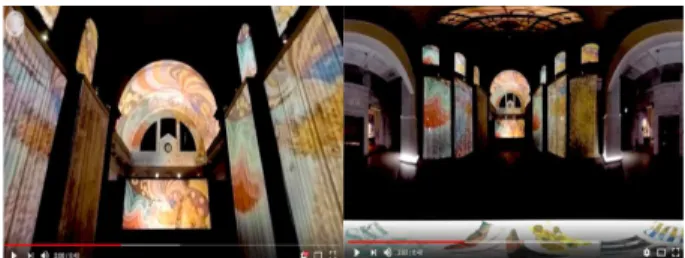
Fig. 7. Virtual reality using image-based stitching technique
Fig.7. is a part of the image that implements the virtual reality based on the image taken at the culture station 284 of 'Van Gogh Inside: The Festival of Light and Music'. It is an image that can be seen by moving a virtual space 360 degrees using a computer monitor. Additional explanations of each space and image in the exhibition are also possible. The exhibition, which was completed in early 2016, can still be viewed as a 3D virtual reality rather than a photograph or an image.[13]
Fig. 8. Experience Van Gogh VR content using Samsung Gear VR
Fig.8. shows that visitors are experiencing Van Gogh VR content in 'Van Gogh Inside: Festival of Light and Music'. The user wears a gear VR equipped with a mobile phone, and Van Gogh creates a virtual cafe in a virtual space. Using the touch pad of Gear VR, you can move forward and experience a virtual character and space created in graphic in virtual space. The background of this content is the 'Cafe of Night of Arlen' in Fig.
9, and consists of three spaces in which other spaces of Van and other Van Gogh works together.
Fig. 9. The Night Cafe in Arles, Van Gogh
Fig. 10. Restaurant at Stoke's Mansion
Fig. 11. Tree of Life, Klimt
This content is a new VR content based on the "Klimt Inside", which is based on the "Klimt" mansion where “Klimt” created the work. In the exhibition space, the user can listen to the explanation, I applied the content. It is the contents of the story of visiting the restaurant in Stoke's mansion in Fig.10 and listening to the appreciation and explanation of the tree in Fig.11 in the restaurant. It is the content of 10 extra courses where the user starts from the outside of the mansion, enters the interior of the house through the door, examines the living room, acquires relevant information, meets Klimt and hears stories about the mansion and the painting. In this content, you can experience various scenery and buildings inside and outside the building, which are divided into three areas, the exterior of the residence, the inner living room of the residence, and the restaurant.
Fig.12 shows the space setting for experiencing the Samsung Gear VR. It is a content that rotates 306 degrees while rotating a virtual space. So, for safety reasons, I set up an environment where I could experience 360 degrees while sitting on a swivel chair. In addition, there were cases where experience was made by creating an environment similar to the contents used in the exhibition space. Fig.13 is a method for solving problems with device fixation. There was a problem that the equipment was broken and the operation of the user was troublesome due to falling off the equipment while being set on the table. In order to use this safely, it is connected to the upper part of the equipment at the top of the booth so as to prevent it from falling and being set to be convenient for the user to use.
Fig. 12. Virtual reality booth installation in the exhibition space
Fig. 13. Samsung gear VR setting in exhibition booth
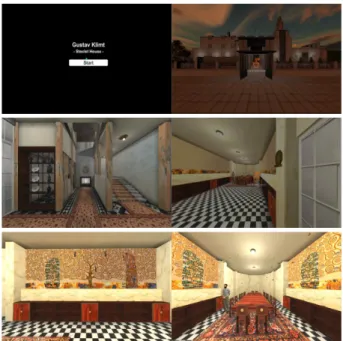
Fig. 14. Samsung gear VR - Klimt's Stoclet House-based VR content
Based on Klimt Stoclet Frieze work, Fig.14 demonstrates VR content that can be used to interact with Stoclet house.
Based on the above-mentioned Stokes residences, a user who is in the mansion experiences using the touch pad of the gear VR.
Moving and experiencing the designated space, and finally, the
concept of listening to the imaginary Klimt works around the
table. Evaluate the content as an educational content that learns
about a single work while listening to the background and
contents of the work.
Ⅳ. Conclusion
The research on the application of virtual reality technology in the exhibition space was carried out. Space constraints, environmental problems, etc., but users have always felt enthusiastic about new things and feel satisfaction when experiencing them. In the meantime, many technologies have been developed and developed only in the application part of software. A game engine in which a typical result of such a result is applied to a game or the like can be mentioned. In the meantime, the development of hardware did not show much success except the initial version. Recently, the market for the development of many contents has been formed due to the announcement of new products for the new equipment deviating from the existing HMD system and the subsequent release of various hardware.
We carried out research with one of these new hardware, Samsung Gear VR. Only one development of hardware or software can lead the market and expect ripple effect. Therefore, it should be the research that can expand the new media market and lead the market through application and utilization of various fields along with development of technology and contents. In particular, virtual reality can confirm the results of fields that we can not directly experience. It is also an attractive technology content area for anyone in the new experience area. In the future, it will develop into a study of human senses and various technologies and interfaces responding to them. This research fills the shortage of new technologies and can be used in combination with various surrounding technologies.
Acknowledgement
This paper was supported by the Semyung University Research Grant of 2016
References