115 This is an Open-Access article distributed under the terms of the Creative Commons Attribution Non-Commercial License (http://
creativecommons.org/licenses/by-nc/3.0) which permits unrestricted non-commercial use, distribution, and reproduction in any medium, provided the original work is properly cited.
J. Mushrooms 2021 September, 19(3):115-125 http://dx.doi.org/10.14480/JM.2021.19.3.115 Print ISSN 1738-0294, Online ISSN 2288-8853
© The Korean Society of Mushroom Science Eui-Jin Kim (Researcher) and Hyun-Jae Shin (Professor)
*Corresponding author E-mail : [email protected] Tel : +82-62-230-7518 Received September 9, 2021 Revised September 15, 2021 Accepted September 17, 2021
버섯 섭취와 장내 미생물 균총의 변화
김의진 · 신현재
조선대학교 공과대학 생명화학공학과
Changes in gut microbiota with mushroom consumption
Eui-Jin Kim and Hyun-Jae Shin
Department of Biochemical Engineering, Chosun University, Gwangju 61452, Republic of Korea
ABSTRACT: Mushroom consumption causes changes in the immune system and gut microbiota via the actions of mushroom probiotic components. β-Glucan structure-related substances suppress secretion of inflammatory mediators, and induce macrophage activation, enhancing immunity and immune function. Substances other than directly useful components can be metabolized into short-chain fatty acids by gut microbiota. These short-chain fatty acids can then induce immunity, alleviating various diseases. Substances used to stimulate growth of health-promoting gut bacteria, thereby changing the gut microbiota community are defined to be probiotics. Probiotic altered intestinal microflora can prevent various types of bacterial infection from external sources, and can help to maintain immune system balance, thus preventing diseases. Research into beneficial components of Pleurotus eryngii, Lentinula edodes, Pleurotus ostreatus, Flammulina velutipes, Auricularia auricula-judae, and Agaricus bisporus, which are frequently consumed in Korea, changes in microbiota, changes in short-chain fatty acids, and correlations between consumption and health contribute to our understanding of the effects of dietary mushrooms on disease prevention and mitigation.
KEYWORDS: Mushroom, Microbiota, Short chain fatty acid, β-glucan
서 론
국내의 버섯 총 생산량은 농촌진흥청 기준 2019년 152,853 톤이며, 그중, 느타리버섯 48,327 톤, 팽이버섯 31,818 톤, 양송이버섯 21,913 톤으로 국내에서는 느타리 버섯의 생산량이 가장 높은 것으로 조사되었다. 국내의 버섯 수입은 2018년 기준 74,356 톤, 96,677 천 달러로 양송이 버섯 7,233 톤, 영지버섯 184 톤, 표고버섯 17,898
톤 등등이 수입되었다. 국내의 생산량과 수입량을 고려할 때 연간 200,000 톤 이상의 국내 버섯 시장 규모를 짐작 할 수 있다. 이중 국내 버섯 섭취 통계는 2019년 국민영 양통계기준 인구당 6.59 g으로 버섯 종류에 따라서는 새 송이버섯 2.57 g, 표고버섯 1.88 g, 느타리버섯 1.14 g, 팽 이버섯 0.94 g, 목이버섯 0.62 g, 양송이버섯 0.48 g 순으 로 나타났다. 생버섯은 일반적으로 80~90%의 수분을 포 함하고 있으며, 단백질이 1~20%, 식이섬유를 포함하여 탄수화물이 3~80%를 차지하고 있으며, 지질은 0.1~6%를 차지하는 식이섬유가 많이 함유된 식품이다. 버섯의 탄수화 물로는 식이섬유, β-glucan, rehalose, mannitol, arabinotol 등 이 많이 함유되어 있다. 예를 들어, 목이버섯과 석이버섯의 경우 100 g 당 50% 이상인 57.4, 52.9 g의 식이섬유를 포 함하고 있다. 버섯의 단백질 함량은 생버섯의 경우 1.8~4.2%이고, 건조할 경우 10.6~27.7%로 필수아미노산 의 함량이 높고, 식물성 재료에서는 부족한 lysine을 함유 하고 있어 식물성 단백질과 동물성 단백질을 모두 섭취할 수 있는 영양학적으로 균형이 이루어진 식품이다. 지질의 경우 상대적으로 그 함량이 낮으나, 구성 성분 중 불포화 지방산이 80%를 이루고 있으며, 그중 필수 지방산인 linoleic acid가 가장 많은 비중을 차지하고 있다. 비타민
의 경우 비타민 B1, B2, niacin, B6, pantothenic acid등이 모든 버섯에 함유되어 있으며, 생버섯 400 g에는 성인 1 일 권고섭취량이 포함되어 있다. 세포내 전해질 대사에 중요한 역할을 하는 미네랄의 경우 K, Fe, Mg, P, Ca 등 을 함유하고 있다 (Patel et al., 2021) (Hyder and Dutta 2021) (Zhang et al., 2021).
버섯의 약리 기능성은 다양한 종에서 연구되었으며, 그 중 약리 기능성을 나타내는 구조가 연구된 내용도 다수 존재하며 각 버섯 명, 학명 및 약리기능성을 나타내는 구 조는 Table 1에 정리하였다 (Ba et al., 2021) (Usman, Murtaza and Ditta, 2021) (Hyder and Dutta, 2021). 버섯 의 유용성분으로는 수용성 식이섬유의 일종인 β-glucan이 주요한 요인으로 알려져 있다 (Yamanaka et al., 2021).
버섯의 종류에 따라서 β-glucan에 추가적인 구조가 더해 지며 각기 다른 형태의 물질들이 보고되고 있으며, 이러 한 추가적인 구조들로 인하여 버섯의 종류에 따른 효능 및 효과가 조금씩 차이가 있으나, 주요 기능으로는 면역 활성체의 기능, 항산화능, 생체조직 재생과 치유 기능, 항 생제, 항균, 항바이러스 및 항종양 효과가 있는 것으로 알 려져 있다 (Ma et al., 2021) (Barea-Sepúlveda et al., 2021) (Harshavardhini and Sharma, 2021).
장내 미생물은 인간의 몸 안에서 공존하며 면역기능의 조절에 관여하고 각종 대사물질을 생성하며, 비만, 당뇨, 아토피, 암, 자가면역질환, 및 우울증 등에도 관여하는 것 으로 알려져 있다. 우리 몸에 존재하는 미생물은 100조 개 이상 존재하며, 무게로는 1~2 kg에 달한다. 장내미생 물은 크게 3가지로 분류하는데 인체에 이익을 주는 유익 균, 인체에 질병을 유발하는 유해균, 환경에 따라 유익균 및 유해균으로 변화가 가능한 중간균으로 나뉜다. 인체의 미생물은 피부, 눈, 입, 호홉기, 비뇨생식기등 인체 곳곳이 다양하게 분포하며 장내에도 식도, 위, 소장등 다양한 장
소에 존재하지만, 대부분의 장내미생물은 대장에 존재하 며 인체 장내 존재하는 전체 미생물을 장내 미생물 균총 (microbiota)이라 한다 (Davies et al., 2021) (Nichols and Davenport, 2021).
장내 미생물총은 병원균 침입을 방어하고 면역체계를 성숙시키며 비타민과 단쇄지방산을 생산하여 영양분을 공 급하여 인체 대사 조절에 관여한다. 또한 인체와 상호작 용을 통해 인간의 건강과 질병에 큰 영향을 미치는 것으 로 알려져 있다. 장내 미생물 균총은 미생물들이 생존하 고 있는 환경 즉 장내의 상태를 대변하게 된다. 건강한 사 람과 질환이 있는 사람은 장내의 환경이 다르게 되며, 이 러한 원리로 비만과 정상상태의 장내환경이 다름을 장내 미생물 균총의 변화에 따라 확인할 수 있다. 비만 그룹과 정상 그룹의 장내 미생물 균총을 비교하였을 때 Firmicutes와 Bacteroidetes 균의 비율이 비만그룹에서 낮 게 나타났다 (Mariat et al., 2009). 이러한 현상은 비만 그 룹에서 섭취하는 음식으로 인한 장내 환경의 변화로 예상 하고 음식섭취에 변화를 주게 되면 장내 미생물의 비율이 변화하게 된다. 이는 음식의 섭취를 통하여 장내 미생물 의 변화가 가능함을 의미한다. 신생아의 장내 미생물은 대부분 모계의 장내미생물을 물려 받는 걸로 알려져 있다 (Vaishampayan et al., 2010). 이는 임신 후 태아 때 모계 의 장내에서 동일한 영양분을 공급받으면서 나타나는 현 상으로 동일한 음식을 섭취할 때 동일한 장내 미생물을 갖게 됨을 의미한다. 이러한 장내 미생물은 연령에 따라 다르게 나타난다. 특별한 질환이 없는 건강한 대상의 장 내미생물을 비교한 결과 연령이 높을수록 장내미생물의 다양성이 상대적으로 낮고 염증 발생 가능성이 높은 미생 물이 더 많은 것으로 분석되었다. 이렇듯 장내 미생물은 음식의 섭취 및 인체의 상태에 따라 그 구성 및 다양성이 변화하게 된다. 이는 미생물의 종에 따라 성장하는 최적 Table 1. Cancer research related to the structure of the major components of mushrooms
Mushroom species Structure Cancer Ref.
Phellinus linteus Acidic heteropolysacchride Gastric cancer (Kim et al., 2004) Lentinus edodes β-1,6-branched β-1,3 glucan Gastric cancer (Zhang and Cheung, 2002) Coriolus lentinus β-1,6-branched β-1,4,
β-1,3 glucan-protein
Gastric cancer, Lung cancer
(Lakhanpal and Rana, 2005) (Wasser and Weis, 1999) Schizophyllum commune β-1,6-branched β-1,3 glucan Cervical cancer (Ohno et al., 2003)
Poria coccus β-1,3 linear glucan Prostatic cancer (Lakhanpal and Rana, 2005)
Ganoderma lucidum Hetero β-glucan Breast cancer (BHAT et al., 2021)
Agaricus blazei Hetero β-glucan Sarcoma (Chakraborty et al., 2021)
Auricularia auricula Hetero β-glucan Sarcoma (Xu et al., 2018)
Grifola frondosa β-Glucan Sarcoma (Fang et al., 2012)
Pleurotus ostreatus β-Glucan Sarcoma (Jesenak et al., 2013)
Ganoderma applanatum Hetero β-glucan Sarcoma (Wasser, 2002)
Flammulina velutipes β-1,6-branched β-1,3 glucan Sarcoma (Nitschke et al., 2011)
의 환경이 각기 다름을 고려할 때 필연적인 결과이다. 이 와는 반대로 장내 미생물 균총이 변화하면 그 변화가 인 체에도 영향을 미칠 수 있다. 이는 실험으로 증명되었는 데, 동일한 음식을 섭취할 때 비만그룹 장내 미생물 균총을 정상 마우스 장내에 옮겼을 때 정상 마우스의 몸무게가 증 가하는 것을 확인하였다 (Ser et al., 2021) (Harrington et al., 2021). 몸무게의 증가는 몸에 지방에 축적되는 현상인 데 동일한 음식을 섭취하여도 인체에서 섭취한 음식의 대 사 과정이 다름에서 나타나는 현상으로 이는 장내 미생물 이 장내에서 대사과정에 밀접하게 관여한다는 의미이다.
이렇듯 장내 환경에 영향을 받으며 또한 인체에 영향을 주는 장내 미생물은 인체의 질병과도 밀접한 관계가 있다 . 하나의 예로 면역체계는 장 상피세포 표면에 위치한 Toll-like receptor (TLR)와 같은 수용체는 미생물의 지질 다당체(lipopolysaccharide, LPS)나 pathogen associated molecular patterns(PAMPs) 또는 미생물의 대사산물 단쇄 지방산(short chain fatty acid, SCFA)에 의해 활성화가 된 다 (Park et al., 2019). 또한 PAMPs가 내강에서 항원제 시 세포(antigen-presenting cell)에 의해 인식되거나 M세 포에 의해 인식되어 분해된 후 항원제시 세포에게 인식되
어 T세포를 활성화하여 후천성 면역반응을 증진시킨다 (Priyadarshini et al., 2021).
장내미생물과 암 종류에 따른 연관성
장내미생물은 인체의 상태와 밀접한 관계가 있으며 이 는 질병에 따라 균체의 구성 및 분포가 달라질 수 있다는 결론에 도달하게 된다. 이러한 현상을 확인할 수 있는 경 우 질환의 지표물질 즉 바이오마커(biomacker)라 지칭하 게 되며, 바이오마커에 관한 다양한 장내미생물이 연구되 었다. Table 3은 암의 종류에 따라 관찰된 장내미생물을 정리한 표이다. 대표적인 바이오마커로는 위암과 연관이 있는 것으로 알려진 H. pylori 이다. 그러나 이러한 바이 오마커는 가능성을 예상할 수 있는 범주이지 질병을 확실 하게 확인할 수 있는 지표로 아직까지 명확하지 않다. 이 는 질병 또는 암의 발병 원인의 다양성, 환자의 나이, 몸 무게, 상태 등의 다양한 요인으로 변수가 존재하기 때문 이다. 그럼에도 장내미생물은 질환의 예측을 위한 방법으 로는 충분한 가치를 갖는다.
버섯 유용성분과 장내 미생물에 의한 인체 면역력 증진 Table 2. Pharmacological function by intake of mushrooms
Mushroom species Pharmacological
function Ref.
Taiwanofungus camphoratus, Termitomyces clypeatus, Antrodia cinnamonea, Phellinus linteus, Agaricus blazei Murill, Agaricus brasiliensis, Antrodia cinnamonea, Antrodia sal- monea, Boletus edulis, Clitocybe alexandri, Coprinus comatus, Cordyceps militaris, Cori- olus versicolor, Fomes fomentarius, Fuscoporia torulosa, Ganoderma lucidum,
Ganoderma neojaponicum, Gomphus clavatus, Innotus obliquus, Kuehneromyces muta- bilis, Lactarius quietus, Lentinellus cochleatus, Lepista inversa, Lignosus rhinoceros, Lig- nosus tigris
Anticancer (Nowakowski et al., 2021)
Agaricus blazei, Gymnopus dryophilus, Ophiocordyceps sinensis, Cryptoporus volvatus, Flammulina velutipes, Ganoderma lucidum, Grifola frondosa, Hericium erinaceus, Inon- otus obliquus, Lentinula edodes, Lentinus squarrosulus, Morchella esculenta, Morchella conica, Naematelia aurantialba, Pleurotus ostreatus, Poria cocos, Sarcodon aspratus, Schizophyllum commune, Sparassis crispa, Taiwanofungus camphoratus, Tropicoporus linteus, Trametes versicolor, Tremella fuciformis, Macrocybe gigantean, Xylaria nigripes
Immunomodula-
tory (Zhao et al., 2020)
Agaricus bisporus, Agaricus bitorquis, Agaricus essettei, Agaricus silvicola, Armillaria mellea, Boletus edulis, Cantharellus cibarius, Clitocybe alexandri, Clitocybe geotropa, Cortinarius sp., Gloeoporus thelephoroides, Hexagonia hydnoides, Hydnum repandum, Hypholoma fasciculare, Irpex lacteus, Lactarius camphorates, Lactarius delicious, Lactar- ius piperatus, Lactarius volemus, Laetiporus sulphureus, Lentinus edodes, Lepista nuda, Leucopaxillus giganteus, Macrolepiota procera, Meripilus giganteus, Meripilus giganteus, Phellinus sp., Pleurotus ostreatus, Pleurotus ostreatus, Ramaria botrytis, Ramaria flava, Rhizopogon roseolus, Sarcodon imbricatus, Sparassis crispa, Tricholoma portentosum
Antibacterial (Alves et al., 2012)
Boletus edulis, Pleurotus ostreatus, Lentinus edodes, Phellinus pini, Ganoderma pfeifferi,
Rozites caperata, Agaricus brasiliensis Antiviral (Seo and Choi, 2021)
Pleurotus ostreatus, Lentinula edodes Cholesterol control (Bobek et al., 1991)
Pleurotus ostreatus, Pleurotus cornucopiae, Agaricus bisporus, Volvariella volvacea Blood pressure
(Khatun et al., 2007) (Hagiwara et al., 2005)
(Lin et al., 1973)
버섯의 유용성분으로 잘 알려진 β-glucan은 포도당이 베타결합으로 이루어진 긴 사슬 형태를 이루고 있다. 다 양한 재료로부터 분리한 β-glucan의 분자량은 4~1,350 kDa 으로 크기가 다양하며, 그중 버섯유래 β-glucan은 300 kDa 정도의 크기로 존재한다 (Ahmad et al., 2012).
이 물질들은 원핵세포 및 진핵세포 생물에 의해 만들어질 수 있으며, 일부 미생물에서는 세포 밖으로 분비되기도 하지만, 대체는 세포벽의 성분이다(Ooi and Liu, 1999).
β-glucan은 선천성 면역계를 자극하는데, 선천성 면역계는 외부의 박테리아나 바이러스등에 존재하는 공통적인 물질 의 패턴을 인식하여 외부에서 침입하는 박테리아, 바이러 스등을 제거한다. 선천성 면역계는 항원 항체 같은 특이 성은 없어 선택적인 반응이 아니지만, 병원체가 들어올 때 빠르게 반응하는 장점을 지닌다. 이러한 면역체계의 자극은 염증반응을 자극하여 인체에 유해한 반응을 증진 시킬 수 있지만, 베타글루칸은 대식세포만을 자극하여 과도 한 염증반응을 동반하지 않는 특징을 지닌다(Fernandez- Julia, Munoz-Munoz and van Sinderen, 2021).
장내미생물과 인체의 연관성
버섯의 유용 성분은 물질 그 자체적인 효과도 있으며, 유용성분이 장내미생물에 의한 분해로 생산된 단쇄지방산 (SCFAs)으로 인한 효과도 존재한다(Yin et al., 2020). 이 러한 효과는 버섯 분말을 섭취한 실험 군에서 장내의 단쇄 지방산이 증가한 실험을 통하여 입증된 바 있다 (Yin et al., 2020). 장내미생물을 분류하는 문(phylum)중 Bacteroidetes 와 Firmicutes는 두 문의 비율에 따라서 인체(host)의 건 강상태를 확인할 수 있는 지표로 활용된다. 인체가 비만 지표가 높아질수록 그 장내 미생물의 Firmicutes의 비율 이 증가한다는 다수의 보고가 발표되고 있으며 (Kallus and Brandt, 2012, John and Mullin 2016, Stojanov, Berlec and Štrukelj, 2020, Guo et al., 2008), Firmicutes 의 비율 증가는 비만과 밀접한 관계가 있다는 것이 학계 의 정설이다. Bacteroidetes는 Sus-like transport system을 주로 활용하여 다당류를 분해하고, Firmicutes는 ABC- transport system을 주로 활용하여 다당류를 분해하는데 이러한 시스템적인 차이로 인하여 다당류를 Bacteroidetes Table 3. Effect of gut microbiota on the cancer type
Type of cancer Alteration in the microbiota Reference
Cervical cancers (CRC)
Increased levels of Fusobacteria, such as Sneathia spp. and decreased levels of Lacto- bacillus spp. were found in HPV-infected cervical cancers patients
(Schmitt et al., 2013b) (Lee et al., 2013) Increased proportions of Enterococcus, Escherichia/Shigella, Bacteroides fragilis, and
Klebsiella, and decreased level of Roseburia and members of family Lachnospiraceae were observed in CRC
(Schmitt et al., 2013a) (Grivennikov et al., 2012)
Presence of intracellular E. coli increased in patients with adenoma and CRC (Diamandis, 2014) (Swidsinski et al., 1998) Increased levels of Proteobacteria, Faecalibacterium and Dorea, whereas decreased
levels of Coprococcus and Bacteroides were observed in adenomas patients
(Lee et al., 2013) (Shen et al., 2010) The level of Bacteroides/Prevotella was increased in CRC patients as verified by
quantitative PCR
(Grivennikov et al., 2012) (Sobhani et al., 2011) Oral cancer Increased levels of Streptococcus mitis, Capnocytophaga ochracea, Eubacterium sabur-
reum and Leptotrichia buccalis were found in oral cancer (Mager et al., 2005) Higher levels of Streptococcus anginosus was observed in oral cancer (Swidsinski et al., 1998)
(Sasaki et al., 2005) Esophageal cancer High levels of Campylobacter concisus and C. rectus were observed in Barrett’s
esophagus (Macfarlane et al., 2007)
Increased level of S. anginosus was found in only esophageal cancer and gastric can- cer tissues
(Shen et al., 2010) (Sasaki et al., 1998) Increased proportion of Treponema denticola, S. anginosus and S. mitis were found
in esophageal cancer (Narikiyo et al., 2004)
Decreased level of H. pylori was observed in esophageal cancer (Sobhani et al., 2011) (Anderson et al., 2008) Gastric cancer Increased proportion of Helicobacter pylori was observed in gastric cancer (Muller et al., 2007) Gall bladder cancer Elevated level of H. pylori was observed in 33% of gallbladder cancer patients (Mishra, Tewari
and Shukla 2011) Increased level of Salmonella typhi and S. Paratyphi was observed in bladder cancer (Sharma et al., 2007) Pancreatic cancer High levels of Neisseria elongata and S. mitis were observed in pancreatic cancer (Farrell et al., 2012)
가 좀더 광범위하게 분해하게 되며, Firmicutes는 좀더 선 택적인 다당류를 분해하여 대사에 활용하게 된다(Yin et al., 2020). 이러한 종간의 차이로 음식을 섭취하는 종류에 따라 장내 미생물의 성장은 각기 차이를 나타내게 되고 이로 인하여 생성되는 단쇄지방산의 종류 또한 차이가 나 타나게 된다. 단쇄지방산중 acetate, propionate, butyrate 는 인체의 면역력을 증진시키는 것으로 알려져 있다. 단 쇄지방산은 장내의 점액(mucus)의 생산을 증가시키며, 점 막 층의 두께를 증가시킨다(Sun et al., 2021). 또한 장내 세포간의 간격을 촘촘하게 하여 감염성 균의 감염을 막게 되며 건강한 장내 환경을 유지할 수 있도록 도와준다.
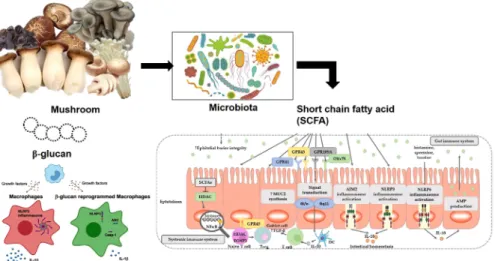
Histone acetylation에 관여하여 nitric oxide, TNF-α, IL- 12, IL-1β의 생성을 저해시키고, neutrophil, macrophage, monocyte의 염증관련 cytokines 및 chemokines의 생성을 저해하여 염증반응을 억제한다(Fig. 1).
버섯유용성분과 대사질환과의 연관성
버섯유용성분의 또다른 대표적인 효과는 비만과 2형 당 뇨를 저해하는 것으로 알려져 있다(Dubey et al., 2019).
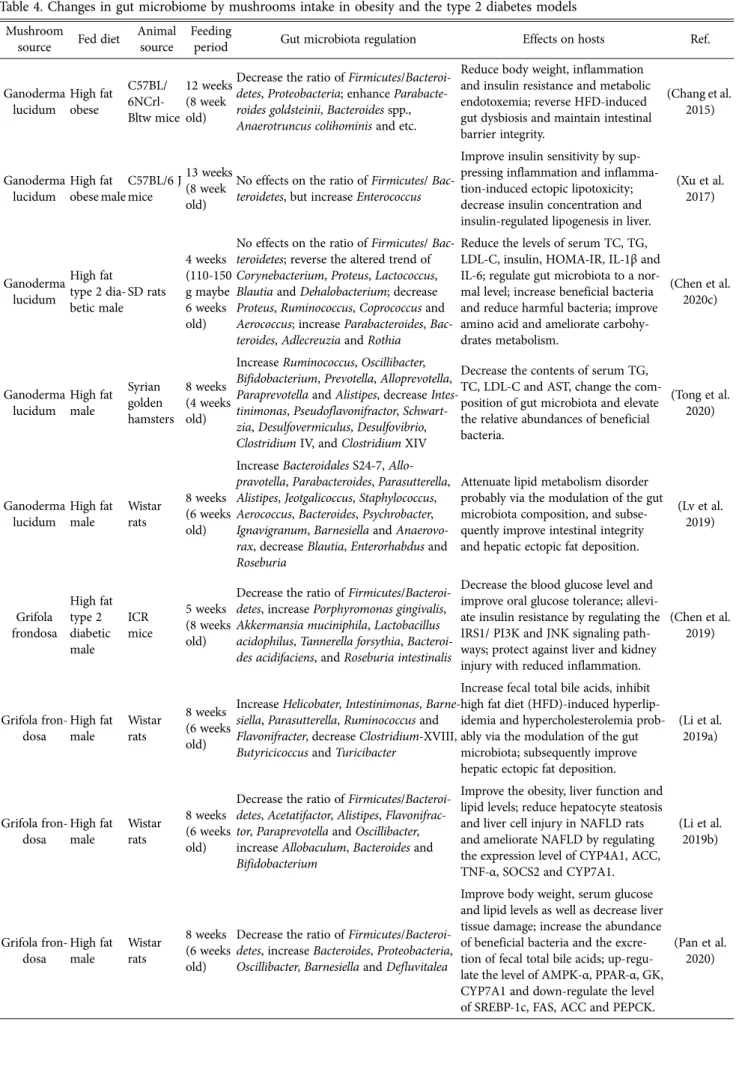
2형 당뇨의 발생은 비만으로 인하여 지속적인 염증이 인 체에서 유발하여 인체에 당을 전달하는 역할을 하는 인슐 린의 생산 또는 활성을 낮추어 당뇨를 나타나는 질병이다 . 지속적인 비만은 과도한 지방의 축적으로 인하여 지방간 을 유발할 수 있으며, 이러한 현상들은 대사질환으로 이 어지게 된다. 비만에 대한 위험은 초기 몸무게를 기준으 로 그 지표를 삼았으나, 비만과 연관된 다양한 질병으로 인하여 다양한 지표들이 등장하게 된다. 예를 들어 몸무 게는 비만 수치에 들어가지 않지만, 혈중 콜레스테롤 수 치가 높다거나, 간수치 및 염증 수치가 높은 문제들이 나 타나게 되면서 이를 보안하기 위한 지표로 장내미생물과 의 연관성에 관한 다수의 연구가 진행되었다(Table 4.). 다 수의 연구에서 버섯의 섭취는 대상의 몸무게 증가를 감소
하거나, 간수치 및 혈액내 콜레스테롤 및 지방대사 유전자 발현의 저하 등의 대사질환관련 지표의 변화를 수반하였으 며, 이에 따른 장내미생물의 변화도 관찰되었다. 이러한 현 상은 인체의 대사와 장내미생물과의 연관성을 시사하는 현 상으로 장내미생물의 분포 및 존재 유무와 인체의 대사 질 환이 연장선상에 있음을 확인할 수 있으며, 버섯의 섭취를 통하여 장내미생물의 변화가 나타나고 이로 인하여 인체의 대사과정에 변화가 발생하며, 이를 통하여 대사 질환을 예 방 나아가 치료까지 가능할 것으로 여겨진다.
결 론
버섯의 대표적인 유용 성분은 β-glucan으로 알려져 있 으며 버섯을 섭취하였을 때 인체에 나타나는 효과는 대사 질환에서 암까지 다양한 분야에 이른다. 그러나 버섯 섭 취에 따른 장내미생물균총의 변화 및 장내미생물에 의해 생성되는 단쇄지방산의 변화에 관한 연구는 미비한 실정 이다. 단쇄지방산들의 변화는 버섯의 영양성분들을 장내 미생물이 단쇄지방산으로 변화시키고 이로 인하여 장내 환경이 변화하며 장내미생물의 분포가 변화하게 된다. 단 쇄지방산의 분포 및 생성과 장내미생물균총의 관계는 밀 접하며, 생성된 단쇄지방산 역시 인체의 면역반응을 조절 하는데 많은 기여를 한다. 이러한 상관관계에 대한 연구 는 추후 장내 미생물의 제어 및 이를 활용한 질병의 예방, 면역력 증진 등을 도모할 수 있는 중요한 연구일 것이다.
추후 국내에서 섭취 순위가 높은 새송이, 표고, 느타리, 팽이, 목이, 양송이에 대한 장내미생물의 변화 및 단쇄지 방산의 변화에 관한 연구는 버섯을 섭취하여 얻을 수 있 는 건강증진의 과학적이 토대가 될 수 있으며, 인체의 질 병에 따른 올바른 섭취 방향을 제시할 수 있는 초안이 될 것으로 기대된다.
Fig. 1. Correlation ship of immune system with mushroom effects products.
Table 4. Changes in gut microbiome by mushrooms intake in obesity and the type 2 diabetes models Mushroom
source Fed diet Animal source
Feeding
period Gut microbiota regulation Effects on hosts Ref.
Ganoderma lucidum
High fat obese
C57BL/
6NCrl- Bltw mice
12 weeks (8 week old)
Decrease the ratio of Firmicutes/Bacteroi- detes, Proteobacteria; enhance Parabacte- roides goldsteinii, Bacteroides spp., Anaerotruncus colihominis and etc.
Reduce body weight, inflammation and insulin resistance and metabolic endotoxemia; reverse HFD-induced gut dysbiosis and maintain intestinal barrier integrity.
(Chang et al.
2015)
Ganoderma lucidum
High fat obese male
C57BL/6 J mice
13 weeks (8 week old)
No effects on the ratio of Firmicutes/ Bac- teroidetes, but increase Enterococcus
Improve insulin sensitivity by sup- pressing inflammation and inflamma- tion-induced ectopic lipotoxicity;
decrease insulin concentration and insulin-regulated lipogenesis in liver.
(Xu et al.
2017)
Ganoderma lucidum
High fat type 2 dia- betic male
SD rats
4 weeks (110-150 g maybe 6 weeks old)
No effects on the ratio of Firmicutes/ Bac- teroidetes; reverse the altered trend of Corynebacterium, Proteus, Lactococcus, Blautia and Dehalobacterium; decrease Proteus, Ruminococcus, Coprococcus and Aerococcus; increase Parabacteroides, Bac- teroides, Adlecreuzia and Rothia
Reduce the levels of serum TC, TG, LDL-C, insulin, HOMA-IR, IL-1β and IL-6; regulate gut microbiota to a nor- mal level; increase beneficial bacteria and reduce harmful bacteria; improve amino acid and ameliorate carbohy- drates metabolism.
(Chen et al.
2020c)
Ganoderma lucidum
High fat male
Syrian golden hamsters
8 weeks (4 weeks old)
Increase Ruminococcus, Oscillibacter, Bifidobacterium, Prevotella, Alloprevotella, Paraprevotella and Alistipes, decrease Intes- tinimonas, Pseudoflavonifractor, Schwart- zia, Desulfovermiculus, Desulfovibrio, Clostridium IV, and Clostridium XIV
Decrease the contents of serum TG, TC, LDL-C and AST, change the com- position of gut microbiota and elevate the relative abundances of beneficial bacteria.
(Tong et al.
2020)
Ganoderma lucidum
High fat male
Wistar rats
8 weeks (6 weeks old)
Increase Bacteroidales S24-7, Allo- pravotella, Parabacteroides, Parasutterella, Alistipes, Jeotgalicoccus, Staphylococcus, Aerococcus, Bacteroides, Psychrobacter, Ignavigranum, Barnesiella and Anaerovo- rax, decrease Blautia, Enterorhabdus and Roseburia
Attenuate lipid metabolism disorder probably via the modulation of the gut microbiota composition, and subse- quently improve intestinal integrity and hepatic ectopic fat deposition.
(Lv et al.
2019)
Grifola frondosa
High fat type 2 diabetic male
ICR mice
5 weeks (8 weeks old)
Decrease the ratio of Firmicutes/Bacteroi- detes, increase Porphyromonas gingivalis, Akkermansia muciniphila, Lactobacillus acidophilus, Tannerella forsythia, Bacteroi- des acidifaciens, and Roseburia intestinalis
Decrease the blood glucose level and improve oral glucose tolerance; allevi- ate insulin resistance by regulating the IRS1/ PI3K and JNK signaling path- ways; protect against liver and kidney injury with reduced inflammation.
(Chen et al.
2019)
Grifola fron- dosa
High fat male
Wistar rats
8 weeks (6 weeks old)
Increase Helicobater, Intestinimonas, Barne- siella, Parasutterella, Ruminococcus and Flavonifracter, decrease Clostridium-XVIII, Butyricicoccus and Turicibacter
Increase fecal total bile acids, inhibit high fat diet (HFD)-induced hyperlip- idemia and hypercholesterolemia prob- ably via the modulation of the gut microbiota; subsequently improve hepatic ectopic fat deposition.
(Li et al.
2019a)
Grifola fron- dosa
High fat male
Wistar rats
8 weeks (6 weeks old)
Decrease the ratio of Firmicutes/Bacteroi- detes, Acetatifactor, Alistipes, Flavonifrac- tor, Paraprevotella and Oscillibacter, increase Allobaculum, Bacteroides and Bifidobacterium
Improve the obesity, liver function and lipid levels; reduce hepatocyte steatosis and liver cell injury in NAFLD rats and ameliorate NAFLD by regulating the expression level of CYP4A1, ACC, TNF-α, SOCS2 and CYP7A1.
(Li et al.
2019b)
Grifola fron- dosa
High fat male
Wistar rats
8 weeks (6 weeks old)
Decrease the ratio of Firmicutes/Bacteroi- detes, increase Bacteroides, Proteobacteria, Oscillibacter, Barnesiella and Defluvitalea
Improve body weight, serum glucose and lipid levels as well as decrease liver tissue damage; increase the abundance of beneficial bacteria and the excre- tion of fecal total bile acids; up-regu- late the level of AMPK-α, PPAR-α, GK, CYP7A1 and down-regulate the level of SREBP-1c, FAS, ACC and PEPCK.
(Pan et al.
2020)
적 요
버섯의 섭취는 버섯의 유용 성분에 의해 면역체계 및
장내미생물균총의 변화를 유발한다. 그중 많이 알려진 β- glucan 구조 기반 물질들은 염증매개물질의 분비는 억제 하고 대식세포의 활성은 유발하여 면역력의 증진을 도와 Table 4. Changes in gut microbiome by mushrooms intake in obesity and the type 2 diabetes models (Continued)
Grifola frondosa
High fat male
Kunming mice
8 weeks (4 weeks)
Increase Alistipes and reduce Streptococ- cus, Enterococcus, Staphylococcus and Aero- coccus
Reduce the serum levels of FBG, OGT, TC, TG and LDL-C; significantly decrease the hepatic levels of TC, TG
and free fatty acids; moderate the composition of gut microflora and enhance bile acids (BAs) synthesis and
excretion in liver.
(Guo et al.
2020)
Phellinus linteus
High fat type 2 diabetic male
SD rats
6 weeks (6 weeks old)
Increase Lachnospiraceae-NK4A136, Lach- nospiraceae-UCG-006, Roseburia, Prevotel- la9, Blautia, Ruminiclostridium-9 etc., decrease Clostridium_sensu_stricto_1, Escherichia-Shigella, Bacteroidales_S24- 7_group, and Akkermansia
Enhance levels of SCFA-producing bacteria and inhibit opportunistic pathogens; restore intestinal mucosal layer thickness, reduce intestinal per- meability by promoting SCFA produc-
tion, and improve inflammation and glucose tolerance by inhibiting JNK
and NF-κB activation.
(Liu et al.
2020)
Phellinus lin- teus
High fat obese male
C57BL/6 J mice
16 weeks (4~5 weeks old)
Increase Porphyromonas
Reduce fasting blood glucose level and ameliorate glucose intolerance;
improve insulin resistance via modify- ing hepatic phospholipids metabolism and rescuing insulin signaling trans-
duction
(Feng et al.
2018)
Cordyceps
Sinensis High fat C57BL/6 J mice
8 weeks (8 weeks old)
Decrease Bacteroidetes, increase Actinobac- teria, Acidobacteria and Olsenella
Reduce body weight, but aggravate liver fibrosis and steatosis as evi- denced by increase inflammation, lipid
metabolism markers, insulin resis- tance and alanine aminotransferase.
(Chen et al.
2020b)
Hirsutella sinensis
High fat obese male
C57BL/6 J mice
12 weeks (4 weeks old)
Increase Parabacteroides goldsteinii, Flinti- bacter butyricus, Intestinimonas butyricip- roducens, Clostridium cocleatum etc., decrease Pseudomonas aeruginosa, Esche- richia coli and Shewanella algae
Reverse obesity-induced gut dysbiosis and leaky gut; reduce metabolic endo- toxemia, inflammation, insulin resis-
tance and dyslipidemia; produce antiobesogenic and antidiabetic effects
in obese mice.
(Wu et al.
2019)
Pleurotus eryngii
High fat obese male
C57BL/6 J mice
16 weeks (6 weeks old)
No effects on the ratio of Firmicutes/ Bac- teroidetes, increase Parabacteroides, Anaer- ostipes and Clostridium, decrease Roseburia and Lactobacillus
Suppress the weight gain and fat accu- mulation; improve glucose tolerance;
increase total bile acids in faeces, the expression level of LDLR gene in liver and GPR43 in fat; decrease total cho-
lesterol and LDL cholesterol level in serum.
(Nakahara et al. 2020)
Poria cocos ob/ob
mice Mice
4 weeks (8 weeks old)
Decrease the ratio of Firmicutes/Bacteroi- detes, increase Lachnospiracea, Allo- prevotella, Parabacteroides, ClostridumIV, Ruminococcus, and Bacteroides, decrease Megamonas and Proteus
Improve glucose and lipid metabolism and alleviated hepatic steatosis in ob/
ob mice; increase the butyrate-produc- ing bacteria; improve the gut mucosal integrity and activate the intestinal
PPAR-γ pathway.
(Shan-Shan et al. 2019)
Sarcodon aspratus
High fat obese male
C57BL/6 J mice
14 weeks (4 weeks old)
Decrease the ratio of Firmicutes/Bacteroi- detes, reverse the altered trend of Verru- comicrobia and Proteobacteria, increase Lactobacillus, Bacteroides and Akkermansia
Improve the glucose intolerance, hepatic steatosis, inflammation, adipo- cyte differentiation and modulate dys-
lipidemia induced by HFD.
(Chen et al.
2020a)
Schizophyllum spp.
Low-fiber dietin male
C57BL/6 J mice
12 weeks (5 weeks old)
Increase Anaerostipes, unknown genera in F16 and Clostridiales, decrease Oscillo- spira, Ruminococcus gnavus, unknown genera in S24-7 and Lachnospiracea
Increase the length of small intestine and enhance goblet cell density along
with mucosal layer thickness.
(Muthura- malingam et al. 2019)
인체의 면역기능을 증진시킨다. 직접적인 유용 성분 이외 의 다른 물질은 장내 미생물균총에 의해 단쇄지방산으로 변화되며, 변화된 단쇄지방산은 면역 및 다양한 질병의 완 화를 유발하게 된다. 버섯이 포함하고 있는 성분은 β- glucan 외에도 장내미생물균총을 변화하게 유도하는 prebiotic로써의 역할을 수행하게 된다. 변화된 장내미생물 균총은 외부로부터 들어오는 다양한 감염성 균의 감염을 막으며, 면역체계의 균형 유지를 도우며, 질병을 예방하게 된다. 국내 섭취 빈도가 높은 새송이, 표고, 느타리, 팽이, 목이, 양송이 버섯의 유용 성분의 탐색, 장내미생물균총의 변화 및 섭취 시 인체의 단쇄지방산 변화 연구는 추후 버 섯의 유용 성분, 장내미생물 및 질병과의 인과관계를 풀 어내는데 기여할 것으로 여겨진다.
감사의 글
본 연구는 산림청 산림과학기술개발사업(2020191B10- 2022-BA01)에 의해 이루어진 것으로 이에 감사드립니다.
본 연구는 2021년도 정부(교육부)의 재원으로 한국연구재단 의 지원을 받아 수행된 기초연구사업임(2021R1I 1A1A01057538)
REFERENCES
Ahmad, A., F. M. Anjum, T. Zahoor, H. Nawaz & S. M. R.
Dilshad. 2012. Beta glucan: a valuable functional ingredient in foods. Critical reviews in food science and nutrition, 52:
201-212.
Alves, M. J., I. C. Ferreira, J. Dias, V. Teixeira, A. Martins & M.
Pintado. 2012. A review on antimicrobial activity of mushroom (Basidiomycetes) extracts and isolated compounds. Planta medica, 78: 1707-1718.
Anderson, L. A., S. J. Murphy, B. T. Johnston, R. Watson, H.
Ferguson, K. B. Bamford, A. Ghazy, P. McCarron, J.
McGuigan & J. V. Reynolds. 2008. Relationship between Helicobacter pylori infection and gastric atrophy and the stages of the oesophageal inflammation, metaplasia, adenocarcinoma sequence: results from the FINBAR case–
control study. Gut, 57: 734-739.
Ba, D. M., P. Ssentongo, R. B. Beelman, J. Muscat, X. Gao & J. P.
Richie. 2021. Higher Mushroom consumption is associated with lower risk of cancer: a systematic review and meta- analysis of observational studies. Advances in Nutrition.
Barea-Sepúlveda, M., E. Espada-Bellido, M. Ferreiro-González, A.
Benítez-Rodríguez, J. G. López-Castillo, M. Palma & G. F.
Barbero. 2021. Metal concentrations in Lactarius mushroom species collected from Southern Spain and Northern Morocco: Evaluation of health risks and benefits. Journal of Food Composition and Analysis, 99: 103859.
BHAT, Z. A., A. H. WANI, J. M. WAR & M. Y. BHAT. 2021.
MAJOR BIOACTIVE PROPERTIES OF GANODERMA POLYSACCHARIDES: A REVIEW. Asian J Pharm Clin Res, 14: 11-24.
Bobek, P., E. Ginter, M. Jurčovičová & L. Kuniak. 1991.
Cholesterol-lowering effect of the mushroom Pleurotus ostreatus in hereditary hypercholesterolemic rats. Annals of Nutrition and Metabolism, 35: 191-195.
Chakraborty, N., A. Banerjee, A. Sarkar, S. Ghosh & K. Acharya . 2021. Mushroom polysaccharides: A potent immune- modulator. Biointerface Research in Applied Chemistry, 11:
8915-8930.
Chang, C.-J., C.-S. Lin, C.-C. Lu, J. Martel, Y.-F. Ko, D. M. Ojcius, S.-F. Tseng, T.-R. Wu, Y.-Y. M. Chen & J. D. Young. 2015.
Ganoderma lucidum reduces obesity in mice by modulating the composition of the gut microbiota. Nature communications, 6: 1-19.
Chen, J., J. Liu, C. Yan, C. Zhang, W. Pan, W. Zhang, Y. Lu, L.
Chen & Y. Chen. 2020a. Sarcodon aspratus polysaccharides ameliorated obesity-induced metabolic disorders and modulated gut microbiota dysbiosis in mice fed a high-fat diet. Food & function, 11: 2588-2602.
Chen, L., L. Zhang, W. Wang, W. Qiu, L. Liu, A. Ning, J. Cao, M.
Huang & M. Zhong .2020b. Polysaccharides isolated from Cordyceps Sinensis contribute to the progression of NASH by modifying the gut microbiota in mice fed a high-fat diet. PloS one, 15: e0232972.
Chen, M., D. Xiao, W. Liu, Y. Song, B. Zou, L. Li, P. Li, Y. Cai, D.
Liu & Q. Liao. 2020c. Intake of Ganoderma lucidum polysaccharides reverses the disturbed gut microbiota and metabolism in type 2 diabetic rats. International journal of biological macromolecules, 155: 890-902.
Chen, Y., D. Liu, D. Wang, S. Lai, R. Zhong, Y. Liu, C. Yang, B.
Liu, M. R. Sarker & C. Zhao. 2019. Hypoglycemic activity and gut microbiota regulation of a novel polysaccharide from Grifola frondosa in type 2 diabetic mice. Food and Chemical Toxicology, 126: 295-302.
Davies, C., D. Mishra, R. S. Eshraghi, J. Mittal, R. Sinha, E. Bulut, R. Mittal & A. A. Eshraghi. 2021. Altering the gut microbiome to potentially modulate behavioral manifestations in autism spectrum disorders: A systematic review. Neuroscience &
Biobehavioral Reviews, 128: 549-557.
Diamandis, E. P. 2014. Present and future of cancer biomarkers.
Clinical Chemistry and Laboratory Medicine (CCLM), 52: 791- 794.
Dubey, S. K., V. K. Chaturvedi, D. Mishra, A. Bajpeyee, A. Tiwari
& M. Singh. 2019. Role of edible mushroom as a potent therapeutics for the diabetes and obesity. 3 Biotech, 9: 1-12.
Fang, J., Y. Wang, X. Lv, X. Shen, X. Ni & K. Ding. 2012.
Structure of a β-glucan from Grifola frondosa and its antitumor effect by activating Dectin-1/Syk/NF-κB signaling.
Glycoconjugate journal, 29: 365-377.
Farrell, J. J., L. Zhang, H. Zhou, D. Chia, D. Elashoff, D. Akin, B.
J. Paster, K. Joshipura & D. T. Wong. 2012. Variations of oral microbiota are associated with pancreatic diseases including pancreatic cancer. Gut, 61: 582-588.
Feng, H., S. Zhang, J. M.-F. Wan, L. Gui, M. Ruan, N. Li, H.
Zhang, Z. Liu & H. Wang. 2018. Polysaccharides extracted from Phellinus linteus ameliorate high-fat high-fructose diet induced insulin resistance in mice. Carbohydrate polymers, 200: 144-153.
Fernandez-Julia, P., J. Munoz-Munoz & D. van Sinderen. 2021. A comprehensive review on the impact of β-glucan metabolism by Bacteroides and Bifidobacterium species as members of
the gut microbiota. International Journal of Biological Macromolecules.
Grivennikov, S. I., K. Wang, D. Mucida, C. A. Stewart, B. Schnabl, D. Jauch, K. Taniguchi, G.-Y. Yu, C. H. Österreicher & K. E.
Hung. 2012. Adenoma-linked barrier defects and microbial products drive IL-23/IL-17-mediated tumour growth. Nature, 491: 254-258.
Guo, W.-L., J.-C. Deng, Y.-Y. Pan, J.-X. Xu, J.-L. Hong, F.-F. Shi, G.-L. Liu, M. Qian, W.-D. Bai & W. Zhang. 2020.
Hypoglycemic and hypolipidemic activities of Grifola frondosa polysaccharides and their relationships with the modulation of intestinal microflora in diabetic mice induced by high-fat diet and streptozotocin. International journal of biological macromolecules, 153: 1231-1240.
Guo, X., X. Xia, R. Tang, J. Zhou, H. Zhao & K. Wang. 2008.
Development of a real‐time PCR method for Firmicutes and Bacteroidetes in faeces and its application to quantify intestinal population of obese and lean pigs. Letters in applied microbiology, 47: 367-373.
Hagiwara, S.-y., M. Takahashi, Y. Shen, S. Kaihou, T. Tomiyama, M. Yazawa, Y. Tamai, Y. Sin, A. Kazusaka & M. Terazawa.
2005. A phytochemical in the edible Tamogi-take mushroom (Pleurotus cornucopiae), D-mannitol, inhibits ACE activity and lowers the blood pressure of spontaneously hypertensive rats. Bioscience, biotechnology, and biochemistry, 69: 1603- 1605.
Harrington, V., L. Lau, K. Seddu & J. Suez. 2021. Ecology and Medicine Converge at the Microbiome-Host Interface.
Msystems, 6: e00756-21.
Harshavardhini, B. & P. D. Sharma. 2021. Drying Characteristics of Button Mushroom. Int. J. Curr. Microbiol. App. Sci, 10:
503-512.
Hyder, M. S. & S. D. Dutta. 2021. Mushroom-derived polysaccharides as antitumor and anticancer agent: A concise review. Biocatalysis and Agricultural Biotechnology, 102085.
Jesenak, M., J. Majtan, Z. Rennerova, J. Kyselovic, P. Banovcin & M.
Hrubisko. 2013. Immunomodulatory effect of pleuran (β-glucan from Pleurotus ostreatus) in children with recurrent respiratory tract infections. International Immunopharmacology, 15: 395-399.
John, G. K. & G. E. Mullin. 2016. The gut microbiome and obesity. Current oncology reports, 18: 1-7.
Kallus, S. J. & L. J. Brandt. 2012. The intestinal microbiota and obesity. Journal of clinical gastroenterology, 46: 16-24.
Khatun, K., H. Mahtab, P. Khanam, M. Sayeed & K. Khan. 2007.
Oyster mushroom reduced blood glucose and cholesterol in diabetic subjects. Mymensingh medical journal: MMJ, 16: 94- 99.
Kim, G.-Y., G.-S. Choi, S.-H. Lee & Y.-M. Park. 2004. Acidic polysaccharide isolated from Phellinus linteus enhances through the up-regulation of nitric oxide and tumor necrosis factor-α from peritoneal macrophages. Journal of Ethnopharmacology, 95: 69-76.
Lakhanpal, T. & M. Rana. 2005. Medicinal and nutraceutical genetic resources of mushrooms. Plant Genetic Resources, 3:
288-303.
Lee, J. E., S. Lee, H. Lee, Y.-M. Song, K. Lee, M. J. Han, J. Sung &
G. Ko. 2013. Association of the vaginal microbiota with human papillomavirus infection in a Korean twin cohort.
PloS one, 8: e63514.
Li, L., W.-L. Guo, W. Zhang, J.-X. Xu, M. Qian, W.-D. Bai, Y.-Y.
Zhang, P.-F. Rao, L. Ni & X.-C. Lv. 2019a. Grifola frondosa polysaccharides ameliorate lipid metabolic disorders and gut microbiota dysbiosis in high-fat diet fed rats. Food &
function, 10: 2560-2572.
Li, X., F. Zeng, Y. Huang & B. Liu. 2019b. The positive effects of Grifola frondosa heteropolysaccharide on NAFLD and regulation of the gut microbiota. International journal of molecular sciences, 20: 5302.
Lin, J.-Y., T.-W. Jeng, C.-C. Chen, G.-Y. Shi & T.-C. Tung. 1973.
Isolation of a new cardiotoxic protein from the edible mushroom, Volvariella volvacea. Nature, 246: 524-525.
Liu, Y., C. Wang, J. Li, T. Li, Y. Zhang, Y. Liang & Y. Mei. 2020.
Phellinus linteus polysaccharide extract improves insulin resistance by regulating gut microbiota composition. The FASEB Journal, 34: 1065-1078.
Lv, X.-C., W.-L. Guo, L. Li, X.-D. Yu & B. Liu. 2019.
Polysaccharide peptides from Ganoderma lucidum ameliorate lipid metabolic disorders and gut microbiota dysbiosis in high-fat diet-fed rats. Journal of Functional Foods, 57: 48-58.
Ma, G., H. Du, Q. Hu, W. Yang, F. Pei & H. Xiao. 2021. Health benefits of edible mushroom polysaccharides and associated gut microbiota regulation. Critical Reviews in Food Science and Nutrition, 1-18.
Macfarlane, S., E. Furrie, G. T. Macfarlane & J. F. Dillon. 2007.
Microbial colonization of the upper gastrointestinal tract in patients with Barrett's esophagus. Clinical infectious diseases, 45: 29-38.
Mager, D., A. Haffajee, P. Devlin, C. Norris, M. Posner & J.
Goodson. 2005. The salivary microbiota as a diagnostic indicator of oral cancer: a descriptive, non-randomized study of cancer-free and oral squamous cell carcinoma subjects.
Journal of translational medicine, 3: 1-8.
Mariat, D., O. Firmesse, F. Levenez, V. Guimarăes, H. Sokol, J.
Doré, G. Corthier & J. Furet. 2009. The Firmicutes/
Bacteroidetes ratio of the human microbiota changes with age. BMC microbiology, 9: 1-6.
Mishra, R. R., M. Tewari & H. S. Shukla. 2011. Helicobacter pylori and pathogenesis of gallbladder cancer. Journal of gastroenterology and hepatology, 26: 260-266.
Muller, L. B., R. B. Fagundes, C. C. d. Moraes & A. Rampazzo.
2007. Prevalence of Helicobacter pylori infection and gastric cancer precursor lesions in patients with dyspepsia. Arquivos de gastroenterologia, 44: 93-98.
Muthuramalingam, K., V. Singh, C. Choi, S. I. Choi, S. Park, Y.
M. Kim, T. Unno & M. Cho. 2019. Effect of mushroom (Schizophyllum spp.) derived β-glucan on low-fiber diet induced gut dysbiosis. Journal of Applied Biological Chemistry, 62: 211-217.
Nakahara, D., C. Nan, K. Mori, M. Hanayama, H. Kikuchi, S.
Hirai & Y. Egashira. 2020. Effect of mushroom polysaccharides from Pleurotus eryngii on obesity and gut microbiota in mice fed a high-fat diet. European journal of nutrition, 59: 3231-3244.
Narikiyo, M., C. Tanabe, Y. Yamada, H. Igaki, Y. Tachimori, H.
Kato, M. Muto, R. Montesano, H. Sakamoto & Y. Nakajima.
2004. Frequent and preferential infection of Treponema denticola, Streptococcus mitis, and Streptococcus anginosus in esophageal cancers. Cancer science, 95: 569-574.
Nichols, R. G. & E. R. Davenport. 2021. The relationship between the gut microbiome and host gene expression: a review.
Human genetics, 140: 747-760.
Nitschke, J., H. Modick, E. Busch, R. W. Von Rekowski, H.-J.
Altenbach & H. Mölleken. 2011. A new colorimetric method to quantify β-1, 3-1, 6-glucans in comparison with total β-1, 3-glucans in edible mushrooms. Food chemistry, 127: 791-796.
Nowakowski, P., R. Markiewicz-Żukowska, J. Bielecka, K.
Mielcarek, M. Grabia & K. Socha. 2021. Treasures from the forest: Evaluation of mushroom extracts as anti-cancer agents. Biomedicine & Pharmacotherapy, 143: 112106.
Ohno, N., S. Nameda, T. Harada, N. N. Miura, Y. Adachi, M.
Nakajima, K. Yoshida, H. Yoshida & T. Yadomae. 2003.
Immunomodulating Activity of a b-Glucan Preparation, SCG, Extracted from a Culinary–Medicinal Mushroom, Sparassis crispa Wulf.: Fr.(Aphyllophoromycetideae), and Application to Cancer Patients. International Journal of Medicinal Mushrooms, 5.
Ooi, V. E. C. & F. Liu. 1999. A review of pharmacological activities of mushroom polysaccharides. International Journal of medicinal mushrooms, 1.
Pan, Y., X. Wan, F. Zeng, R. Zhong, W. Guo, X.-C. Lv, C. Zhao &
B. Liu. 2020. Regulatory effect of Grifola frondosa extract rich in polysaccharides and organic acids on glycolipid metabolism and gut microbiota in rats. International journal of biological macromolecules, 155: 1030-1039.
Park, J. W., H. Y. Kim, M. G. Kim, S. Jeong, C.-H. Yun & S. H.
Han. 2019. Short-chain fatty acids inhibit staphylococcal lipoprotein-induced nitric oxide production in murine macrophages. Immune network, 19.
Patel, D. K., S. D. Dutta, K. Ganguly, S.-J. Cho & K.-T. Lim. 2021.
Mushroom-derived bioactive molecules as immunotherapeutic agents: A review. Molecules, 26: 1359.
Priyadarshini, M., K. Lednovich, K. Xu, S. Gough, B. Wicksteed
& B. T. Layden. 2021. FFAR from the Gut Microbiome Crowd: SCFA Receptors in T1D Pathology. Metabolites, 11:
302.
Sasaki, H., T. Ishizuka, M. Muto, M. Nezu, Y. Nakanishi, Y.
Inagaki, H. Watanabe, H. Watanabe & M. Terada. 1998.
Presence of Streptococcus anginosus DNA in esophageal cancer, dysplasia of esophagus, and gastric cancer. Cancer research, 58: 2991-2995.
Sasaki, M., C. Yamaura, Y. Ohara‐Nemoto, S. Tajika, Y. Kodama, T. Ohya, R. Harada & S. Kimura. 2005. Streptococcus anginosus infection in oral cancer and its infection route.
Oral diseases, 11: 151-156.
Schmitt, M., C. Depuydt, I. Benoy, J. Bogers, J. Antoine, M.
Arbyn, M. Pawlita & V. S. Group. 2013a. Prevalence and viral load of 51 genital human papillomavirus types and three subtypes. International journal of cancer, 132: 2395-2403.
Schmitt, M., C. Depuydt, I. Benoy, J. Bogers, J. Antoine, M.
Pawlita & M. Arbyn. 2013b. Viral load of high-risk human papillomaviruses as reliable clinical predictor for the presence of cervical lesions. Cancer Epidemiology and Prevention Biomarkers, 22: 406-414.
Seo, D. J. & C. Choi. 2021. Antiviral bioactive compounds of mushrooms and their antiviral mechanisms: a review. Viruses, 13: 350.
Ser, H.-L., V. Letchumanan, B.-H. Goh, S. H. Wong & L.-H. Lee.
2021.The Use of Fecal Microbiome Transplant in Treating Human Diseases: Too Early for Poop? Frontiers in Microbiology, 12: 1005.
Shan-Shan, S., W. Kai, M. Ke, B. Li & L. Hong-Wei. 2019. An insoluble polysaccharide from the sclerotium of Poria cocos improves hyperglycemia, hyperlipidemia and hepatic steatosis in ob/ob mice via modulation of gut microbiota. Chinese journal of natural medicines, 17: 3-14.
Sharma, V., V. S. Chauhan, G. Nath, A. Kumar & V. K. Shukla.
2007. Role of bile bacteria in gallbladder carcinoma. Hepato- gastroenterology, 54: 1622-1625.
Shen, X. J., J. F. Rawls, T. A. Randall, L. Burcall, C. Mpande, N.
Jenkins, B. Jovov, Z. Abdo, R. S. Sandler & T. O. Keku. 2010.
Molecular characterization of mucosal adherent bacteria and associations with colorectal adenomas. Gut microbes, 1: 138- 147.
Sobhani, I., J. Tap, F. Roudot-Thoraval, J. P. Roperch, S. Letulle, P.
Langella, G. Corthier, J. T. Van Nhieu & J. P. Furet. 2011.
Microbial dysbiosis in colorectal cancer (CRC) patients. PloS one, 6: e16393.
Stojanov, S., A. Berlec & B. Štrukelj. 2020. The influence of probiotics on the Firmicutes/Bacteroidetes ratio in the treatment of obesity and inflammatory bowel disease.
Microorganisms, 8: 1715.
Sun, S., Y. Yang, X. Lin, P. Chen, L. Ye, L. Zeng, Q. Ye, X. Yang, J.
Ceng & J. Shan. 2021. Qiweibaizhu Decoction Treats Diarrheal Juvenile Rats by Modulating the Gut Microbiota, Short-Chain Fatty Acids, and the Mucus Barrier. Evidence- Based Complementary and Alternative Medicine, 2021.
Swidsinski, A., M. Khilkin, D. Kerjaschki, S. Schreiber, M. Ortner, J. Weber & H. Lochs. 1998. Association between intraepithelial Escherichia coli and colorectal cancer.
Gastroenterology, 115: 281-286.
Tong, A. J., R. K. Hu, L. X. Wu, X. C. Lv, X. Li, L. N. Zhao & B.
Liu. 2020. Ganoderma polysaccharide and chitosan synergistically ameliorate lipid metabolic disorders and modulate gut microbiota composition in high fat diet‐fed golden hamsters. Journal of food biochemistry, 44: e13109.
Usman, M., G. Murtaza & A. Ditta. 2021. Nutritional, Medicinal, and Cosmetic Value of Bioactive Compounds in Button Mushroom (Agaricus bisporus): A Review. Applied Sciences, 11: 5943.
Vaishampayan, P. A., J. V. Kuehl, J. L. Froula, J. L. Morgan, H.
Ochman & M. P. Francino. 2010. Comparative metagenomics and population dynamics of the gut microbiota in mother and infant. Genome biology and evolution, 2: 53-66.
Wasser, S. 2002. Medicinal mushrooms as a source of antitumor and immunomodulating polysaccharides. Applied microbiology and biotechnology, 60: 258-274.
Wasser, S. P. & A. L. Weis. 1999. Medicinal properties of substances occurring in higher basidiomycetes mushrooms:
current perspectives. International Journal of medicinal mushrooms, 1.
Wu, T.-R., C.-S. Lin, C.-J. Chang, T.-L. Lin, J. Martel, Y.-F. Ko, D.
M. Ojcius, C.-C. Lu, J. D. Young & H.-C. Lai. 2019. Gut commensal Parabacteroides goldsteinii plays a predominant role in the anti-obesity effects of polysaccharides isolated from Hirsutella sinensis. Gut, 68: 248-262.
Xu, S., Y. Dou, B. Ye, Q. Wu, Y. Wang, M. Hu, F. Ma, X. Rong &
J. Guo. 2017. Ganoderma lucidum polysaccharides improve insulin sensitivity by regulating inflammatory cytokines and gut microbiota composition in mice. Journal of Functional Foods, 38: 545-552.
Xu, Y., M. Shen, Y. Chen, Y. Lou, R. Luo, J. Chen, Y. Zhang, J. Li
& W. Wang. 2018. Optimization of the polysaccharide hydrolysate from Auricularia auricula with antioxidant activity by response surface methodology. International journal of biological macromolecules, 113: 543-549.
Yamanaka, D., M. Shoda, T. Matsubara, K.-i. Ishibashi, A. Motoi, R. Motoi, M. Motoi, N. Ohno & Y. Adachi. 2021. Open-Label Study of the Influence of Food Containing the Royal Sun Mushroom, Agaricus brasiliensis KA21 (Agaricomycetes), on β-Glucan-Specific Antibody Production in Healthy Human Volunteers. International Journal of Medicinal Mushrooms, 23.
Yin, C., G. D. Noratto, X. Fan, Z. Chen, F. Yao, D. Shi & H. Gao.
2020. The impact of mushroom polysaccharides on gut microbiota and its beneficial effects to host: A review.
Carbohydrate Polymers, 116942.
Zhang, J., X. Yu, B. Xu, A. E. A. Yagoub, A. T. Mustapha & C.
Zhou. 2021. Effect of intensive pulsed light on the activity, structure, physico-chemical properties and surface topography of polyphenol oxidase from mushroom.
Innovative Food Science & Emerging Technologies, 102741.
Zhang, P. & P. C. Cheung. 2002. Evaluation of sulfated Lentinus edodes α-(1→ 3)-d-glucan as a potential antitumor agent.
Bioscience, biotechnology, and biochemistry, 66: 1052-1056.
Zhao, S., Q. Gao, C. Rong, S. Wang, Z. Zhao, Y. Liu & J. Xu. 2020.
Immunomodulatory effects of edible and medicinal mushrooms and their bioactive immunoregulatory products.
Journal of Fungi, 6: 269.